- Yes
- No
Hello everyone, and welcome to this new suggestion.
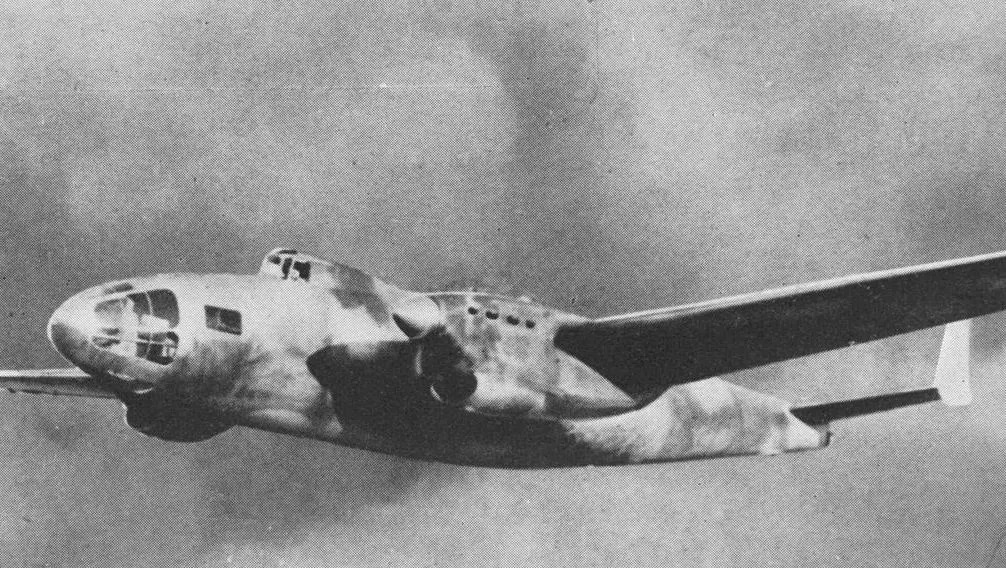
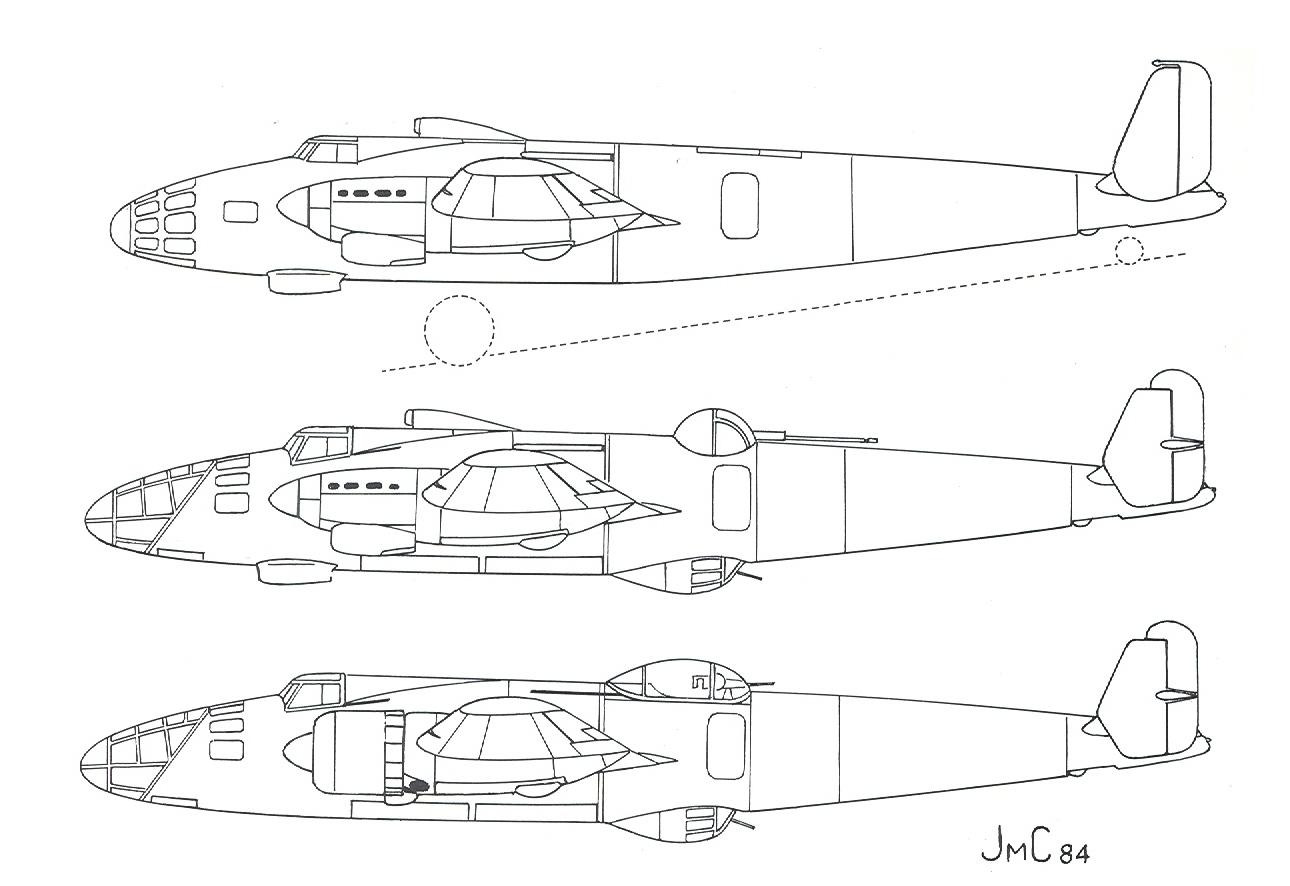
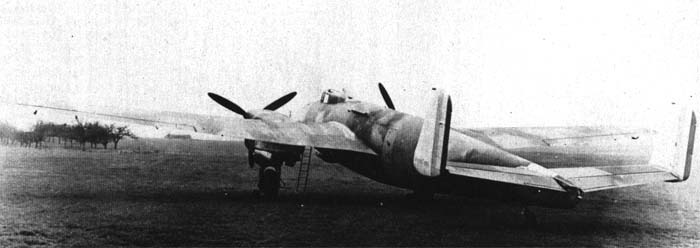
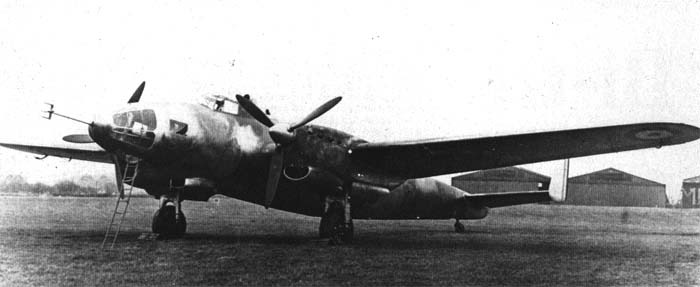
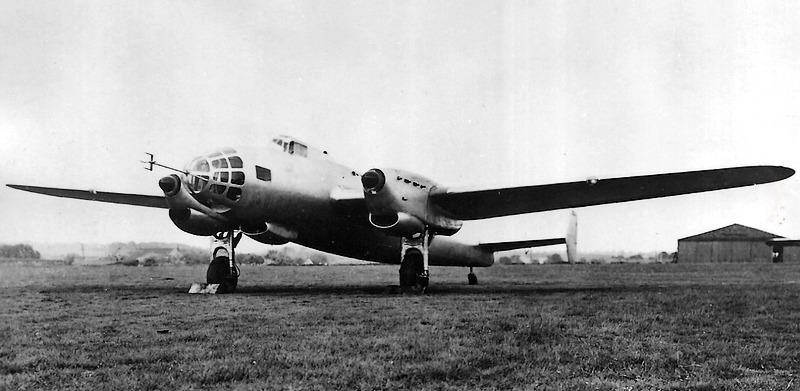
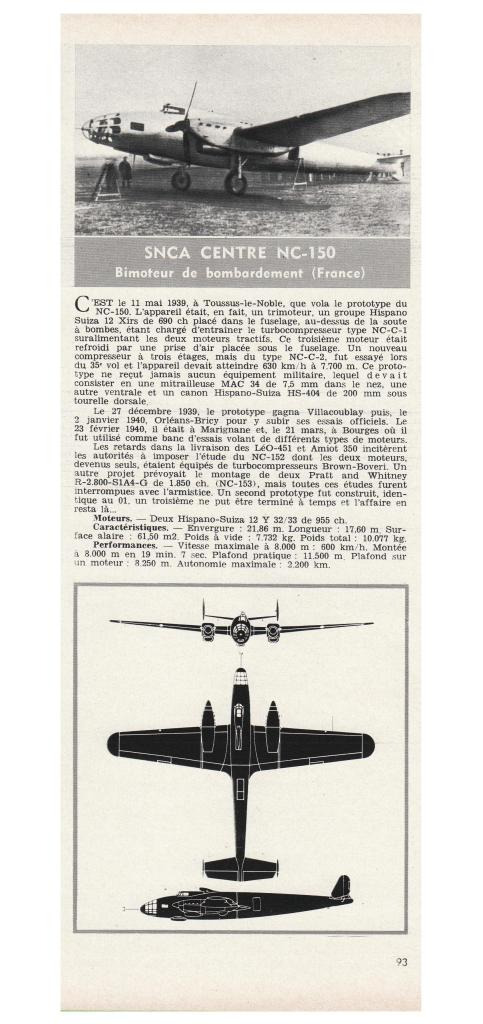
Today, I am presenting a rather unusual French aircraft prototype: the SNCAC NC.150.02, a high-altitude heavy bomber.
During the 1930s, the French Air Force began looking for a new generation of heavy bombers capable of operating at high altitude. The objective was to develop an aircraft that could fly above enemy fighters and anti-aircraft defenses while retaining enough range and payload capacity to carry out strategic bombing missions. Several French manufacturers responded to the requirement, including SNCAC, a company recently created through the merger of Farman and Hanriot. Drawing heavily on Farman’s previous work on high-altitude aircraft, SNCAC developed the NC.150, one of the most unusual bomber designs produced in France during the interwar period.
The aircraft featured a highly unconventional propulsion system designed specifically to improve its high-altitude performance. Two Hispano-Suiza engines were installed in conventional nacelles beneath the wings, but a third engine was mounted internally inside the fuselage. This additional engine was not connected directly to a propeller; instead, its sole purpose was to drive a large compressor. Air was drawn through an intake on top of the fuselage and compressed before being supplied to the two main engines, allowing them to maintain their power at extreme altitudes. This system was intended to increase the aircraft’s operational ceiling from approximately 8,500 meters to around 11,500 meters.
Operating at such altitudes presented another major challenge: the crew would have to function in an environment where the air pressure and temperature were far too low for normal operation. The NC.150 was therefore designed with a pressurized crew compartment, an advanced feature for a French aircraft of the period.
The first prototype, designated NC.150.01, was completed in 1939 and made its maiden flight during the spring of that year. Testing proved sufficiently promising, and the prototype completed around thirty flights before the end of 1939. While these trials were underway, SNCAC began construction of a second prototype, designated NC.150.02. Unlike the first aircraft, this version was intended to represent a more complete operational configuration and was designed to carry defensive armament and other military equipment.
By April 1940, construction of the second prototype was nearing completion. However, disagreements surrounding its propulsion system (wether or not the third engine was really a necessity) caused delays at precisely the moment when France was preparing for the German invasion. The outbreak of the Second World War and the rapid deterioration of the military situation ultimately brought the program to an end before the NC.150.02 could take to the air.
The first prototype was evacuated to southern France in an attempt to prevent it from falling into German hands, while the unfinished second prototype was abandoned at the factory. Its ultimate fate remains uncertain, and there is no evidence that it ever completed its construction or performed a flight. With the French armistice, the NC.150 project disappeared entirely, ending what could have become one of France’s most advanced high-altitude bomber programs.
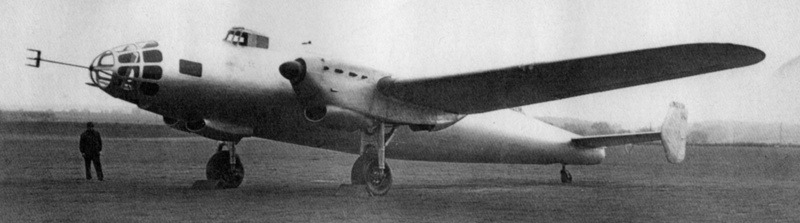
Characteristics
Length : 17.60 m
Width : 21.86 m
Height : 4.19 m
Mass :
- Empty : 7 732 kg
- Max : 10 077 kg
The aircraft features a highly unique propulsion system, powered by Hispano-Suiza 12Y-32/33 engines (955 hp) that rely on a supercharger driven by a separate Hispano-Suiza 12X engine (located above the bomb bay). This setup allows the aircraft to reach a top speed of 600 km/h at 8,000 meters and a service ceiling of 11,500 meters—performance levels rarely achieved by combat aircraft of that era. It has a range of 2,200 km.
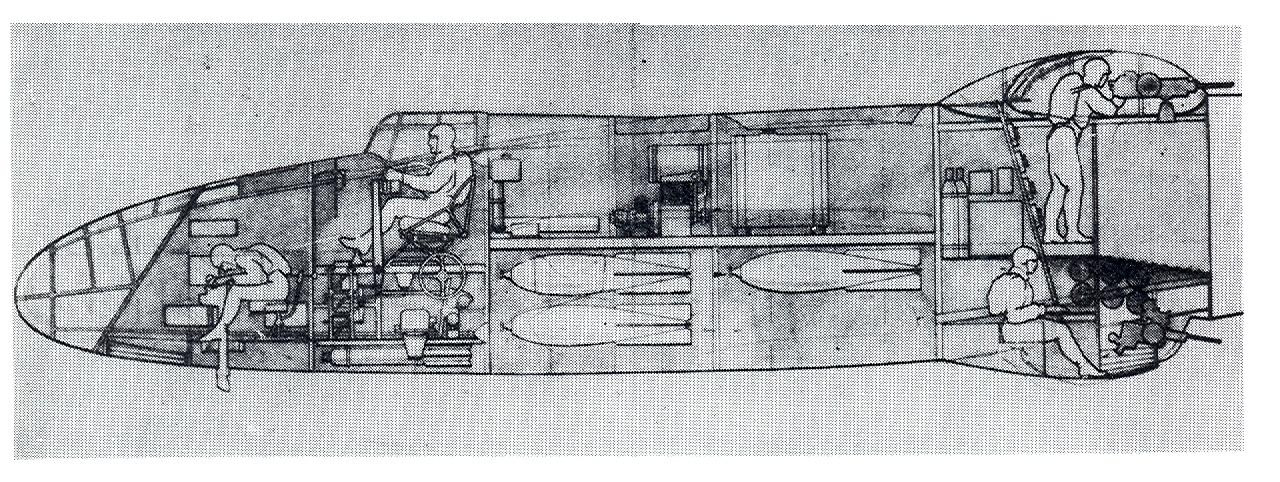
The crew consists of four members: a pilot in a cockpit positioned on the left side of the aircraft, an observer/bombardier in the nose, and two gunners in the rear—one operating the upper turret and the other the lower turret.

Weapons
The NC.150 boasts an impressive armament suite, featuring adequate defensive weaponry and a bomb load capable of inflicting significant damage.
Defensive Armament:
- 1 x 7.5mm MAC-34 machine gun (nose)
- 1 x 7.5mm MAC-34 machine gun (ventral turret)
- 1 x 20mm Hispano-Suiza HS.404 cannon (dorsal turret)
Offensive Armament (1,173 kg maximum):
- 6 x 441 lb bombs
- 8 x 220 lb bombs
- 24 x 110 lb bombs
- 96 x 22 lb bombs
In-game, this aircraft would be a particularly interesting addition to the French tech tree; capable of reaching very high altitudes and dropping a respectable bomb load, it would fill a gap for this type of aircraft in the current lineup.
Pictures
Sources
"Warplanes of the Second World War - Volume 7 - Bombers and Reconaissance aircraft" by William Green, Macdonald 1967

- S.N.C.A.C. NC-150 - Bombardier moyen - Un siècle d’aviation française
- SNCAC-150
- SNCAC (Centre) NC-150 high altitude medium bomber | Secret Projects Forum
- Conçu à l’origine par Farman à la fin des années 1930, le bimoteur SNCAC NC 150 “Bi-Tri”, un avion de construction mixte bois et métal, à train d’atterrissage rétractable et aux lignes modernes, cachait un secret. Outre ses deux moteurs, des Hispano Suiza 12 Y 32/33 de 960 CV chacun, il possédait un troisième moteur installé dans le fuselage, un Hispano Suiza 12 Xirs de 690 CV, qui entraînait un compresseur à trois étages qui assurait un regain de puissance aux deux moteurs principaux, d’où son surnom de “Bi-Tri”. La formule semblait prometteuse et son premier vol en mai 1939 fut couronnée de succès. Mais en septembre, avec l’entrée en guerre, la France avait un besoin urgent de bombardiers moyens modernes et les LéO 45 et Amiot 351 étaient déjà entrés en production. On craignait alors que la mise en production d’un troisième avion ne ralentisse celles des deux précédents. Le programme fut toutefois poursuivi mais au ralenti et l’armistice de juin 1940 le… - Avions moches, bizarres, ratés, projets abandonnés et aviation insolite. | Facebook