- Yes
- No
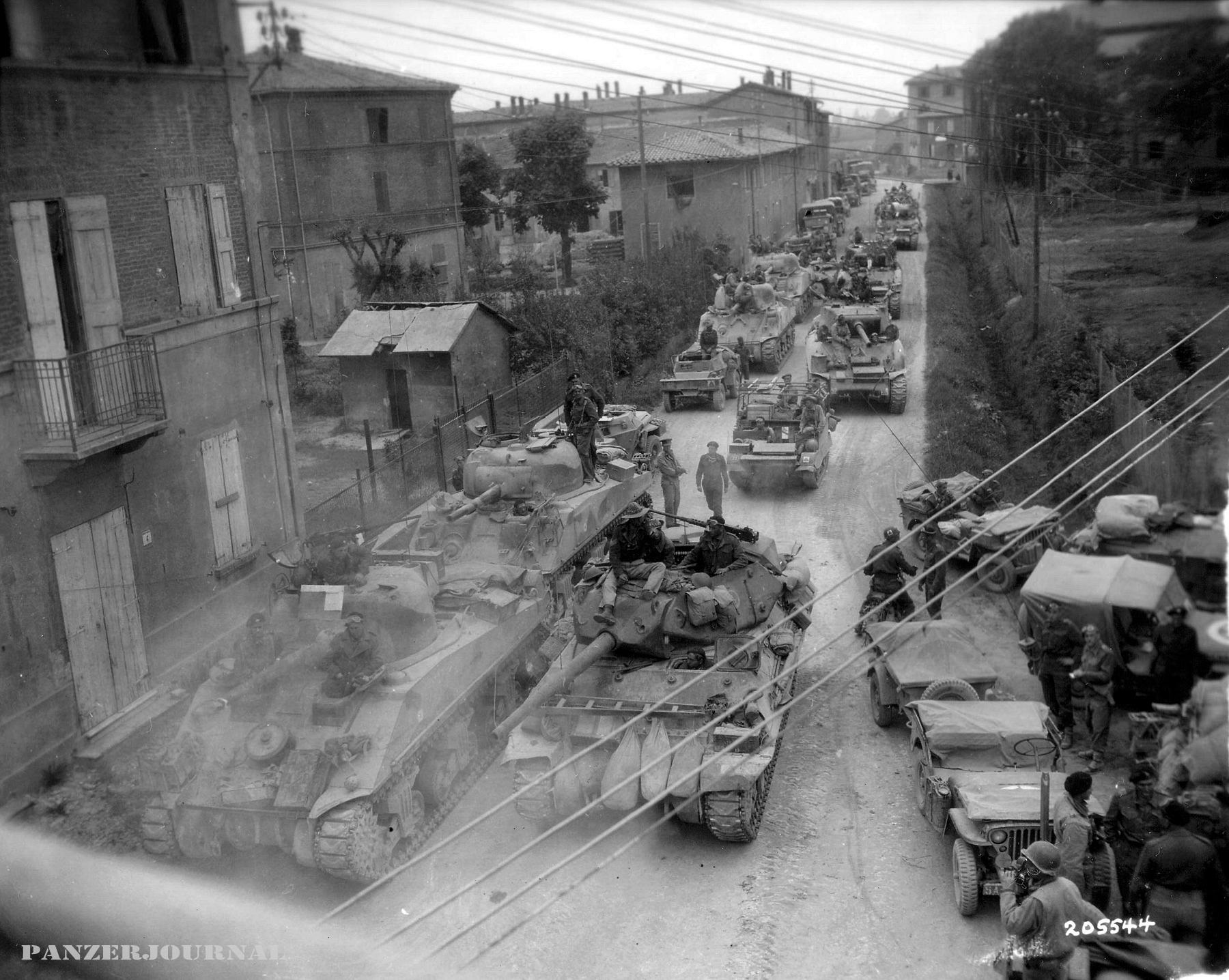
Sherman tanks of D Squadron, 10th Royal Hussars, enter the Italian town of Cesena, north-west of Rimini in Italy. - IWM (AY 825/1-4)
History
The 3-inch M7, which ended up mounted in the M6 Heavy Tank and M10 GMC respectively, had already proven to be too bulky and heavy for the Sherman’s turret and so development was started on a lighter 76mm which could fit into the M34 gun mount. This gun had the designation of 76mm T1 and went on to become the 76mm M1.
In August 1942 , not long after Sherman production had started, the US Ordnance Department began testing for the creation of Shermans armed with the 76mm T1. Multiple prototypes were built with various improvements being applied over time but, to the Armored Force, the results proved to be less than satisfactory. With the turret deemed to be too small and the crew’s ergonomics unacceptably suffering for it, the order for additional tanks was cancelled and eventually so was the project as a whole in May 1943.
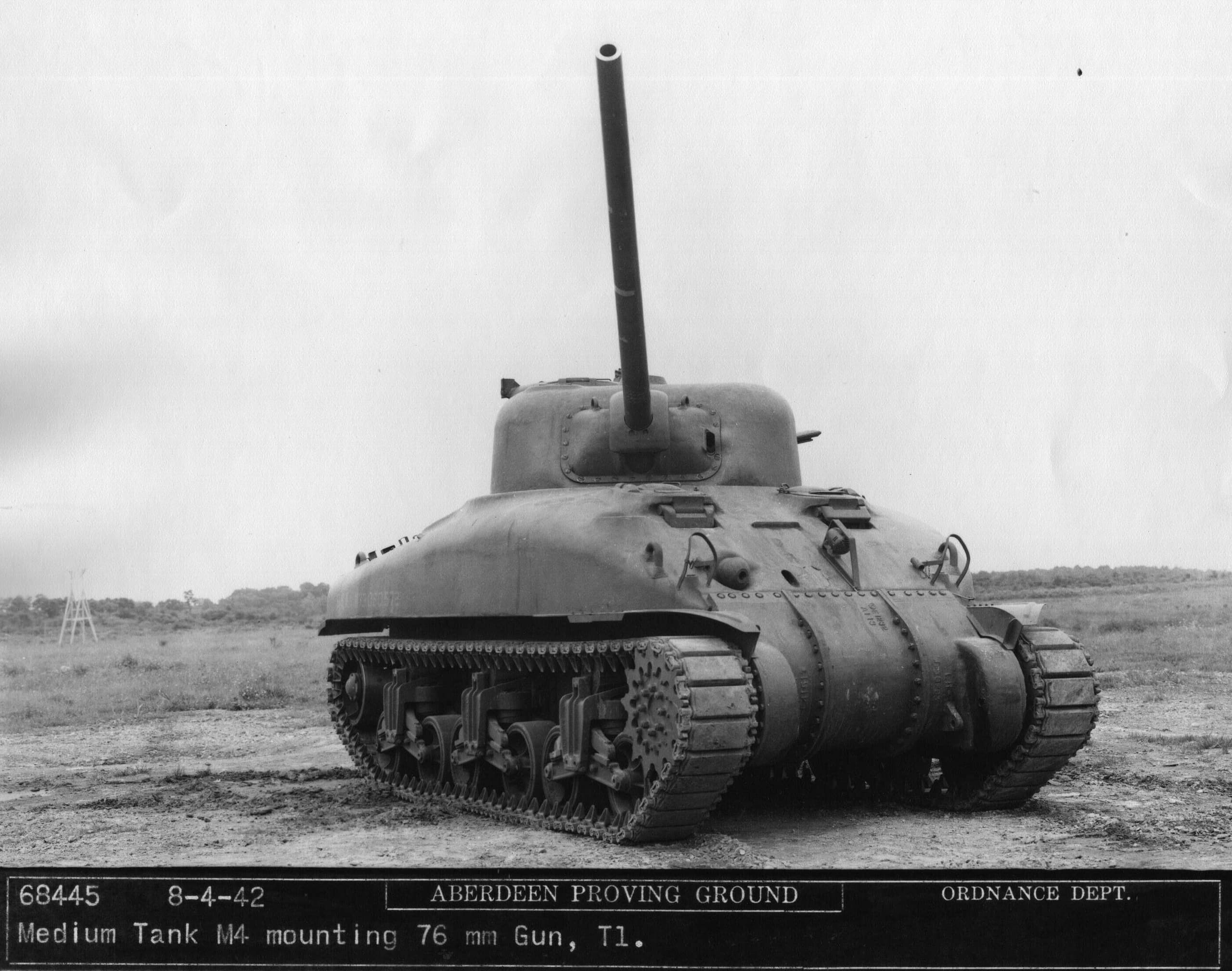
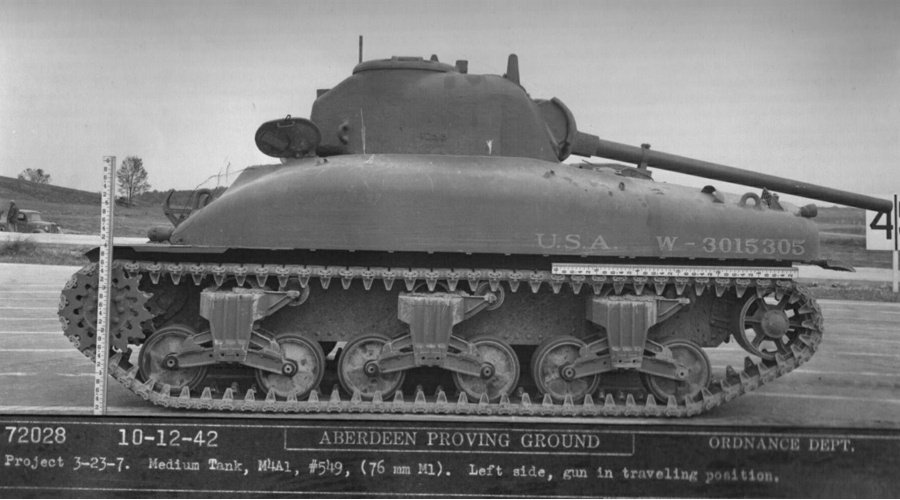

Development had also started on new Medium Tank designs, as possible replacements for the Sherman, which became known as the T20 series. Of these, the T23 mounted a 76mm in a new larger cast turret, solving the problems of the original 76mm Sherman test vehicles. The T23 wasn’t standardised due to concerns regarding its electrical transmission but, as they both had 69-inch diameter turret rings, the T23’s turret could be adapted for use on the Sherman.
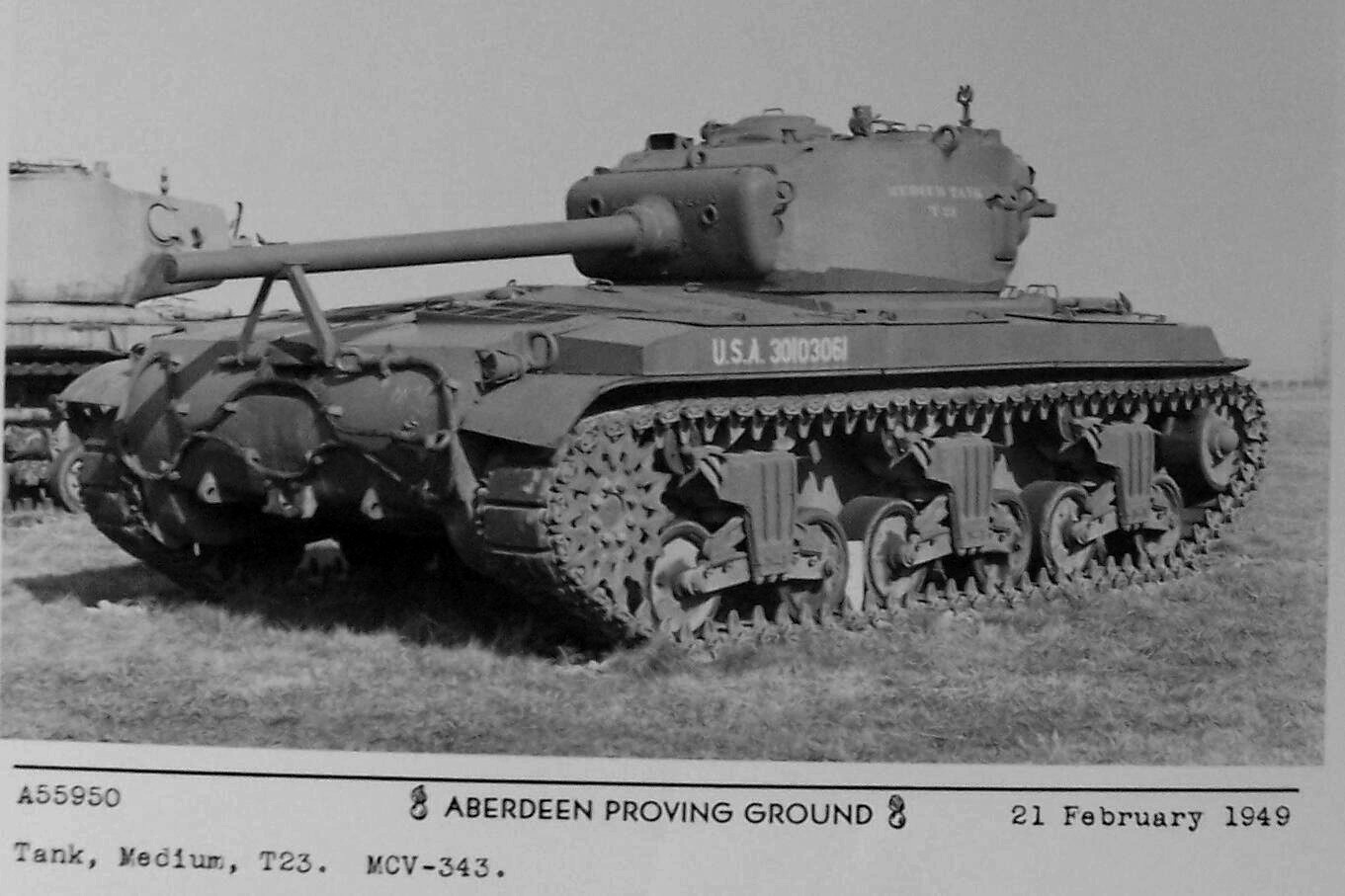
As well as the change of turret, the internal stowage was updated with the ammunition now being held low down in the hull and surrounded by water-jackets with the aim of reducing the chances of ammunition fires after a penetration. This became known as ‘wet stowage’ and is what the ‘W’ suffix indicates in the designation of production vehicles.
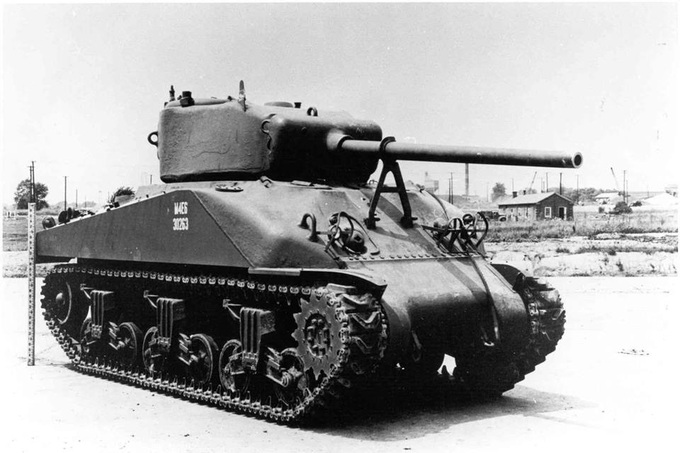
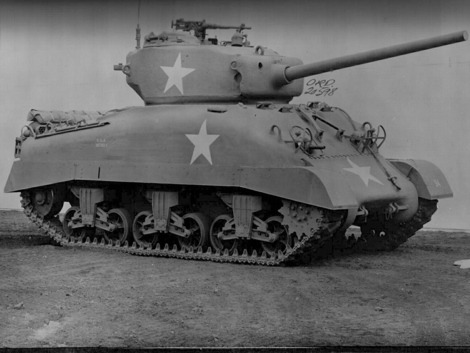
The prototype M4E6
The M4A1 was the first of these new models to enter production in January 1944 and, in this guise, became the M4A1 (76) W. Pressed Steel Car was the only manufacturer of the M4A1(76), producing an approximate total of 3426 through to July 1945. 2171 of these were M4A1 (76) Ws with the other 1255 being the M4A1 (76) W HVSS.
British and Commonwealth Service
There had previously an been interest in the American 76mm due to concerns about getting British guns like the 17pdr and Vickers HV 75mm into suitable vehicles within an adequate timeframe. However, by this point, the Firefly and Challenger were in service, and the Comet’s development was progressing well, and as such there was no actual requirement for any 76mm Shermans.
The reason that they were being delivered now is that the US couldn’t guarantee enough 75mm Shermans to fulfill British Lend-Lease needs for the rest of the year. The 75mm Shermans were far more valuable to the British as any suitable tanks could be converted into Fireflies while the rest of the 75s would carry on as they were and, in either case, the 17pdr and 75mm ammunition was already in widespread circulation.
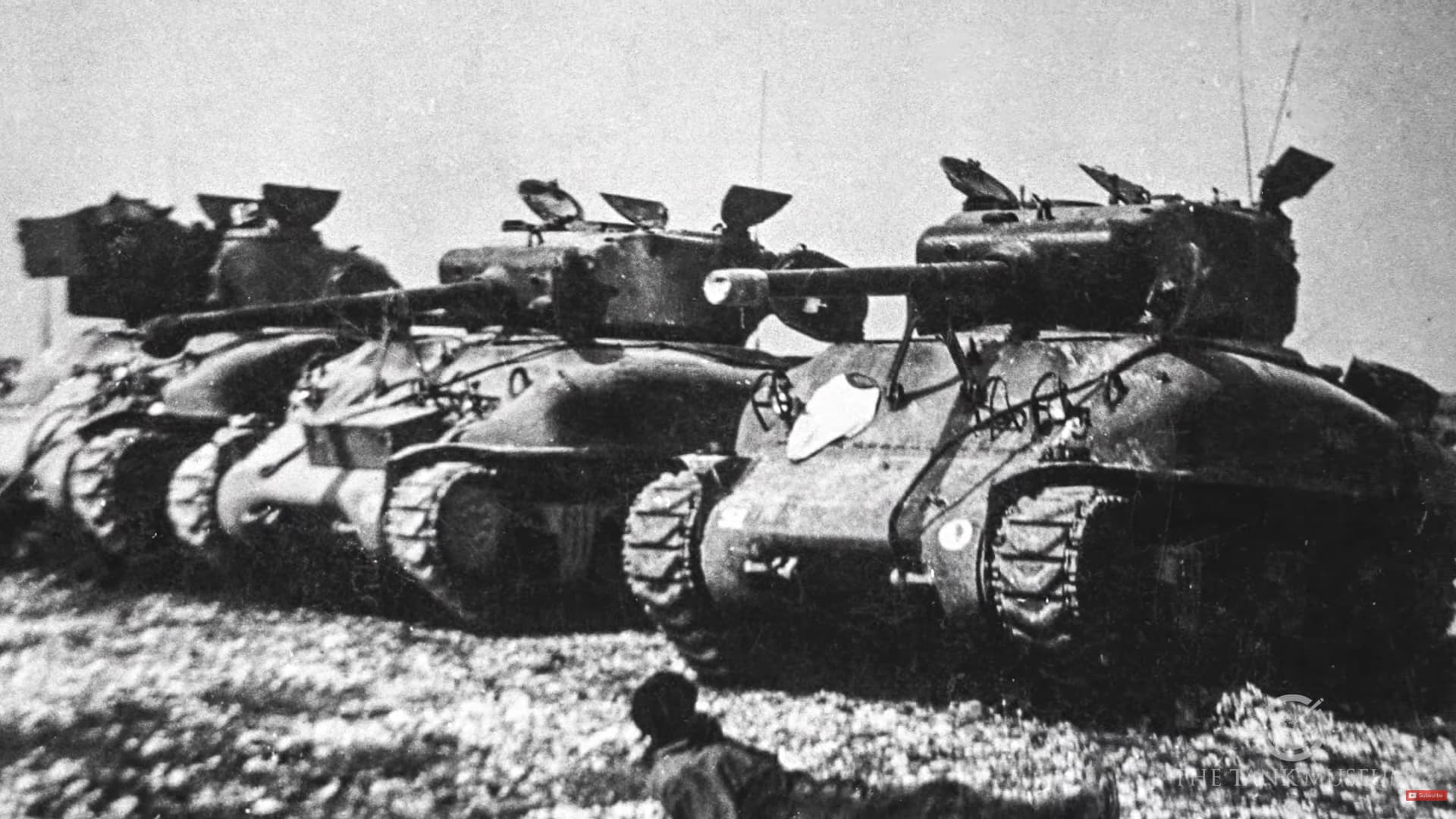
A Sherman Mk. IC Hybrid (Firefly) and two Sherman Mk. IIAs of 7th Armoured Brigade.
Regardless, more Shermans were needed and, of the 2171 M4A1 (76)s built, Britain received 1330 (allocated all but 247 of the tanks built up to October 1944). Once delivered, these tanks were given the designation of Sherman Mk. IIA. Mk. II meaning it was an M4A1 and the A suffix denoting it was armed with the 76mm M1 (B was used for the 105mm M4, and C for the 17pdr).
Being somewhat unwanted, the Mk. IIA found itself in a tricky position. With a lesser AP performance compared to the Firefly and worse HE performance than the 75mm, it was less suited to British needs and introduced another ammunition type to the supply chain.
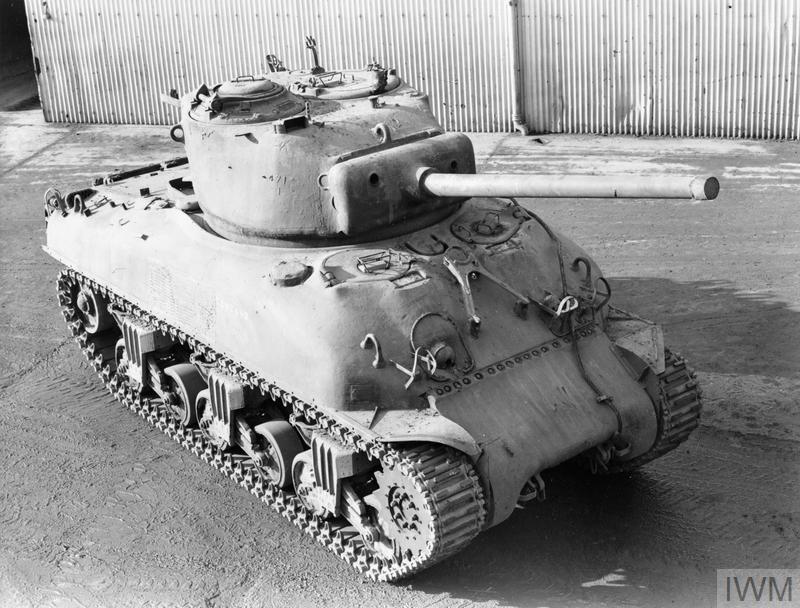
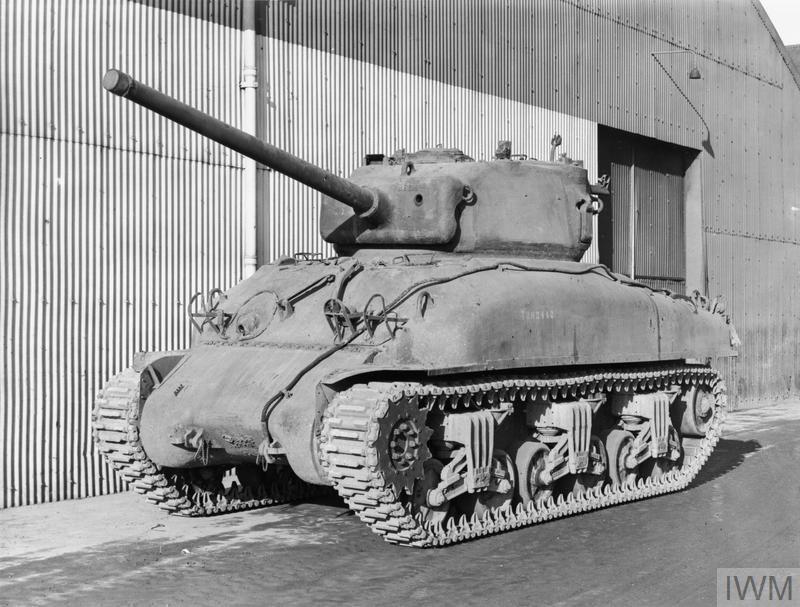
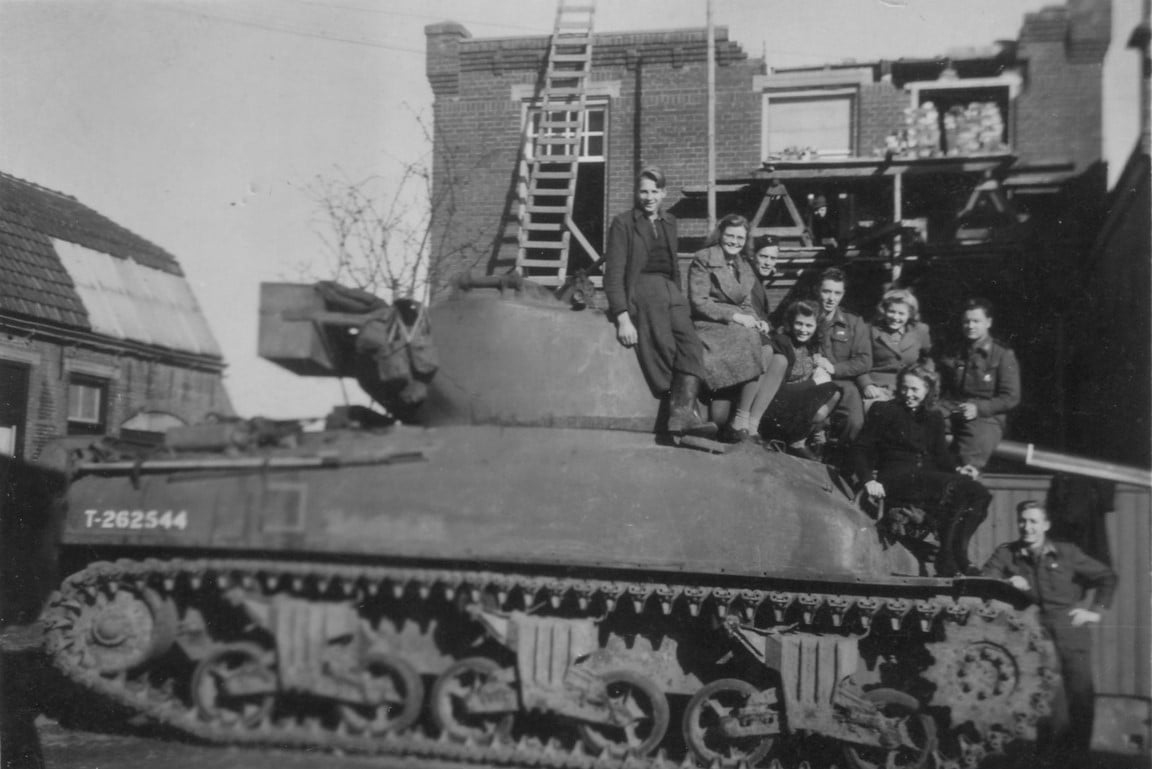
T262442 - IWM (MH 9527) / IWM (MH 9515)
Italian Front
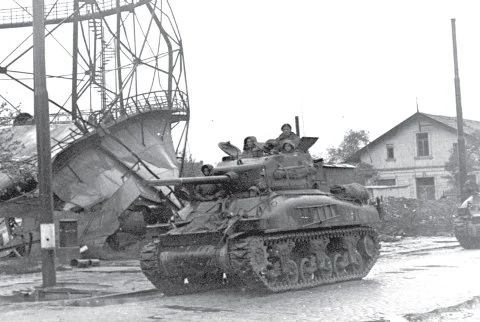
The majority of Sherman Mk. IIAs that saw service had been sent to units in Italy. It was a logical choice as the units there were also in need of improved AP performance over their 75mm Shermans and, while Fireflies were also active in Italy, sending over the IIAs would free up some Fireflies for the replacement of losses sustained in North-West Europe where their need was more pressing.
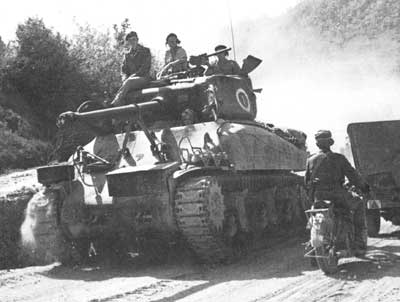
They were assigned to units in September '44 with 1st Armoured Division receiving 28, 6th Armoured Division receiving 2, and the 6th South African Armoured Division receiving 14. Another 69 were in Tank Replacement depots and 82 were enroute from America.
By February '45 the numbers had increased further. 1st AD had been disbanded and their 2nd Armoured Brigade was now an Independent Brigade with 114 IIAs. 6th AD now had 42, 6th SAAD had 129, 7th AB had 61, 85 were with Tank Replacement Groups, 175 were in ordnance/training stock, and another 36 were being shipped over.
North-West Europe
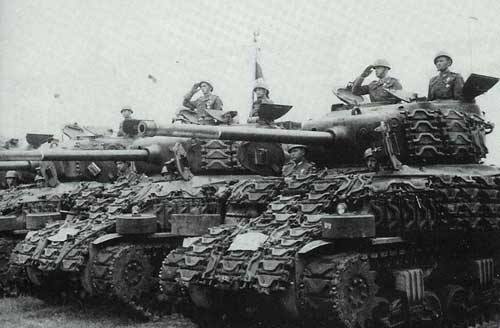
No British units used IIAs in NWE but a fair number were given to 1st Polish Armoured Division as replacements/stand-ins for Firefly losses. They received the typical modifications of extra stowage boxes and lots of track links as supplemental armour but also camouflage on the gun barrels to disguise their length as was done to Fireflies.
They had 51 IIAs at the end of December 1944 and by the end of the European Campaign they’re listed as having 181. Another 97 were reported in 21st Army Group depots in June 1945.
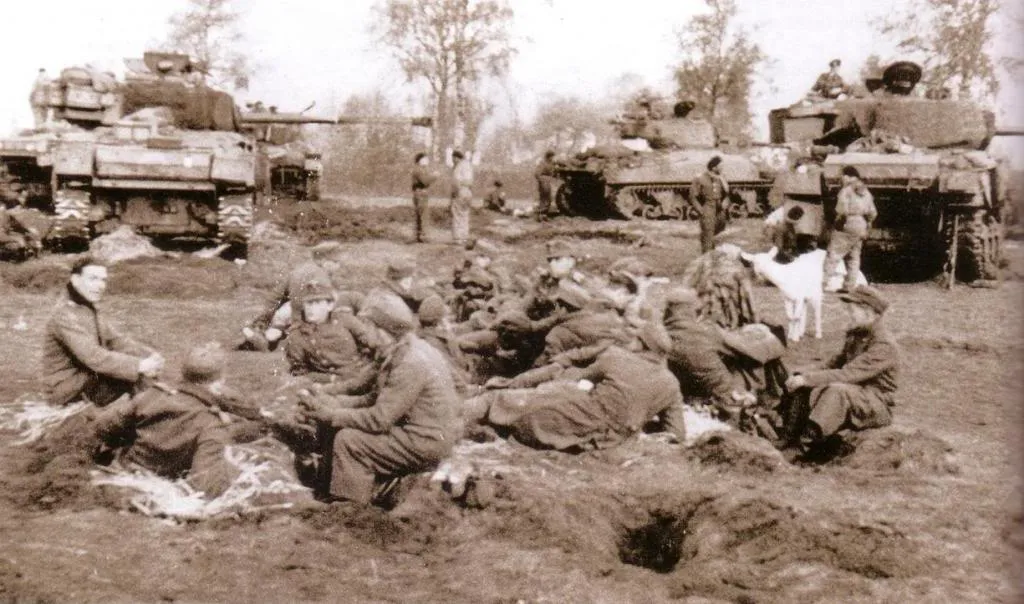
The IIA on the right is an oddity as it’s not only been fitted with the rear stowage box from a Sherman V but also the turret stowage box from a Panzer III or IV.
In-game
As with the M4A1 (76) W in the American tree, this would be a 5.0 vehicle. It could be foldered with the Sherman VC and any other future Firefly variants and could act as a back-up vehicle for a 5.3 line-up alongside the Comet and Challenger, giving Britain some much needed APHE, and would be useful for players who don’t have any of the premium 5.3s.
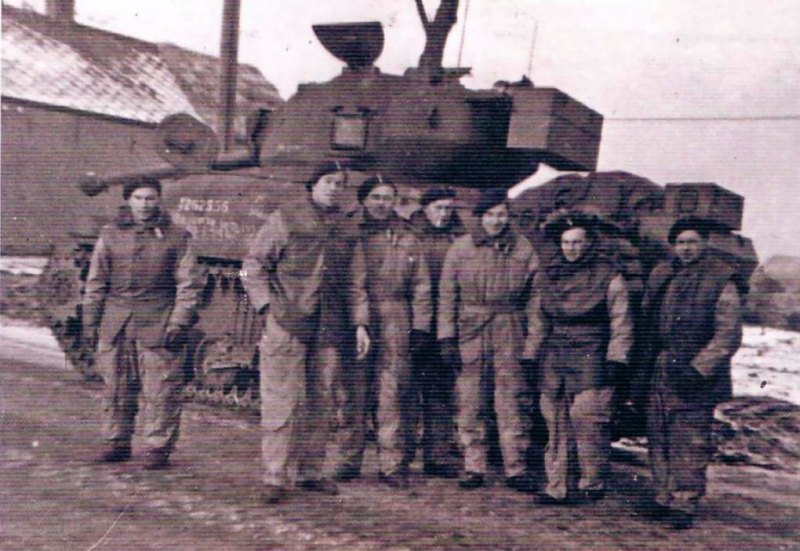
To visually distinguish it from the US M4A1 (76), this could retain its sandshields as was done with the Sherman II compared to other nation’s M4A1s. Additionally it could have some form of altered stowage such as the box that appears on the transmission housing of some tanks and, as seen below, the jerry cans in the racks meant for spare track links.
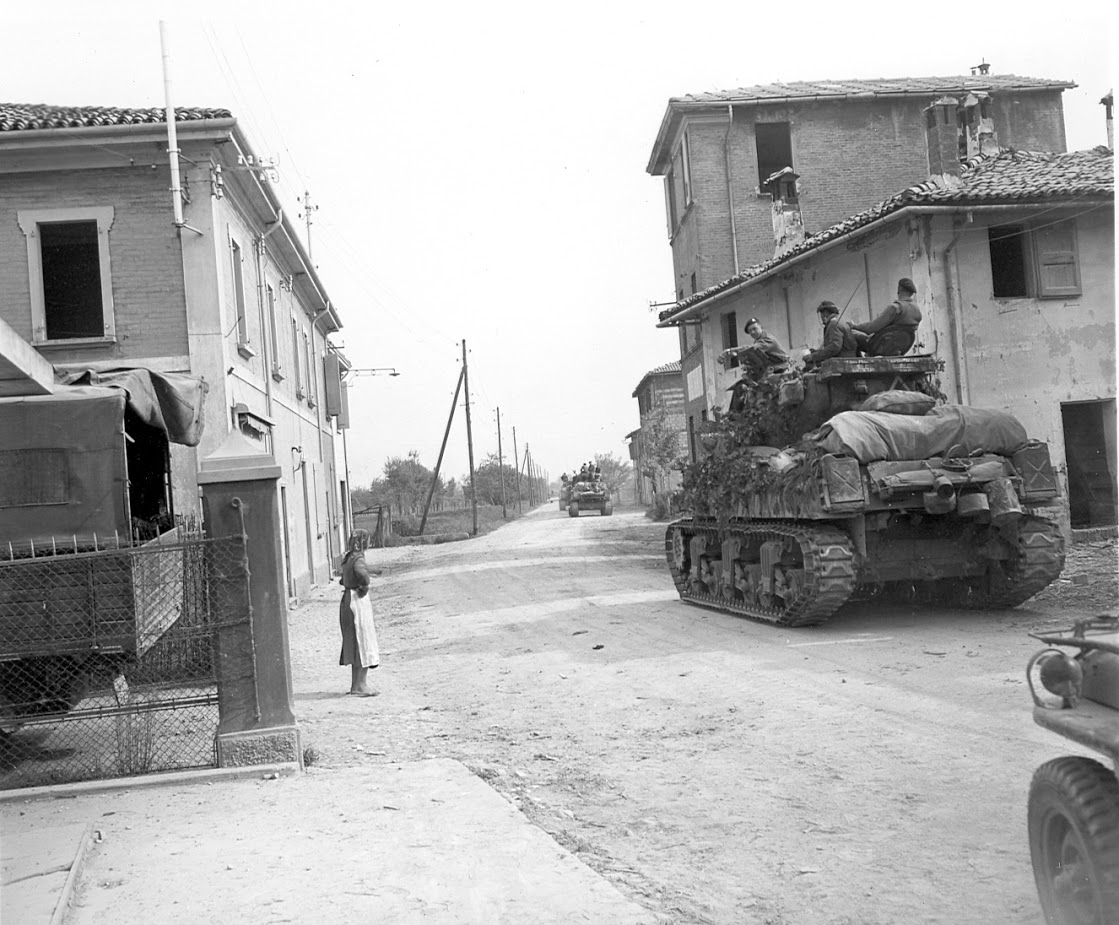
A potential modification could be the extended ‘Platypus’ grousers which saw a fair amount of use on Shermans in Italy. Much like Ost/Winterketten on German vehicles, this could be a Rank 1 modification that would slightly improve traction.

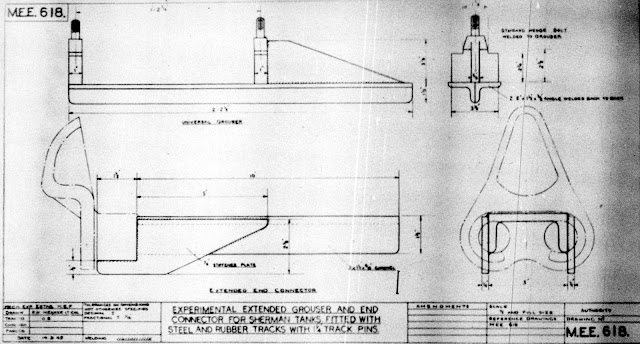
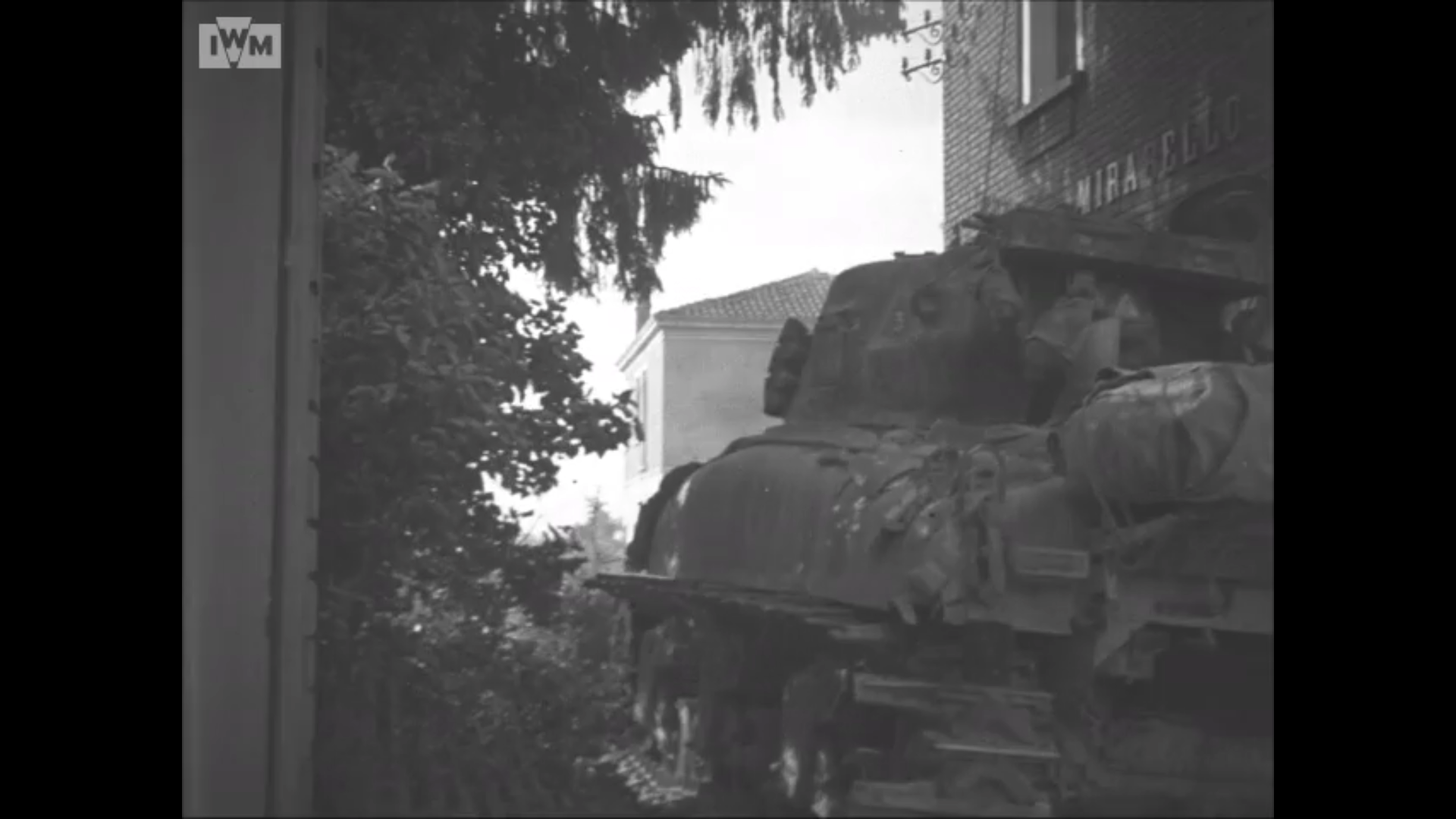
Specifications
The specifications would be exactly the same as the M4A1 (76) W in the US tech tree.
Crew - 5
Weight - 32.7t
Engine - Continental R-975 C4 Radial
Max speed - 24.2mph
Armament
76mm M1 (M1A1, M1A1C, or M1A2)
2x .30cal MG
1x .50cal MG
Max elevation/depression - +25/-10
Ammunition
71 shells
3,000 .30cal rounds
600 .50cal rounds
Figures taken from War Thunder Wiki
Armor penetration (mm) at a distance:
10m / 100m / 500m / 1000m / 1500m / 2000m
M79 Shot - AP: 134 / 132 / 121 / 109 / 99 / 89
M62 Shell - APCBC: 149 / 146 / 133 / 119 / 106 / 95
M42A1 Shell - HE
M88 - Smoke
Armour
Nose - 63.5mm
Glacis - 63.5mm
Lower Hull Sides - 38.1mm
Upper Hull Sides - 38.1mm
Hull Rear - 38.1mm
Hull Roof - 38.1mm
Engine Deck - 19.5mm
Mantlet - 88.9mm
Turret Front - 63.5mm
Turret Sides - 63.5mm
Turret Rear - 63.5mm
Turret Roof - 25.4mm

Additional Images
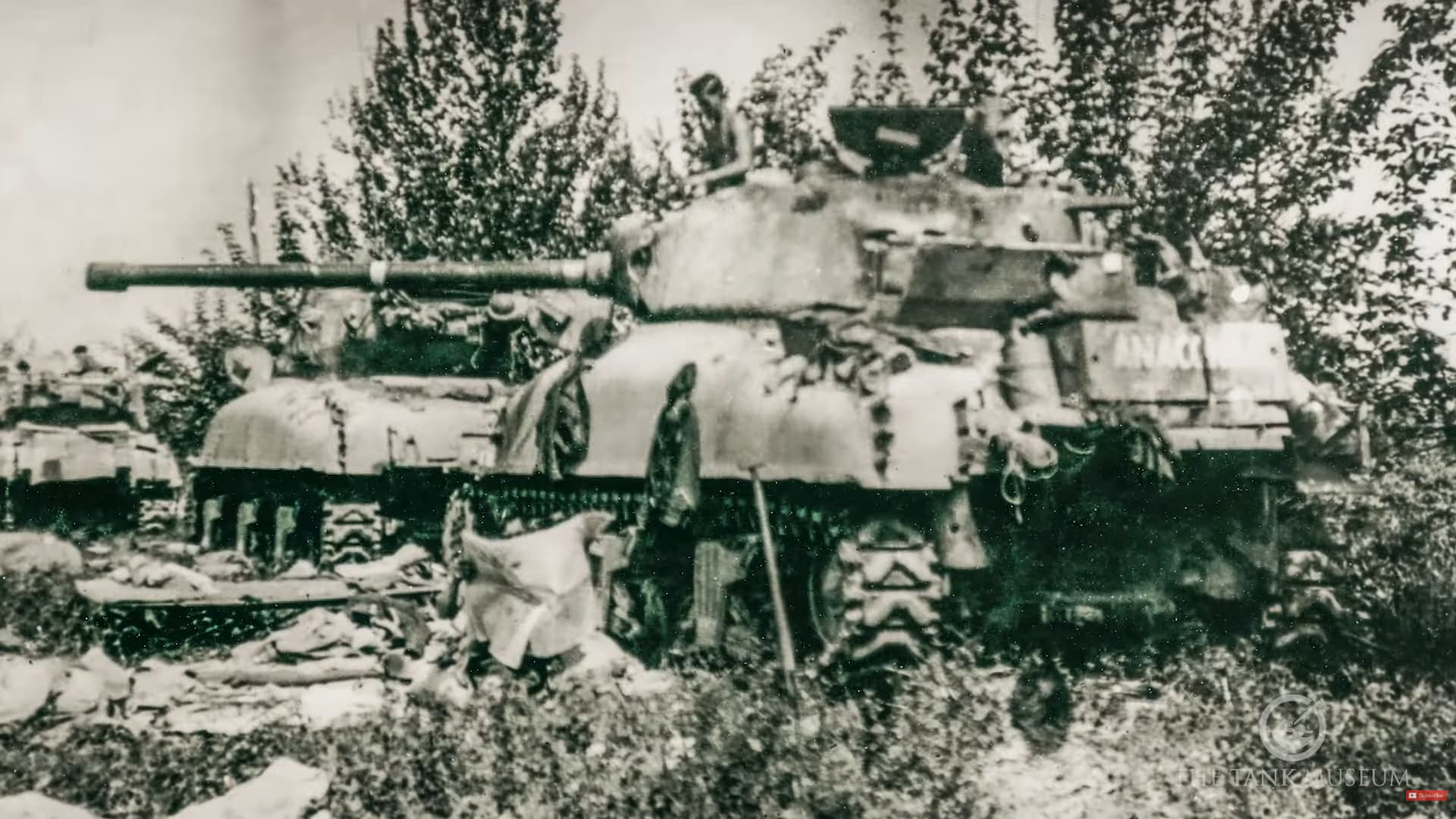
‘Snake Troop’ of B Squadron, 2nd RTR consisting of ‘Asp’, ‘Anaconda’, and ‘Adder’.
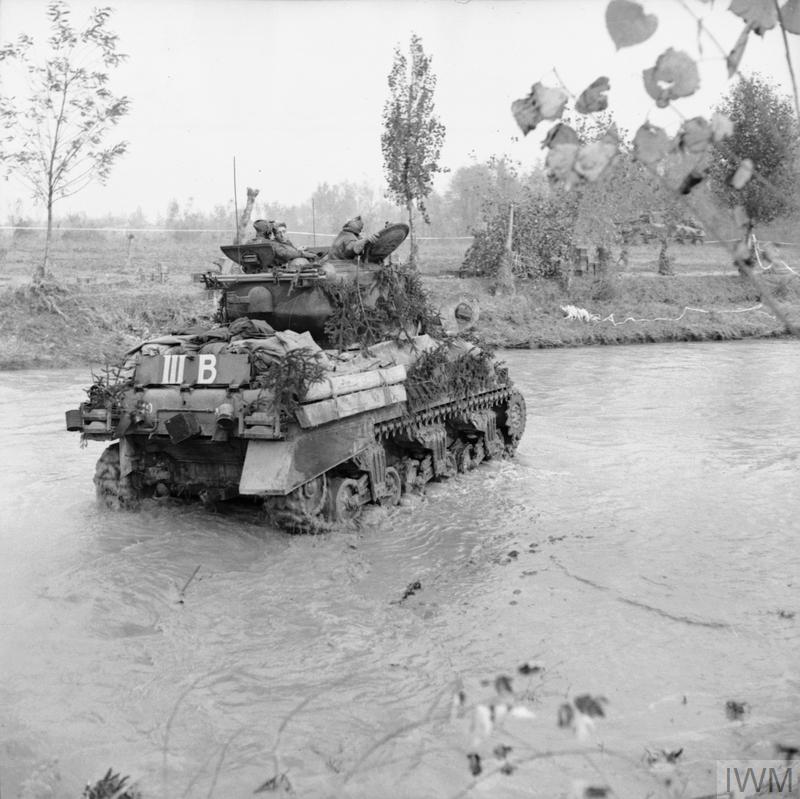
A Sherman tank of 2nd Armoured Brigade crossing the River Rabbi at San Martino, 9 November 1944. - IWM (NA 20043)
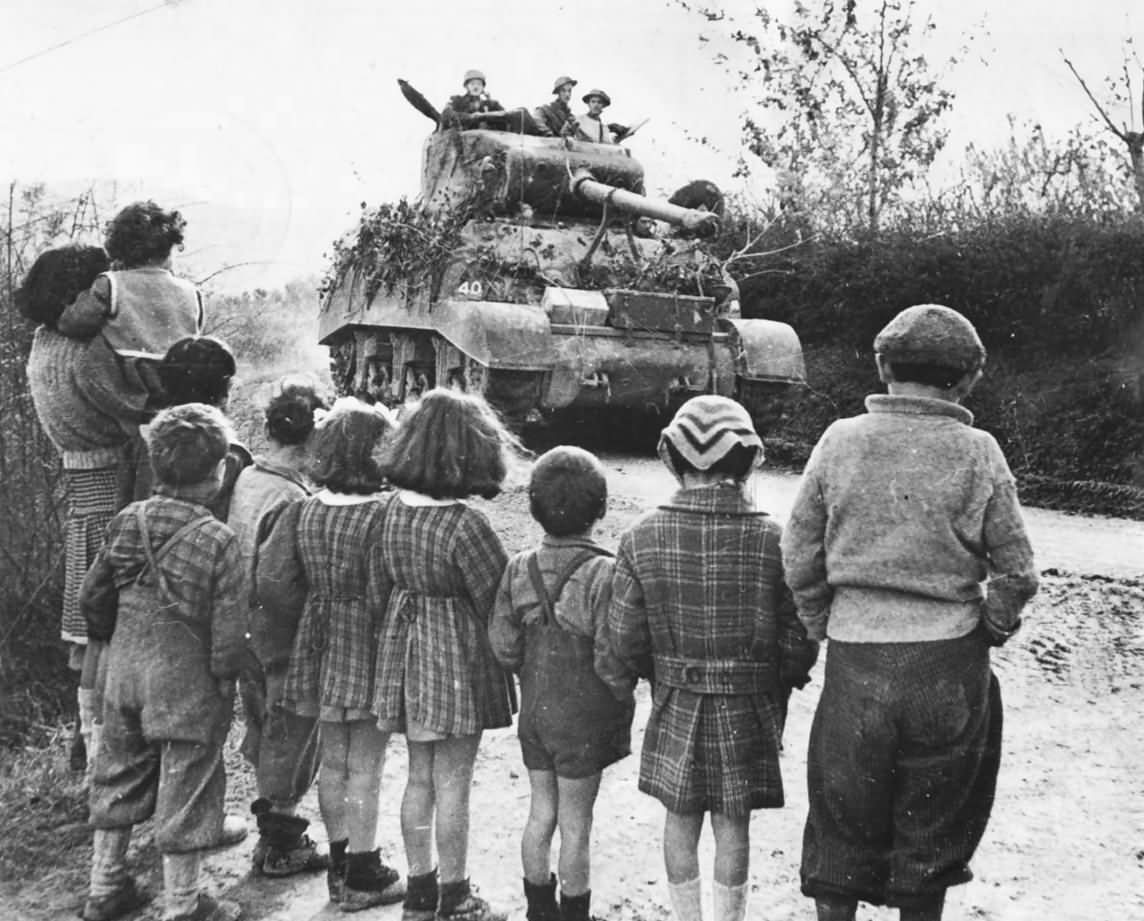
Sherman tanks rumble forward, with an interested audience of Italian children. - IWM (NA 20093)
Sources
British Battle Tanks: American-Made World War II Tanks - David Fletcher & Steven J. Zaloga
Sherman Minutia (Sherman minutia homepage) - Pierre-Olivier Buan, Joe DeMarco and Leife Hulbert
https://www.youtube.com/watch?v=LIPG2_TOITo - Tank Chats #111 | Sherman M4A1 (76) W | The Tank Museum
Sherman Medium Tank Canadian, New Zealand and South African Armies, Italy 1943–1945 - Dennis Oliver
Medium Tank M4A1 (76M1) - Tank Encyclopedia