i think he means a full area scan aka its full coverage
idk what you are trying to say but the radar is infact ±70°
wait i get it now
i think he means a full area scan aka its full coverage
idk what you are trying to say but the radar is infact ±70°
wait i get it now
Currently the largest volume you can scan is 70°´s, he wants a full 140° scan like the EF and rafale have
but thats not happening since they would have to change the J-10C and J-15T radar too
Yes, i know. I misunderstood his comment and tought he wanted +/-140
70° isn’t realistic either for an flat plate ESA, even 60° is pushing the performance of it. The beamwidth at 60° is almost 2x and at 70° its 3x of its original. Then transmit power loss, is 50% at 60° and 65% at 70° which translates to ~30% and ~40% less range
you can work around this using different Antenna designs
No, this is a physical limitation. The principle is quite straightforward: when the radar is at a sideways angle theta, the effective aperture of the antenna becomes the original aperture multiplied by cos(θ), and the detection range scales as the square root of cos(θ). So at 60°, it’s 0.5 times and 0.7 times, respectively.
I’d have to run the program for it tho as I highly doubt an element radiation pattern other than isotropic will yield better results for the gain.
Fixed plate ESAs in warthunder have even another issue of innacuracy with scanning angles over just not suffering gain penalties at angles. As said penalties IRL are based off of angle off from the tangential plane from the ESA, the radar cant really reach more then 60 degrees off boresight. So a radar can reach an azimuth or elevation of +/-60, however it cant actually reach 60 elevation 60 azimuth.
However, in game its angular limits are treated like a mech scan system’s, so it can actually reach 60 degrees in both elevation and azimuth at the same time. This means that if you rotate yourself relative to the target you can actually get another like 12 degrees of angle which are just impossible IRL.
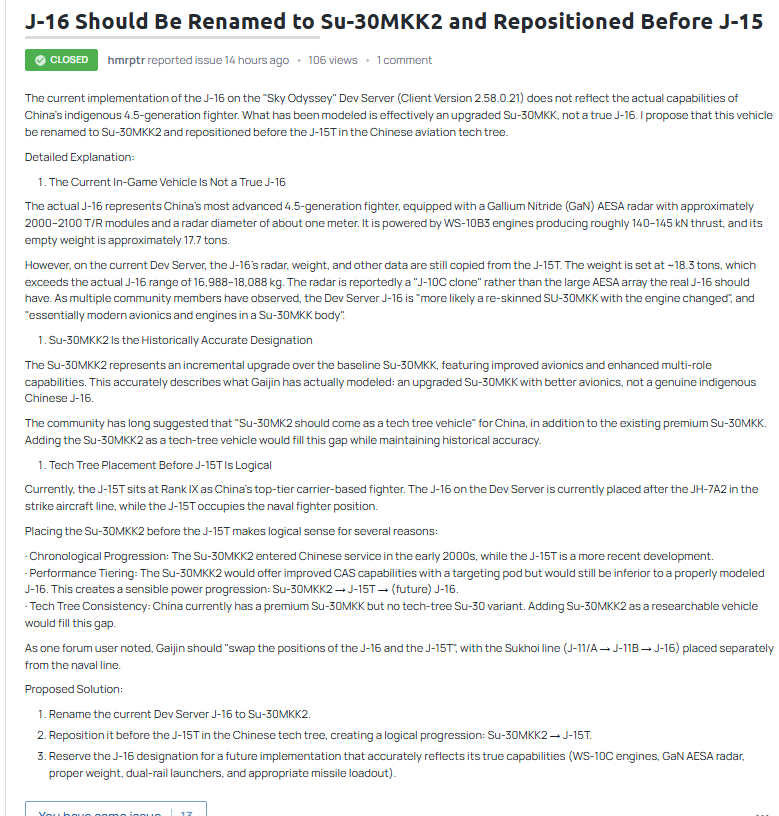
https://community.gaijin.net/issues/p/warthunder/i/fBPsgZzR4fLq
Considering that tools and spare parts should be close to 0 kg,
then I can only assume that the Chinese Pilot is secretly Caseoh
What does this even mean.
its a joke.
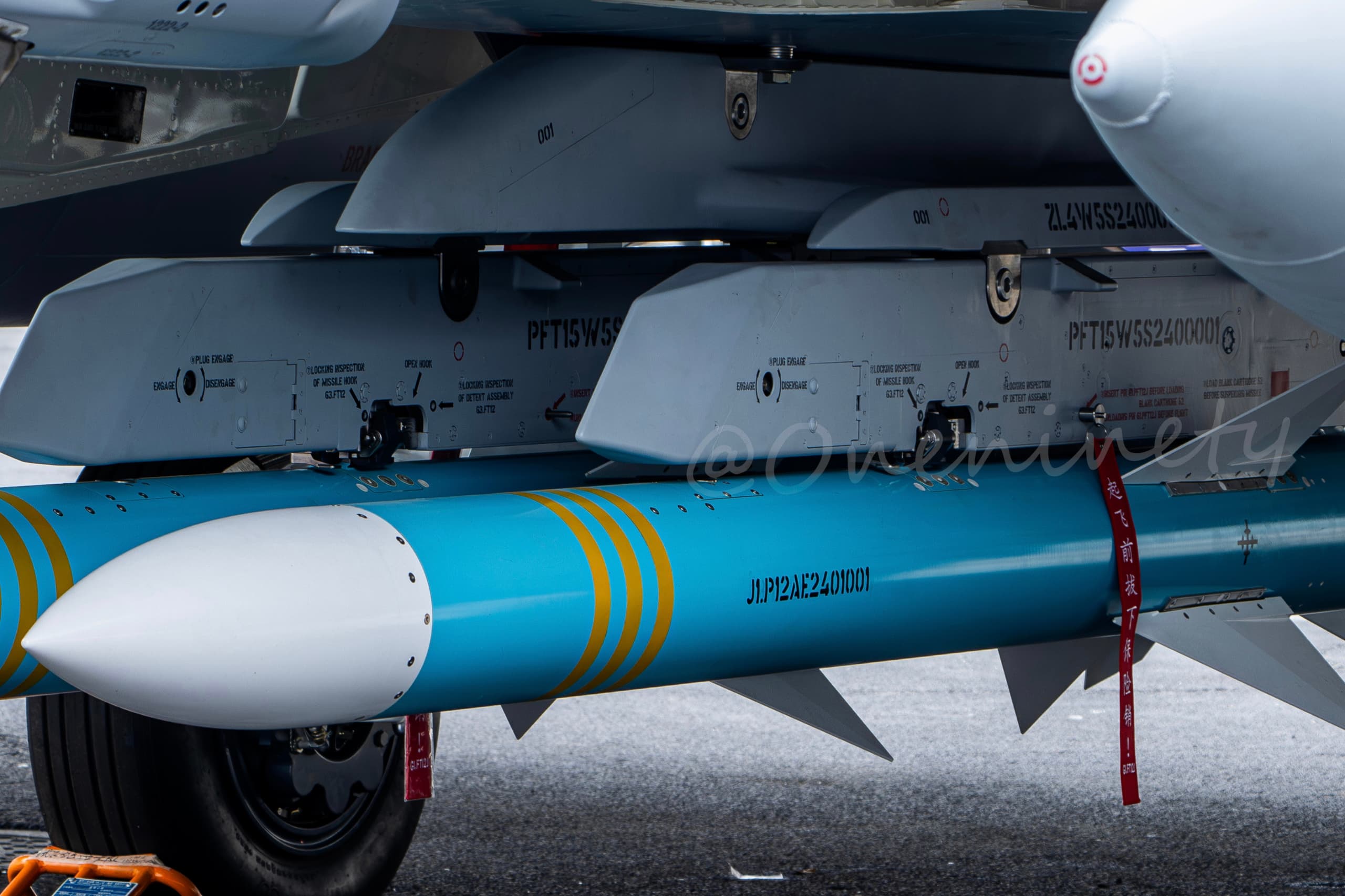
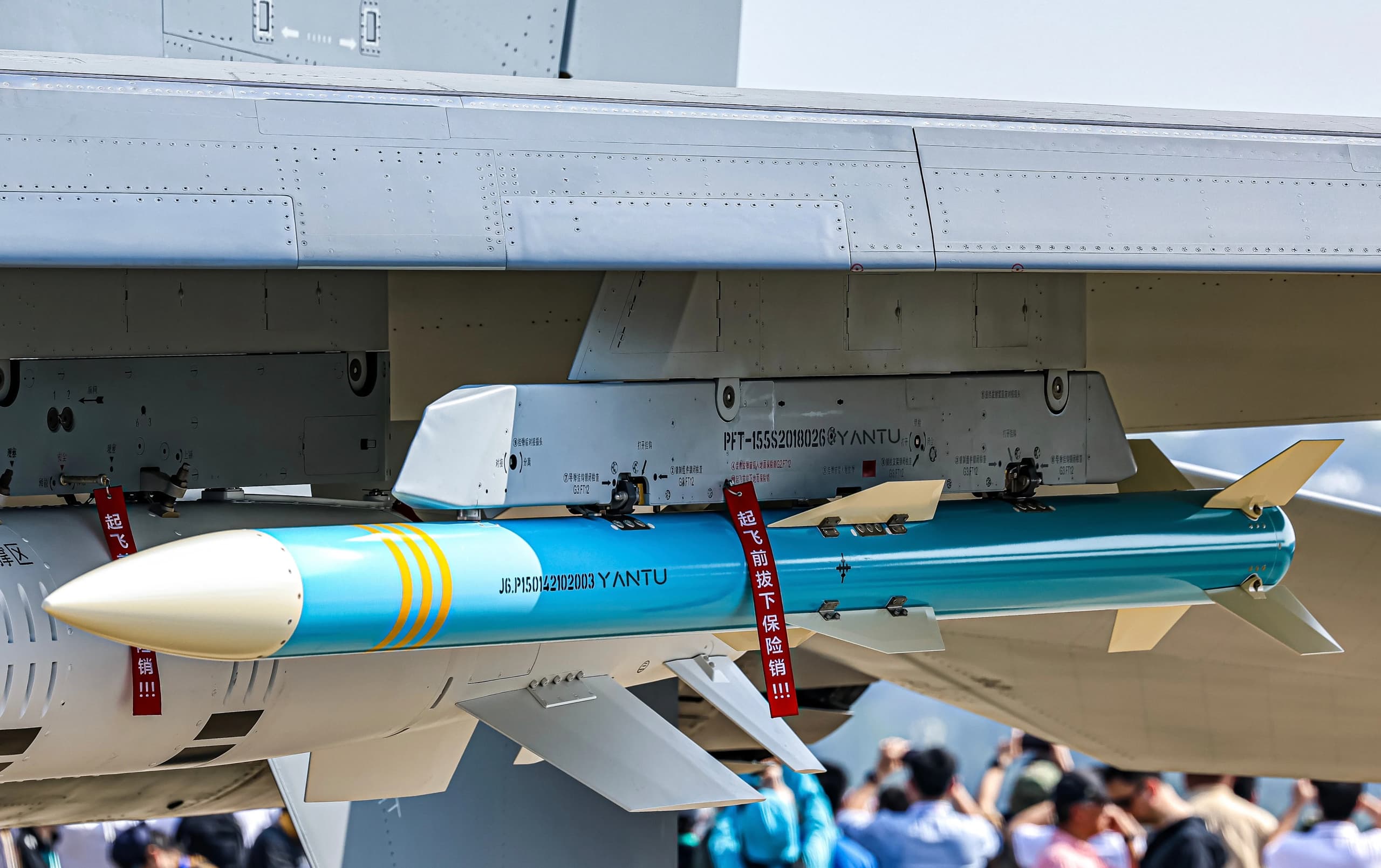
The PL-15E has a max range stated >145km which means ingame the PL-15 will most likely have 145km max range.
Add to that the fact its lighter and dual pulse we genuinely might get a weaker motor then the PL-12A but with less drag
I am very aware of that just not so sure what the whole rafale bark pl-15 thing is trying to imply, though I I think its widely accepted at least one was shot down by a pl-15.
I don’t know why, but the Derby-er has more fuel than the Derby with the same weight.
ok, not same, 4kg diffirent
plus another little bit over 3kg diff of warhead
which puts it at a 7kg difference that could be used for fuel
means 9kg of fuel comes from gaijin realizing electronics can be compressed ig? (or the ER is just modeled wrongly)
ah, i missed different warhead
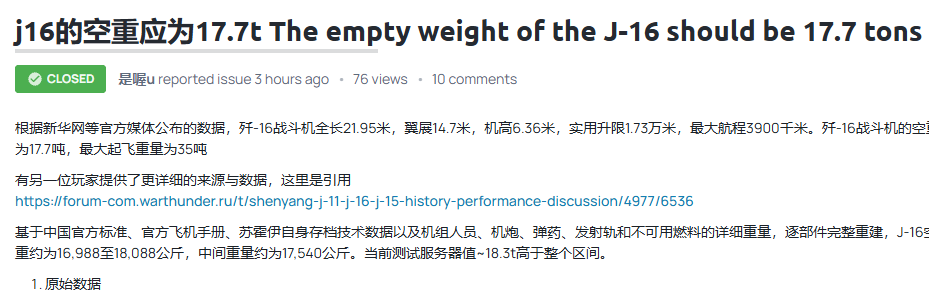
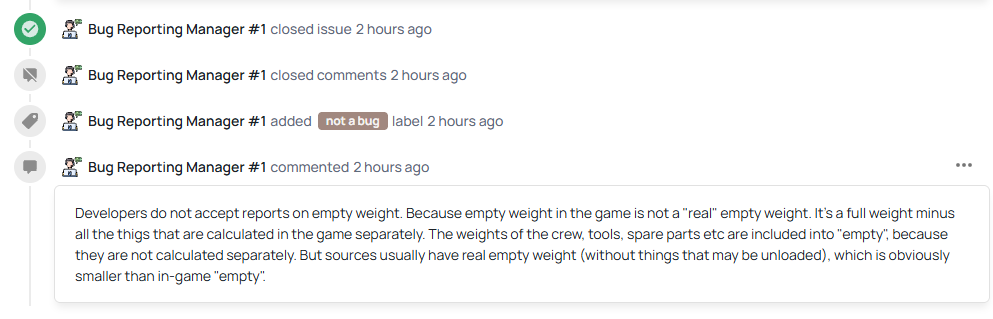
Should’ve said dry weight not empty weight, its a slight difference which idk how well comes across when translated, but what was calculated is dry weight; which should be acceptable, unlike empty weight, which is not.
Now, it still probably would’ve been denied, as reports based on calculations aren’t generally accepted. But a change of a few words would’ve fixed the issue it was denied for.
@Yamahagi
Would it be possible to make a report on the J-16’s dry weight?
I still think the current weight is a placeholder considering there are no sources I can find that state the J-16 as being 18.3 tons (It’s same as the J-15T right now).
Usually the figure that I can find is either 17.5 or 17.7 tons.
All the official data currently available mostly consist of direct copy‑pastes from the Su‑30MKK weight figures; only a small portion can actually be used for calculations, and those yield a very wide range. Moreover, we simply don’t know the exact internal fuel capacity of the J‑16, which is a prerequisite for the calculations. Finally, when using design takeoff weight and design landing weight as references, and comparing with the MKK and Su‑35S, we can conclude simultaneously that the J‑16’s operational empty weight is consistent with the MKK’s and 400 kg lighter than the Su‑35S. Taking the Su‑35S’s operational empty weight as 19 tons, the J‑16’s dry weight would be 19,000 – 400 – 180 – 30 – 96 – 60 = 18,234 kg; using the MKK as a reference gives 17,500 kg. If we calculate based on the design landing weight of 21,840 kg, with internal fuel assumed at 10 tons, then the dry weight is 21,840 – 4,000 (or 3,000, because the standard is 30‑40% of total fuel capacity) – 180 – 30 – 96 – 60 = 17,470 (or 18,470) kg; with internal fuel at 9,640 kg, it gives 17,614 (or 18,578) kg; and with internal fuel at 9,400 kg, it gives 17,710 (or 18,650) kg. Ultimately, we are left with a huge interval ranging from 17,470 to 18,650 kg.
I can’t tell if this guy is stupid or if this is an expertly crafted shitpost.
I greatly hope for the latter.
https://community.gaijin.net/issues/p/warthunder/i/hyihCn8mIv0r