Have the PL-12s been changed at all?
the DHL-1 buff and the fuze delay being set to 0.4sec no
What is DHL-1?
explosive
Ty
If we get 180 degrees + coverage on the radar
and the PL12 actually starts hitting stuff again, I would be happy
A complete, component-by-component reconstruction — based on an official Chinese standard, an official aircraft handbook, Sukhoi’s own archived technical data, and itemized weights for crew, cannon, ammunition, launch rails, and unusable fuel — puts J-16’s empty weight at roughly 16,988–18,088 kg, with a midpoint around 17,540 kg. The current test-server value of ~18.3t sits above this entire range.
1. Primary source data
The Concise Chinese Aircraft Handbook (简明中国飞机手册, Aviation Industry Press, October 2023) gives:
- Design takeoff weight: 24,900 kg
- Design landing weight: 21,840 kg
Chinese aviation researchers compiling this table note the J-16 figures track closely to a blend of Su-30SME and Su-30MK data — the design takeoff weight matches Su-30MK’s normal takeoff weight exactly.
2. Independent confirmation from Sukhoi’s own data
Sukhoi’s official Su-30MK technical page (archived: web.archive.org/web/20110716144928/sukhoi.org/eng/planes/military/su30mk/lth/) independently confirms:
- Maximum internal fuel: 9,640 kg
- Normal internal fuel: 5,270 kg (a separate figure — not to be confused with the above)
- Normal takeoff weight (2×R-27R1 + 2×R-73E, 5,270 kg fuel): 24,900 kg — matching the handbook’s J-16 figure exactly
3. GJB 34A-2012 back-calculation (§4.5.9.1)
Normal landing weight = usage weight + 0 (no external stores) + 30–40% internal fuel (fighter category). Using 21,840 kg and 9,640 kg:
| Fuel fraction | Fuel weight | Usage weight |
|---|---|---|
| 30% | 2,892 kg | 18,948 kg |
| 40% | 3,856 kg | 17,984 kg |
4. Usable oil (engine)
Per the AL-31F engine construction manual (Falaleev, Samara State Aerospace University, 2013), §9 “Oil System”: oil tank fill quantity is 15+1 L per engine. At ~0.9 kg/L, two engines ≈ 28 kg, subtracted per GJB §4.5.3’s usage-weight definition.
(Hydraulic fluid — confirmed at 110 L / ~93.5 kg total for both hydraulic systems, per the Su-27 technical description, using АМГ-10Б fluid — is a closed-loop system fluid conventionally already counted within empty weight, and is not separately subtracted here.)
5. Fixed load, itemized
Per GJB 34A-2012 §4.4.1 (“fixed load” = crew, unusable fuel/oil, cannon, ammunition, non-jettisonable racks/launchers):
| Item | Weight | Source |
|---|---|---|
| Crew (2 × 90 kg) | 180 kg | user-specified baseline |
| GSh-30-1 cannon (dry) | 46 kg | Wikipedia / manufacturer specs |
| Ammunition (150 rounds × 0.832 kg) | 125 kg | 30×165mm HEI-T round spec sheet (Arcon Consult) |
| Non-jettisonable launch racks (2 medium + 2 short-range, “2+2” loadout) | 240–280 kg | AKU-470 (90kg)/APU-470 (70kg) for medium-range, APU-73 (~50kg) for short-range |
| Unusable fuel (2.5–3.5% of 9,640 kg internal capacity — typical modern aircraft range) | 241–337 kg | general aviation engineering convention |
6. Final empty weight estimate
Combining all of the above across the fuel-fraction and unusable-fuel sensitivity range:
| Scenario | Result |
|---|---|
| 30% fuel + light rack + 2.5% unusable fuel | 18,088 kg |
| 30% fuel + heavy rack + 3.5% unusable fuel | 17,952 kg |
| 40% fuel + light rack + 2.5% unusable fuel | 17,124 kg |
| 40% fuel + heavy rack + 3.5% unusable fuel | 16,988 kg |
Estimated empty weight range: 16,988–18,088 kg, midpoint ≈ 17,540 kg.
7. Independent cross-check — Su-27SK official empty weight + increment method
Su-27SK’s officially-cited empty weight is 16,380 kg. Applying the known normal-takeoff-weight increment from Su-27SK to Su-30MK (+1.47t, per independent Chinese aviation research), the estimated Su-30MK usage-weight-class figure is ≈17,850 kg — consistent with, and falling within, the range derived above via a completely independent method.
8. Public reporting
Chinese media has separately cited J-16’s empty weight as 17.7t (17,700 kg) — also within the calculated range.
Conclusion
Every independent line of evidence — official handbook data, Sukhoi’s own factory specifications, a component-level weight reconstruction, an independent increment-based cross-check, and public reporting — converges on an empty weight in the 16,988–18,088 kg range. The current test-server value of ~18.3t (18,300 kg) sits clearly above this range by at least ~200 kg even under the most conservative combination of assumptions. I’d ask the team to review this figure against the sources below.
Sources:
- 简明中国飞机手册 (Concise Chinese Aircraft Handbook), Aviation Industry Press, Oct 2023
- GJB 34A-2012, “Piloted Aircraft (Fixed Wing) Flight Performance,” §4.4–4.5
- Sukhoi official Su-30MK technical data (archived via Wayback Machine)
- С.В. Фалалеев, “Конструкция ТРДДФ АЛ-31Ф,” Samara State Aerospace University, 2013 (oil system data)
- Su-27 technical description (hydraulic system data)
- GSh-30-1 and 30×165mm ammunition manufacturer/reference specifications
- AKU-470 / APU-470 / APU-73 missile launcher specifications (Vympel and related sources)
- Independent Su-27SK official weight data and Su-30 family increment analysis (Chinese aviation research)
- Public Chinese-language aviation reporting citing 17.7t empty weight
16 Likes
You make a convincing argument. However, right now on the dev server the J-16’s radar, weight, and other data are still copied from the J-15T. If Gaijin doesn’t plan to change that, the only real difference between the two is trading two PL-8s for 48 flares. In that case, adding the J-16 would be completely pointless — better not to add it at all.
5 Likes
This is not the case, the rocket pylons can’t be so closely aligned. Also this isn’t a bomb python since duel bomb pylons got a plain surface.
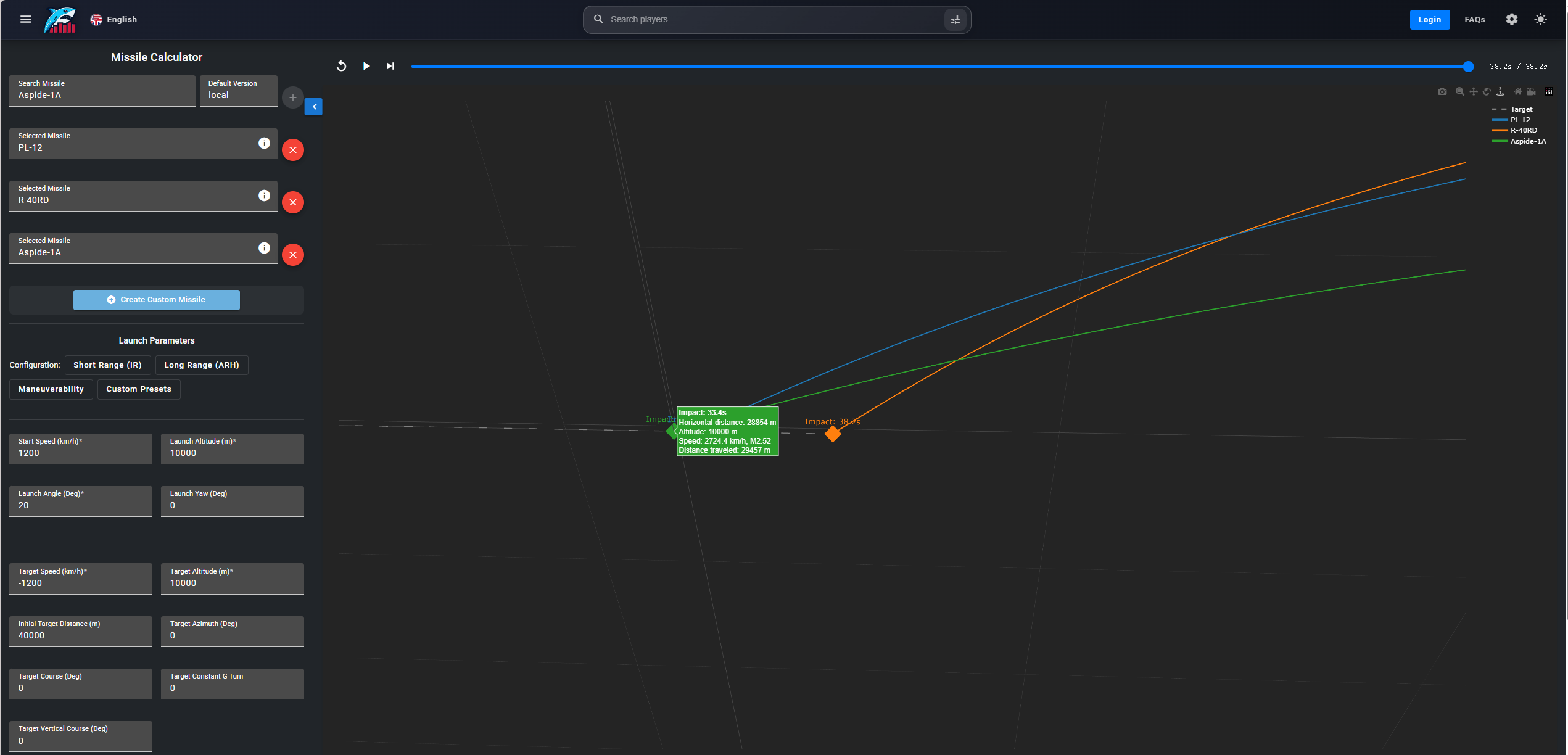
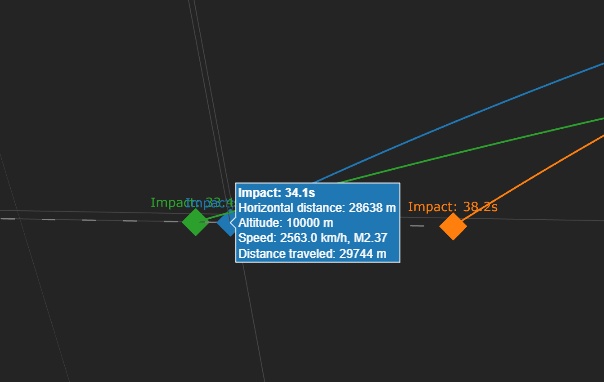
It’s normal for a twin-seat Flanker to have a lower maximum Mach number than its single-seat counterpart.
I still think it is so strange how reluctant haijin is to give the j16 twin pylons for its Pl-12’s, as when they gave it to the su27sm it did not historically carry them, instead it was for “balancing” (if im not misremebering). I find this a weird double standard, as it would nkt even make the j16 the best 14.7 I would probably not even say top 3
3 Likes
The art team seems to have already finished the J-16’s twin racks and FLIR pod, but the devs just don’t seem to want to actually put them in the game…
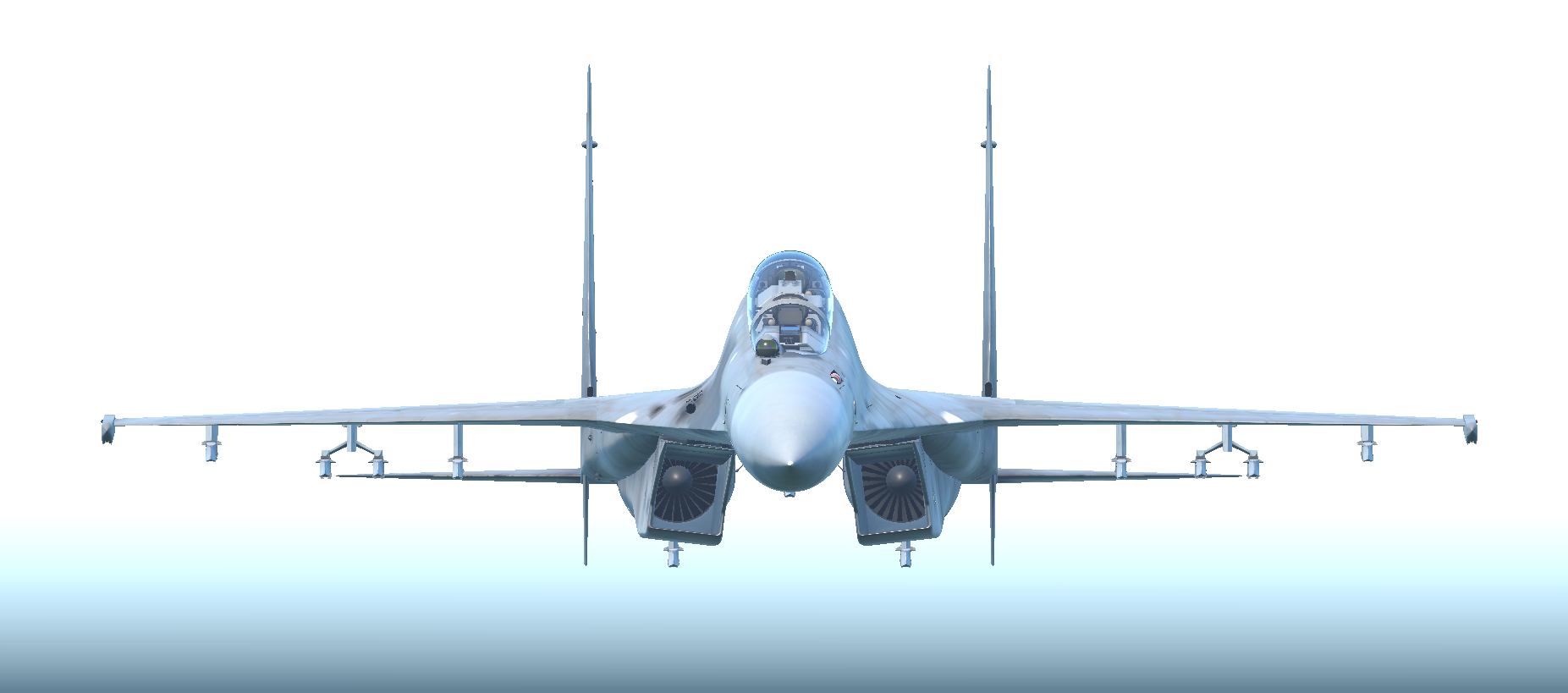
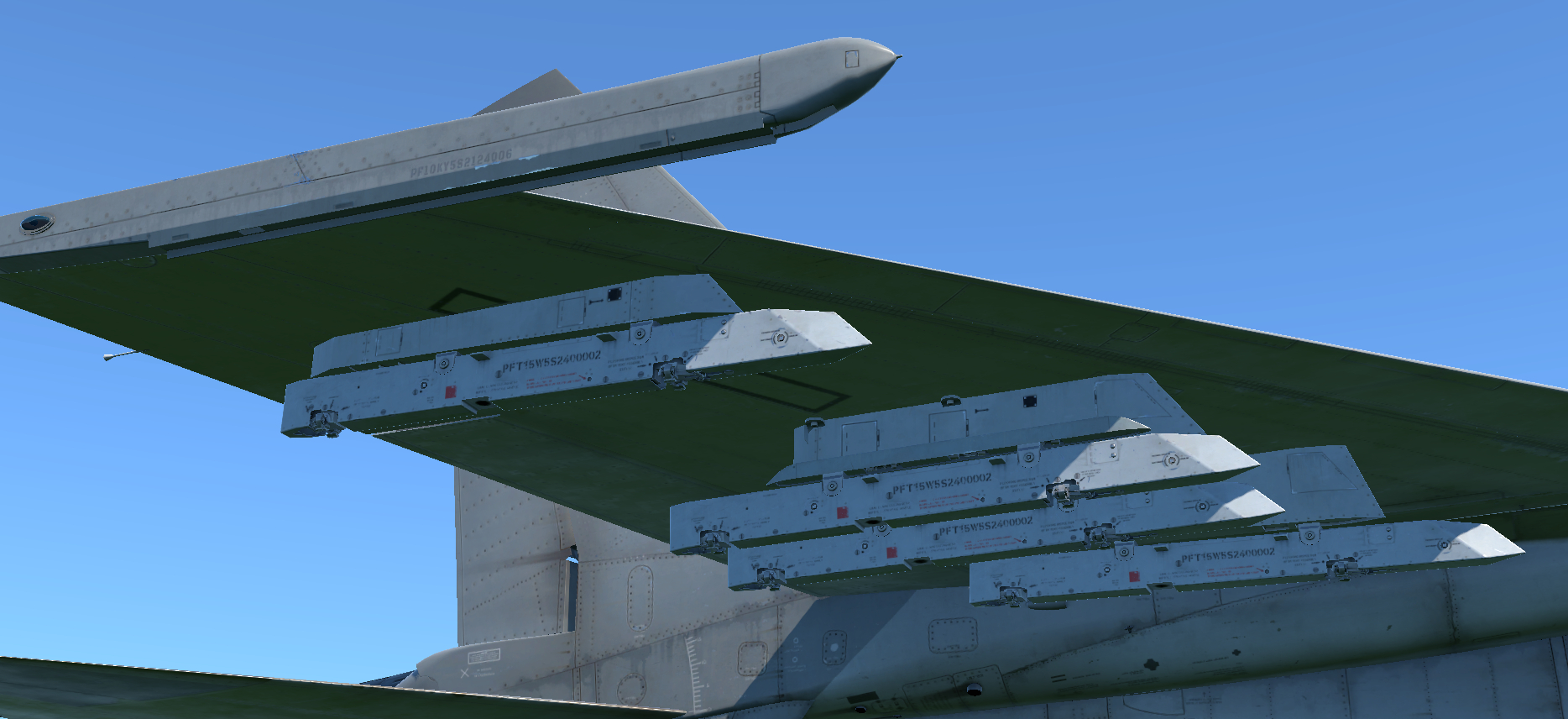
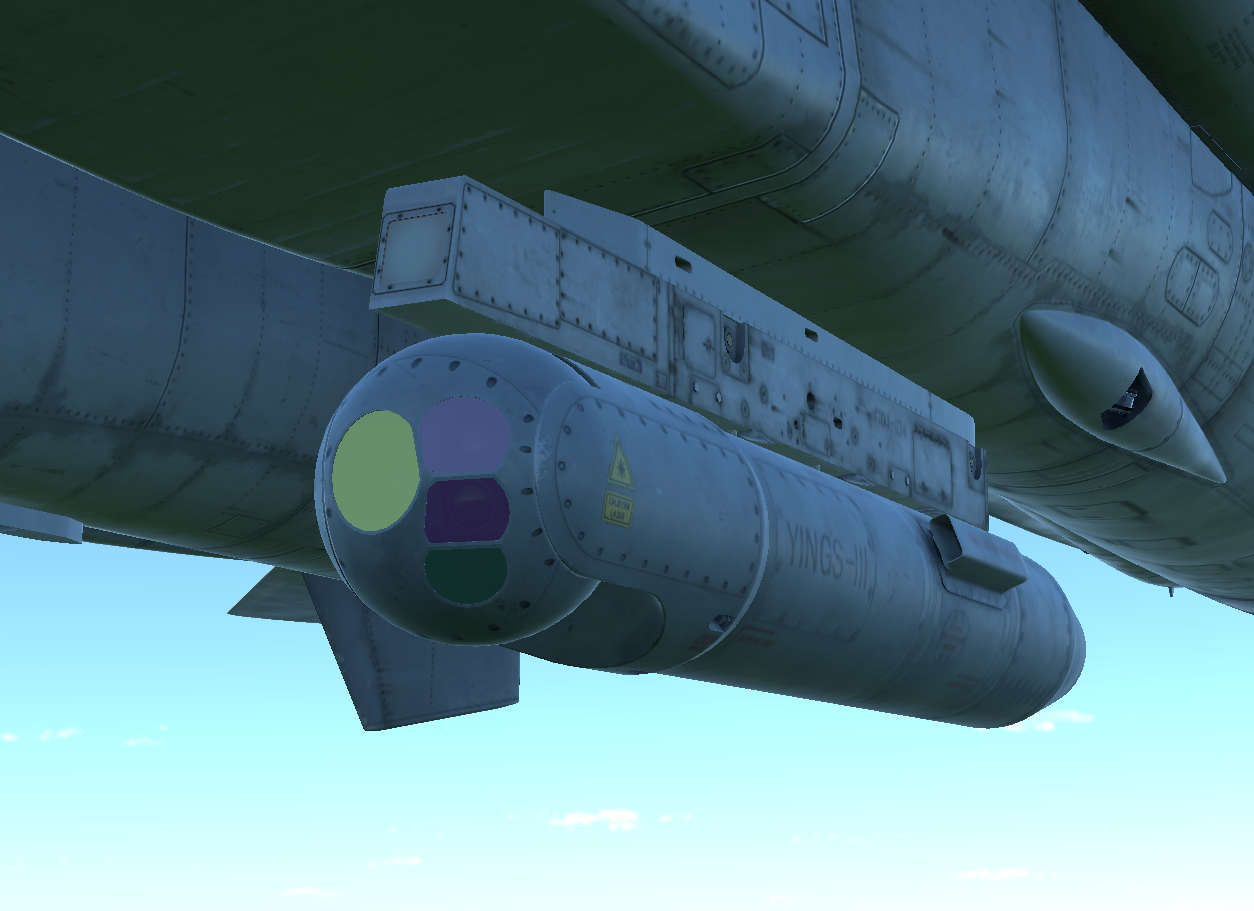
6 Likes
Hopefully with Monday’s dev server patch they implement them.
1 Like
Well, guess we’ll just have to wait and see… but I’m not holding my breath.
1 Like
This might be a similar situation to when the double rails for the Eurofighter were found in the files, but stayed there for over a year.
Could be possible that they are either waiting for a good reoport or rather just still looking into possible sources.
It seems to be for IR bouncing.
It’s worth mentioning that the PL9 has been lying around for two years (if I remember correctly), and it seems it was intended to be installed on the J8F back then.
1 Like
Nahh,I want them put those dual pylons on the underside, like sm2
Idk what you guys were expecting radar wise, but the only thing id expect to change from currently is
- double Pylons
- empty weight
- RWR
Thats it, if they feel like it they might rename the engine ig
4 Likes