Intercept cruise missiles or, before entering radar detection range, expend all external ordnance and then jettison the pylons to return to a low-observable state.
True, but it carries pl15s no? Fairly sizeable size difference between pl15 and aim120.
F-22 can also carry additional missiles with stealth pylons.
Not to mention it will most likely carry Aim-260 soon as well.
this kind of theory won’t work for modern planes.
for modern planes, the data bus is digital programmed, as long as the hard point can hold the weight and has data interface, you can put anything you like, just update the program, not modifying the plane in mechanism.
using foreign weapons may need some decrypt and authorization, but not for domestic weapons, as for pylons, they are just like computer’s expand station, it also need to be programmed and authenticated, but not a big problem.
same for other planes, AIM-174 is never seen on others except F/A-18, but you can’t say only F/A-18 can use it, also for R-77M in SU-35.
3 Likes
Similarly, among Soviet Flanker fighters, no variants other than the Su-35S have ever been equipped with a ventral composite pylon, and therefore it should not appear in the game either.
1 Like
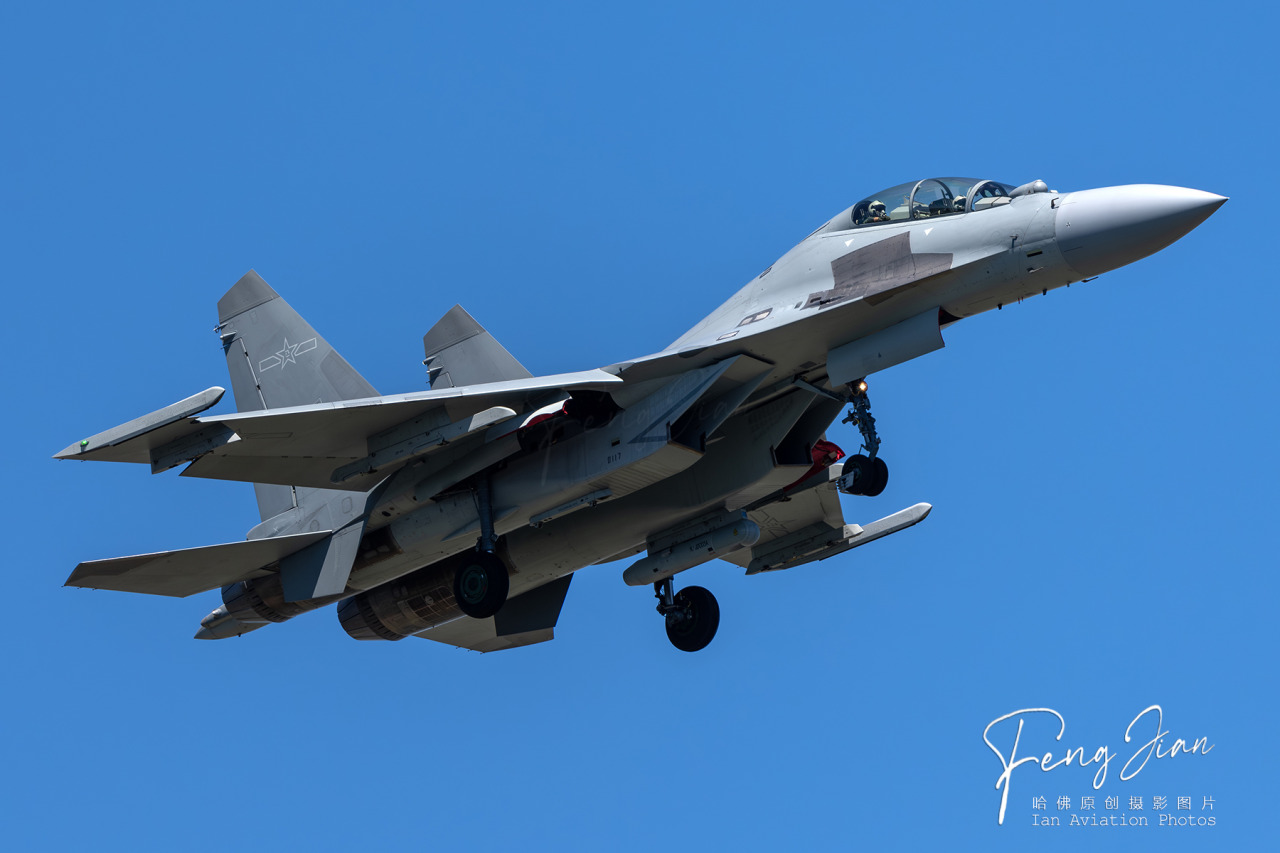
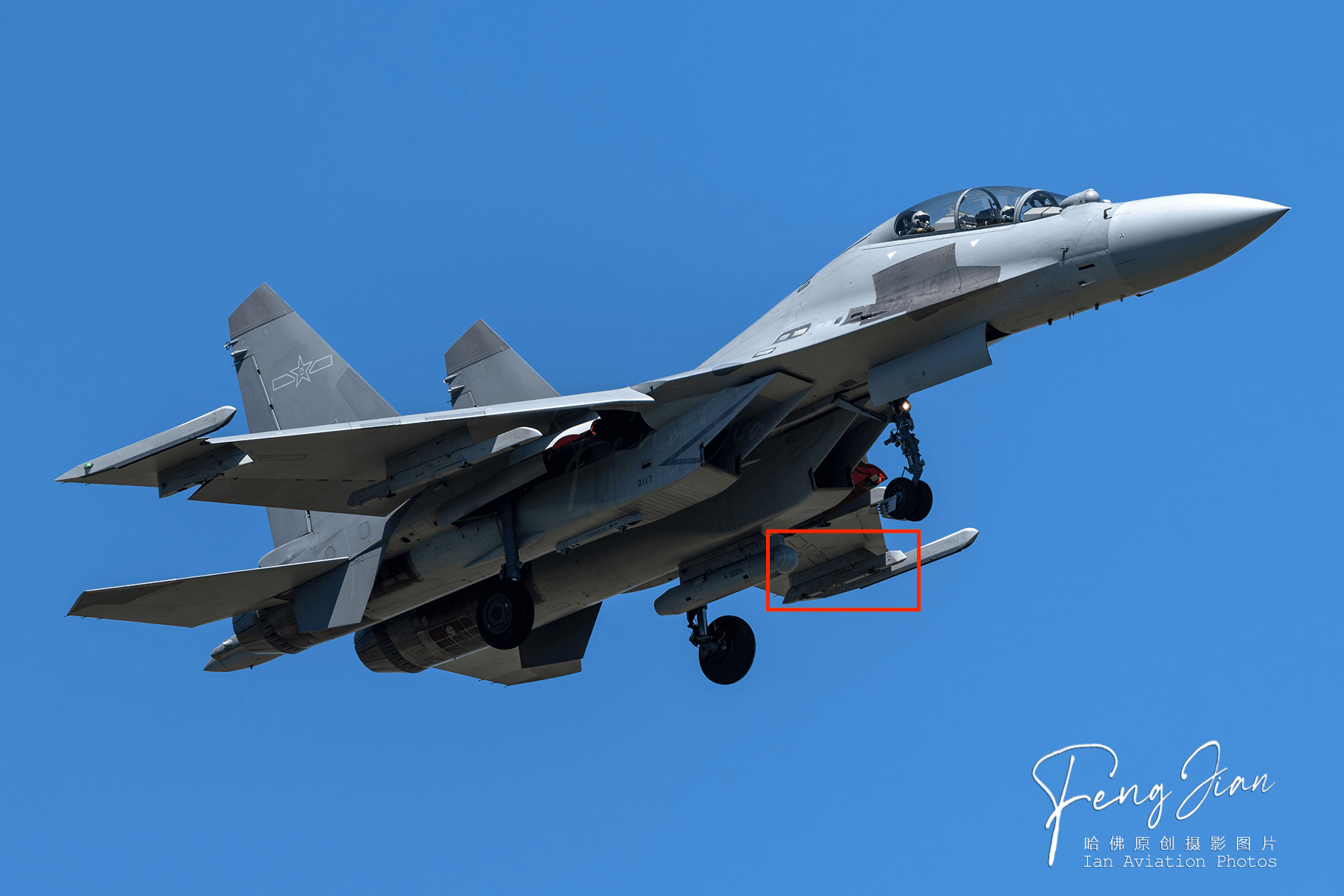
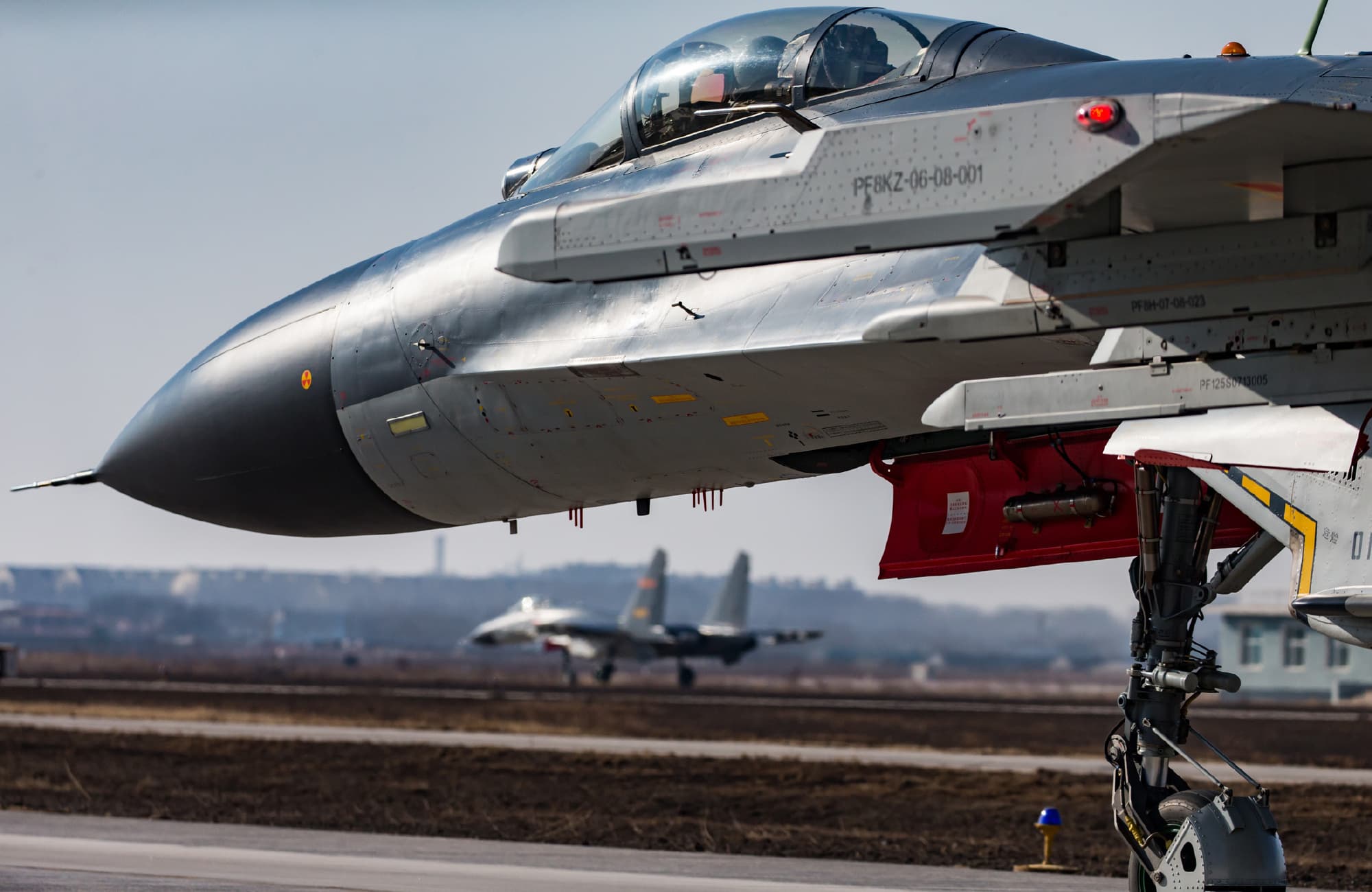
If you look closely, the empty pylon visible in the background of the photo is clearly an ejector launcher designed for FOX-3 missiles, not a rail-type launcher for short-range dogfight missiles.
5 Likes
Not all ejectors are for missiles, more commonly ejectors are for bombs, typcially missiles on wings are rail mounted with expections for large missiles like AIM-54 or AIM-174.
but in this image, clearly it’s not bomb ejectors, like the one on right wing same position.
to be more precise, the marked one is PTF15 pylon, used for PL-12/15, usually 15
1 Like
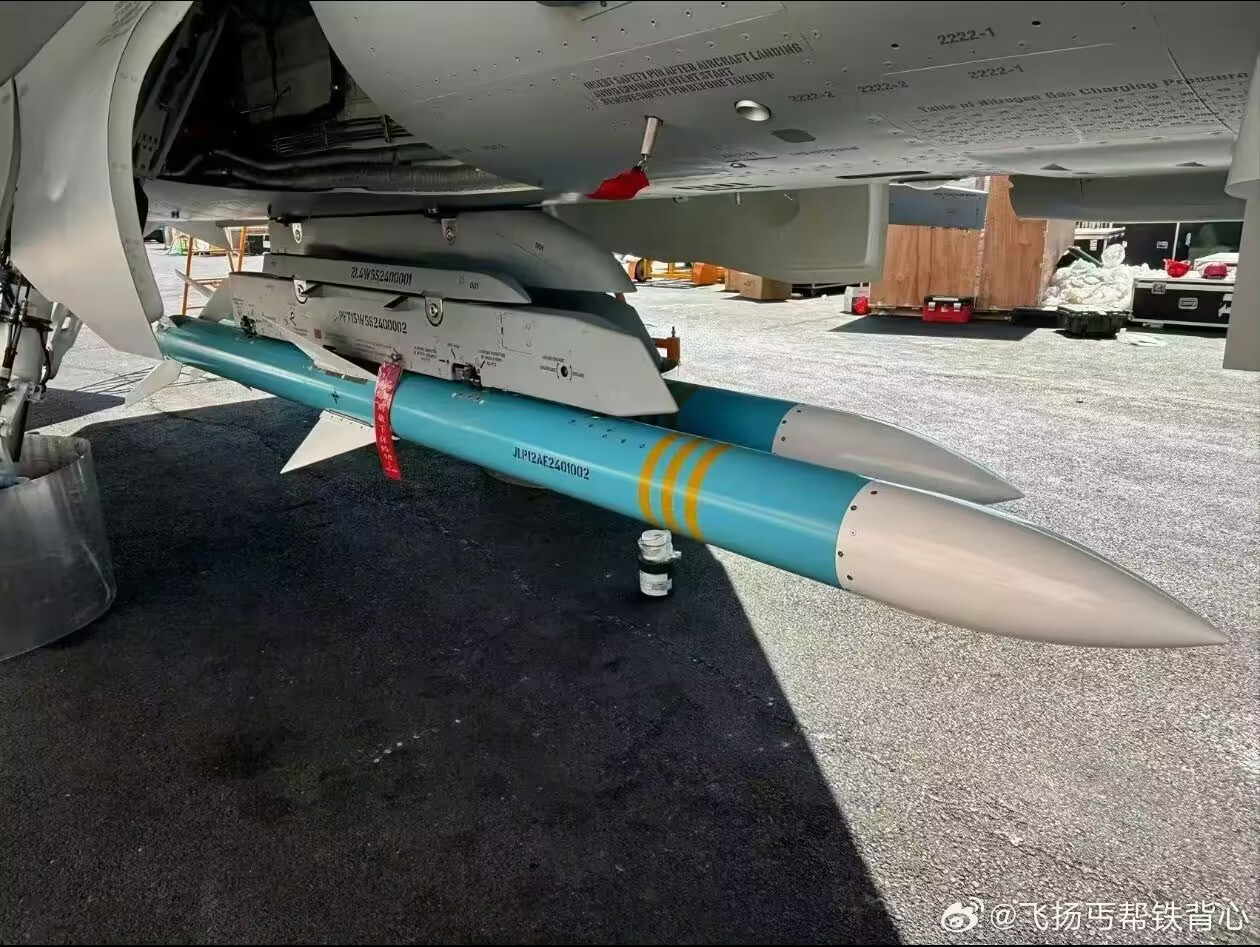
Yes, but the ejector I am referring to is clearly longer than the one at the symmetrical position on the other side, and the shape of its forward section closely matches missile launchers previously shown at air shows. On reasonable grounds, I would argue that this pylon is intended, at minimum, for large air-to-ground weapons or medium-range missiles. Furthermore, if you look at the cutout geometry of the relevant hardpoint, it matches the cutout position of the ventral pylon, rather than that of the rocket launcher pylon on the other side.
2 Likes
Probably wide enough for a missile in this instance. You got a photo of that type of pylon with a AAM on it?
Nice, definitely a missile ejector then.
4 Likes
you can see the PTF15 character in this pylon’s serial number
1 Like
Yeah @Mamba_Out’s post cleared it up. Odd choice for a wing pylon so far out, I’d have expected rails to be used on outboard wing pylons as my impressions is ejectors impart a guidance delay so the missile clears the airframe and where possible, rails would be more preferable.
Then I suppose if its rated for ejection and you have the pylons why not? Interesting non the less.
All Sino-Flankers, from the J-15 onwards, have uniformly adopted ejector launchers over rail launchers for firing BVRAAMs, though the specific reasons for this design choice are not publicly detailed.
4 Likes
I think this isn’t a problem for middle/long range missiles.
As for PL-12/15, they are capable for both type.
PF10 pylon which is universal for PL-10/12/15
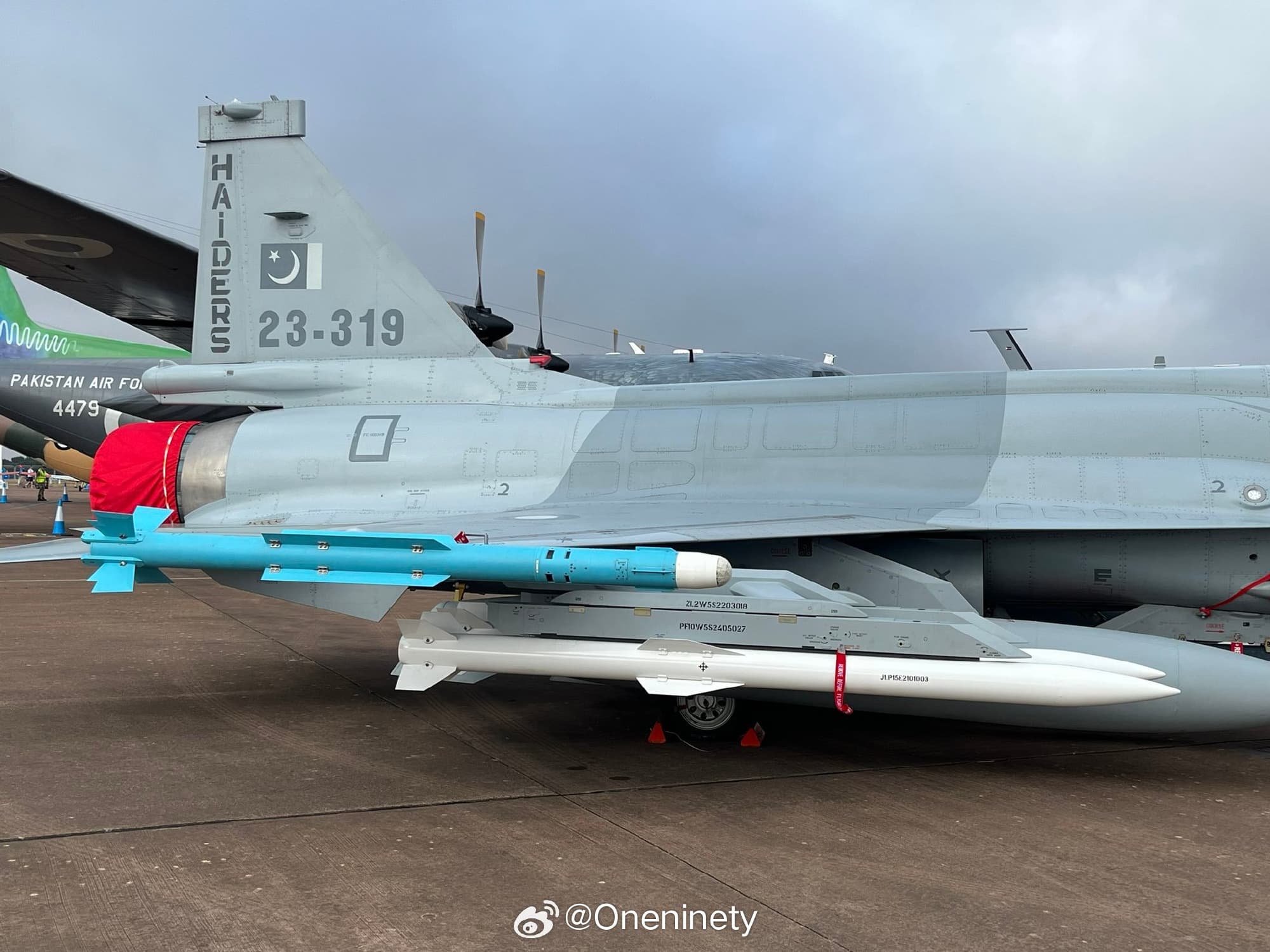
PF12 changed to PFT12

5 Likes
Super interesting, didn’t know that.
Would impact their close in performance but yes mostly meaningless in the medium/long range profiles. I suppose its eases maintenance and mounting procedures which is good for logistics reasons.
I think this won’t influence the seeker, but just the engine delay for very short time, so just tiny influence.
and I remember seeing a paper about a special control method of missiles, related to very complex aerodynamic computation and control, so very hard to achieve in old time but available with modern missile-borne computer.
it’s can make the missile turn up to 180° with start speed before fire the engine, work like the adjust TVC engine in 9M331, make BVR missiles perform better in close range, this could also be related.
but this memory is very blurry so better don’t take its details seriously
1 Like
Typically and using AIM-120C-5 from an ejector as an example, you get the delay of firing the booster as the missile falls, then another delay from boost to maneuver as the missile clears the airframe. Modern missiles/systems could have improved the later delay with maneuver limitations (example being it cant pull straight up into the airframe but lateral or downward maneuver would be unlimited). But that fall from the ejector is always going to be there. But as covered for medium/long range shots its meaningless.
1 Like
though this recalls me the SARH delay in game, it’s the delay both for seeker and engine, causing most of the complaining about random flying AIM-7Fs
Yeah the seeker delay is to prevent the angle gating setting too early and cause the missile to track nothing.
I discussed this with a developer some time ago. Angle gating was introduced before update 2.35, and the limits were tightened in 2.35+. Then was updated to only applied after the missile has found a target, as the gate could sometimes misalign on a maneuvering target during pre-launch, causing the missile to track nothing.
Here you can see the gate set incorrectly and the missile guides to nothing.
4 Likes