- Yes
- No
History
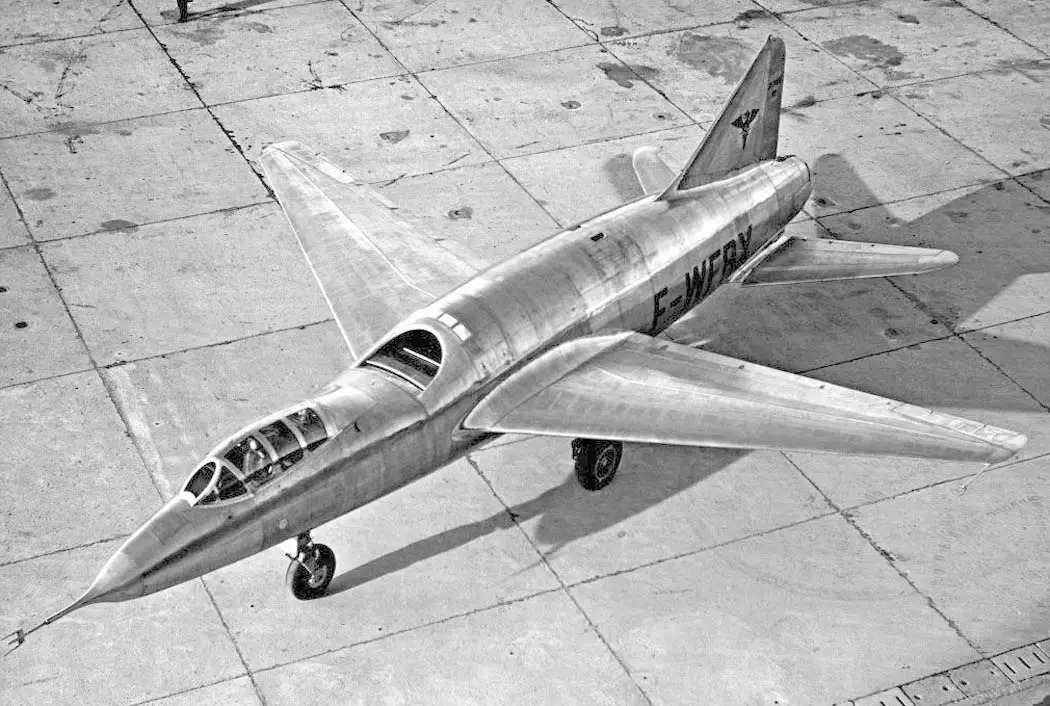
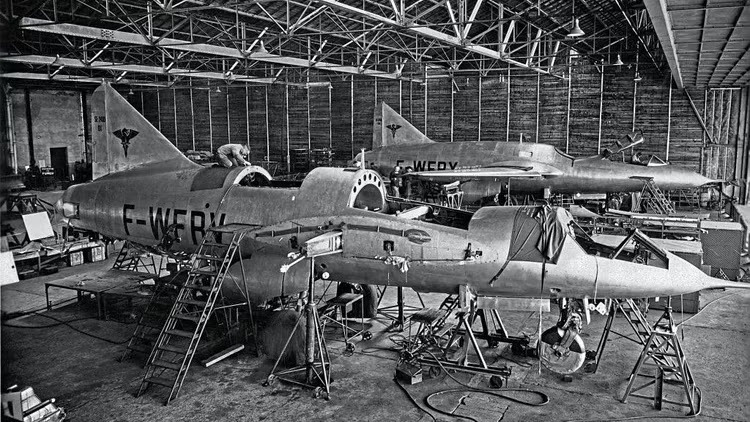
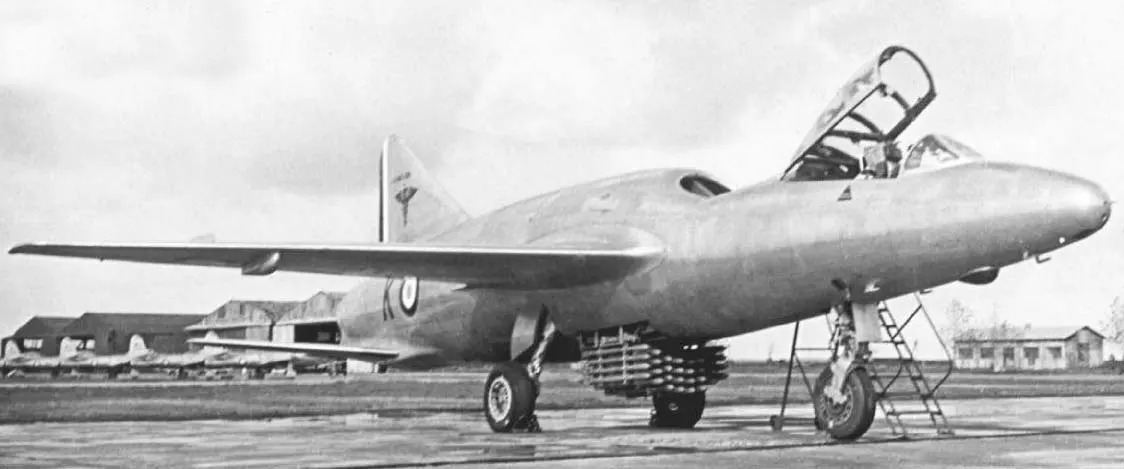
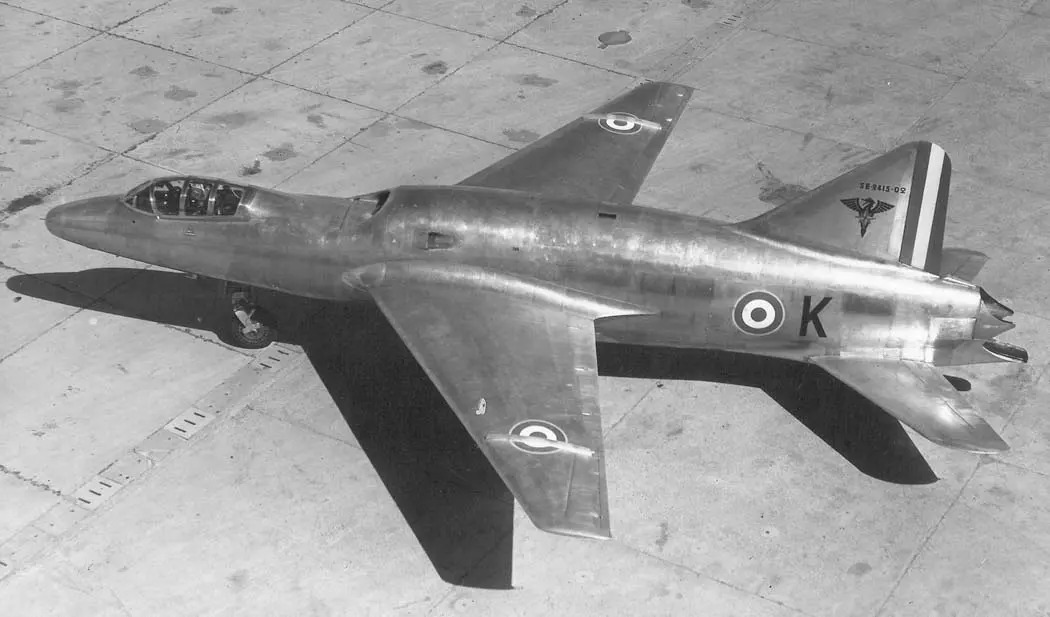
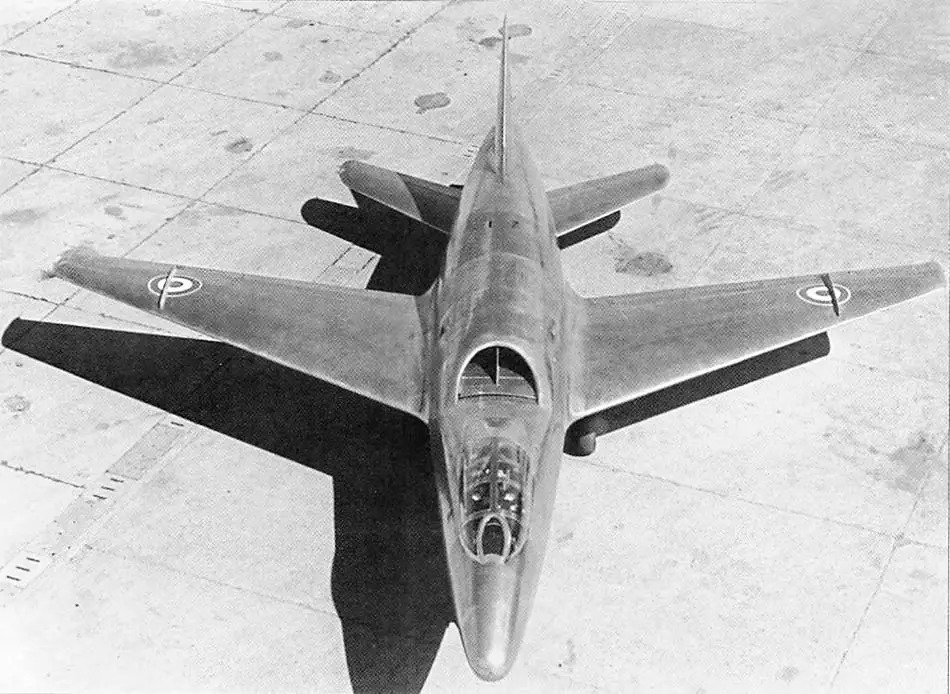
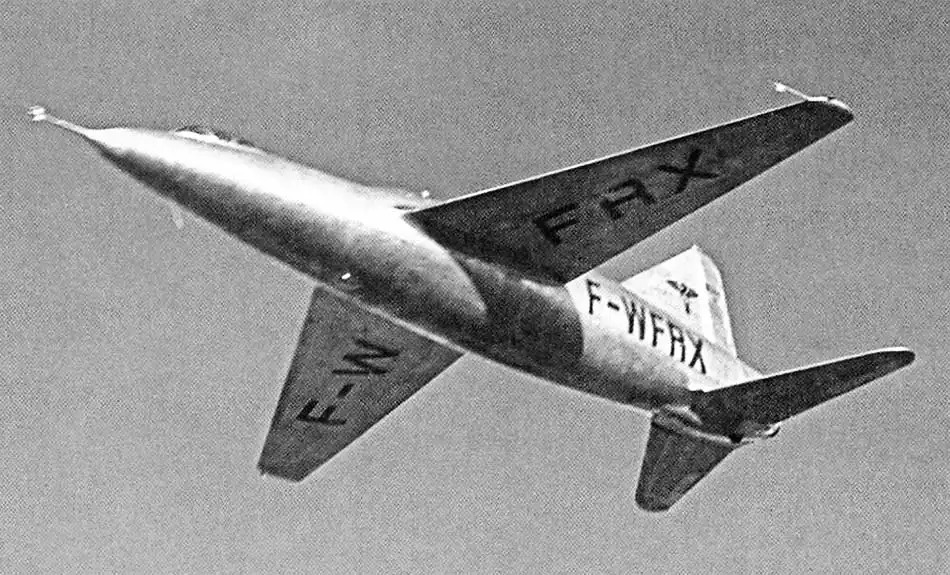
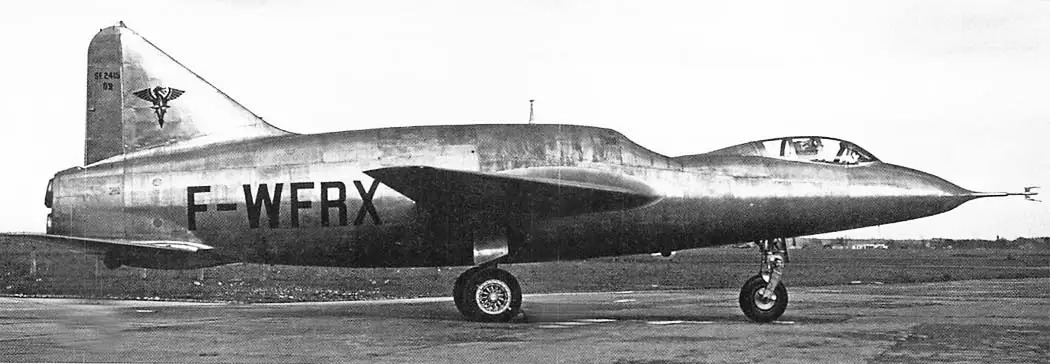
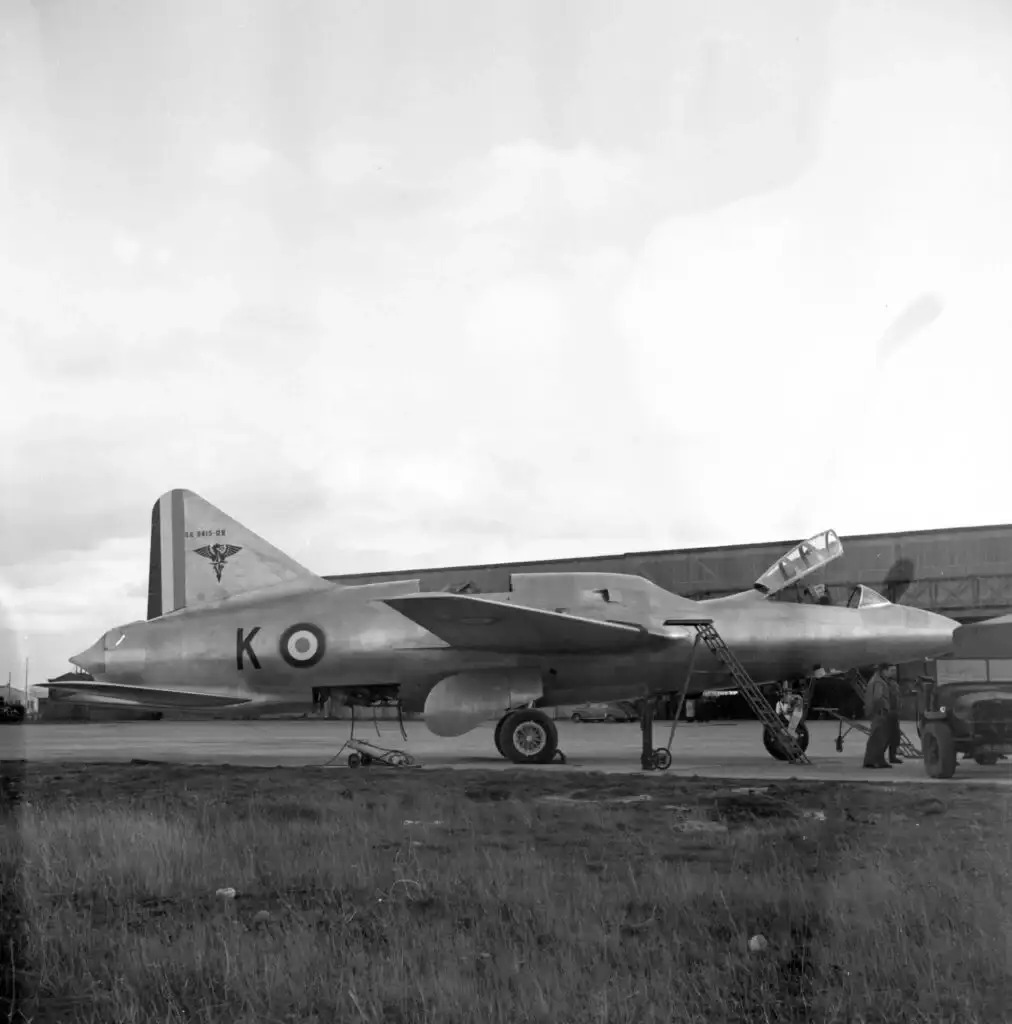
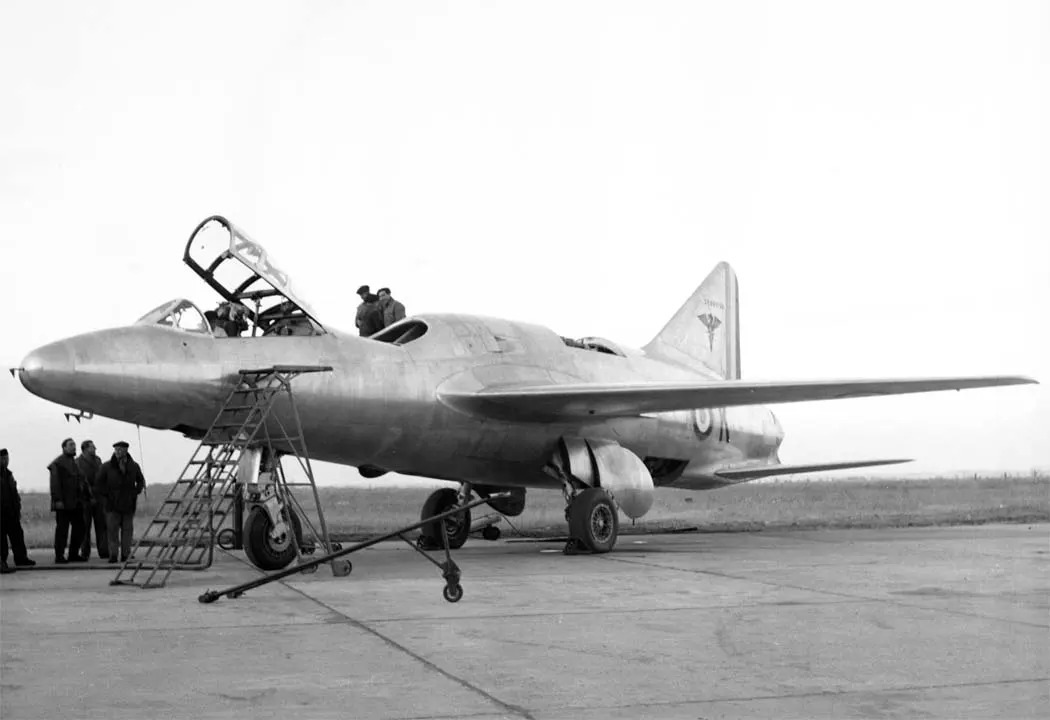
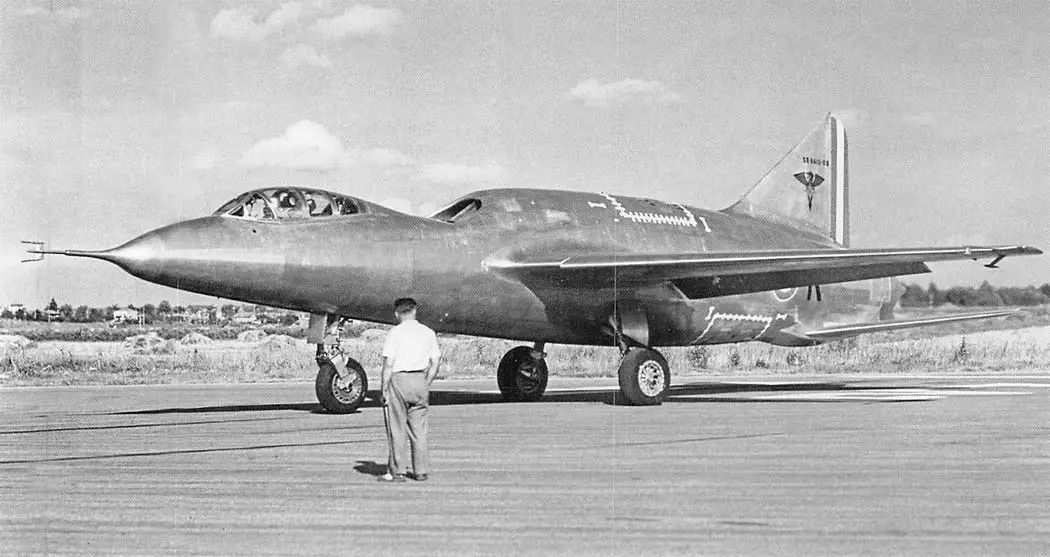
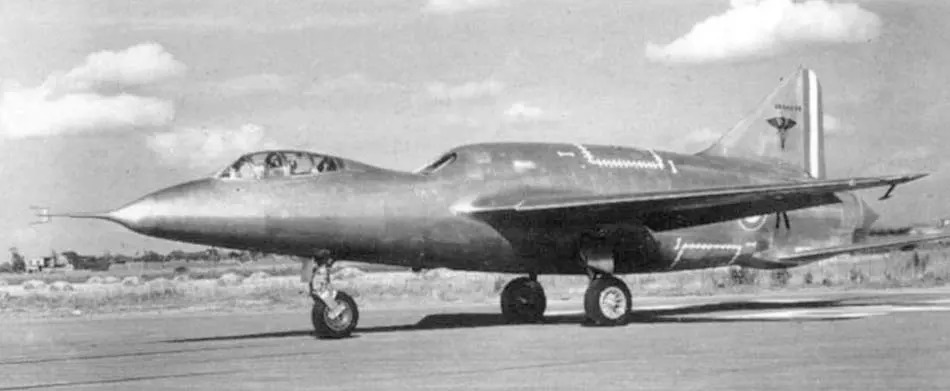
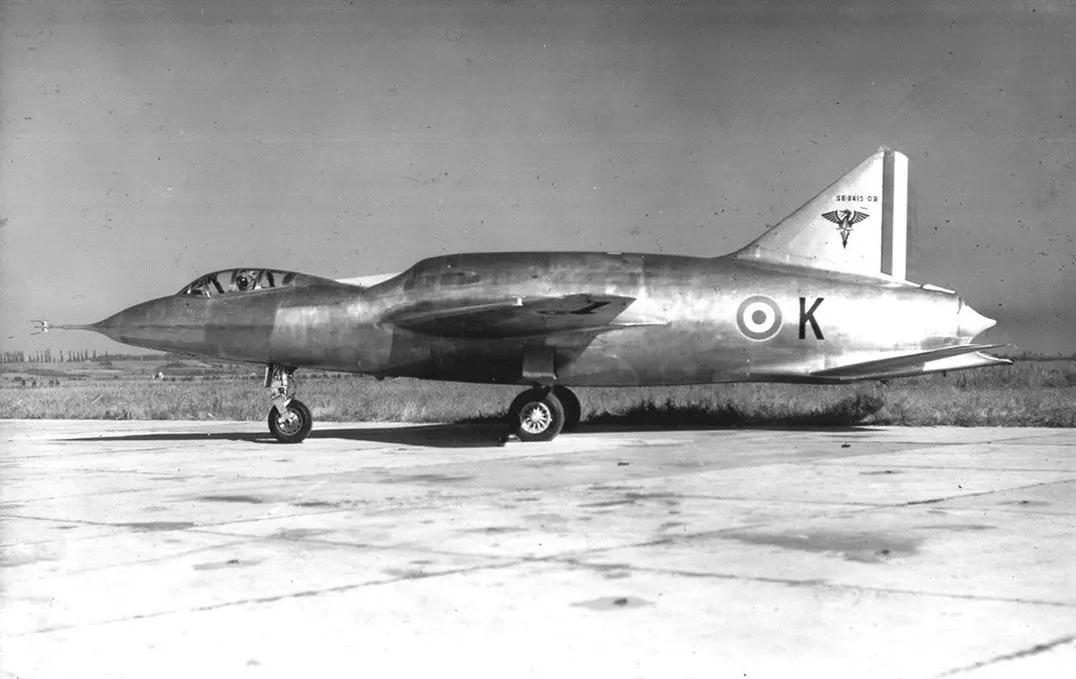
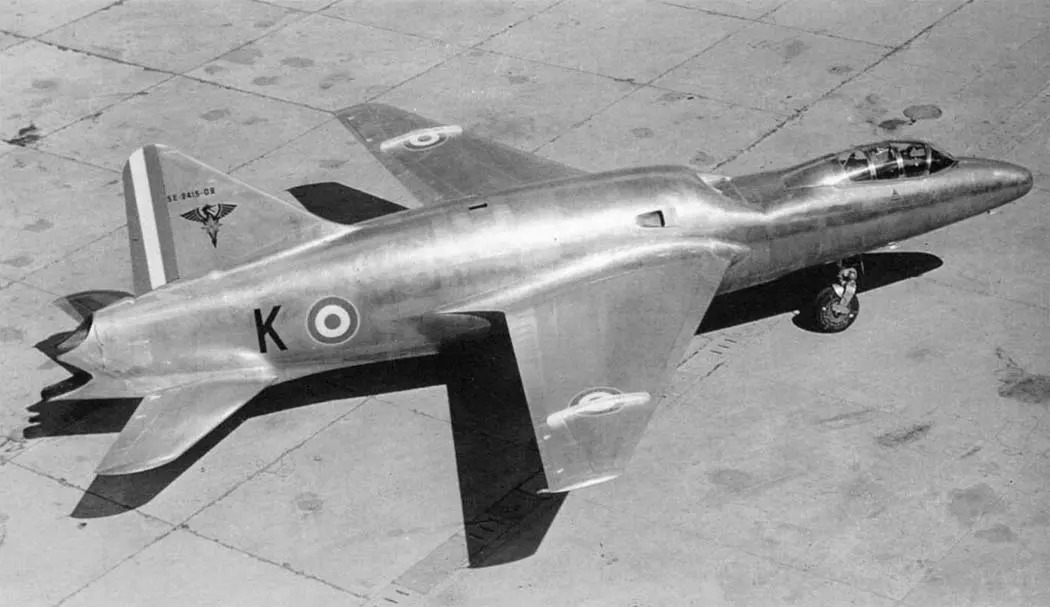
After WW2, France was playing catch-up in aircraft development. In 1948, The Armée de l’Air created a specification for a low-flying ground attack aircraft, to replace its P47s and F6Fs. Sud-Est, or SNCASE, built off a design created right after the war, SE.2400. It was decided to create 2 prototypes, and later produce 360 planes. The plane was named Grognard, a nickname for Napoleon’s Old-Guard, but those working on it nicknamed it ‘hunchback’. It was first shown to the public at the 1949 Paris Air Show, though only as a scale model. On April 30, 1950, the first prototype, SE.2410 took flight. This plane had many problems, so while they were being fixed, work on the second, 2 seater prototype, SE.2415, commenced. This made its first flight on February 14, 1951. After both planes had their problems –which were mainly vibration issues at the tail–worked out, weapons testing commenced, notably the planes becoming the first French aircraft to fire an AAM, the Matra T10. During this, the Armée de l’Air overhauled its requirements for new planes. Instead of ground attack aircraft, it wanted all-weather fighter-bombers, and it eventually put into service the Vautour, also made by Sud-Est. The planes, judged to be inflexible in role, (the cockpit wasn’t pressurized, e.g.) and behind schedule, made the cancellation of the program well justified. Eventually, SE.2415 was badly damaged in a belly landing, and was used as a test target, while SE.2410 was shown at the 1953 Paris Air Show, but was hit by a bird strike and had to land. It was finally scrapped in 1954 after also being used as a target. Many more variants of the plane were drawn up, but were never built.
Design
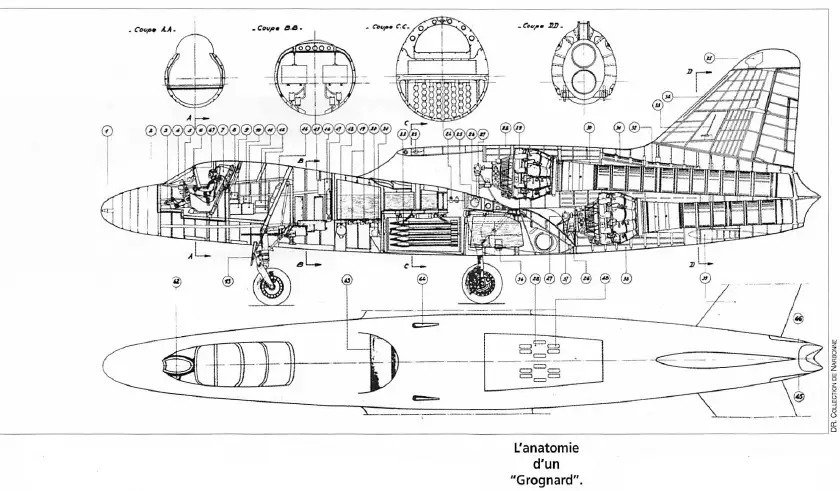
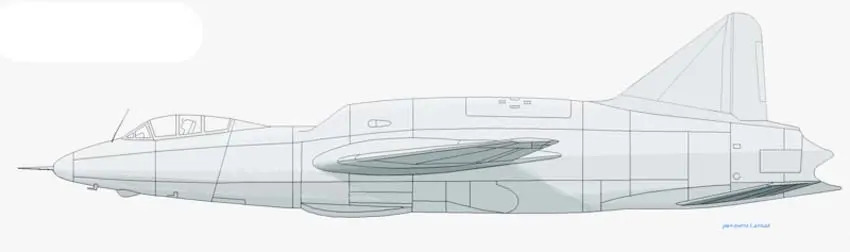
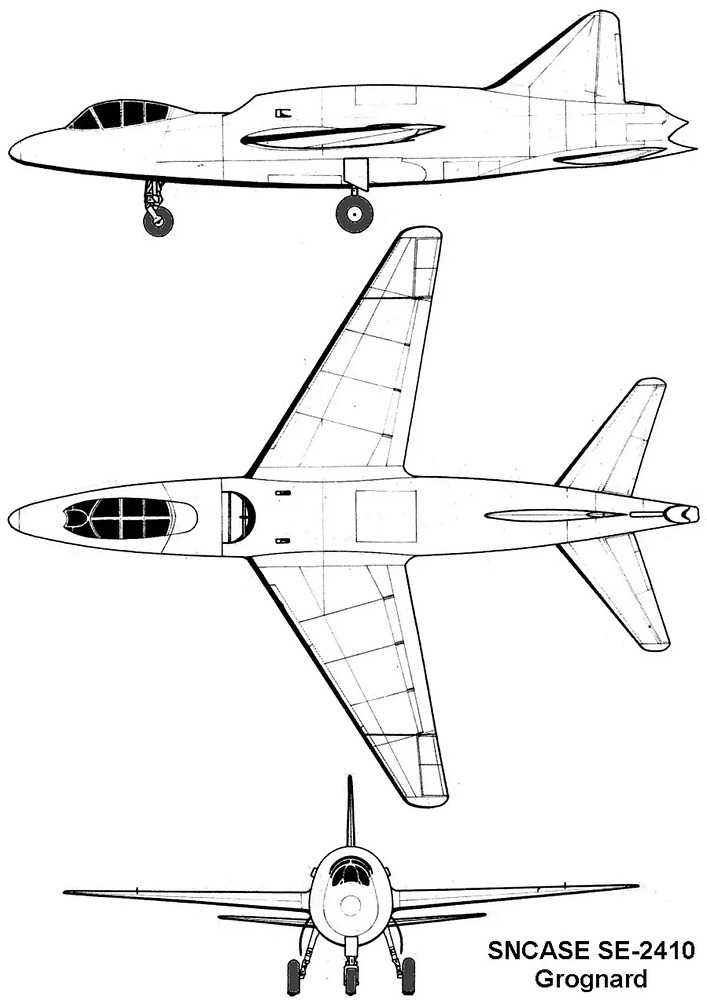
Note that this image is of SE.2410, but aside from the cockpit, the internals should be the same.
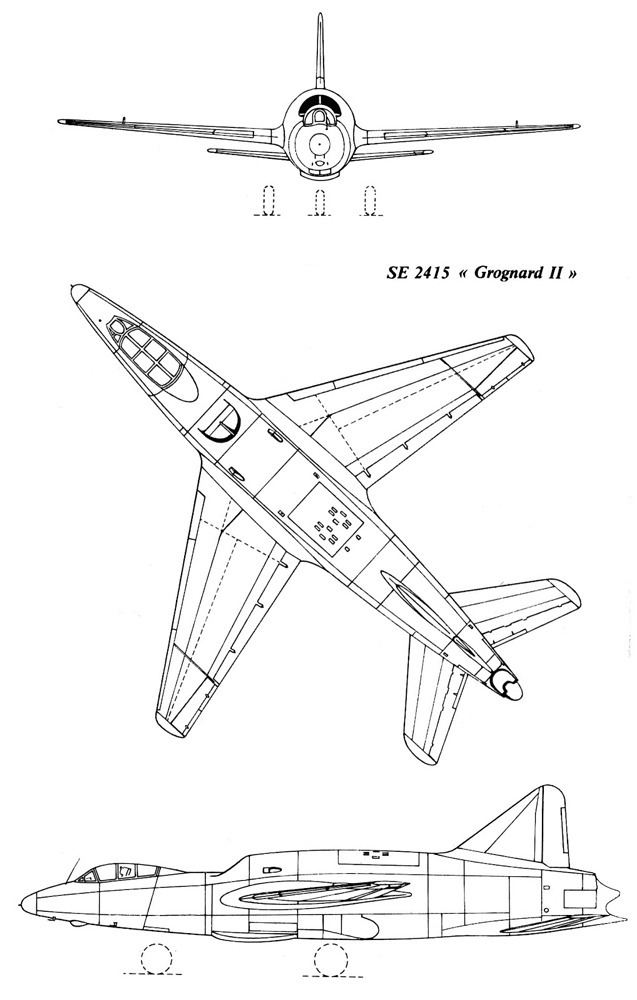
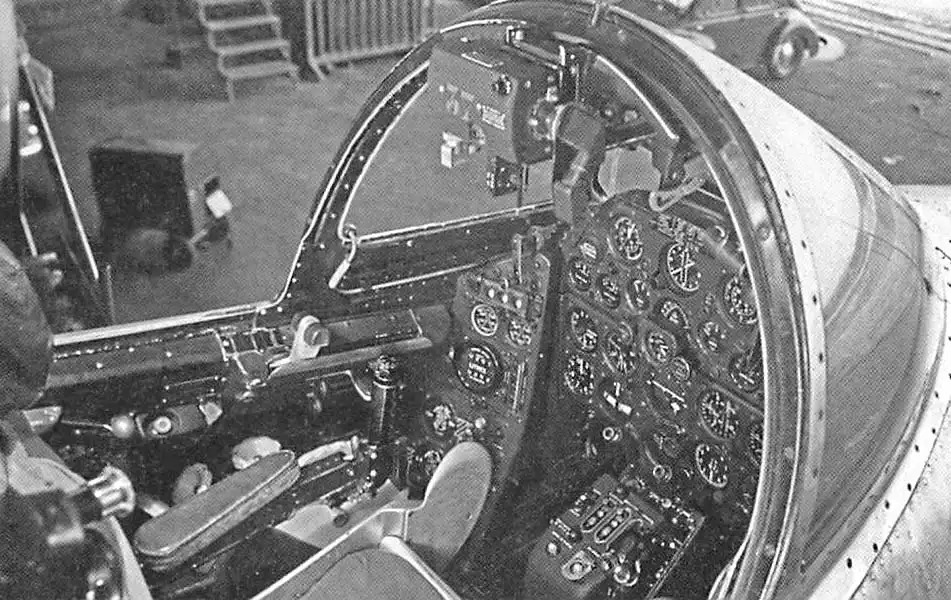
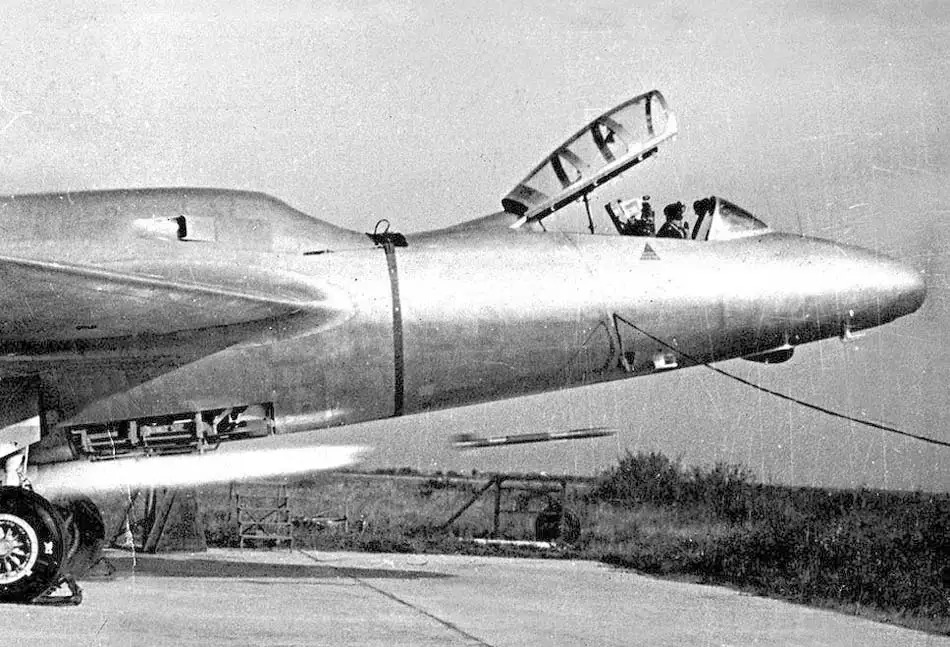
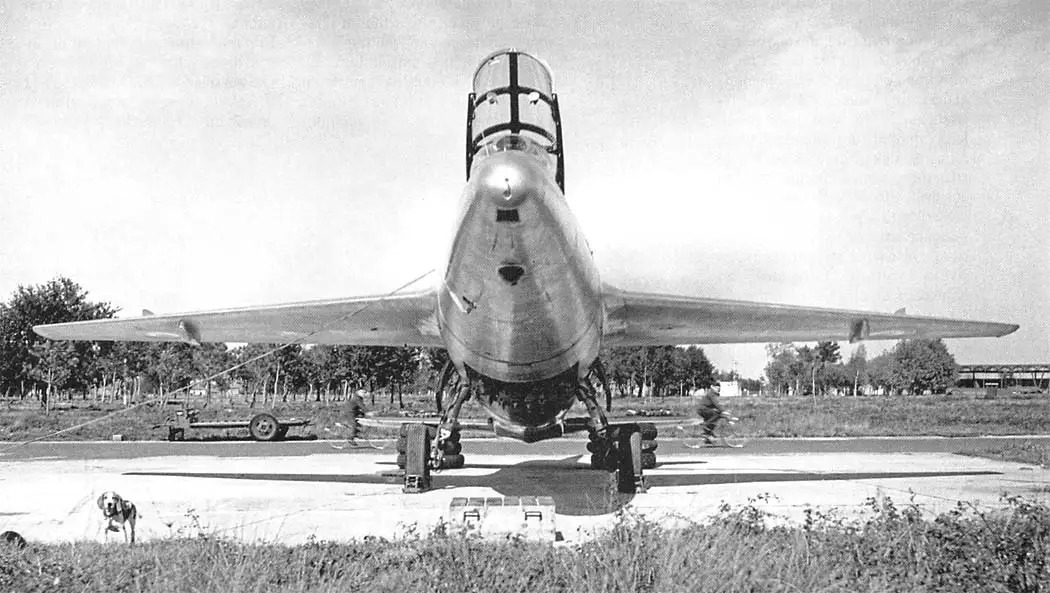
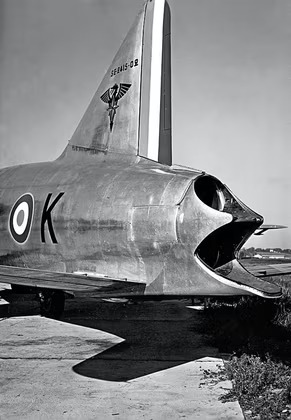
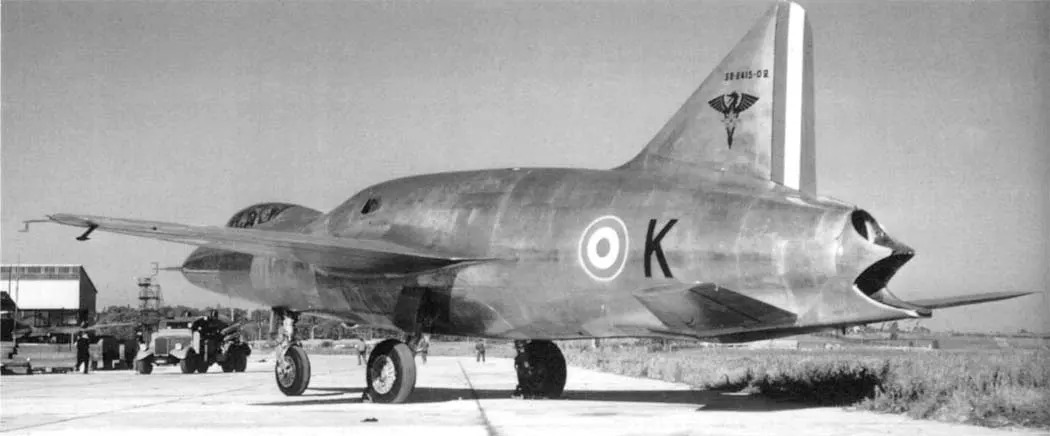
The cockpit of the second design, SE.2415, was placed even further forward, with a modern bubble canopy and room for a radar in the nose However, the most interesting part of the cockpit was the elbow controls, which also gave the pilot more visibility. It was unpressurized and probably had an ejection seat, though other sources say otherwise. Behind the cockpit was the dorsal air intake for the two engines, as well as the large main fuel tank. The wings on SE.2415 were swept at 32 degree angle, lower than SE.2410’s due to the new weight in the nose, and it gave the plane better performance at low altitude. The wings didn’t have a uniform profile, and were modular. The wings’ avionics were hydraulic, and they had leading-edge slats. Specific to SE.2415, the wings also got boundary layer fences, and tested underwing spoilers. Each wing later got two pylons. The weapon bay had a volume of 3 m³. The plane had a tricycle landing gear, with the same wheels as the Canberra, and they retracted backwards. This plane had the engines stacked on top of each other, like the English Electric Lightning. Originally, it was planned to house narrower engines, but after those hit development problems, it was decided to switch to Rolls Royce Nene 101s. These engines were so big and heavy, they couldn’t be fitted under the wings, nor side-by-side (the tail would’ve been too heavy), so they were fitted vertically. Benefits from this were that if one failed, the other would not create asymmetrical thrust, and it allowed for the large weapon bay. The horizontal stabilizer was mounted very low, below the exhaust duct of the lower engine. This was so it wouldn’t be impacted by airflow from the rest of the plane. The plane was equipped with a drag chute, with a diameter of 4 meters. There were other slight modifications to the tail, horizontal stabilizer, and landing gear, that differed from SE.2410.
Below is the cockpit for SE.2415
Specifications:
(collected mainly from the Fliegerweb article, with some adjustments by corroboration)
Dimensions
- Wingspan: 13.58 m
- Length: 16,84 m
- Height: 5.18 m
- Wing area: 44.23 m²
- Greatest hull height: 2.68m
- Largest hull width: 2.02 m
- Wingspan of vertical stabilizer: 6.00 m
- Gauge: 2.70 m
- Wheelbase: 4.60 m
- Wing aspect ratio: 4.17
- Greatest wing depth: 3.60 m
- Largest wing thickness: 0.48 m
Mass
- Empty mass: 11,512 kg
- Take-off mass normal: 17,050 kg
- Maximum take-off mass: 18,160 kg (some sources put this at 14,481kg)
- Tank capacity: 2,600 liters
- Wing loading: 410.58 kg/m²
- Power load: 4.64 kg/kW (note the different units)
Performance
- Engine: 2x Rolls-Royce Nene Mk. 101
- Maximum speed close to the ground: 960 km/h
- Top speed at 8,000 m: 982 km/h
- Cruising speed at 8,000 m: 880 km/h
- Takeoff speed: 240 km/h
- Landing speed: 180 km/h
- Ceiling: 9,000 m
- Climb rate: 44 m/s
- Climbing time to 1,000 m: 25 sec
- Ascent time to 8,000 m: 4.5 min
- Range: 855 km
- Flight duration: 2.25 h
- Take-off distance: 920 m
Armament
Fitted
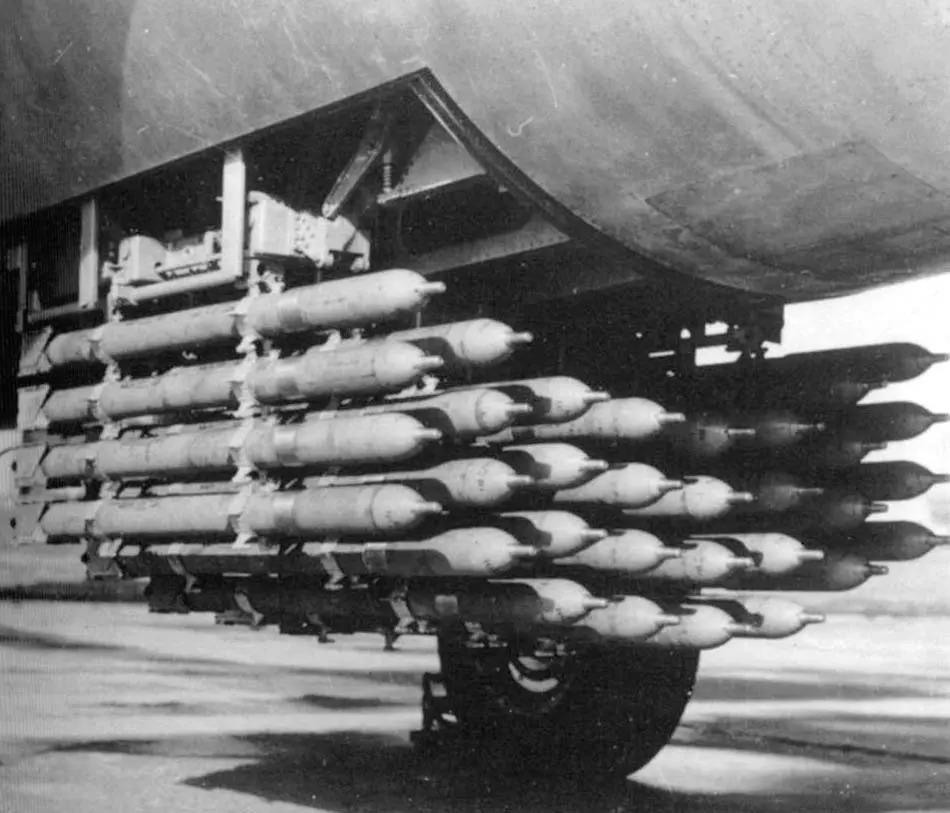
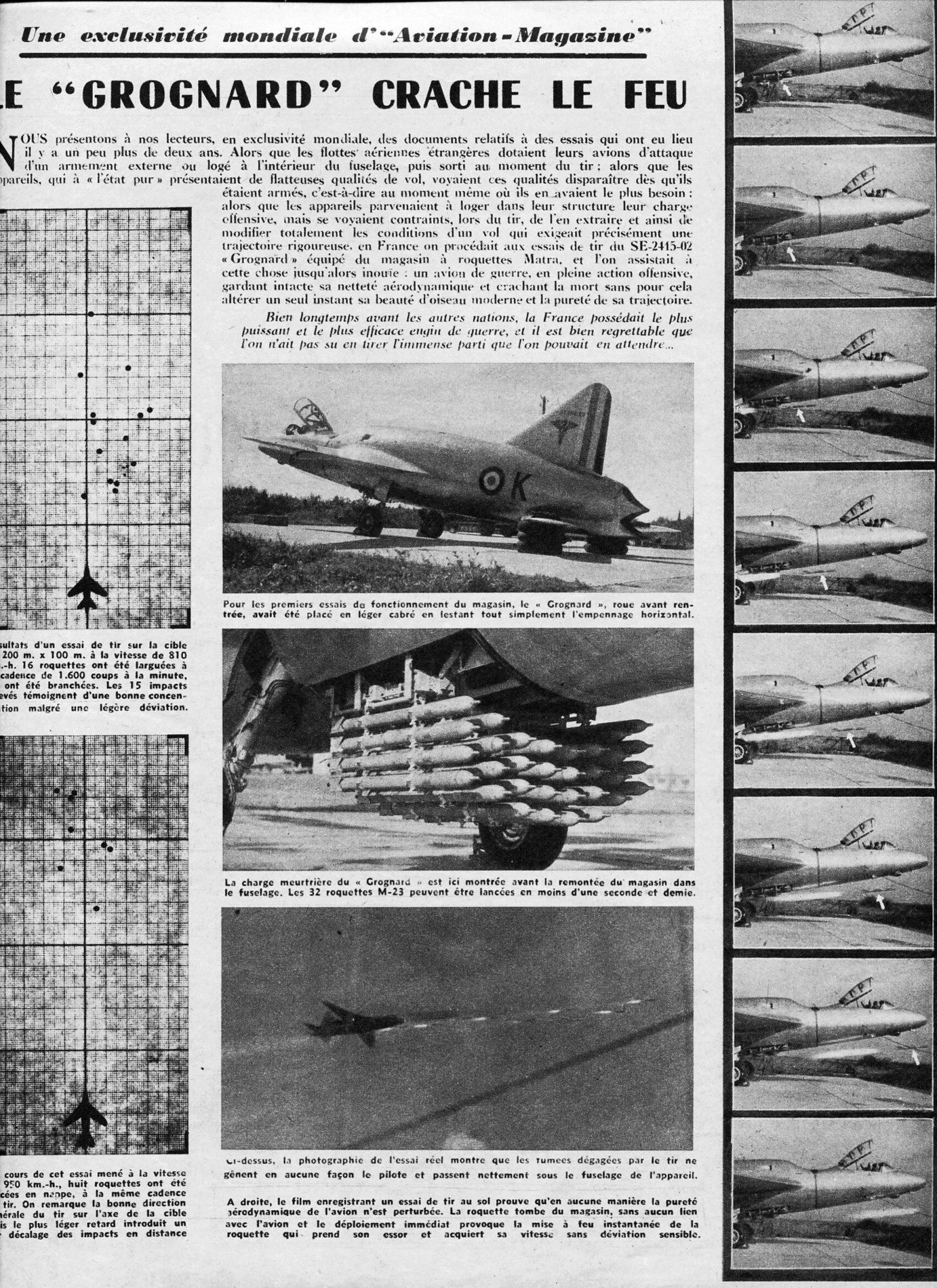
- 32x SNEB 23 rockets in bomb bay
- 200x SNEB 23 rockets in bomb bay
- 16x HVAR rockets in bomb bay
- 4x Matra T-10 AAM underwing (some sources list as PU NUR) (I don’t have any information on the missile’s performance)
- 4x Nord underwing (possibly)
Planned
- 2x 30mm DEFA cannons, 100 rounds each
- 4x 550lb bombs in bomb bay
- 2x 750lb bombs, (I presume in bomb bay)
- 2x 1000lb bombs under wings
- 4x 350lb napalm bombs in bomb bay
- SNEB rocket pods underwing
Sources
Sorted in order of usefulness. The top has the most info, the bottom is just for corroboration.
Sud-Est Grognard - FLUG REVUE
SNCASE Sud-Est SE. 2410 Grognard
militaryfactory.com
aviationsmilitares.net
grogna10.jpg (1382×1900)
SE.2410 Grognard: The Unique French Experimental Aircraft
Sud-Est SE.2410 Grognard — avionslegendaires.net
Mystery Ship: Can you identify this winged Quasimodo?
X-Planes of Europe. Secret Research Aircraft From The Golden Age 1946-1974 - (Hikoki - 2012) | PDF
French longitudinal twin-engine jet - Southwest Groniard I/II (SE 2410/2415) (European prototype aircraft series 12) - Bilibili
Video of Grognard
Sud-Est S.E.2410 Grognard - ground-attack aircraft
Popular Science - Google Books
Sud-Ouest SE.2410 “Grognard”, attack aircraft | Encyclopedia of Military Equipment
Sud-Ouest SE.2415 “Grognard II”, attack aircraft | Encyclopedia of Military Equipment
nhungdoicanh: Sud-Est SE-2410/2415 Grognard
Drawings