- Yes
- No
Hello everyone, and welcome to this new suggestion.
Today, I am presenting the third and final aircraft developed by SAB (Société d’Aviation Bordelaise): the SAB A.B.22, one of the earliest attempts at creating what we would today call a gunship.
In the early 1930s, military aviation was undergoing a period of rapid transformation. As strategic bombing became increasingly important, air forces around the world were looking for aircraft capable of carrying heavy weapons over long distances. France was no exception, and its aircraft manufacturers were encouraged to explore new and sometimes unconventional concepts for the Armée de l’Air.
Among them was the Société d’Aviation Bordelaise (SAB), a company established using the facilities and expertise inherited from Dyle et Bacalan. SAB had already developed the unusual DB-30 lifting-body concept, which subsequently served as the basis for the A.B.20 and A.B.21.
For its final project, however, SAB decided to move away from conventional bombing altogether. The engineers envisioned an aircraft capable of attacking ground targets with an exceptionally heavy weapon. To achieve this, they took an A.B.20 and installed a 75 mm Mle 1897 cannon—the same basic artillery piece that would later be famously associated with the FCM 2C tank, inside the port side of the fuselage, between the landing gear and the wing.
The concept was particularly unusual. Instead of firing forward, the cannon was mounted perpendicular to the aircraft’s flight path, allowing it to fire sideways. The idea was that the relatively low speed of the aircraft would allow it to circle a target while continuously bringing the cannon to bear, essentially creating an early form of airborne gunship.
On paper, the concept was certainly impressive. In practice, however, it quickly became apparent that there were serious problems. During static firing tests, the enormous blast produced by the 75 mm cannon began damaging the aircraft’s port wing. Continuing with the concept would therefore have posed a significant risk to both the aircraft and its crew.
The project was consequently abandoned before the A.B.22 could become an operational aircraft. Nevertheless, the prototype did exist for a time, making it a fascinating example of the unconventional ideas explored by French engineers during the interwar period.
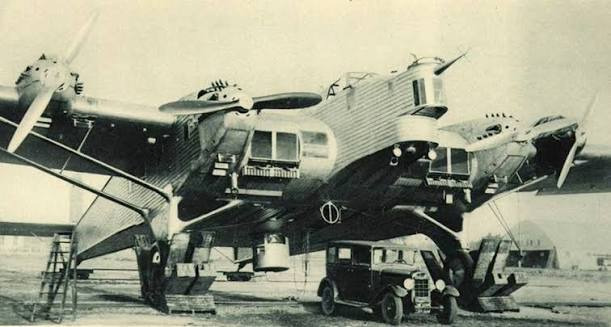
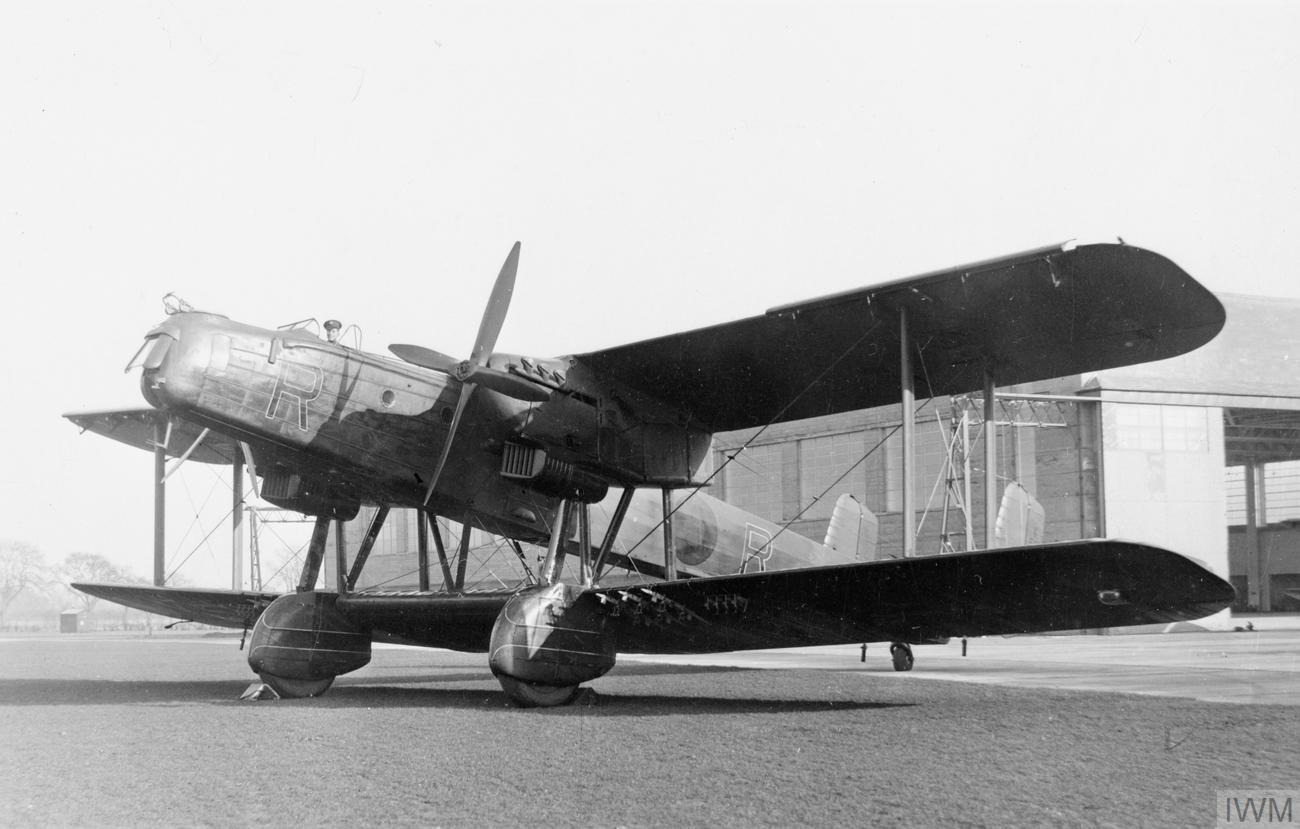
Standard A.B.20
Characteristics
Length : 21.50 m
Width : 37.00 m
Height : 7.40 m
Mass :
- Empty : 9,650 kg
- Full : 14,600 kg
The aircraft is powered by four 600 hp Lorraine engines. This substantial power allows it to take off within 300 meters, though its aerodynamics limit its top speed to 210 km/h and its ceiling to 4,700 meters (an altitude that takes nearly an hour to reach). It has a range of 850 km at a cruising speed of 180 km/h.
Its original crew consists of a pilot, a co-pilot, an observer/bombardier, a flight engineer, and three gunners. This version also includes the gun crew.
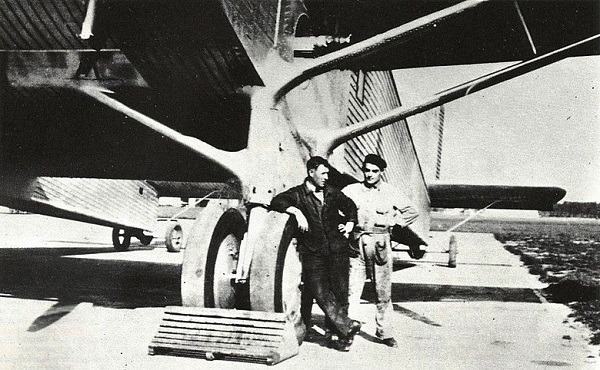
The 75mm gun is visible over the head of the two persons
Weapons
The aircraft’s armament is unusual, to say the least, being centered around a main gun mounted in a side port.
Defensive armament:
- 2 x 7.7mm Vickers machine guns (dorsal T.O.7 turret)
- 2 x 7.7mm Vickers machine guns (nose T.O.7 turret)
- 2 x 7.7mm Vickers machine guns (ventral T.O.7 turret)
Offensive armament:
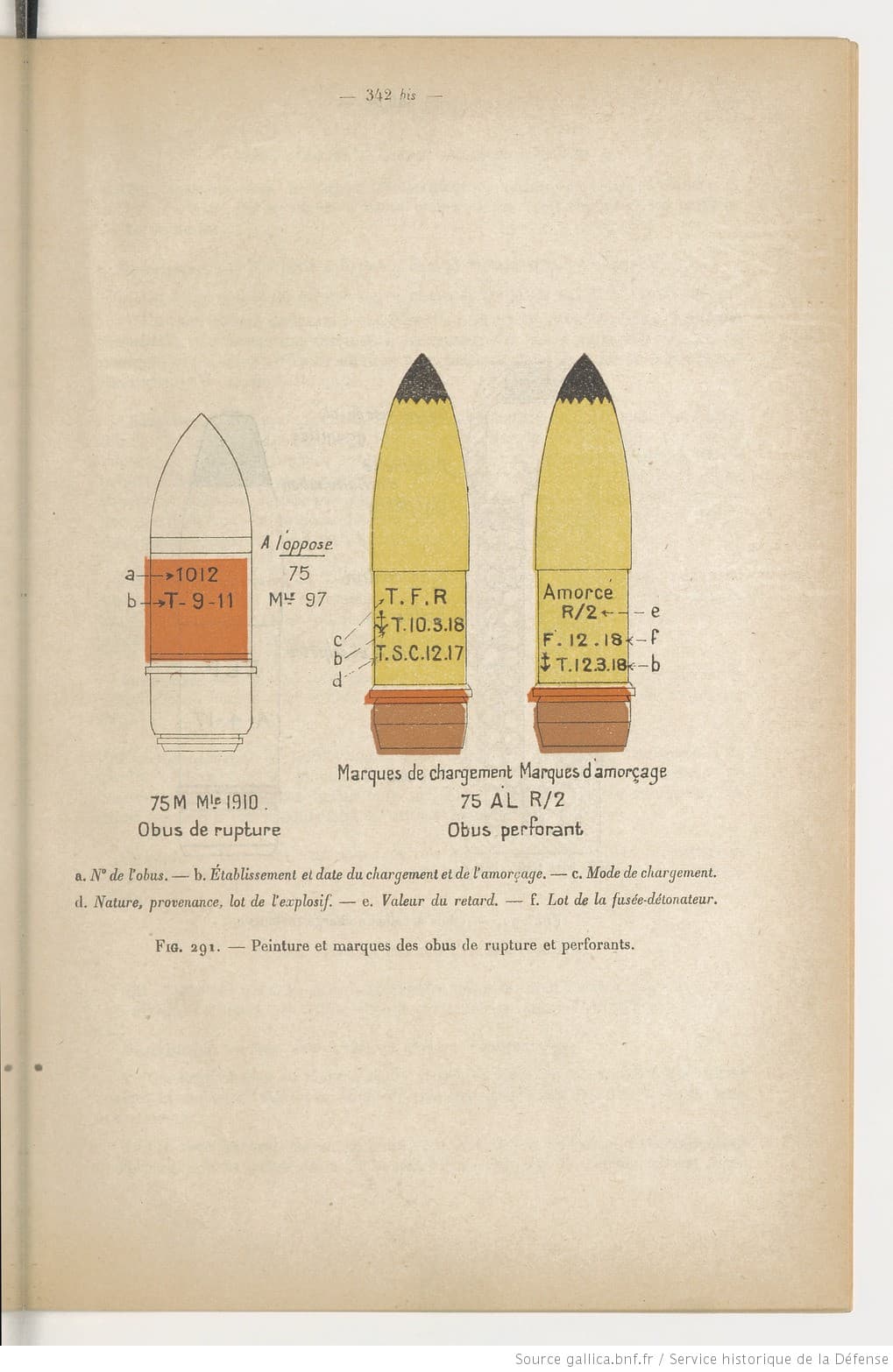
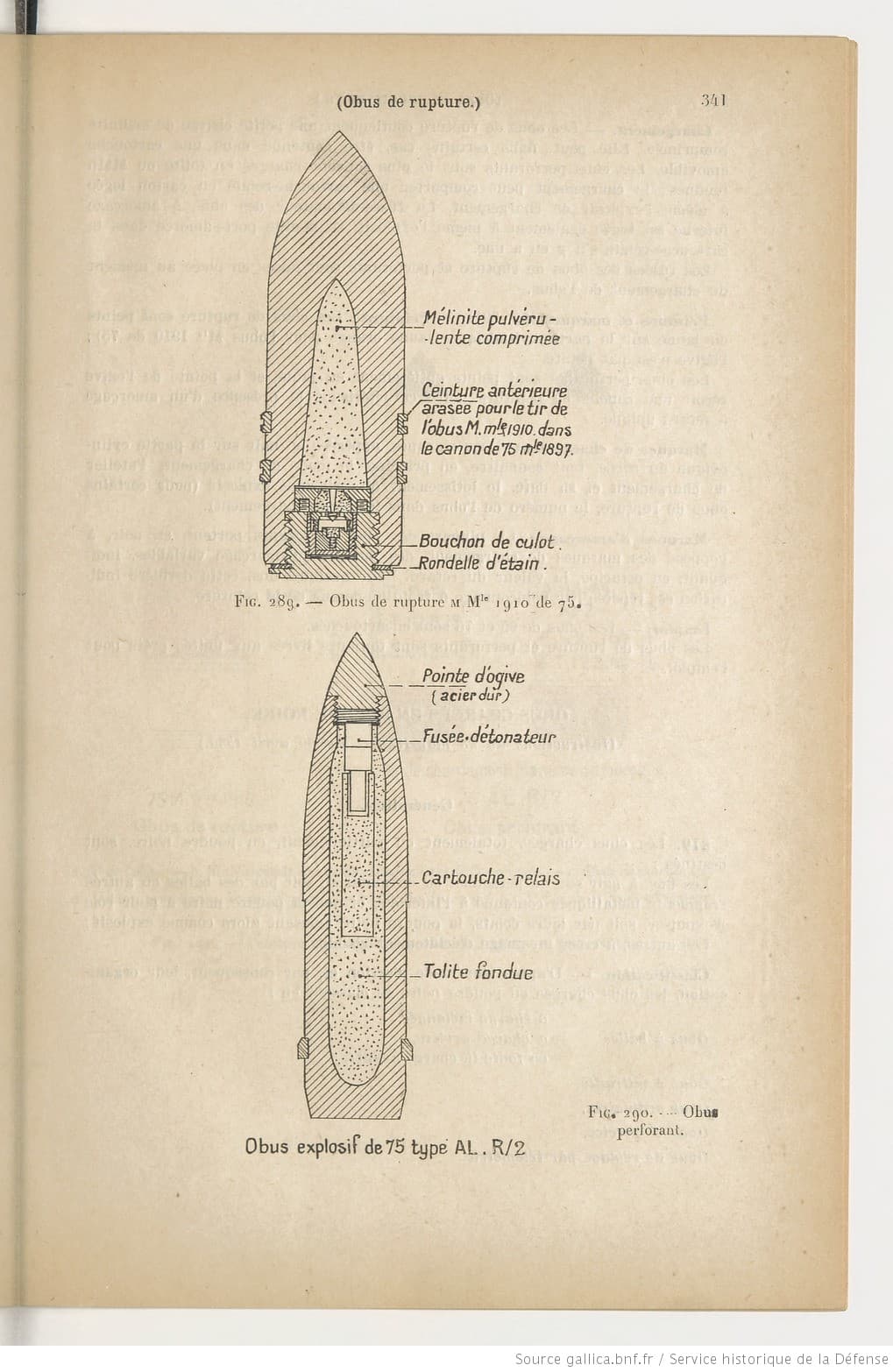
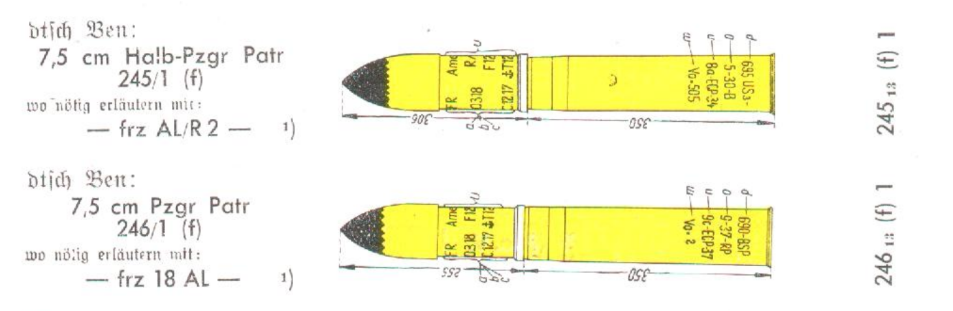
- 75mm Mle 1897 gun
In-game, this aircraft would be a really fun addition to the French tree, introducing a machine with a very unique and distinctive role—adding a nice touch to the tree.