- Yes
- No
 S-350 Vityaz - Russia’s New Generation Air Defense
I will continue to update this post as I come across new information
History
The S-350 Vityaz is a modern Russian medium range surface to air missile system developed to replace older variants of the S-300 family in frontline service. Its development reflects the broader effort by Russia to modernize its air defense network after the Cold War and create a layered system capable of dealing with modern aerial threats such as cruise missiles, precision guided munitions, unmanned aerial vehicles, and advanced aircraft.
Work on what would become the S-350 began in the late 1990s and early 2000s. After the collapse of the Soviet Union, Russia inherited a large inventory of S-300 systems, many of which were aging and expensive to maintain. While the S-400 system was being developed to handle long range threats, there was still a need for a more affordable and mobile system to cover medium ranges and to replace older S-300PS units. The idea was to create a system that could fire more missiles per launcher, react faster, and better handle saturation attacks.
A key moment in the program came in the mid 2000s when Russia cooperated with South Korea on the KM-SAM air defense project. The technology and design experience from that program contributed to the development of the S-350. Over time the Russian version evolved into a distinct system tailored to the needs of the Russian Aerospace Forces.
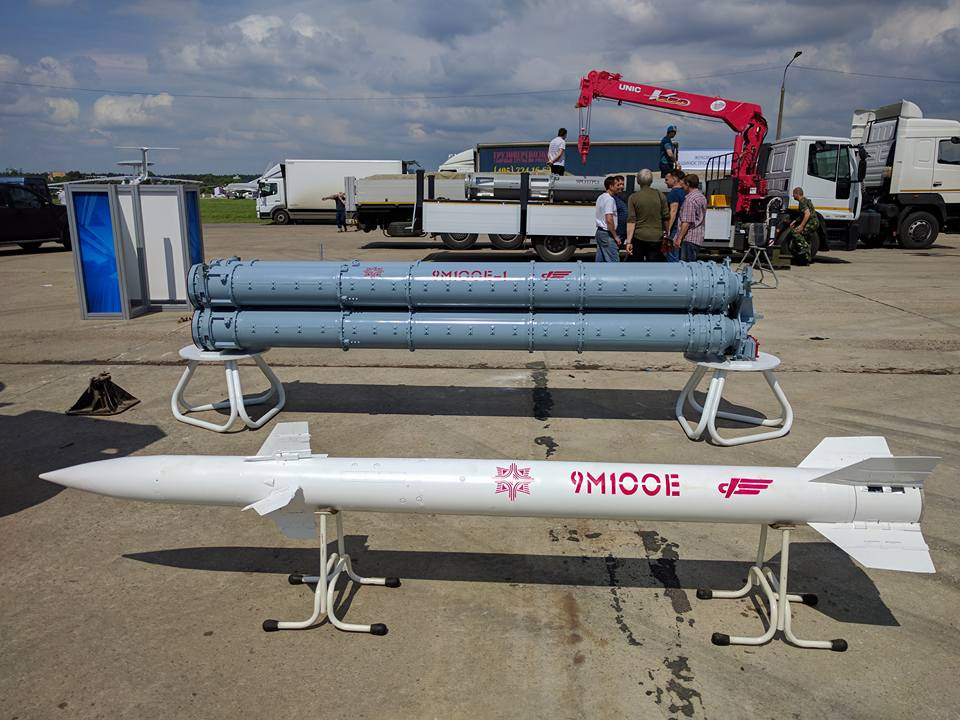
The S-350 was officially revealed to the public in 2013. It drew attention because of its compact vertical launch canisters and its use of the 9M96 missile family, which had originally been developed for use with the S-400. Unlike older S-300 variants that carried four large missiles per launcher, the S-350 can carry twelve smaller 9M96 missiles or four smaller 9M100 missiles in a singular launch container, this could theoretically increase the missile count to 40 in a full load, mixed loads are also available. This significantly increases the number of ready to fire interceptors in a battery and makes it better suited to counter mass attacks.
Testing continued throughout the 2010s. Early trials focused on validating the radar systems, command and control integration, and the performance of the 9M96 missiles against a range of aerial targets. The system uses a modern multifunction radar with active phased array technology, allowing it to track dozens of targets simultaneously and guide multiple missiles at once. This makes it effective against complex threats including low flying cruise missiles and maneuvering aircraft.
In 2019 the first operational S-350 regiment entered service with the Russian Aerospace Forces. It was deployed to replace older S-300PS units in western Russia. Since then additional units have been delivered, gradually expanding the system’s presence within Russia’s layered air defense network. The S-350 is intended to operate alongside longer range systems like the S-400, creating overlapping coverage zones. In this structure, the S-350 handles medium range engagements and high target density situations, while longer range systems focus on strategic threats.
The Vityaz, which translates to knight or warrior, reflects its intended role as a defender of key military and infrastructure sites. Its mobility allows it to be repositioned relatively quickly compared to older systems, and its digital architecture makes it easier to integrate into modern command networks.
Specifications
Missiles:
The 9M96 family forms the backbone of the system’s medium-range firepower. These missiles use inertial guidance with radio correction during midcourse flight, transitioning to active radar homing in the terminal phase. Equipped with thrust vector control and aerodynamic control surfaces, they are designed for aggressive endgame maneuvering against modern threats such as tactical aircraft, cruise missiles, and precision-guided munitions. The 9M96E missile is capable of engaging low-altitude targets operating near the radio horizon, including threats flying close to radar blind zones. This makes it particularly valuable for intercepting terrain-hugging cruise missiles or aircraft attempting to exploit ground clutter and curvature limits. According to the referenced material, at shorter engagement distances the missile is capable of sustaining extremely high overloads, with maneuver capability cited as reaching up to approximately 60 G under optimal conditions, decreasing as engagement range increases.
Complementing the 9M96 series is the 9M100, a compact short-range interceptor equipped with an infrared seeker for terminal homing. Designed for rapid reaction and high agility, the 9M100 provides point-defense capability within the system’s inner layer. Its thrust vector control and lightweight airframe allow for sharp directional changes during terminal intercepts, making it effective against highly maneuverable aircraft, unmanned systems, and low-flying cruise missiles. With engagement ranges extending to roughly 10 to 15 kilometers depending on variant and target profile, it fills the gap between medium-range coverage and very close-in defensive systems.
Together, these missiles create a layered engagement envelope within a single battery. The 9M96 series handles medium-range interceptions and targets attempting to operate near the radar horizon, while the 9M100 provides dense close-range protection against threats that penetrate the outer layer. Combined with modern phased-array radar and digital command architecture, this mix gives the S-350 the ability to track multiple targets simultaneously and conduct coordinated engagements across a wide battlespace.
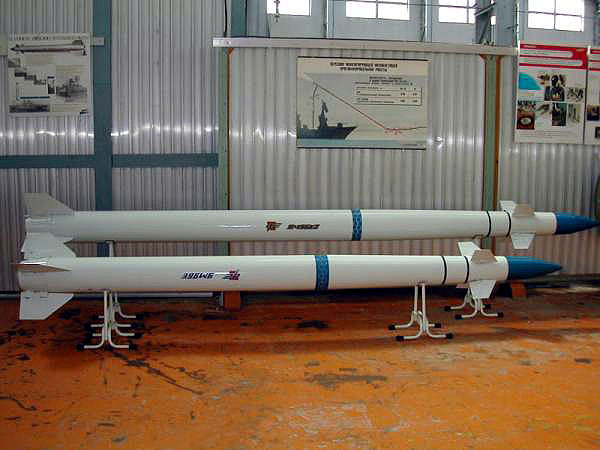
- 9M96 (also known as 9M96E)
The 9M96E missile is capable of engaging airborne targets at distances of up to 40 km and altitudes reaching 20,000 meters. It is equipped with a 24 kg high-explosive fragmentation warhead that uses a radio-frequency proximity fuze. The missile is stored in a sealed canister with a service life of around 15 years, which can be extended with proper maintenance. Both the 9M96E and 9M96E2 share a similar design, including comparable size and weight, but the 9M96E uses a less powerful rocket motor. -
- Speed: 900-1000 m/s (?)
-
- Range: 1.5 to 40 km
-
- G tolerance: 20-60G
-
- Weight: 333 kg (734 lb)
-
- Altitude: up to 20 km
-
- Guidance: Inertial + datalink + active radar homing
-
- Warhead: High explosive fragmentation warhead approximately 24 kg
- 9M96M (also known as 9M96E2, 9M96D, SA-26)
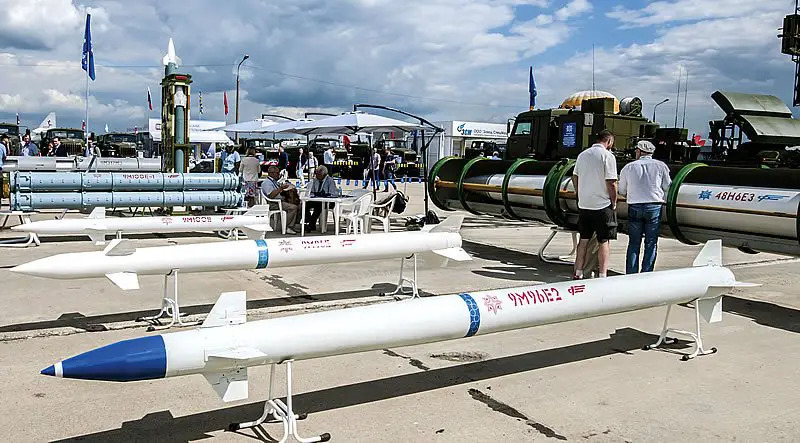
The 9M96M missile is capable of engaging both airborne and ballistic targets at ranges of up to 120 km, operating at altitudes from as low as 5 meters up to around 30,000 meters. Some sources suggest it may reach heights of up to 35,000 meters. It carries a 24 kg high-explosive fragmentation warhead equipped with a radio-frequency proximity fuze. The missile is stored in a sealed canister with a service life of approximately 15 years, which can be extended with proper maintenance. The 9M96E and 9M96E2 share many common components and have similar size and weight, but the 9M96E2 is fitted with a more powerful rocket motor. -
- Speed: 1,800 m/s
-
- Range: 1.5 to 120 km
-
- G tolerance: 20-60G
-
- Weight: 420 kg (930 lb)
-
- Altitude: up to ~30-35 km
-
- Guidance: Inertial + datalink + active radar homing
-
- Warhead: High explosive fragmentation warhead approximately 24 to 26 kg
- 9M96M2 (also known as 9M96M2 and 9M96DM) (little to be said about it)
The 9M96M2 is an improved version of the 9M96M missile, featuring an extended range of up to 150 km to engage a wide range of aerial targets at greater distances. It is designed for use with the Vityaz ground-based air defense system as well as the Poliment-Redut naval air defense system fitted on Project 22350 frigates and Project 20380 corvettes. The missile was expected to enter service with the Russian Armed Forces between 2018 and 2020. Some reports suggest the range could be increased further to around 200 km, though as of early 2019, available information indicates a maximum range of approximately 150 km.
-
- Speed: 1,800 m/s
-
- Range: 1.5 to 150 km
-
- G tolerance: 20-60G
-
- Weight: 420 kg (930 lb)
-
- Altitude: up to 35 km
-
- Guidance: Inertial + datalink + active radar homing
-
- Warhead: High explosive fragmentation 24 kg to 26 kg
- 9M100
The 9M100 is a short-range surface-to-air missile developed by the Fakel Design Bureau, part of the Almaz-Antey concern, for Russia’s next-generation air defense systems planned for deployment around 2015. It is intended to counter modern threats such as advanced fighter aircraft, helicopters, cruise missiles, guided bombs, supersonic weapons, and unmanned aerial vehicles (UAVs), all of which pose significant risks to ground forces and critical infrastructure. The missile is highly maneuverable and designed for vertical launch from a VLS. As of the early 2010s, it was linked to the Vityaz medium-range system and considered a likely primary armament for the Morfei short-range air defense system.
The 9M100 uses a guidance system that combines inertial navigation with an infrared seeker, along with both contact and proximity fuzes to detonate the warhead. This setup allows it to operate as a fire-and-forget missile capable of engaging multiple targets at once. Its solid-fuel rocket motor incorporates thrust vectoring, giving it excellent agility. -
- Speed: 1000 m/s
-
- Range: 15 km
-
- G tolerance: 60G (claimed)
-
- Weight: 140 kg (310 lb)
-
- Altitude: up to 8 to 10 km
-
- Guidance: Imaging infrared seeker
-
- Warhead: High explosive fragmentation warhead approximately 14 to 15 kg
Engagement Capacity:
- Up to 16 aerodynamic targets engaged simultaneously
- Up to 12 ballistic targets engaged simultaneously
- Up to 40 missiles guided at once
50P6A missile transporter and launcher
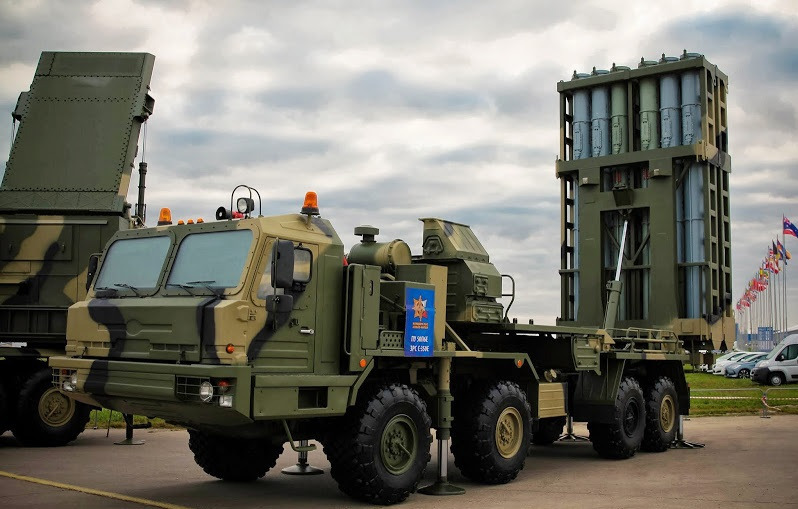
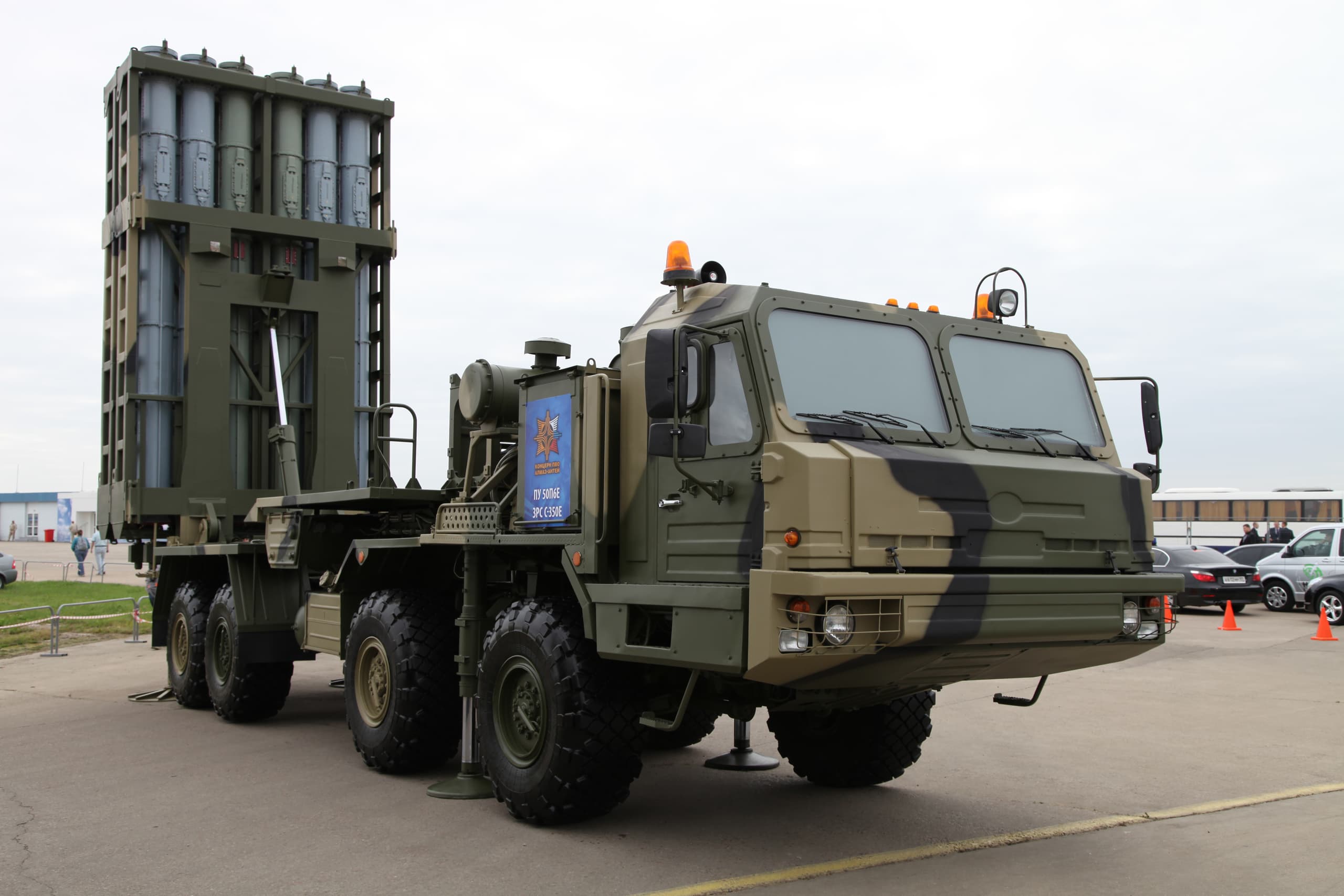
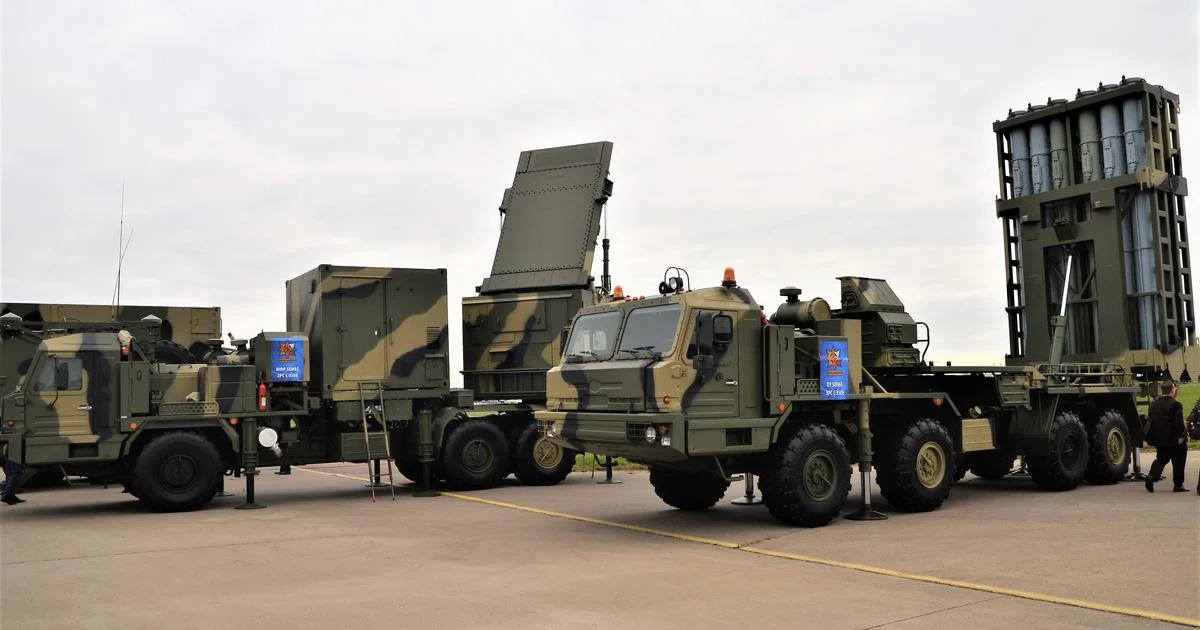
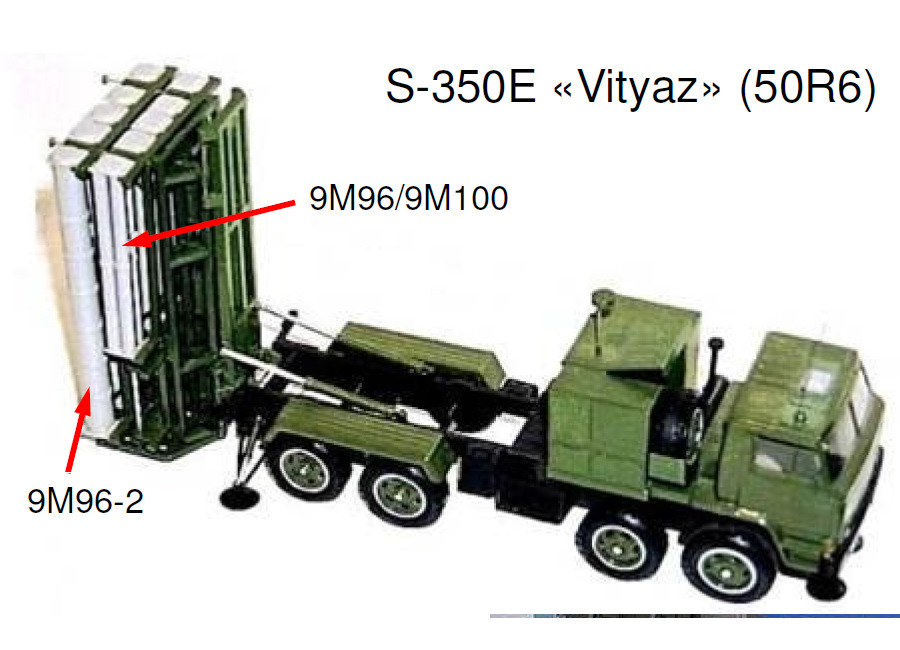
The 50P6A is a heavy, 8×8 military truck dominated by a massive double-layered bank of 12 vertical launch tubes on its rear bed. Its boxy, armored cab sits low at the front, leading back to a long chassis supported by eight oversized all-terrain tires. When stationary, the entire rear assembly tilts upward, standing like a two-story rectangular honeycomb ready to fire.
The vehicle has a rugged, industrial appearance, with visible heavy-duty suspension, external storage lockers, and thick ventilation grilles for its 470-horsepower engine. Because it uses “cold launch” technology, you won’t see scorch marks or heavy blast shielding on the truck itself; instead, the missiles are popped out by gas before their engines ignite high above the vehicle.
50N6A Multi-functional Radar Vehicle
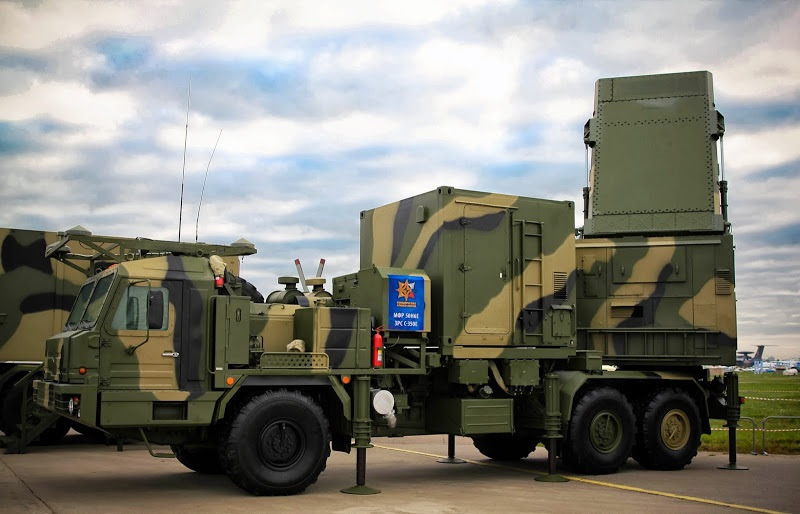
The overall layout of the 50N6A radar does not differ dramatically from the engagement radars used in the S-300 and S-400 families. What sets it apart, however, is its role. It became the first true multi functional radar of its type to enter operational service in the Soviet and later Russian air defense structure. Traditionally, Soviet and Russian air defense doctrine relied on separate radar systems for target detection and missile guidance. This approach was influenced partly by limitations within the domestic electronics industry at the time, and partly by a design philosophy that treated search and engagement functions as distinct technical challenges. As a result, systems such as the phased array guidance radars used with the S-300 and S-400 employed highly specialized feed technologies and unique engineering solutions that remain in use today. The same general concept is expected to continue with the future S-500 system.
The 50N6A is classified as a multi functional mobile tracking and guidance radar. It operates in the X band and uses a high power coherent phased array with a single rotating antenna, spinning at roughly 60 revolutions per minute. Although the antenna rotates mechanically, beam steering is carried out electronically, allowing for rapid target acquisition and tracking. The radar offers a wide elevation deflection range of approximately plus or minus 45 degrees and broad azimuth coverage, enabling it to quickly detect and begin tracking aircraft, helicopters, unmanned aerial vehicles, and tactical ballistic missiles within a defined sector.
In addition to its search capability, the 50N6A performs precision three dimensional tracking and supports missile guidance simultaneously. It can reportedly detect and track up to 40 targets at once, while selecting 8 of those for engagement and guiding two missiles per target. This engagement logic is designed to maintain a high probability of interception. Within the overall system structure, this allows the S-350 to intercept up to 16 aerodynamic targets or up to 12 ballistic targets at the same time.
One limitation of the radar is its antenna height, which affects its ability to detect extremely low altitude targets at extended distances due to the curvature of the earth. Detailed technical specifications for the 50N6A have not been publicly released. However, based on missile range and the physical size of the radar array, analysts generally assess that its maximum detection range is lower than that of the 92N6E engagement radar used with the S-400. Estimates commonly place its detection range at around 200 kilometers, depending on target size and flight profile.
50K6A command vehicle
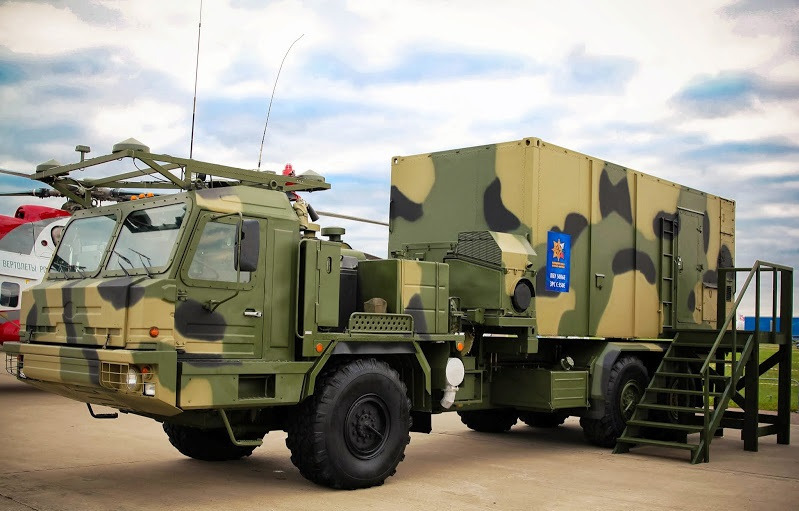
The 50K6A command vehicle is primarily responsible for autonomous combat control of the entire S‑350 operational system and for coordinating with other long‑range air defense assets. Its role relies on two essential capabilities: first, the ability to gather and process large volumes of information, and second, the capacity to command and coordinate the system effectively. To meet the first requirement, the vehicle is equipped with advanced data acquisition and audio transmission systems. For the second, it integrates a high-performance computer and automated command systems to analyze incoming information and manage engagements, though detailed technical specifications remain undisclosed.
To support these functions, the 50K6A features a digital data and audio communication suite, dedicated data transmission devices, a new data link terminal, and an integrated audio communication system. Onboard, a ruggedized computer processes the acquired information in real time. One notable addition is a precision navigation system mounted atop the driver’s cab, similar to the system used on the 50N6A radar vehicle. This reflects a broader trend in Russian air defense toward enhanced situational awareness and precise system coordination.
Both the 50K6A command vehicle and the 50N6A multi-functional radar vehicle are built on a 6×6 wheeled BAZ‑69092 chassis. They are powered by a multi-fuel, eight-cylinder V-type, four-stroke, liquid-cooled diesel engine producing 450 horsepower. This allows a maximum road speed of 80 km/h and a driving range of up to 1,000 km, providing both mobility and endurance for rapid deployment.
There is also a South Korean cousin to this system the KM-SAM Cheongung Block II, if you’re interested in South Korean technology this is a good read.
Images
Sources
S-350 missile system - Wikipedia
S-350“勇士”防空导弹系统已完成国家测试,开始进入批量生产_目标
S-350 S-350E Vityaz 50R6
S-350 Vityaz (50R6)
S-350 "Vityaz" SAM System - Page 18
https://www.army-technology.com/projects/s-350e-vityaz-50r6-surface-to-air-defence-missile-system/?cf-view
https://www.deagel.com/Armies/S-350/a002482