Any reason why you continue to dodge/ignore people explaining how the document very likely is mistaken?
Multiple people have now pointed out that the UK MOD was very likely mistaken regarding the T-80U’s actual protection levels.
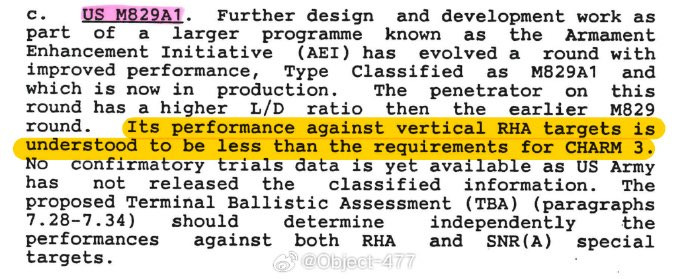
M829A1 is a superior penetrator design to L27, yet M829A1 proved incapable of defeating K-5 armoured targets during trails, yet L27 has no issues going through the same targets at 2000m?
Because its not the first time Gaijin has called British Documents a marketing lie. Its the third time iirc.
The defacto argument seems to be that if its British then it cant be accepted.
But if they can just turn around and say “this primary document is incorrect”. Then what is the point of ever submitting any bug report ever again when Gaijin just picks and chooses what is real and what isnt. Which almost always favours soviet vehicles.
So unless you are saying that the T-80U that they purchased and fired shells at didnt have the correct levels of protection it should have had. In which case, I invite documents being provided… How can they be mistaken?
L27 was developed using an actual T-80 to fire at
This just sounds more like Gaijin parroting
and what about the 13 primary doucments for the DM53? Are those marketing lies as well?
Please provide a single primary source for any of this
That has nothing to do with the validity of the statements made in this specific page.
Because we’ve got contradictory sources here, as I’ve explained and shall now explain a second time:
M829A1 is stated to not have been able to defeat K-5 -armoured targets, M829A1 is a superior penetrator design, how is it that M829A1 cannot do what L27 does at 2000m?
Firstly: Please present a source that shows L27 penetrated an actual T-80U in testing, and at what range/location the penetration occurred. The latter is extremely important given that we’re talking about the UFP covered by K-5 here, and firing trails could’ve easily resulted in portions of the vehicle NOT covered by K-5 being penetrated.
Secondly: Please show me whether that testing was done before or after the other source’s time of writing.
Thirdly: I’d be really helpful if we got the full source instead of the half page without context.
In the vast majority of cases I’ve seen, sources work with an estimated level of protection for adversary vehicles, those estimations usually turn out to be off after some years have passed and better information comes to light.
Soviet MBTs that are performing very well, in fact are documented to be overperforming need a buff because soviet mains are butthurt that they dont have a meta MBT at the moment?
Despite being meta in air, naval and every other aspect of ground bar MBTs?
Prove its a superior design.
and why cant DM53 pen K-5 either, despite being a superior design to the A3 which can?
This is not the case in this instance.
but please provide me any documentation that proves the current IN-GAME MODELING which is what Gaijin used to “prove” that the L27A1 cannot pen it. is correct.
Gaijin did not state that the sources were wrong, or that there were other soruces that contested it. They stated that they fired an L27A1 in-game at a T-80U without ERA and it didnt pen. Therefore the primary source is wrong.
Gaijin used War Thunder as a Primary source for War Thunder…
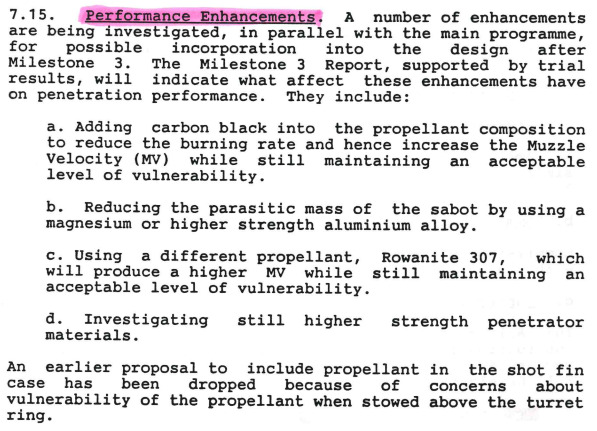
It was expected that L27 would achieve or surpass that of M829A1, and sit itself somewhere between A1 and A2. You can see how that could happen if you were to fix the penetrator, and then increase its MV.
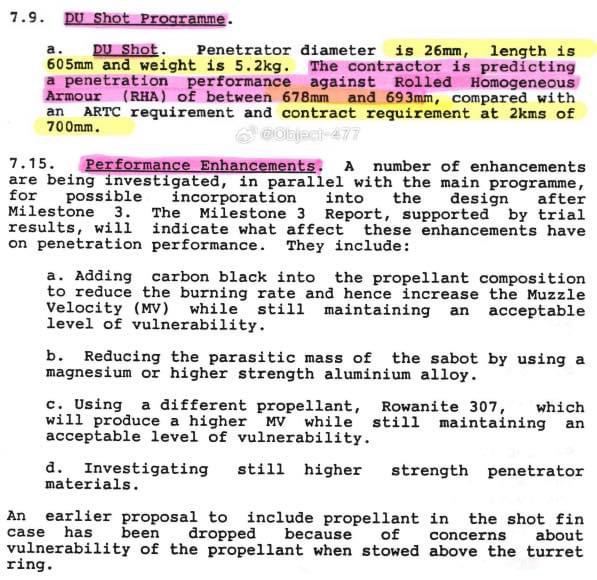
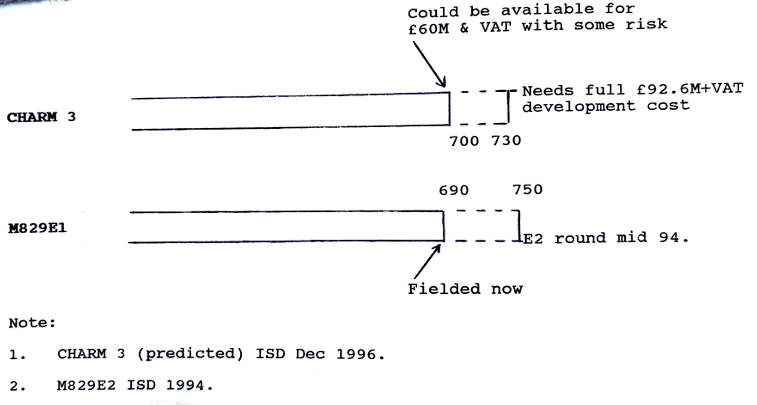
L27 is stated to penetrate between 678 and 693mm @ 70° angle of attack, M829A1 will penetrate around 770mm under the same criteria.
Could you please stop moving the goalpost every single time?
I’m discussing the single page taken from a source which claims L27 is expected to penetrate the T-80U, I’m NOT discussing DM53, Russian CAS performance, naval balance, whether or not Russian mains are butthurt, etc.
I’ll take it that you’re unable to present any of the sources I previously asked for.
And my question is when that took place, as well as if direct firing trails took place before or after the time of writing of the source we’re discussing.
I don’t know what you’re questioning on the first part, but they suffer reduced reload no matter the loss considering the commander buffs the whole crew.
Lets look at this logically total length of the round is 660mm, pentrator is less than that how can you possibly achieve 700mm of pen? 3bM60 which is about 745mm in total length cannot pen 80u from the front at 0 degrees 2000m range.
I tested that a long while back and it made no difference, I’d be curious to test it again and see if that’s fixed.
Regardless, an M1 without a commander will still out-reload any Soviet tank, even if we assume it’s fixed.
Slightly off-topic, but I was surprised to see the M1A2 with 2 crew reloads in 9.8 seconds, I always thought that 2 crew remaining doubles the previous reload time, which would be 10.6s (Expert crew 5.3 x 2 = 10.6 sec).
I’m using the ammunition symbol with the count-down animation as a reference point for the test, and got 9:83 seconds:
Based on…? The 70 degree angle of attack is an assumption by you, it should also be noted that this was early on in the design, propellent improvements(and potentially sabot), led to this value being 730mm.
(with M829A1 being rated at 690mm using whatever metric was proscribed…)
Everything unclassified is basically mentioned in the suggestion.
Firing trials of L-27 may have taken place in the 1980s, but Germans probably got their T-80s in the 1990s.
We have a decent understanding of L27’s dimensions based on this document:
Spoiler
A penetrator that is 605mm in length is simply not going to achieve >700mm of penetration at the vertical.
If someone has data on whether L27 was significantly improved from this point, and how this was done, I’d be happy to read it.
If you run the known and currently available data through Lanz Odermatt with Gaijin’s criteria (260 BHN target) at 70° angle of attack, ≈2000m distance, you get ≈695mm of penetration, that’s awfully close to the quoted figures in the document.
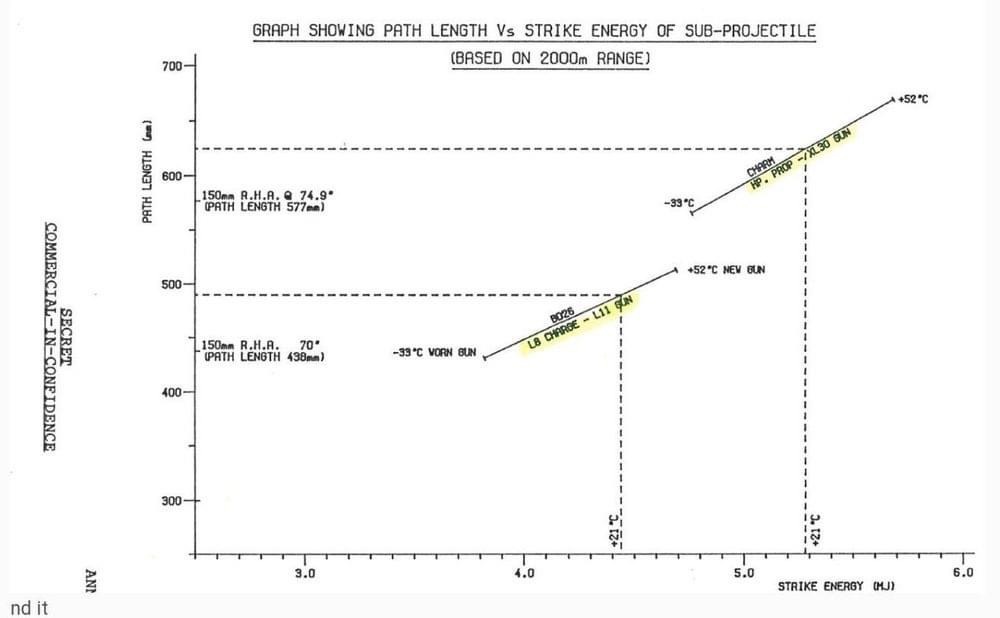
Furthermore, all other documents I’ve seen regarding British penetration values list 70°-75° angles of attack:
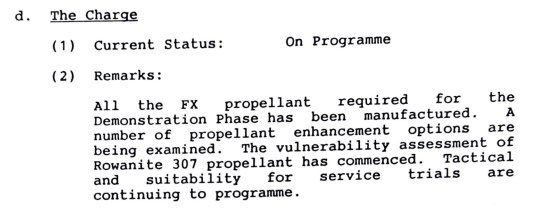
First source makes it clear the UK was not aware of M829A1’s actual performance characteristics at that time.
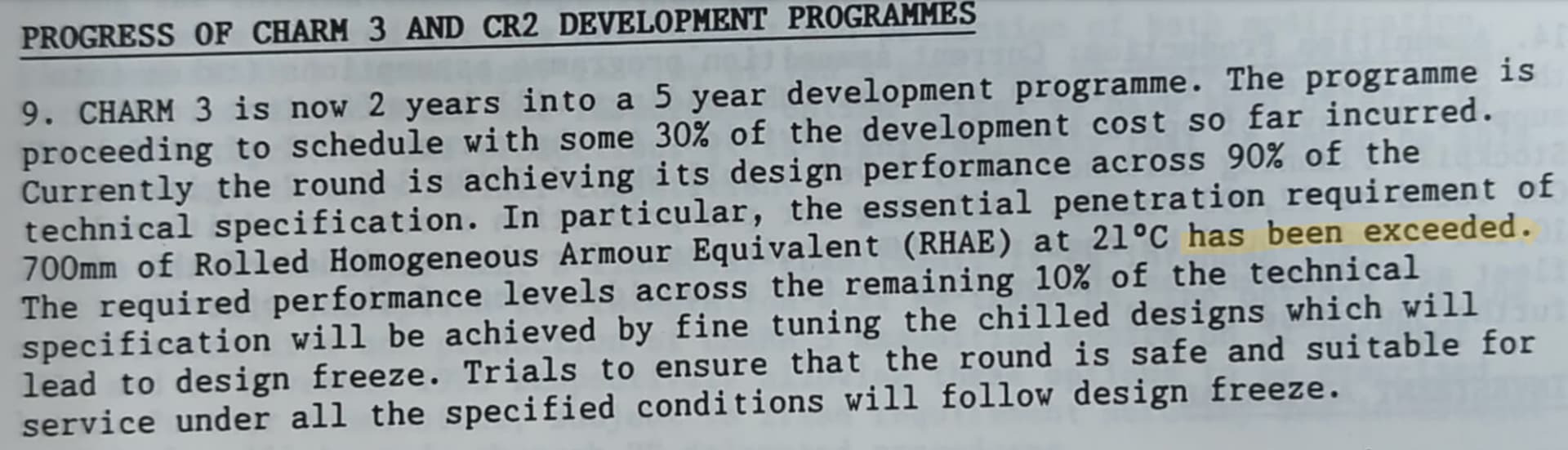
Second source doesn’t disprove my statement that it’s likely the criteria are for a 70° angle of attack.
Third source is just the bottom part of the source I linked, and doesn’t even begin to state that L27 would be capable of exceeding 700mm of penetration at (or close to) vertical angles of attack, even if all improvements were carried out.
This source also does not mention increasing the length of the penetrator, and a basic rule of penetration characteristics is that APFSDS projectiles do not exceed their own length in penetration at the vertical.
Fourth source is mistaken in regards to M829A1 penetration if it also uses a 70° angle of attack for basis of comparison. Known data for M829A1 puts it’s penetration in excess of 700mm even at 60° angle of attack, let alone 70°.
Again your 70 degree value is entirely estimated, assuming not only the L-0 model and your version work, but also that the value isnt a numerical representation of average performance over multiple conditions for example.
Again you are entirely assuming this 70 degree condition. It would make sense if there is a heuristic or directly comparable and consistent way these values were obtained so that the requirements or capabilites can be directly compared.
Again nobody is claiming that any performance is against vertical targets, that would be ridiculous, it can only be read that CHARM 3 is positioned in between M829A1 and M829A2 in terms of penetrative performance.