Yeah maybe take a good look at .blk files first before making such statements.
All trunnions (with exceptions that I will come to later) are currently modelled as a volumetric part of;
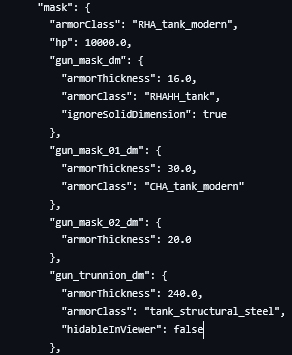
(minimum thickness) 150 mm modern CHA (0.98x RHA), i.e. 147 mm of RHAE.
The maximum effective thickness of them is 300 mm of mCHA (as above), i.e. 294 mm of RHAE.
This applies to all T-Series MBTs, M1-Series MBT’s, Leopard 2K and as far as I can tell the PT 16 / T 14 (mod.)
However, ALL other Leopard 2’s have their trunnions modelled differently - and they’re much, much worse;
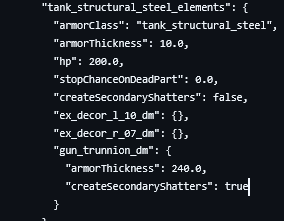
The thickness of their trunnions is 240 mm but the material is structural steel (0.45x RHA), which corresponds to 108 mm of RHAE.
Now, there are also two groups of them, which feature the following code;
Leopard 2A5 // Leopard 2A4
The left one in this example is significantly worse, as “secondaryshatter” is explicitly enabled, causing a stupid amount of spall-creation.
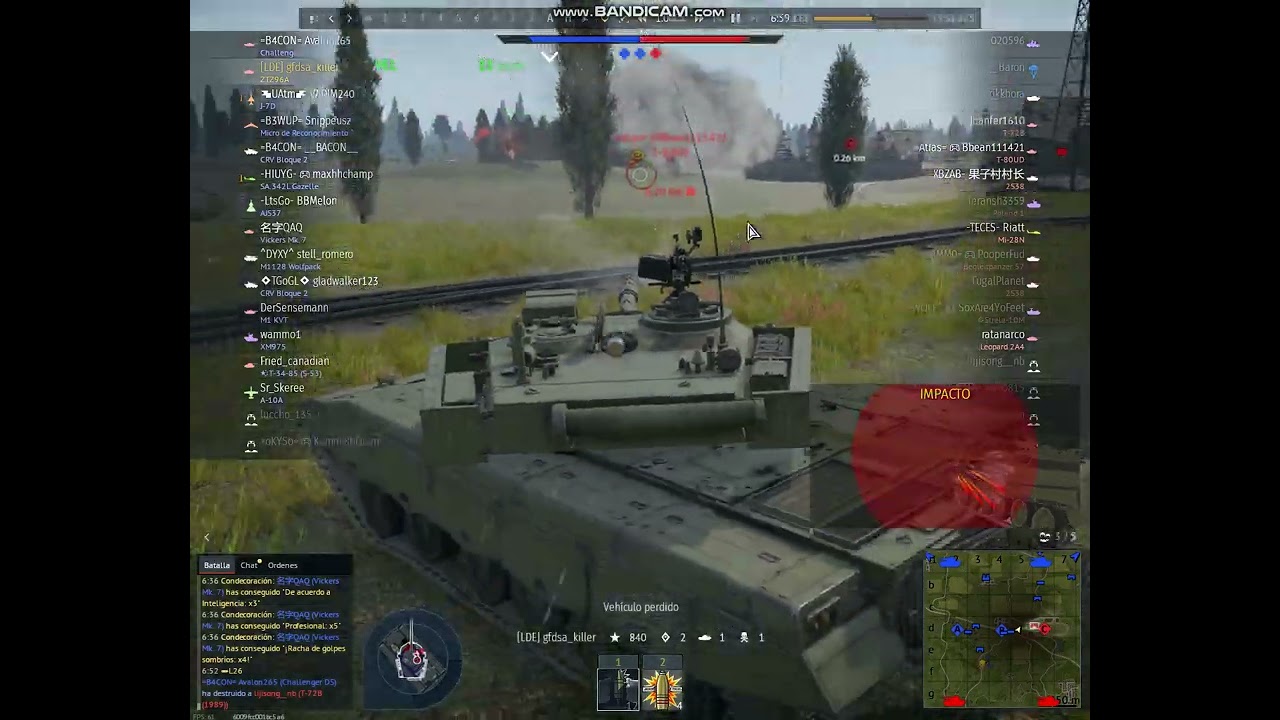
This is (most likely) also what causes this issue;
https://community.gaijin.net/issues/p/warthunder/i/pyMBrqNZROz4
Unlike the default trunnions (T-series, Abrams, etc.), these also do not have a maximum thickness, yet it wont matter at all as the RHAE modifier is significantly lower (0.45x vs 0.98x), thus rendering the increased base-thickness worthless.
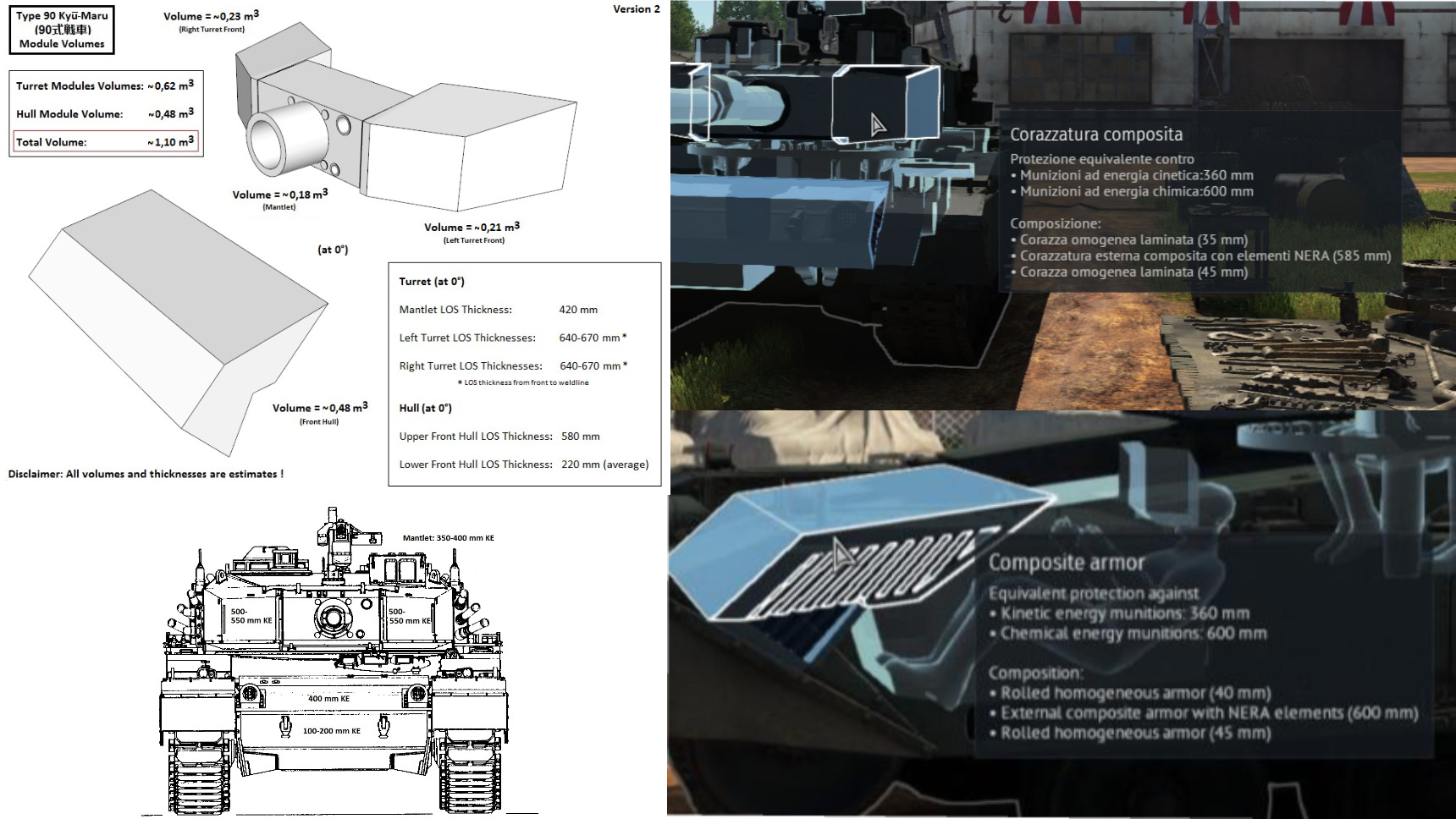
The other exception is Type 90, which has trunnions that are 200mm thick, have no maximum effective thickness limit but also feature modern CHA, like everyone else but Leopard 2 series (with Leo 2K and PT 16 being the sole exceptions).
Thereby, trunnions benefit T-Series mbts the most (due to how they’re shaped and modelled on them), Leopard 2’s the least and are, in some cases still, a significant downgrade to some Leopard 2’s survivability.