I haven’t been paying much attention to this discussion… please god don’t let the community do this again. I swear half the time issues are directly caused by gaijin (stinger missile overload, BMPT at 10.3, balancing in general) and the other half are the community.
1 Like
The Leopard 2 RS implementation is a net negative. And yes it’s likely bugged, but Gaijin has a long history of just ignoring those and releasing stuff as bugged as it was on the dev.
So I wouldn’t blame people for expecting the worst when it comes to Gaijin.
Agreed that people voting against the APHE change was stupid though.
Regarding the engine horsepower bug:
A simple experiment on a slope using a user-created model suggests that engine horsepower roughly doubles during cornering.
Therefore, when equipping a user model with a double differential, setting the engine horsepower to half its value should allow you to gauge its true cornering performance (albeit perhaps not with perfect accuracy).
Naturally, since the engine horsepower is abnormal when driving straight, this method is useful solely for assessing cornering performance.
…Hmm.
It appears that the current double-differential steering system exhibits behavior where turning performance varies depending on engine RPM (or vehicle speed).
The maximum turning radius is limited to the radius calculated based on the current gear and the neutral gear ratio. However, that specific radius is only achieved when the engine is at maximum RPM; at lower speeds, the turning radius appears to be smaller than the calculated value.
If this behavior was intended by Gaijin, it is incorrect for a double-differential steering system.
This is because a double-differential steering system dictates the speed ratio between the left and right tracks, meaning the difference in speed between the tracks remains constant based on that ratio.
Regardless of whether the vehicle is moving fast or slow, the relationship between steering input and turning radius should remain fixed. When a player applies 100% steering input, the resulting turning radius should always be the same.
A minimum turning radius that varies based on speed is characteristic of systems like early American “Cross-Drive” transmissions (influenced by torque converters) or modern MBTs that use hydraulic motors connected to the double-differential steering unit.
While the Leopard 2 or Type 90/10—the subjects of this test—might exhibit such behavior in reality, it is inappropriate for the behavior defined by the steerType:t = "double_differential" parameter.
In this video, the Chieftain’s minimum turning radius in 4th gear was set to 4.43 times the vehicle width, yet during the initial phase of acceleration, the vehicle is clearly turning with a radius smaller than that value.
4 Likes
Did they add regen to all tanks that have it???
So far only the Leopard 2 family, along with the Type 10 and Type 90 series have been made ready for official testing on the dev server.
While it is possible to test regenerative steering on other tanks using a user mission, instructions here, this is entirely unofficial.
Users have also discovered how to tweak the gear ratios in the user mission to give better handling and more realistic behavior overall. In comparison Gaijin’s official test seems half baked, and especially the way the Leopard 2 handles gives a poor first impression of the mechanic.
1 Like
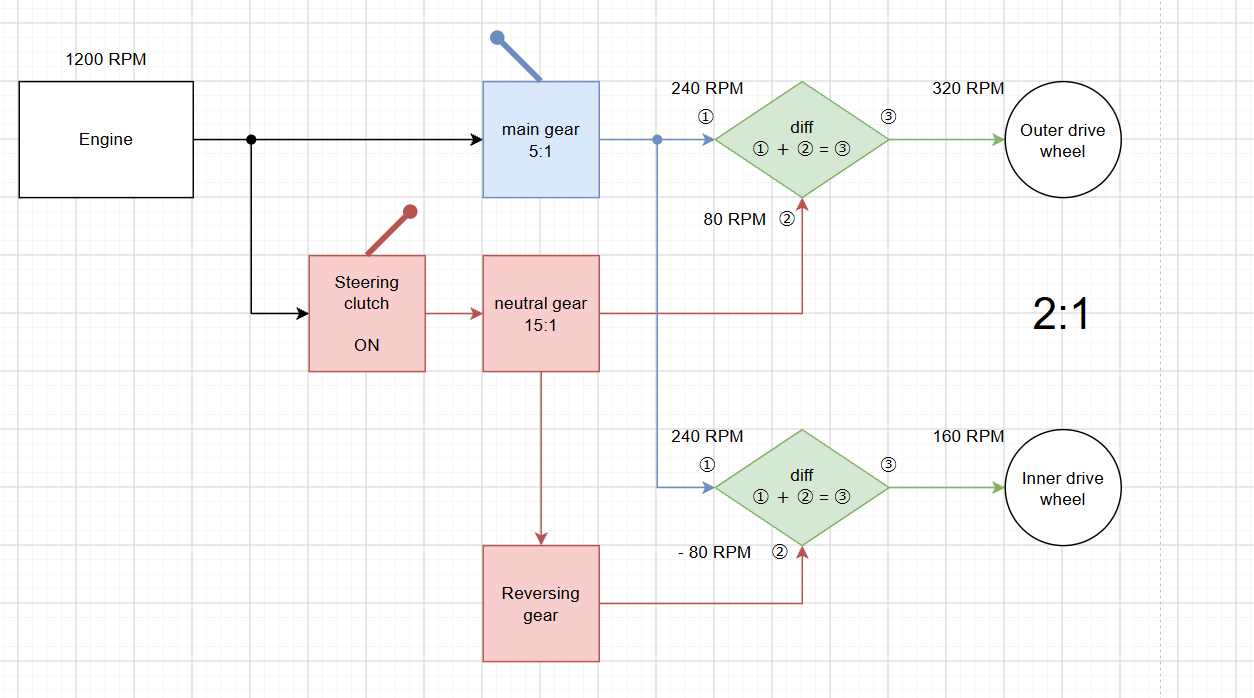
This is a simplified conceptual diagram of a fully gear-based double-differential steering system that does not utilize fluid power.
I created this to illustrate how the speed relationship between the left and right drive wheels remains fixed at a constant ratio, even when the engine speed changes.

1 Like
wow, that’s simpler than I would have ever imagined
1 Like
A conceptual diagram that more closely resembles the actual object looks something like this.

1 Like
This is a conceptual diagram of a system in which a hydraulic motor is connected to a dual-differential steering mechanism.
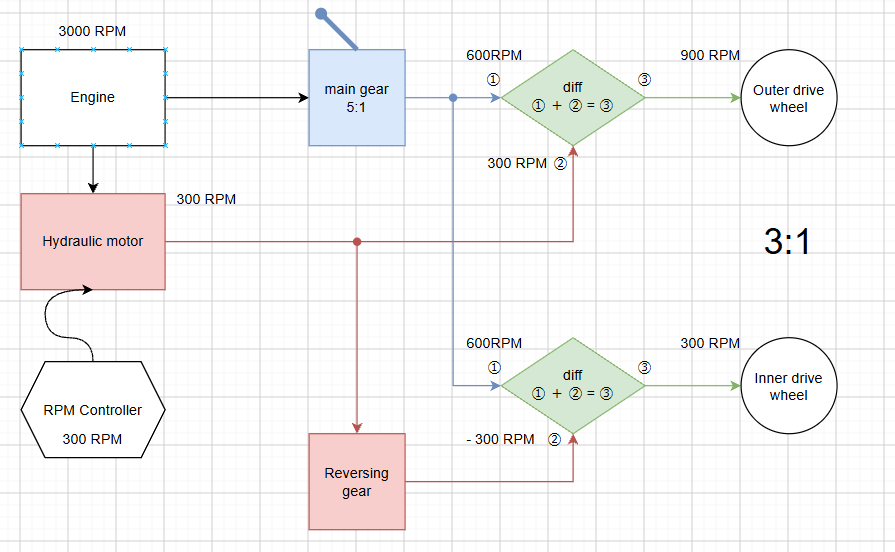

Regardless of engine RPM or gear selection, the turning radius can be freely adjusted by varying the RPM of the hydraulic motor.
By incorporating a system that synchronizes tank speed with the hydraulic motor’s RPM, it is possible to finely adjust the minimum turning radius based on speed—much like the behavior seen on the DEV server.
This type of hydraulic-motor-driven double-differential steering system is commonly found in modern Western tanks (the Abrams being a prime example).
The French B1 tank serves as an early example of a vehicle equipped with this system.
1 Like
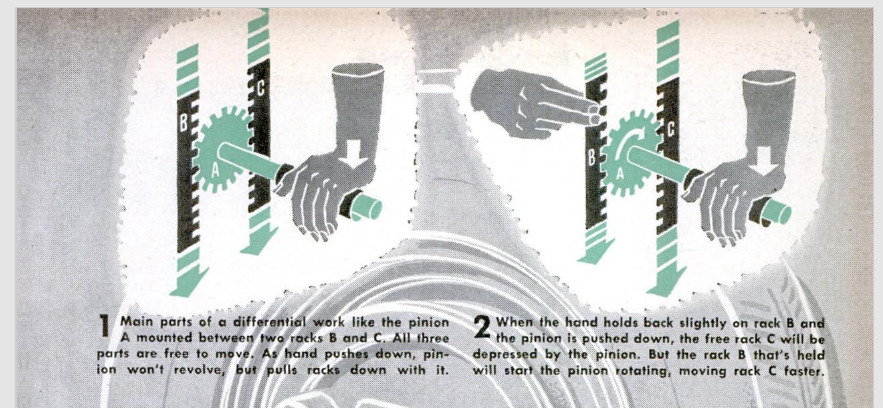
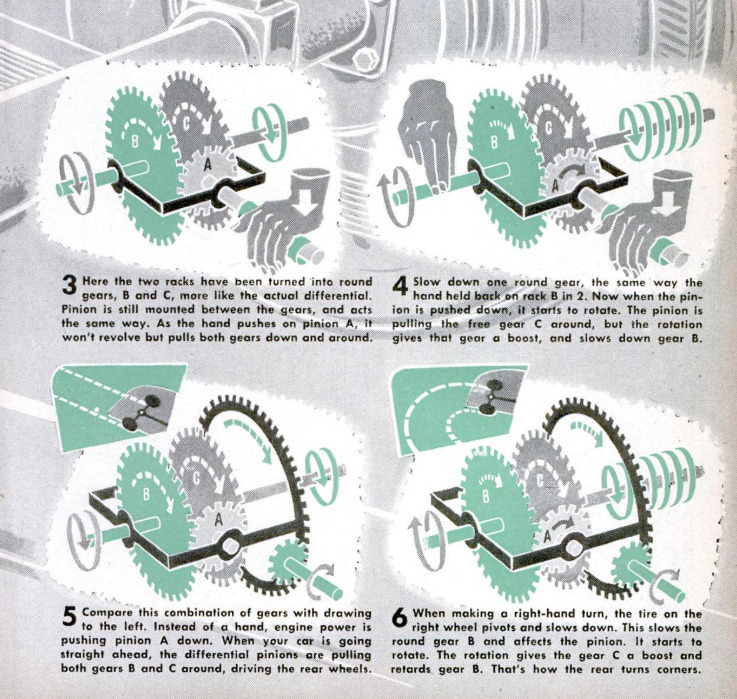
The “diff” boxes you have would just be planetary gearboxes. No?
YES
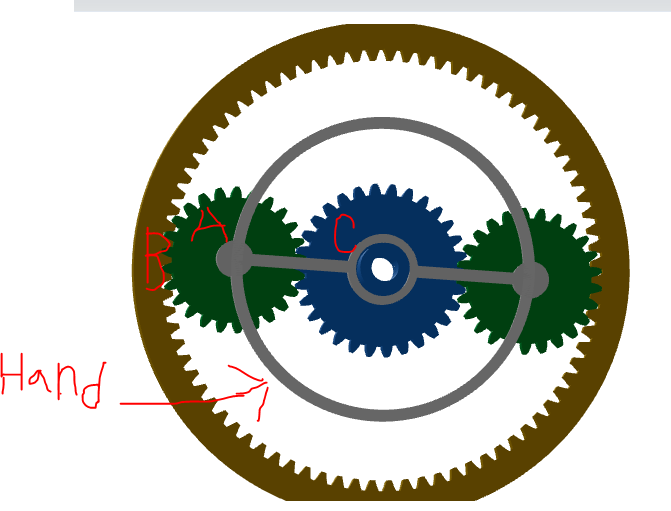
planetary gears and differential gears are essentially the same thing.
By cleverly configuring the number of teeth and the casing, a planetary gear set can be made to function as a differential.
(Hmm, it’s a bit difficult to explain in words, though.)
Edit:Here is a simplified diagram.
1 Like
For the lower diagrams atleast, you have 2 motors, one per side which removes the need for a reversing gear.
The motors are fed by pumps run directly off the engine.
The two motor outputs share a null output shaft, that’s how power is shared/“regenerated”, not exactly sure how that works.
I’m sorry.
My English skills aren’t strong enough, so I’m having trouble fully grasping the intent behind what you said.
normal for gaijin tbh
At least theres good faith reason to oppose the change if you dont like how it feels unlike the APHE change a while ago. I think even the leo 2 is improved by it, I think every tank unless wildly borked in its turn radius will be majorly upgraded by it, may well cause a few BR increases here and there too
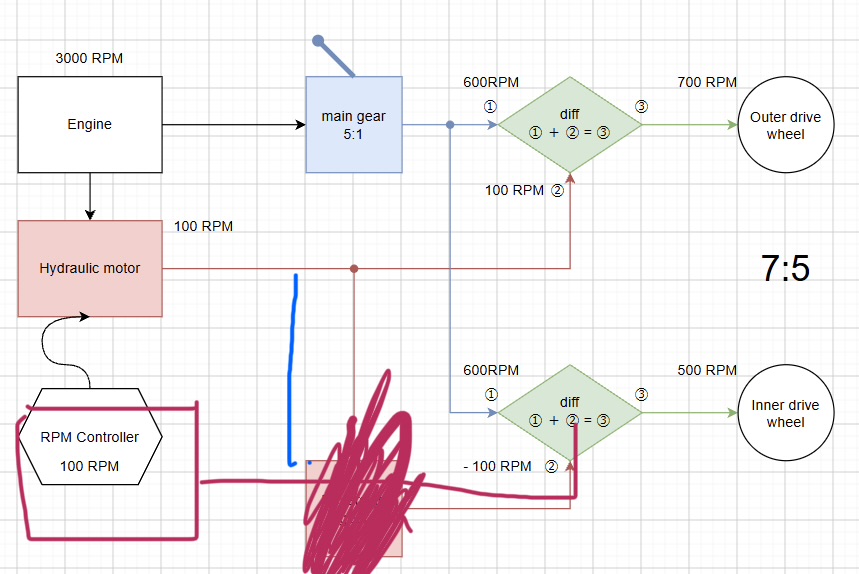
Apologies for the rough attempt but basically, there is two motors not 1, one per side. These motors then share a bull shaft(blue) which is how the power is “regenerated”.
1 Like
I understand now. Thank you.
What specific type of vehicle uses a mechanism equipped with two hydraulic motors? To the best of my knowledge, I have never seen an implementation like that.
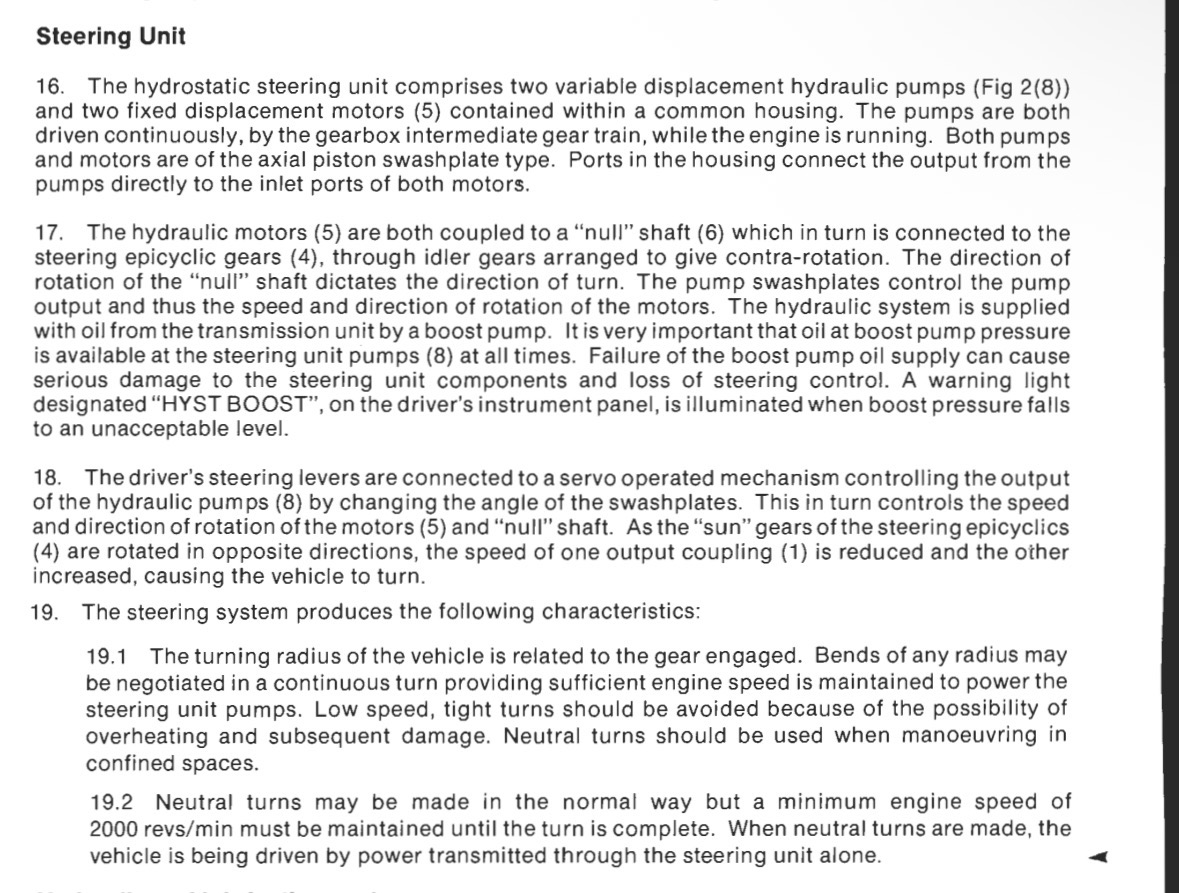
I see.
Looking at the image in the Challenger manual, the two motors share a single shaft, and there appears to be a reversing gear on one side of that shaft.
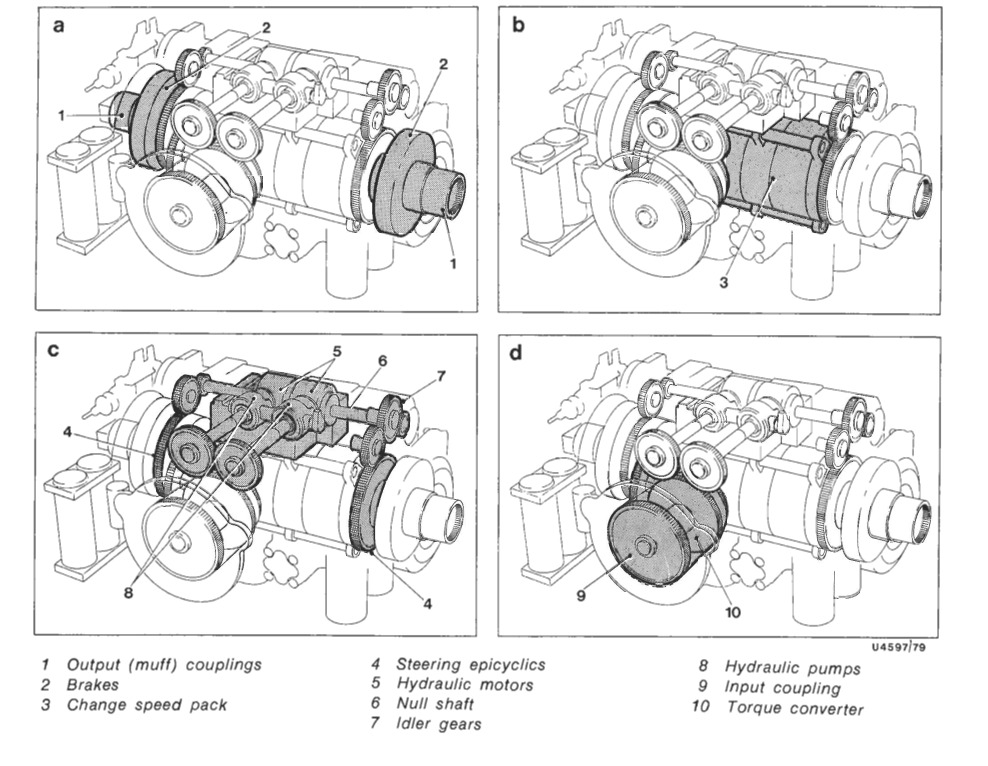
In other words, the setup likely looks something like this
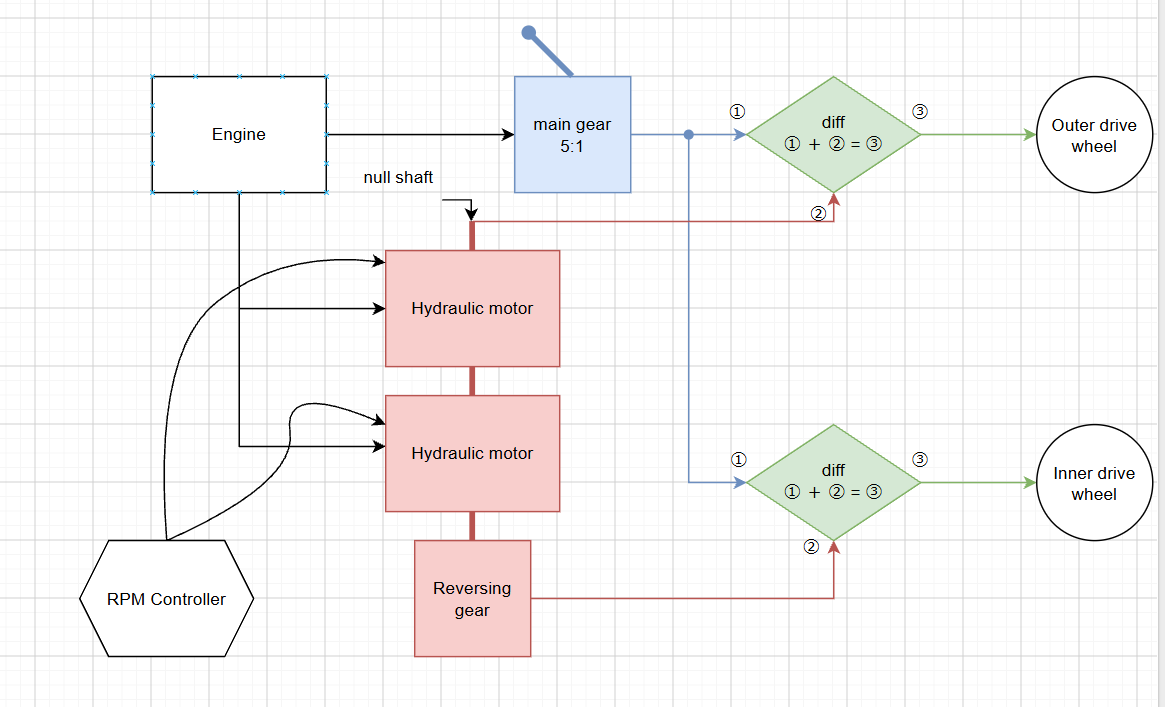
I suspect the use of two hydrostatic motors was an attempt to strike a balance between output torque and the size of the unit.
Ahhh yes that makes complete sense!
1 Like