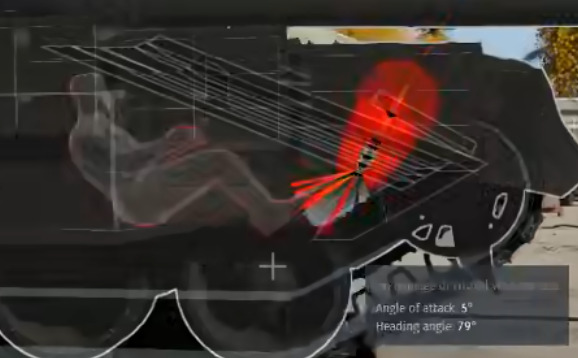
X-ray hit replays suggest that the projectile passes through multilayer composite armor as a single volume, entering at one point and exiting at another, without accounting for layer-by-layer interaction. In reality, an APFSDS round should progressively deform and erode while penetrating each armor layer.
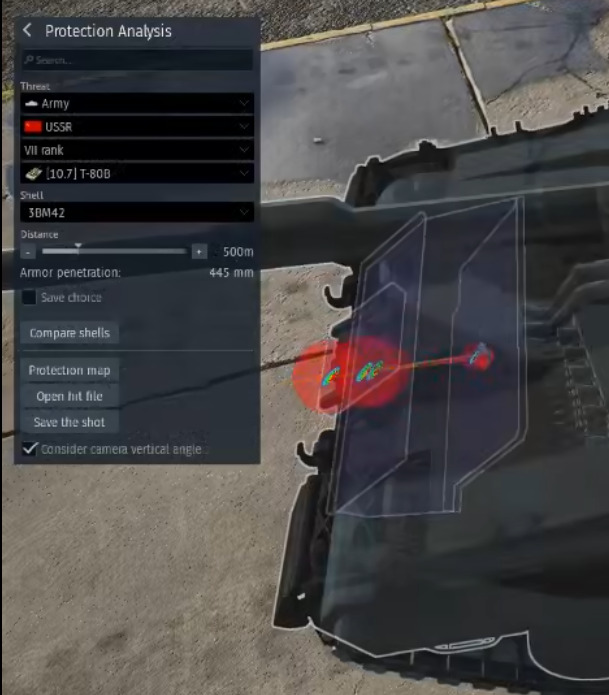
Because of this, multilayer structural armor does not take into account the projectile’s impact angle, its residual velocity, or the generation of fragments after the armor is penetrated.
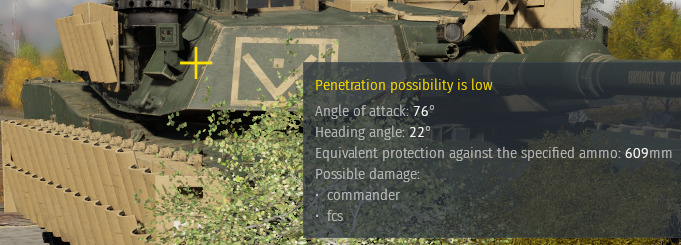
In the second case, we can see that the side armor of the Abrams turret is effectively not protected at all, even when the projectile enters at extremely steep angles.
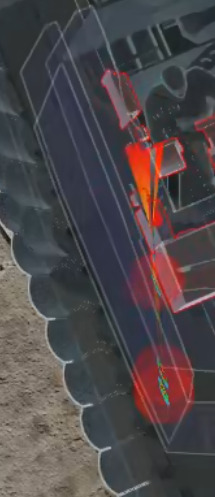
I also noticed another issue with multilayer armor: even when a projectile penetrates the armor at the very limit of its capabilities, it does not appear to lose velocity and can continue to penetrate almost the entire tank, while still retaining the ability to generate multiple fragmentation waves.
7 Likes
This brings up the issue that we don’t know what is exactly inside NATO tanks and how effective it is. Gaijin just uses a flat multiplier. For T-series tanks, we got a lot of information after the fall and we know exactly what their composite arrays are made of.
2 Likes
Well, Gaijin looks at NATO tanks, at stated specs, at what is being used and what information we have. Then declares it “clear marketing lies”, and makes vehicles like the PUMA which according to all sources are immune to APFSDS 30mm. And makes it so regular 30mm APDS can basically lolpen it from the side and to an extent the front.
Oh and 50cal can pen it from the back.
Just as an example. The same applies to a lot of other NATO tanks. Who all happen to be big, heavy, yet have worse armor than Russian tanks.
11 Likes
Good luck on that with the puma it took like three or four years to get the type 16 to be resistant to 30mm despite it being the only publicly available number about its level of protection.
2 Likes
As far as i am aware, composite is treated as a block and if the round fully pens, then it goes through.
I fear what would happen if they had it calculate each layer. With gaijin’s angle coding, it would most likely cause composite to become fully immune to everything after the round gets auto-bounced after several angle checks.
1 Like
Ever seen those simulations that show this? They take HOURS to render. WT isn’t 100% realistic because it can’t be, it is a video game.
1 Like
There’s no real projectile degradation in War Thunder, something that would buff relatively by a noticeable amount explosive reactive armor, and seeing that the bogeyman is Soviet Union, people wouldn’t like that.
As @slavmememachine and others mentioned is: we don’t have the full picture; these armor values can be and very likely is inaccurate, developers still use documents from the Cold War as most of these still classified or, some that are, don’t bring meaningful changes to the vehicle.
I’m hoping that at some point Gaijin implements projectile degradation, this could certainly make some vehicles more tougher, but I don’t think it will mean turning a vehicle in a unstoppable machine.
1 Like
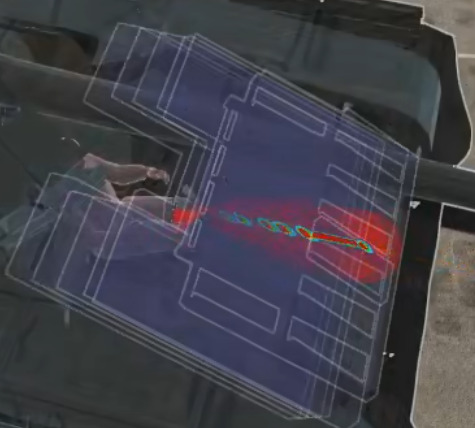
For some reason, Gaijin has enough power to process incredibly dense ERA layers. Because of this, the projectile often disappears or simply doesn’t do any damage. Speaking of the projectile impact simulation video, you saw that the round changes its trajectory when it hits structural armor. In our game, this only works on Soviet tanks.
3 Likes
You’ve noticed that when hitting Soviet EPA armor, a bug often occurs. Then, in the hangar, you check the hit analysis and see that the round should have penetrated the armor.
4 Likes
How strange, odd, bizarre
1 Like
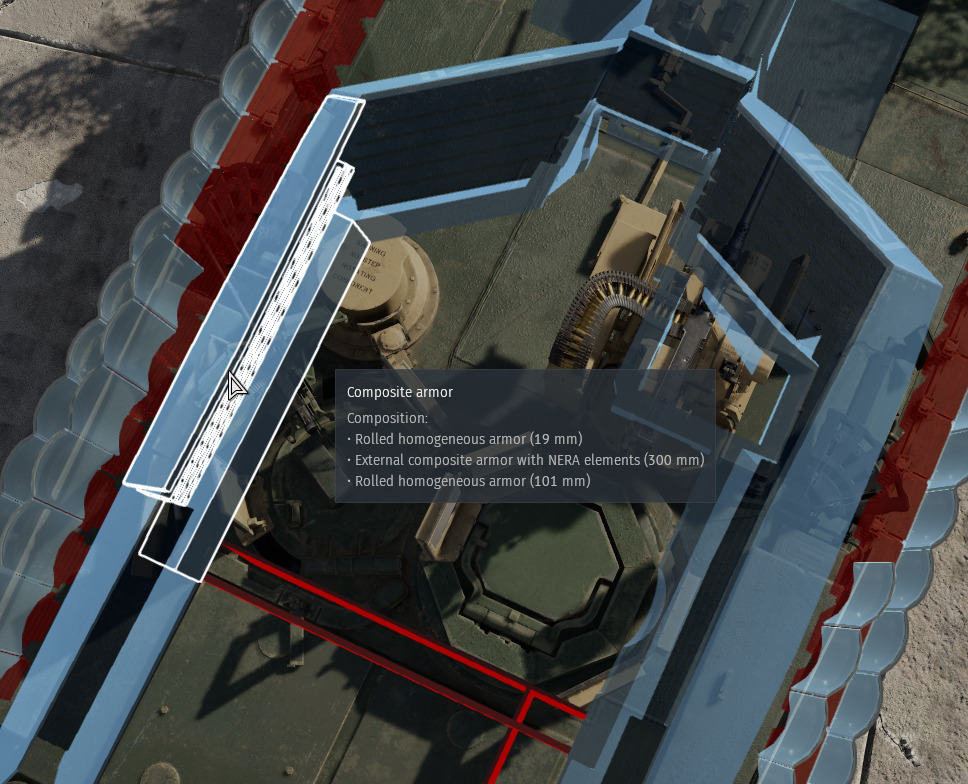
It’s already been modeled and is available in X-rays. What’s so difficult about modeling it for rounds?
They did the same thing on Soviet tanks.
Latest-generation Russian tanks(such as the T-90M, T-14 Armata, and others) are modern combat vehicles whose armor data is officially classified. Documentation regarding their protection systems (layer thickness, materials, composite layout) is generally not published by the state, and any leaks, when they occurred, were immediately removed by developers and moderators.
2 Likes
Oh yes, the Leopard 2A4. Broken since 2018.
It is underperforming and still not fixed even though declassified information available
2 Likes
I assume they just use RHA(e) numbers to stop the servers catching fire every time someone gets shot.
I would understand this if there hadn’t been calculations for the multilayer armor of Soviet MBTs. Why did they calculate it for only one nation and not for another?
2 Likes
I wouldnt even trust the hit calc stuff in the hanger too much.
I think it saves the hits client-side.
They need to refine the code used for when rounds hit multiple pieces.
Same issue happens with stuff like skirts and view ports
Looking at it in game the early Russian tanks that use metal-polymer block composite do the same thing as the NATO NERA and only show the entry/exit of the round through the main plates, I can only speculate that at some point the plates become to thin or numerous to model independently.
Of course this is all best of the hanger pen calculators animations, I have no idea how to dig into the code and figure out how its actually calculating it.
Take the multilayered side armor of the Abrams turret as an example. Because the armor isn’t designed as multilayered, a shell easily enters at an angle of 78 degrees. In reality, the shell would simply disappear into the multilayered armor.
1 Like
This is very noticeable on the BMPT Terminator. Due to the stacked EPA layers and their different values, the round often disappears. Then you look at the Hit Analysis in the hangar and see that you should have penetrated it. Because the game servers can’t keep up with the Soviet multilayer armor.
2 Likes