- Yes
- No
Hello everyone, and welcome to this new feature.
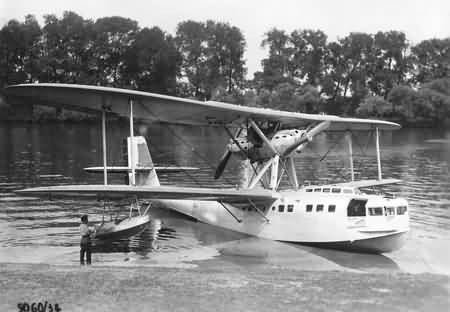
Today, I am presenting a French Navy seaplane prototype from the interwar period: the Potez CAMS 110.
In the early 1930s, the seaplane manufacturer CAMS was facing financial difficulties; its latest prototypes were failing to sell, and its racing models were underperforming. Henry Potez, a prominent figure in French aviation, acquired the company and funded the production of new aircraft. This led to the creation of several iconic French Navy aircraft, such as the Antarès. However, today I am showcasing the Potez-CAMS group’s very first prototype, a design intended to be innovative while remaining true to the company’s earlier aircraft.
The CAMS 110 was an evolution of the CAMS 55, a military reconnaissance seaplane widely used by the French Navy. This new version was essentially an enlarged iteration of the original aircraft, featuring two major changes. The first concerned construction materials: while the CAMS 55 and its predecessors were built entirely of wood, the CAMS 110 featured a metal hull, providing superior seaworthiness and impact resistance; the wings, however, remained wooden to keep the structure as light as possible. The second change involved the propulsion system; whereas CAMS aircraft were traditionally single-engine designs, this model featured two engines mounted back-to-back in a “push-pull” configuration, a setup found on several other French aircraft of the era.
A single prototype was produced and made its maiden flight in 1934. It demonstrated impressive flight characteristics, with the new propulsion system significantly boosting performance and enabling the transport of heavy loads. Ultimately, however, the military did not select the aircraft, and it was subsequently demilitarized. However, that was not the end of its story; CAMS subsequently used the aircraft for testing the integration of various armaments, and in 1939, the military even inducted it into service as war loomed and the need for aircraft grew urgent. Yet, the only CAMS 110 ever built was destroyed during the very first hours of the war, marking the end of the aircraft’s career.
Interestingly, during its brief service life, the aircraft was used to transport officials to government meetings; notably, it carried an Air Force representative to the Azores for negotiations regarding seaplane stopovers in the archipelago during transatlantic flights.
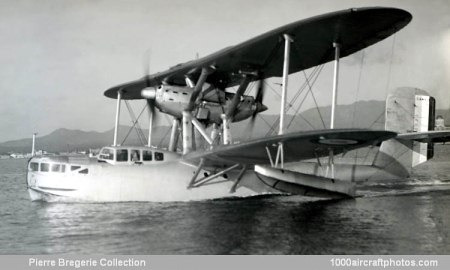
Characteristics
Length : 16.30 m
Width : 22.50 m
Height : 6.00 m
Mass :
- Empty : 5 520 kg
- Max : 9 250 kg
The aircraft is powered by two Hispano-Suiza 12 Ydrs engines, each developing 860 hp, enabling it to reach a top speed of 240 km/h and a service ceiling of 6,500 m. It has a range of 2,700 km.
The crew consists of five or six personnel: two pilots flying the aircraft in tandem; a flight commander responsible for navigation, operating the forward guns, and releasing bombs; and a flight engineer and a radio operator, the latter also manning the rear machine guns, a role that can be taken over by an additional gunner.
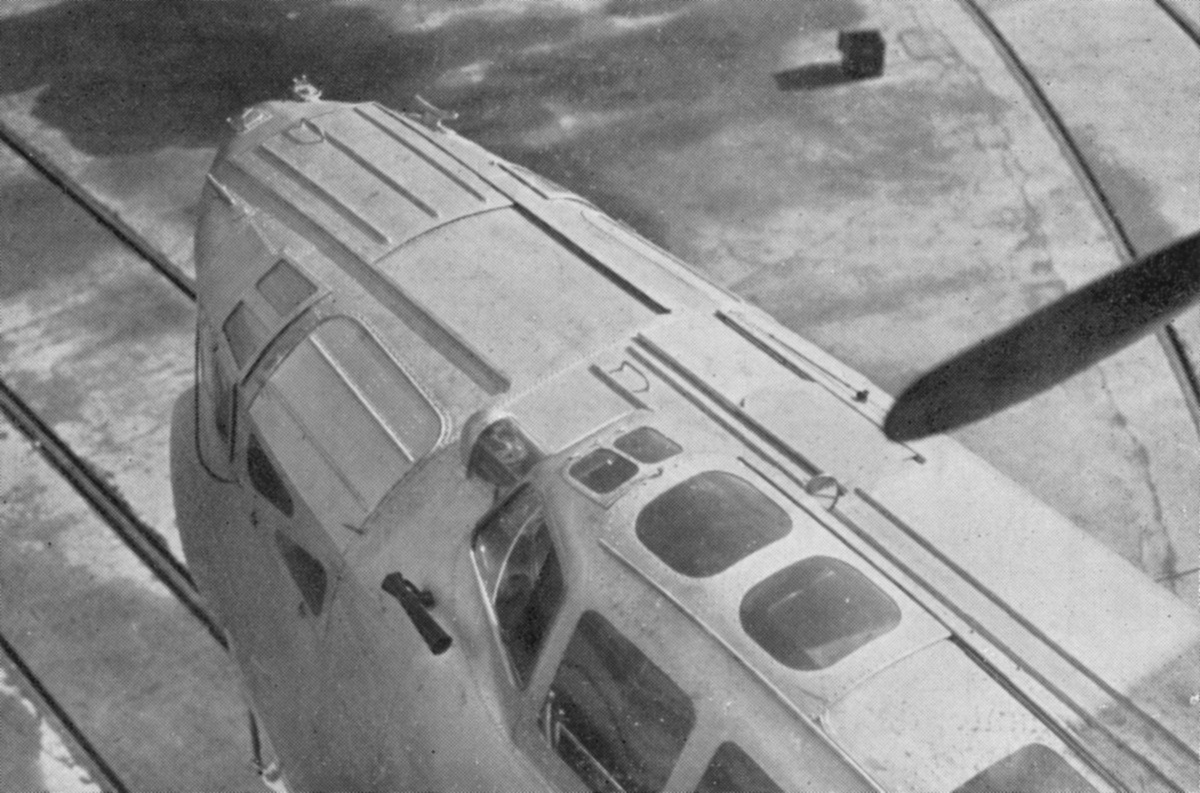
Weapons
The aircraft’s armament differs from that of previous CAMS models. Instead of featuring open turrets at the bow and stern, it is equipped with beam-mounted machine guns, which are easier to access in flight and have less impact on the aircraft’s aerodynamics
Defensive armament:
- 4 x 7.5mm Darne machine guns (2 at the front—one on each side—and 2 at the rear—one on each side)
Offensive armament:
- 1 tonne of bombs
In-game, this aircraft would be an interesting addition to the French tree, to say the least, providing a low-BR seaplane capable of defending itself effectively from all angles and carrying a bomb load sufficient to inflict significant damage on ground targets.
Sources
- Les hydravions POTEZ
- Les Ailes : journal hebdomadaire de la locomotion aérienne / directeur, rédacteur en chef, Georges Houard | 1936-11-15 | Gallica
- Les Ailes : journal hebdomadaire de la locomotion aérienne / directeur, rédacteur en chef, Georges Houard | 1935-06-27 | Gallica
- Les Ailes : journal hebdomadaire de la locomotion aérienne / directeur, rédacteur en chef, Georges Houard | 1935-07-18 | Gallica
- Potez Aéronautique : aérostructures, aménagement cabine, services industriels
- Hydravions CAMS en photographie
- CAMS 110
- AVIATION FRANCAISE 1935-1975 et autres nations combattantes ou non. | The nose of the only CAMS 110… | Facebook
- Potez and Potez-CAMS flying boats and seaplanes | Secret Projects Forum