- Yes
- No
Introduction
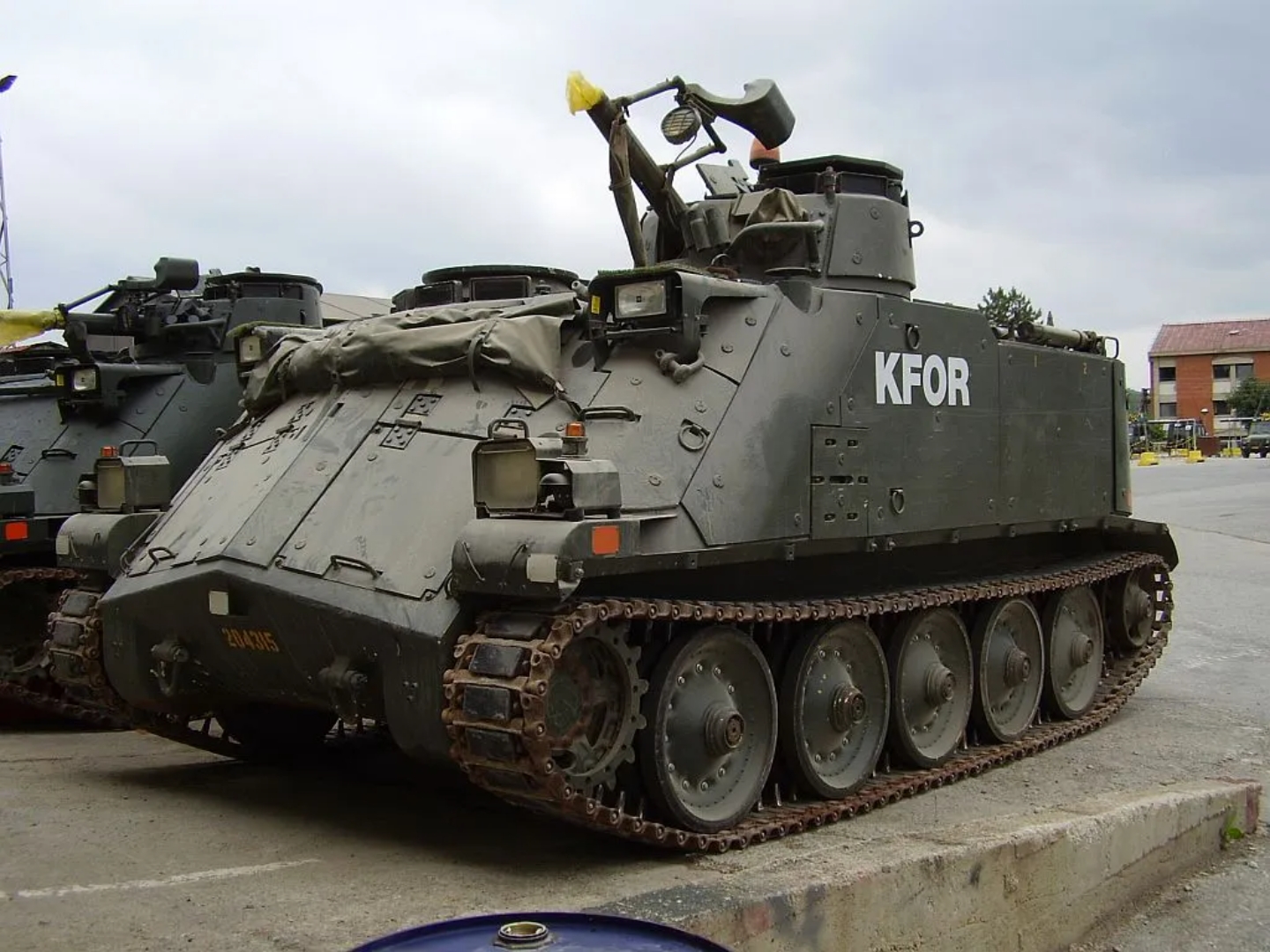
The Pansarbandvagn 302C represents the last iteration of the Pbv 302. These are the same as the Pbv 302B but with even more modifications, not just an internal spall liner. The C variant received an external appliqué armor kit to protect it from shaped-charge ammunition. But these also received a new suspension, and later a new roadwheel design would be introduced as the appliqué armor kit added around 800kg. Testing also showed that the turbocharged wared out faster, so a new turbo would be fitted as well. Additional Hella headlights would be fitted instead of the original round ones, with an additional set found on the front fenders. The C variant also received AC units for added comfort. Only 50 Pbv 302C would be made, and these would also be the ones to serve the longest in the Swedish army.
History
The history of the Pbv 302 can be traced back to the 60’s when a dedicated armored troop transport was needed. While a dedicated platform would be developed under the program Pbv m/ny, a stopgap solution would be made in the form of the Pbv 301, using the chassis of the Strv m/41 and converting it into a dedicated APC. For the program Pbv m/ny, importing an already proven vehicle was of interest, while Landsverk and Hägglunds & Söner would be tasked with designing their own APC for consideration. For foreign options, the M113 was the most promising one, so one would be bought, and Hägglunds would meanwhile present two designs for Pbv m/ny. The difference between them was the gearbox used. Hägglunds would be awarded the funds to construct two prototypes, one for each proposed transmission, but the two prototypes did have other differences as well.
The first production model would just be called Pbv 302, and this model would, in the 80s, undergo REMO (a modernization program), which would allow the vehicles to serve into the 2000s. This modernization saw the turret’s internal structure overhauled, allowing a 30-round magazine instead of the previous 10-round magazine combined with an ammunition belt. There were also other changes, like the driver getting a new seat as well as the relocation of the smoke launchers from the roof of the troop compartment to the turret housing the 20mm automatic cannon. These would in 1993 be redesignated to Pbv 302A, as 50 Pbv 302s would be upgraded for peacekeeping in other nations.

Åkers Krutbruk Protection AB would be tasked with making a ceramic appliqué armor kit for the Swedish military. This kit was meant to be able to be applied to almost any light vehicle, like trucks and APCs, to improve their protection against shaped-charge ammunition. This kit was meant to be applied to these 50 Pbv 302 for their deployment to Bosnia in 1993, but testing found that the kit added around 800kg of extra weight. This meant the chassis of the Pbv 302 was now over its intended maximum weight of 14 tons. This resulted in only an internal glass fiber spall liner being mounted for the initial deployment, and these would be designated Pbv 302B. To fix the issue of the added strain to the Pbv 302, a new suspension would be made and a new turbo would be installed. The new turbo did not boost the overall horsepower of the engine; instead, it allowed for more torque. The first Pbv 302Bs would receive the appliqué armor kit while in Bosnia in 1993, with the rest getting the kit installed under 1994. After the deployment in Bosnia, a new roadwheel design would be introduced to complement the new suspension; the same type of roadwheel would make its way onto Pbv 302As as well. Some other changes that were done for the C variant included a new set of headlights made by Hella. These were of a square design and would, in Bosnia, be mounted under the original headlights. While the vehicles were in Sweden before deployment to Kosovo under KFOR, the original headlights would be removed, and the Hella headlights would be fully replaced. An additional set would subsequently be mounted on the front fenders. An AC unit would also be fitted to the C variant to add crew comfort. But due to these modifications and added weight, the Pbv 302C is no longer amphibious, and therefore the splashboard along with its frame would be removed.
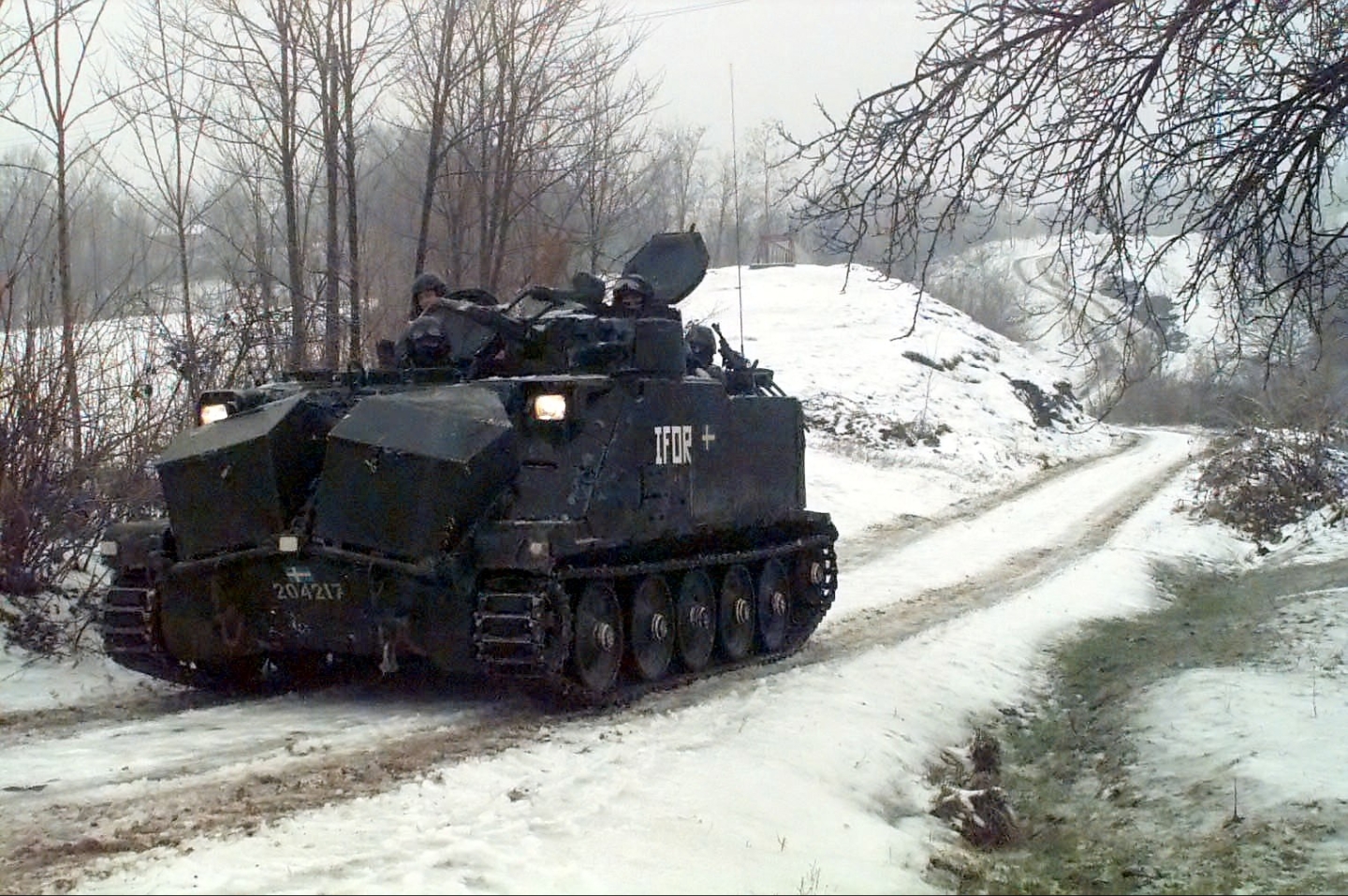
In 1999, the Pbv 302C was deployed for the NATO peacekeeping operation KFOR. The 50 Pbv 302C would be a part of this deployment. Deployment of the vehicles lasted from 1999 to 2003, and a second deployment of only 14 vehicles was done in 2004. At this point, scrapping of a large quantity of the Pbv 302 had been decided as the SEP program was proving to be very promising as it aimed to replace most light vehicles with a universal platform. But as the project was put on ice, the logical solution was to have all Pbv 302 replaced by Strf90 instead. Full decommissioning of the Pbv 302 would be carried out following this decision, and the last Pbv 302 to see service was the C variant. I would not be retired until 2018. These vehicles would be put into storage instead of being scrapped, and in 2024, the entire fleet of Pbv 302 in storage would be sent in aid packages to Ukraine. It is rumored that most of the C variants had their appliqué armor kit removed before being sent to Ukraine to save on weight. But at least one Pbv 302C has been seen in Ukraine.
Specifications
Protection
Chassis
- Front: 25 mm + Appliqué armor
- Sides: 10 mm + Appliqué armor
- Rear: 5 mm + Appliqué armor
- Internal fiberglass spall liner
Turret
- Front: 23 mm + Appliqué armor
- Sides: 20 mm + Appliqué armor
- Rear: 20 mm + Appliqué armor
Armaments
Main armament
- 20 mm akan m/47D
- Horizontal guidance: ±180°
- Traverse rate: 1st speed: 4°/rev, 2nd speed: 12°/rev
- Vertical guidance: +50° / -10°
- Amount of rounds: 5 × 30-round magazines in the turret + 5 × 30-round magazines in the hull
- sgr m/47 (HE)
- slsgr m/71 (HEI-T)
- slpprj m/68 (HVAP-T)
- slhpbrgr m/47 (SAPHEI-T)
- slhpbrgr m/95 (SAPHEI-T)
- Horizontal guidance: ±180°
Secondary armaments
- 6 × smoke grenade launchers
- 3 launchers are located on each side of the turret
- 2 × 71 mm Lyran illumination mortar
Crew
- Commander / Gunner
- Periscopic sight
- Magnification: 4.0× to 8.0×
- NVD
- Periscopic sight
- Driver
- NVD
Mobility
Engine
- Volvo-PENTA THD 100 B
- 270 hp @ 2200 rpm
Transmission
- Volvo-PENTA R-60
- Has both high and low range
- Gears forward: 8
- Gears backward: 2
- Has both high and low range
Speed
- Forward: 65 km/h
- Backward: 11 km/h
Weight
- 14.2 tons
Power-to-Weight
- 270 hp ÷ 14.2 tons ≈ 19,01 hp/ton
Dimensions
- Length: 5350 mm
- Width: 2860 mm
- Height: 2500 mm
Sources
KAF Maj 1968. Pansarbandvagn 302A MT. Mtrlugrp Tp Stridsfordon, Förrådsbeteckning M5370-302011
Jane’s Armour and Artillery 1979-80
Jane’s Armour and Artillery 2003-04
TIFT. NR 4 - 2005
https://sv.wikipedia.org/wiki/Pansarbandvagn_302
https://en.wikipedia.org/wiki/Pansarbandvagn_302
https://sv.wikipedia.org/wiki/Pansarbandvagn_301
Pbv 302
Pbv 302 (fordonsfamilj) | SPHF
Pbv 302-uppropet! | SPHF
pbv 302
pbv302 | gotlandsforsvarsmuseum.se
https://sv.wikipedia.org/wiki/Hispano-Suiza_HS_404#Svenska_varianter_och_beteckningar
Pansarbandvagn 302 (PBV 302) - Pebban | SoldF
Pbv 302 (BILL) | War Thunder Wiki
https://sv.wikipedia.org/wiki/Bosnien_BA01
Kosovo Force – Wikipedia
Kosovo – KFOR