- Yes
- No
Introduction
The Pbv 302B was a further development of the Pbv 302A REMO, which had been in service with the Swedish Army since the mid-1980s. With Sweden preparing to send troops to Bosnia as part of the UN peacekeeping mission, additional protection was considered necessary. This would result in 50 Pbv 302A REMOs being fitted with an internal fibreglass spall liner, receiving the designation Pbv 302B. The version would only be used for a short period before being further upgraded to the Pbv 302C standard, which received external ceramic appliqué armor. Despite its short service life, the Pbv 302B would see combat during its deployment in Bosnia.
History
The Pbv 302 was the first serial-produced APC for the Swedish Army, while the Pbv 301 was only a stopgap solution until a more capable vehicle was designed. Work on a new APC began in the early 1960s under the program Pbv m/ny, and both importing an already existing and proven vehicle was on the table, but Landsverk and Hägglunds & Söner had also been asked to draw up a design each. One example of an M113 would be bought, and Hägglunds would present two different alternatives, the difference between them being the gearbox of choice. They would be granted the funds to build two prototypes, one for each gearbox, and these two prototypes would be numbered 925 and 926. Testing commenced in 1963 alongside the M113; prototype No. 925 proved itself to be the most capable one. The only change that would be made was the installation of a revised turret, which is what is found on the serial production models.
A pre-production batch of 26 Pbv 302s would be built in 1967, with serial production beginning the following year, and delivery of the last Pbv 302s was made in 1971. But already in 1979, prototyping for the REMO version of the Pbv 302 began, and three different Pbv 302s would be modified to try out new modifications to the vehicle. All Pbv 302s would undergo REMO, with it beginning in 1984. What was decided to do was to move the smoke grenade launchers from the rear roof hatches over the infantry compartment and place them on the turret instead. The internal layout of the turret would also be restructured; this would allow the gun to have a 30-round magazine instead of the previous 10-round magazine. Because of this, the belt magazines were removed in favor of only having the 30-round magazine. Various internal things were changed for ergonomics, like the driver receiving a new seat. When the Pbv 302 was being produced, it received M113 tracks, while later they would be fitted with M70 tracks and sprockets, but this was not part of REMO and was done later.
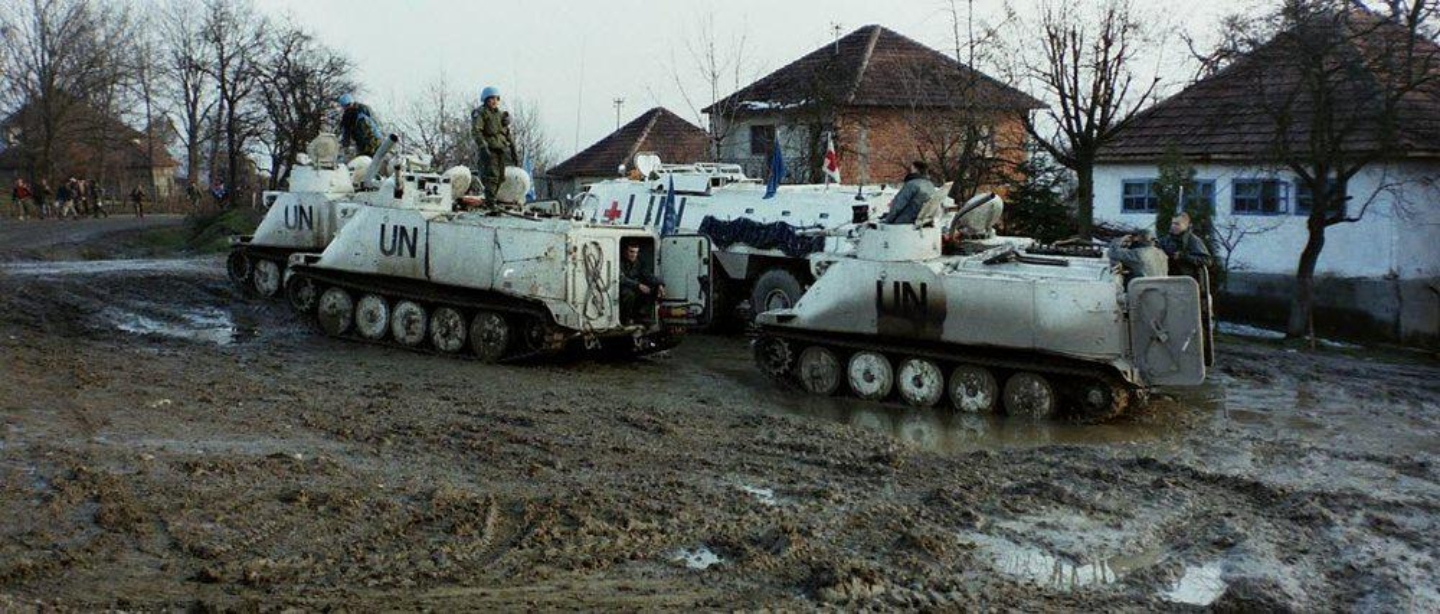
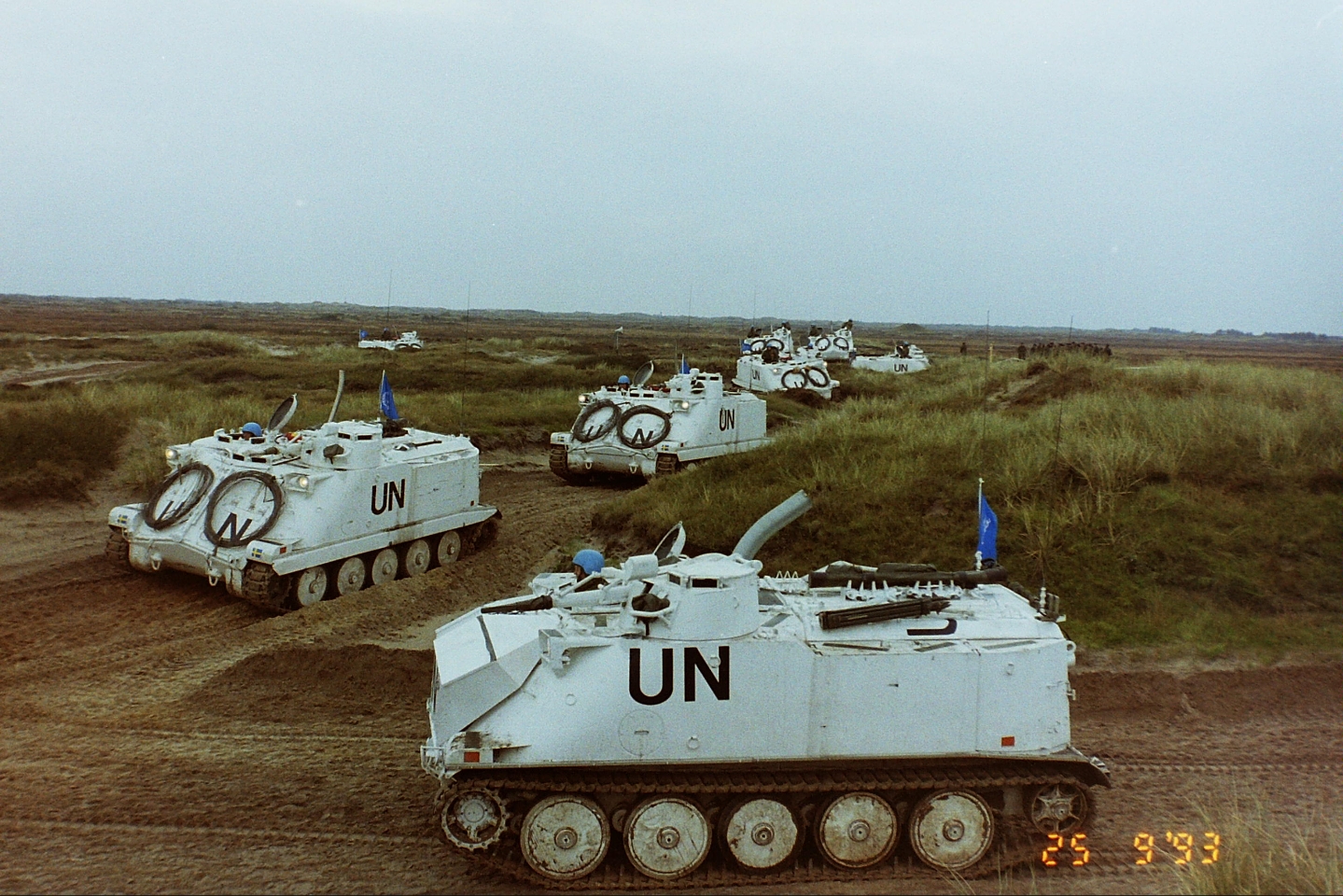
In 1993, the Pbv 302 would be deployed for peacekeeping with the Swedish UN battalion BA01 in Bosnia. 50 Pbv 302As would be upgraded with an internal fibreglass spall liner, receiving the designation Pbv 302B. Some of the vehicles also received additional storage boxes on the front. As these were part of the UN battalion, they were painted white with large black UN markings on the sides.
On 22 February 1994, three Swedish Pbv 302s came under fire from AT-3 Sagger (9M14 Malyutka) anti-tank missiles near Ribnica in Bosnia. Two vehicles were hit, one of which was a Stripbv 3021B command vehicle and the other a Pbv 302 belonging to the anti-tank missile platoon. The exact version of the Pbv 302 is unknown; it may have been B-standard and not yet upgraded to C-standard, as both vehicles belonged to the same battalion. No one was killed, but five Swedish soldiers were wounded. The injuries included minor wounds from shrapnel, temporary incapacitation following the explosions, and permanent hearing damage to one soldier. According to accounts from former servicemen, both vehicles were later repaired and continued to serve, with at least one remaining in the Balkans until December 2002. The incident would later lead the Swedish Defence Research Establishment (FOA) to conduct tests in Sweden against a Pbv 302 using warheads from Robot 53, which were considered comparable to the AT-3 Sagger. The tests were intended to recreate the attacks in Bosnia and investigate what the soldiers had experienced. Six shots were fired, three against the front and three against the side of the vehicle. The tests investigated the internal pressure, smoke, gases, and intense light caused by the penetration. It was found that hearing protection had helped prevent hearing injuries, while the smoke and pressure could explain some of the other effects experienced by the soldiers.

Later in 1993 and throughout 1994, the 50 Pbv 302Bs would receive an external ceramic appliqué armor kit, resulting in their redesignation as Pbv 302C. The C-version would also receive further improvements, including reinforced suspension, air conditioning, an upgraded turbocharger, and additional Hella headlights mounted under the stock round headlights (these would later be fully replaced with Hella headlights, with an additional set on the front fenders).
Specifications
Protection
Chassis
- Front: 25 mm
- Sides: 10 mm
- Rear: 5 mm
- Internal fiberglass spall liner
Turret
- Front: 23 mm
- Sides: 20 mm
- Rear: 20 mm
Armaments
Main armament
- 20 mm akan m/47D
- Horizontal guidance: ±180°
- Traverse rate: 1st speed: 4°/rev, 2nd speed: 12°/rev
- Vertical guidance: +50° / -10°
- Amount of rounds: 5 × 30-round magazines in the turret + 5 × 30-round magazines in the hull
- sgr m/47 (HE)
- slsgr m/71 (HEI-T)
- slpprj m/68 (HVAP-T)
- slhpbrgr m/47 (SAPHEI-T)
- slhpbrgr m/95 (SAPHEI-T)
- Horizontal guidance: ±180°
Secondary armaments
- 6 × smoke grenade launchers
- 3 launchers are located on each side of the turret
- 2 × 71 mm Lyran illumination mortar
Crew
- Commander / Gunner
- Periscopic sight
- Magnification: 4.0× to 8.0×
- NVD
- Periscopic sight
- Driver
- NVD
Mobility
Engine
- Volvo-PENTA THD 100 B
- 270 hp @ 2200 rpm
Transmission
- Volvo-PENTA R-60
- Has both high and low range
- Gears forward: 8
- Gears backward: 2
- Has both high and low range
Speed
- Forward: 65 km/h
- Forward while swimming: 7,2 km/h
- Backward: 11 km/h
- Backwards while swimming: Unknown
Weight
- 14 tons
Power-to-Weight
- 270 hp ÷ 14 tons ≈ 19,28
Dimensions
- Length: 5350 mm
- Width: 2860 mm
- Height: 2500 mm
Sources
KAF Maj 1968. Pansarbandvagn 302A MT. Mtrlugrp Tp Stridsfordon, Förrådsbeteckning M5370-302011
Jane’s Armour and Artillery 1979-80
https://sv.wikipedia.org/wiki/Pansarbandvagn_302
https://en.wikipedia.org/wiki/Pansarbandvagn_302
https://sv.wikipedia.org/wiki/Pansarbandvagn_301
Pbv 302
Pbv 302 (fordonsfamilj) | SPHF
Pbv 302-uppropet! | SPHF
pbv 302
pbv302 | gotlandsforsvarsmuseum.se
https://sv.wikipedia.org/wiki/Hispano-Suiza_HS_404#Svenska_varianter_och_beteckningar
Pansarbandvagn 302 (PBV 302) - Pebban | SoldF
Pbv 302 (BILL) | War Thunder Wiki
https://sv.wikipedia.org/wiki/Bosnien_BA01
Verkan av en RSV-laddning mot pbv 302. En experimentell jämförelse med beskjutningarna i Bosnien 1994 - Totalförsvarets forskningsinstitut - FOI