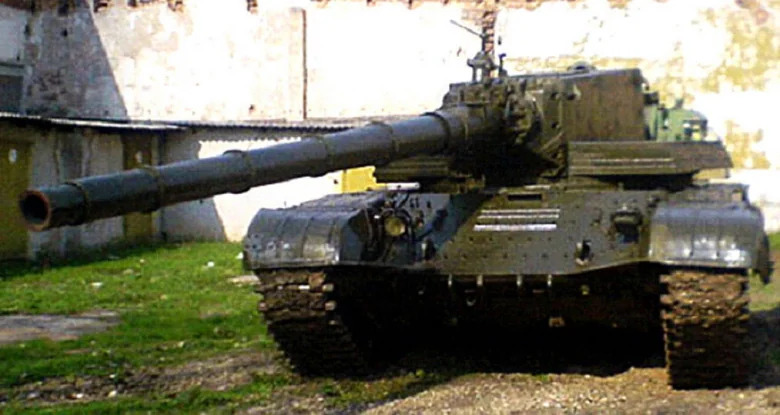
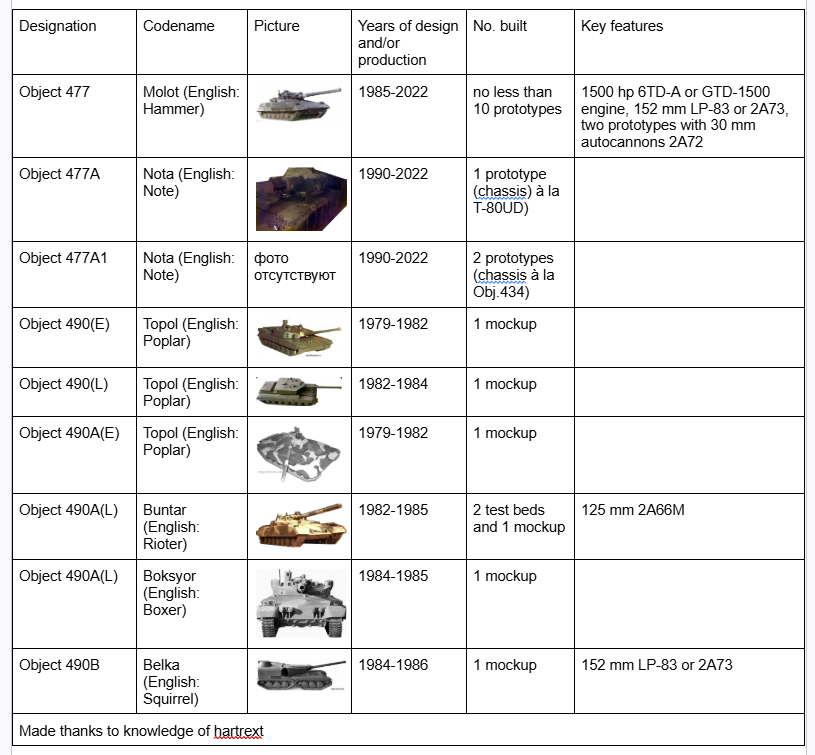
- Yes
- No

 Object 477A1 ‘Nota’ - a joint Russo-Ukrainian Project

Before we get into the Nota, if you see any discrepancies or if something is wrong, feel free to let me know below and we can try to correct it, not a ton is known about this specific vehicle hence why its taken awhile for me to even finish it. thank you.
History
The Object 477A1 “Nota” stands as a remarkable testament to what Ukrainian and Russian engineers could achieve when they pooled their brilliance. It represents a unique era of cooperation, where two newly independent nations chose to bridge their defense industries to keep a shared dream of next-generation armored warfare alive.
When the Soviet Union dissolved in 1991, decades of groundbreaking research on a futuristic 152 mm super-tank were at risk of being lost forever. Instead of letting the project die in the geopolitical chaos, Kyiv and Moscow chose unity. In 1993, they forged a bilateral partnership, officially merging their talents under the “Nota” program to build a machine that neither country could have completed alone.
The collaboration was a perfect industrial symbiosis. Ukraine’s Kharkiv Morozov Design Bureau provided the physical backbone of the tank, contributing their world-class chassis design, advanced suspension, and powerful 6TD diesel engines. Russia matched this effort by delivering the tank’s raw power and high-tech brain, supplying the massive 152mm smoothbore gun, specialized ammunition, and advanced targeting electronics.
Working side-by-side, engineers from both nations successfully solved incredibly complex hurdles. Together, they turned highly ambitious blueprints into actual, working prototypes. They successfully integrated a low-profile, unmanned turret with a revolutionary “three-drum” autoloader capable of handling massive 152mm shells a feat of engineering that remains legendary in military history.
While shifting national priorities eventually led the two countries to pursue separate military paths in 2001, the Object 477A1 “Nota” remains a monument to a time of shared purpose.
To sum up the venture
- Ukraine handled the heavy lifting of the physical tank designing the chassis, the advanced suspension, and building the powerful diesel engines.
- Russia supplied the firepower and brains building the massive 152mm smoothbore gun, the advanced electronics, and the automated fire control systems.
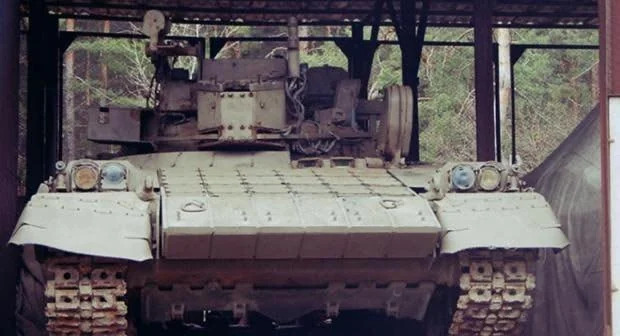
Specifications
General Information
- Country of Origin: Russia / Ukraine (Post-Soviet Joint Project, KMDB)
- Crew: 3
Mobility & Performance
- Engine: KMDB 6TD-3 6-cylinder, multi-fuel, opposing-piston, supercharged two-stroke diesel
- Engine Power: 1,500 hp at 2,600 RPM
- Transmission: Mechanical planetary gearbox (7 forward gears, 1 reverse gear; optionally upgradable to a hydro-volume steering system with 4 reverse gears)
- Maximum Speed (Forward): 70 km/h
- Maximum Speed (Reverse): -4 km/h (up to -30 km/h with hydraulic steering upgrade)
- Combat Weight: 55.0 metric tons (reduced from older 57-ton designs due to extensive titanium alloy integration)
- Power-to-Weight Ratio: 27.2 hp/t
- Suspension: Custom KMDB 7-roadwheel torsion bar suspension with hydraulic shock absorbers
Armament
- Primary Armament: 152mm 2A73 smoothbore cannon
- Megajoules: 25
- Muzzle Velocity: 1980-2000m/s
- Grifel-1: APFSDS (Tungsten core)
- Grifel-2: APFSDS (Depleted Uranium core)
- Grifel-3: High-explosive fragmentation (HE-FRAG)
- Elevation Limits: -6° / +14°
- Turret Traverse Speed: 32°/s (Hydraulic-electric drive)
- Autoloader: 3-drum mechanical system (10-round central ready-drum located vertically behind the crew capsule, automatically replenished by two 11-to-12 round longitudinal drums)
- Reload Speed: 4.3 seconds
- Total Ammo Capacity: 32 rounds
- Secondary Armament: Remotely operated 30mm 2A42 autocannon
- Ammo Capacity: 300 rounds
- Feed: Dual-feed (HE-I / AP-T belt configurations)
- Coaxial Armament: 1x 7.62mm PKT machine gun (or optional 12.7mm NSVT heavy machine gun)
- Ammo Capacity: 2,000 rounds
Protection & Survivability
- Crew Layout (3 Members): Driver, Gunner, and Commander seated shoulder-to-shoulder inside a heavily reinforced, titanium-shielded armored capsule in the front hull (completely isolated from the fuel, ammunition, and autoloader).
- Frontal Hull Composition: Multi-barrier composite matrix integrating high-hardness steel, ceramic blocks, and structural titanium plates. Provides 850mm-950mm kinetic energy (KE) protection and >1,300mm chemical energy (CE) protection.
- Side Armor: Modular composite side-skirts combined with heavy armor plates to defend against tandem-charge HEAT warheads and high-caliber autocannons.
- Active Protection System: None.
- Explosive Reactive Armor: Built-in modular heavy ERA arrays code named "R&D Project Name: “Nizh” / “Nozh” or under the Soviet Designation "Soviet Hull-Integration Code: “Grom” / “Grom-2”.
- When the program transitioned to the joint Ukrainian-Russian Object 477A1 “Nota” in the 1990s, the Kharkiv Morozov Design Bureau (KMDB) began integrating their newly developed, revolutionary Ukrainian dynamic protection technology.
- Smoke Countermeasures: 12x 81mm smoke grenade dischargers integrated into the pedestal and rear chassis.
Electronics & Optics
- Fire Control System: “Argus” digital fire control system with an integrated tank information-control computer system
- Gunner’s Optics: Dual-channel primary stabilized sight with Gen 2 thermal imaging (Agave-2 or equivalent developmental thermal system)
- Commander’s Optics: Independent 360-degree panoramic thermal viewer with hunter-killer capabilities
- Radar Tracking: Experimental mast-mounted miniature radar system on the turret rear for target acquisition, tracking of incoming low-flying threats, and target scanning
- Defensive Electronics: Multi-sensor Laser Warning Receiver (LWR) interface designed for automatic threat direction-finding and automated smoke screen deployment
Sources
"Молот", "Нота" та інші секрети: українські танки нового покоління (4 частина) | Defense Express
Unknown Photo of Ukrainian “Secret” Tank is Published
Nota / Object 477A Molot
https://www.secretprojects.co.uk/threads/kharkovs-object-490-buntar-bokser-and-object-477-molot-advanced-tanks.22005/page-2
https://sturgeonshouse.ipbhost.com/topic/33-models-and-pictures-of-soviet-mbt-designs-from-80s-object-477a-object-490-buntar-and-object-299/page/6/
The Ukrainian tank "Nota" surpasses "Armata" only in the caliber of its cannon - ВПК.name
https://www.youtube.com/watch?v=nv5rqA0rzbQ