- Yes
- No
 Object 477A ‘Molot’ - The Hammer That Cracked Its Own Anvil
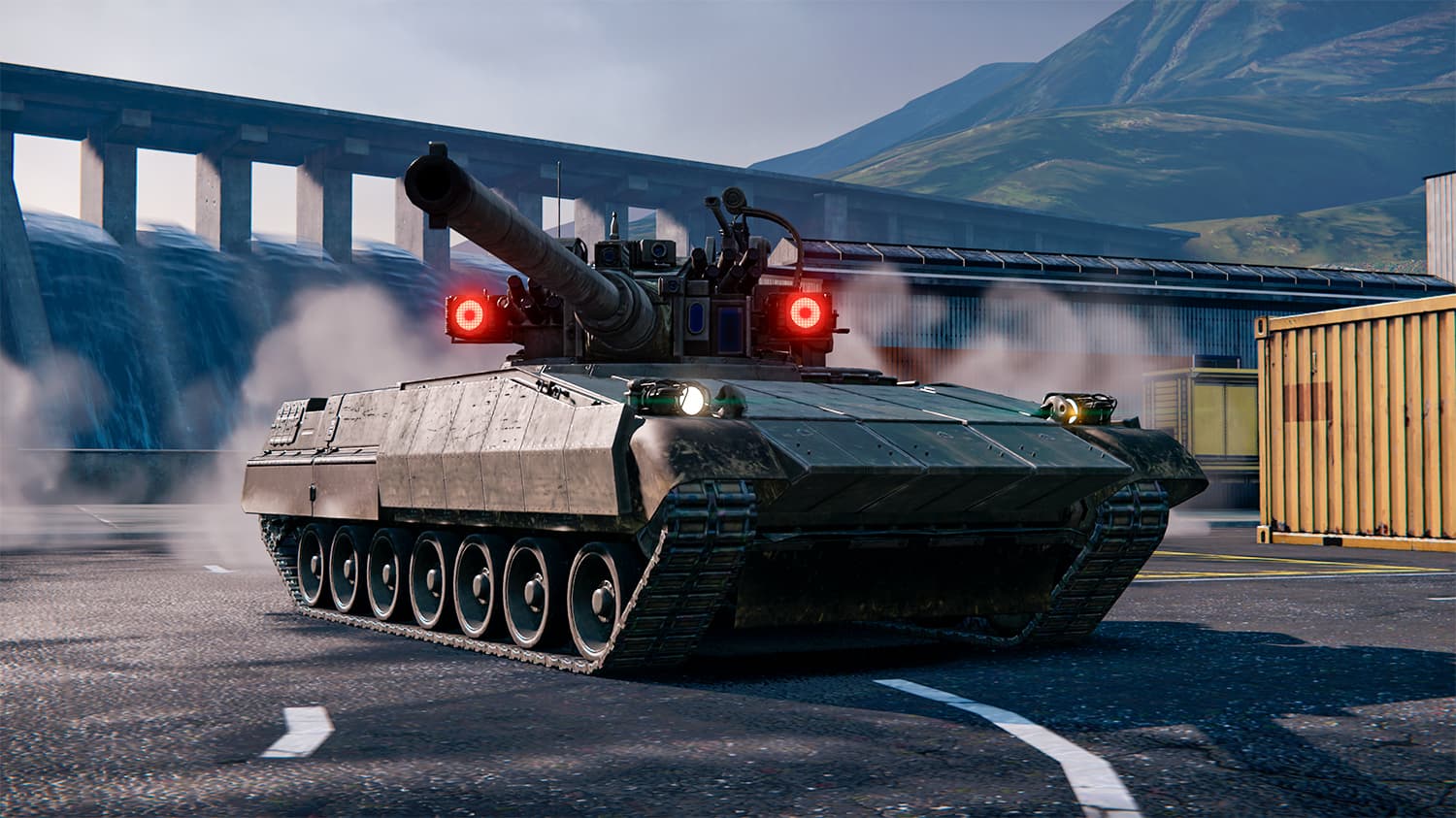
Image from Artstorm for MWT which is a Gaijin Entertainment Published Game.
Makes it likely to be a variant we see in War Thunder.
History
To understand the Object 477A Molot, you have to look at the sheer paranoia of the late Cold War. By the mid-1980s, the Soviet military was realizing that their qualitative edge was slipping. Western tanks like the M1 Abrams and Leopard 2 were coming online, and the standard Soviet T-72s and T-80s weren’t going to be enough to guarantee absolute dominance anymore. The Soviet solution wasn’t to build a slightly better tank, but to leapfrog Western technology entirely with a vehicle so advanced it would render NATO’s armor obsolete overnight.
The project started at the legendary Kharkov Morozov Design Bureau in Ukraine under the designation Object 477 “Boxer.” However, the program suffered a catastrophic security breach when its blueprints were leaked to Western intelligence. Rather than scrapping years of hard work, the Soviet leadership ordered a massive redesign to counter whatever NATO now knew, and the project was reborn under the highly classified cover name Object 477A “Molot,” which translates to “Hammer.”
The Molot was a radical departure from anything that had come before. Instead of a traditional turret where the commander and gunner sat, the design bureau opted for an unmanned weapon station. The entire three-man crew was placed shoulder-to-shoulder in a heavily armored capsule low in the front hull. This kept them completely isolated from the fuel and the massive tank rounds, meaning even a catastrophic ammunition explosion wouldn’t necessarily kill the crew.
To deal with the thickest Western armor, the Soviets bypassed standard calibers and fitted the Molot with a monstrous 152mm smoothbore gun. This cannon fired experimental kinetic darts at nearly two thousand meters per second, packing double the muzzle energy of a standard tank gun. Because 152mm shells were too massive to carry in large quantities, the engineers also tacked on a 30mm autocannon to the side of the turret, allowing the crew to engage light targets and helicopters without wasting their precious main gun rounds.
But building a sci-fi tank on paper in 1987 was a lot easier than making it work in reality. The Molot ran headfirst into the limitations of late-Soviet industry. The first major hurdle was the autoloader. Because the crew sat in the hull, a highly complex robotic elevator had to pull two-piece 152mm ammunition from storage, lift it into the external breech, and ram it home. During field trials, this mechanism was a nightmare it jammed constantly, broke down under the vibrations of rough terrain, and was incredibly difficult to service.
Auto Loader Preview

An even bigger issue was the electronics. To fight effectively with an unmanned turret, the crew needed advanced thermal imagers, digital displays, and complex optical routing to see what was happening outside. The Soviet microelectronics industry was lagging years behind the West, to the point where the first physical prototypes rolled out of the factory completely “blind,” missing the high-tech sights and computers they were designed to use.
When the Soviet Union collapsed in 1991, the Molot entered a strange geopolitical limbo. The design bureau was now in an independent Ukraine, while the funding, test ranges, and component suppliers were largely in Russia. Amazingly, the two countries actually continued to collaborate on the project throughout the cash-strapped 1990s, even upgrading the design to the Object 477A1 “Nota.”
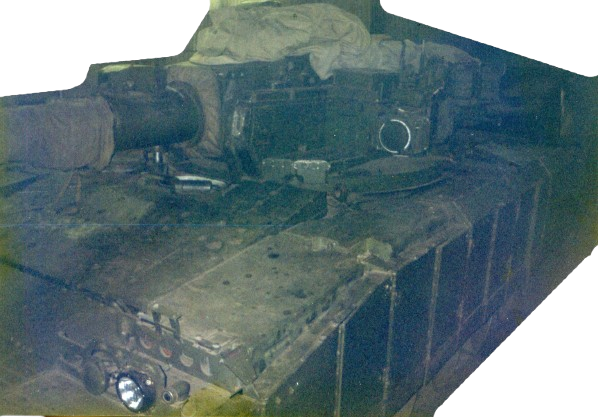
Specification
General Information
- Country of Origin: USSR (Ukrainian SSR / KMDB)
- Crew: 3
Mobility & Performance
- Engine: KMDB 6TD-2 6-cylinder, multi-fuel, opposing-piston, supercharged two-stroke diesel
- Engine Power: 1,200 hp at 2,600 RPM
- Transmission: Mechanical planetary gearbox (7 forward gears, 4 reverse gears)
- Maximum Speed (Forward): 68 km/h
- Maximum Speed (Reverse): -24 km/h
- Combat Weight: 57.0 metric tons
- Power-to-Weight Ratio: 21.05 hp/t (26.3 hp/t with 6TD-3)
- Suspension: Torsion bar with hydraulic shock absorbers
Armament
- Primary Armament:
- 152mm 2A73 (LP-81) smoothbore cannon
- Megajoules: 25
- Muzzle Velocity: 1980-2000m/s
- Grifel-1: APFSDS (Tungsten core)
- Grifel-2: APFSDS (Depleted Uranium core)
- Grifel-3: High-explosive fragmentation (HE-FRAG)
- Elevation Limits: -6° / +14°
- Turret Traverse Speed: 32°/s (Hydraulic-electric drive)
- Autoloader: 3-drum mechanical system (8-round ready-drum under the turret, automatically replenished by two 16-round drums flanking the crew cabin)
- Reload Speed: 4.3 seconds
- Total Ammo Capacity: 40 rounds
- Secondary Armament:
- 30mm 2A42 autocannon
- Ammo Capacity: 600 rounds
- Feed: Dual-feed (HE-I / AP-T belt configurations)
- Coaxial Armament:
- 1x 7.62mm PKT machine gun
- Ammo Capacity: 2,000 rounds
Protection & Survivability
- Crew Layout (3 Members): Driver, Gunner, Commander seated shoulder-to-shoulder in a heavily reinforced armored capsule in the front hull.
- Active Protection System: “Shtora-1” electro-optical soft-kill
- Frontal Hull Composition: Multi-barrier composite matrix (High-hardness steel, ceramic plates, textolite backing). Effective physical thickness exceeds 1,000mm against kinetic projectiles.
- Side Armor: Five-barrier composite side-skirts designed to defeat chemical energy warheads (HEAT) and heavy autocannon rounds.
- Explosive Reactive Armor (ERA): Integrated heavy ERA blocks protecting the upper frontal plate (UFP) and side skirts.
- Smoke Countermeasures: 12x 81 mm smoke grenade dischargers (6 on each side of the pedestal).
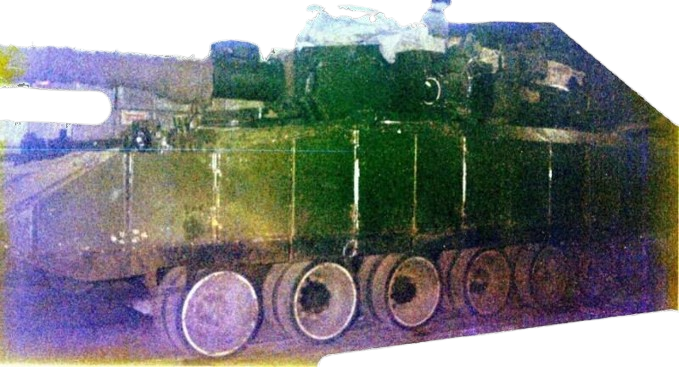
Sources
Gur Khan attacks!: Харьковский "молоток" на шасси питерской "восьмидесятки"
https://btvt.info/
https://www.secretprojects.co.uk/threads/kharkovs-object-490-buntar-bokser-and-object-477-molot-advanced-tanks.22005/
https://sturgeonshouse.ipbhost.com/topic/33-models-and-pictures-of-soviet-mbt-designs-from-80s-object-477a-object-490-buntar-and-object-299/page/2/
"Молот", "Нота" та інші секрети: українські танки нового покоління (4 частина) | Defense Express
https://en.namu.wiki/w/오비옉트%20477