So in essence from what i can tell it’s still sort of a bang bang but with a orientational filter making the missiles wings only guide at the “top” of the sine curve and not through the entire sine curves hyperbola?
That would negate a lot of energy loss from overcorrecting in the positive and negative orthogonal direction but wouldn’t it also result in a lower average g-load for the half rotation as the integral for the guiding period becomes smaller?
Wait… i might be dumb, i think i’m reading the wrong patent… excuse my morning confusion.
Edit2:
So now that i’ve read the correct document…
What i gather from this is that the guidance logic deflects the wings an amount depending on the targets deviation from the desired angle in relation to the missiles direction of travel. So they do not fully deflect unless needed due to a very high of boresight target. This should result in much better energy retention but in my understanding not a higher average g-load as the max attainable average g-load would still be the same as currently in the game. It’s just that the deflection isn’t made at a maximum for every case of deviation, but instead a proportional deflection is applied based on the targets deviation amount.
So max peak g-load and max average g-load would in that case still be correct but the guidance should be smother and it should not overcorrect if the target is (or is very close to) inline with the missiles direction of travel.
So, all nations received a missile as powerful as the Kh-38MT? Or a missile as powerful as the Vikhr? Or did their main battle tanks receive anti-splinter liner? And now all countries have received the BMPT?
But if we go back listing unbalanced additions, the US certainly has quite a list of those as well, so I’m not sure you want go there if you want to preserve your skill issue camouflaged as “US suffers” agenda.
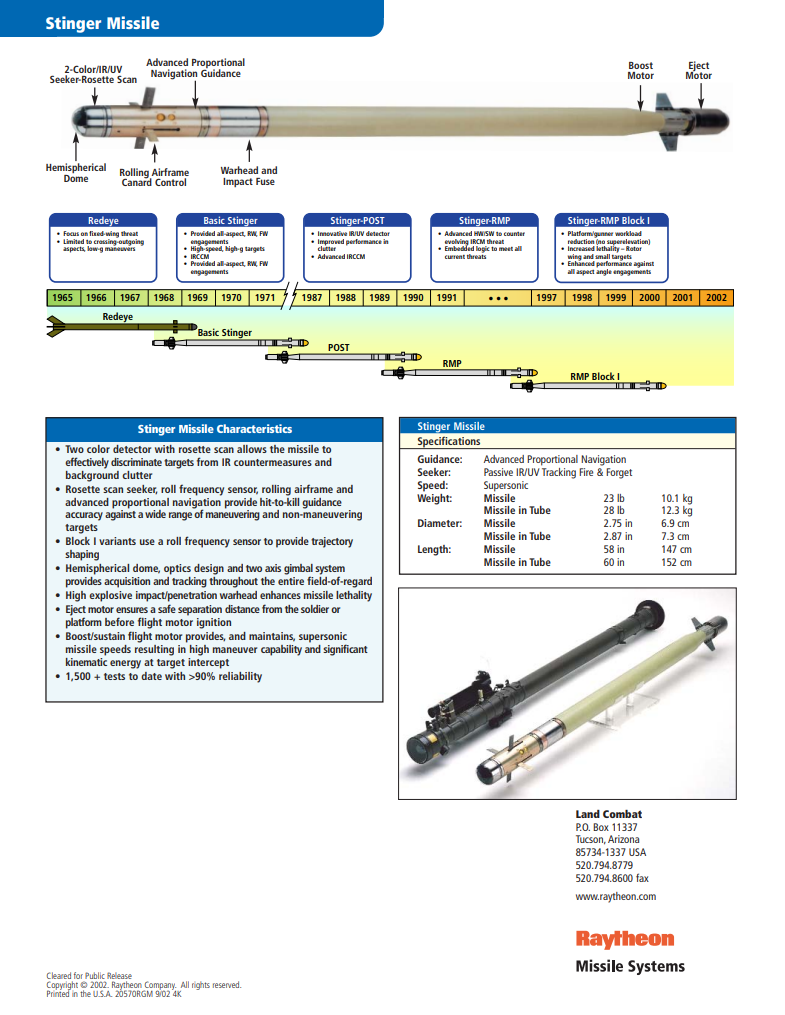
Note that in the provided excerpt(s) “Figure. 6d”, there is practically no acceleration registered in the horizontal (aka. quadrature) component during steady state flight over a rotation(“Figure. 6b”). As such the average acceleration is the “maximum” value once the steady state is achieved post launch across many rotations, as is evident in rotations occurring between 0.4~0.9 seconds (“Figure. 6c”).
As such the value for “lateral acceleration” seen in documentation can be very well assumed to be either maximum or average acceleration as it evidently would not make a difference for the FIM-92 if it was modeled faithfully.
Where as with the Redeye / Igla there is a significant quantity(“Fx”), only that over any particular rotation (assuming that the roll rate remain constant over time, which it doesn’t IRL) the net lift is canceled completely. and that the average value for “Fz” is very much not the maximum observed lift.
If I wanted that I’d point out the fact that The Stinger (FIM-92B and later variants, which use the POST seeker) missed out on the “Optical Contrast lock” mechanic, arbitrarily (Type 93 and Strela received it). Even though it is well known that it uses a dual band(IR / UV) seeker. Simply because the UV band is not in the “visual spectrum” of light.
Which again has been reported in the following report
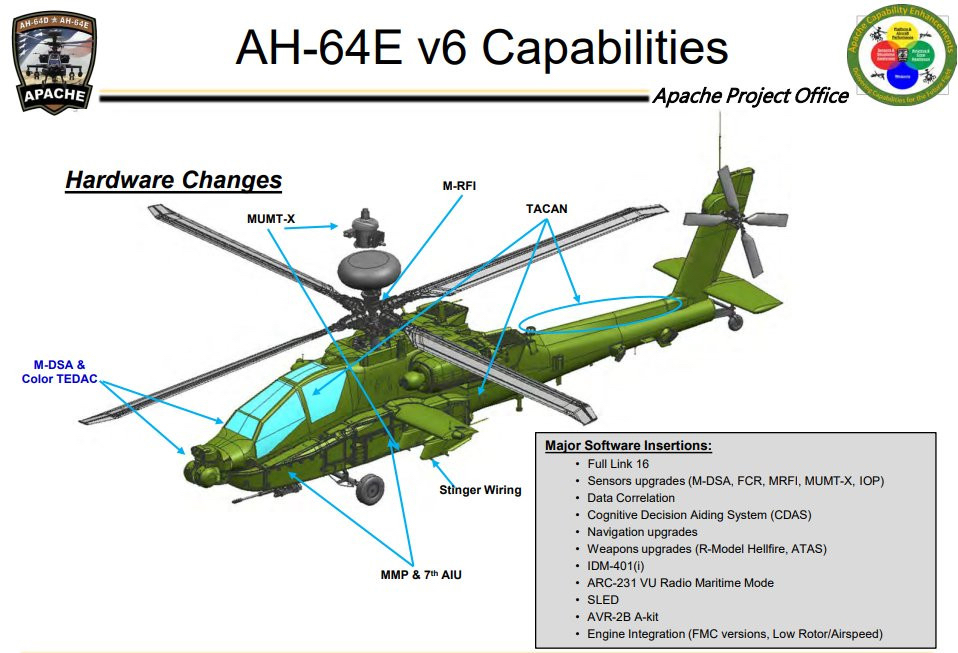
Or that the ATAL (Rail used to mount ATAS missiles) is limited to the basic Stinger arbitrarily because we can’t prove that any particular airframe carried which missile even though We’ve got primary documentation stating that the ATAL can mount the -92C or -92E, and that the AH-64E(V)6 (among other mainline AH-64 variants, and assorted US airframes), can mount the ATAL rail.
I’m still waiting for Japanese CAS aircraft. For example, the Ki-51/71, the Japanese equivalent of the IL-2, or the A6M7, the equivalent of the Focke-Wulf Fw 190 F-8, or the Ki-93, the equivalent of the T18B (57). Does Gajin seriously believe that the Japanese are incapable of building such aircraft? After 70 years, is the American propaganda that the Japanese only build aircraft under license and are incapable of making their own aircraft in the Gajin universe still relevant?
That’s probably the road we are heading down right now. I don’t see a reason why Gaijin wouldn’t do so. They have shown a clear reluctance to back track on badly timed additions.
You get a KH38MT, you get a KH38MT, YOU ALL GET A KH38!!!