Ships equipped with rangefinders and gun directors should feature three distinct types of sights:
Spotter/binoculars
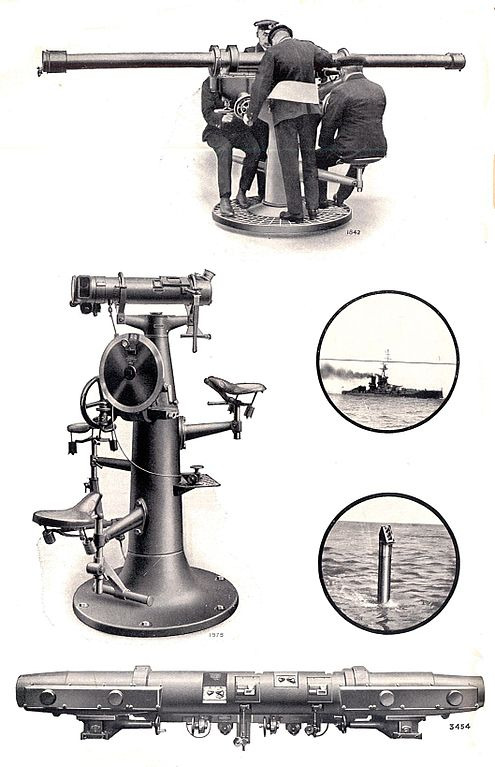
Rangefinder/Gun Director
Comanding deck view (would be nice, but not necessary)
Targeting sequence could work as follows:
- Initial spotting – You use binoculars to locate targets. When you press the “Lock on Target” key, the rangefinders and main guns will start tracking the selected target. You can still freely use your binoculars to observe the battlefield.
The selected target would not be highlighted in any artificial way — the only indicator would be the rangefinder’s focus on it.
- Rangefinding – Switching to the rangefinder view allows you to see your target (unless it’s obscured by a smokescreen, an island, or other ships).
Gun director would consist of smaller binocular view, rangefinder scope (placed above binocular view), course and speed indicator (upper right corner, it’s in game right now), screen showing target path and fall of the shells, similar to irl Dreyer table (upper left corner).
Rangefinder would move freely on x and y axis, so player could pick favorable measuring point.
Example view: https://images.app.goo.gl/iNZti
Use the mouse scroll to adjust and determine the target’s range.
*Edit:
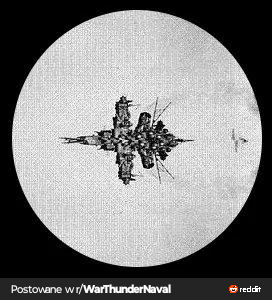
Rangefinder/gun director view would be either stereoscpic or coincidental depending on the navy.
In stereoscpic view there are two images “bars” and ship silhouette, once those two are align, player would see correct range.
In coincidence rangefinder image of the ships is split horizontaly in two, player needs to align both halves in order to get the range reading
As the target and player moves, player would need to take corrctions.
- Firing solution – *edit - when player makes at least two range corrections (pressing"target lock" key after each correction)- balistic computer will start to plot the fire solution. With fire solution calculated, guns would automatcaly align themselves to fire at predicted target position.
All this time horizontal movement of the guns would be possibile to allow player for quick corrections if target manouvers faster than balistic computer would be able to calculate.
At any chosen moment player would be able to switch guns to “follow the pointer” mode, where they would follow horizontal move of the gun director, with elevation following the data from the rangefinder, allowing to aim without automated corrections - there would be no aiming aid, so corrections would need to be made by player, but gun movement would be only seen by “milldots” moving left or right in guns director view, that way player wouldn’t loose the sight of the target while chasing the correction/deflection point. In this mode corrections to gun elevation would be made by mouse wheel
In addition there should be “danger zone” (place, where vertical spread is the longest, ensuring most likelyhood od hitting the target) it would be indicated by the green light in rangefinder view. Also aiming asistants - bearing indicator and targeted ship view would be moved to upper qarter part of the rangefinder view, they would be more useful there.
How the gunnery action would look like in the battle.
- After spawn, you switch to spotter view, (which is placed where actual spotter was placed on ship), after picking your target, you point it to gun director (the same way you would do it in comander view in ground battles)
- You switch to gun director view.
With binoculars player chooses place on enemy ship most suitable for taking measurments, locks the rangefinder position, takes measurments from rangefinder, press target lock.
Now player have two options:
- switch to aiming without balistic computer, and working out corrections on his own;
- take another reading from rangefinder, which also starts ballistic calculations.
With first option, player can shoot right away but it might take some time to “find the target”.
With second option player would need to wait for fire solution but with the chance of hitting with first salvo.
The goal is to keep range readings accurate.
The player would need to make constant range adjustments, with the ability to move guns horizontally if the target’s course changes unpredictably… It looks like IT could be done better, so this is what I came up with:
This system would still feel somewhat “arcade” in accessibility but would require more attention and situational awareness. It would also prevent unrealistic “snapshots,” giving the impression of operating a complex warship rather than simply steering a floating platform with guns.
AI gunners spotting – AI gunners should not automatically fire upon sighting a target. Instead, they should only report when a target enters their engagement range. The player would then decide whether to engage by pressing a bound key — similar to the mechanic used for “thanking for help with repairs.”
- Yes
- No
This is what I came up with after consulting with chat gpt - the idea is mine, it just polished it cause english isn’t my first language.
First of all - no permanent additions to HUD.
The player should never operate the Fire Control Computer.
Instead, the player operates the ship’s historical observation equipment.
The Fire Control System works entirely in the background.
The player provides information.
The Fire Control System produces the firing solution.
The only direct indication of its work is the aiming correction already familiar to War Thunder players.
This keeps the interface clean while making the process behind every accurate salvo significantly more engaging.
System Architecture
The proposed system can be divided into four independent modules.
- Observation Module
Responsible for gathering information.
Depending on the ship this may include:
binoculars
optical sights
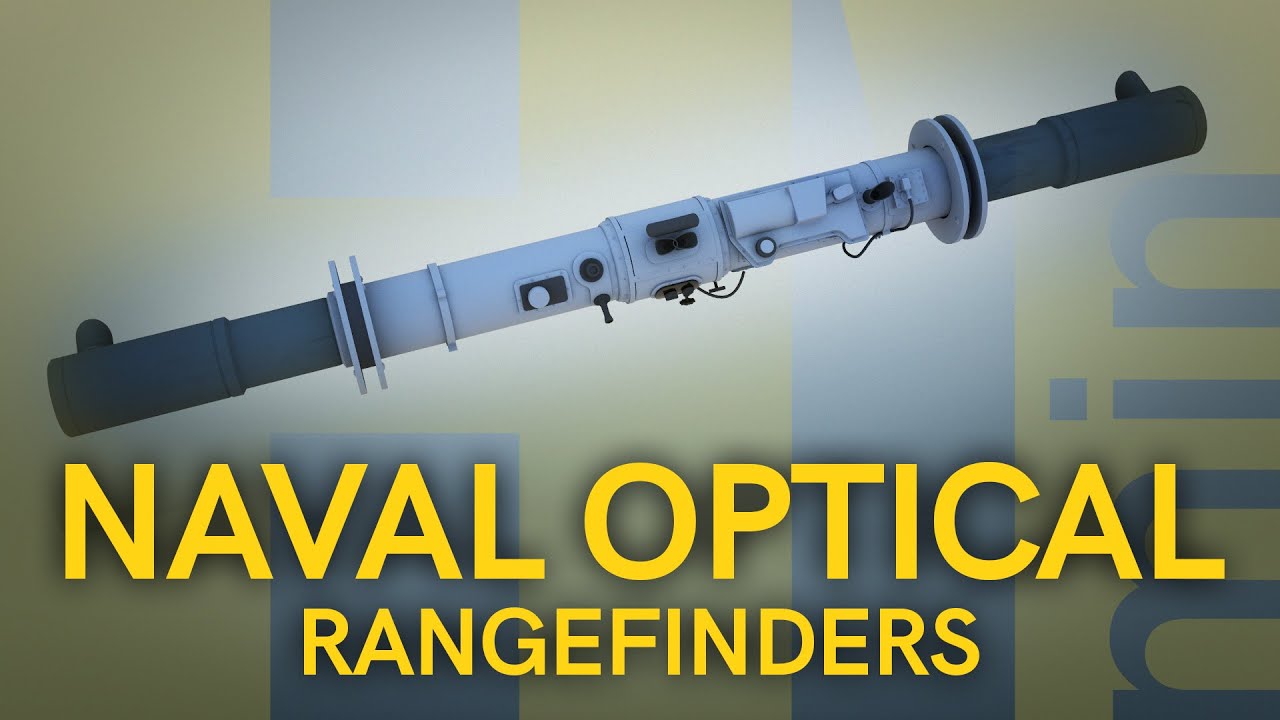
coincidence rangefinders
stereoscopic rangefinders
radar directors
radar tracking
This module provides raw observations. - Measurement Module
Responsible for producing usable target data.
Examples include:
target range
bearing
estimated course
estimated speed
Different devices provide different levels of precision and update speed.
For example:
an optical coincidence rangefinder provides very accurate range but requires manual alignment;
radar provides continuous updates but may be affected by historical limitations;
simple optical observation may only provide rough estimates.
The quality of the collected information directly affects the quality of the firing solution. - Fire Control Module
This module remains completely hidden from the player.
Its purpose is to combine all available information and continuously calculate the best possible firing solution.
Internally it may consider:
own ship motion
target motion
previous measurements
shell ballistics
gun characteristics
update frequency of each sensor
The player never interacts with this module directly. - Gunnery Module
Receives the calculated solution.
Responsible for:
gun elevation
lead calculation
continuous solution updates
aiming correction
This is the only part visible during normal gameplay.
User Interface
The biggest design goal is to avoid increasing HUD complexity.
The default HUD remains unchanged.
Holding a dedicated key temporarily opens an equipment overlay.
Instead of opening a “Fire Control System”, the player opens the available observation devices.
For ships equipped with multiple systems, the overlay behaves similarly to a modern web browser using tabs.
Example:
[ Optical ] [ Coincidence ] [ Radar ]
Each tab represents a physical device installed aboard the ship.
Selecting another tab simply changes which instrument the player is currently using.
Releasing the key immediately closes the overlay and returns to the normal HUD.
No permanent windows.
No additional screen clutter.
No complicated menus.
Gameplay Loop
Observe target.
↓
Select observation device.
↓
Measure target.
↓
Update target information.
↓
Fire Control System updates automatically.
↓
Continue firing.
↓
Repeat when necessary.
The player interacts with the process instead of receiving a perfect solution automatically.
Historical Progression
One of the greatest advantages of this design is that technological progression becomes meaningful.
Instead of balancing ships primarily through gun caliber or reload speed, their historical fire control equipment also becomes an important gameplay characteristic.
Examples:
WWI:
optical observation
manual rangefinding
slower corrections
Late WWII:
advanced coincidence rangefinders
radar-assisted ranging
analog fire control computers
Cold War:
automatic radar tracking
rapid solution updates
highly stable firing solutions
Every ship keeps the same gameplay foundation while offering different tools.
Why this approach?
The proposal intentionally separates the player from the calculations.
Historically, operators did not calculate ballistic solutions themselves.
They collected accurate information.
The ship’s Fire Control System performed the calculations.
This proposal reproduces that relationship without overwhelming the player with unnecessary controls.
Modular Development
The proposal can also be implemented incrementally.
Phase 1: Introduce interactive observation devices.
Phase 2: Improve measurement mechanics.
Phase 3: Integrate hidden Fire Control behaviour.
Phase 4: Expand historical differences between nations and ship classes.
Each phase adds value independently without requiring a complete redesign of Naval Battles.