- Yes
- No
試製七糎半対戦車砲 I型 「ナト」
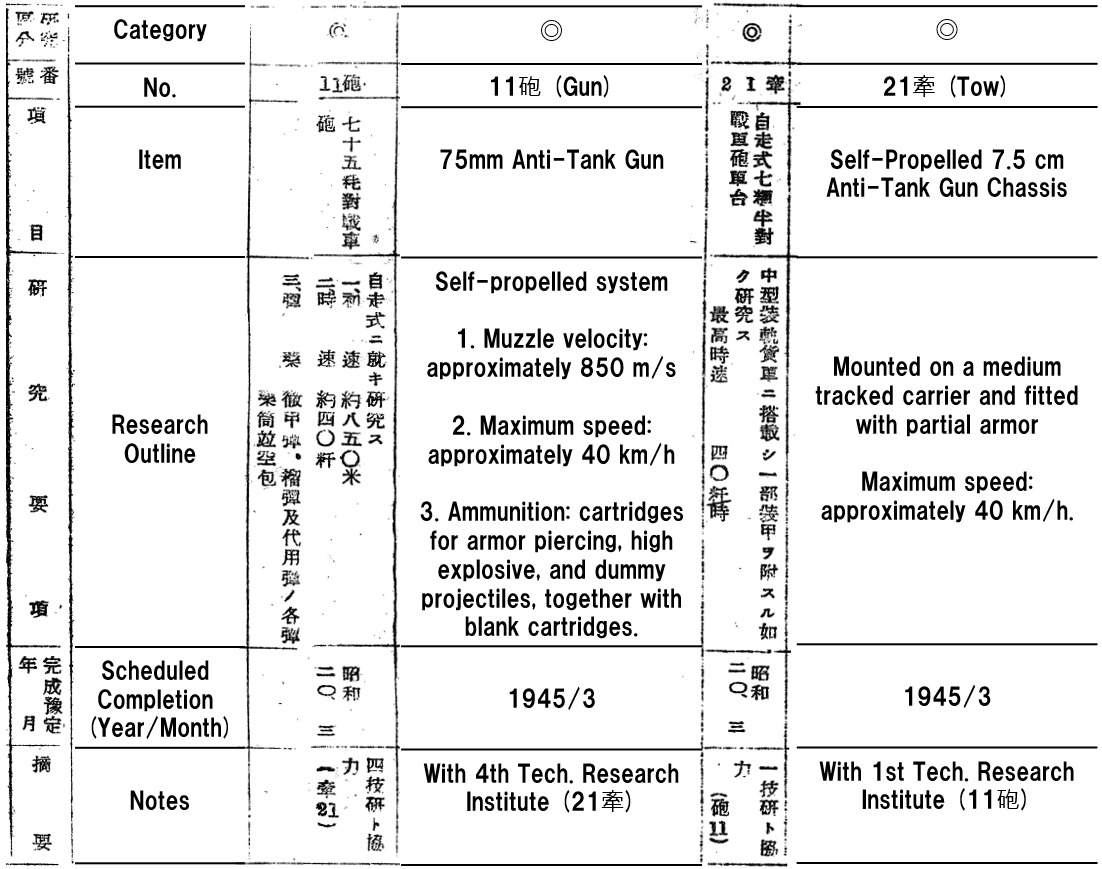
On 23 February 1942, the Army Technical Bureau introduced a project for a long-barreled 75 mm anti-tank gun with a target muzzle velocity of 850 m/s under the Ordnance Research Plan. This stemmed from the army’s assessment that a more powerful anti-tank gun would be essential to counter the armored forces of the major powers following the outbreak of the Pacific War in 1941.
Since the Japanese Army believed that towed anti-tank guns of 75 mm caliber or larger would be unable to keep up with the highly mobile battlefields of the time, the gun was planned as self-propelled from the outset. Although the plan was formulated relatively quickly, it was not officially reflected in the research directive until November 1942, and research did not begin until February 1943. The main cause of the delay was the slow progress in testing the Experimental Type 4 7.5 cm Anti-Aircraft Gun (試製四式七糎半高射砲). As the Na-To was to share the same barrel and ammunition as this gun, it was sensible to wait until some progress had been made in the early tests to ensure compatibility.
Development was divided between two research institutes: the First Army Technical Research Institute was responsible for the gun under the research code 「11砲 (Gun)」, while the Fourth Army Technical Research Institute handled the chassis under 「21牽 (Tow)」. Major Takeo Hara (原丈夫) of the First Institute and Technical Lieutenant Yoshizane Tanaka (田中良実) of the Fourth served as officers in charge of the project. Work on the chassis began in March 1943, one month after work on the gun started. Both research projects were scheduled for completion by March 1945.
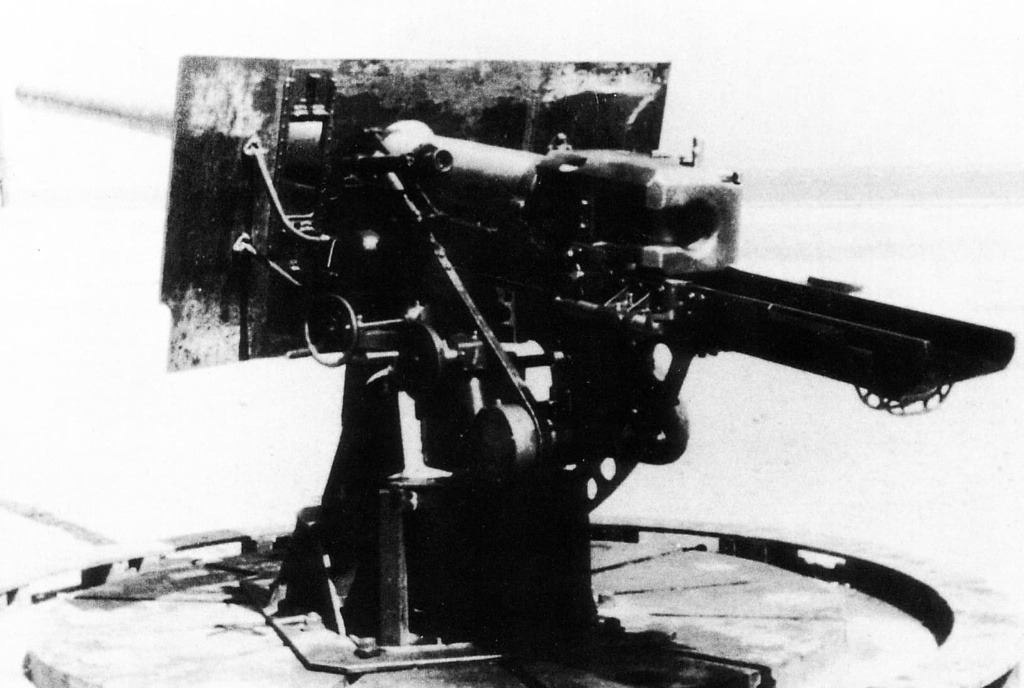
The gun’s design was completed in April 1944, and two prototypes were built at the Osaka Army Arsenal in July of that year. As the chassis was still being constructed, the guns were test-fired while fixed directly to the ground. The tests took place at the Osaka Arsenal and the Ōtsugawa range between July 11 and 16.
The first gun malfunctioned after 33 rounds had been fired, and the second after 64. Both guns experienced the same failure, which was caused by deformation of the cradle. The affected section was later reinforced and further tests were conducted from November 5 to 10. After these trials, Major Hara was transferred to the Army Ordnance Bureau, and the project was subsequently taken over by Technical Lieutenant Akira Uchioke (内桶明).
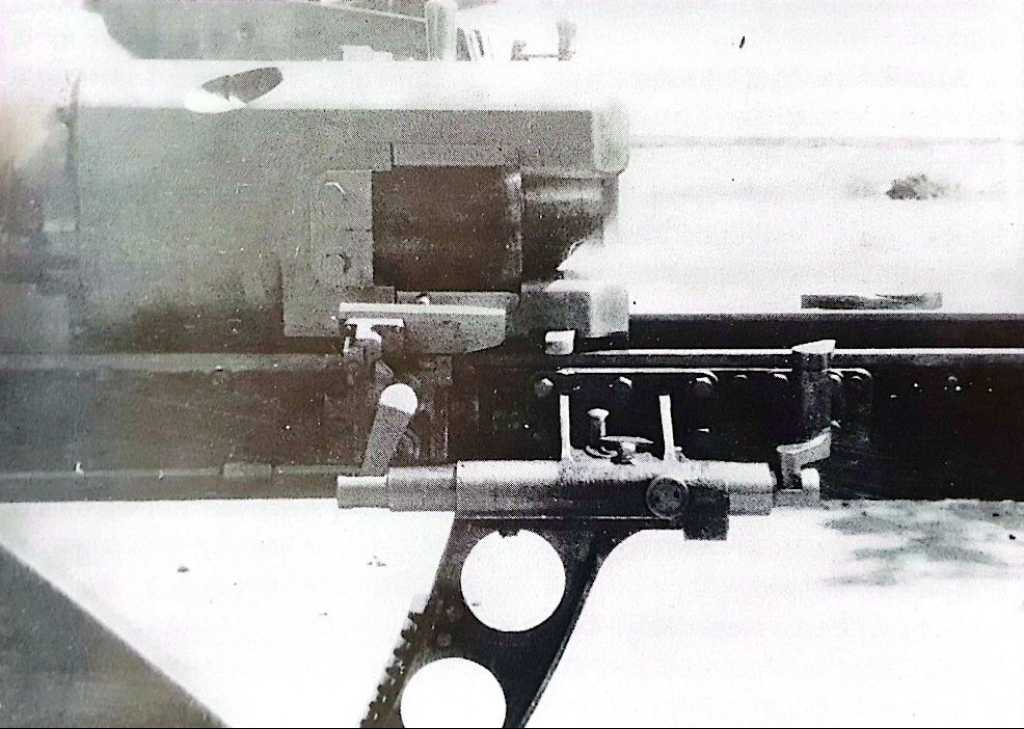
In this test, the previous issues were resolved, but a new problem arose with the breech mechanism, causing case extraction failures. Because of this, additional tests were conducted from December 11 to 14, but the issue remained unresolved. Two solutions were proposed to address the problem. The first involved modifying the existing breech block with anti-friction plates, and the second was to design a new breech mechanism based on the Type 88 Anti-Aircraft Gun, which featured a buffer system. Both approaches were selected for testing.
Around the same time, on December 10, 1944, two prototype vehicles commissioned by the Fourth Research Institute from the Sagami Arsenal were completed. The guns were mounted between December 16 and 20, and comprehensive testing (including firing and mobility trials) began in January 1945.
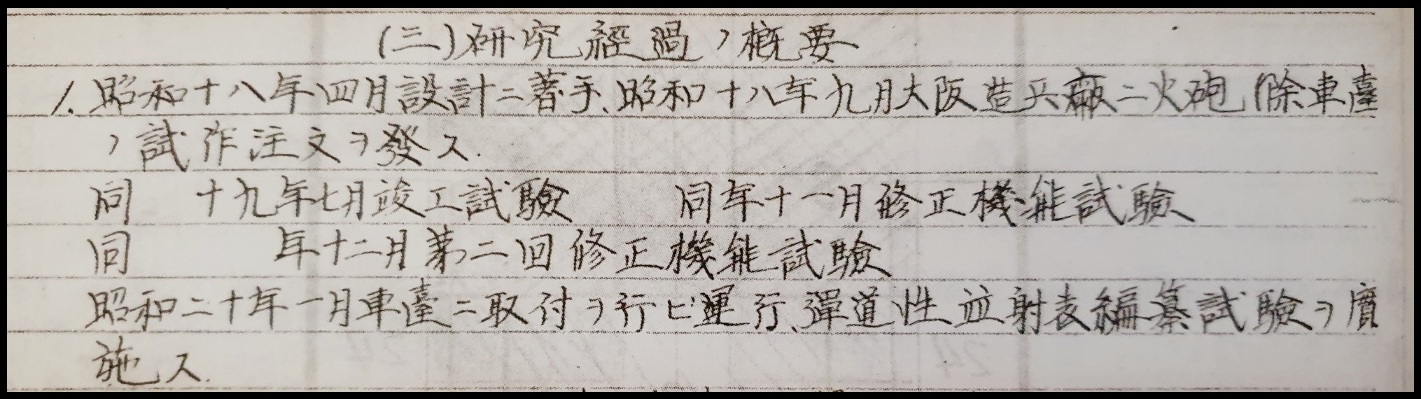
- Design commenced in April 1943, and in September of the same year an order for prototype construction of the gun (excluding the chassis) was placed with the Osaka Army Arsenal.
Completion test in July 1944; corrective functional test in November of the same year.
Second corrective functional test in December of the same year.
In January 1945, the gun was mounted on the chassis, and mobility, ballistic, and firing-table compilation tests were conducted.
The mobility test was originally scheduled for December 21, but as the second vehicle had broken down, it was carried out on January 7 using only the first vehicle. The route extended from Osaka through Moriyama, Tarui, and Okazaki to Irago, covering 305 km over four days. Despite heavy snowfall during the test, the run was successfully completed.
The firing tests were conducted using both the first and second vehicles. These took place from January 12 to 15 and employed Type 1 APHE, Type 4 AP and Type 4 HE shells, as well as high-explosive anti-aircraft shells. Both the Type 1 and Type 4 AP rounds were successfully fired, achieving muzzle velocities of 821 m/s and 819 m/s, respectively. However, the high-explosive tests were postponed due to an earthquake during the trials. In a subsequent test, the Type 4 HE shell was fired at a velocity of 858 m/s.
On January 15, the research team reached the following conclusions based on the results of the test series:
- The driver positioned in front of the gun shield was left completely unprotected, and the alignment between the gun shield and the chassis was improper. Their relative positioning requires redesign.
- The durability during driving was good overall. In the mobility trials, which covered a total distance of 305 km including irregular terrain, the average speed was 18.4 km/h, with a maximum of 40 km/h.
- The performance of the modified breech mechanism was generally satisfactory. However, the second proposal, which incorporated a buffer system, was deemed more suitable in terms of durability.
- From a production standpoint, it was considered appropriate to modify the gun to use the same parts as the Experimental 7.5 cm Tank Gun (Long), including the cradle.
Among these, the last point was particularly significant for the gun’s development. Since the 7.5 cm Anti-Tank Gun (Na-To) and the Tank Gun (Chi-To) shared almost no common parts apart from their barrels, this decision effectively called for the development of an entirely new weapon. As a result, the new design had to be distinguished from the previous one. The earlier model was officially designated Model I (I型), and the new design was named Model II (II型). Design work on the Model II began in January, and two prototypes were completed for testing by May. However, during these tests, it was found that the vehicle could not withstand the gun’s recoil. After modifications, including changes to the mounting position, satisfactory results were finally achieved in July 1945.
On July 11, the weapon was officially designated as the Experimental Type 5 7.5 cm Anti-Tank Gun (試製五式七糎半対戦車砲), and on the 20th, with the approval for production, it became the Type 5 7.5 cm Anti-Tank Gun (五式七糎半対戦車砲). Following this, mass production of the chassis and the gun began at the Sagami and Osaka Arsenals, respectively; however, none were completed before the end of the war.
Meanwhile, after the firing tests in January, the two Model I guns were removed from their chassis and returned to the Osaka Arsenal. They were not dismantled, only left unused. Toward the end of the war, both the First and Fourth Institutes considered using these guns in actual service. However, nothing is known about their fate after Japan’s surrender. The US Army briefly mentioned the Na-To Model I gun in its 1946 report (ORD TIR No. 10), though this reference appears to have been based on existing Japanese documents rather than a direct examination of the weapon.
Note: The section in this post describing events after the January tests is a summary. A more detailed explanation can be found in my “Na-To Prototype II Kai” suggestion. If you’re interested, please take a look.
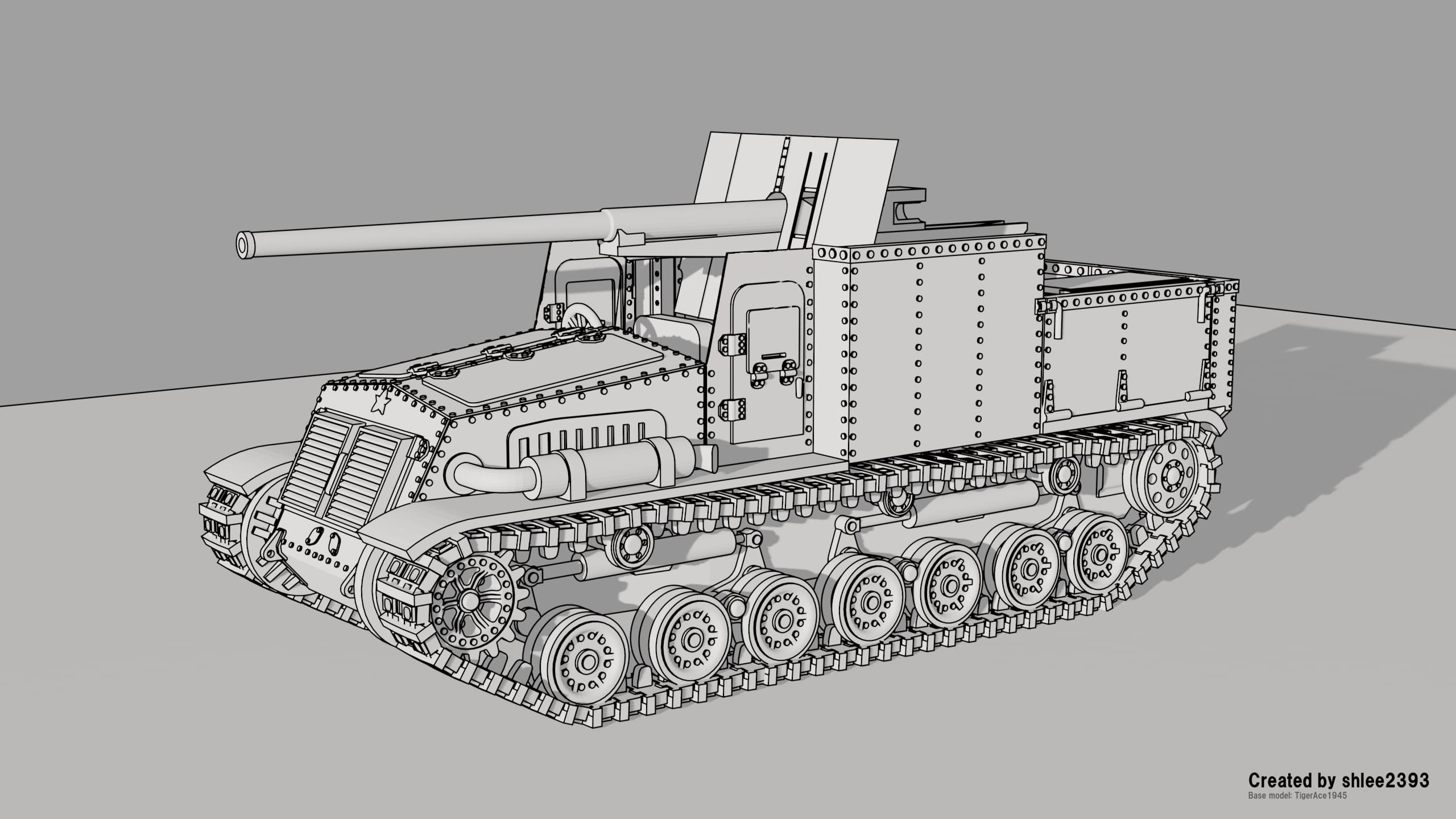
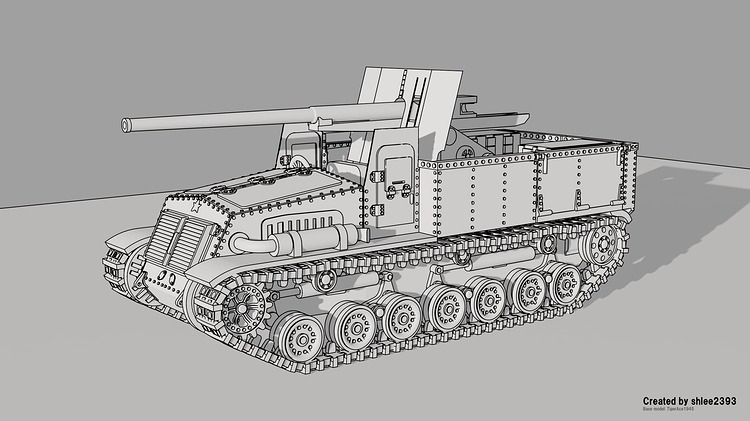
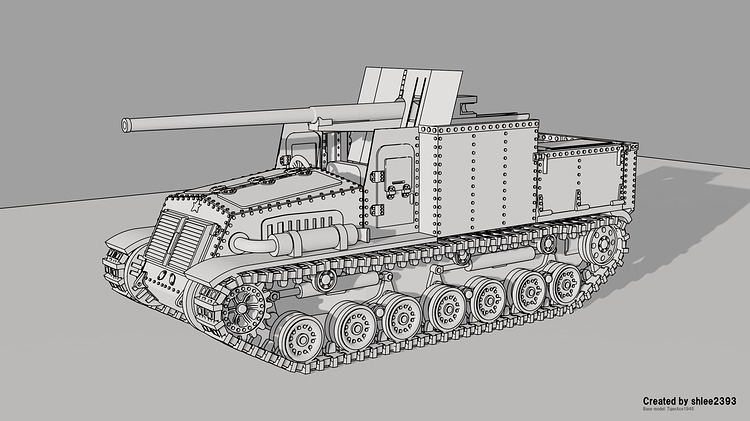
The existence of this vehicle is clearly recorded in Na-To’s research notes, but unfortunately, no photographs of it are included. Therefore, its appearance can only be inferred from written descriptions. The 3D model above is a reconstruction based on these descriptions. I would like to thank @_qaz for helping me analyze the materials and complete this illustration.
The Na-To I appears to have differed significantly in appearance from the later Na-To II. This is evident from the following statement issued after the January tests:
“The driver positioned in front of the gun shield was left completely unprotected, and the alignment between the gun shield and the chassis was improper.”
This suggests that the Na-To I lacked a front armor plate for the driver. This is also supported by the fact that the gun shield on the Na-To I extended much lower than that of the Model II. Furthermore, as a temporary platform seems to have been fitted to the gun on the Na-To II, the Na-To I’s gun was likely mounted slightly lower than on the later model.
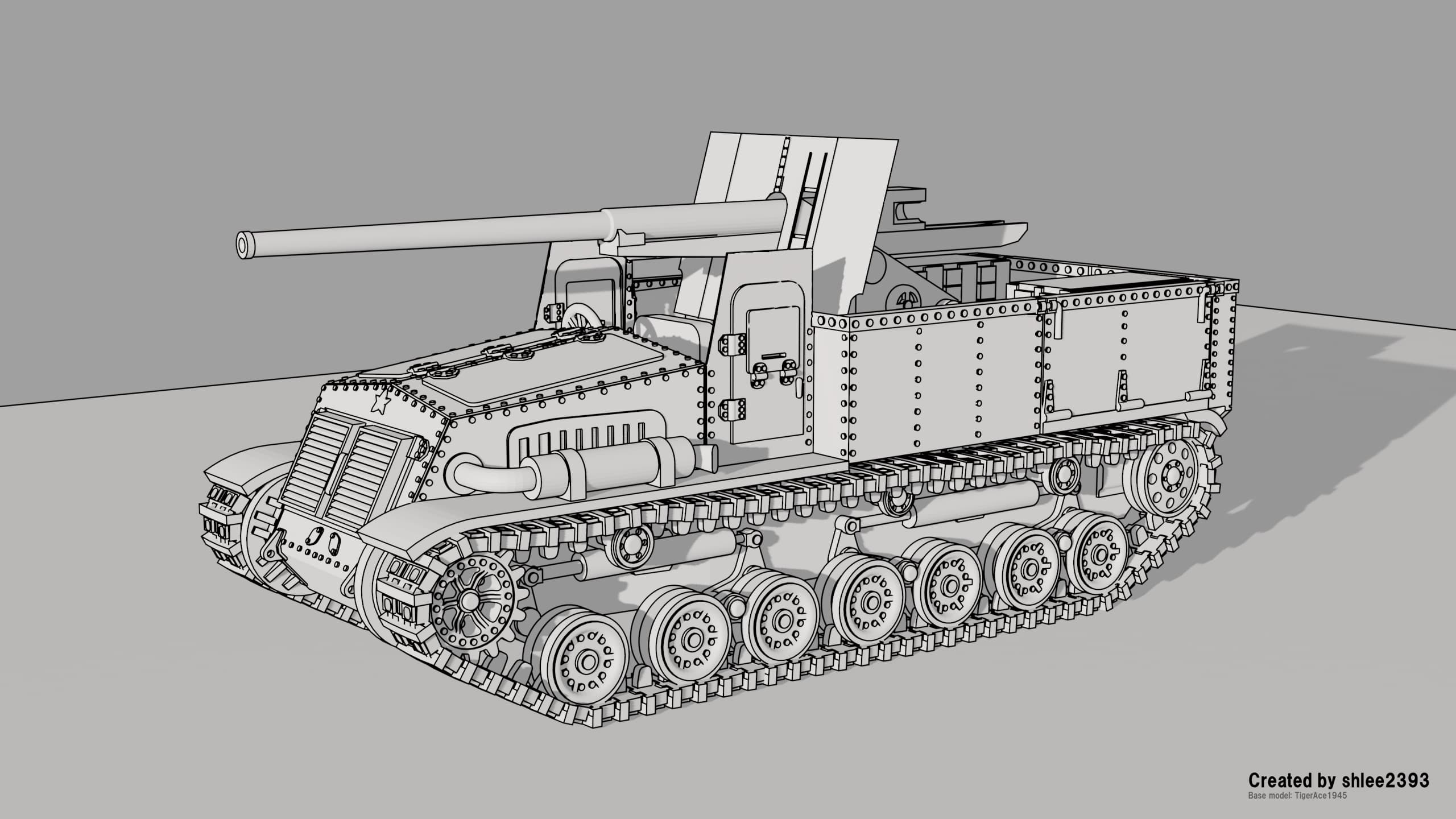
Additionally, the Na-To I may have retained side structures resembling those of its base vehicle, the Chi-So. This estimation is based on the shape of the gun shield. A 3D model of this possible design is shown below.
Numerical data were also reported for the Na-To Gun Model I. The following drawing is a reconstruction of the Na-To I based on these figures.

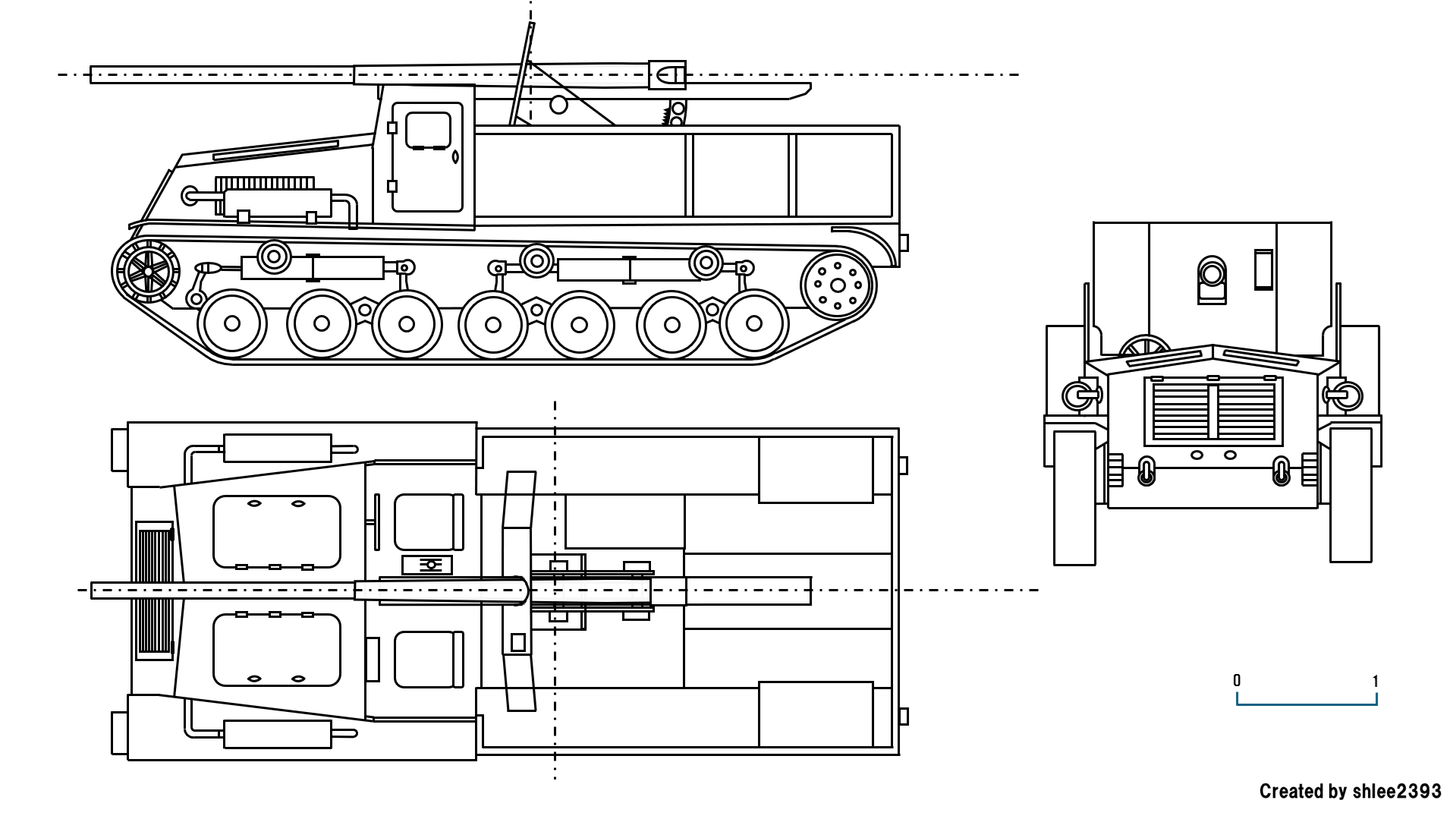
- Total gun length: 5120 mm
- Barrel sleeve length: 2100 mm
- Gun center height: 1267 mm
- Gun height (including gun shield): 1640 mm
- Gun width (including gun shield): 1698 mm
- Barrel length: 4230 mm
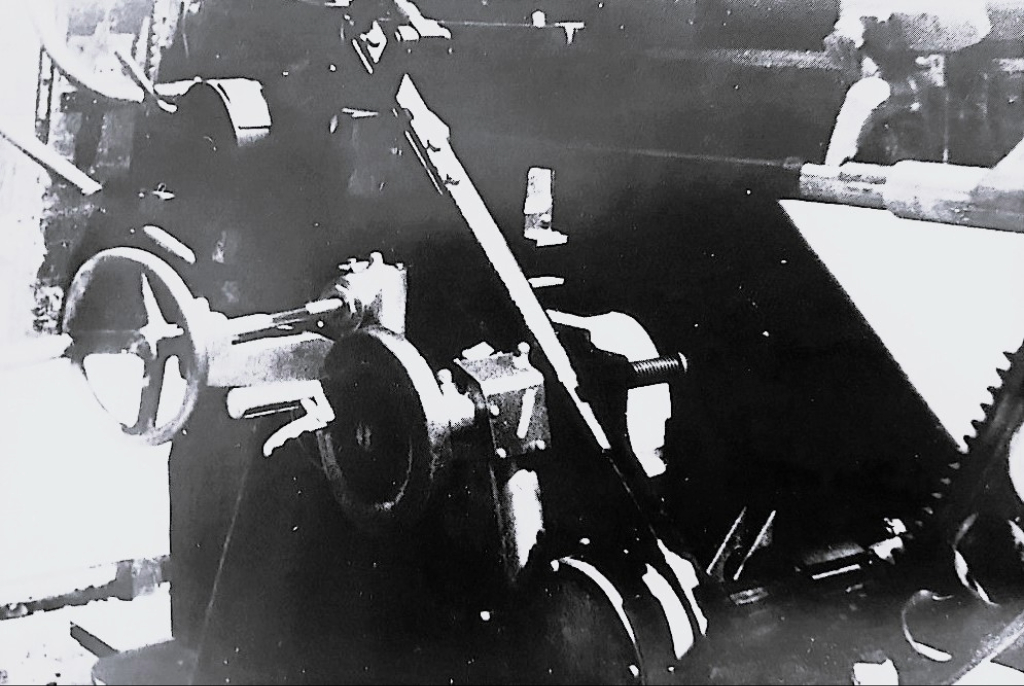
Excerpt from Research Notes on the Experimental 7.5 cm Anti-Tank Gun, page 42, dated July 11, 1944.
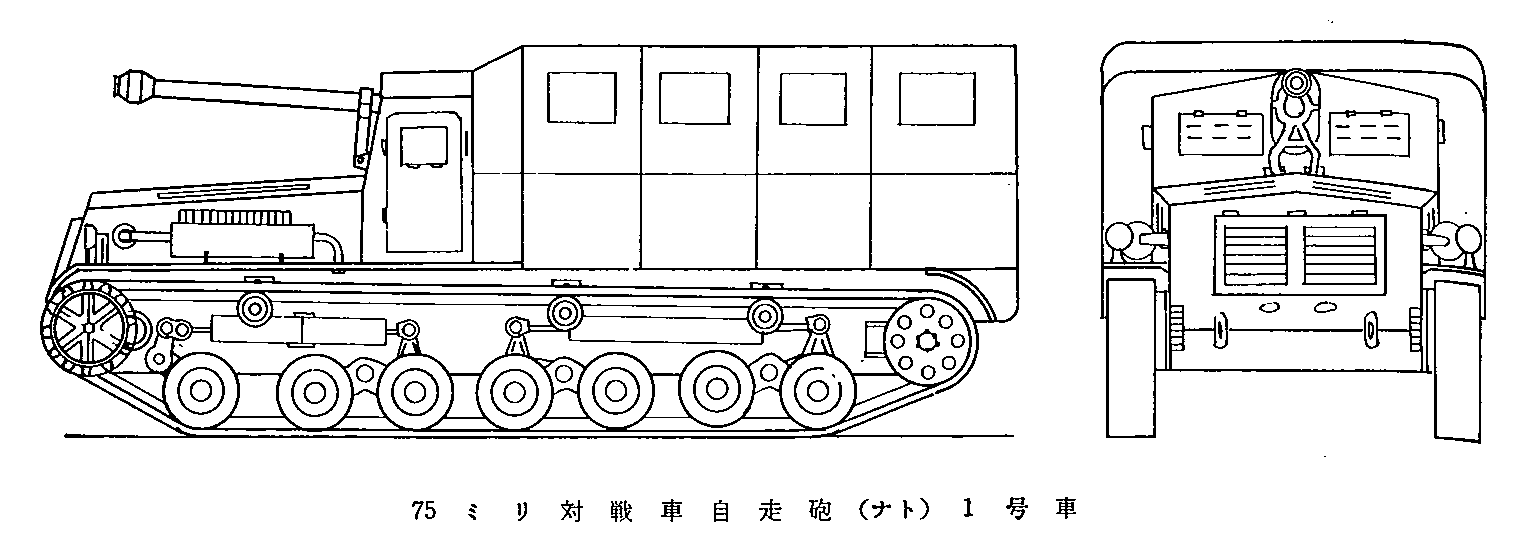
In 『日本の戦車 (1978)』, Japanese tank researcher Akira Takeuchi claimed that the first Na-To prototype, completed in December 1944, was equipped with the Type 3 7.5 cm Tank Gun (for Chi-Nu). At the time, reliable records regarding the Na-To were almost nonexistent, and as a result, this claim was cited by many later publications.
However, the actual research notes state that the gun mounted in December was the 7.5 cm Anti-Tank Gun Model I, with no mention of the Type 3 Tank Gun. Since the project had aimed for a muzzle velocity of 850 m/s from the outset, it is highly unlikely that the Type 3 Tank Gun, with its muzzle velocity of 668 m/s, was ever part of the research. This statement was removed in Takeuchi’s later work,『日本の大砲 (1986)』.
Nevertheless, there was a plan in place to replace the Na-To’s gun with the Type 90 Field Gun (= Type 3 Tank Gun). Although this did not happen in 1944, a separate plan was established under 兵政造機密10 (Army Ordnance Bureau Production Secret No. 10), dated May 14, 1945, to manufacture the Na-To’s gun using the barrel of the Type 90 Field Gun and to allocate the resulting surplus production capacity to tank gun manufacturing. Consideration of this plan appears to have begun in February, shortly after the decision to standardize the anti-tank and tank guns was made.
While the details of this plan remain unclear, it is conceivable that some Na-To units in mass production in August 1945 incorporated this specification. After the war, 70 unfinished Na-To hulls were found at the Sagami Arsenal, yet no corresponding Type 5 Anti-Tank Guns were discovered at the Osaka Arsenal.
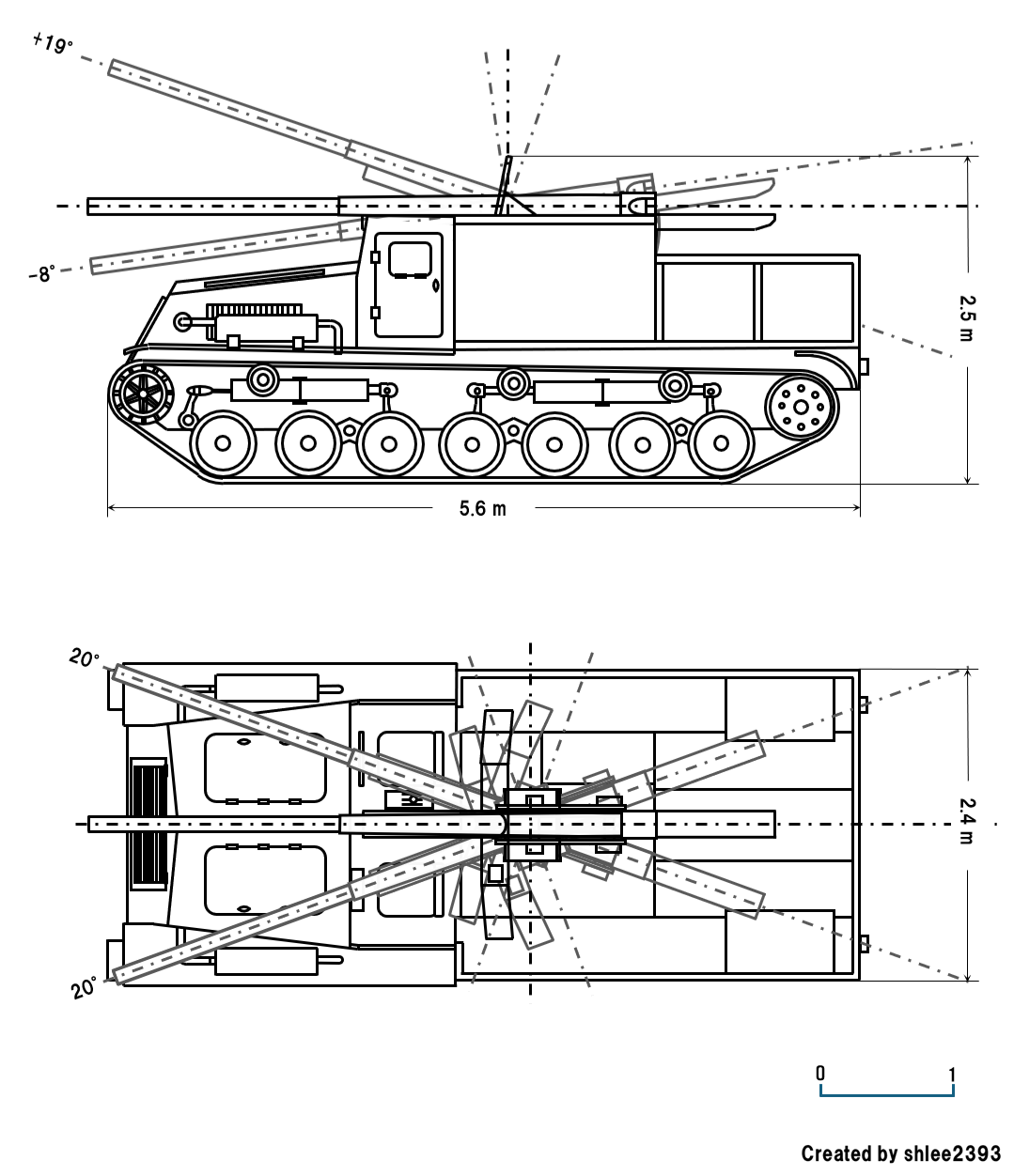
- Length: unknown (estimated ≈ 5.7 m)
- Width: 2.4 m
- Height: unknown (estimated ≈ 2.5 m)
- Combat weight: unknown (estimated ≈ 12.6 t)
- 13.4 (Na-To II) − 2.68 (Na-To Gun, Model II) + 1.845 (Na-To Gun, Model I) = 12.565 t
- Track width: 300 mm
- Maximum speed: 40 km/h
- Cruising speed: 18.4 km/h
- Gradeability: 2/3
- Turning radius: 10 m
- Engine: Type 100 air-cooled V8 diesel
- Bore × Stroke: 120 × 160 mm
- Maximum power: 165 hp @ 2000 rpm
- Armor (mm): front 12, side 12, rear 4, bottom 6
- Armament: Experimental 7.5cm Anti-Tank Gun Model I (試製七糎半対戦車砲 I型)
- Caliber: 75 mm
- Barrel length: 4230 mm
- Muzzle velocity: 830 m/s
- Traverse: ±20°
- Elevation: −8° to +19°
- Recoil length: 1250 mm
- Crew: 7
- Ammunition (total 68 rounds): Type 1 APHE, Type 4 HE, Type 4 AP
Sources:
- 第一陸軍技術研究所, 研究原簿 試製七糎半対戦車砲II型, 1943–1945年7月.
- 陸軍兵器行政本部, 昭和18年度陸軍兵器行政本部研究計画, 1943年3月. (Ref. C14011078200)
- 陸軍兵器行政本部, 昭和20年度整備計画附表, 1945年2月. (Ref. C13120840600)
- 陸軍兵器行政本部, 各造兵廠作業計画表綴, 1945年3月. (Ref. C13120849200)
- 陸軍兵器行政本部, 陸軍技術研究所之部, 1945年8月. (Ref. C15010408100)
- 東京第一陸軍造兵廠, 未完成兵器等一覧表. (Ref.C14010956500)
- Potter, Richard C., Ordnance Technical Intelligence Report No. 10, GHQ, US Army Forces Pacific, February 1946.
- Morrison, Malcolm C., Ordnance Technical Intelligence Report No. 21, GHQ, US Army Forces Pacific, March 1946.
- 『丸』, 潮書房光人新社, 1961年9月号.
- 日本兵器工業会, 陸戦兵器総覧, 図書出版社, 1977年3月.
- 竹内昭・原乙未生・栄森伝治, 日本の戦車, 出版協同社, 1978年9月.
- 竹内昭・佐山二郎, 日本の大砲, 協同社, 1986年4月.
- ガリレオ出版, 帝国陸海軍の戦闘用車両, 1996年1月.
- 『グランドパワー』, ガリレオ出版, 1996年11月号.
- アルゴノート社, 日本の戦車と装甲車輌, 2000年6月.
- 佐山二郎, 機甲入門, 光人社NF文庫, 2002年10月.
- 学研プラス, 帝国陸軍戦車と砲戦車, 2001年12月.
- 『グランドパワー』, ガリレオ出版, 2008年10月号.
- 『パンツァー』, アルゴノート社, 2008年11月号.
- 国本康文, 試製五式七糎半対戦車砲 ― ナト砲の謎を解く ―, 国本戦車塾, 2008年12月.
- 佐山二郎, 日本陸軍の火砲 ― 歩兵砲・対戦車砲 他 ―, 光人社NF文庫, 2011年8月.