I think modern SAM should get a rework of last generation ground-to-air missiles ARH seeker, because most of them are thought to face multipathing and targets such as heli’s.
Could be just a ‘system’ update and not freak out as soon as a target gets under 30m from the ground, and have a way better ht rate against heli’s or hovering jets using the micro-doppler effect (Doppler but with blades or engines blade).
Most toptier SPAA uses vertical launched ARH missiles and some such as the Type-03 or Aster-30 litteraly never scored a hit on a heli unless a miracle happens.
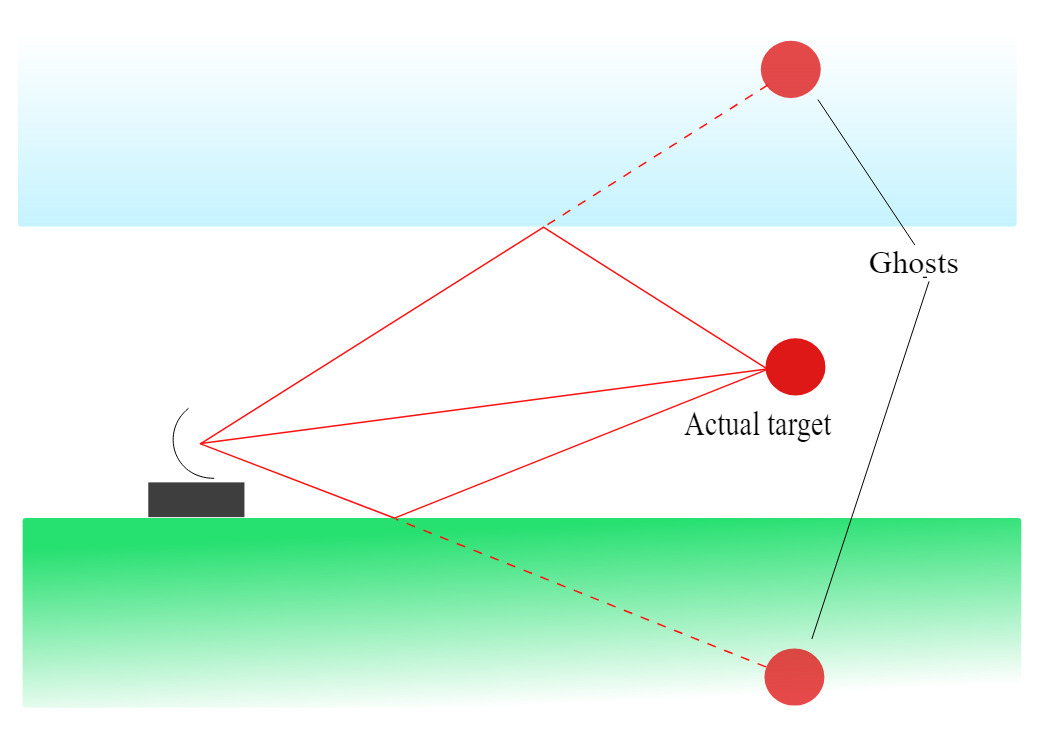
Here are a couple ways modern SAM uses to hit a target close to the ground.
AESA radars with fine angular resolution
many small transmit/receive elements let the system resolve direct vs. reflected returns as genuinely separate angles rather than blending them, directly attacking the root cause of glint.
Frequency agility
rapidly hopping frequency changes the interference pattern the multipath reflection creates pulse to pulse, decorrelating it so it averages out over the tracking window instead of producing a stable false angle.
Adaptive sidelobe cancellation (ASLC) / Constant False Alarm Rate (CFAR) processing
actively nulls energy arriving from the reflection’s angle and statistically rejects clutter-level returns, both used explicitly on systems like Type 03 Chu-SAM’s AESA.
Micro-Doppler / blade-flash discrimination
Is used to target helicopters mainly. Doppler works by supressing sationnary stuff to only see the targets and can work without being ‘jammed’ by scanning the whole regionnal topography. But what about a stationnary helicopter such as a hovering Mi-28NM by exemple ? Well Micro-Doppler is the Doppler effect for rotor blades, compressor faces, or propellers. Each add their own oscillating signature distinct from the fuselage’s overall closing velocity. The most exploitable form is blade-flash: brief, high-amplitude spikes generated when a rotor blade presents its broadside to the radar, recurring at a rate tied to blade count and RPM, which gives seekers a near-fingerprint for classifying rotorcraft or drones even when bulk Doppler is near zero, as with a hovering helicopter otherwise indistinguishable from ground clutter.
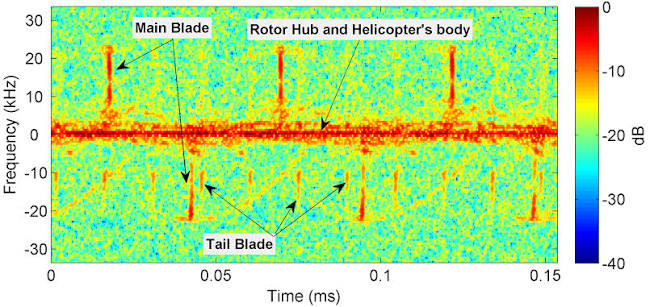
Steep terminal engagement geometry
missiles (Fox 3 especially, once on their own seeker) generally close from above or a steep dive angle rather than skimming the surface themselves, which geometrically separates direct and reflected paths far better than a shallow ground-radar look.
Used in air vs air in WT and IRL to get almost a 100% sure shot.
Sadly this would make tinnier map impossible to play with air, unless you bring almost only chaff. But as a postive thing, it will make CAS way harder, and people will have to use the whole map that was hardly worked on.
Here is a table of what I could find about toptier missiles for this.
Sadly it is still very classified, or I jst haven’t looked down enough. If you have any info, please tell me what to correct, and please state sources because anyone can say anything !
Spoiler
| Missile | AESA seeker | Frequency agility | ASLC/CFAR | Micro-Doppler/blade-flash | Steep terminal geometry |
|---|---|---|---|---|---|
| Aster-30 (Block 1NT) | Probably doesn’t — Ka-band active seeker, not a true AESA array | It does — explicitly stated | It’s said to — clutter suppression, not named CFAR/ASLC | Classified/unknown | It does — PIF-PAF is the signature feature, 60g terminal maneuvers |
| Chu-SAM (base Type 03) | It does — AESA seeker inherited from AAM-4 lineage | It’s said to — implied by AESA, not stated outright | Classified/unknown | Classified/unknown | Classified/unknown |
| Chu-SAM Kai | It does — explicitly stated, upgraded for low-RCS detection | It’s said to — implied by resilience to jamming | It’s said to — same, generic ECCM language | Classified/unknown | Classified/unknown |
| AMRAAM-ER | Probably doesn’t — same seeker family as C-7, mechanically scanned | It’s said to — improved ECCM language | It’s said to | Classified/unknown | Probably doesn’t — no thrust vectoring disclosed |
| AIM-120C-7 | Probably doesn’t — confirmed mechanically scanned array, not AESA | It’s said to — improved ECCM with jamming detection | It’s said to | Classified/unknown | Probably doesn’t |
| 9M317MA (Buk-M3) | Classified/unknown — active radar homing head (ARGSN), AESA not confirmed | Classified/unknown | Classified/unknown | Classified/unknown | It’s said to — high-g thrust vector control claimed |
| CAMM | Classified/unknown — solid-state GaN seeker, not confirmed as scanning AESA | Classified/unknown | It does — clutter rejection explicitly stated | Classified/unknown | It’s said to — thrust vectoring control |
| CAMM-ER | Classified/unknown — same seeker family as CAMM | Classified/unknown | It does — pulsed Doppler with clutter rejection stated | Classified/unknown | It’s said to |
| FM-3000 | Classified/unknown — very little open-source detail on this one at all | Classified/unknown | Classified/unknown | Classified/unknown | Classified/unknown |
| I-Derby ER | Classified/unknown — software-controlled RF seeker, AESA not confirmed | It does — software-defined, explicitly adaptable | It’s said to — ECCM stated but not named CFAR/ASLC | Classified/unknown | Classified/unknown |
- Kepp multipathing as a meta
- Change multipathing for toptier anti-air if sources/proof shows it can counter
- Allow from a given generation of missiles a way to deal with multipathing (ground & air launched missiles)
Keep in mind there is still different way to deal with anti-air missiles.