I myself have spent some time on this forum and have come across some rather misleading or straight up misinformative statements made about the nature and possible introduction of Milimeter wave guidance into War Thunder. Although I have no academic indepth experience in Radar research I will try to present the information that I have gathered and analyzed in a mostly straightforward manner.
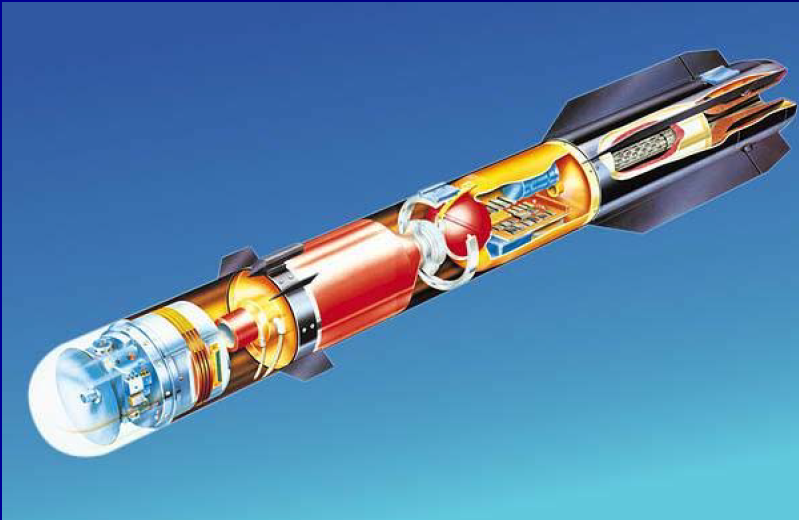
Millimeter Wave (MMW) guidance refers to the use of high-frequency, short-wavelength radar as the primary sensor for target acquisition and terminal munitions guidance. In tactical applications, these systems typically operate at frequencies such as 35 GHz or 94 GHz.
Because it operates within this specific band, MMW radar bridges the gap between traditional centimeter-wave (cmW) radars and Electro-Optical (EO) imagers, offering a unique set of physical advantages:
- Finer Resolution in a Compact Size: The exceptionally short wavelengths allow engineers to design radars that achieve very fine target resolution while keeping the physical antenna aperture small enough to fit inside the confined nose cone of a tactical missile.
- All-Weather and Penetration Capabilities: Unlike optical or infrared imagers that are easily blinded by weather, MMW radar maintains an all-weather capability and can penetrate dielectric materials, such as foliage and camouflage.
- Active and Coherent Tracking: Because MMW seekers are active radar systems, they directly and continuously measure both the precise range to the target and its Doppler shift (velocity).
- High Sensitivity to Target Detail: The MMW band is highly sensitive to fine physical details, meaning the radar signature is influenced by surface roughness and small structural features. This sensitivity allows the seeker to utilize High-Resolution Range Profiling (HRRP) and Synthetic Aperture Radar (SAR) to map targets with resolutions down to 10 to 30 centimeters.
Operational Applications By combining these high-resolution radar maps with Automatic Target Recognition (ATR) algorithms, MMW guidance allows weapon systems to autonomously find, classify, and engage targets (like distinguishing a tracked tank from a wheeled truck).
This technology is currently categorized into three main tactical applications:
- Airborne Fire Control Radars: Such as the 35 GHz Longbow radar used on the Apache helicopter.
- Air-Launched Anti-Armor Missiles: Such as the 35 GHz RF Hellfire and the 94 GHz Brimstone, which use MMW for true “fire-and-forget” terminal guidance.
- Terminally Guided Sub-Munitions: Such as the 94 GHz SADARM, which uses a short-range MMW seeker to detect targets during its descent.
A prevalent misconception about mmW is that the seeker itself locks onto a target from the aircraft pylon and retains lock until impact. In reality, the fundamental laws of electromagnetism dictate the physical limitatations of these seekers, especially the limited range necessitating mid-course corrections from the launching aircraft. Estimated range of the seeker itself varies from weapon, around two kilometers estimated for Brimstone, three kilometeres for the AGM-114L and only hundreds of meters for something like the SADARM.
mmW seekers operate in microvawe transparency windows (where atmospheric attenuation minimums exist), typically at 35 Ghz (Ka band) or 94 Ghz (W-band). The higher the frequency the finer the final radar “image”. Electromagnetic waves at these frequencies suffer absorption by atmospheric oxygen and water vapor.
The most common argument against the introduction of mmW seekers into the game is that the feautures of these weapons allow to for example, salvo them in the general area where enemies are located and then the individual projectiles will seek and lock a target with minimal user input. This is exactly synonymous to launching a FOX3 missile in “Mad Dog” mode. The missile comes off the rail, immediately turns on its seeker and starts searching for targets. Such a feature isn’t currently implemented for air-launched FOX3 missiles so an argument made on this basis against mmW is of no value.
Another misconception is that autonomous, fire-and-forget mmW munitions inherently lack Friend or Foe (IFF) capabilities, leading to high probabilites of fratricide. Automatic Target Recognition (ATR) algorithms are specifically engineered to execute milions of operations per second to to evaluate radar scatter maping and verify IFF parametres.
The core of the ATR system is the onboard threat library and associated machine learning classifiers. The algorithms perform advanced transformations to evaluate and compare the raw HRRP (High resolution range profiling) data against a stored multi-aspect, polarimetric matrix spanning a complete 360-degree azimuth with varying elevation angles.
The ATR algorithm follows a strict pipeline which organizes the sequence of operations. The target(s) is first isolated from the ground clutter, then Positive Predictive Values (PPV) and Negative Predictive Values (NPV) are calculated, if the highest probability matches the target, the missile commits to the terminal attack. Additionally its worth noting that at 94 Ghz the seeker is able to “slice” the target into multiple bins to for example strike the weakspot where the turret meets the hull.
Finally other methods such as dual-polarization techniques ensure high-fidelity discrimination.
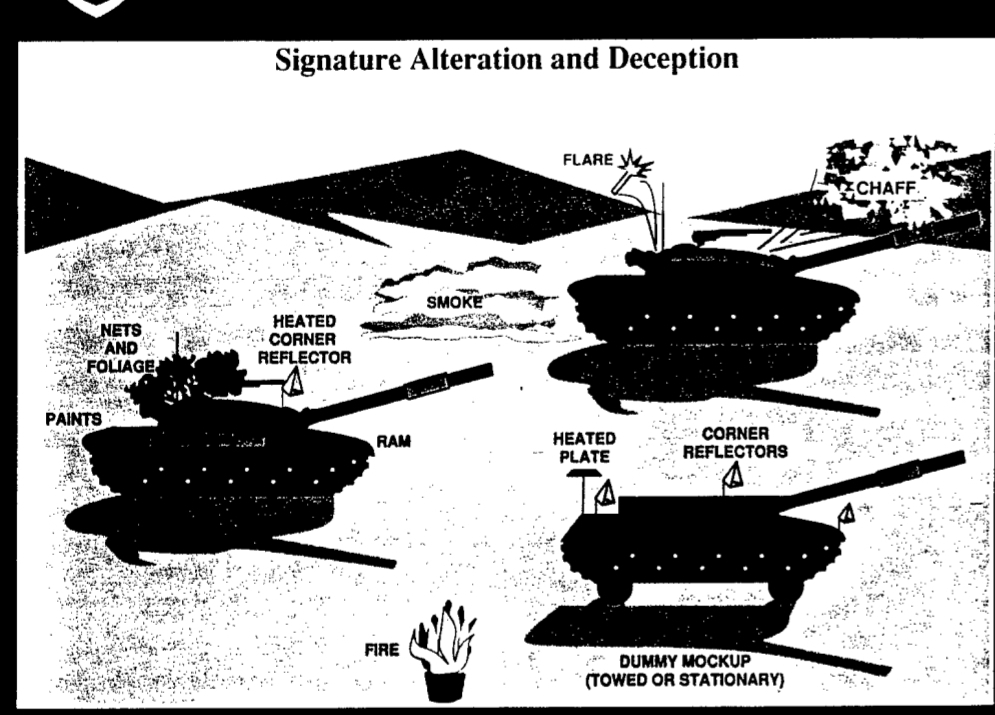
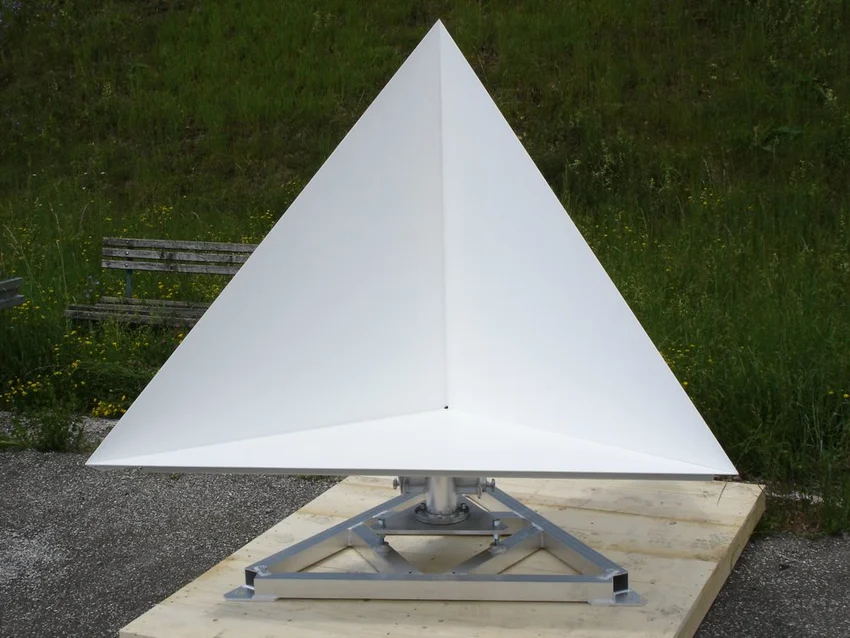
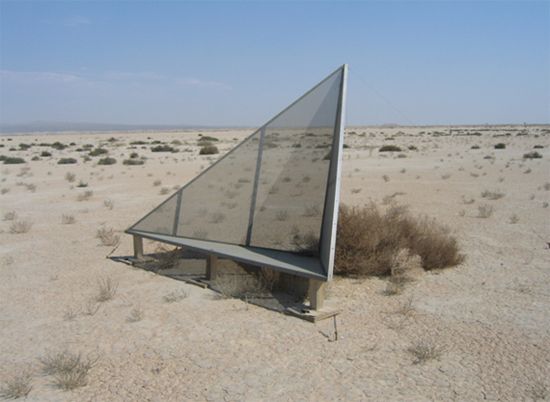
A trivial countermeasure against a mmW seeker that is both most effective and cost-efficient is the employment of trihedral corner reflectors. A trihedral corner reflector reflects electromagnetic waves directly back to the source across an exceptionally wide range of incident angles. The maximum theoretical RCS of a triangular trihedral corner reflector is calculated using the physical dimensions of its edges and the wavelength of the radar. Even a physically compact 40-centimeter corner reflector can generate an RCS identical to that of a MBT. Research into trihedral corner reflectors demonstrates that complex interference patterns can be engineered (to for example fool the ATR algorithm into believing a reflector is actually a tank). In war thunder such passive structures could be incorporated for example near player spawns, providing a safe haven from such weapons.
Multispectral aerosols or application of Radar absorbent material (RAM) is also a viable defence option.
Although the final efficacy of mmW seekers depends on the attention to detail and faithfulness that the developers employ when/if implementing this mechanic into the game, in my modest opinion for some nations the introduction of weapons that posses mmW seekers is inevitable for providing them with weapons on par (both in age and capability) to rival nations.
Thank you for your time and attention
Sources
- Three-dimensional ISAR imaging using high resolution range profiles
- Electromagnetic Spectrum Selection for Missile Seekers
- MILLIMETER WAVE RADAR APPLICATIONS TO N WEAPONS SYSTEMS
- Multispectral Aerosol Obscurants: A review
- Comparison of Infrared and Millimeter-Wave Imager Performance in Adverse Weather Conditions
- THE EVOLUTION OF RADAR GUIDANCE D. A. RAMSAY
- Electronic Warfare and Radar Systems Engineering Handbook
- W-band GaN IMPATT Devices Navy SBIR FY2015.2
- W-Band Multi-Aspect High Resolution Range Profile Radar Target Classification Using Support Vector Machines
- Spatiotemporal Deep Learning for Target Classification in High-Resolution 3D-ISAR Radar Images
- Brimstone Missile
- Scalable Undersized Dataset RF Classification: Using convolutional multistage training
- Multiple-Input Multiple-Output Radar for Drone Detection Lehmann, Lasse
- RADAR REFLECTIVITY MEASUREMENTS SYMPOSIUM
- JPRS Report, Science and Technology: China. JPRS-CST-89-007
- Analytical Model for the Maximum Radar Cross Section of Dielectric Trihedral Corner Reflectors
- Survey of Missile Simulation and Flight Mechanics Facilities in NATO
- Electromagnetic wave propagation in rain and polarization effects
- Attenuation-Based Estimates of Rainfall Rates Aloft with Vertically Pointing
Ka-Band Radars, SERGEY Y. MATROSOV, Cooperative Institute for Research in Environmental Sciences, University of Colorado, and NOAA/Environmental Technology Laboratory, Boulder, Colorado - The Who, What, Where and When of Radar Targeting.