- Yes
- No
Hello and welcome to another suggestion, in this one we’ll be having a look at the final form of the Mirage III pre-production series, defined by the IIIA with model number 10.
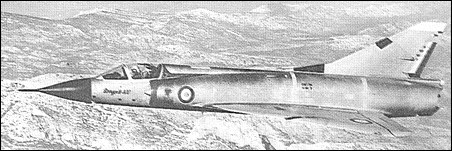
The story of the Mirage III is obviously a lengthy one, but these vehicles are very much at the start of this legendary aircraft’s career. The program started with the very different Mirage I, a twin engine vehicle that pretty much only shared the delta wing concept with the final production vehicle. The initial prototype was eventually considered to be too small for further development and integration with advanced systems, leading to the Dassault engineers returning to the drawing board. They first came up with the Mirage II, which was larger but still twin-engined, and never ended up being built. Finally the design landed on the Mirage III, featuring a single more powerful engine in a larger hull. This design met the needs and a prototype Mirage III 001 was built. It first flew in 1956 and the performance was convincing enough for an order of a set of 10 pre-production aircraft, the Mirage IIIA series.
The design and development of these pre-production aircraft was tweaked throughout the process and eventually perfected on the last 2 models 09 and 10.
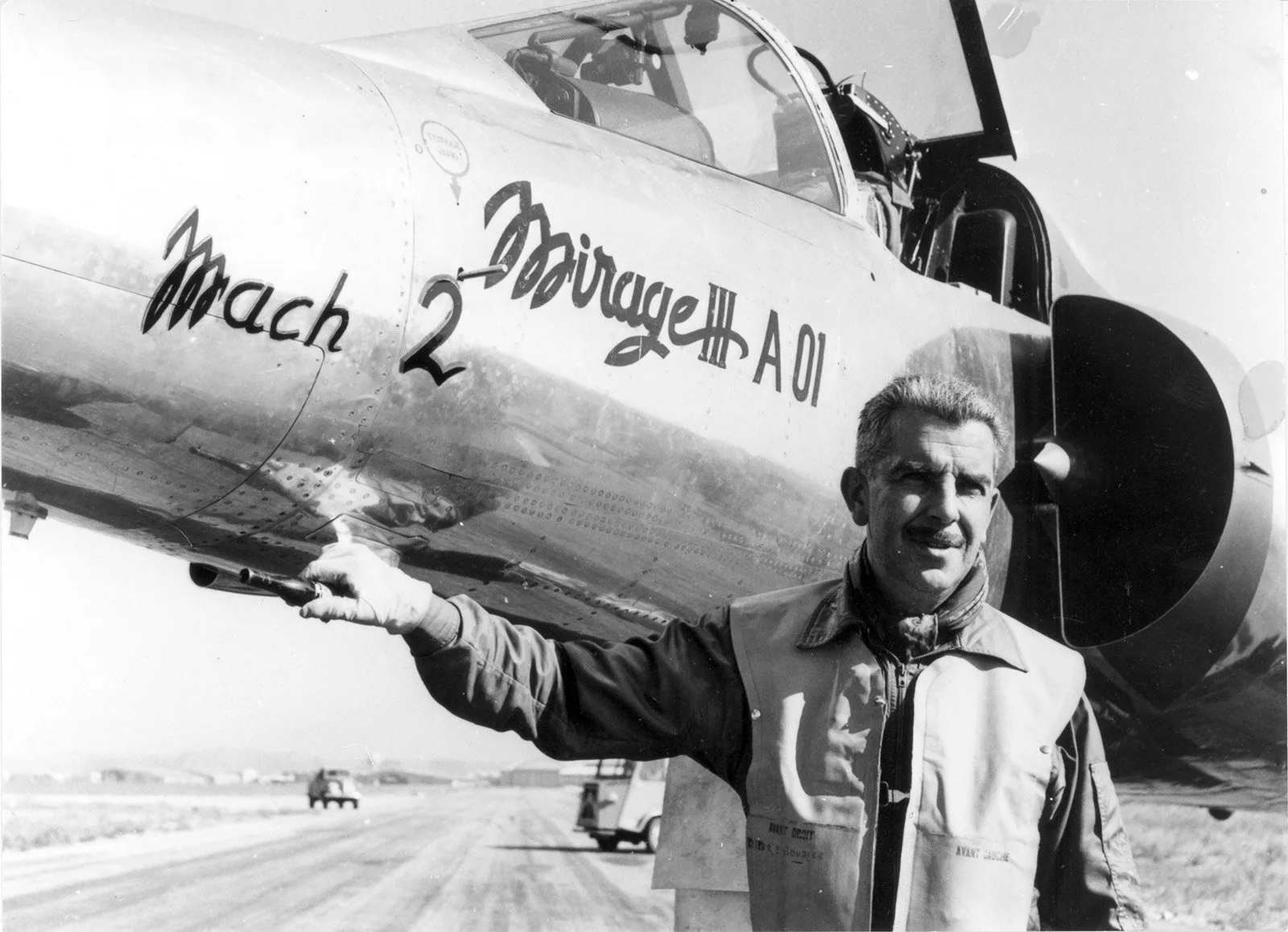
Each of the 10 aircraft was tasked with a specific part of the development program, ranging from tests of the flight envelope and engine for 01 and 02, leading to the breaking of the mach 2 barrier, becoming the first European aircraft to achieve this feat. Testing eventually evolved to increasingly more complex and finalized tasks as the number increased. From number 05 onwards, the vehicles were equipped with a radar and weapons testing started at 07. By the time 09 and 10 were reached, the model was almost finalized and very few differences would still happen between them and the final IIIC production model.

Mirage III A10 with its nosecone replaced for display purposes
You might wonder then, if there is so few differences between the IIIA 10 and IIIC, then why bother at all? The key can be found in the armaments, and the way in which the IIIC currently exists in-game. As these vehicles operated in the late 50s and early 60s, the Matra magic had not been developed yet, thus drastically changing the potential weapons performance of these vehicles. Mirage IIIA 10 was designed as the final testbed of the vehicles, and thus also featured all the weapons integrations available at its development time. At the time of its first flight in 1959, it had already been integrated with the AIM-9B and R.511 missiles as these had already been tested on earlier models (perhaps as early as 06), making these the standard loadout for this vehicle. The R.530s development closely followed that of the Mirage III, and the missile became available for testing in late 1960. Mirage IIIA 10 was chosen for the testing, which was done in 1960-1961, just in-time for the Mirage IIIC production models, which would be receiving the missile shortly after their introduction into service.
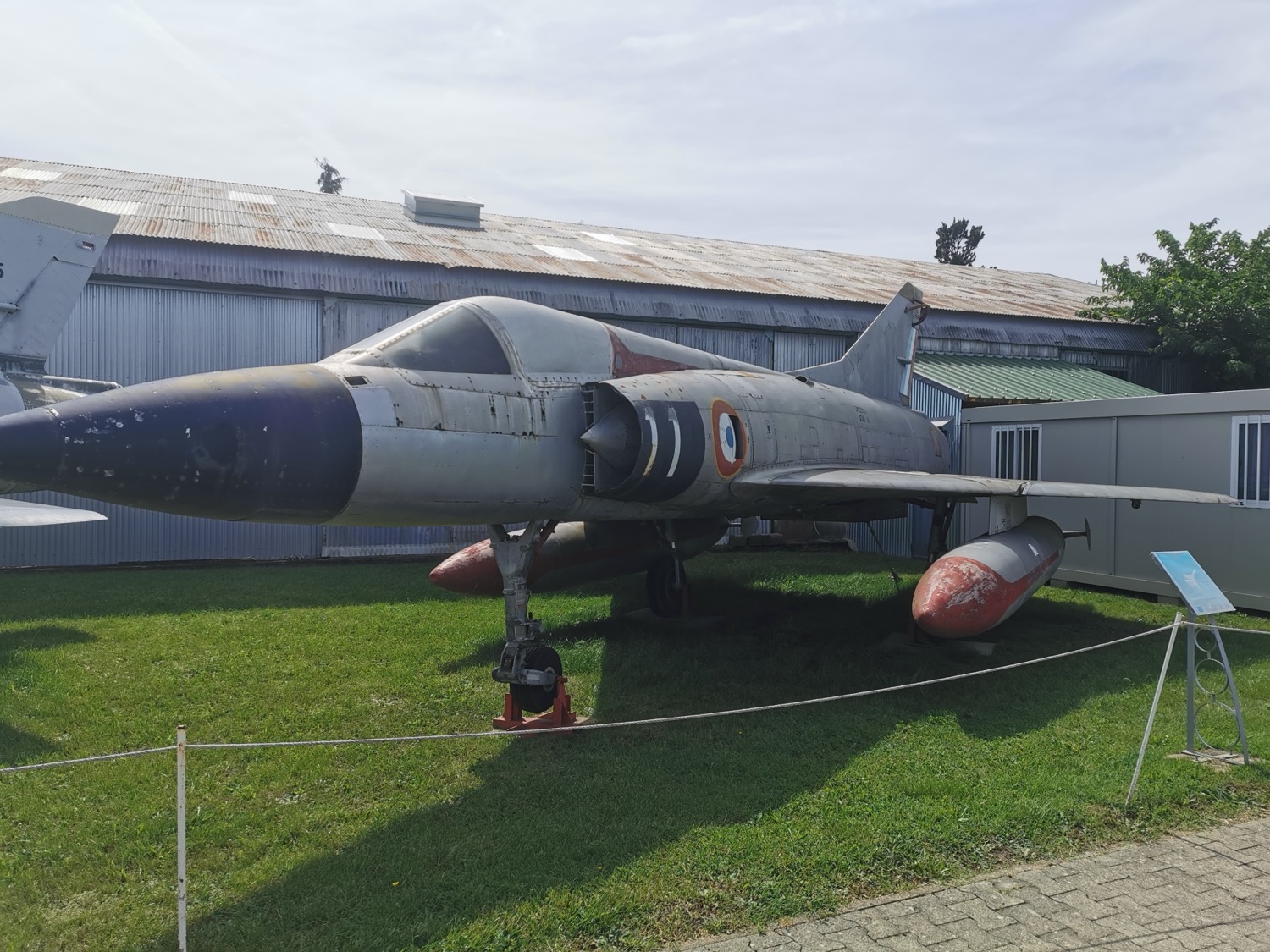
Mirage IIIA 09 preserved in Montélimar
The Mirage IIIAs would essentially end their career as mass production of the IIIC model began, only being used for some minor integration testing later down the line. 09 for example was used to test the integration of the arresting hook present on Belgian Mirage 5s. A couple of examples have been preserved however, with IIIA 01 sitting in the air and space museum and Le Bourget, 09 is on display at Montélimar and 10 is outside the Toulouse airport.

The Mirage IIIA 10 will be a very familiar vehicle for those of us who’ve already flown the Mirage III before, as technically it doesn’t differ from the IIIC already in-game. Just like that one, it is powered by SNECMA Atar 09B turbojet engine, the engine that made it possible for this plane to exist in the first place, as earlier Mirage iterations had been powered by 2 smaller engines. This engine provided an impressive 4230kgf of thrust without afterburner and 6090 with. This allowed the all-metal fighter to reach an impressive top speed of 2350 km/h.
As far as weapons are concerned, here too it is a rather familiar story. The twin 30mm DEFA setup was already developed and integrated by the time of A 10 and was also tested on it during its operational testing at Mont de Marsan. It also has the AIM-9B, R.511 and both versions of the R.530 available to it, giving it a nice variety of air-to-air weapons to choose from.
Of course, the Mirage III was designed with some ground strike capabilities from the get-go, which translated into the ability to carry a variety of dumb bombs and rockets. The AS-30 which we know from the Mirage IIIC appears to not have been available yet at the time of testing of the Mirage IIIA 10.
General Characteristics:
- Powerplant: 1 × SNECMA Atar 09B turbojet (4230kgf dry thrust, 6090kgf with afterburner)
- Maximum speed: 2350 km/h at 11km altitude
- Empty weight: 5922 kg
- Maximum takeoff weight: 9727 kg
- Crew: 1
- Wing area: 34.85 m²
Armaments:
- 2x 30mm DEFA 552A cannons
- 1x R.511 missile on belly hardpoint
- 1x R.530 (both versions) missile on belly hardpoint
- 2x AIM-9B on wing hardpoints.
- 2x 250 kg SAMP bombs on belly hardpoint
- 2x 400 kg SAMP bombs on belly hardpoint
- 2x SNEB type 23 rocket launchers on wing hardpoints
Systems:
- Radar: Cyrano I bis
- Rocket booster: SEPR 841
Place in-game:
This aircraft has more modest armaments than the later Mirage IIIC, which would allow it to be a great stepping stone in the gap currently present between the Super Mystère B2 and the Mirage IIIC. The latter being equipped with the advanced Matra magic missile, which pushes it to a higher br than the IIIA 10 would occupy. This would allow players a more gentle transition into the supersonic era as well as offering a fun counterpart to other early supersonic aircraft that we’ve seen introduced such as the F-102 and 106. Given that this vehicle’s air to air armament will be limited to AIM-9B and R.530 at best I feel like a br of 9.7 (as of September 2026) would be fair. If Gaijin would choose to introduce the aircraft as initially tested, it’ll have AIM-9B and R.511 only, at which point I think a br of 9.3 would be feasible (the latter could also be achieved by introducing Mirage IIIA 06, which only ever trialed the R.511 and was never integrated with R.530). The planes in this BR range are honestly so varied with the F-106 somehow sitting at 9.3 while the G.91YS is also there, so it’s not easy to pin a proper br on it.
Gameplay-wise, it would obviously be very similar to the Mirage IIIC, just without the extra killing potential of the Matra magic missile and hopefully at a lower BR.
Sources
Dassault Mirage III - fighter-bomber
https://www.airliners.net/photo/France-Air-Force/Dassault-Mirage-IIIA/4879399/L
https://www.secretprojects.co.uk/threads/mirage-iii-why-only-one-r530-on-the-centerline.36296/
https://www.key.aero/article/aircraft-profile-dassault-mirage-iii
Dassault Mirage IIIRS - Pima Air & Space
https://www.meacmtl.com/fiches-avions/dassault-aviation-mirage-iiia/
http://www.maquetland.com/articles/impression/668