- Yes
- No
Hello everyone, and welcome to this new suggestion.
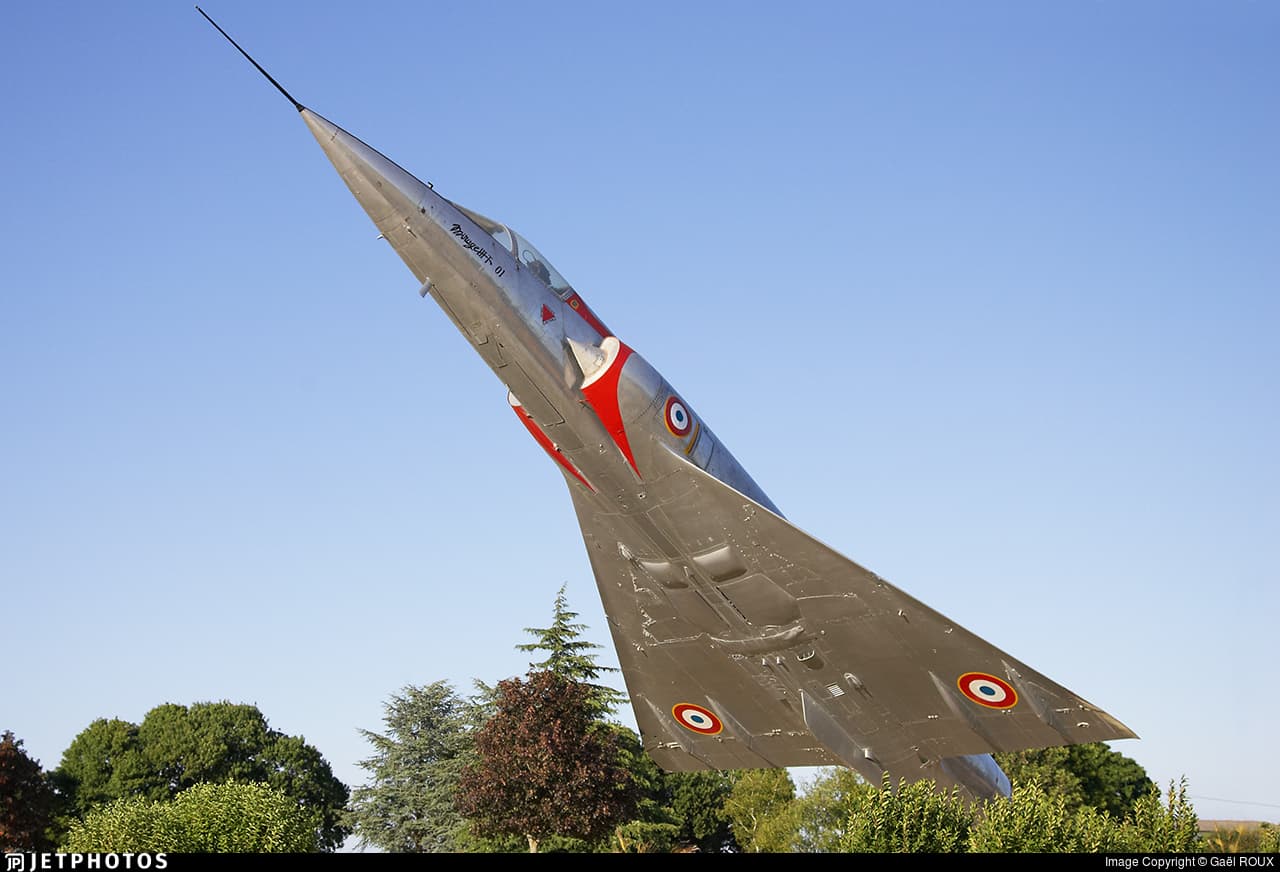
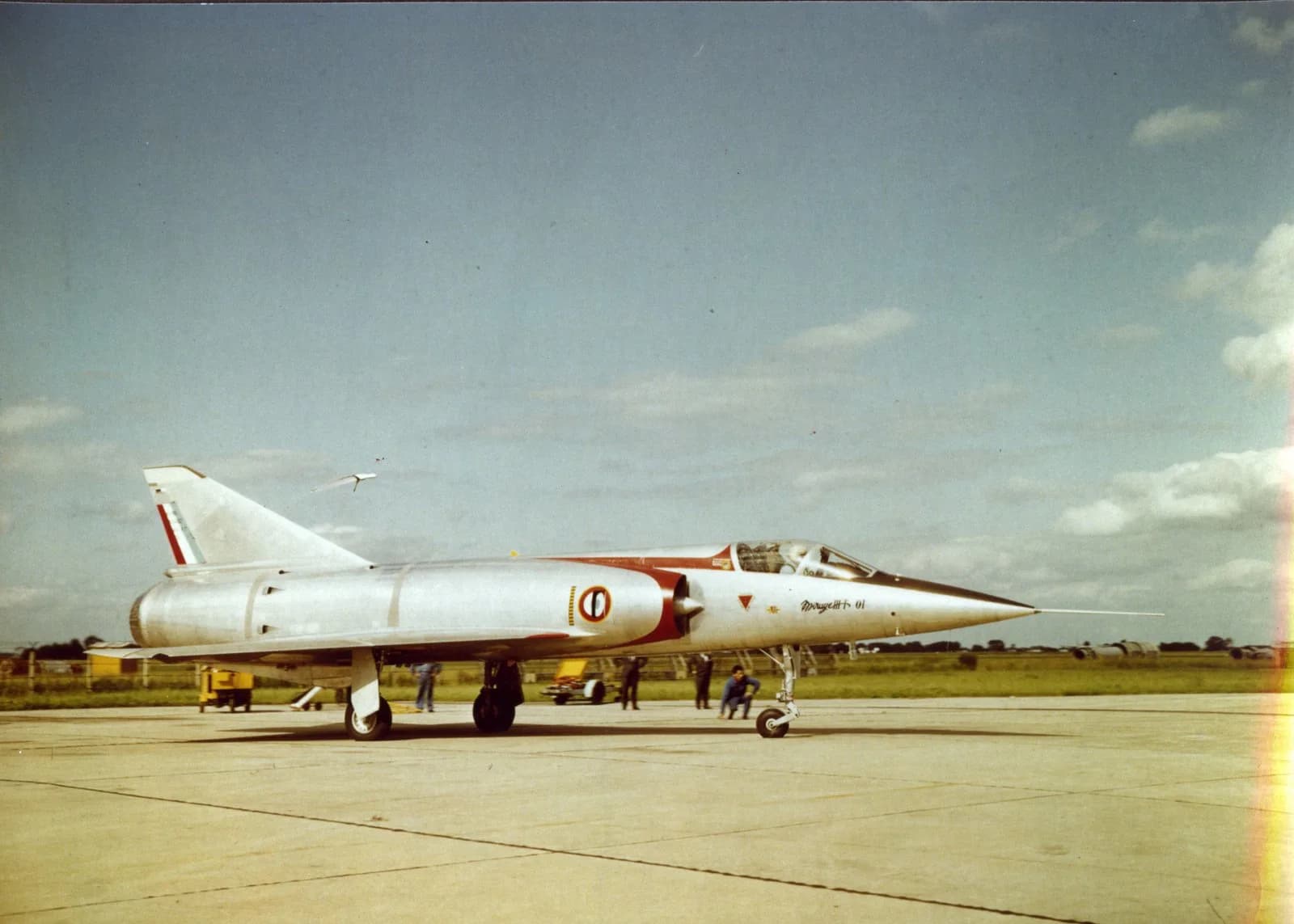
Today, I am presenting a new French prototype aircraft: the Dassault Mirage III T.
In the early 1960s, Dassault Aviation was working on an ambitious new project: the Mirage III V, a vertical take-off and landing (VTOL) fighter designed to combine supersonic performance with the ability to operate without a conventional runway. The aircraft relied on a highly complex propulsion system centered around the Snecma TF 106, a French-built version of the Pratt & Whitney JTF10.
However, integrating this new engine into the Mirage III V proved to be a major challenge. The TF 106 suffered from recurring technical problems, particularly frequent flameouts, making it necessary to develop a dedicated aircraft to test and refine the engine before it could be used reliably.
Dassault therefore modified a Mirage III C airframe to create the Mirage III T. The fuselage was lengthened and widened around the rear section to accommodate the new powerplant and its associated systems. The aircraft initially received a less powerful Snecma TF 104 engine, allowing engineers to evaluate the modified airframe before installing the definitive engine.
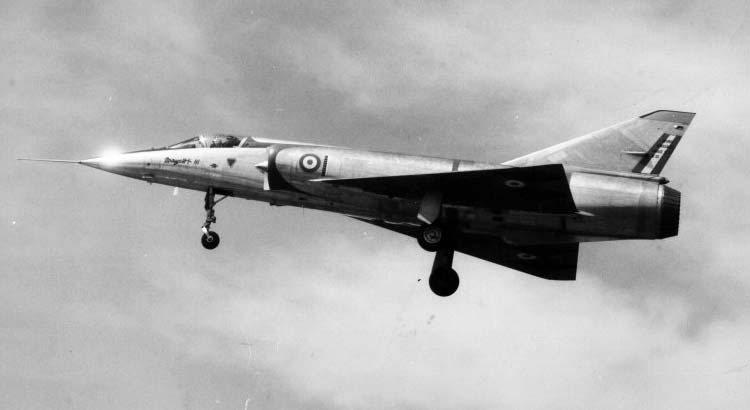
The Mirage III T made its maiden flight in 1964 and performed satisfactorily during its initial testing. With the airframe validated, the TF 106 was installed in early 1965, and the aircraft began a new series of trials.
Although the engine provided impressive thrust, it suffered from a serious flaw: a strong tendency to flame out at low engine speeds. This problem was particularly troublesome during take-off, precisely when reliable engine operation was essential. Despite repeated attempts to resolve these issues, the TF 106 remained problematic.
In 1966, the French VTOL fighter program was finally cancelled. With funding for the Mirage III T’s test program subsequently withdrawn, the aircraft’s development came to an end as well.
The sole Mirage III T was eventually preserved and placed on static display at a French military base, bringing an end to the short but technically interesting story of this unusual Mirage variant.
Characteristics
Length : 14.77m m
Width : 8.22 m
Height : 4.25 m
Mass :
- Empty : > 5,922 kg
- Max : > 11,700 kg
The aircraft is powered by a SNECMA TF106 engine delivering 7.5 tonnes of thrust with afterburner (compared to 6 tonnes for the standard engine), allowing for a higher top speed; the aircraft exceeded Mach 2 during testing. It should be noted that installing the new engine made it impossible to include the auxiliary rocket motor.
The crew consists of a single pilot.
Equipment
Regarding equipment, the Mirage III T retains the standard fit of the Mirage III C; it still lacks countermeasures but is equipped with a Cyrano Ibis radar.
Weapons
The aircraft’s armament is identical to that of the Mirage III C, featuring the following:
Cannons:
- 2 x 30mm DEFA cannons
Missiles:
- 2 x AIM-9B
- 2 x Magic 1
- 1 x R530
- 1 x R530E
- 1 x R511
Rockets:
- 2 x 7 FZ49
- 2 x 18 SNEB Type 23
Bombs:
- 2 x SAMP Type 21
- 2 x SAMP Type 21 200
- 2 x SAMP Type 25
- 2 x SAMP Type 25 200
Additionally, two fuel tanks can be mounted under the wings to extend the aircraft’s range.
In-game, this aircraft would be an interesting addition between the Mirage III C and III E, offering a fighter with a more powerful engine than the other versions, yet still limited by a lack of defensive systems—specifically the absence of flares.