Added 20mm M56 HEFI to 23mm comparison.
With this there’s now visualiation for the following post-war shells:
- 20mm M39 & M61 Vulcan (HEFI)
- 23mm NS-23 / NR-23 (HEFI, HEFI-T, API) (Same as WW2)
- 30mm ADEN/DEFA (HEI)
- 30mm GSh-30-1 (HEFI)
Added 20mm M56 HEFI to 23mm comparison.
With this there’s now visualiation for the following post-war shells:
Added a summary of explosive damage. It’s notable that Mineshells outperform explosive shells when it comes to structural damage to wings.
Added a comparison of explosive shells and Mineshells for taking out large bombers.
Of course it’s a simplification, since many factors influence the results.
Added .50cal API
Crazy to think that that little I tip of the AP-I Cal. .50 has a greater firechance in game than some bigger Incendary rounds.
Indeed. Proportions of incendiary chance and damage are completely blown out of the water and Incendiary bullets or shells have no clear advantage over API in War Thunder.
There either needs to be a system that bases incendiary chance and damage on caliber and ammunition type or incendiary content needs to be modeled.
I would prefer the later, for more accurate depiction of ammunition.
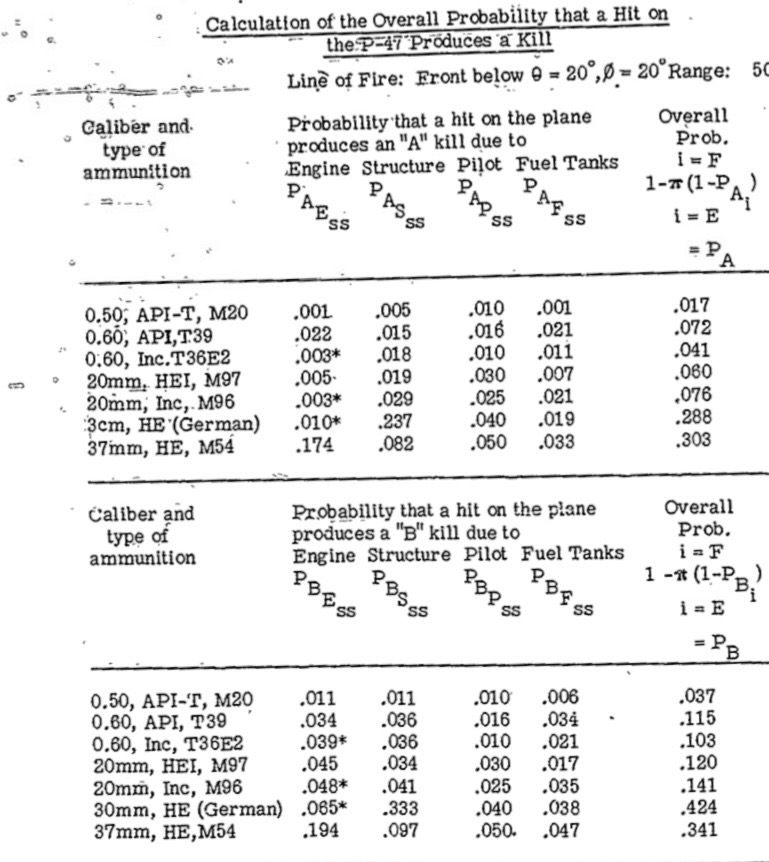
.50cal API-T with 1.16g Incendiary filler only has a 0.6% chance to cause a kill within 5 minutes with damage to fuel tanks and structure.
20mm M96 with 10.8g Incendiary filler has a 5% chance in comparison. Thats more than 8 times the likeliness.
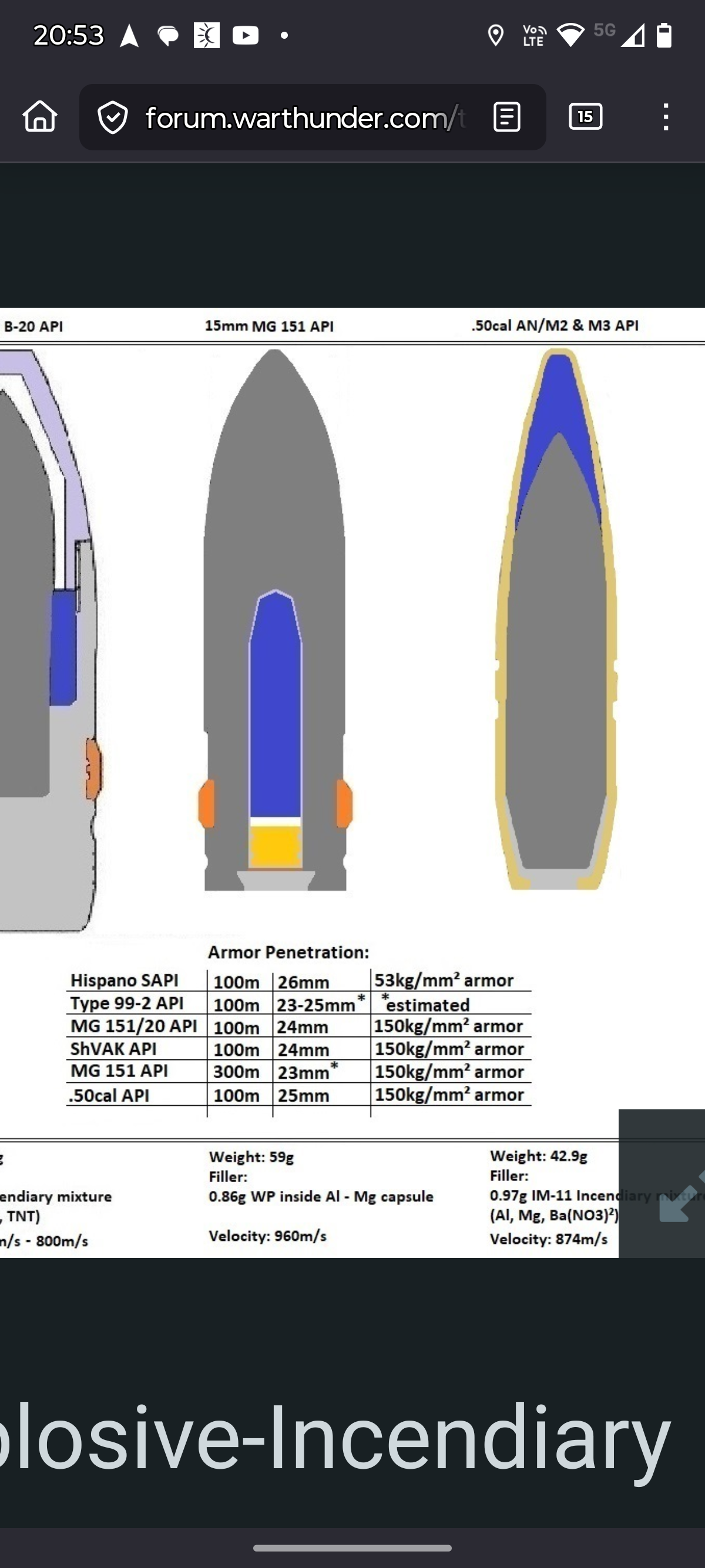
Changed MG 151/20 API penetration from 20mm to 24mm.
Compared to the softer APHE and the regular AP, the API was hardened to a greater degree.
Presumably to make the shell break appart more easily, to release the WP, which also increased the penetration performance.
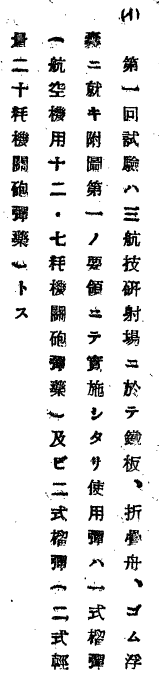
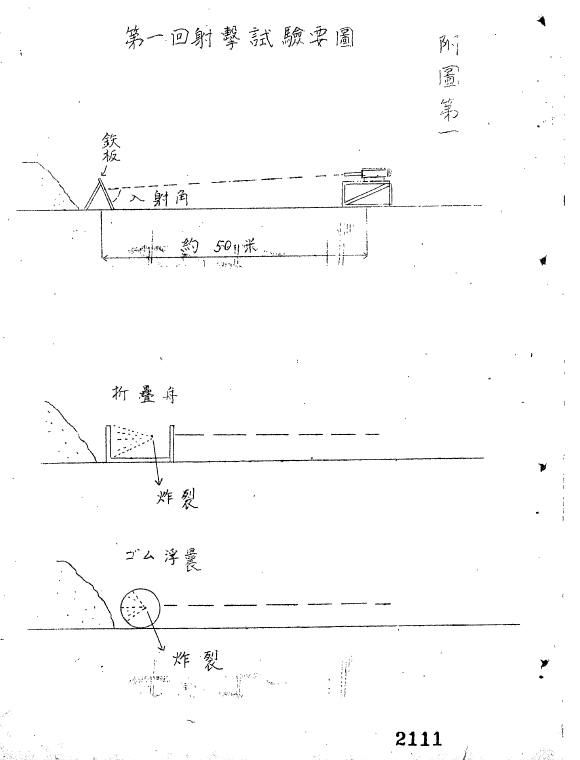
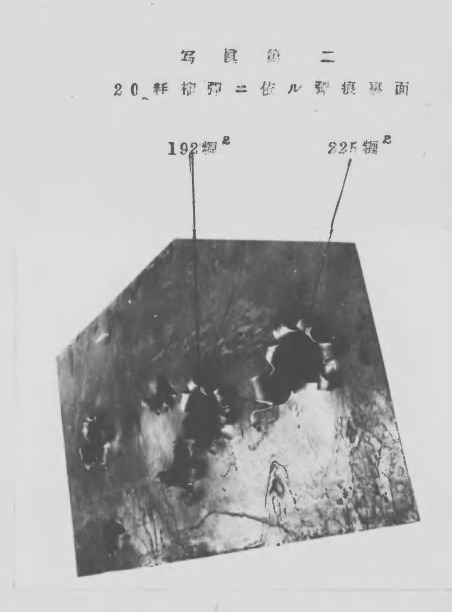
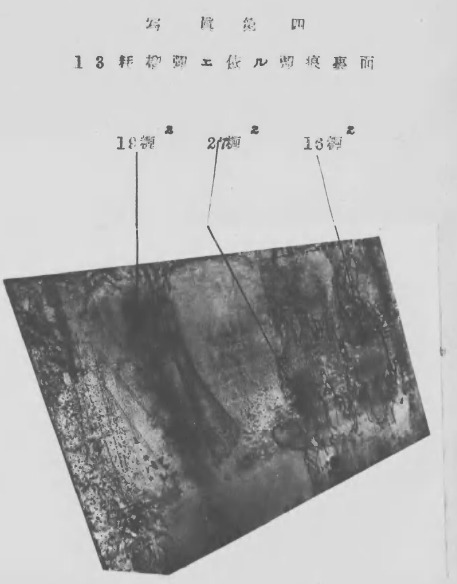
Here is the IJA tests of HE rounds from Ho-103 and Ho-5 against 3.2mm steel that stands for a ship/boat hull, which is interesting.
The rounds were 12.7mm “Type 1 HE”(Ma-102?) of Ho-103, and 20mm “Type 2 HE” from Ho-5, fired at a distance of 50m:
Results:
20mm Ho-5 Entry:
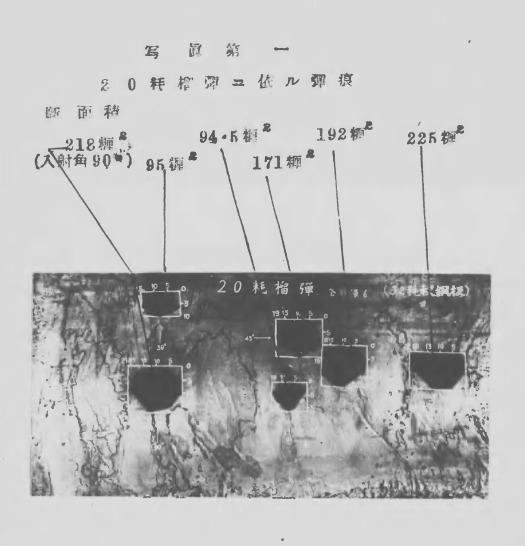
20mm Ho-5 Exit:
12.7mm Ho-103 Entry:
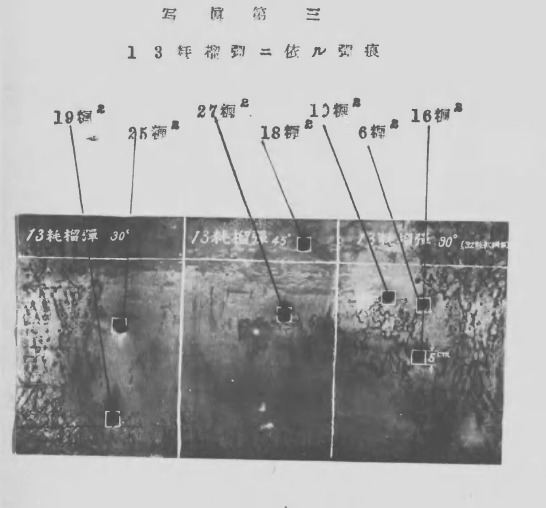
12.7mm Ho-103 Exit:
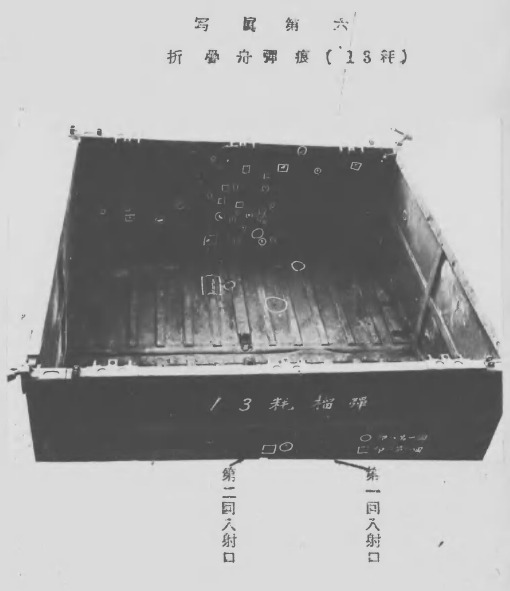
20mm Ho-5 against a folding boat:
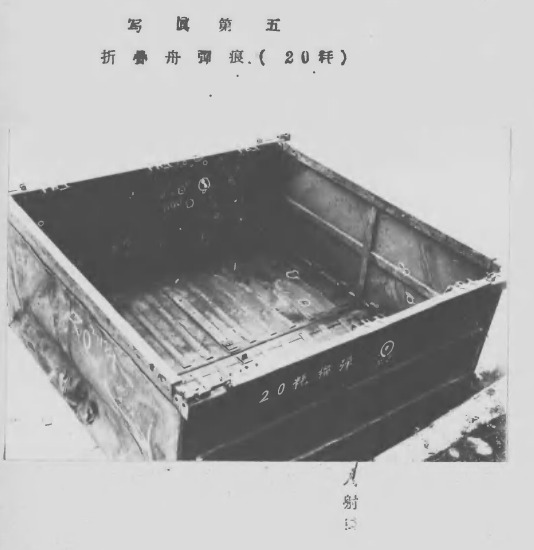
12.7mm Ho-103 against a folding boat:
The median value is roughly 181.5cm², while the mean without the outliers is around 201cm².
This translates to a hole with 15-16cm diamter in size.
Very similiar to the performance of the ShVAK against a duralumin sheet aircraft wing (18cm hole)
Construction steel has roughly the same hardness as aircraft duralumin, so it should be pretty comparable, other the fact that the steel plate is thicker and should offer more resistance.
Here the median is 18cm² or 21cm average without outliers. So a 4.5-5cm wide hole. (2.65g filler)
Compared to the Berezin MDZ-3 bullet which leaves a 2cm entrance hole and a 11cm exit hole in a dural wing (3.2g filler).
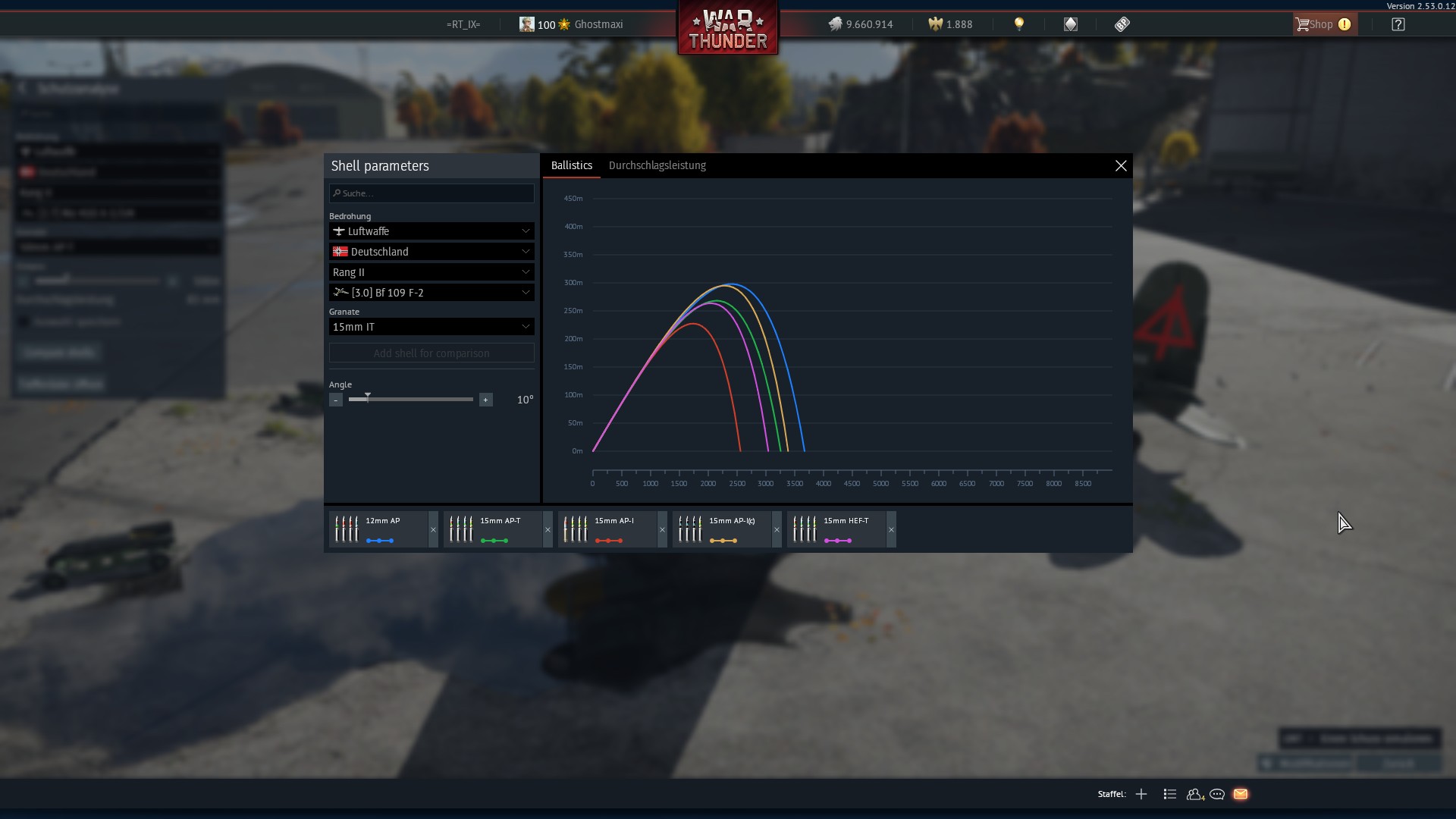
It’s because .50cal bullets are very aerodynamic compared to cannon shells 🙂
And 15mm shells are awfully light cannon shells, so they are not great at keeping their speed.
Very noticeable with 15mm API which is lighter and doesn’t have a tracer compared to 15mm AP-T.
13mm API would have complete potato ballistics and 13mm AP-T is already barely effective past 200m.
Yeah, but the Ap-T at 72g, boat tail, tracer, nearly same velocity, still so much worse than the lighter, no tracer .50.
It’s the shape. 15mm is pointy till around 1/3 and then has complete straight walls.
While a .50cal are basically pointy to 2/3 or more.
They are also bottom heavy, which keeps the tail more stable while 15mm shells are more nose heavy, which causes them to wiggle around, increasing drag.
Downside is that bullets will easily tumble once they impact a target, while front heavy shells keep their orientation.
Added firing time comparisons for taking down a 4-engined bomber.
@KillaKiwi @Ghostmaxi I would actually put my money on real world vs Gaijin calculated ballistics.
I mean, nose heavy projectiles are naturally stable, hence all smoothbore slugs and bullets are nose heavy (f.e. Minie bullets).
Now, at least in shotguns, any wiggling there is is eliminated by spin stabilisation. In other words, nose heavy, spin stabilised bullet in theory should be the least prone to wiggling and should be the most stable overal.
Now, maybe 15mm simply has somehow way worse mass to frontal area ratio, which would also mean way lower length to diameter ratio.
But that’s assuming Gaijin uses real world data for US bullets.
Do they?
The nose shape is of course not without impact, but the difference seems just too big…
As far as I know, both 15mm and US .50cal ballistics are accurate.
I mean, maybe that 15mm bullet indeed lacks some length. Who knows. I have a hard time believing nose alone slams the ballistics so horribly. But I can’t do the maths ans measurements on my phone.
BTW, 53kg/mm^2 - wouldn’t that be way softer than any lower thickness armor has any right to be?
Oh and thanks for reminding me Gaijin completely ignores booster charge, because it magically doesn’t count.
Also thanks for reminding me Shvak and Vya pretty much use HVAP, but these work just like full caliber 20mm, while extremely effective real life 20mm - Pzgr 40 and post war DM43 can’t pen a Hellcat or Wiesel and generally suck major arse despite tons of real world tests indicating these shells were of very effective design,eith DM43 having way better penetration both vs vertical and angled armor compared what we have in game. But nah, onky Vya and Shvak can have effective sub caliber AP, MG151, 2cm Flak and Oerlikon can suck it up.
Time to drown the bad memories in vodka…
…just kidding, lol, best I can do is some coffee.
Yeah but that’s how it’s in the document.
They probably thought it was used against small ships and boats.
So hard to say how it would fare against real armor.
It’s probably not worse than ball, which could defeat around 15mm.
Well, wonder what kind of steel was ball ammo made of? I guess it was a lot softer than AP, but wonder how much.
Was it tested vs 150kg/mm^2 too? Anyway, 15mm sounds about right, proper armor steel is a lot stronger (damn, 100 vs 150kg is already a big difference). Of course in WT it’s 22mm, because reasons.
BTW I like your logical reasoning behind the German APHE vs API penetration differences. Indeed for a shell with no penetrating cap, a bit softer steel would stop the shell from shattering, thus preserving the bursting charge, while for API back of the shell shattering is the desired side effect.