- Yes
- No
- Tech Tree
- Premium
- Event Vehicle
- Battlepass
- I already said no
At a glance:
Improved electronic warfare variant of the MiG-23MLD. Minor upgrades to avionics, weapons, and access to an ECM system.
- Prototype subvariant of the MiG-23MLD with Gardeniya-1FU radar jammer/electronic countermeasure system, with 360° coverage and 1.5km range.
- Access to R-73 and improved R-24M missiles.
- Improved radar and avionics - better ECCM, access to helmet-mounted sight and TWS.
- Same proven flight model, engine and suspended weapons as the MiG-23MLD.
- Cannot carry additional x12 countermeasures.
The MiG-23 is the most mass-produced variable-geometry aircraft, and a number of test and proposed versions arose during its life. This aircraft was the result of testing the possibilities of electronic warfare over the course of more than half a decade, fitted with the best technology the last Floggers used. This plane never entered service, as more advanced versions of the MiG-23 were not pursued in favour of embracing the incoming MiG-29 and Su-27 - but the testing and research used on it and its predecessors later informed the use of EW equipment on the Flanker and Fulcrum respectively. While there are more powerful versions of the MiG-23, such as the MiG-23-98, this is the Flogger in its most potent form, while still true to what makes it the MiG-23. (i.e. it’s not the MiG-23-98).
Although the MiG-23MLDG is a subvariant of the MLD, the penultimate MiG-23, this plane has its origins in the MiG-23ML. As many players will know, the MiG-23ML was updated later in its production run as the MiG-23MLA - although the one in the German tech tree in-game isn’t strictly speaking an MLA, and I’ll explain why later.
The MLA was assigned Production Code (Izdeylie) 23-12A, and entered service in the Soviet air force in 1978. In 1982, two MiG-23MLAs were developed further into two new planes - one was only known as Production Code 23-19, the other was the MiG-23MLDG, Production Code 23-35.
I need to point out here that this 1982 “MiG-23MLDG” is not the one I am proposing. The nomenclature is very confusing, but I’ll address that later, just remember the production code to tell the difference. This article is about the aircraft with production code 23-57.
MiG-23 23-19 and 23-35 were very interesting aircraft, both developed from the MiG-23MLA. 23-35, who is relevant for our story, was fitted with the Gardeniya-1FU electronic countermeasure system in a suspended container hanging from the centerline pylon (which had previously been experimented on with the MiG-25PDSL, though the timeline isn’t very clear - some say MiG-25PDSL completed its flight tests in 1985, others say it began them in that year), as well as a number of other advanced electronic systems for interfering with radar and giving the aircraft better self-defence measures. However, 23-19 was selected over 23-35, and recommended to be developed into the next generation of MiG-23 - 23-19 was produced as the export version of MiG-23MLA, under the name MiG-23MLAE (“E” for “Export”; this version was offered to third-world countries like Syria, he Soviet version of MiG-23MLA had production code 23-12A), and later evolved into the MiG-23MLD, which was given production code 23-18. Technology from the MiG-23MLD was then used to develop the other export option of the MiG-23MLA, the MiG-23MLAE-2 (production code 23-22), which was offered to Warsaw Pact countries (like Germany and Bulgaria). However, unlike the MiG-23MLD, the MLAE-2 did not include the aerodynamic improvements, such as the “Sawtooth” vortex generators on the wing root.
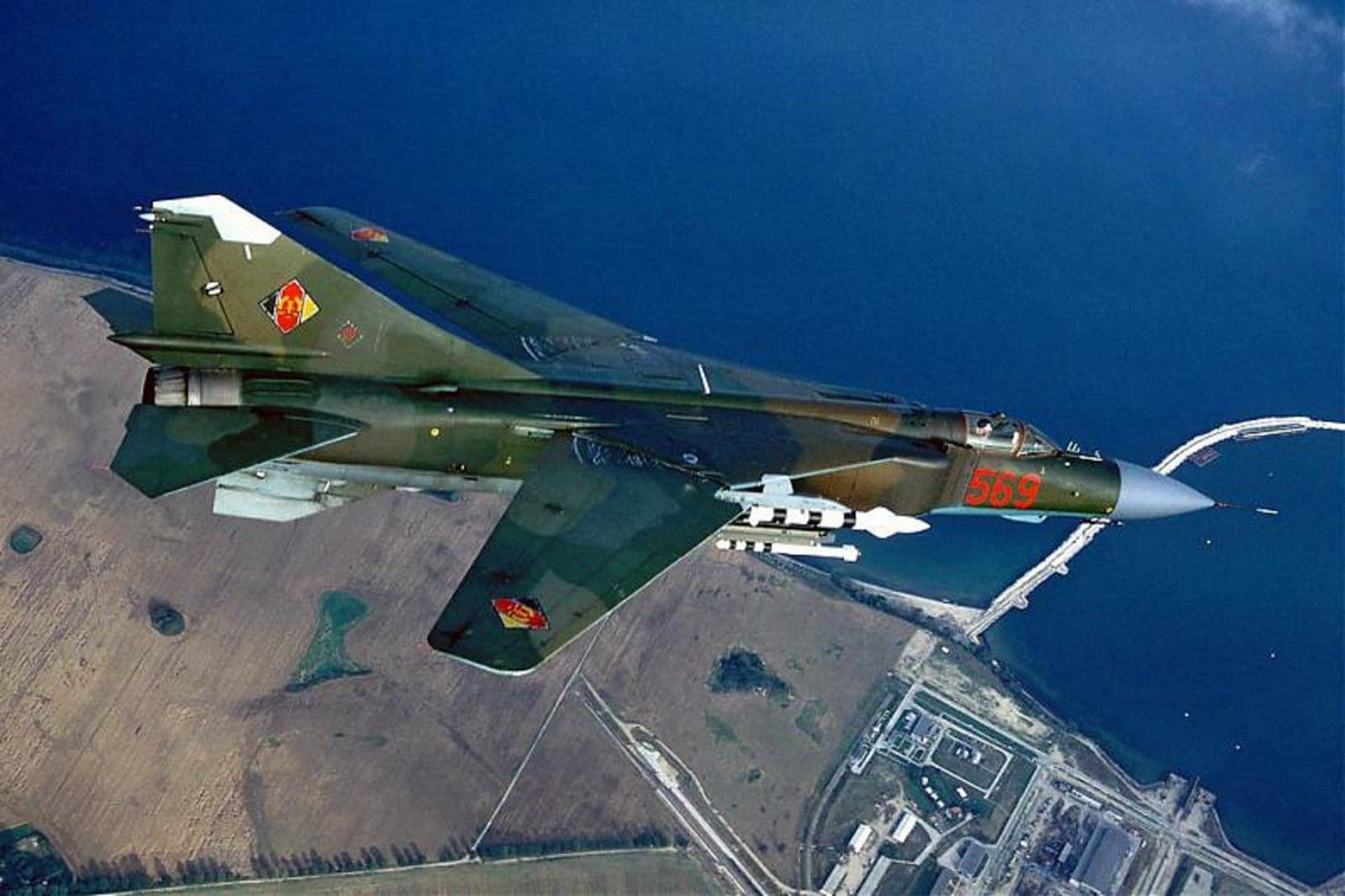
Even though the 23-19 was selected over the 23-35, the idea of a MiG-23 fitted with such advanced systems persisted, and the idea was explored further - especially after the promising results of the MiG-25PDSL, which was fitted with the same ECM equipment.
In 1984, two new planes were developed on the basis of the MiG-23MLD: MiG-23MLG (23-37) and MiG-23MLS (23-47). The purpose of these aircraft was to further explore the concept of jamming technology against IR and Radar systems. The MLG was to be used by the Soviet Air Force, and the MLS to be exported - the “S” stood for the export market in mind, Syria, which already flew the MiG-23ML and MLAE (aka MLD 23-19). The “G” on the domestic Soviet version stood for the electronic countermeasure system this new MiG was equipped with - “Gardeniya”, named after the species of flower. Naturally, both were equipped with the new technology the MiG-23MLD had received in service at that time - the R-73 missile and the accompanying Shchel-3UM helmet-mounted sight. They also received upgrades to the radar to account for the ECM equipment: improved tracking reliability, low-altitude performance, and resistance to noise, clutter, and radar jamming.
Tests on these EW variants of the MiG-23 continued throughout the 1980s, though none were mass-produced; unsurprising given the MiG-23MLD itself was never factory-built, only ever converted from MiG-23ML and MLA aircraft. While none of the EW MiG-23s were used operationally, they were greatly informative for the use of ECM equipment on the MiG-29 and Su-27. It was the arrival of the Fulcrum and the Flanker that led to these Floggers not being pursued, despite promising results.
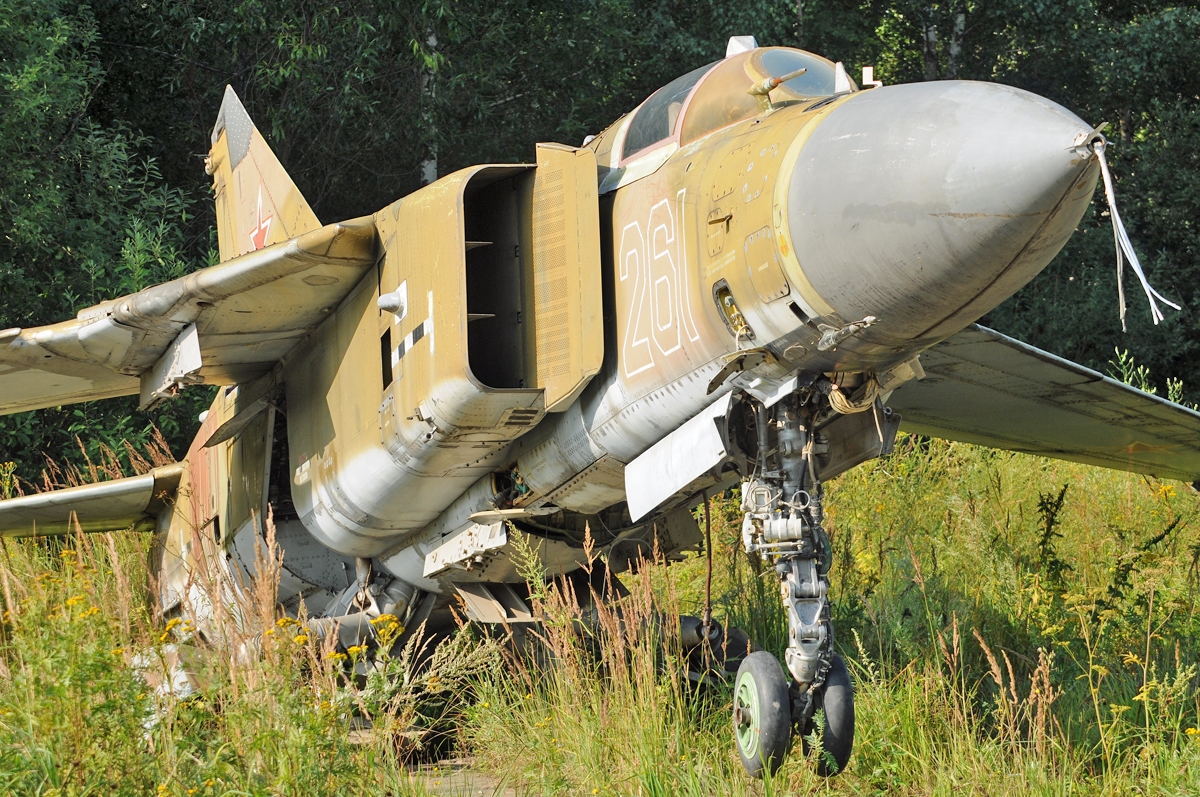
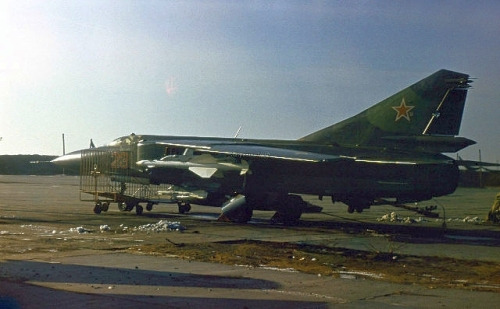
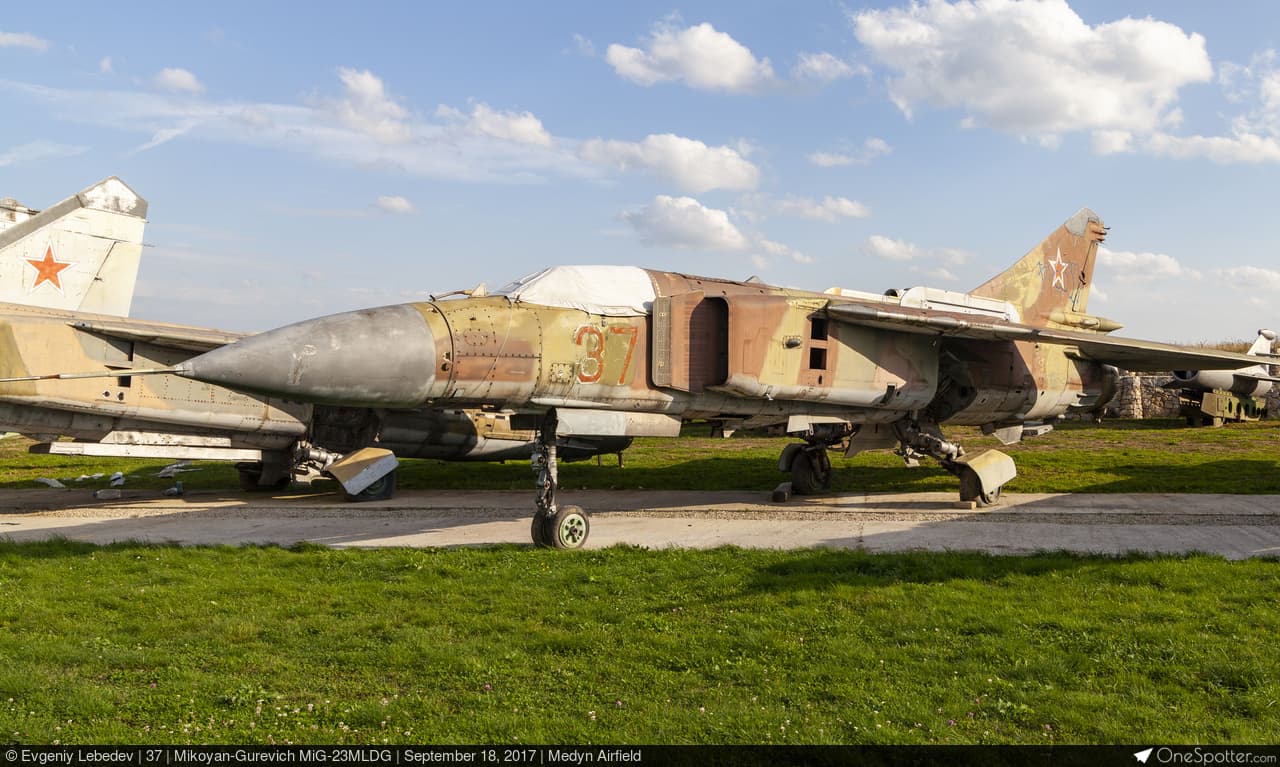
The ultimate version of the Electronic Warfare MiG-23s was MiG-23MLDG (23-57), derived from the Soviet-intended version MiG-23MLG. It was built and tested in “the late 1980s”, and one of the few built survives today. Judging by the lack of weathering on the paint job on MiG-23MLDG (23-57) “37 Red” in late 1993 (at the top of this post), it seems this was likely.
Ultimately, very few MiG-23s were converted to this standard, although there were several of this family. Other sub-variants, like MiG-23MLG and MLGD represent different production codes with slightly different designs - all fitting the “Gardeniya” electronic countermeasure system.
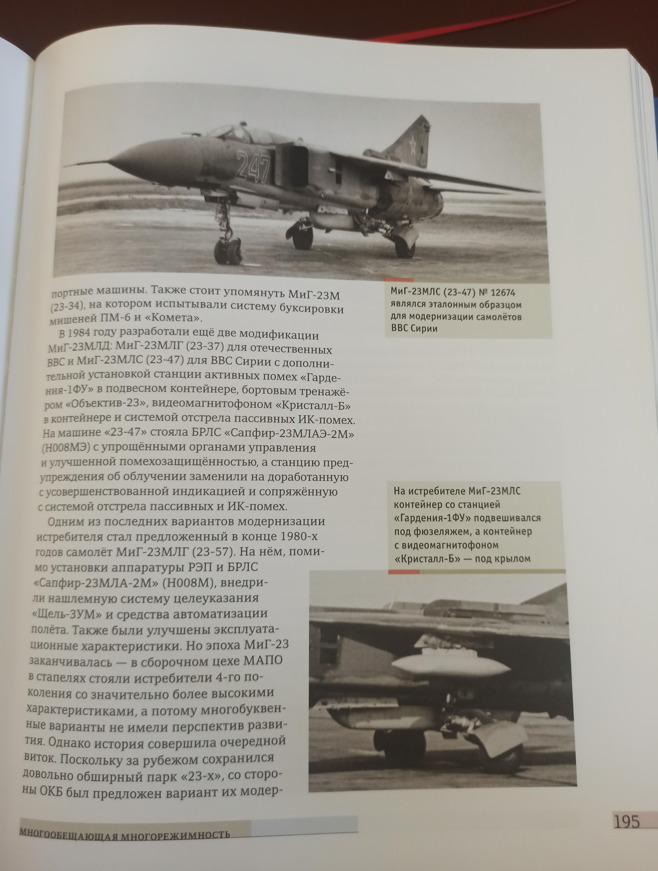
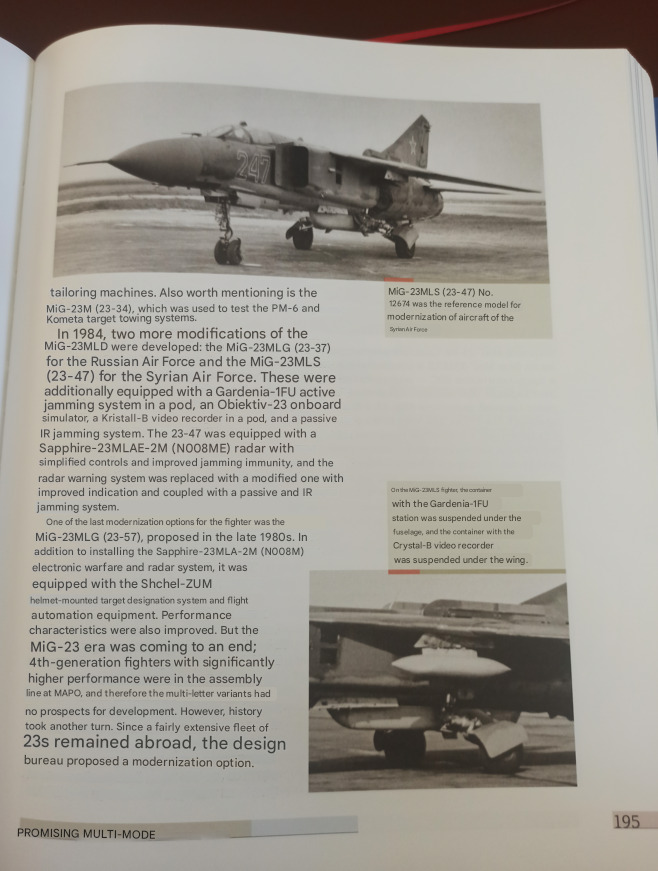
From the book ““MiG”: A flight through time” - E.V. Arsenyev, N.O. Valuev, Yu.F. Polushkin (2020).
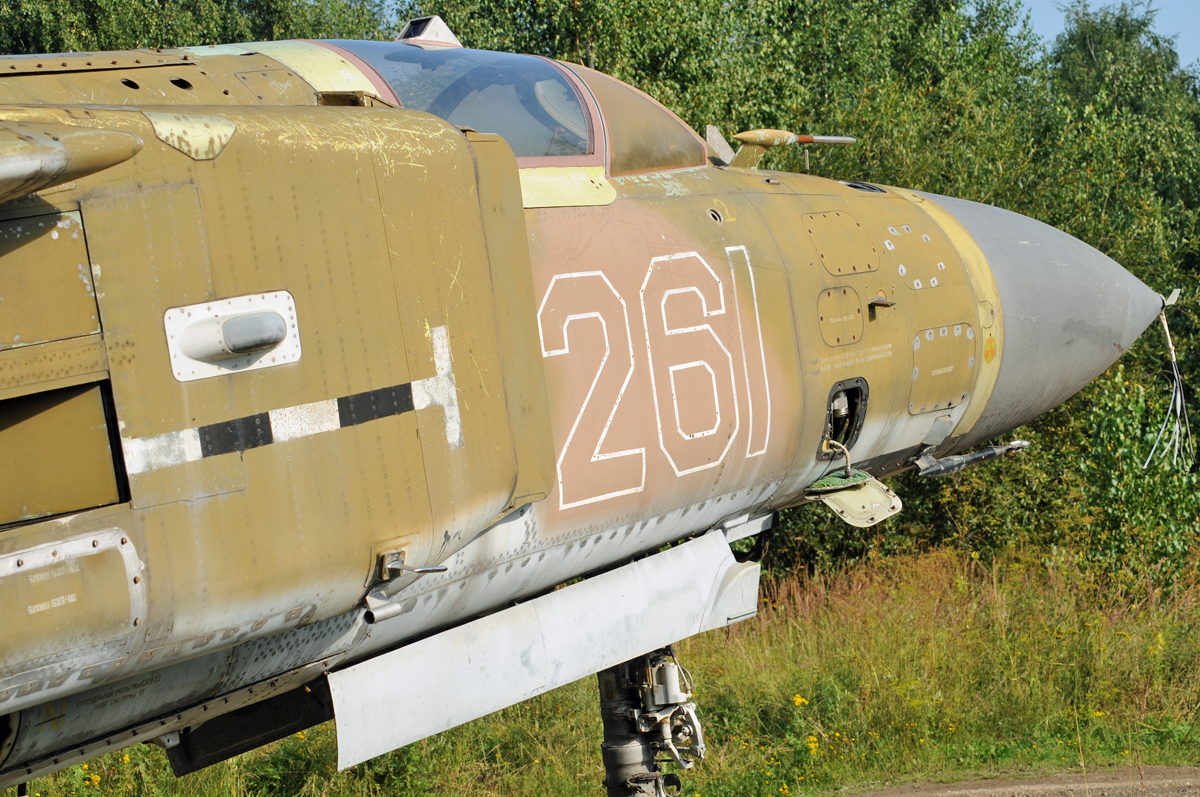
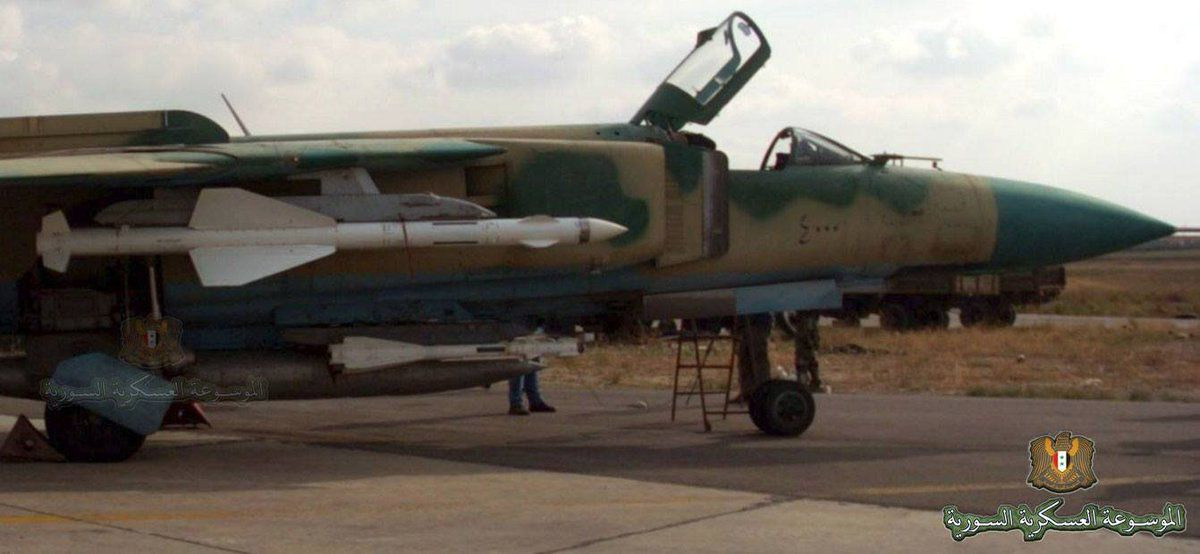
The sole MiG-23MLDG (23-57) - “37 Red” - survives today. Although this plane is sometimes listed as a normal MLD (which we can tell by the wing root vortex generators) - there are some very specific details that give away its past as an electronic warfare fighter.

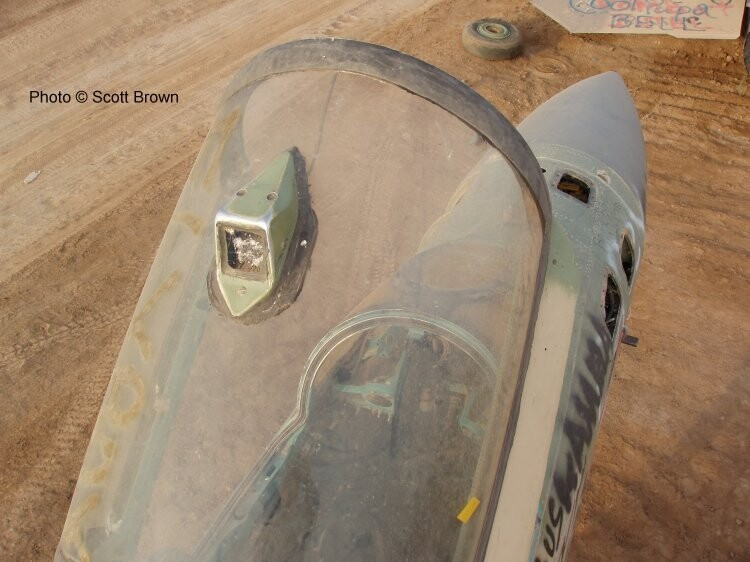
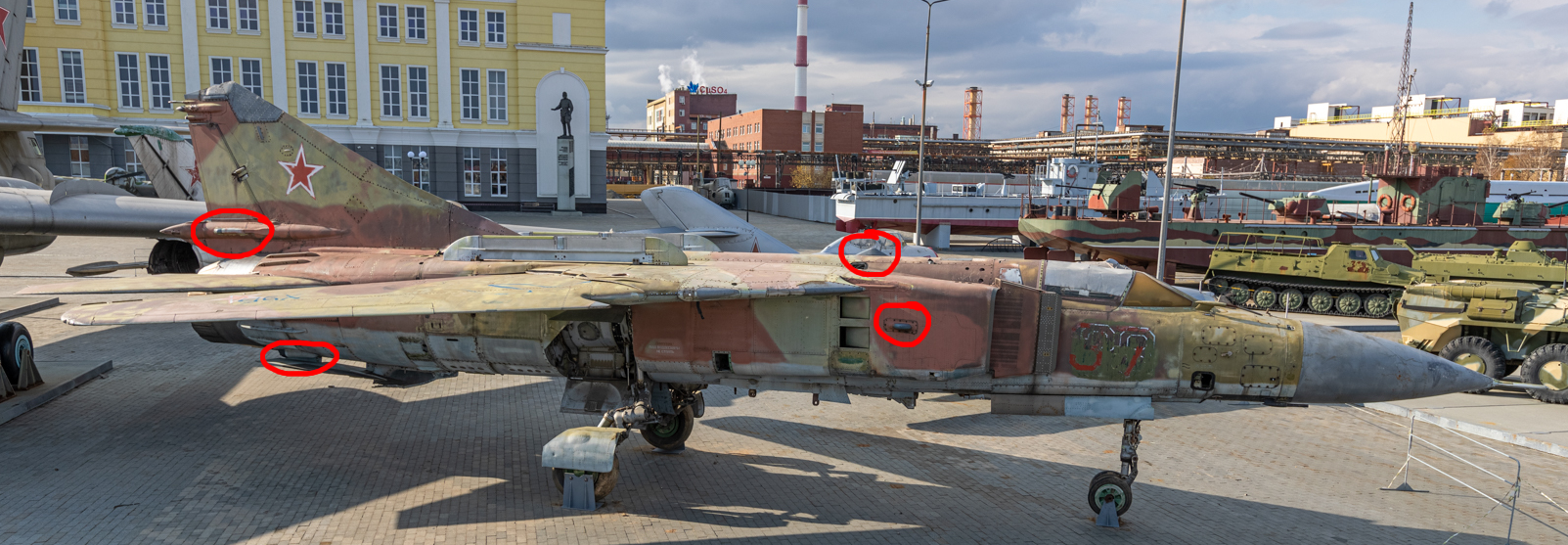
Looking closely, there is a small nub just behind the cockpit and another on the air intake. In the below photo, the same ones can be seen under the air brake, on the air intake and at the base of its tail. That’s on purpose - they’re the A57 Antenna needed for the Gardeniya-1FU ECM system to operate.

These can also be seen in-game on the MiG-23BN, MiG-27M, and MiG-27K.
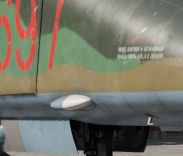
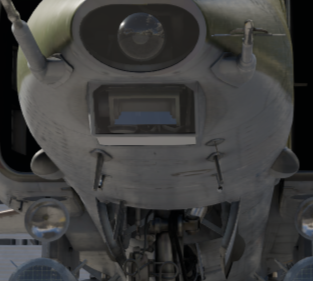
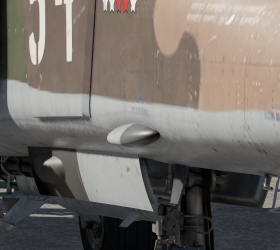
This is on purpose, as these planes were intended to mount electronic warfare equipment in suspended containers - specifically the SPS-141, -142 and -143 depending on the mission (each version operated at a different frequency band) - Gaijin pls, MiG-27 ECM pods!!!1
If we look very closely at the tail of this Su-27, we can see the same antenna - exactly as described in the Su-27SK Operator’s Manual, which goes into detail about the Gardeniya-1FU system.

Earlier I mentioned the MiG-23MLDG (23-35) from 1982 and the later 23-57 which is inexplicably also named MiG-23MLDG. You may have also seen “MiG-23MLGD” somewhere. Naturally, which is which? Well: I have no idea.
The only way to definitively tell the difference between MiG-23 variants is their production codes, “Izdyelie”, which are “23-[Number]”. Towards the end of the MiG-23’s lifespan, there were a number of variants, subvariants, proposals and otherwise, and telling the difference between them all can get confusing to say the least. There are some planes out there stated to be MiG-23MLD, but are actually some variant of MiG-23MLA that used the avionics upgrades of the MLD but not the aerodynamic ones. So if you’ve ever seen photos of a Bulgarian MiG-23 that claims to be an MLD but doesn’t have the giveaway vortex generators in the wing root - well, kind of, but it’s an understandable mistake.
With the electronic warfare variants, I quickly discovered that there is a lot of online documentation that all disagree with each other on the names of these planes, especially 23-35 and 23-57, including how many were built, and what happened to them. Some refer to 37 Red as an MLD, or MLGD, others MLDG, and others still insist it’s actually the MLG. Almost all I found online disagree with each other on “MLDG” vs. “MLGD”, some saying both 23-35 and 23-57 were named MLDG (or MLGD), or that 23-35 was “MiG-23MLDG” and 23-57 was “MiG-23MLGD”. The book I cited at the start of this post says 23-37 and 23-57 were both called “MiG-23MLG”. I don’t live in Russia, I can read Cyrillic but can’t speak Russian, and I have no idea which one is true.
For those interested, here’s a table of all MiG-23 variants.

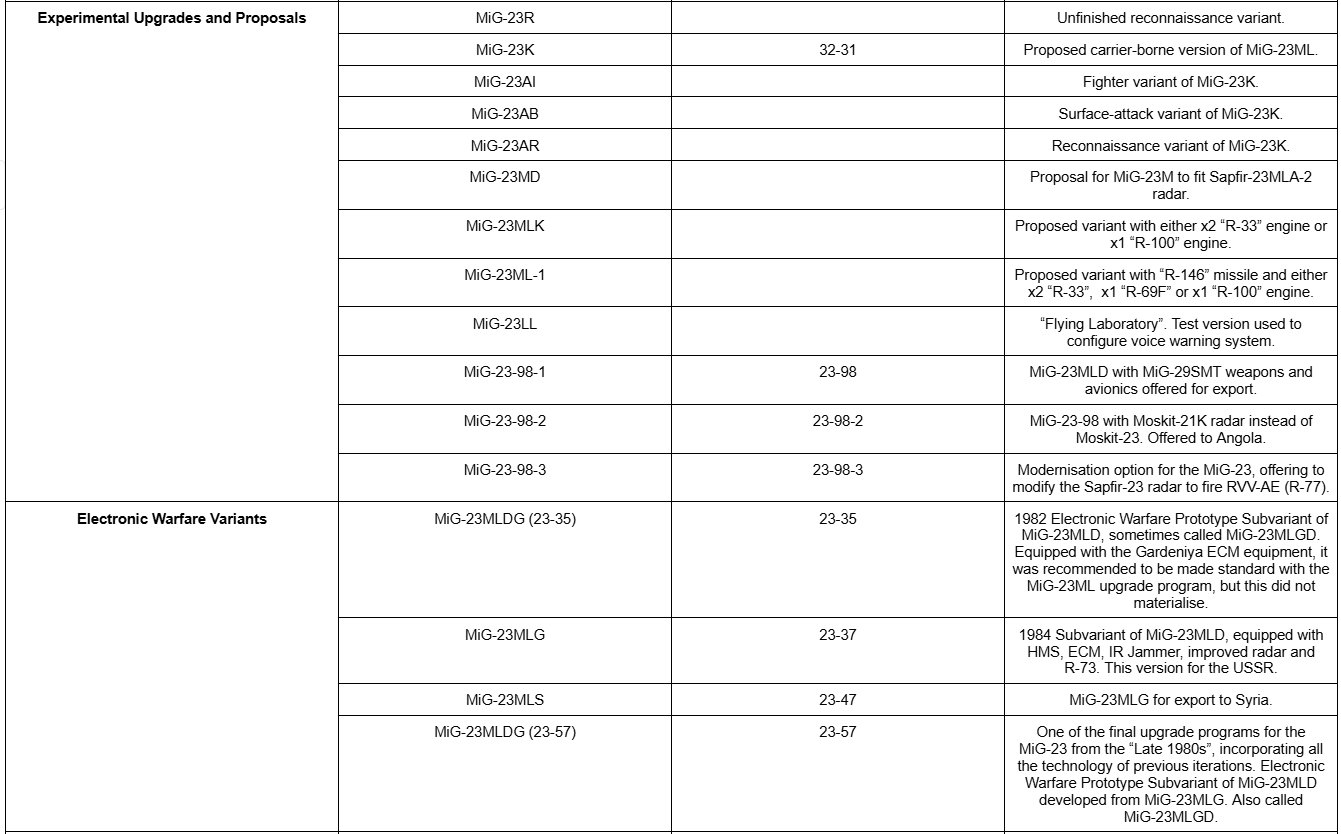
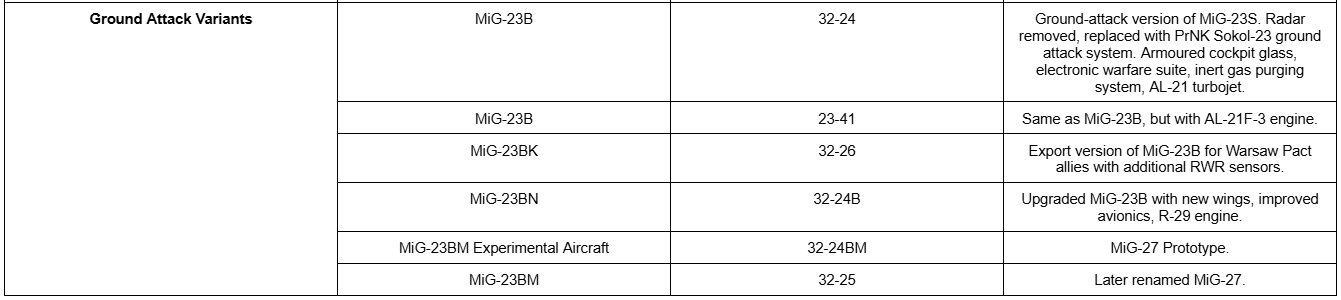
This proposal is referring to Production Code 23-57, the prototype (or maybe it had three examples built? I’ve seen that claimed, I don’t know, but it was at least one). This version had HMS and would have been able to fire the advanced R-24M, introduced in 1988. I’ve chosen to use the name “MLDG” since, considering what those letters stand for (“M” for “Modernised”, “L” for “Lightweight”, “D” for “Revised/Finalised” (“Доработанный”, “Dorabotanniyy”), “G” for “Gardeniya”) - so, “MLGD” would imply “Revised Gardeniya”, which could be considered accurate, since it was derived from the MiG-23MLG, the version intended for the USSR air force; but it was a subvariant of the MLD, so logically the “G” should follow the “D”.
I don’t know. Feel free to disagree with me. Please, someone, show me a primary source about these things. I saw someone call it “MiG-23-57”, maybe that’ll work.
The MiG-23MLDG/MLGD, MLG, MLS, and MLGD/MLDG (Production Code 23-35, 23-37, 23-47 and 23-57) are all related with various minor differences between them. At least one of each was built, all of them (except 23-35) are based on the airframe of MiG-23MLD. They all use the R-35-300 engine, Sapfir-23MLA-IIM radar, and can fire the R-73 and R-24 (except 23-35, which used Sapfir-23MLA-II and did not get R-73s). Only the 23-57 has all of these things plus the MLD’s aerodynamic improvements and, since it was built and tested around 1988, the R-24M, which had become standard to replace the R-24R by that time.
The history I’ve cobbled together here is based on my attempt at finding as much information as possible on these obscure aircraft online and piecing together an accurate (to the best of my ability) understanding of how the Electronic Warfare Floggers worked and what their story was. I’ve done my best to find provable information where I can, but some of this history was me inferring facts based on logical reasoning and deduction. If anyone has something more reliable than my educated guesses, please correct anything I’ve gotten wrong.
But, with that out of the way, let’s talk about how the MiG-23MLDG would work in War Thunder.
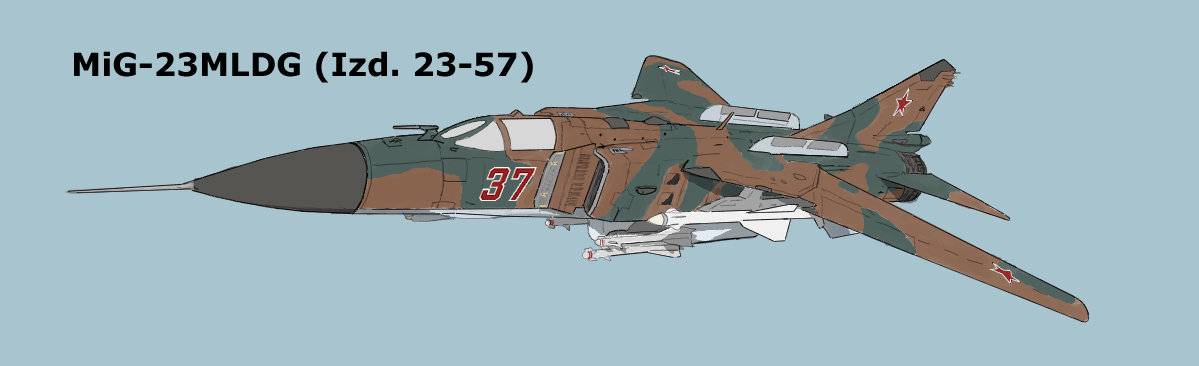
Illustration by me, based on the in-game MiG-23MLD.
As stated, this version of the MiG-23 also includes the later upgrades the MiG-23 received late in its service life. At long last, it’s time for the MiG-23 to receive the R-73 infrared-guided air-to-air missile. But that’s not all! The MiG-23MLDG also received the Shchel-3UM helmet-mounted sight (HMS), the same one used on the MiG-29. This system actually entered service in 1981, and was the first comprehensive HMS in the world; the MiG-23MLD received it too. The monocle sight was designed specifically for use with the R-73, allowing the pilot to fire missiles just by looking at the target.
Naturally, this system works with the R-60 and R-24 as well, and I’m sure many skilled flogger pilots will jump at the opportunity to exploit the MiG-23’s unique variable-geometric manoeuvrability with this new, advanced missile. There is a catch, however: the lack of a dual bracket for the R-73 means only one can be mounted per hardpoint, meaning only a maximum of four can be taken into battle - with no room for any other missiles! A worthy trade off, maybe? Your normal R-60Ms are still available. Choose wisely!
The MiG-23 is well known for its Sapfir-23 pulse-doppler radar with look-down/shoot-down capabilities, paired specifically for its powerful R-23 and R-24 missiles. A powerful and accurate radar that perfectly compliments the R-24 missiles - in infrared, diving on targets far below, or in SARH, surprising enemy planes whose radar warning receivers can’t intercept the J-Band signal. It’s only fitting then that MiG-23MLDG also features a new radar model with a new R-24 with it!
The Sapfir-23MLA-IIM is very similar to the normal MiG-23MLD radar, but features improved integrated electronic counter-countermeasures (ECCM) making it highly resistant to chaff and electronic countermeasures, and a greatly improved ability to ignore noise and ground clutter. The radar’s improvements were focused on countermeasure resistance and low-altitude performance, which pairs perfectly well with the R-24M, whose new seeker also had those improvements in mind!
The R-24M is a modernised version of R-24R, and entered service in 1987 or 1988 - I’ve already suggested it here. It features redesigned fins and a new seeker especially designed for greatly improved noise/clutter and countermeasure resistance thanks to ECCM, with improved low-altitude performance and tracking reliability. It also features increased lock range and launch boresight characteristics. This radar and this missile together will ensure pilots will never lose sight of a target again.
The main feature of the MiG-23MLDG, of course, is the “G”, for “Gardeniya” - the Gardeniya-1FU electronic countermeasure (ECM) system which hangs from the centreline pod. Unfortunately, it can’t be removed in the custom weapon selection, similar to the (non-functional) SPS-141 pod on the MiG-21SMT, which means the plane cannot carry the additional x12 countermeasures like all other MiG-23s, and can only carry drop tanks on its outer wing pylons.
But, this sacrifice does have value. The Gardeniya-1FU is an electronic warfare system that functions similarly to the Infrared Countermeasure (IRCM) systems many players are familiar with, such as those on helicopters. It’s well-known that even fighter jets in-game (like the F-15E and the Su-27SM) have the ability to mount external jammers like this one. If you look at the two white blots on the tail of the Su-27SM - that’s not an aesthetic choice, that’s the ECM antenna.
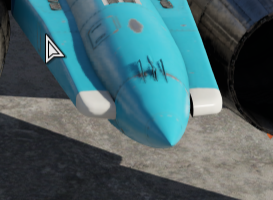
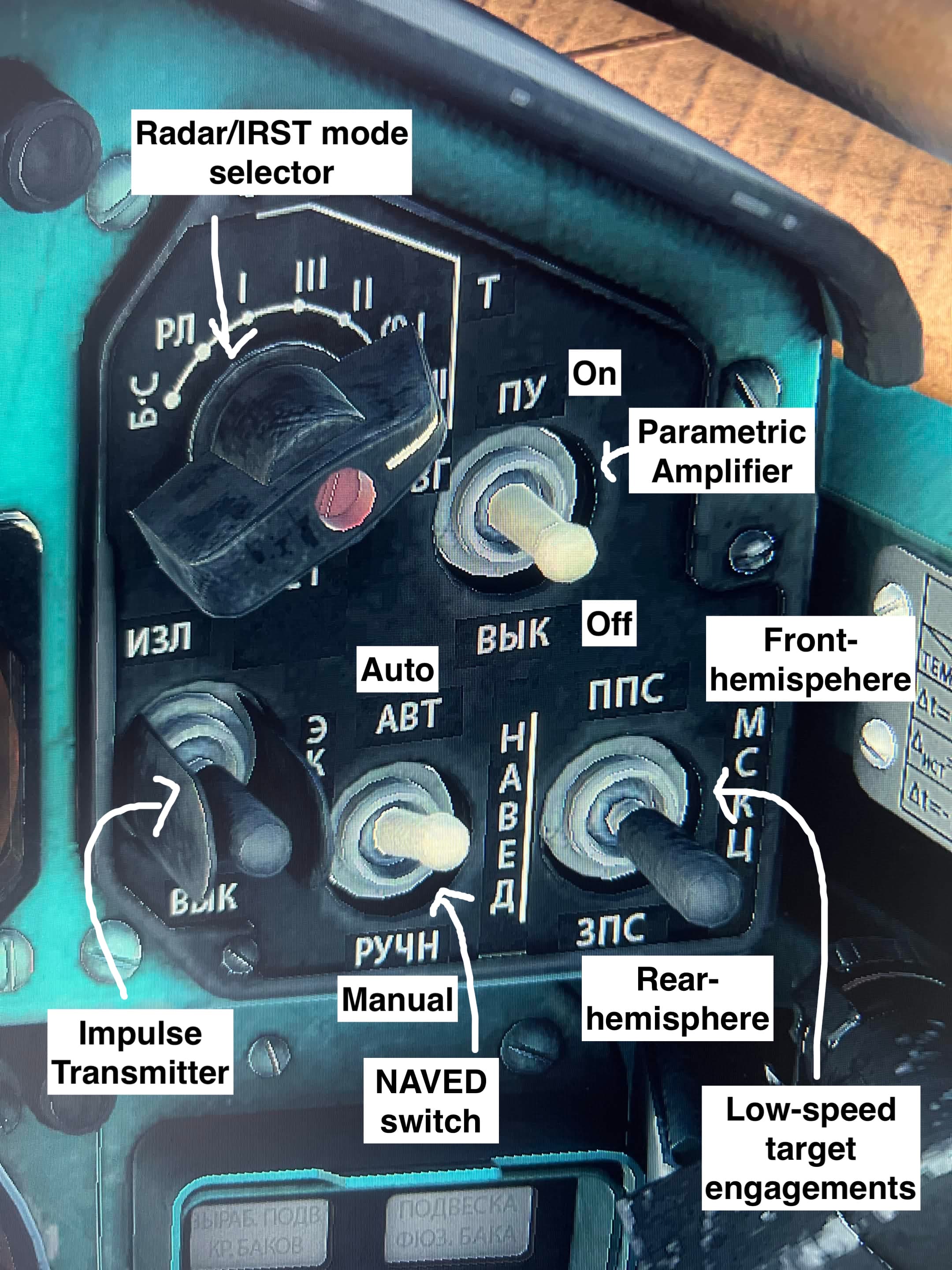
And, more directly, if you look closely at the cockpit of the F/A-18 you can see the ECM system is set to “ECM XMIT”… meaning the Hornet’s radar jammer is turned on. If you don’t have any F/A-18s (like me), you can hop into a test flight in the F/A-18C Late and see for yourself:
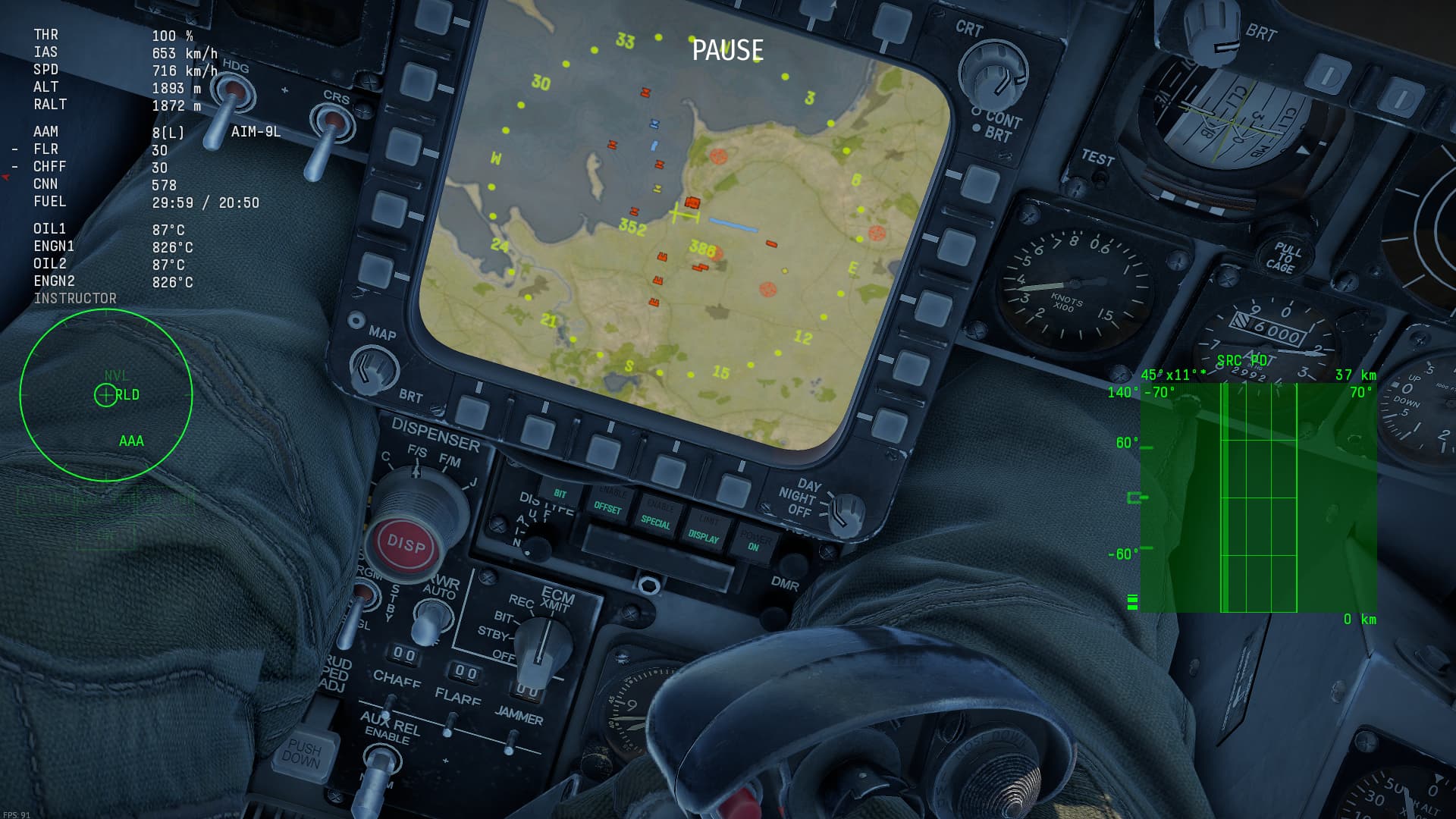
It’s a bit hard to see since it’s behind the stick, but there it is. Right next to the big red “DISP” button.
Electronic Warfare is a function of modern day fighter aircraft and has been a fact of air-to-air warfare since at least the 1970s. It would be interesting to see this added to War Thunder, so a plane like the MiG-23MLDG seems perfect to test this out - the MiG-23 is a proven, reliable, and popular fighter jet in-game, and there are many Western aircraft that could fit similar systems, such as variants of the F-4 Phantom, F-111, F/A-18, and many more. Seriously, read this wikipedia list and scroll down to the “AN/ALQ” section. Other countries like China and Sweden also have pursued such technology (e.g. Shaanxi Y-9LG and Saab EAJP), so it’s not something exclusive to the USSR and USA.
So, for Gardeniya-1FU, how exactly does this system work?
Similar to “Dazzler”-type jammers, the Gardeniya system works by constantly producing nonsense information (or “noise”) across radio channels. The deluge of meaningless information overloads the sensors of missiles and radar alike, causing them to be unable to lock on to anything within range of whatever’s producing the “noise”. Gardeniya can be tuned to do this across high and low radar frequencies, most effective against continuous wave, quasi-continuous wave, and pulse-doppler radar.
Sources on the Gardeniya system state it has an area of effect of ±60° Azimuth and ±30° elevation - you can visualise this similar to a radar’s scanning field. The “±“ symbol is important to account for, though, since it means the “scanning field” is, in normal terms, 120°x60° in front and behind the plane.
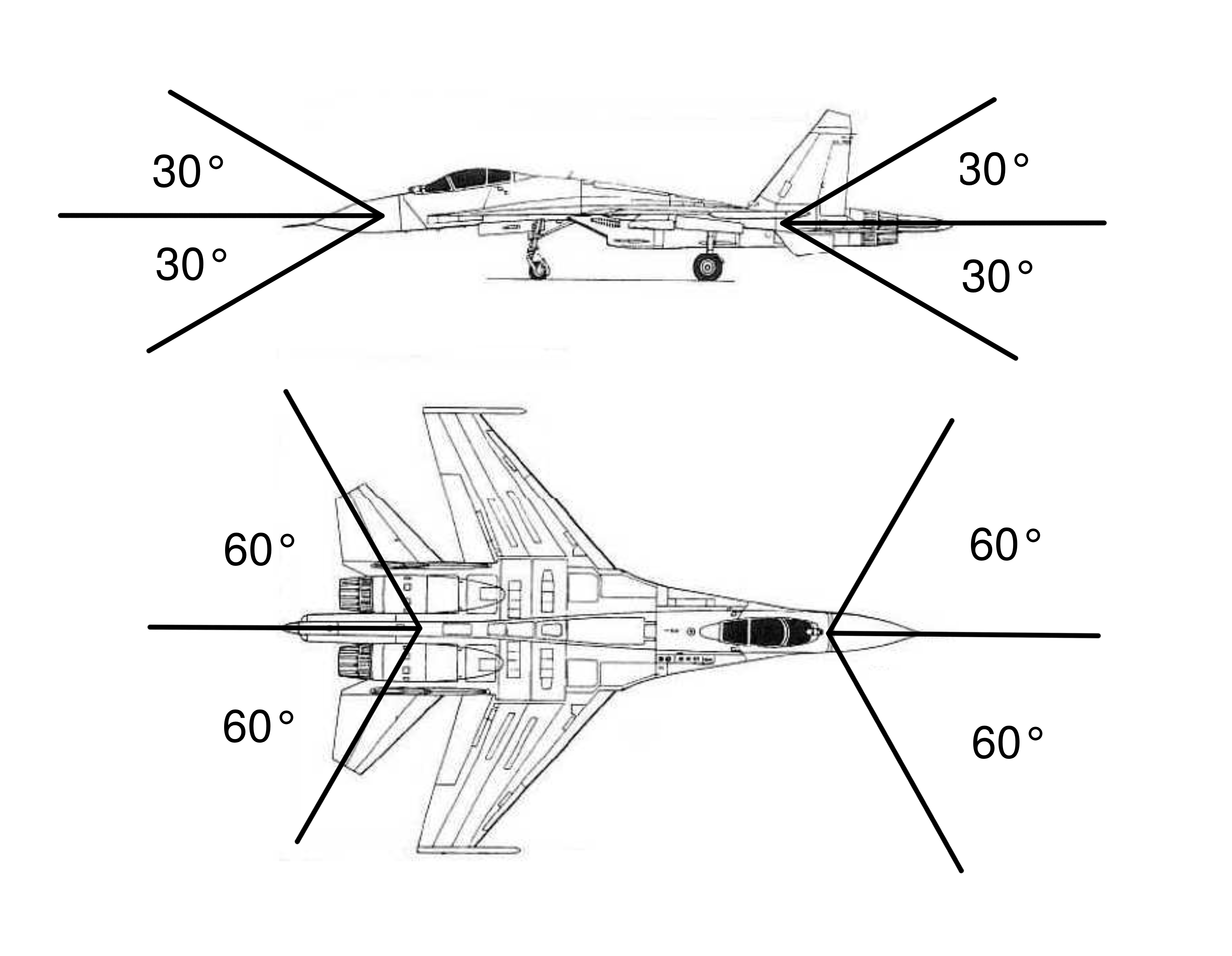
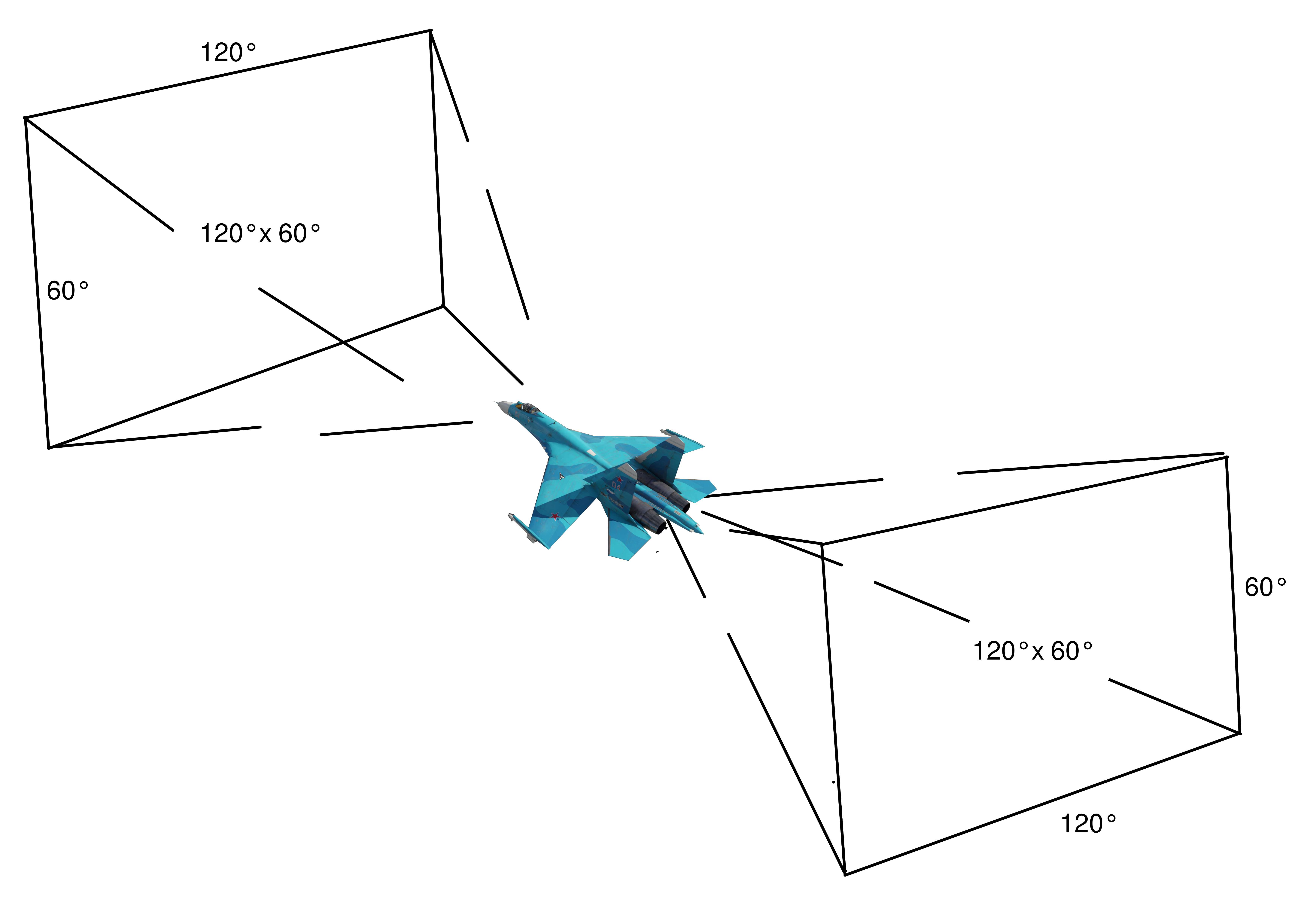
However, an interesting quirk with Gardeniya-equipped MiG-23s is that this is not the case… unlike, for example, the Su-27SK, which has two tail-mounted antennae for use with Gardeniya, the MiG-23MLDG has seven antennae - two on the air intakes, one behind the cockpit, two underneath the air brake and two on the base of the tail. With these additional points to generate the Gardeniya’s signals, the MiG-23 has 360°x360° all-around protection, similar to the MiG-29M, which was developed at the same time as the MiG-23MLDG. ECM equipment on the F-16C also has such all-around protection.
Now, it’s not that this “bubble” envelops the plane in a cloak of radio chatter making it invisible to radar. This isn’t stealth technology. Enemy radar will still be able to see you… well, actually- they won’t be able to see anything but you.
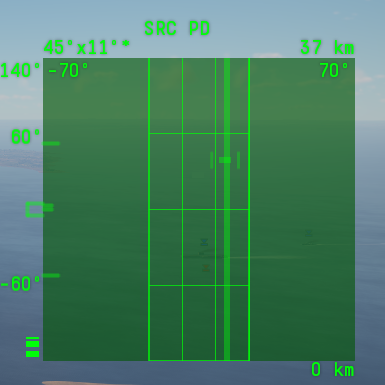
This is how a normal MiG-23 will show up on an F/A-18’s radar:
…and this is how a MiG-23MLDG will appear:
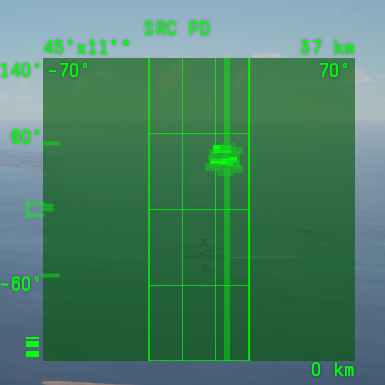
As far as enemy radar is concerned, the MiG-23MLDG is some… thing screaming as loudly as possible across multiple frequencies, an indecipherable blob of noise that’s impossible to ignore or comprehend. Oh, enemy radar will see you alright. And they’ll wish they couldn’t.
Conveniently, Gardenia-1FU operates across the I-Band frequency, which happens to be the same frequency that nearly every airborne radar and missile seeker in the game operates at. Even better, the 1.5km effective range means that any allied plane within that “bubble” - which stacks with other MiG-23MLDG - will also reap the benefits of Gardeniya’s jamming. Your teammates might want to practice their formation flying with you by their side! But, this doesn’t mean this plane will be totally invulnerable to every air-to-air or surface-to-air missile. The Gardeniya system has limitations.
For starters, there are multiple ground SPAAs and SAM systems whose radars operate at frequencies too low for Gardeniya to interfere with. For example, the SAG MPDR-16 radar used by the French AMX-30 Roland 1 operates on D-Band (1-2 GHz), so don’t get too confident - airfield SAM defences will be able to see you just fine.
Additionally, while Gardeniya is effective at disrupting IRST and Radars within its frequency emissions, it has less or no effect against Phased Array, Passive Electronically-Scanned Array (PESA) or Active Electronically-Scanned Array (AESA) Radars. It also doesn’t protect against normal heat-seeking missiles either, though this plane is equipped with sixty rounds of flares/chaff. Gardeniya was designed to interfere with Continuous Wave (CW), Quasi-CW and Pulse-Doppler Radars, like those on the F-4 Phantom, Mirage 2000, JA37; and older versions of the F-15 Eagle, F-16 Fighting Falcon and F/A-18 Hornet. It is mostly a case-by-case basis - for example, the F-16A (and variants) uses the Pulse-Doppler Planar Array (i.e. Phased Array) AN/APG-66 Radar, but it’s mechanically controlled, and so still susceptible to Gardeniya’s interference - although not as badly as the F-15A and F-15C MSIP II’s Pulse-Doppler AN/APG-63. However, the AN/APG-63(V)3 AESA radar on the F-15C Golden Eagle (and AN/APG-68(V)7 on the F-16C) will be immune.
Furthermore, most ground-based radars with Phased Array, PESA or AESA function (like HQ-11 TA) will not have any trouble with you.
On the bright side, while there are plenty of radars that can overcome Gardeniya, that doesn’t necessarily mean the missiles launched by those radars will. Gardeniya was designed specifically to disrupt the guidance of radar-homing seekers, is highly potent against Semi- and Active-Radar-Homing (S/ARH) missiles, especially the likes of the AIM-7 Sparrow and the AIM-120 AMRAAM. To give you an idea of how effective the Gardeniya system is against missiles, Soviet Pilots reported that Gardeniya was effective against the R-27 in mock combat, causing the missile to lose the target lock and harmlessly fall away. According to the Su-27SK flight manual, Gardeniya’s interference will cause missiles with SARH guidance to lose connection with the guiding radar (assuming the radar can overcome Gardeniya) and fall away, and those with ARH guidance will lose the target lock. Between altitudes of 50-500m, Gardeniya will intentionally attempt to force the missile to dive into the ground.
Just bear in mind that your biggest enemy might end up being MiG-21s, MiG-25s and other MiG-23s, whose radars and missiles are some of the only ones in the game to operate at J-Band, outside the Gardeniya’s jamming frequency.
Ultimately, all radar-homing missiles will become SARH missiles (assuming the radar guiding them can overcome Gardeniya), and will need to rely on the launch radar to guide them towards the MiG-23MLDG. Furthermore, missiles that have Datalink (DL) capability will have significantly more effectiveness against the MiG-23MLDG. In the future, when missiles like the Chinese PL-15 are added, they will also not have any difficulty against Gardeniya thanks to their AESA seekers.
But, if all else fails, remember- your planes do have guns on them. And, unfortunately, the Gardeniya doesn’t work on bullets.
“Some people think they can outsmart me. Maybe, [sniff], maybe. I have yet to meet one that can outsmart bullet.”
- Heavy Weapons Guy Team Fortress 2
So, that’s the MiG-23MLDG (23-57). In short, it’s a specialised Electronic Warfare variant of the MiG-23 with equipment that greatly improves its defensive characteristics while having access to the most advanced weaponry and avionics the Flogger was equipped with. Below I’ll go into the technical details of the three more important features - the R-24M, Gardeniya-1FU, and improved radar - and then a general rundown of those systems plus the aircraft’s weapons and avionics, both what will show up on the War Thunder stat card and other tertiary information to better understand the plane.
There aren’t any other electronic warfare aircraft in-game, hopefully this can be the first. I think this plane would fit in very nicely at BR 12.0 or 12.3, either in or after the MiG-23 folder. Alternatively, it could be interesting as an event vehicle (but I don’t think that would be a good idea, just add this to the game as a tech tree vehicle along with the F-4 Wild Weasel or EA-18G or something).
There are also some notes on various technical systems I should mention, which aren’t directly related to this specific plane (more the MiG-23 generally), I will note after the technical data. Thanks for reading!
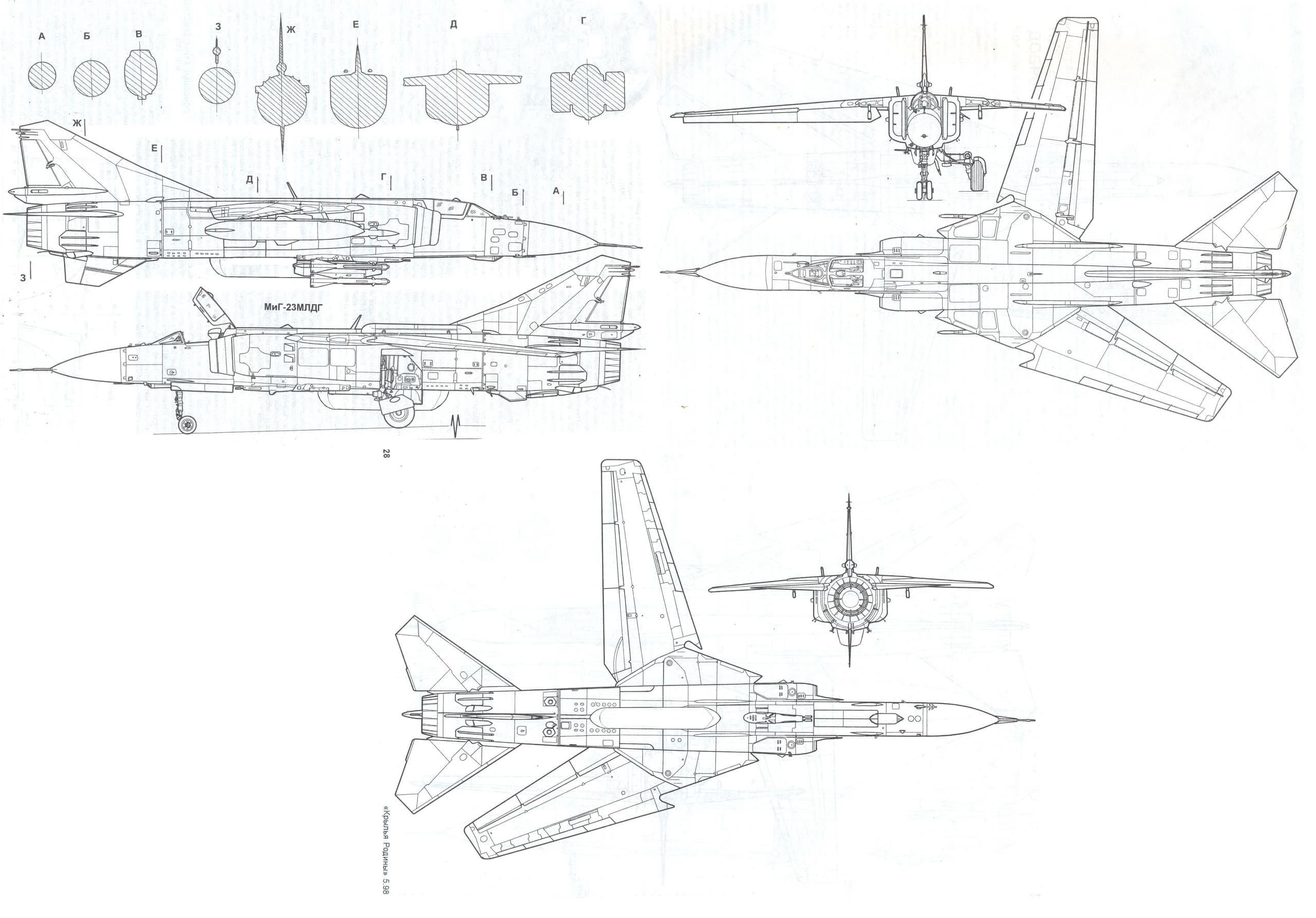
Three-view Drawing:
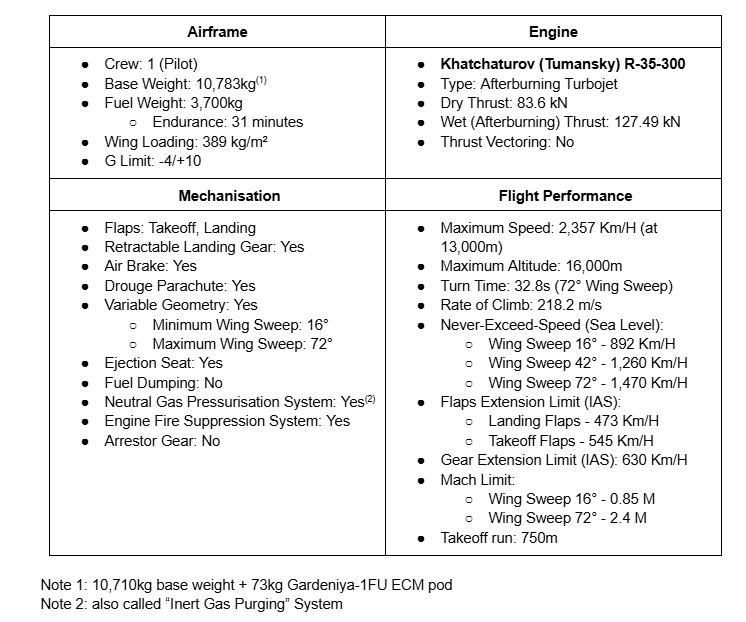
Airframe, Engine, Mechanisation and Flight Performance:
Spoiler
Identical to the MiG-23MLD, but slightly changed to account for the added ECM equipment. These numbers are either from the wiki or are my estimation of what the MiG-23MLDG’s flight performance would be (clean plane, no suspended ordnance). I made these guesses based on the statcard performance of a fully-spaded MiG-23MLD in-game, with the centreline drop tank included to simulate the weight of the Gardeniya-1FU system - conveniently, the drop tank weighs 59.6kg, just slightly less than the 73kg Gardeniya-1FU.
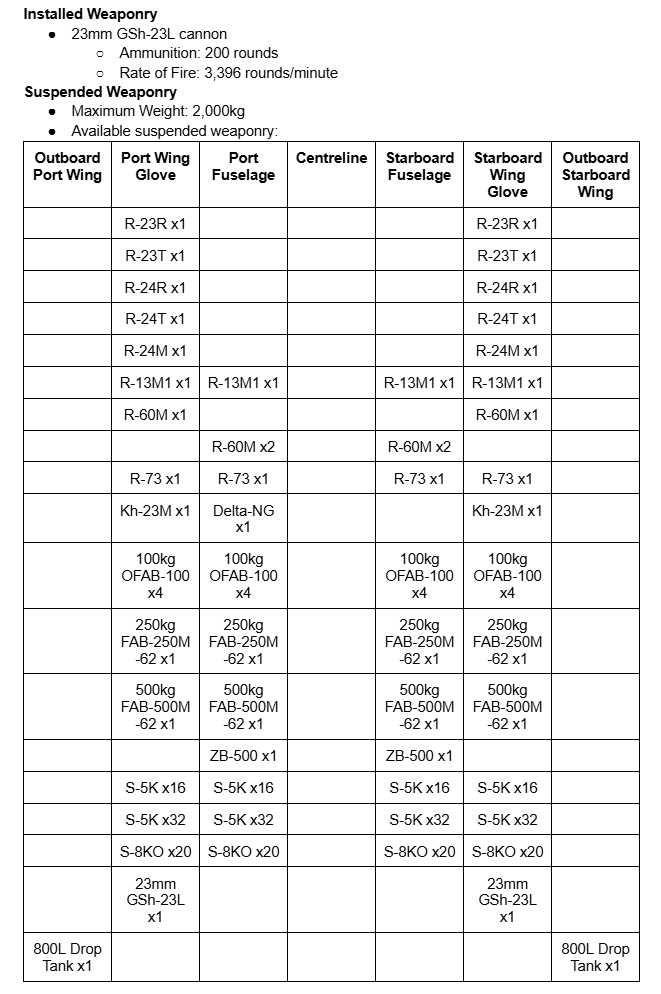
Weapons:
Spoiler
Suspended and installed weaponry. Mostly the same as the MiG-23MLD, but with the centreline pod taken up by the ECM, and with access to R-24M and R-73.
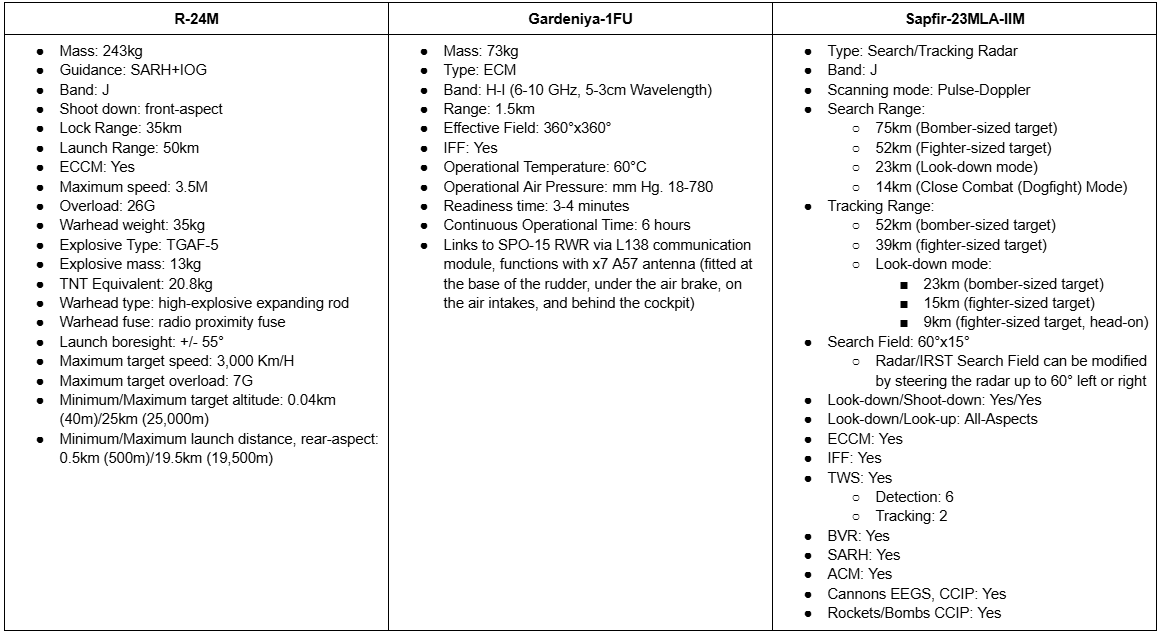
R-24M Technical Information:
- Mass: 243kg
- Guidance: SARH+IOG
- Band: J
- Shoot down: front-aspect
- Lock Range: 35km
- Launch Range: 50km
- ECCM: Yes
- Maximum speed: 3.5M
- Overload: 26G
- Explosive Type: TGAF-5
- Explosive mass: 13kg
- TNT Equivalent: 20.8kg
Other Technical Information:
- Launch boresight: +/- 55°
- Maximum target speed: 3,000 Km/H
- Maximum target overload: 7G
- Warhead weight: 35kg
- Warhead type: high-explosive expanding rod
- Warhead fuse: radio proximity fuse
- Minimum/Maximum target altitude: 0.04km (40m)/25km (25,000m)
- Minimum/Maximum launch distance, rear-aspect: 0.5km (500m)/19.5km (19,500m)
Radar, IRST, Avionics, Countermeasures:
Spoiler
Very similar to the MiG-23MLD, with slightly improved radar and avionics sensors, as well as the details on the Gardeniya-1FU electronic countermeasure system.
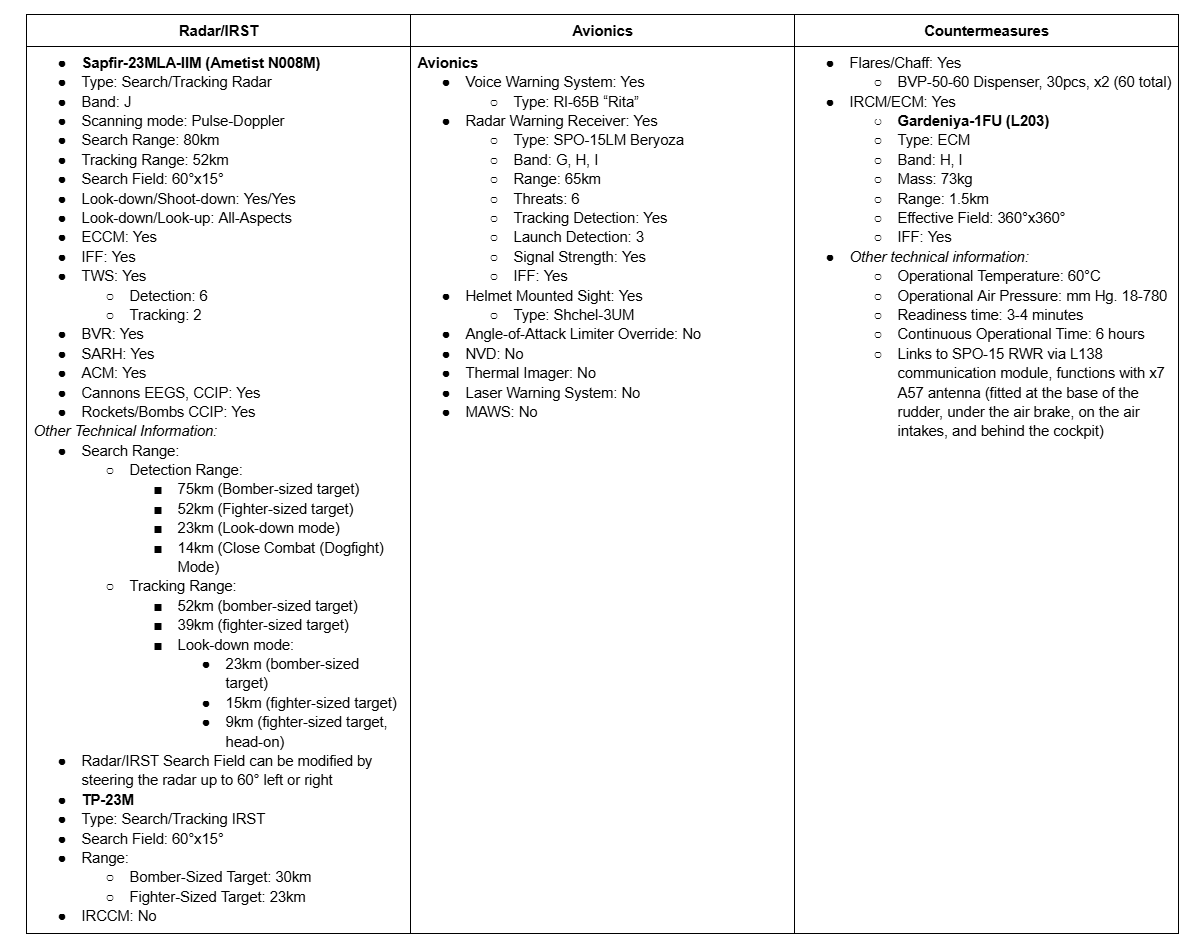
Sources on the MiG-23MLDG (23-57) specifically as well as related technologies.
MiG-23MLDG (23-57):
- «МиГ»: полёт сквозь время - Е.В. Арсеньев, Н.О. Валуев, Ю.Ф. Полушкин (2020), Page 194-195
- Авиация и Время: “МиГ-23: долгий путь к совершенству”, Владимир Ильин
- Крылья Родины: ““Плетка” для “Фантомов”: Истребитель МиГ-23”, В. Молочков
- Котлобовский А.В. Послевоенный ударные самолёты. - Ч. 2. - Киев: Архив-Пресс, 1997
- Марковский В.Ю., Приходченко И.В. - Истребитель МиГ-23. На защите неба Родины - Litres, Moscow (2022)
R-24M:
- See my suggestion post on the R-24M
- М. Дрофа, Е.А. Федосова - Авиация ПВО России и научно-технический прогресс: боевые комплексы и системы вчера, сегодня, завтра: монография / под ред (2005)
Gardeniya-1FU:
- САМОЛЕТ СУ-27СК - РУКОВОДСТВО ПО ЛЕТНОЙ ЭКСПЛУАТАЦИИ - Книга 1 (2004), Page 184-187
- Ильдар Бедретдинов - Штурмовик Су-25 и его модификации - (2002), Page 253
Sapfir-23 Radar TWS:
- “Stickers, Scans, and Radar Beats: An Operational View of MiG-23MF with Indian Air Force”, Centre for Air Power and Strategic Studies, 24 June 2024 Link
- Alexander Mladenov, Soviet Cold War Fighters (United Kingdom: Fonthill Media, 2016)
- Greg Goebel, “Fighter Floggers,” AirVectors, 1 June 2024 https://www.airvectors.net/avmig23_1.html
There were quite a couple of things about this plane that I wanna mention, but aren’t directly relevant to it, moreso about the MiG-23 as a whole. So I’ll address them here.
Did any of these Electronic Warfare variants of the MiG-23 enter service?
Spoiler
No. They were developed and offered to the Soviet air forces and recommended for export to Soviet allies, but never used. MiG-23MLS and MLG were recommended for production and export respectively, but this was not taken up due to the decision to focus on Su-27 and MiG-29 production; MiG-23MLDG only had either one or three examples converted from MiG-23MLDs. However, the equipment used by these planes was later deployed operationally on the MiG-29 (9-13). “Gardeniya-1FU” is still used today.
Missing Features on the MiG-23s in-game (TWS, HMS, R-24M/R-73, outer wing pylons, etc)
Spoiler
As I researched these planes, it became apparent to me that the MiG-23s in-game are missing a few features. I’ll discuss them here.
- TWS mode
- SPS-141 ECM pod
- R-24M missile
- R-73 missile
- HMS
- Outer wing hardpoints
R-73 and Helmet Mounted Sight for MiG-23MLD
It’s well-known that the MiG-23 used the R-73 missile later in its service life, and not the 1990s like it’s commonly said. The R-73 entered service in 1984, and the MiG-23 was equipped with it. The MiG-23 was also equipped with the accompanying Shchel-3UM helmet mounted sight (HMS).
The Shchel-3UM was created specifically to be used with the R-73, the monocle sight was made to take advantage of the R-73’s off-boresight capabilities. I don’t think I should have to provide a source for this, it should be pretty self-evident in my opinion. Like yeah, obviously the MiG-23 had HMS, it used the R-73. It’s like obviously if such-and-such a tank used this or that gun, I wouldn’t be expected to provide a source saying it was equipped with ammunition for that gun.
Sapfir-23 Radar Track-While-Scanning functionality
Apparently, yeah. Not just the MiG-23MLDG, but all MiG-23s in-game, with a potential exception for the MiG-23M. Wing Commander Biswa Bihari (B.B.) Misra (Retd) described the Track-While-Scanning abilities of the Indian Air Force MiG-23MF in an interview with the Centre for Air Power and Strategic Studies - and not just in passing, but gave a detailed explanation on TWS, and how the MiG-23’s TWS worked, and cited the specific radar that had that capability: the Sapfir-23D-III, the radar fitted to the MiG-23MF and all MiG-23Ms from 1975 onwards. Logically, therefore, the MiG-23ML, MLA, MLD and MLDG should also have this. Other sources describe the MiG-23MLD specifically having TWS as well, both the domestic Soviet version and the export MiG-23MLAE. That said, the Sapfir-23’s TWS is primitive by modern standards, only having the ability to simultaneously track two targets at once, and having no automation, requiring the pilot to manually cycle between targets - conveniently, that’s how TWS works in War Thunder too. Further, it can only detect six targets while in TWS mode.
Earlier in the Sapir-23’s data sheet I mentioned that it could be steered up to 60° left or right to change the search field - which is probably how it has the ability for TWS. If you’ve ever played a plane with TWS, then you’ll know yeah it works like that. Besides, only two targets isn’t really a downside… the MiG-23 can only carry two radar-homing missiles, after all.
I’m going to collect more sources when I find them, and lodge a bug report when I have enough. If anyone beats me to the punch, the sources I have are above in the “sources” section.
An IRCM on the MiG-23?
After a lot of digging and looking, the answer I can give is a resounding “Maybe”. The book I cited on the EW MiG-23s also described the MiG-23MLS and MLG as being fitted with an IR Jammer.
One thing to note, to start with, is that a lot of Russian sources use the term “Passive IR Jammer” to mean flares. To a westerner’s mind, that term would imply something like an IRCM device, but that’s something a Russian source would call an “Active IR Jammer”. In the pages on the MiG-23MLG and MLS it does describe a “Passive IR Jammer” on those planes, but on the MiG-23MLS it says “…passive and IR Jamming system”. Could be a translation error, could be a deliberate word choice to say it had a “Passive IR Jammer” (Flares) and it had another type, like an IRCM. MiG-23MLDG was directly developed from the MLG/MLS, so logically it would make sense that it would include an IR Jammer alongside its radar jammer, just as MLS might have. However, annoyingly, the book doesn’t mention if MLDG had an IR Jammer like its predecessor, only the improvements it had over them, and it doesn’t cite which IR Jammer it used (if it had one)… so, not only do we not know if it had an IR Jammer, we have to guess which one it was.
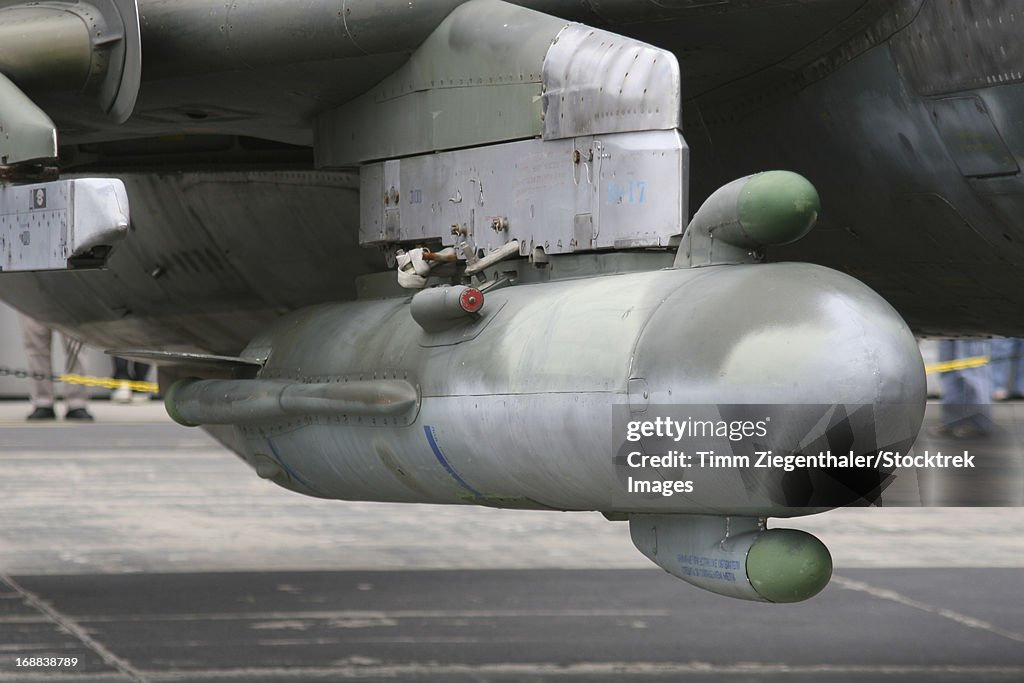
The MiG-23MLG 23-37 is specifically cited as being able to carry the SPS-141 radar jammer, whether in an external pod or internally I don’t know (presumably MiG-23MLS 23-47 could too; probably an option since Gardeniya-1FU was also equipped) the same as what’s on the MiG-21SMT (though currently Gaijin has not modeled its ECM effect). Apparently, other MiG-23s - the ML and MLD - could carry it as well. Similarly, the MiG-27K was fitted with either SPS-141, SPS-142 or SPS-143 depending on the mission (each model covered a different radar band), the sensors for which formed the distinctive “pimple” on the aircraft’s nose. Gaijin hasn’t modelled this functionality either.
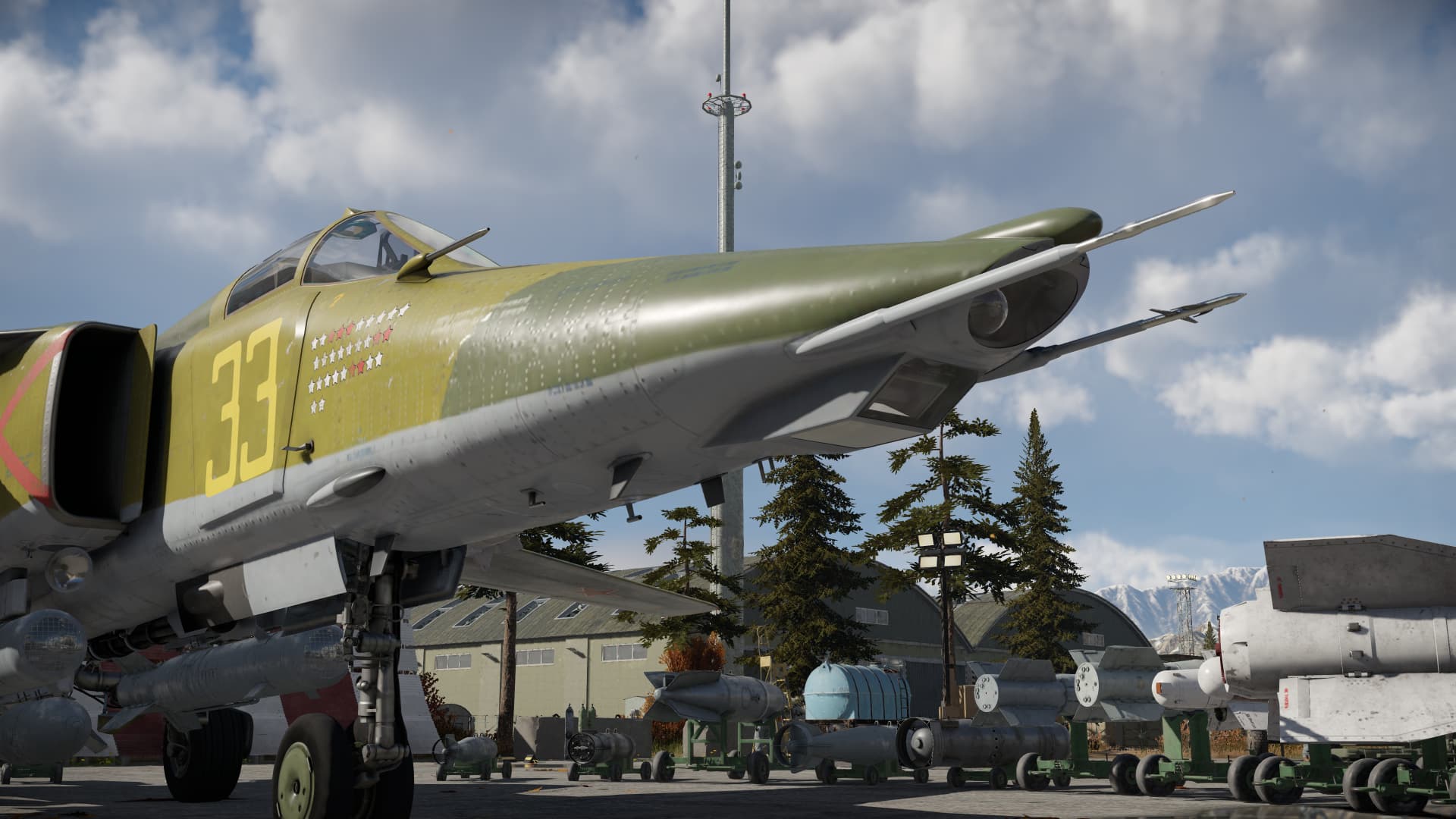
Obviously this photo prominently shows the Kaira-1 electro-optical sensor, but note the antenna just behind it - these were highlighted earlier in the post.
The MiG-23BN and MiG-27M should also have this functionality.
Soviet air forces were using IRCM devices during the time of the MLG/MLS (1984), they were applied on helicopters like the Mi-4, Mi-8 and Mi-24 and the Su-25T.
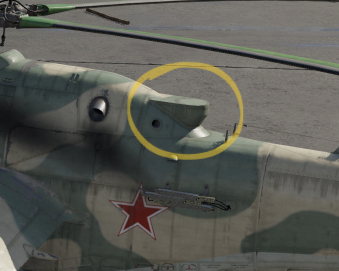

The helicopter version was L166V-11E “Ispanka”, the Su-25T used L166S1 “Sukhogruz”, mounted at the base of the rudder. You can see it in-game on the Su-25T and Su-39, and it actually functions.
There is a variant of the L166 system it might have used, the L166V1A - a small (36.5x46.3cm, “no more than 20kg” - size and weight varies according to the particular platform, these numbers are from the Mi-8) system controlled by a 95x70x45mm, 0.125kg control panel in the cockpit. This system offers protection from a range of IR missiles, including AIM-9s, VL MICA-IR (the short-range truck-launched one, not the Rafale one), Stingers, Strela-2M, FIM-43 Redeye and Chaparral, and presumably it physically resembles its helicopter-mounted counterpart. The system can operate for 50 hours at a time, with an operational lifetime of 1,200 hours. Modern GRAU indexes confirm that this system does exist, so it is a possibility.
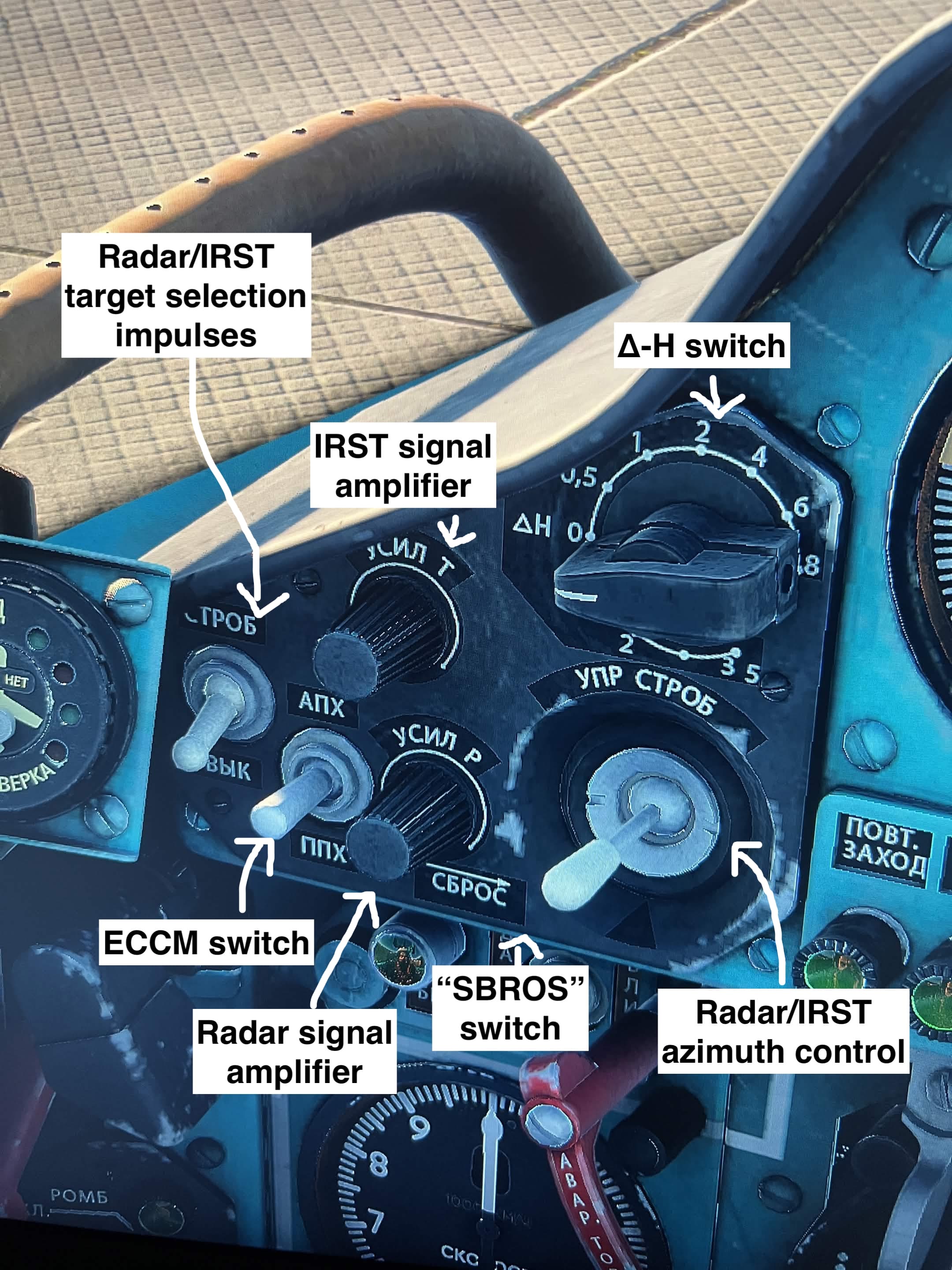
That’s all very well and good. But online bloggers have been able to upload a lot of detailed photos of MiG-23MLDG (37 Red specifically), and either it never had an IRCM, and if it did, it’s been removed.

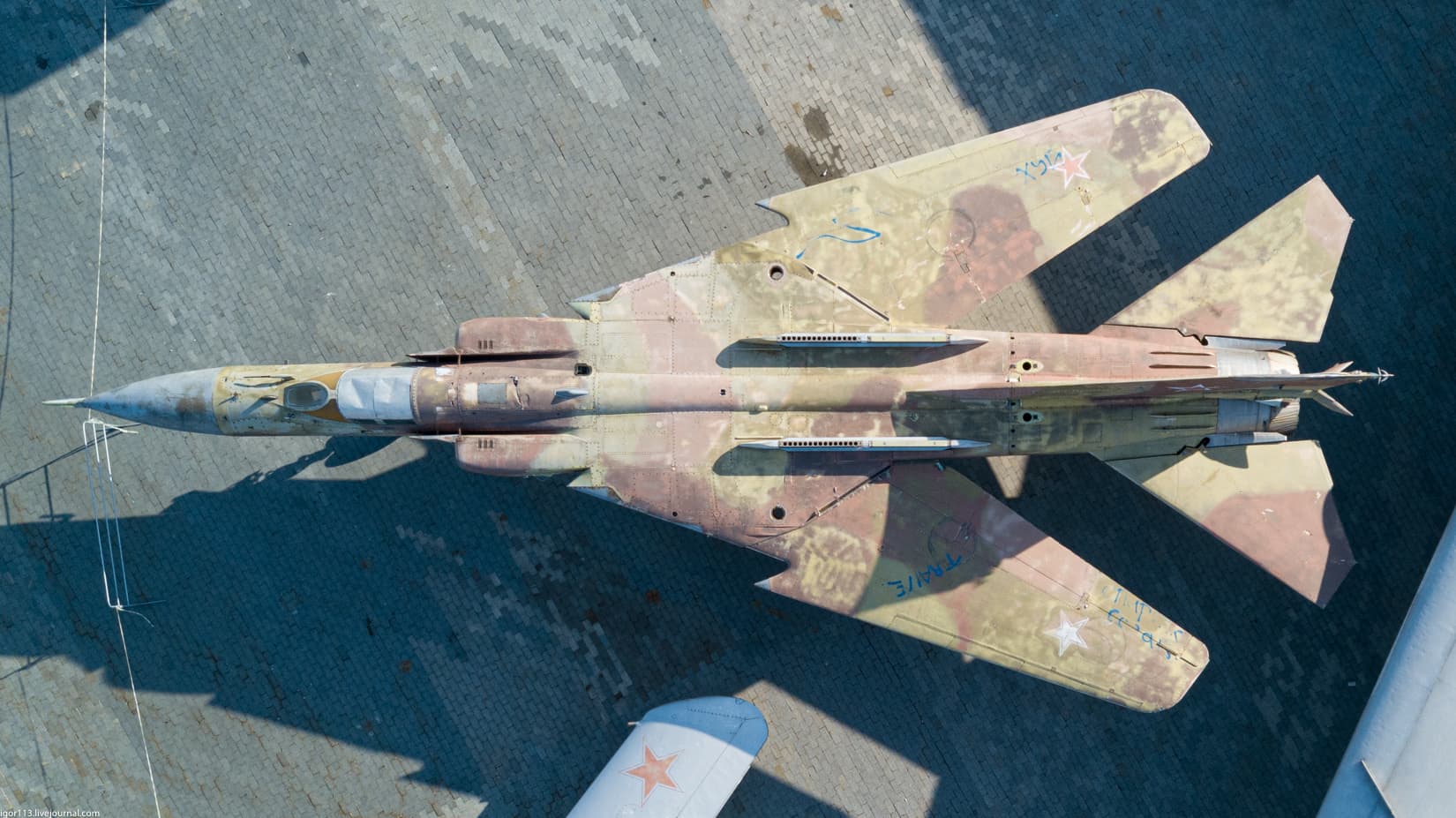
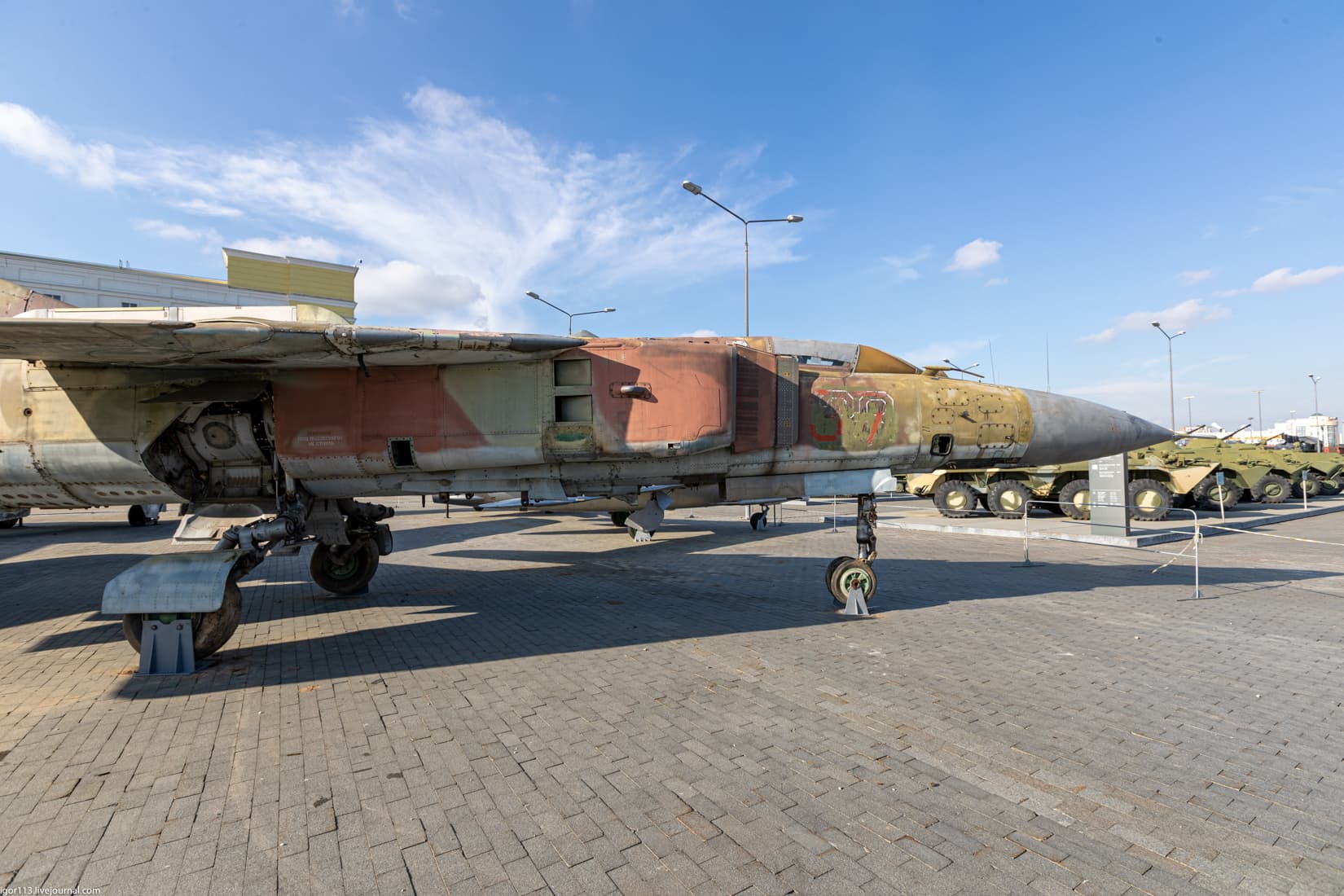
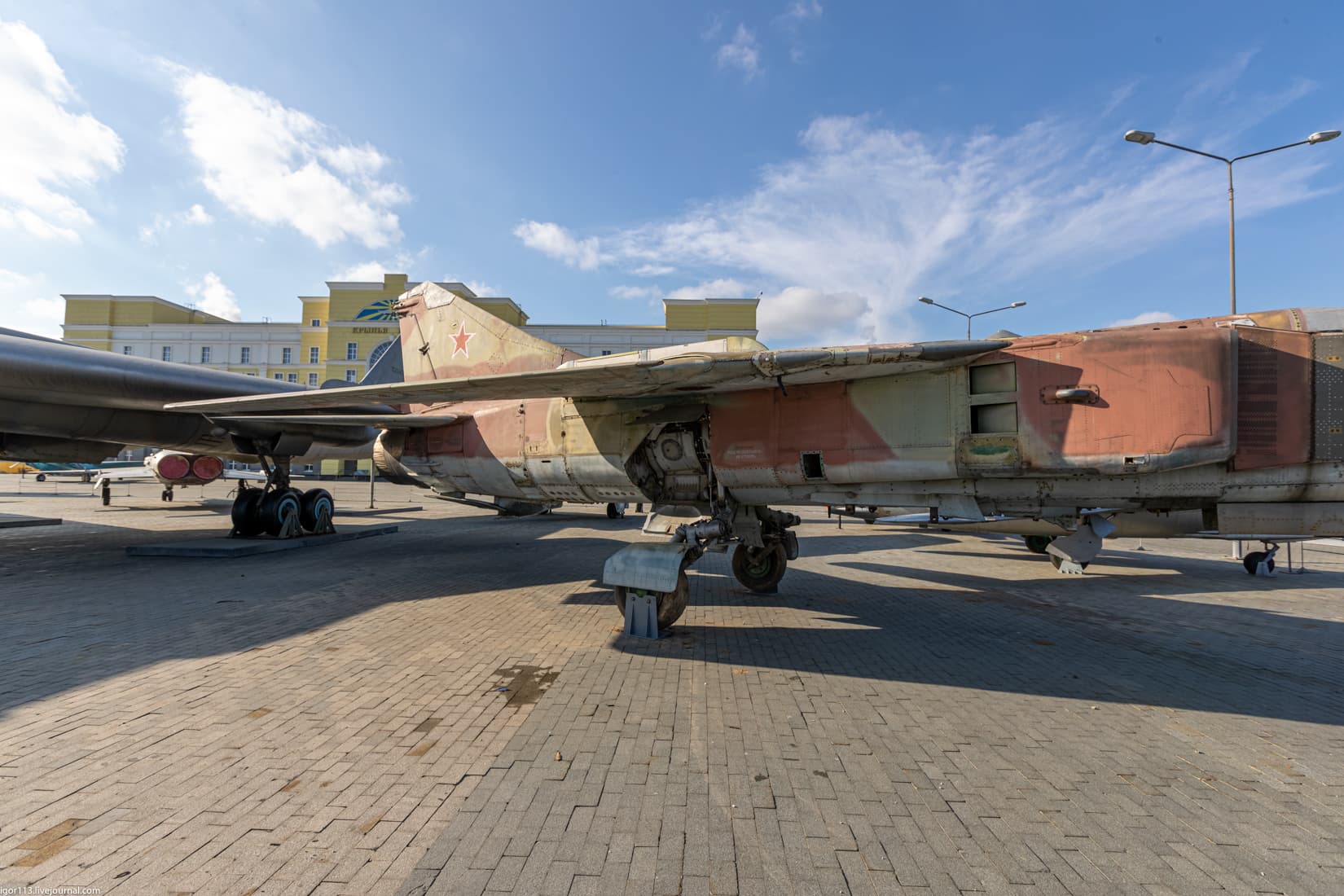
Her underside also doesn’t seem to show anywhere an IRCM could have been mounted. However, it’s worth noting that her IRST sensor is also missing, so there is a chance an IRCM system was mounted and later removed.
We can reasonably assume that the MiG-23MLDG probably had the same IRCM system as the MLS… assuming the MLS had an IRCM. The Russian Wikipedia page for the MiG-23 states MiG-23MLDs were fitted with “blocks of containers with IR decoys on the fixed parts of the wing” to protect against MANPADS at low altitude. Given that the flares/chaff dispensers are mounted on the fuselage, not the wings, I’m not sure if this refers to those or some other IRCM. But without knowing what type of IRCM it was, it’s impossible to actually suggest it. Maybe they were mounted on the wing hardpoints.
I do think finding out would be important, since if it turns out this aircraft not only had a reasonably effective radar jammer, but also an IRCM effective against most non-IRCCM IR missiles, that would, in my opinion, absolutely justify it being added at 12.3 BR rather than 12.0.
MiG-23 missing wing hardpoints
The in-game MiG-23ML, MLA and MLD are all missing two hardpoints on the outer part of the wing. Don’t get excited, they were only used to carry drop tanks.
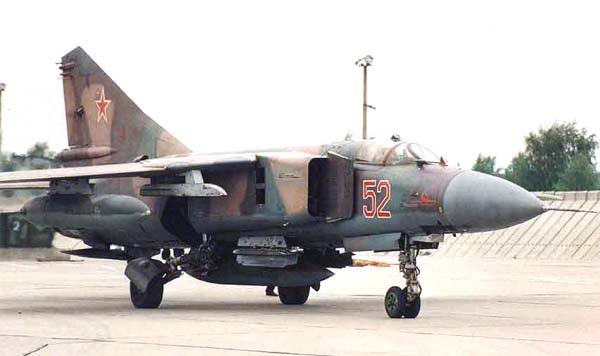
Conceivably, they could have been used to mount the SPS-141 jammer the EW Floggers (and the normal MLD) are mentioned being equipped with.
R-24M Missile
The R-24M entered service in 1988. It’s an obscure, upgraded version of the R-24R, and it would’ve only been used by the MiG-23ML, MLA, and MLD. Part of the reason why I specifically suggested 23-57 is because it would’ve been able to take advantage of the R-24M.
There’s more information on the suggestion I made of it here. Essentially, it was an R-24M with new fins, a new seeker, long lock range and ECCM.
Was the Gardeniya’s effective field actually 360°?
Spoiler
The operational manual for the Su-27SK states that the Gardeniya-1FUE (the export version) had an effective field of ±60° Azimuth and ±30° Elevation - in other words, it had a 120°x60° field of effect in front and behind. However, this was not the case for the MiG-23MLDG, or the earlier MLS and MLG, or the MiG-29M developed at the same time. We know this because of the antenna that cover the plane - on the base of the rudder, below the airbrake, on the side of the air intakes, and behind the cockpit - antenna that clearly match the type used on the Su-27SK, which I highlighted earlier in this post.
The MiG-23 having antennas all over it gives it the all-around protection. The MiG-29M, also quoted as having 360º of coverage with Gardeniya, also has antennas on all sides. Why doesn’t the Su-27 and MiG-29 have this set up? I don’t really know, but I would wager a guess that it has to do with the difference in modern BVR combat vs. how it worked in the Flogger’s heyday. By the time Gardeniya was operational on the MiG-29, BVR missiles had gone from having dozens of kilometres of range to almost a hundred, and so it made less sense to put sensors all over the plane when all you needed was a wide enough field in front and behind. To be sure, 120°x60° is a smaller field than 360°x360°, but remember the principle of angular distance: the distance between two points diverging from each other on an angle increases the longer they go on. If the enemy launch platform is far away enough from you, a 120°x60° effective field is much less of a deal, at a certain distance it doesn’t matter at all.
Today, the Gardeniya system is still in use, usually as a suspended container, but more lately as wingtip-mounted tubes.
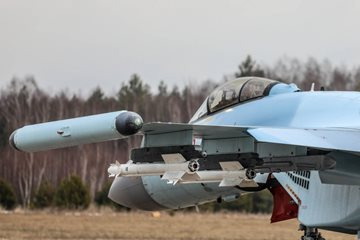
The Gardeniya’s Operational Band
Spoiler
I listed the Operational Band of the Gardeniya system as H-I Band, but to be perfectly honest I’m not entirely sure if that’s correct. My source is this:
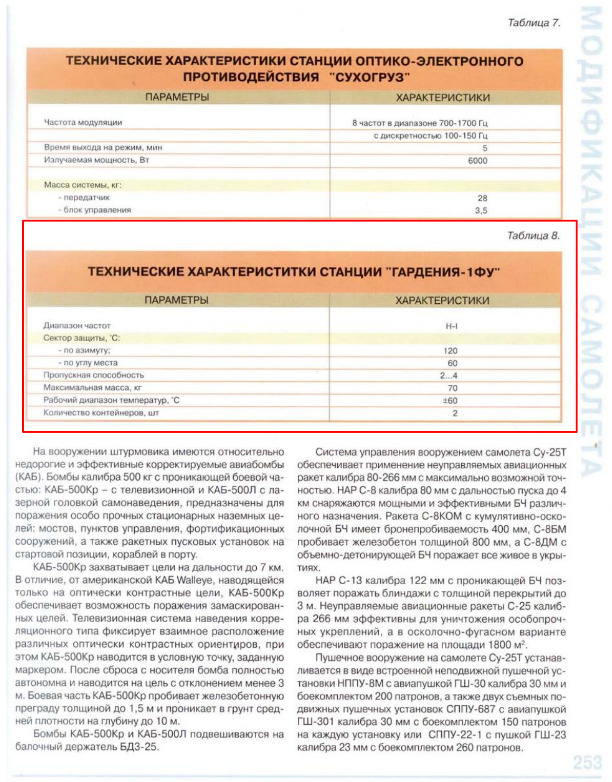
The first line of the second table states the operational band is “H-I”. I’m not sure if I’m reading that right. Why would a Russian source use NATO standard definitions of radio frequency? Why wouldn’t they write it as “Х-И”? Is it supposed to say “N-I”? The Su-27SK operational manual says the frequency is I’m not sure. Maybe I’ve got this wrong, I don’t know. Probably just something lost in translation.
Thank you for reading!