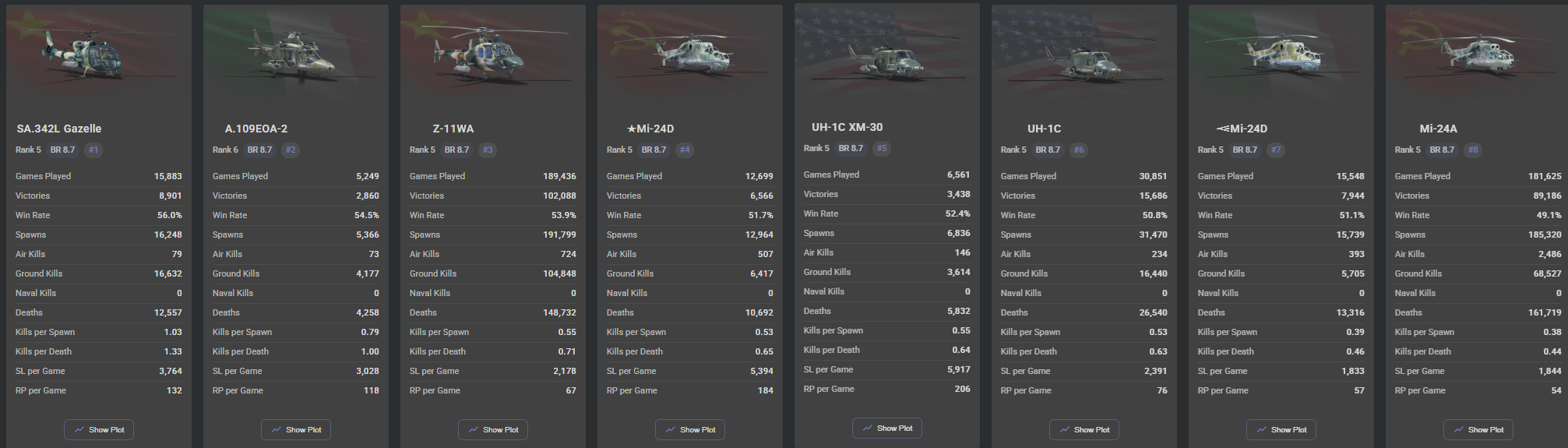
A few things to clarify here, because some of this mixes theory with how the Mi-24D actually plays in practice.
First, Nobody is arguing that “premium = better than tech tree” in this topic. The issue is post-purchase loss of functionality. The Mi-24D (USSR) previously had ballistic assistance for rockets and gun pods. That was removed without BR, survivability, or role compensation.
Whether similar tech-tree variants exist doesn’t change the fact that a paid vehicle was mechanically downgraded.
Second, calling the Mi-24D an “ATGM platform” at 8.7 is where the comparison “breaks down”.
Yes, it technically has ATGMs, but they are short-range, manually guided, and force sustained line-of-sight exposure. At 8.7, that means radar SPAA, proximity shells, and jets with enough speed to delete you before a second missile is guided in. Speed doesn’t help much when the engagement envelope itself is hostile.
The turret and flares don’t really solve this either
The turret is defensive only against very specific threats and requires close proximity.
Flares help against IR missiles, not radar SPAA or gun-based AA, which is the dominant threat at this BR.
As for comparisons to 8.3 helicopters like Mi-8, IAR-316, or SA.313/316, those vehicles being worse does not justify keeping another helicopter overtiered. Balance shouldn’t be anchored to the weakest examples in the bracket, especially when the Mi-24D is forced into the same close-range exposure profile without the aiming tools it originally had.
The core problem remains unchanged
At 8.7, the Mi-24D now has high exposure, low first-pass lethality, and no stand-off capability, Which is exactly what the ballistic computer previously compensated for. Removing it broke that equation.
This isn’t about wanting the helicopter to be overpowered. It’s about restoring internal consistency. Either by giving back the tools it was balanced around, or by adjusting its BR or role accordingly.