Nothing’s been said of its propulsion yet
There are some journalists that are informed enough on this topic, the goal is to make it fast by taking already existing brick of technologies, propulsion would be similar to MICA.
1 Like

oh nice. France will make their own R-37
Starting to have doubts as to the Meteors Effectiveness in game if it does not have a better IOG or GNSS capability for long range shots.
The IOG missile Drift when doing 100km+ Shots with the AIM-120C in Nuclear Escalation is INSANE
Missile is sometimes 30km+ off target making it useless at these ranges, even though the missile has speed and battery time to hit the target.
does it even have this?
because from what ive seen it is only IOG + DL for mid course
just datalink it in
I think IOG drift is waaaaaay too high on pretty much everything.
GNSS drift too probably shouldn’t exist for A2G
2 Likes
Datalink gives updates to the missile for mid course correction
But if the IOG Drift makes the missile think its somewhere completely different, it misses by such a huge margin, literal tens of kilometres, so its trying to data link to a location in a completely different to where the target actually is.
It means that the AIM-120C in warthudner is relegated to sub 60km shots even if you launch at mach 2 and 55,000 feet
IOG drift on ground weapons is also ridiculous.
If you turn off or lose laser lock on the brimstone when it is 300 meters from impact, it will just straight up miss the target like there is no inertial navigation at all.
I was trying to get long range kills in NE and managed to connect 4 missiles from 80 to 100km launch distance in the first try with the AESAPhoon, seems i got lucky
I have no idea how much it is in-game but this was rather interesting:
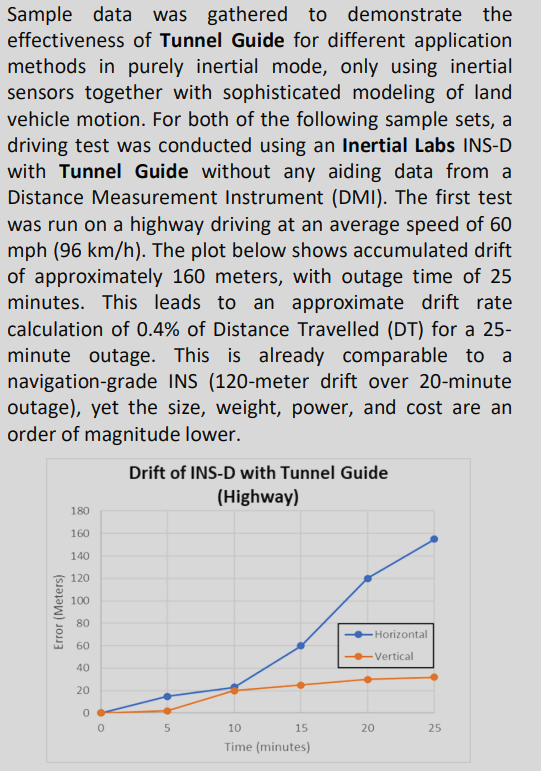
Wouldn’t matter, it’s continuously powered. GNSS is mainly for missiles with limited propulsion to reduce inefficient energy expenditure and increase accuracy in mid course (and by extension, effective* range)
It should be 2 meters per second in game as a “standard” IOG drift.
So over the 120s guidance, it should drift by a maximum of 240 meters, which is nothing really when the missile is travelling 60+km.
But the game seems to compound it in a way that doesn’t make sense.
For example, with the brimstone. If you turn off laser 1-2 seconds before impact, it should still hit a tank sized target very easily, at least 90% of the time.
However, it always misses by 20-30 meters.
Edit:
Ok what I actually found out is that IOG on brimstone is only active at launch.
If the missile acquires a laser lock, IOG disables completely and the missile loses all guidance and tracking, making it wobble and deviate significantly from the target.
This must be a bug right? I will repost in the correct topic
1 Like
same issue with ARM´s btw as far as i understand
no
iirc its an intended mechanic that was added to hellfires to limit their effectiveness when they were first added
and has been retained and carried over to new laser + IOG missiles
So stupid and unrealistic.
It breaks the core principal of INS guidance logic that has been in use since the 80s. All systems that use active tracking should update the INS and reset the drift to 0 whenever more accurate and up to date information is available.
The whole reason GNSS systems still use INS is because the GPS can be jammed, allowing thr INS to take over, but if the GPS signal returns, then the INS drift is automatically reset.
The exact same thing should happen on any INS capable actively guided weapons that can differentiate the position of the misile in relation to the position of the target.
IIRC it is actually the correct behaviour for most Hellfire missiles. Someone posted a manual on the old forum which basically said that the pilot most ensure that SAL Hellfires do not lose lock at any point because the missile is incapable of regaining lock / engaging a target if the lock is lost.
As far as I know early Hellfires also used an analogue guidance system which could not use inertial navigation to reach a target. I believe AGM-114R is the first SAL Hellfire to feature true inertial navigation (the 114L also has it, but is radar guided).
3 Likes
In the same way that the R27ER datalink should be dead if the lock was lost before the missile locked onto the target? Forcing it to rely on INS only.
I am looking into sources for Meteor’s motor. I inquired on a primary paper and I was told they were located in 3 different libraries in Germany. These are:
- Badische Landesbibliothek
- Deutsche Nationalbibliothek Frankfurt A
- Deutsche Nationalbibliothek Leipzig

If anyone is located nearby them I would very much appreciate if you were willing to look into it, you can message me for more information.
4 Likes