Except it seems that it does also overperforms, in game without the apliqé it only can penetrate it under 200m.
This is from tankograd,

I recommend reading my conversation with @Fireball_2020 , where I explained the difference between acceptable and unacceptable penetrations, and he ultimately admitted I was right.
You’re trying to draw conclusions, but you’re making mistakes at every turn.
Literally, the T-64A, with its non-optimized 80-20 armor package, provided 305mm of steel equivalent at 0 degrees.
The T-72A had a more optimized 60-50 package (which is also slightly thicker), resulting in a resistance of 330mm.
1 Like
The thing is are those test performed with long rod apfsds?
This isn’t specified, but the book is from 2006, so it could be anything.
In any case, even if this data is from the 3BM22, for example, the 330mm of protection (as in the game) for the T-72A is fully supported by this data. (If 305mm were for the long APFSDS, the T-72A should have higher protection than 330mm, since the additional 10mm of steel and the optimized thickness of the front and rear plates provide a significant increase in resistance.)
Except it’s not supported by this data… against 3bm22 it is nowhere even close to the 330mm of protection, it is literally 410mm, so it does really matters which round was used as short rod apfsds have worse angle performance
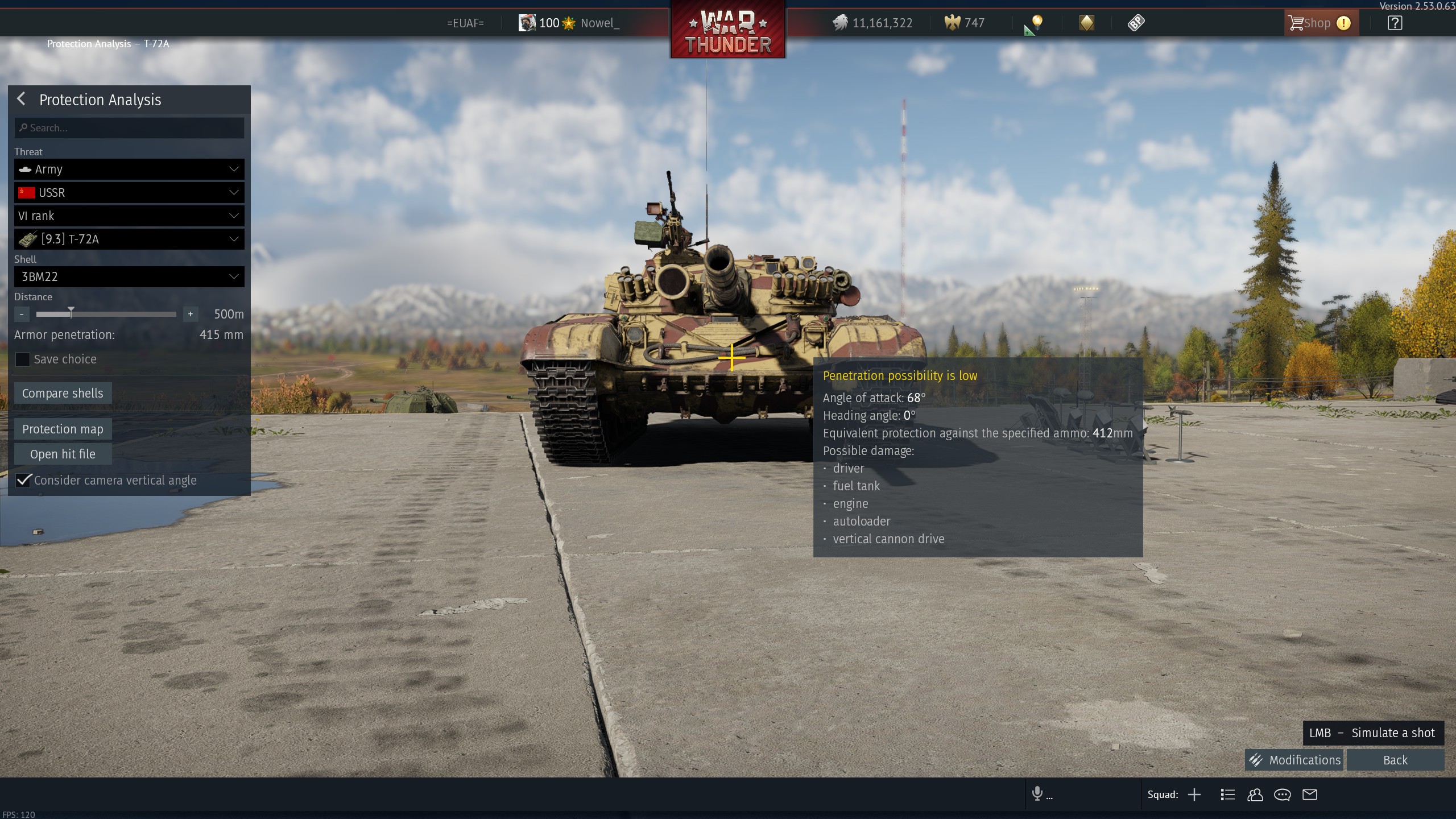
This is the base hull
So, 330mm for the long APFSDS.
For the short ones, it’s obviously higher, given that the T-64A, with its much worse package, has 305mm for them.
In game it does, irl quite unlikely since it was able to be penetrated by m111 2 km away so it would be closer to 300-310mm
However doesnt mean that the 305 value(which isnt even on the game ) is for long rod apfsds, in fact this 300 value is far closer in game to the protection agaisnt short rod than against long rod.
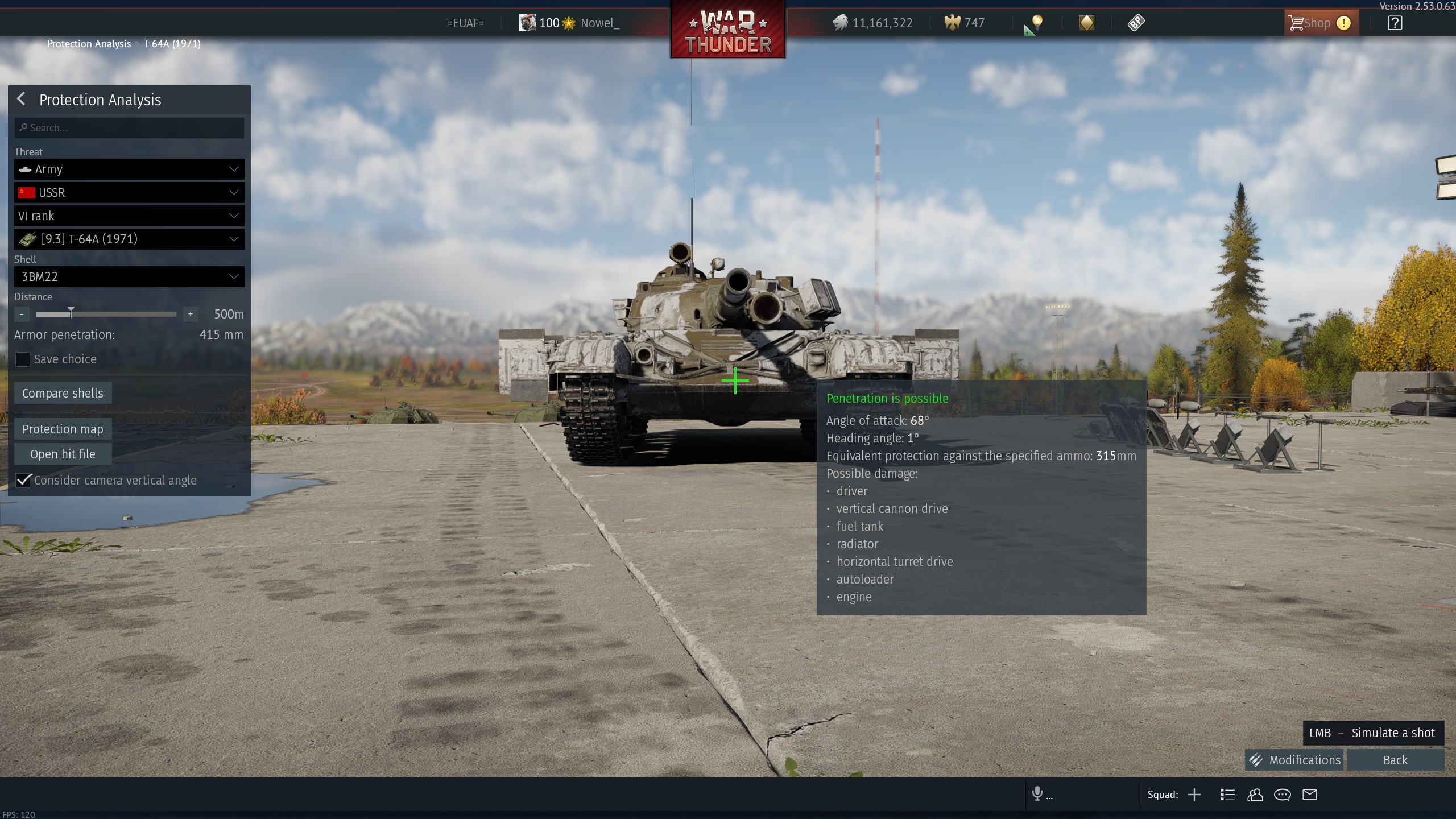
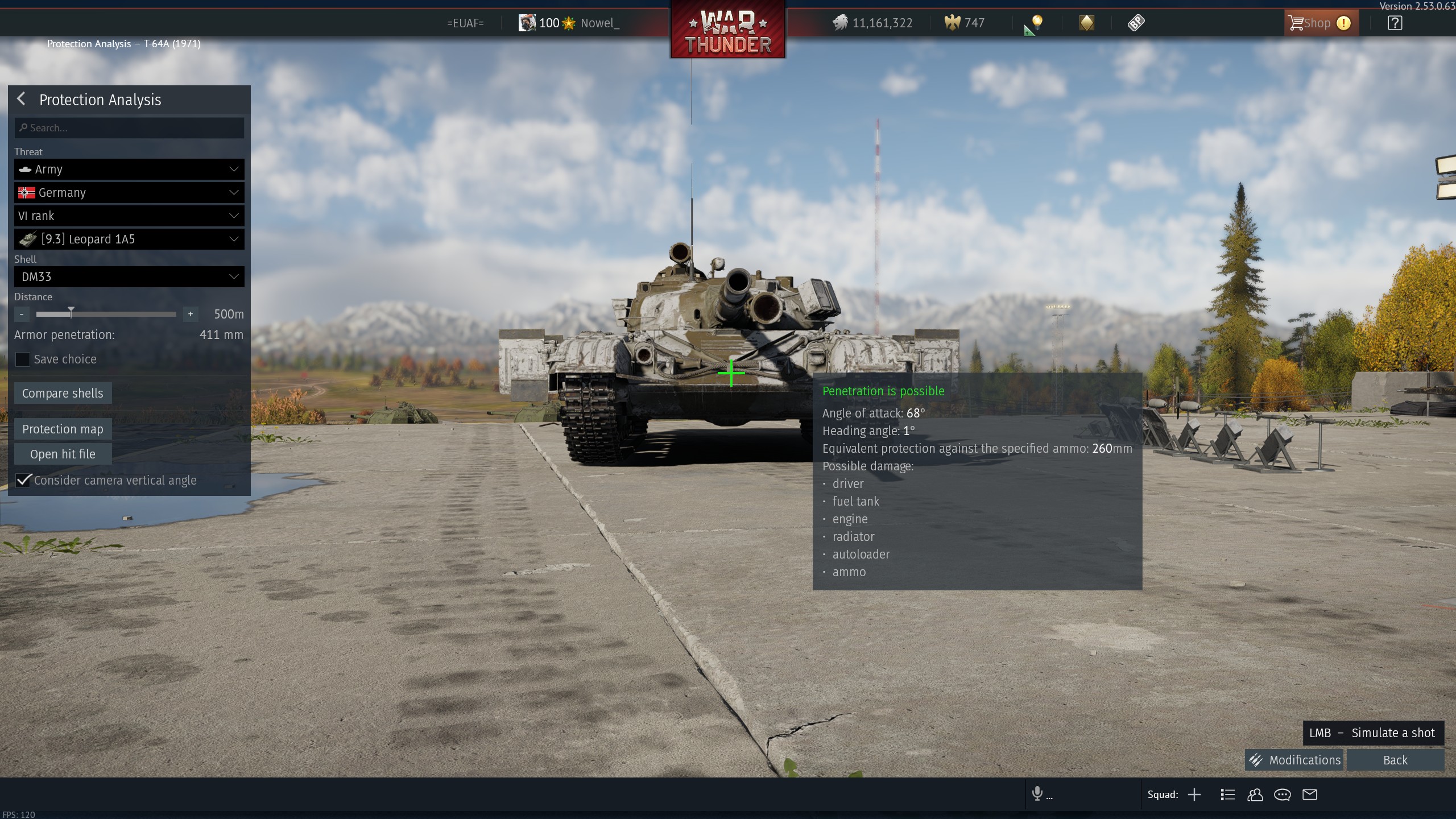
You don’t understand the meaning of “standard” and “non-standard” damage.
Furthermore, this is impossible, given that the T-72A’s durability is significantly higher than that of the T-64A, and we know the data for the T-64A.
Furthermore, all of this has already been discussed in detail above.
We know that the M111 inflicted adequate damage on a T-72A with an additional 16mm RHA plate from 300 meters.
This contradicts the possibility of completely penetrating the APFSDS core from 2 kilometers without the 16mm RHA plate.
Learn the concepts of acceptable and unacceptable damage. I’m tired of explaining it twice, to be honest.
1 Like
And it does, since these values that youre providing could very much be against short rod, and quite likely they are as the t64 was vulnerable against british apds.
In game it provides 260 vs long rod and 310 vs short rod which does coincides with your source
How does this contradicts it ? Youre the one contradicting yourself, in game the m111 can only penetrate the t72A at point range without the 16mm plate, while youre admiting that they "inflicted adequate damage " on the t72A with the aditional 16mm Plate, so with the plate would be round 330 and without around 300-310.
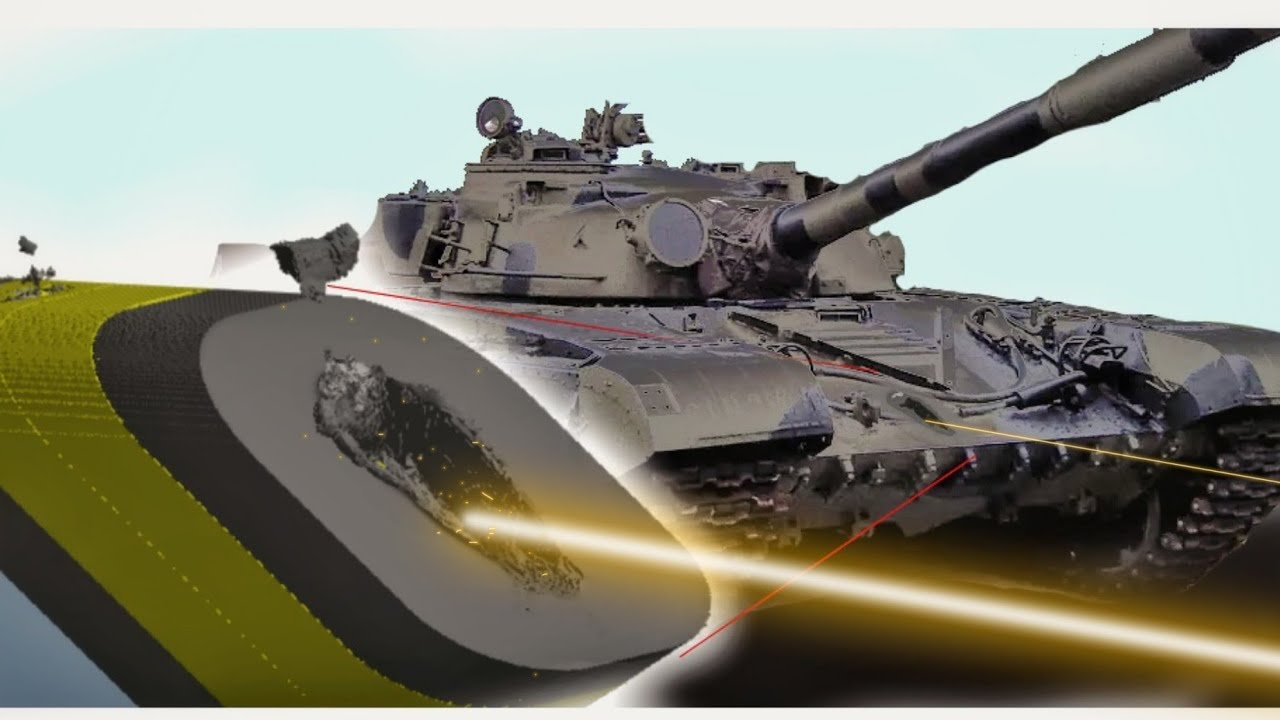
Well, in that case, the T-72A should have 330mm of resistance against long APFSDS shells, since it has 10mm more steel and a properly optimized thickness.
Otherwise, the data won’t add up, and the T-64A should have lower resistance against APFSDS shells.
You refuse to understand what CONDITIONAL damage is.
It essentially means the armor isn’t penetrated, not to mention the penetrator hitting the fighting compartment. In the game, penetration is defined as a penetrator hitting the fighting compartment. This requires much more penetration than CONDITIONAL damage.
I explained all of this literally above and even provided links, but you refuse to read.
1 Like
You are refusing to understand that the t72hull cannot be penetrated over point blank range while they could very much be completely penetrated at much more longer ranges with the m111
How those better properties and 10mm provides 90 mm of extra protection agaisnt long rod apfsds?
the t72 was penetrated by the m111 in the tests at much longer ranges than in game. This isn’t a case of “conditional” damage, as there was an actual penetration and the round was not stopped.
2 Likes
Except the document shows exactly the opposite.
T-62 is shown as being 200mm, from 100mm at 60°.
That’s the LOS thickness. Against APFSDS the protection will be lower. (Around 180mm)
Hence T-64A is not 305mm but 255mm.
4 Likes
Reread your own quote and you’ll see that it clarifies that penetrator penetration of the fighting compartment isn’t implied.
Even standard damage is implied to be closer than 2,000 meters.
Your quote literally states that this correlates with standard damage to a T-72A with a 16mm additional plate.
Are you deliberately ignoring half the text in your own quote?
And in what way is it a contradiction? And to speak about it strictly, yes, as currently their armors are significantly too efficient
The T-72A has a normalized protection of 370mm in the game, which, as discussed above, is correct based on the M111 fire data.
M111s perforation is 337mm last I checked, and in real life, the round was capable of perforating non up-armored T-72A pre Obr.1983 out to 1km’s based on Soviet data, that is currently not reflected.
However, in your opinion, five-layer armor (which is much more effective than three-layer armor with the same steel thickness) made of 50-50-50mm high-hardness steel (T-80BV) provides only 450mm?
A bit more, but yes.
This simply means that either the T-72A and T-64A should have significantly lower protection, which we know is not true, or the data for the T-80U and others has already been normalized.
Was this against monoblock long-rod WHA/DU projectiles or against short-rod steel projectiles?
The latter is more likely.
The top line literally says “normalized horizontal thickness of steel equivalent.”
Again, normalized against what?
All Soviet documents already provide normalized protection.
That is unlikely, a “normalized” protection of 570mm RHAe KE for an array of any of T-series is in the realm of pure fantasy.
Even late-90s advanced NERA array produced by Germany were incapable of that, heck, MODERN composites aren’t really capable of that.
That would mean a T-80BV array would have protection of about 706mm at LoS 68, while having a steel LoS of as you yourself said, just 457mm, where does the other ~250mm of RHAe comes from, again? Textolite would never be capable of that, as you yourself have proved, combining the coefficients of ALL layers wouldn’t be capable of that.
That is pure fantasy.
2 Likes
Also for y’all
"In the memoirs " Life Given to Tanks " dedicated to the UKBTM chief designer V.N Venediktov, published in 2010, G. A. Kheifits, a leading specialist in the D epartment of Armour at UKBTM who was appointed to the State Commission for testing the T-72B tank, describes the live fire tests against mock ups of the T-72B upper glacis and other experimental armour designs developed by the UKBTM design bureau that took place at the proving grounds of the Main Missile and Artillery Directorate (GRAU) in Donguz (in the Southern Urals). At the same time, various armour designs developed by the LKZ design bureau were also being tested at the same proving grounds, including a mock up of the T-80BV upper glacis. The tests were carried out with the 125mm 3BM-32 “Vant” monobloc DU long rod APFSDS ammunition, which was the newest ammunition of its type available in the Soviet Army in 1985.
According to Kheifits, the tests of the T-72B armour designed by UKBTM were successful. Even after increasing the amount of propellant to launch the “Vant” round at its maximum permissible velocity, it was not possible to break through the armour. On the other hand, the armour designed by LKZ was perforated by “Vant” when fired from a standard propellant charge.
Using the Lanz-Odermatt equation, the perforation limit of 3BM32 “Vant” at its muzzle velocity of 1,710 m/s is calculated to be 192mm at 68 degrees (~513mm LOS), with the target being medium hardness RHA (270 BHN). To convert from initial perforation to nominal defeat, a physical thickness of 10mm is added, translating to an effective thickness figure of 540mm. In other words, to resist 3BM32 at its muzzle velocity, the effective thickness of the 60-10-10-20-20-50 armour must equivalent to around 540mm RHA. With the armour having the same weight as 454mm of steel, this implies that the mass efficiency coefficient of the armour is only 1.18 which is less than the 1.2 coefficient of the “Reflection-1” array.
The so-called “maximum permissible velocity” is assumed to be the muzzle velocity of “Vant” at a charge temperature of +40°C, which is listed as the maximum temperature in a NIMI (Research Institute of the Machine Industry) catalogue. With 12/7 V/A propellant, the difference in muzzle velocity at 15°C and 40°C is +2.5%. The maximum permissible velocity is therefore around 1,753 m/s. At this velocity, the perforation limit is calculated to be 195mm RHA at 68 degrees (~522mm LOS). Converting to nominal defeat, the effective thickness of the armour would be around 550mm RHA."
…
As a reminder, Vant is mostly a DM23 equivalent (for the RHM L/44)…
So i’d say it’s rather impossible for any 500mm+ value to be the “normalized” value, but always a LoS 68 value.
2 Likes
Are you ignoring that this was a asumption made from tankograd, the source claimed to be “pierced”, and even they 310mm would suffice this claim as it is slightly over the 307 mm that the dm23 can penetrate in game, meanwhile the with the 330 that youre claiming to be correct penetration can only happens at point blank range.
It doesnt because in game the pentration of the t72A with the additional plate cannot be archived in game at any range, while the quote states that it should penetrate (nominal defeat) it under 500m so it should have 330 mm against apfsds with the aditional plate not without.
It literally says “Given horizontal thickness of steel equivalent.” There can be no misinterpretation here.
its not

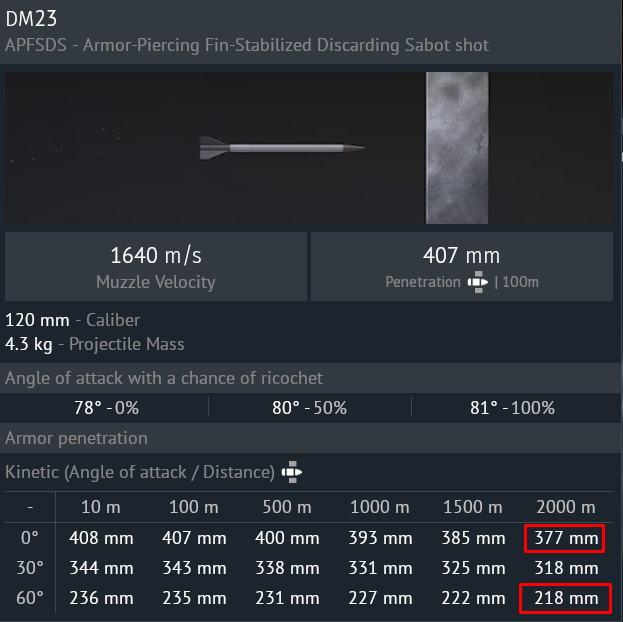
I’m tired of explaining that your quote uses the term “conditional damage.”
This doesn’t actually mean the shell penetrated the armor.
That’s it: conditional damage. Do you see armor penetration? There isn’t any.

Even nonconditional damage doesn’t necessarily mean armor penetration. A through crack without armor penetration is considered nonconditional damage.
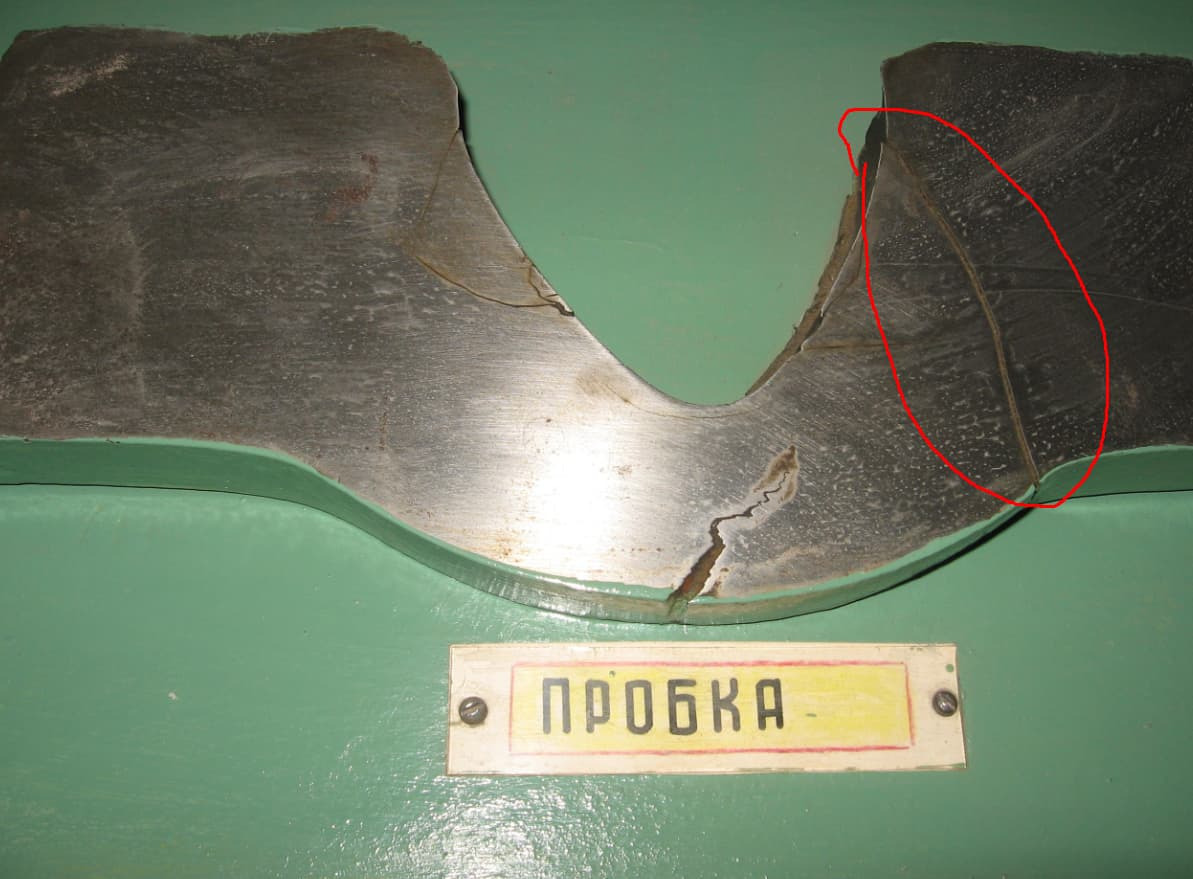
In the game, if a shell penetrates armor, it means that some part of the penetrator will fly inside the tank.
This requires much more energy than a crack in the armor.
1 Like
Again at 500m againt the 16-60-105-50 it archives “nominal penetration” which means that it fully penetrates the plate, so no conditional damage is going on over here.
This cannot be archived in game, thus it is overperfroming.