outside of fuel, yes, most Shermans mainly the A1s and A3s, the ones that used the kit bashed Chrysler engines (ones seen on the A4s which are just 4 smaller car engines slapped together), the wasp engine (plane engine A1) and the A3s used gasoline to power their tanks, VS the A2 which uses diesel of which was already in high supply due to most of the ships being diesel as well
1 Like
im down but can we get these tracks i like the wway they look on shermans +1
Spoiler

2 Likes
I fail to see difference between it and ingame M4A2
?
Me when reading is hard.
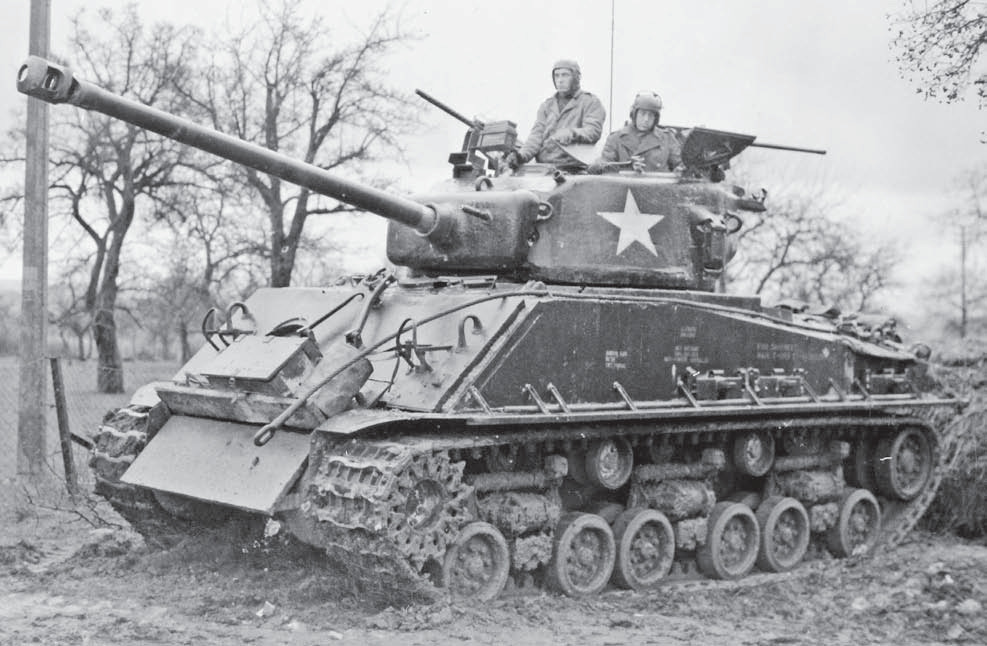
M4A3 (75) is going to have a higher mobility thanks to its Ford GAA V8. It can get a possible access to experimental rounds like blunt AP M338 (T148), a 75mm round capable of penetrating T-34’s UFP.
M4A3 (75) is literally the most iconic and numerous Sherman model. Nothing’s wrong with having more Shermans in the US tree.
12 Likes
even when using JDM or is this just historical
Just historical.
2 Likes
Different hull, different engine, different turret. Performance-wise it’s more mobile and very slightly better armoured, plus the ammo racks are located in a safer position which reduces the chance of ammo rack detonation. The ready rack would also likely allow for a slightly faster reload.
But the main thing is this is the US Army Sherman variant, with more produced than any other Sherman model. Between the two, the M4A2 is an insignificant footnote in the Sherman’s history.
For a simpler comparison, the differences of the M4A3W and M4A2 are mostly the same as the differences between the M4A2 (76) and M4A3 (76) W.
6 Likes
Here’s a follow-up comment. Even in-game, it is still capable of penetrating the T-34’s UFP according to @FlipAllTheTables’ calculation and graph in his post:
Below is a graph of how it would perform in-game compared to the M61 APCBC. The red line represents the M338, and the blue line represents the M61. The X-axis shows the angle in degrees, and the Y-axis shows penetration in mm of actual thickness. Relative thickness is irrelevant in this graph.
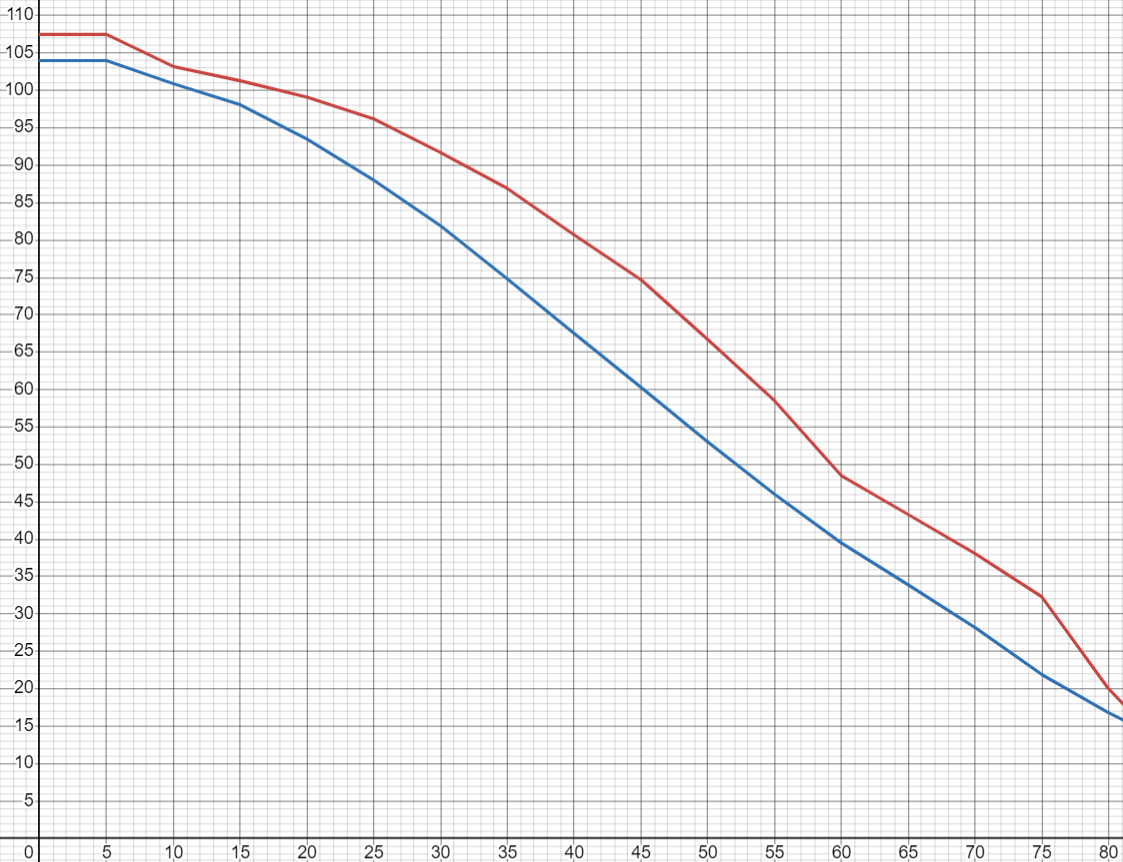
As shown, the M338 penetrates about 49 mm at 60 degrees, while the M61 penetrates about 40 mm at 60 degrees.
For reference, the T-34’s UFP is 45 mm at 60 degrees. The M338 succeds in penetrating the T-34’s UFP, whereas the M61 fails to do so.
2 Likes
I’d really love to see the M4A3 (75)W with the “Duckbill” track extension.
Annual reminder that US TT is still missing its most iconic Sherman variant.
9 Likes
I NEEEEEEEEEEEEEEEEEEEEEEEEEEEEEEEEEEEEEEEEEEEEEEEEEEEEEEEEEED the M4A3(75)W
We have the 105 variant, we have the 76 variant! Now give us the 75 variant of the M4A3!
3 Likes
Well, probably second most iconic
1 Like
+1 for more grunt vehicles!
2 Likes
As someone who’s played a long time. Gotta make the vehicle appealing, and juicy. I’d be fine with either. But PLENTY of tanks around that rank (especially in Germany) have aspects of them that weren’t even close to factory settings, or “common field mods”. There’s features even MISSING, field mods that weren’t rare still missing.
The game literally makes Sherman’s & Tigers fight vehicles from the 70s to 90s. You get modern HEAT shells slung at you at pre-WW2 ranks… These vehicles don’t even blend in, they stand OUT… Which is why I personally wouldn’t be too against a specialized Sherman variant. Unless matchmaking drastically changes, it might be what a vehicle like this would need.
And this here folks is why War Thunder is dying
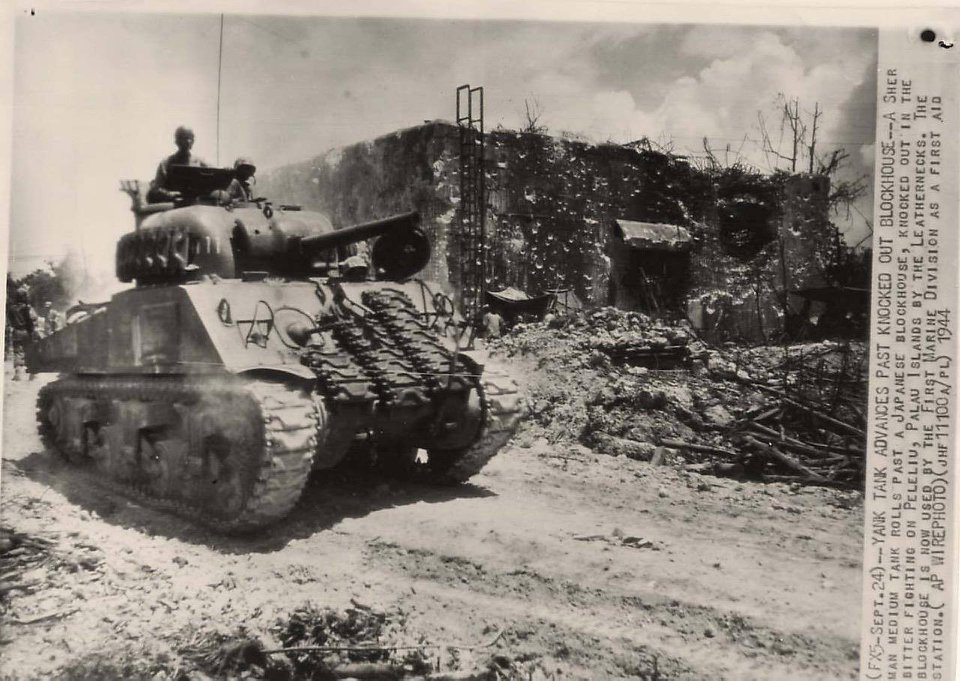
Sorry for the late response, I must’ve forgotten about this notification. When I say “heavy tank” I’m referring to how the M4A2 in USMC service was well known to be a tough nut to crack for the Japanese, and as such can be considered the “heaviest” tank of its theater. And arguably the M4A2 is one of the most famous tanks operated by the USMC. It’s true that the M4A3 saw widespread use with them in 1945, but the M4A2 was there for a majority of the island hopping campaign, which I would say is more than worth representing.
And for the record, I’m aware that the ingame tank represents a somewhat idealistic variant with large hatches. Obviously these weren’t the majority of M4A2s in the Pacific, but for the sake of gameplay purposes I don’t find any problem with this since large hatch service in Peleliu is well documented and iconic in its own right.
Literally a Sherman with twin 50 Cals wouldn’t end the game lol. HEAT slingers at 4.0 to 6.7 is pretty annoying however…
more armor plus add on armor and a upgraded engine M4A3 75MM is ultimate 75 sherman
+1
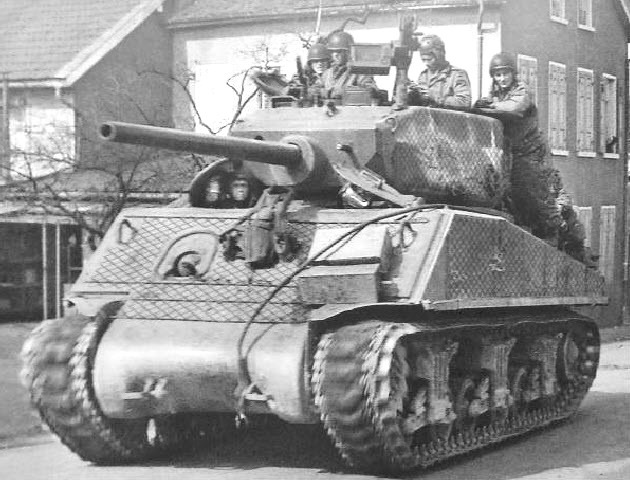
If you want a Sherman with twin .50 cals, there are some cases of .30 cal co-ax mgs being swapped for .50s in the field, though it seems largely limited to M4A3E2s and the Field Expedient version.
4 Likes