Aaah yes the famous hull that hasn’t been changed in 40 years
NATO tax
Aaah yes the famous hull that hasn’t been changed in 40 years
NATO tax
i mean isnt it still like a ton lighter than the sepv3?
About 1.3 ton yeah.
However I’m saying it’s slightly dishonest because Dead_Undertaker has a history of trying to make the Abrams in general worse than it actually is, probably so that it fits his US suffers agenda.
(and just to be sure: just because I don’t think the US suffers doesn’t mean I don’t want the SEPv3 to release as is. The SEPv3 shouldn’t be redundant from the get go)
yeah i agree, people who try to make america seem unplayably weak actually annoy me so much lol, it just tends to be their cas isnt as good as it should really be, and their newer tanks are just worse versions of existing ones because they are artificially gimped by gaijn lol
Of cause they didn’t just add weight for fun. But we have a “black box for my dreams” scenario. It’s easy to get tunnelvision on what you desire to be the outcome.
So why do we have to be carful, well the way the US Army thinks about armor has not changed since the Abrams was designed AFAIK, please correct me if I am wrong.
The way that the US Army does it ,is that they add armor to defeat a specific threat on the exterior of the vehicle skin, that is why the Abrams doesn’t have a spall liner on the interior like modern leopard 2.
This was one of the things that the Reformers tried to change in what we know as “The Pentagon Wars”. So they don’t added armor that can’t defeat a specific threat, if it can’t defeat the threat then it’s dead weight.
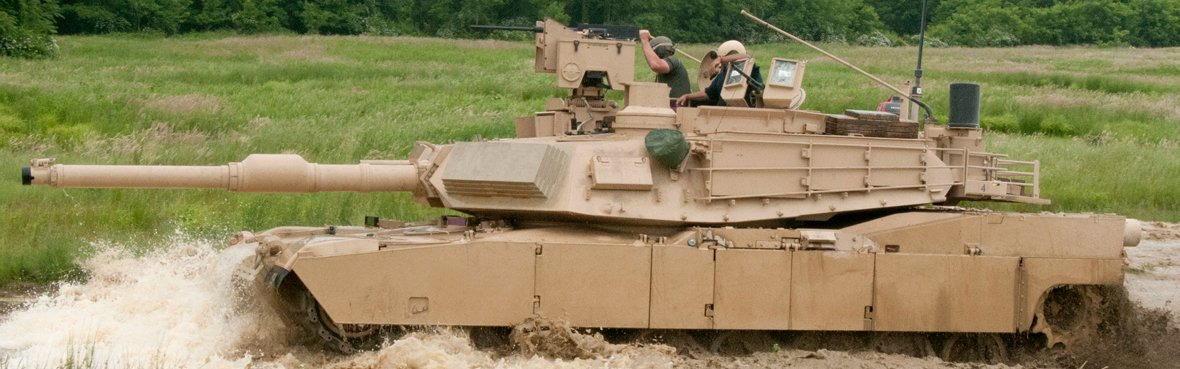
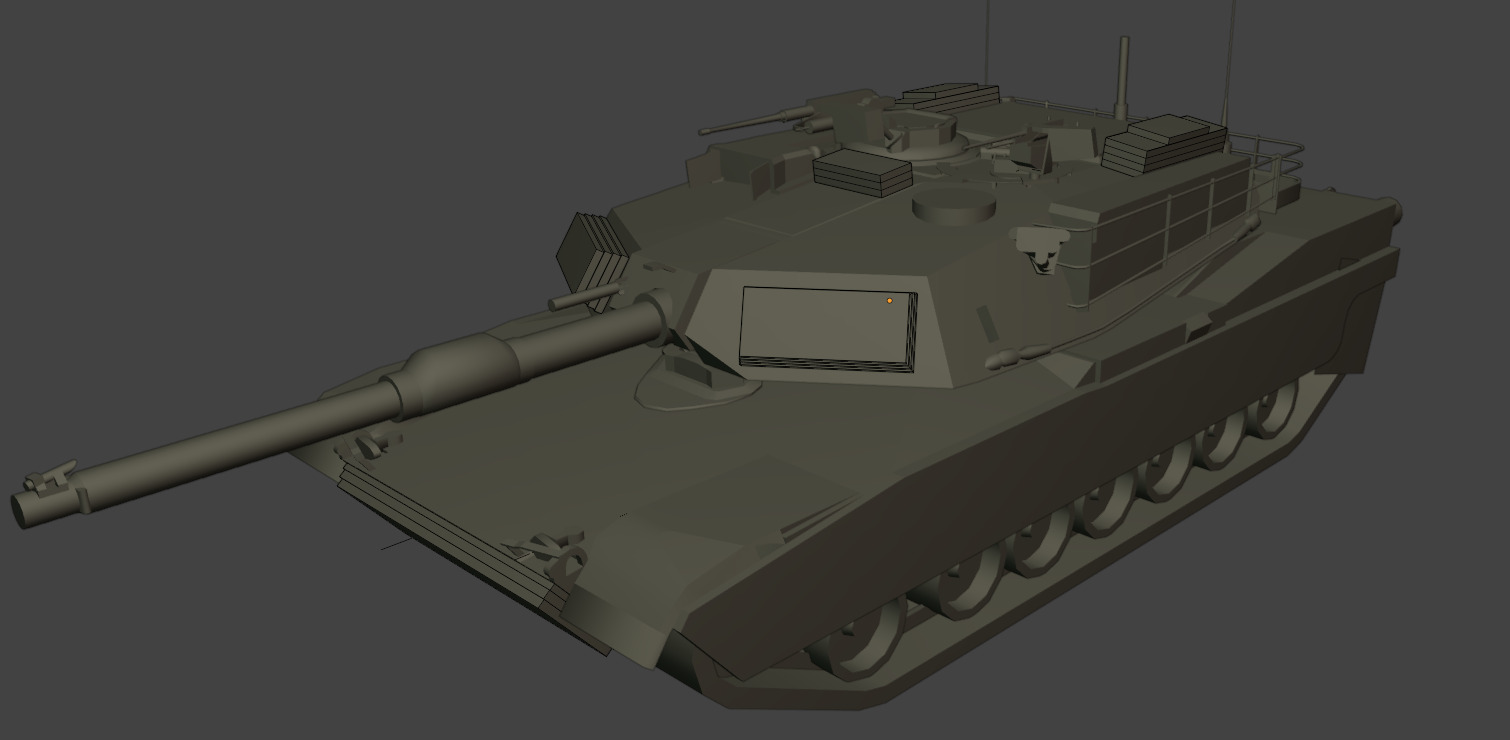
Now, I have an accurate exterior 3D model of the Abrams so I made a quick estimate of the armor weight added to the SEPv3 prototype. It appears to be around ~4.4 short tons of RHA, ~2.9 of which was added to the turret and ~1.5 to the front hull:
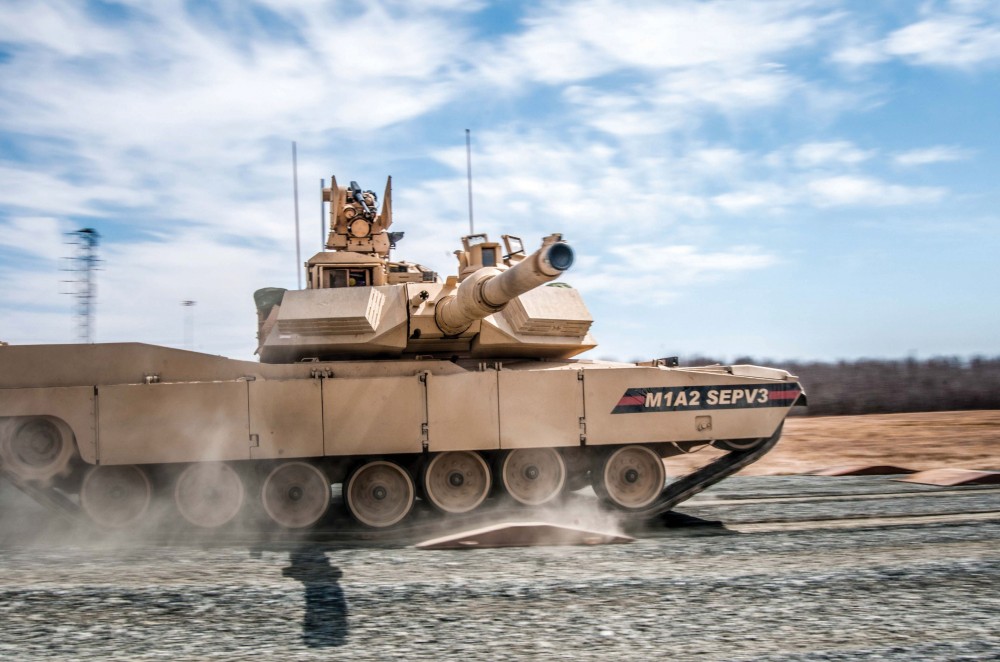
I AM AWARE THAT THIS IS NOT COMPLETE PROOF, JUST A QUICK ESTIMATE
| Total weight added to turret (US tons): | 2,916794692 | ||||
|---|---|---|---|---|---|
| Total weight added to hull front (US tons) : | 1,474641995 | ||||
| Total Addition to turret and hull (US Tons) | 4,391436687 | ||||
| Right side weight increase | Plate 1 | Plate 2 | Plate 3 | Plate 4 | |
| Plate thickness (cm) | 5,08 | 5,08 | 5,08 | 5,08 | |
| Length (cm) | 88,9 | 87,2 | 85,6 | 83,7 | |
| Height (cm) | 39,7 | 37,6 | 35,3 | 33,1 | |
| Volume (cm³) | 17928,9964 | 16655,8976 | 15350,1344 | 14073,9876 | |
| Total volume | 64009,016 | ||||
| Total weight (volume x 7,85 g/cm³) | 502470,7756 | ||||
| Total Weight Kg | 502,4707756 | ||||
| Total Weight US Tons | 0,553878561 | ||||
| Left side weight increase | Plate 1 | Plate 2 | Plate 3 | Plate 4 | |
| Plate thickness (cm) | 5,08 | 5,08 | 5,08 | 5,08 | |
| Length (cm) | 99,5 | 97,7 | 96 | 93,9 | |
| Height (cm) | 45,1 | 43,3 | 41,2 | 39,4 | |
| Volume (cm³) | 22796,246 | 21490,4828 | 20092,416 | 18794,2728 | |
| Total volume | 83173,4176 | ||||
| Total weight (volume x 7,85 g/cm³) | 652911,3282 | ||||
| Total Weight Kg | 652,9113282 | ||||
| Total Weight US Tons | 0,719710686 | ||||
| Hull front weight increase | Plate 1 | Plate 2 | Plate 3 | ||
| Plate thickness (cm) | 3,81 | 5,08 | 5,08 | ||
| Length (cm) | 205 | 203 | 201 | ||
| Height (cm) | 61,7 | 60,6 | 58,5 | ||
| Volume (cm³) | 48190,785 | 62493,144 | 59733,18 | ||
| Total volume | 170417,109 | ||||
| Total weight (volume x 7,85 g/cm³) | 1337774,306 | ||||
| Total Weight Kg | 1337,774306 | ||||
| Total Weight US Tons | 1,474641995 | ||||
| Turret bustle right weight increase | Plate 1 | Plate 2 | Plate 3 | Plate 4 | Plate 5 |
| Plate thickness (cm) | 5,08 | 5,08 | 5,08 | 5,08 | 5,08 |
| Length (cm) | 103 | 103 | 103 | 103 | 51,7 |
| Height (cm) | 34,3 | 34,3 | 34,3 | 34,3 | 34,3 |
| Volume (cm³) | 17947,132 | 17947,132 | 17947,132 | 17947,132 | 9008,4148 |
| Total volume | 80796,9428 | ||||
| Total weight (volume x 7,85 g/cm³) | 634256,001 | ||||
| Total Weight Kg | 634,256001 | ||||
| Total Weight US Tons | 0,699146732 | ||||
| Turret bustl left weight increase | Plate 1 | Plate 2 | Plate 3 | Plate 4 | Plate 5 |
| Plate thickness (cm) | 5,08 | 5,08 | 5,08 | 5,08 | 5,08 |
| Length (cm) | 103 | 103 | 103 | 103 | 51,7 |
| Height (cm) | 34,3 | 34,3 | 34,3 | 34,3 | 34,3 |
| Volume (cm³) | 17947,132 | 17947,132 | 17947,132 | 17947,132 | 9008,4148 |
| Total volume | 80796,9428 | ||||
| Total weight (volume x 7,85 g/cm³) | 634256,001 | ||||
| Total Weight Kg | 634,256001 | ||||
| Total Weight US Tons | 0,699146732 | ||||
| Central turret weight increase | Plate 1 | Plate 2 | Plate 3 | ||
| Plate thickness (cm) | 5,08 | 5,08 | 5,08 | ||
| Length (cm) | 61,7 | 61,7 | 61,7 | ||
| Height (cm) | 30,1 | 30,1 | 30,1 | ||
| Volume (cm³) | 9434,4236 | 9434,4236 | 9434,4236 | ||
| Total volume | 28303,2708 | ||||
| Total weight (volume x 7,85 g/cm³) | 222180,6758 | ||||
| Total Weight Kg | 222,1806758 | ||||
| Total Weight US Tons | 0,244911981 |
Compared to these specs it would seem that my quick estimate of 2.9 is close to the 2.4-2.5 increase given officially. Which would indicate that there was no hull armor mass update of any significant amount and that they chose to only update the turrets KE protection not the hulls protection, between v2 and v3:

The most detailed report ever submitted for a vehicle in war thunder was denied in 30 minutes by a tech mod.
Y’all want things to change for your mbts you better make it known on steams reviewing system.
gaijin in a nutshell
This post was flagged by the community and is temporarily hidden.
Even the video thumbnail contains words what if, which is the thing he conveniently hid.
He’s up to no good.
Your calculation is a useful rough exercise, but I do not think the conclusion follows from it.
First, I agree that the exact composition and protection level of the SEPv3 armor remain a black box. I am not claiming that the hull must have any particular RHA-equivalent value, nor that the lower front plate must suddenly become invulnerable. However, the existence and location of the armor upgrade are not merely matters of speculation.
The FY2026 Army Procurement Justification Book explicitly states:
“The M1A2 System Enhancement Package (SEP)v3 also incorporates turret and hull armor upgrades for enhanced crew survivability.”
That statement appears on Volume 1, page 100. The same procurement documentation separately lists mine-blast improvements, lightweight belly armor, reactive armor tiles, and other survivability features. Therefore, “hull armor upgrades” cannot reasonably be dismissed as merely another name for the underbody kit or internal blast-mitigation changes. The Army lists those as separate improvements.
The DOT&E reports reinforce that distinction. The FY2015 report describes SEPv3 survivability improvements as incorporating “NEA, a new underbody IED kit and other vulnerability reduction measures.” In other words, NEA and the underbody kit are separate items within the survivability package. The FY2016 report then states that SEPv3 armor performance was tested under NEA as “a separate materiel development verification and production effort.” The FY2020 report further states that survivability improvements increased the vehicle’s weight, while the actual survivability and force-protection results were reserved for a classified report.
That brings us to the weight calculation.
Your own estimate produces approximately:
The published vehicle-weight increase you are comparing this against is approximately 2.4–2.5 short tons. Your turret estimate alone is therefore around 17–22 percent greater than the entire published vehicle increase, while your combined estimate is around 76–83 percent greater.
That discrepancy does not demonstrate that the hull received no meaningful armor increase. It demonstrates that the assumptions used in the calculation do not reconcile with the published net vehicle-weight change. Selecting the turret estimate because it is comparatively close to the total, while discarding the hull estimate produced by the same methodology, is not a valid way to apportion the weight.
The calculation also assumes that the estimated external volumes are solid RHA at 7.85 g/cm³. Even if the visible prototype weights were measured perfectly, that remains a bounding assumption rather than proof of the production armor’s actual construction or net mass increase. It does not account for replacement of existing armor arrays, material substitutions, non-solid or tapered structures, prototype ballast geometry, or weight savings elsewhere in the vehicle.
We know that such savings occurred. The Department of Defense report on SEPv3 underbody protection states that the existing aluminum UBB kit was redesigned into a thinner, lighter steel kit that provided equivalent protection. Therefore, the net difference between SEPv2 and SEPv3 gross vehicle weight cannot simply be treated as the sum of every new component’s gross mass. Added mass in one area could be partially offset by reductions elsewhere.
So I agree with the narrow point that public information does not allow us to calculate the exact SEPv3 hull protection value. What I disagree with is the conclusion that the hull therefore received no significant armor update.
The official Army procurement documentation directly says the SEPv3 incorporates both turret and hull armor upgrades. Your rough model does not reconcile with the published mass increase and therefore cannot overturn that statement. The supportable conclusion is that the hull armor was upgraded, while the precise composition and protection level remain classified, not that the hull remained unchanged.
Sources cited:
M1A2_SEPv3_Hull_Armor_Primary_Sources.zip (10.8 MB)
However, the existence and location of the armor upgrade are not merely matters of speculation.
Well I didn’t say that no hull armor update was made only that the KE protection was likely not increased in any significant amount. Because KE protection depends to a large degree on mass.
That discrepancy does not demonstrate that the hull received no meaningful armor increase.
Not in it self, but the reason I lean that way is not the weight in it self but the philosophy that the US Army uses for armor protection. Combined with the fact that we can see that the Turret armor dimensions was changed while the hull armor dimensions were not. And that the US Army has a history of testing hull armor increases but not implementing them as mentioned earlier:
M1E1:
With:
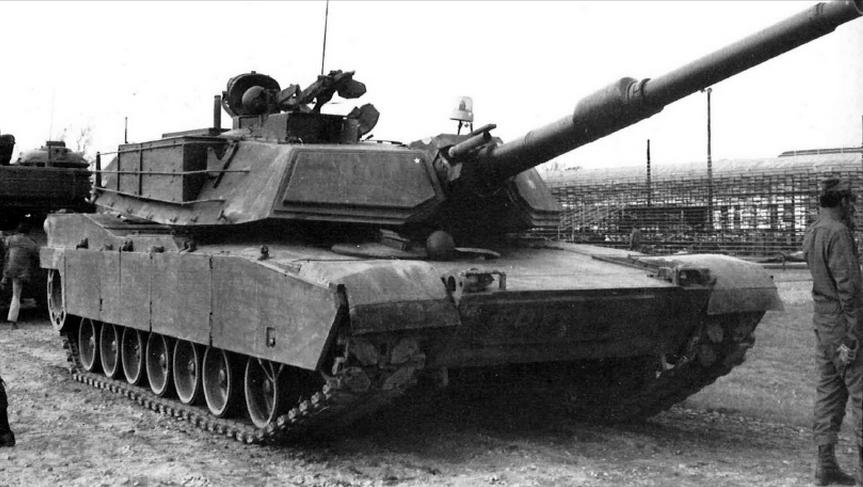
Without:
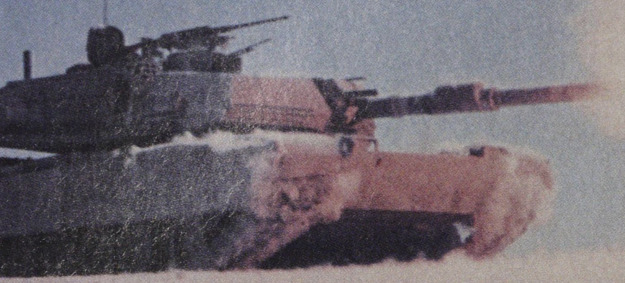
M1A1HA:
Multiple configurations:
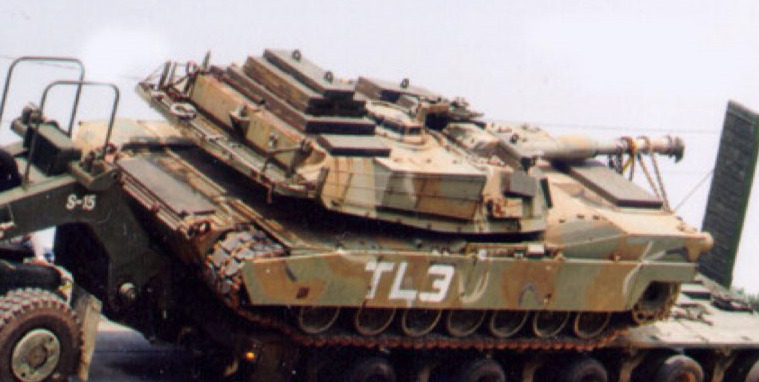
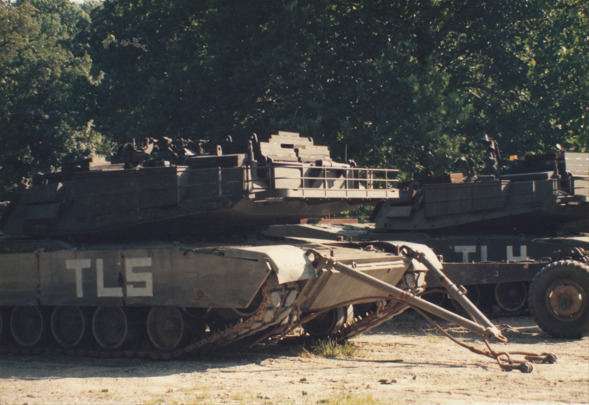
We know that they chose not to update the hull KE protection for M1A1 while they updated the Chobham for the vehicle, we know that they didn’t put DU in the HA hull for production.
So given the threat they wanted to protect the turret against on SEPv3, needed significant weight, which is close to my estimate of what they added to the turret, given that the turret is the most likely to be hit in tank on tank combat it would reason that given what we know and see that they chose to give the KE protection, i.e. mass, to the Turret.
The calculation also assumes that the estimated external volumes are solid RHA at 7.85 g/cm³. Even if the visible prototype weights were measured perfectly, that remains a bounding assumption rather than proof of the production armor’s actual construction or net mass increase. It does not account for replacement of existing armor arrays, material substitutions, non-solid or tapered structures, prototype ballast geometry, or weight savings elsewhere in the vehicle.
This is wishful thinking, now my estimated dimensions are a little off, given the visual estimate, but weight simulators are not space magic it’s just steel plates welded on to the vehicle and when they do that they already know how much weight the final armor package they want to add is going to weight, if they didn’t there would be no point in testing the vehicle. Now what could be the case, is that they tested multiple weights and only showed us pictures of the most impressive looking ones.
By assuming that they just updated the special armor without increasing the KE hull protection, like they have done before, we can bring everything into a possible alignment.
That is a fair clarification. If your claim is only that the public evidence does not prove a large increase in hull KE protection, then we mostly agree. I have already said that the exact composition and protection increase cannot be calculated from public information.
Where I disagree is the next step: That KE protection was therefore likely not improved by any significant amount.
The lack of a visible increase in the external hull dimensions does not establish that the internal armor array remained functionally unchanged. Special armor can be replaced or rearranged inside the existing cavity. Changes in material, layering, spacing, confinement, and areal density can alter KE performance without producing an obvious external enlargement. KE resistance depends heavily on mass, but gross external dimensions alone do not tell us the mass or construction of the internal array.
The older M1A1 hull armor prototypes also establish only that the Army rejected certain hull packages during an earlier program. They do not establish that the Army made the same decision decades later for SEPv3, under different threat requirements, materials, and weight constraints.
Your weight estimate still cannot resolve that question. You have acknowledged that the dimensions are visually estimated, that different prototype configurations may have been tested, and that the photographs may show different weights. Once those variables are unknown, the calculation cannot reliably divide the production vehicle’s weight increase between the turret and hull.
More importantly, saying that everything can be brought into alignment “by assuming that they just updated the special armor without increasing the KE hull protection” assumes the disputed conclusion before using the calculation to support it. That is one possible interpretation of the unknowns, but it is not something the calculation demonstrates.
The official documentation tells us that SEPv3 received both turret and hull armor upgrades, while separately identifying the underbody kit and other blast-protection measures. It does not publicly tell us how much the hull improved against KE versus CE threats. Therefore, the evidence supports an upgraded hull with classified performance. It does not support a precise KE figure, but it also does not support treating the hull KE protection as unchanged.
So I think the actual point of agreement is this: neither of us can prove the exact increase. The difference is that I do not think an unknown increase should be modeled as no increase when the Army explicitly documents a hull armor upgrade.
but the sepv3 did go up in mass?
Also, the mass increase you guys keep talking about does not factor in the weight reduction. The over all mass increased AFTER weight saving measures eere achieved. Meaning the weight increase was substantially more than at first glance.
What are you referring too here, I haven’t said that it didn’t have a weight increase?
When you make a simulated test you have already factored in all the weight changes. The test is invalid if you make the vehicle lighter afterwards. So all the plates we see would be additional weight represents the vehicle after things had been lightened.
The way they do this is that armies make theoretical studies calculating their need, then they design some armor arrays and other changes to meet the projected threat, then they test some vehicles with different weight simulators matching the future vehicle options, then they sum up the data and say:
To get X armor protection we need Y weight increase, that is going to mean Z drop in mobility etc.
Then the decision makers say okay between these, the optimal solution is Y, it provides the best balance between protection, mobility, firepower and cost to meet the projected threat.
They don’t just slap weight on the vehicle and then discover revolutionary improvements afterwards. And if they do make such a discovery, then it’s not going into the current update but will be incorporated in a future variant. These changes have a long lead time, spanning multiple years normally.
Look, I appreciate what you wrote. But at no point did I say weight savings after the fact.
Of course they did weight savings measures first and then fitted the required mission package.
The point you are missing is the weight decrease by x amount, so if object increased in weight by two tons over all after a weight reduction of 2 tons then total weight increase from new items equals 4 tons.
You have 50 apples, you take two apples away and then add 4 apples. You know have 52 apples. How many apples were added?