Also, the mass increase you guys keep talking about does not factor in the weight reduction. The over all mass increased AFTER weight saving measures eere achieved. Meaning the weight increase was substantially more than at first glance.
2 Likes
What are you referring too here, I haven’t said that it didn’t have a weight increase?
When you make a simulated test you have already factored in all the weight changes. The test is invalid if you make the vehicle lighter afterwards. So all the plates we see would be additional weight represents the vehicle after things had been lightened.
The way they do this is that armies make theoretical studies calculating their need, then they design some armor arrays and other changes to meet the projected threat, then they test some vehicles with different weight simulators matching the future vehicle options, then they sum up the data and say:
To get X armor protection we need Y weight increase, that is going to mean Z drop in mobility etc.
Then the decision makers say okay between these, the optimal solution is Y, it provides the best balance between protection, mobility, firepower and cost to meet the projected threat.
They don’t just slap weight on the vehicle and then discover revolutionary improvements afterwards. And if they do make such a discovery, then it’s not going into the current update but will be incorporated in a future variant. These changes have a long lead time, spanning multiple years normally.
Look, I appreciate what you wrote. But at no point did I say weight savings after the fact.
Of course they did weight savings measures first and then fitted the required mission package.
The point you are missing is the weight decrease by x amount, so if object increased in weight by two tons over all after a weight reduction of 2 tons then total weight increase from new items equals 4 tons.
1 Like
You have 50 apples, you take two apples away and then add 4 apples. You know have 52 apples. How many apples were added?
1 Like
Why are you insulting me?
I honestly wasn’t, I am just on the spectrum and legit couldn’t think of a better way to explain my logic. Sorry if it came off that way.
“Typical Gaijin”
Typical or not, it’s arrogant and disrespectful. Further I am tired of that being used as an excuse for the Fanbase to roll over and play dead. I think the bug moderators are playing with fire in giving the fans, their customers mind you, the middle finger.
Okay fair, for future reference it’s comes of insulting when you ask me to do basic math, when I have already demonstrated the ability to do so.
I understand that total armor weight addition can be more if you lighten other components.
Maybe I misunderstood who you comment were aimed at but the reason the internal weight reduction irrelevant to the discussion I was having, is that the armor updates require a weight penalty as demonstrated byt the weight simulators, despite any lowering of weight.
1 Like
hmm not sure, would you agree that the M1A2 co-developed an improved Turret & Hull NERA array
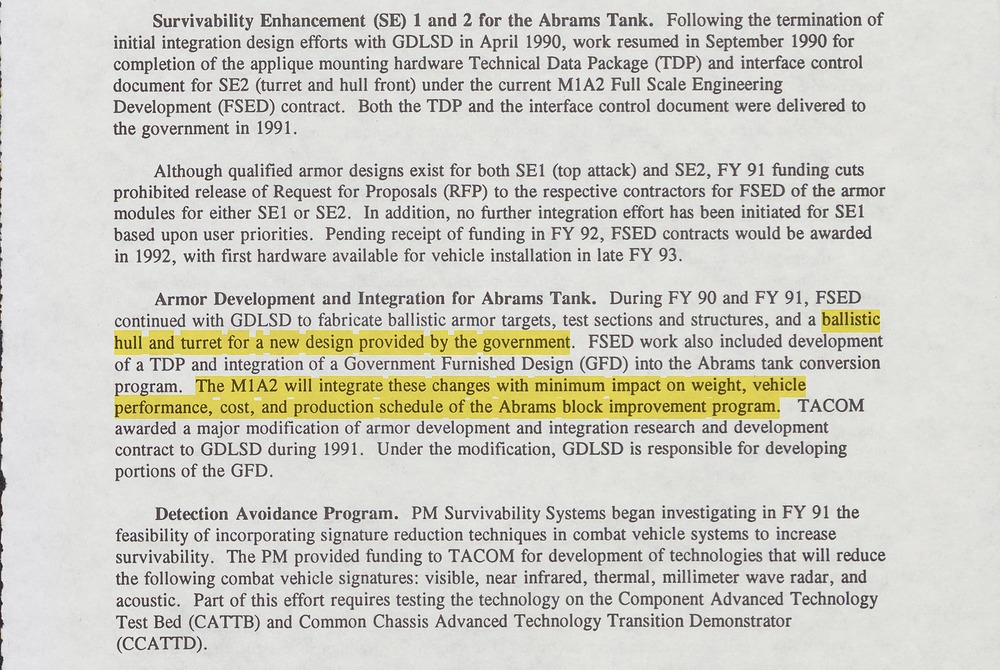
NSIAD-90-57 Abrams Tank: Block II Modifications Not Ready to Enter Production
the Army plans to initially add only portions of the armor packages. Consequently, the program’s survivability objectives may not be achievable. The Army plans to add the remaining portions of the Block II survivability enhancements only as corresponding weight reductions are achieved.
And accept that Performance of said design(s) would approximately be similar for a given thickness of Composite array.
And that this computation could serve as a lower bound for future arrays such as NGAP since it should be fairly obvious that a Objective threat has not had its performance diminish.
We know the Turret of the M1A2 (M1A1 Block 2) is rated at ~650mm KE, so it should be fairly easy to figure out what a prospective SE Block II hull would approximate.
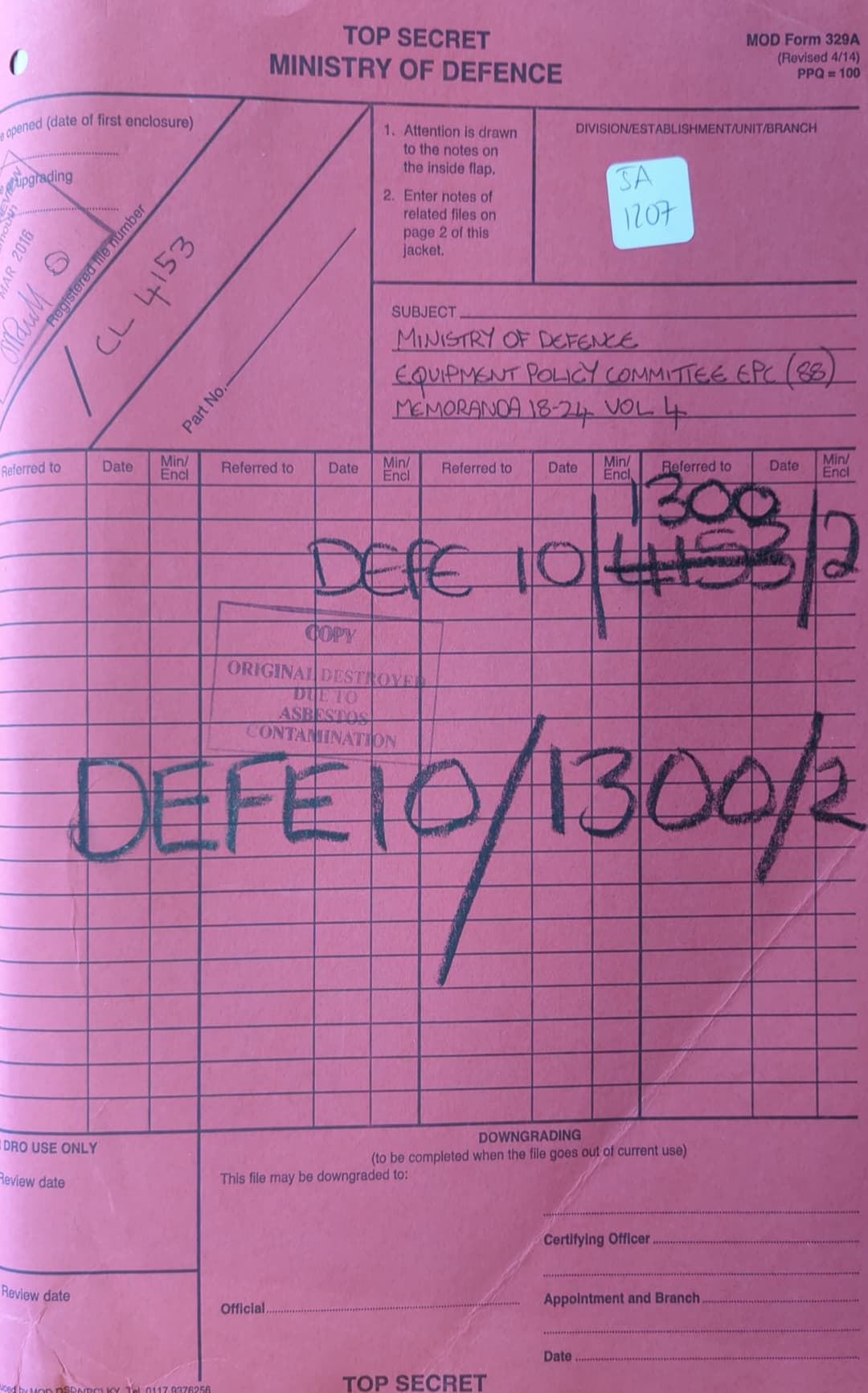
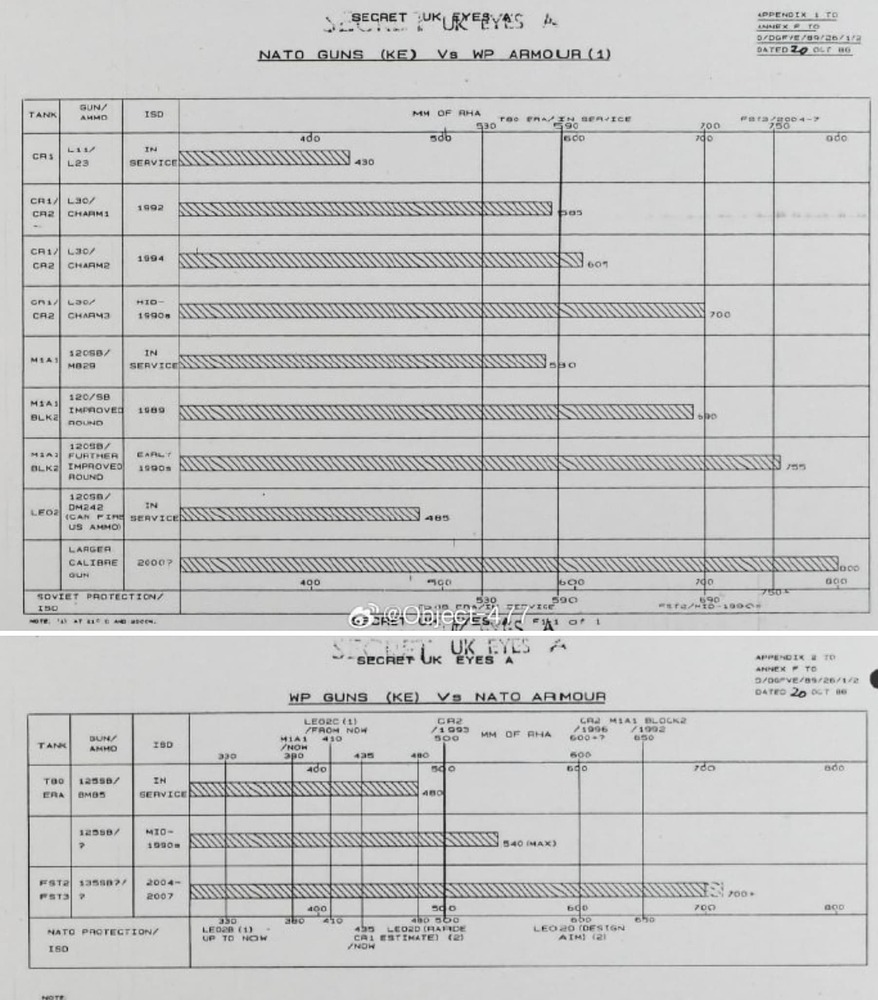
2 Likes

It was a CE improvement not a KE improvement. M1A2 had DU armor in the turret, not the hull, so how do you approximate it’s protection level?
This is for the prospective SE Block II hull array, which is not what was deployed in the M1A2 configuration (remained the basic hull array of the M1) nor do we have a bill of materials for.
The intent remained for it to be issued, but it’s not clear if was put into service at some point after the GAO report as the declared intent at the time was to field the improved Hull when weight reduction efforts allowed.

Why would you need to? We only need to generalize here, and besides DU is generally considered not to significantly improve the protective performance of an array, but improve it’s ability to sustain multiple hits, while retaining performance.
Okay, since when has that been “generally considered” to be the case?
Also it was you who said approximate:
Metals are generally considered to be more ductile than ceramics, but obviously are not as hard. And as such will tend to tear, instead of shattering, when struck.
It’s not up to us to present values, only make obvious that the Hull is not that of the baseline Array Gaijin should handle the rest. thus one way of estimating the performance of the array, would be to duplicate that of the turret. Even if that only results in improvements to CE protecion.
Yes, in the limited sense that the documents describe the turret and hull arrays as being developed under the same survivability-enhancement effort and against the same general threat environment.
I would not take that to mean they were identical arrays or intended to provide identical protection. The turret and hull have very different available cavity depth, geometry, obliquity, coverage requirements, and weight constraints. We also do not have a bill of materials or enough internal detail to determine whether the layer arrangement and material proportions were the same.
So I agree that the hull and turret improvements were co-developed as parts of the same program, but I would not support duplicating the turret protection value onto the hull. The evidence supports an improved hull array over the baseline configuration. It does not support equal turret and hull protection, nor does it give us a defensible exact value for the hull.
1 Like
What I mean is duplicating the RHAe value, so it gets applied to the thickness of the array to create the protection value for the hull array.
Understood. In that case, I do not think the method is unreasonable as a rough heuristic. With the actual array composition and protection classified, any in-game value will inevitably require estimation.
Using the turret array’s estimated RHAe efficiency and scaling it to the hull cavity could provide one reference point, especially if both arrays came from the same general armor-development effort. I would just avoid treating it as a direct conversion or an exact answer, because the turret and hull may differ in material proportions, layer arrangement, backing, confinement, geometry, and KE-versus-CE optimization.
I think the best use of that method would be to establish part of a plausible range, then compare it with the documented hull upgrade, available cavity depth, vehicle mass constraints, expected threats, and gameplay results. The final value should clearly improve upon the baseline hull without simply making the lower front plate equivalent to the turret cheeks.
At this point, a reasonable heuristic is probably the most anyone can produce without classified data. My objection is only to treating a single heuristic as conclusive, not to using it as a starting point.