- Yes
- No
Introduction
The origins of Britain’s Chieftain replacement programme lie in the ever increasing obsolescence of the Chieftain platform against Soviet threats through the late 1970s and 1980s. In the early 1980s the British had rather urgently adopted a development of the Shir 2 as the Challenger 1, importantly though, the Challenger 1 was not a replacement for the Chieftain, it was always intended to serve alongside it. Therefore, in the mid 1980s, the British government began examining options for the actual successor to the Chieftain. After much bureaucracy and many committees, the decision was narrowed down to 7 or so options:
Option 1. Retain Challenger 1 with improved rifled bore gun (CHARM) and improved fire control system (СHІP); replace Chieftain with Challenger 2 Mark 2 with CHARM rifled bore gun.
Option 2. Retain Challenger 1 with improved rifled bore gun (CHARM) and improved fire control system (CHIP); replace Chieftain with Leopard 2 with smoothbore gun.
Option 3. Retain Challenger 1 with improved rifled bore gun (CHARM) and improved fire control system (CHIP); replace Chieftain with Abrams with smoothbore gun and incorporating planned improvements (including up-armouring).
Option 4. Refit Challenger 1 with new turret and smoothbore gun; replace Chieftain with Challenger 2 Mark 2 incorporating smoothbore gun.
Option 5. Refit Challenger 1 with new (Leopard 2) turret and smoothbore gun; replace Chieftain with Leopard 2.
Option 6. Refit Challenger 1 with new (Abrams) turret and smoothbore gun; replace Chieftain with Abrams with smoothbore gun and incorporating planned improvements (including up-armouring).
Option 7. Retain Challenger 1 with improved rifled bore gun (CHARM) and improved fire control system (CHIP); replace Chieftain with Challenger 2 Mark 2 incorporating smoothbore gun.
A few more options were considered, including some rather silly ones put forward by the penny pinchers in the treasury, including ‘can we keep the Chieftain until the 2010s’, but luckily these were not entertained particularly seriously.
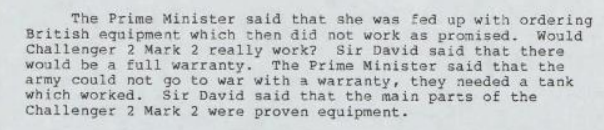
As you can see from the above, for the first time since the Shermans were sent over with lend-lease, Britain was seriously considering opting for a foreign option to form the backbone of its armour. This would obviously come with huge implications in terms of domestic industry, employment, and sovereign capabilities, but the Thatcher government at the time was growing increasingly weary of prioritising British industry for military contracts, with consistently late and over-budget results, for equipment that was not necessarily up to the same standard as our western allies:
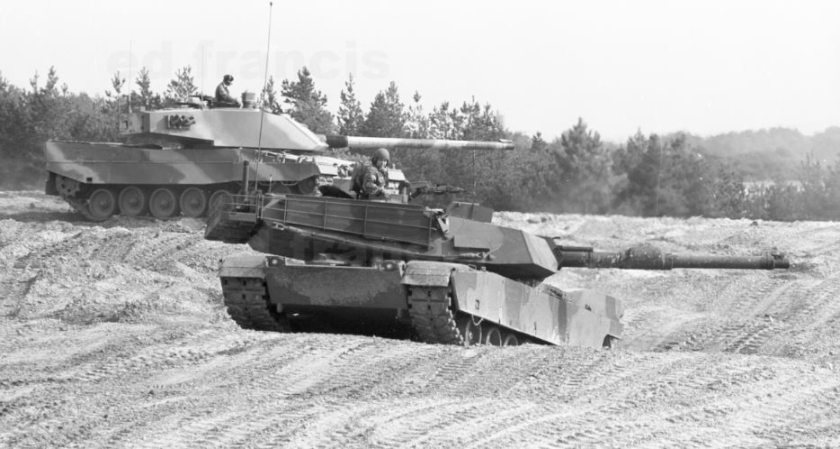
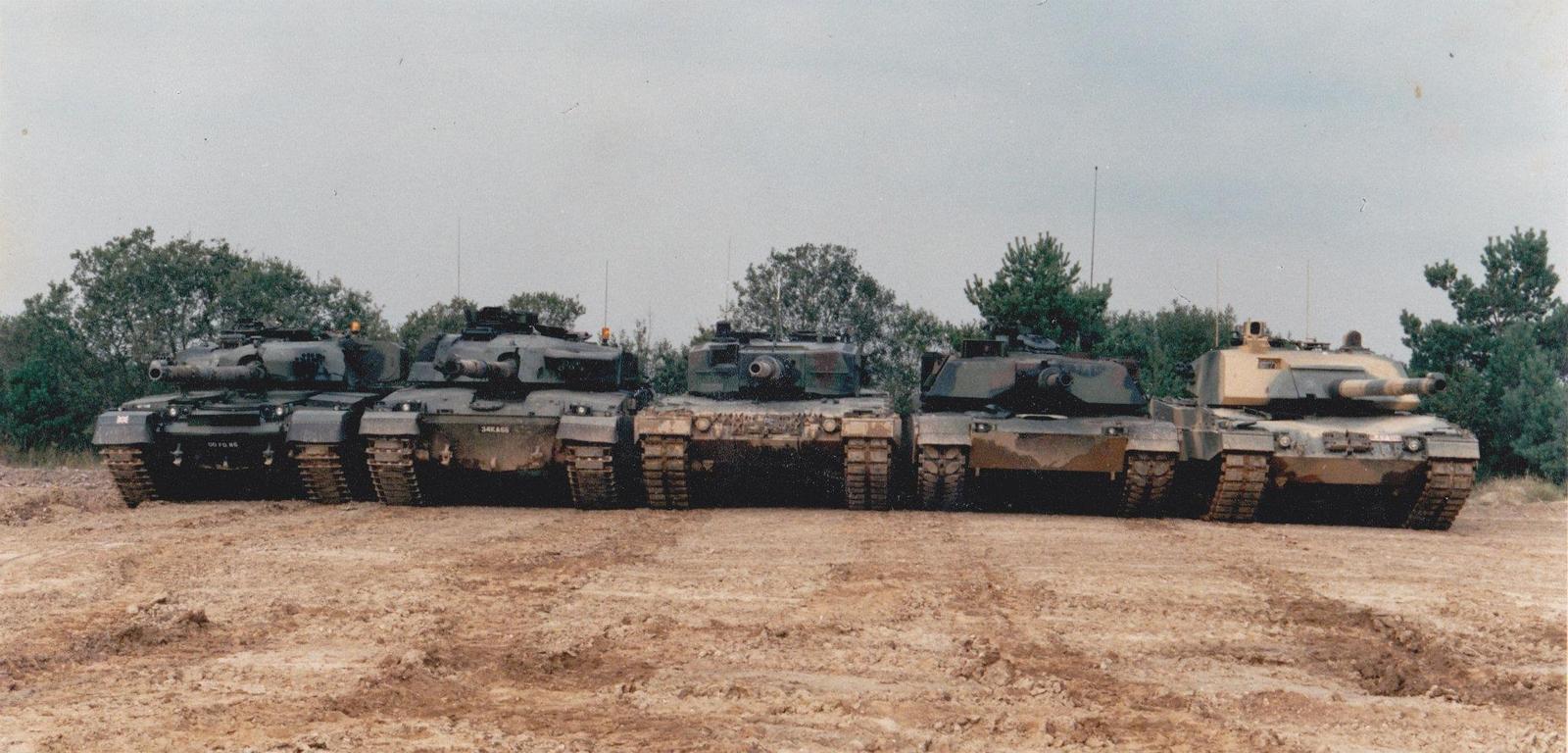
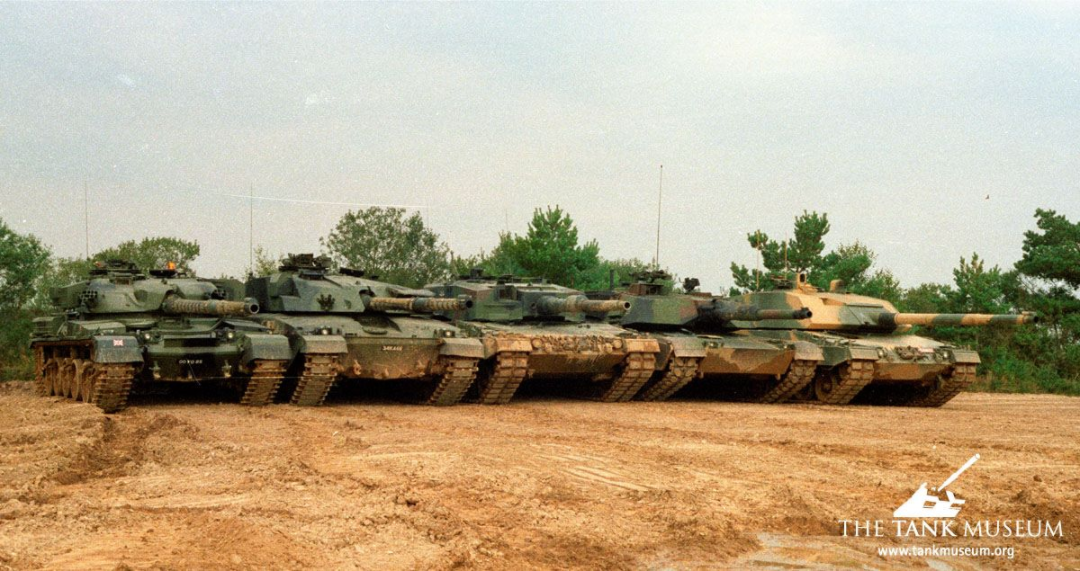
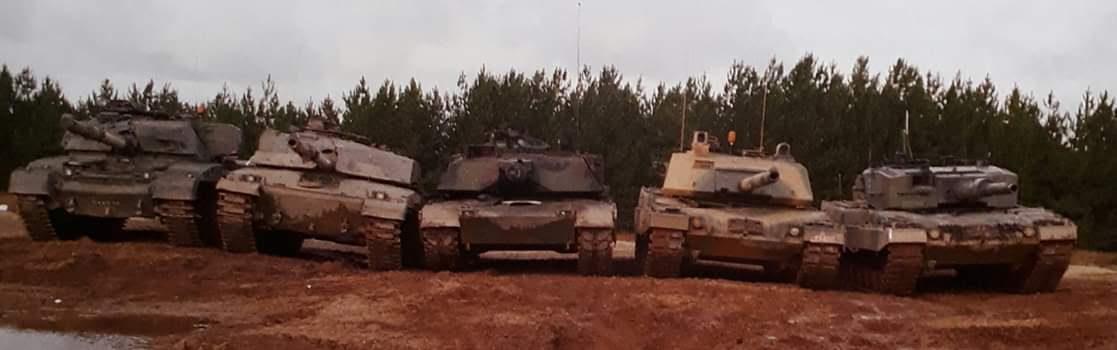
Regardless, the choice was not to be made lightly. Despite very heavy lobbying from Vickers, who were developing what was to becoming the Challenger 2 out of their own pockets and bleeding cash while doing so, much deliberation by the government and MoD was undertaken. If Britain was to throw away their sovereign tank industry in favour of a foreign vehicle, it must be done with absolute certainty that what they are buying is worth it. As such, in September 1987, the two foreign frontrunners for adoption, the Leopard 2A4 and M1A1 Abrams, arrived at the ATDU for mobility and gunnery trials.
The documentation covering the trials is long and thorough, but generally speaking, both the Abrams and Leopard were well-liked. The Leopard was praised for its mobility, reliability, and firepower, but its frontal armour was considered insufficient and combustible ammo above the turret ring was a significant weakness in the British view. As well as this, the thermal imaging was considered wholly inferior to that of the Challenger 1, the TOGS.
Likewise with the Abrams, it was well liked and its mobility and firepower were highly praised. However, similarly to the Leopard, ammunition above the turret ring was a large mark against it, the thermals was considered unsatisfactory, and also the gas turbine engine was hugely inefficient in terms of running costs and fuel efficiency. Both the Abrams and Leopard were also going to be considerably more expensive than the Challenger 2, too.
The poor frontal protection of the 2A4 was the nail in the coffin for the British adoption, but the Abrams was seriously considered, backed by a strong American lobby. The final choice was narrowed down the the Abrams and Challenger 2, and, in the end, sovereign British industry was put first and the Challenger 2 was chosen as the successor to the Chieftain.
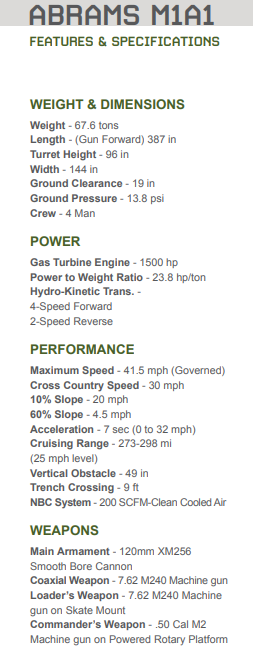
Specifications
Spoiler
Images
Sources
Spoiler
Chieftain Replacement Options – Programme Costings and Appraisals
Vickers Correspondence
Governmental Correspondence
Replacing the Chieftain - The Tank Museum
Chieftain Tank Replacement (Hansard, 21 June 1991)
https://international.gdls.com/english/products/ABRAMS/M1A1.pdf