- Yes
- No
- Pre 2022 (Without western armaments)
- After 2022 (With GBU-62 JDAM ER ,AASM-250, GBU-39/В SDB)
- I voted no

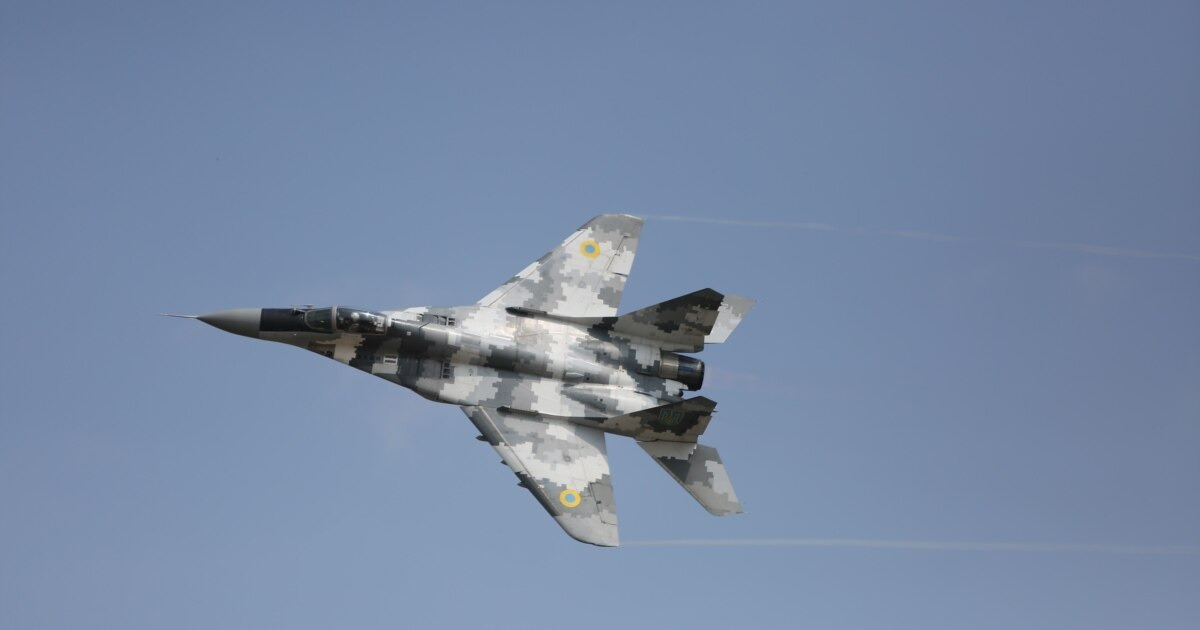
- BASIC DESCRIPTION -
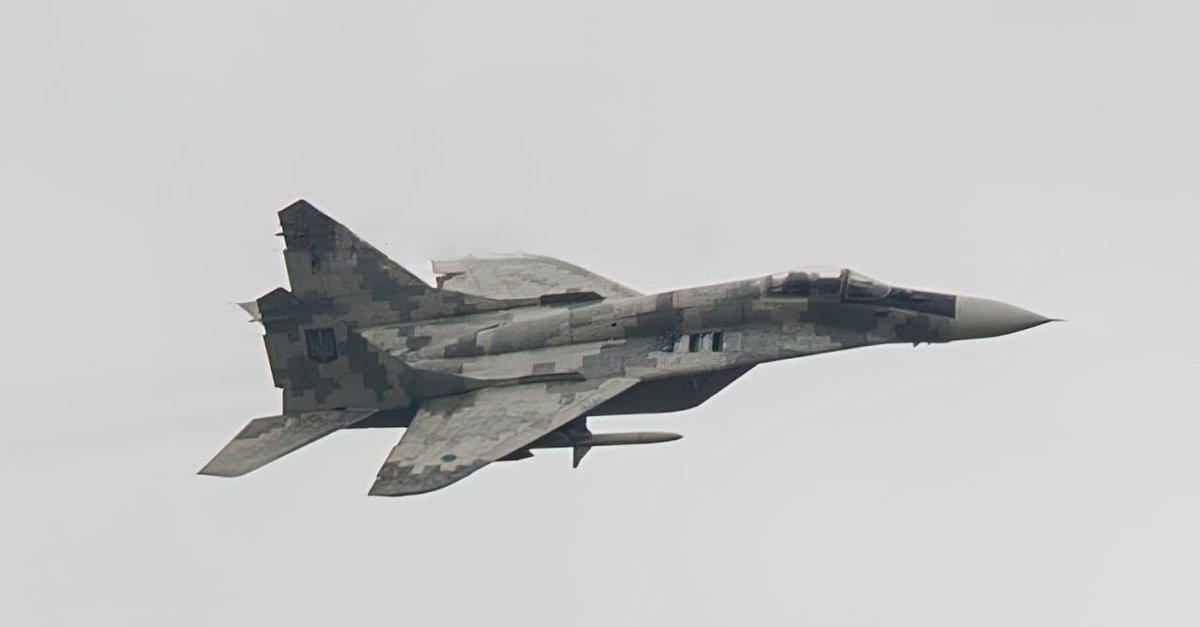
MiG-29MU1 - Is a modernization of existing MiG-29 airframes, manufactured since 2009 by LSARP (Lviv State Aviation Repair Plant) in cooperation with a dozen companies, such as Orizon-Navigacia, Fazotron Ukraina, Novator, Arsenal and others. The goal of the modernization is to extend the technical service life to 35-40 years, increase the range of air target detection up to 100km over the front hemisphere, target acquisition accuracy and self-positioning, as well as expand the capabilities of monitoring and recording functional parameters of the technical condition of the aircraft, engine and a number of onboard systems.
ㅤDue to budgetary constraints, the upgrade program was initially split into two phases, so the aircraft did not receive the ability to carry precision-guided Air-to-Ground munitions, as this was postponed to the MU2 program, which would to take place later.
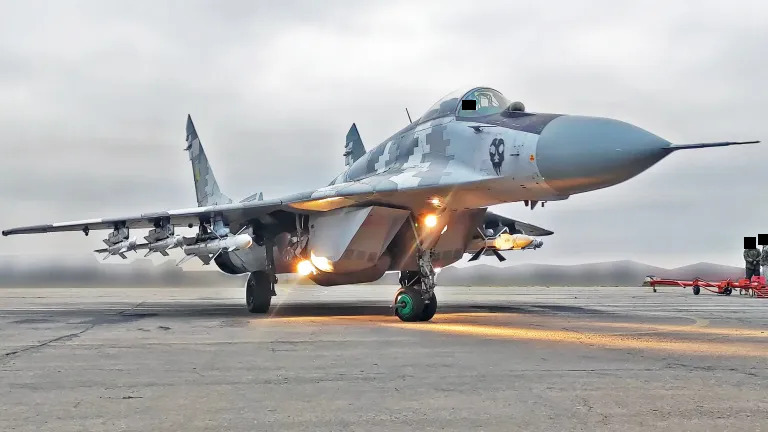
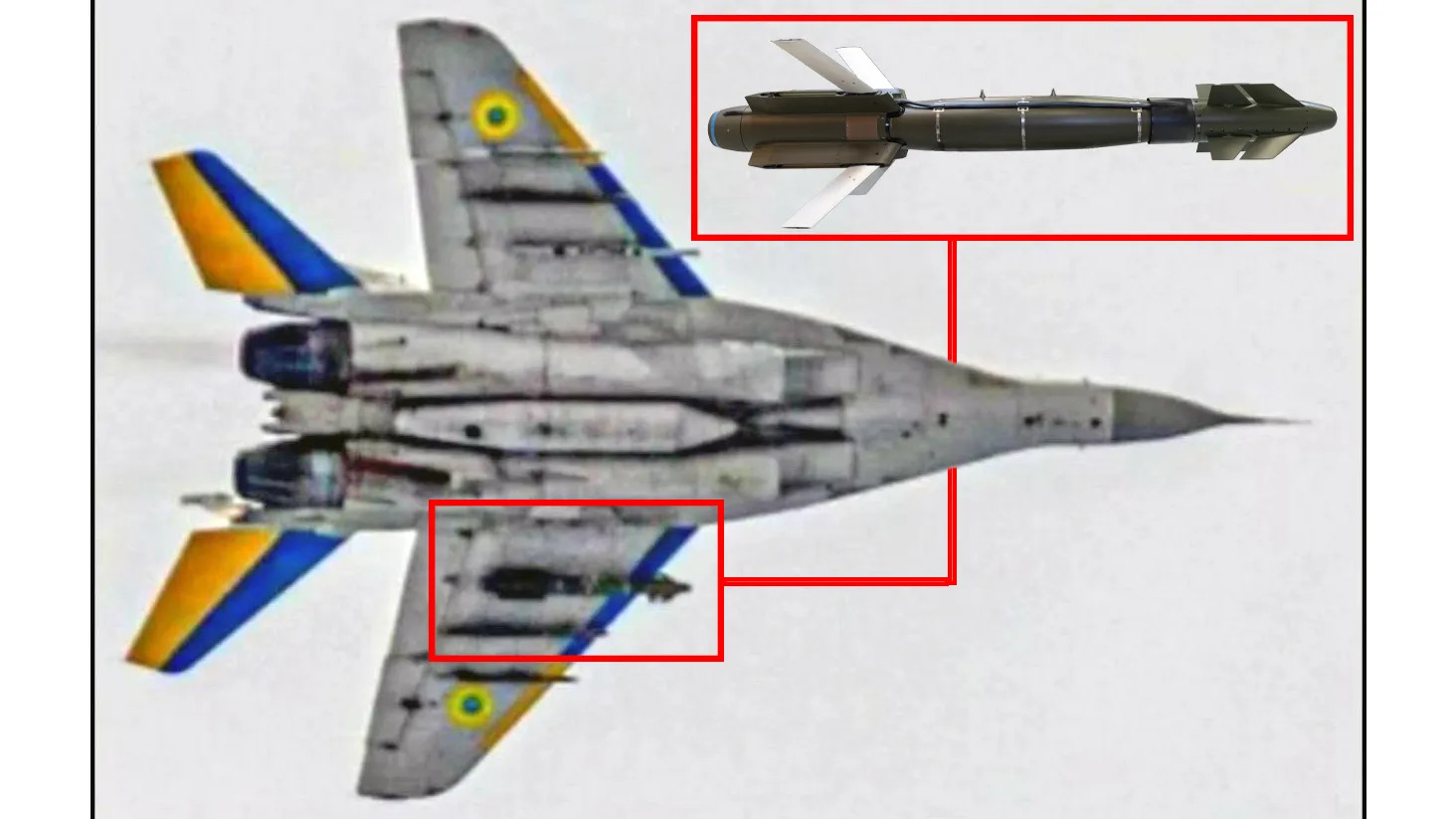
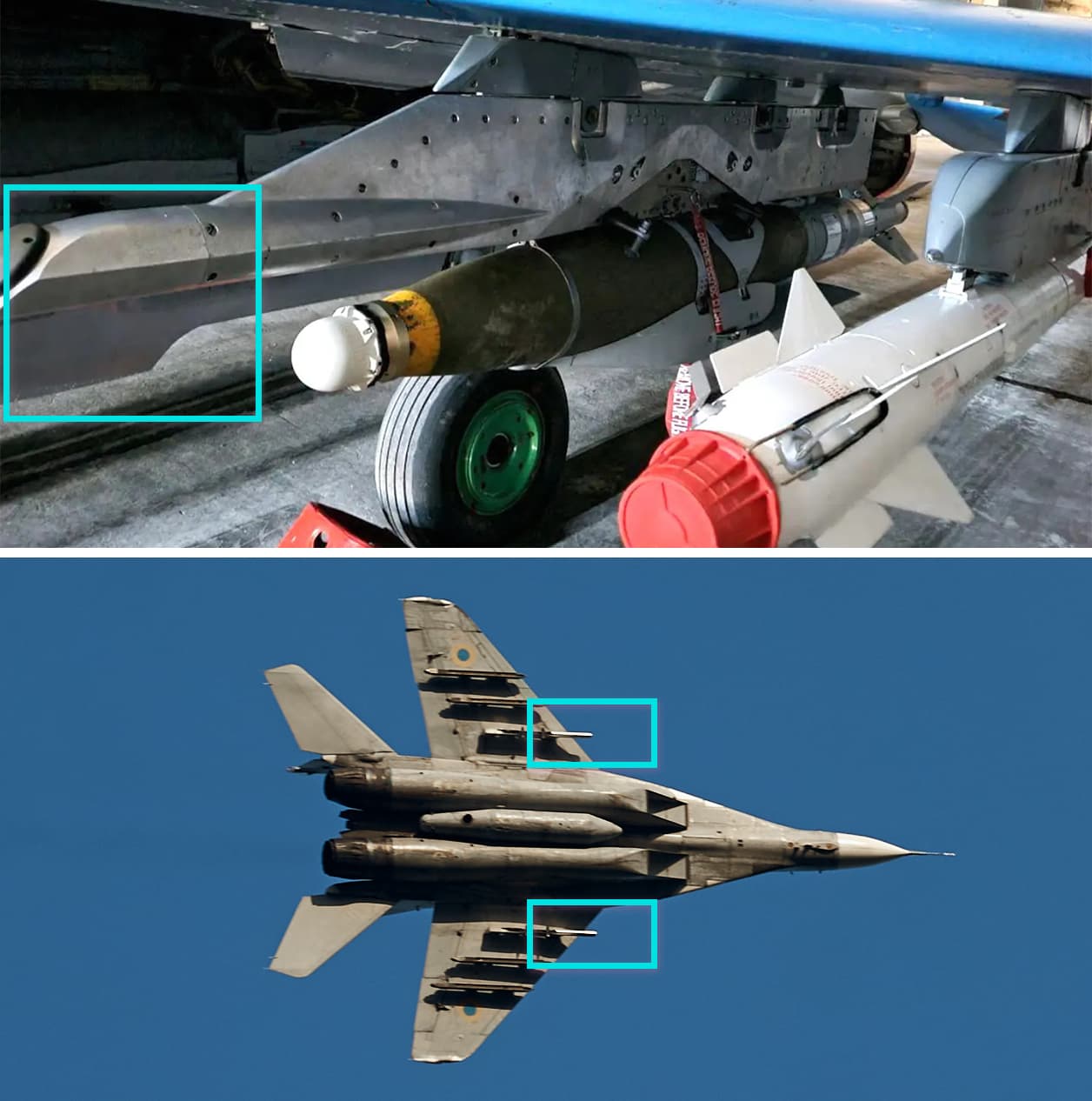
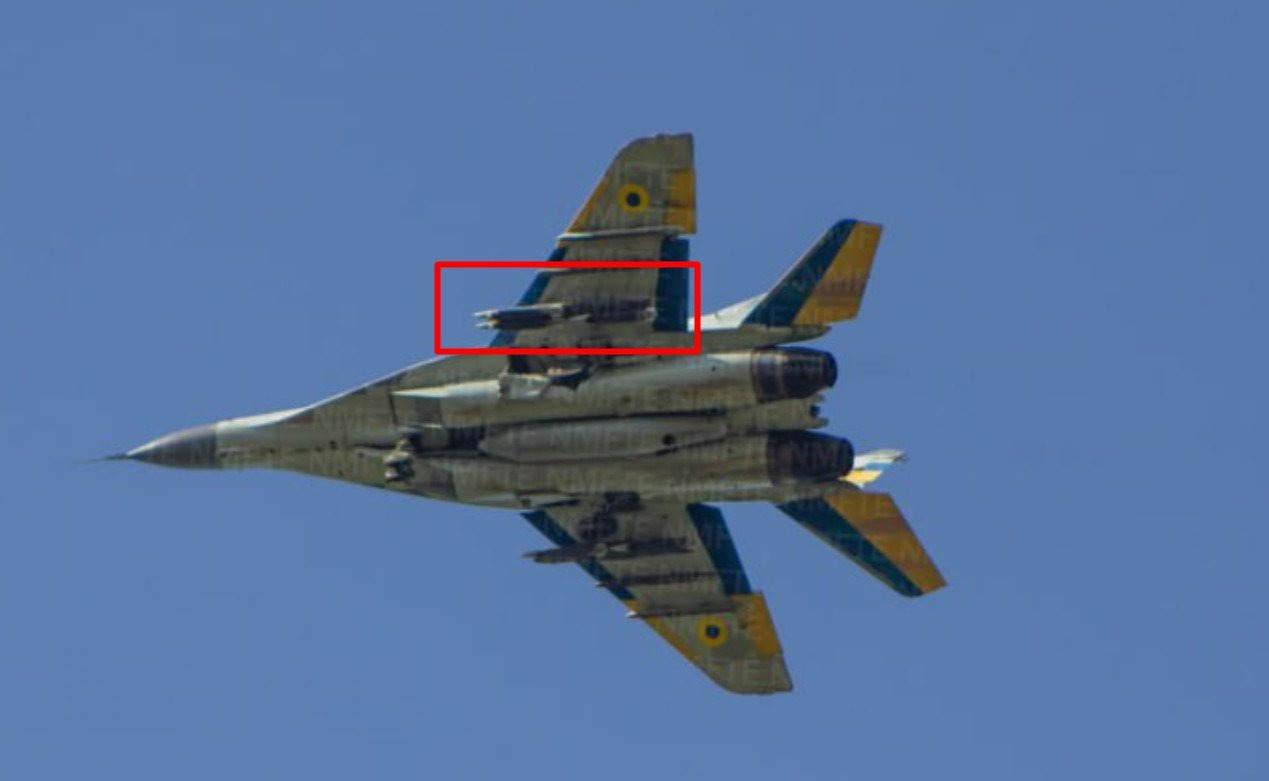
ㅤInterestingly, given the ongoing war, since 2022, some of the MU1, along with other MiG-29s in service with Ukraine, have been modified to carry precision weapons of American and French origin (GBU-39/JDAM ER/AASM-250/AGM-88) on the inner wing pylons, where R-27 missiles are usually carried.
ㅤThe exact number of aircraft upgraded varies depending on the source, but one thing is clear: the upgrades were not extensive, and only a few dozen modifications were carried out.
Spoiler
ㅤThe MiG-29 is a legendary Soviet fighter jet developed in the 1970s and in service with the USSR since the 1980s. Produced en masse, it was and remains the backbone of the air forces of post-Soviet countries, including Ukraine, which inherited up to 240 of these aircraft in 1991.
ㅤDiscussions about modernizing the MiG-29 have been been around since 1999, but no significant efforts have been made to develop it due to a lack of funds and interest in modernization.ㅤThe turning point came with the sale of 12 surplus MiG-29s and two MiG-29UBs to Azerbaijan under a contract signed in late 2005. The aircraft were to undergo a major overhaul and modifications to meet the customer’s requirements, including upgrades to the onboard radar.
ㅤModernization and assembly were carried out by the Lviv State Aircraft Repair Plant (LSARP) in cooperation with six other Ukrainian companies. Rather than relying on the original equipment manufacturer, the entire modernization package was based on Ukrainian developments. For some specific components, such as the N019 radar, improvements were made in cooperation with the Ukrainian representatives of the original manufacturer, in this case, Fazotron-Ukraine.ㅤBased on the knowledge gained during the implementation of this contract, a “pilot” project for the modernization of the Ukrainian MiG-29 fleet was developed. Finally on February 28, 2007, the Ministry of Defense announced the allocation of ₴7.7 million hryvnias ($1.5 million USD at the 2007 exchange rate) from special funds of the ministry and the state budget of Ukraine to complete the development of a modernized version of the MiG-29. Since the country retained its “non-aligned” status, and funding for the Armed Forces was limited, it was decided to divide the program into two phases: The MiG-29 fighters were to be upgraded to the MiG-29MU1 level, an intermediate stage that was later to be upgraded to the more promising version, the MiG-29MU2.
(Most important difference between the MU1 and MU2 is the lack of high-precision air-to-ground capabilities on the MU1)
ㅤThe first stage of modernization was finalized in 2009, and the modernized aircraft was officially accepted into service on December 23, 2009. Finalized MU1 upgrade featured: extension of the technical service life of the aircraft to 35–40 years and of the engines to 20 years, which would ensure the possibility of operating the modernized aircraft for another 15–16 years; an increase in the detection range of air targets to 100 km in the forward hemisphere and up to 45 km in the rear; an increase in the accuracy of target acquisition and self-positioning; as well as expansion of the capabilities for monitoring and recording functional parameters of the technical condition of the aircraft, engine, and a number of onboard systems.
ㅤBy 2011, the modernization of first three aircraft was completed and they underwent military tests in the 40th Tactical Aviation Brigade. Later, On September 27–30, 2012, at the 8th International Aviation and Space Exhibition “Aviasvit-XXI” at Gostomel Airport, the MiG-29MU1 aircraft with the tail number “02 blue” was officially presented to the public. Over the following years, LSARP assembled an average of one to three aircraft per year, except for 2013-2015, when the war in Donbas region broke out. Deliveries resumed in 2016 until 2022, when Russia’s full-scale invasion of Ukraine began. In total, about a dozen aircraft have been modified to date, serving in the 40th and 114th Tactical Aviation Brigades.
ㅤ With the outbreak of full-scale war in 2022, the MiG-29MU1’s biggest flaw became all too obvious: a lack of flexibility on the modern battlefield is a critical issue. The aircraft lacks any precision-guided air-to-ground munitions, and the second phase, the MiG-29MU2, which was supposed to address this issue, had only one aircraft completed in 2019.
ㅤThanks to help from Western partners, some of the MiG-29MU1s, alongside other MiG-29 variants, have undergone makeshift modifications for the rapid integration of Western armaments. Aircraft have been seen with installed iPads or similar commercial tablets in the cockpits, as well as specially designed pylons that integrate avionics enabling the use of American and French guided air-to-ground munitions. While much is still unknown about exactly how these tablets interface with the aircraft and the Western weapons they now carry, it is clear that they play a major role in giving Ukraine’s old Soviet-era fighters a range of new and highly lethal capabilities (more on that would be in “more in detail” part of the suggestion).
ㅤThe confirmed Western-origin armaments observed in use on MiG-29s include AGM-88 air-to-ground anti-radiation missiles, GBU-39/B SDB, GBU-62 JDAM-ER, and AASM-250 air-to-ground guided bombs.
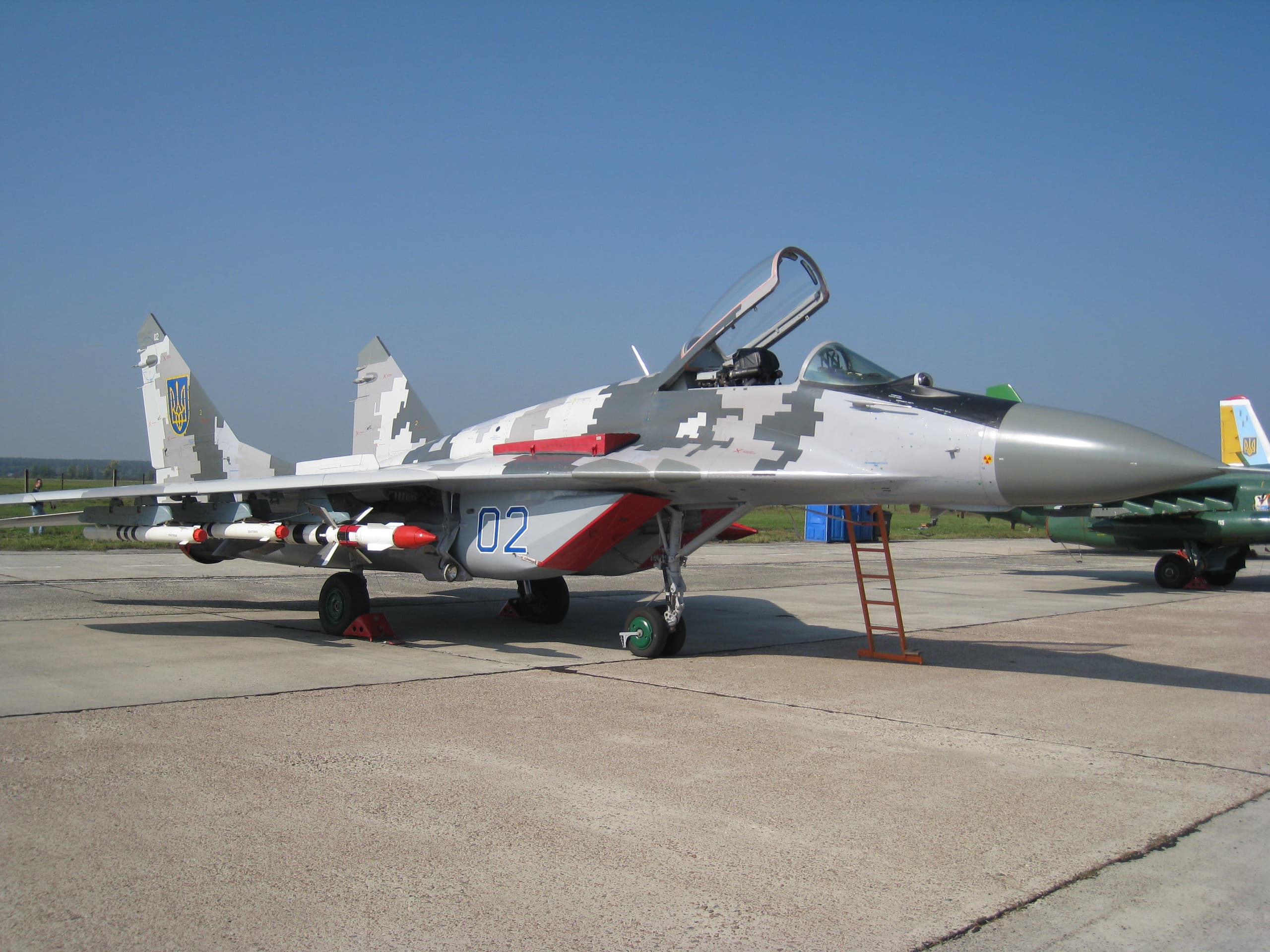
TL;DR. From the above, the principal features of the MiG-29MU1 upgrade are:
- Extension of service life to 30–40 years, allowing the aircraft to be used for another 15–16 years.
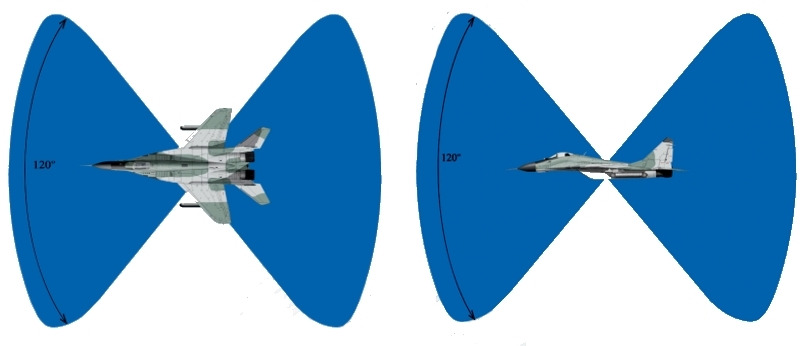
- Upgrade to the N019 radar, extending its detection range to up to 100 km in the forward hemisphere and up to 45 km in the rear.
- The more powerful radar subsequently makes it possible for the aircraft to use R-27 with modified seekers, allowing engagement at significantly increased detection and guidance ranges, produced by the Ukrainian manufacturers Radionix and Artem.
- Improvements to the avionics, in particular a new GPS system and radios.
- Installation of subsystems that improve aircraft maintenance and their frequency.
- Last but not least, since 2022, these aircraft have been further modified to carry air-to-ground weapons of American and French origin.
Spoiler
Developed by Radionix and Fazotron Ukraina, it generally uses the original N019 radar housing but replaces its main modules with newer and more powerful ones, allowing the radar detection range to be extended to 100 km over the front hemisphere and 45 km in the rear. In addition, with further development, this radar can be modified by adding new operating modes, such as “air-to-ground”, which is included in the second stage of the MiG-29MU2 modernization.
The following is a more detailed description from the manufacturer, Radionix:
" The upgrade version of N019 Airborne Radar will sufficiently improve the technical characteristics of the presented aircraft. By the replacement and modernization of the main functional units, an addition of the new radar modes (such as an air-to-surface mode) would be easily allowed. Considerable reliability enhancement of the radar system parts and its improved characteristics will increase N019’s radars life time up to 10 years. Thanks to such an alteration, additional prospects to further modernization are possible.
The first stage of the mentioned boost includes:
► High frequency receiver replacement with the upgraded version N019-09R1;
► Frequency synthesizer replacement with the N001-22R;
► Doppler filters and air target detection units replacement with the «MCPP».The new high frequency receiver modules and synthesizer installations will increase detection range (for about 25-30%) of air targets.
At this stage, it is also possible to apply for the transmission of phase-manipulated signals, which can be used in air-to-surface radar operation modes.
The change of Doppler filters and air target detection units delivers new qualities to the narrowband Doppler signal and measurement system. This replacement will advance not just target detection, but also a selection of reflected target signals from noise, clutter and jamming alarms.
Thus, while operating with both high and medium pulse repetition frequencies, certain enhancement might be achieved for standard N019 radar air-to-air modes.
Overall, the first step of renovations is supposed to improve:
► target acquisition characteristics;
► electronic counter-countermeasures;
► reliability indicators.At the second stage of the update, it is offered to build a completely new digital signal processing system, which would operate separately and include multi-channel wideband digital signal processor (WDSPU) and multifunction control processor (MCPU)."
Detailed illustration of N019 radar modification, Source: Radionix website https://www.radionix.ae/radar-modernization

Spoiler
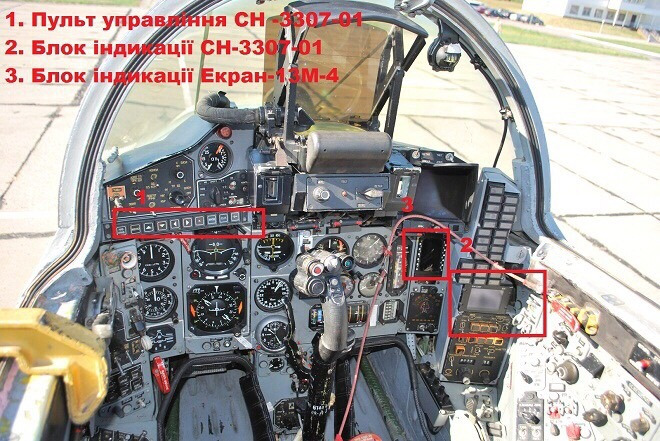
The MiG-29MU1 upgrade in terms of avionics and cockpit systems includes the installation of the CH-3307-01 satellite navigation system, which is integrated into the aircraft’s standard navigation complex; modification of the objective control systems of the “Tester UZ-L” and “Ekran-13M-4” types, as well as the BOPK-88 blocks of the 3KM series, to improve onboard control and flight parameter recording; modification of the R-862 radio station; and installation of the A-511 aircraft transponder.
The installation of a digital flight data recorder allowed faster reading and decoding of information, as well as more accurate analysis and visual display.
However, in practice, some shortcomings of these aircraft modifications were later revealed, in particular the inconvenience and unreliability of the CH-3307 satellite navigation system.
- CH-3307-01 control panel
- CH-3307-01 display unit
- Ekran-13M-4 display unit
Spoiler
The MiG-29MU1 can carry all standard armaments of the unmodified MiG-29, including:
- Unguided S-8KO or S-24B rockets
- Unguided OFAB-100-120, OFAB-250-270 or FAB-500 bombs
- Infrared-guided air-to-air R-60, R-60M, and R-73 missiles
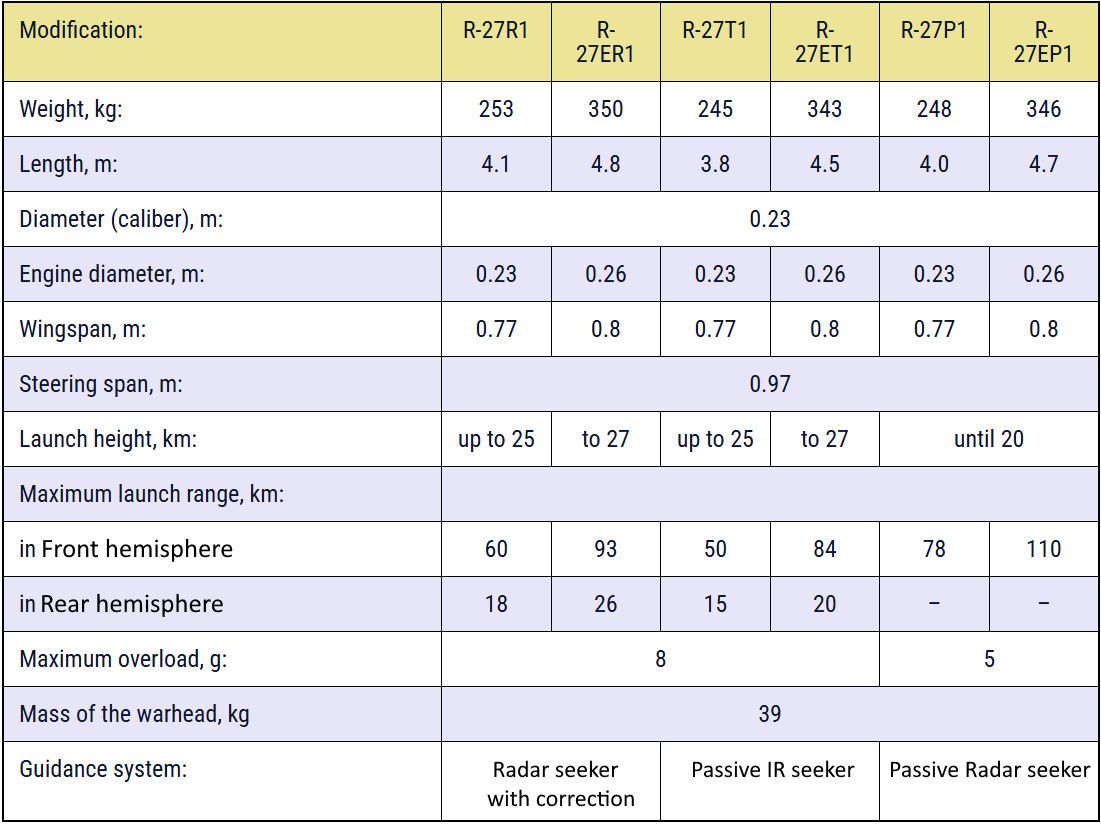
- Infrared- or radar-guided air-to-air R-27 missiles
In addition to the above-mentioned weapons, it can carry several unique armaments, such as:
Spoiler
R-27 missiles with modified seekers developed by Radionix and produced by the Artem company. According to the director of Radionix, the new seeker for the R-27 detects targets at twice the previous range. The R-27 missile features a modular design.

Spoiler
The UP-277 is a medium-range air-to-air missile with an active radar homing seeker. It was developed by the Ukrainian state-owned Luch Design Bureau and was first shown at an exhibition in Kyiv from June 15 to 18, 2021, at “Weapons and Security 2021”. Based on the missile index and its design, the UP-277 appears to be derived from the first Soviet R-77 air-to-air missile with an active seeker, whose serial production took place at the Artem plant (Kyiv) from the late 1980s but was discontinued after the release of a pilot batch due to the collapse of the USSR.
As of now, the missile is still under development and has not yet reached the testing stage.
Manufacturer description:
"The medium-range air-to-air guided missile is designed to intercept and destroy air attack and reconnaissance assets with an effective
reflective surface of at least 0.1 m² when attacking
- at any time of the day;
- in the front and rear hemispheres of targets;
- against the background of the ground, sky and water surface;
- in simple and complex meteorological conditions;
- with active information and maneuver countermeasures.
The missile has increased tactical capabilities and interference immunity, is equipped with an active radar homing head and a non-contact radar target sensor. The missile is intended for use in fighter weapon systems, the missile is launched from a launch pad"
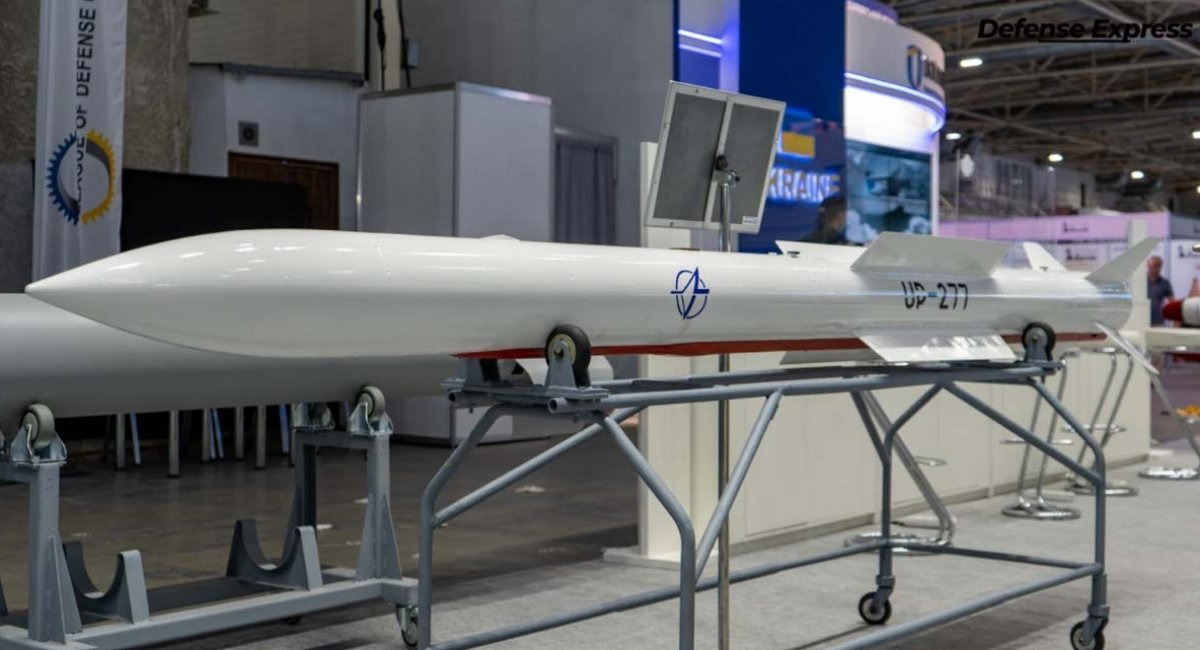
| Name: | UP-277 |
|---|---|
| Carrier aircraft altitude | 20 - 20,000 meters |
| Target aircraft altitude | 20 - 25,000 meters |
| Carrier aircraft speed | 400 - 2,500 km/h |
| Maximum target aircraft speed | 3,000 km/h |
| Carrier to target speed ratio | 0.8 - 2.0 |
| Target overload | 0 - 12 G |
| Target position above (under) the aircraft | 0 - 10,000 meters |
| Targeting angles | 0 - 55° |
| Maximum launch range under attack conditions: | |
| • in the rear hemisphere | 50 km |
| • in the front hemisphere | 80 km |
| • in side angles | 35 km |
| Minimum launch range under attack conditions: | |
| • in the rear hemisphere | 1.2 km |
| • in the front hemisphere | 4 km |
| Weight | 180 kg |
| Warhead weight | 20 kg |
Spoiler
The Gran is a short-range air-to-air missile with an infrared homing seeker. Developed by the Luch State Design Bureau, only a mock-up has ever been shown to the public, and it is unknown whether the missile has entered the testing phase.
Manufacturer description:
"Highly maneuverable air-to-air guided missile of the close air combat class with an infrared homing head, a non-contact radar target sensor in the millimeter range and a controlled engine thrust vector is designed to intercept and destroy highly maneuverable air attack and reconnaissance assets when attacking:
- at any time of the day;
- in the front and rear hemispheres of targets;
- against the background of the ground, sky and water surface;
- in simple and complex meteorological conditions;
- with active information and maneuver counteraction of the enemy.
The missile is intended for use in the armament systems of fighters, front-line bombers and attack aircraft."
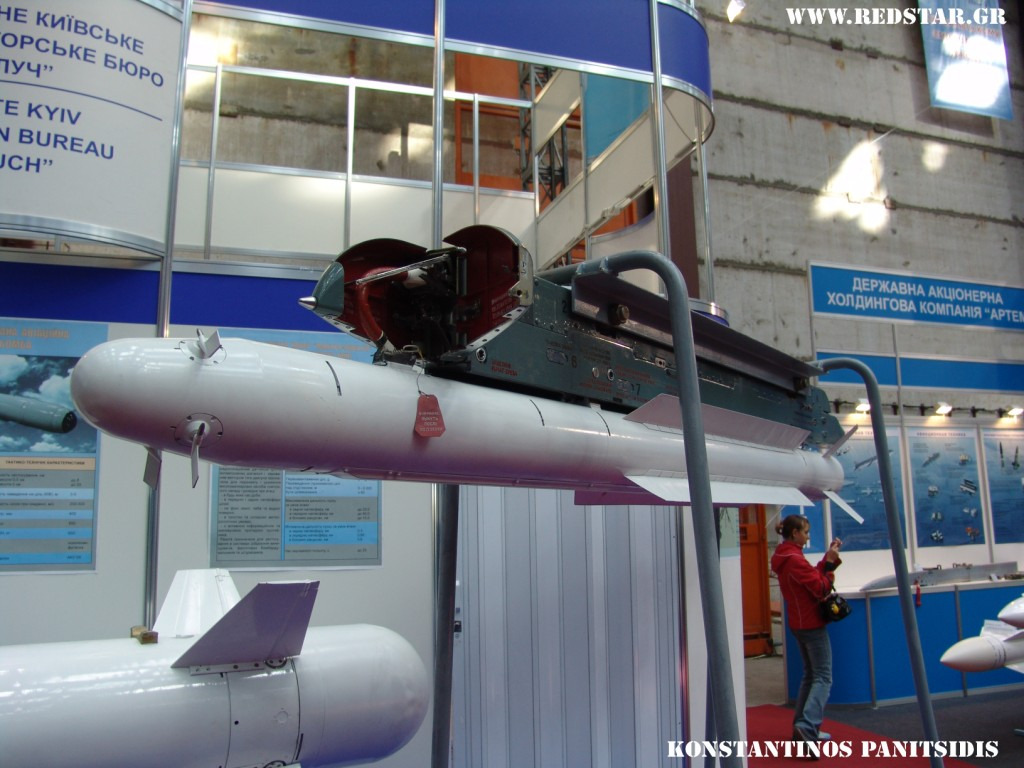
| Name | Gran |
|---|---|
| Carrier aircraft altitude | 20 - 20 000 meters |
| Target aircraft altitude | 20 - 20 000 meters |
| Carrier aircraft speed | 650 - 2 500 km/h |
| Maximum target aircraft speed | 2 700 km/h |
| Carrier to target speed ratio | 0.8 - 3.0 |
| Target overload | 0 - 12 G |
| Target position above (under) the aircraft | 0 - 5 000 meters |
| Targeting angles | ± 60° |
| launch range under attack conditions: in the rear hemisphere | 0,3 - 20 km |
| launch range under attack conditions: in the front hemisphere | 0,65 - 40 km |
| launch range under attack conditions: in side angles | 0,6 - 15 km |
| Controlled flight time | up to 25 seconds |
Spoiler
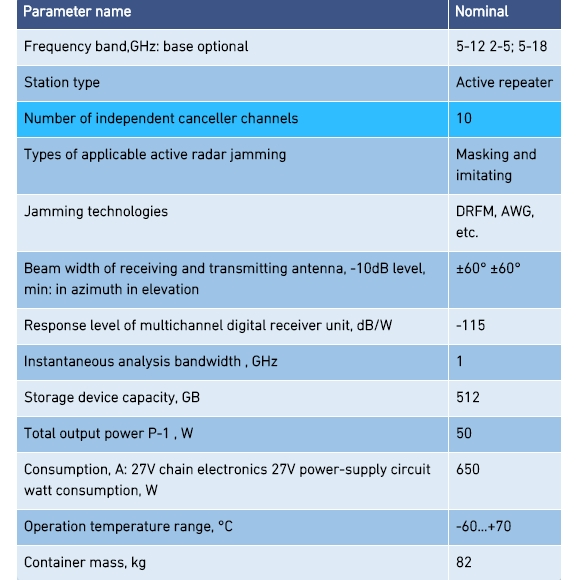
The Omut-KM is a high-performance airborne countermeasures system designed for the individual protection of an aircraft or small tactical aircraft formations against all types of radar-guided weapons. It was developed by the Radionix company. It consists of two equipment pods mounted on underwing stations, as well as control and display panels (such as multifunction displays) installed in the cockpit.
Each pod is designed as a sub-beam, allowing a weapon to be mounted beneath it. Both pods contain identical sets of units, enabling the Omut-KM system to provide electronic protection in both the forward and rear hemispheres.
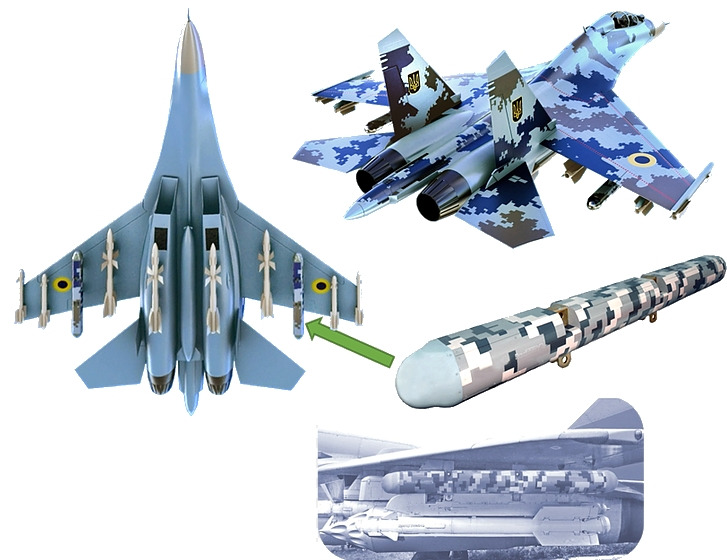
The system was tested on MiG-29 and Su-27 aircraft of the Ukrainian Air Force; however, it did not enter serial production or operational service.
Spoiler
After the start of the full-scale Russian invasion of Ukraine, Western aid, most notably the delivery of AGM-88 HARM anti-radiation missiles in August 2022 led to the MiG-29MU1, along with other MiG-29s and Su-27s, receiving a new modification. This system was developed in the shortest possible time to integrate Western technology into Soviet-designed fighters. The same system was later adapted to integrate additional Western weapons, such as the GBU-62 JDAM-ER and AASM-250 in 2023, and the GBU-39/B SDB in 2024.
While there is limited open-source information available on the system and how it works, The War Zone published a well-researched and detailed article on this unusual and unique upgrade, which serves as the primary source for much of the information discussed here.
The main element of the upgrade is a tablet installed in the cockpit, described as an iPad or a similar commercial device. It acts as the pilot’s primary interface for controlling and preparing Western weapons. Instead of relying on the aircraft’s original avionics, this tablet runs dedicated software that pilots use to enter mission parameters, select weapon types, input GPS coordinates or flight-planning data, and view navigational and tactical overlays. Tablet also provides navigation and map data. Videos from Ukrainian combat missions show the tablet displaying maps and other pertinent flight or mission information, suggesting that it may also supplement or partially replace some flight instrument data.

Because Soviet jets do not natively support the digital interfaces expected by Western weapons, the tablet bypasses the aircraft’s legacy systems and offloads weapon-control logic externally, providing the minimum required interface to prepare and release these weapons.
What is also noteworthy is that analysts speculate that the tablet may connect to the pylons or weapons via wireless means (for example, Bluetooth) rather than through traditional wired avionics, which simplifies installation and avoids complex aircraft rewiring.
In addition to the tablet, in the case of guided bombs (such as JDAM-ER, AASM-250, and GBU-39), specialized pylons are required. While how exactly they work remains unknown, analysts suggest that these pylons may provide critical GPS or interface data to the weapon prior to release and/or potentially host Electronic Support Measures (ESM) hardware capable of detecting and geolocating radar threats. This information could then be displayed on the cockpit tablet to assist with targeting or situational awareness.
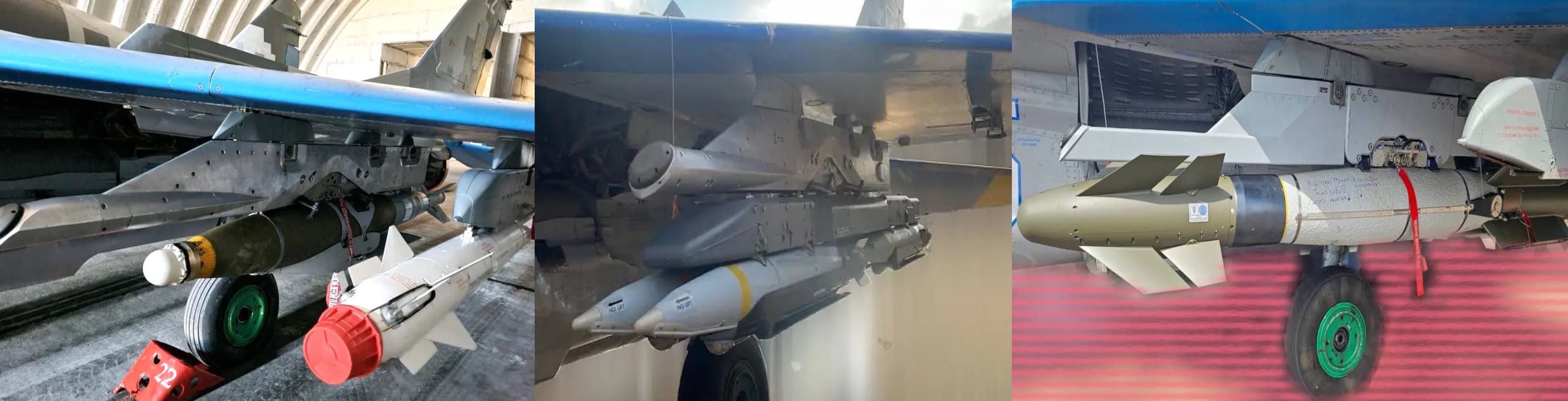
This pylon-based solution is crucial because Soviet jets otherwise lack the internal wiring or avionics necessary to transfer such data. However, in the case of AGM-88 HARM missiles, it does not appear to require the same type of specialized smart pylon used for guided bombs.
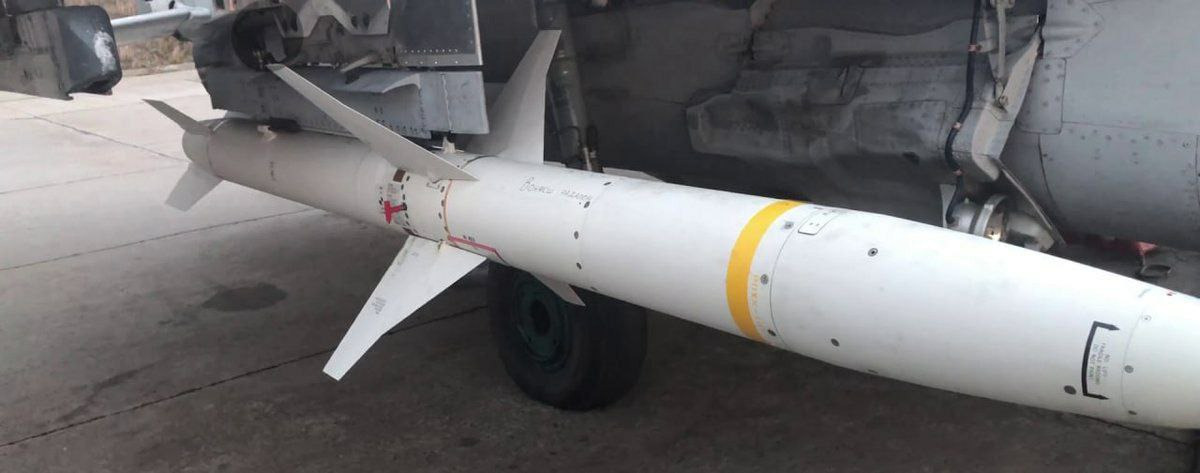
With all of the above in mind, this is how the system enables the use of Western weapons:
- In the case of guided bombs, targeting data such as GPS coordinates are entered before takeoff while the aircraft is still on the ground. The tablet displays a moving map and mission parameters, allows the pilot to confirm weapon settings, and cues weapon release at the correct point. Once released, weapons such as JDAM-ER and Hammer rely on their own GPS/INS (Inertial Navigation System) guidance to reach the target and do not require ongoing data exchange with the aircraft.
- In the case of AGM-88 HARM anti-radiation missiles, the process is somewhat different. These missiles require reactive targeting of active radar emitters, which is an inherently dynamic task. While full Western-style integration is not possible on these aircraft, pre-programmed engagement modes have been achieved, and the tablet likely assists the pilot with threat awareness and map-based situational display.
Overall, this system is one of the most unusual and improvised integrations observed in frontline combat aviation. It uses unconventional methods to solve complex integration challenges and was developed under extremely tight timelines. This setup does not turn these jets into Western fighters, as they still lack true digital data-bus integration comparable to modern Western aircraft. Instead, it introduces an external, stand-alone weapon-control layer using a tablet and adapted pylons, allowing the safe preparation and release of advanced munitions without the need for costly and time-consuming avionics retrofits.
TL;DR
- A tablet in the cockpit functions as a stand-alone weapon interface and mission system for Western weapons on Soviet jets.
- Pilots use it for navigation, targeting input, and bomb/missile release control.
- Weapons are pre-programmed on the ground, and the tablet helps initiate their employment in flight.
- Special pylons may provide additional data or support capabilities required by these weapons.
- While detailed implementation remains partly opaque, this innovative workaround has enabled Ukraine to field Western munitions on old airframes rapidly and in combat.
General Info:
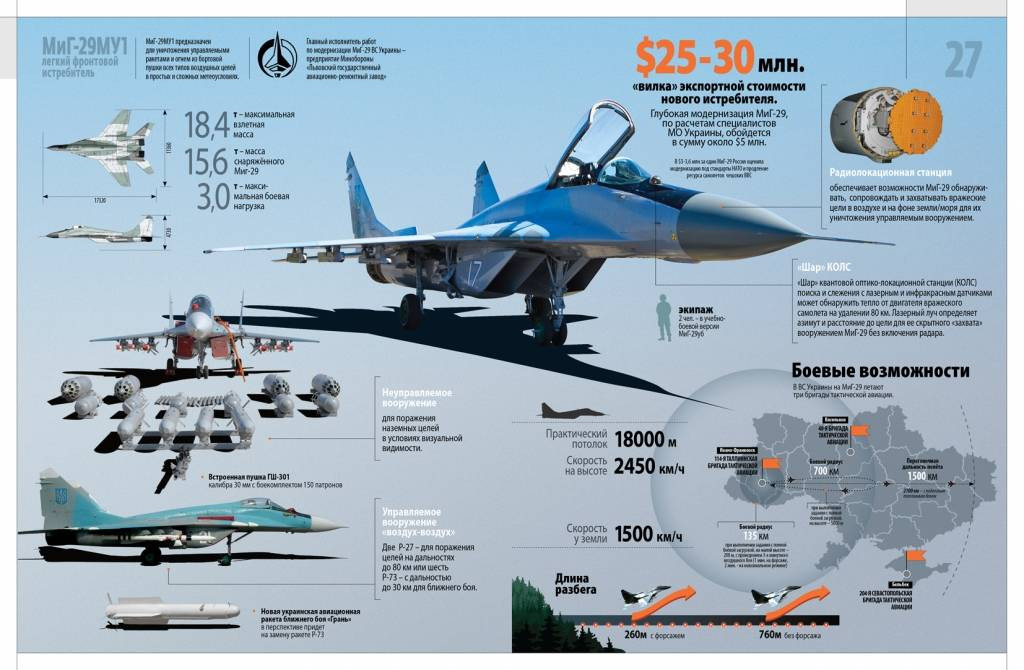
- Name: MiG-29MU1 (МіГ-29МУ1)
- Origin: USSR/Ukraine
- Manufacturer: Lviv State Aviation Repair Plant
- Year: 2009 (later modified in 2022)
- Class: Fighter
- Crew: 1
Dimensions:
- Wingspan: 11,36 m
- Length: 17,32 m
- Height: 4,73 m
- Wing area: 38,06 m2
- Weight
- Empty weight: 10900 kg
- Max. Takeoff weight: 18480 kg
Engine + Performance:
- Engine type: 2× Klimov RD-33 afterburning turbofan engine
- Thrust
- Max, Dry: 2× 49.42 kN
- Max, With afterburner: 2× 81.58 kN
- Maximum speed: 2450 km/h
- Cruising speed: 850 km/h
- Range: 1430 km (2100 km w/drop tank)
- Max. rate of climb: 330 m/s
- Srevice ceiling: 18,000 m
- Max. operating overload: +9G
Subsystems:
- Radar: N019 (Modified)
- Ballistic Computer: CCIP, EEGS, CCRP and SPI
- HMD: ✓
- RWR: ✓
- Chaff/Flare dispensers: 2× BVP-30-26M (30 charges per each)
Armaments:
-
Guns: 1× 30 mm Gryazev-Shipunov GSh-30-1 (150 rounds)
-
Combat Load: 7 pylons (6 underwing, 1 underbelly), 3,090 kg max weight.
-
Suspended Armament:
-
Air-to-Air:
- R-73
- R-27R1
- R-27ER1
- R-27T1
- R-27ET1
-
Air-to-Air - Anti-Radiation:
- R-27P1
- R-27EP1
-
Air-to-Ground - Unguided:
- OFAB-100-120 bombs
- FAB-500 bombs
- OFAB-250-270 bombs
- S-8KO rockets
- S-24B rockets
-
Air-to-Ground - Guided (2022-):
- GBU-62 JDAM-ER
- AASM-250 Hammer
- GBU-39/B SBD
-
Air-to-Ground - Anti-Radiation (2022-):
- AGM-88 HARM
-
Other:
- Drop tank (1520 liters)
- Omut-KM (Electronic Warfare Suite) + Pylon for R-73 beneath
-
Potentially:
- UP-277 (Medium-Range Air-to-Air missile - in development)
- Gran (Short-Range Air-to-Air missile - in development)
-
-
Loadout possibilities (as they will look like in WT):
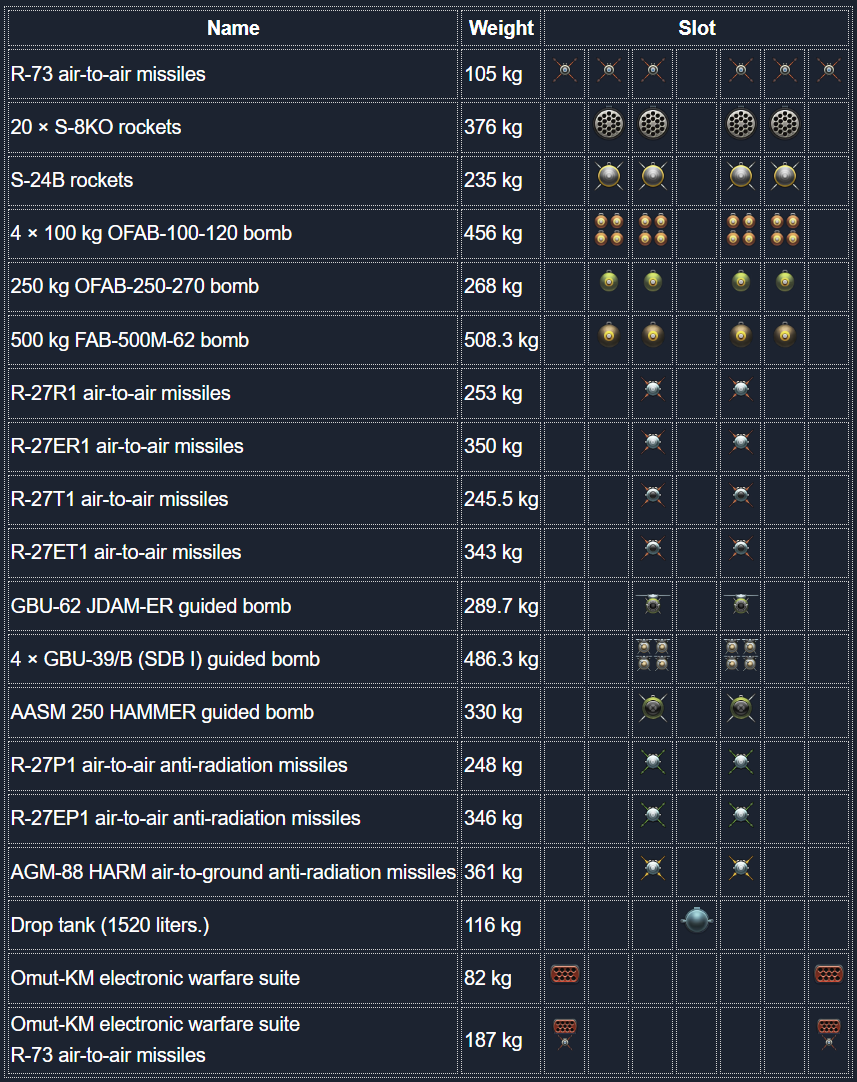
Image gallery:
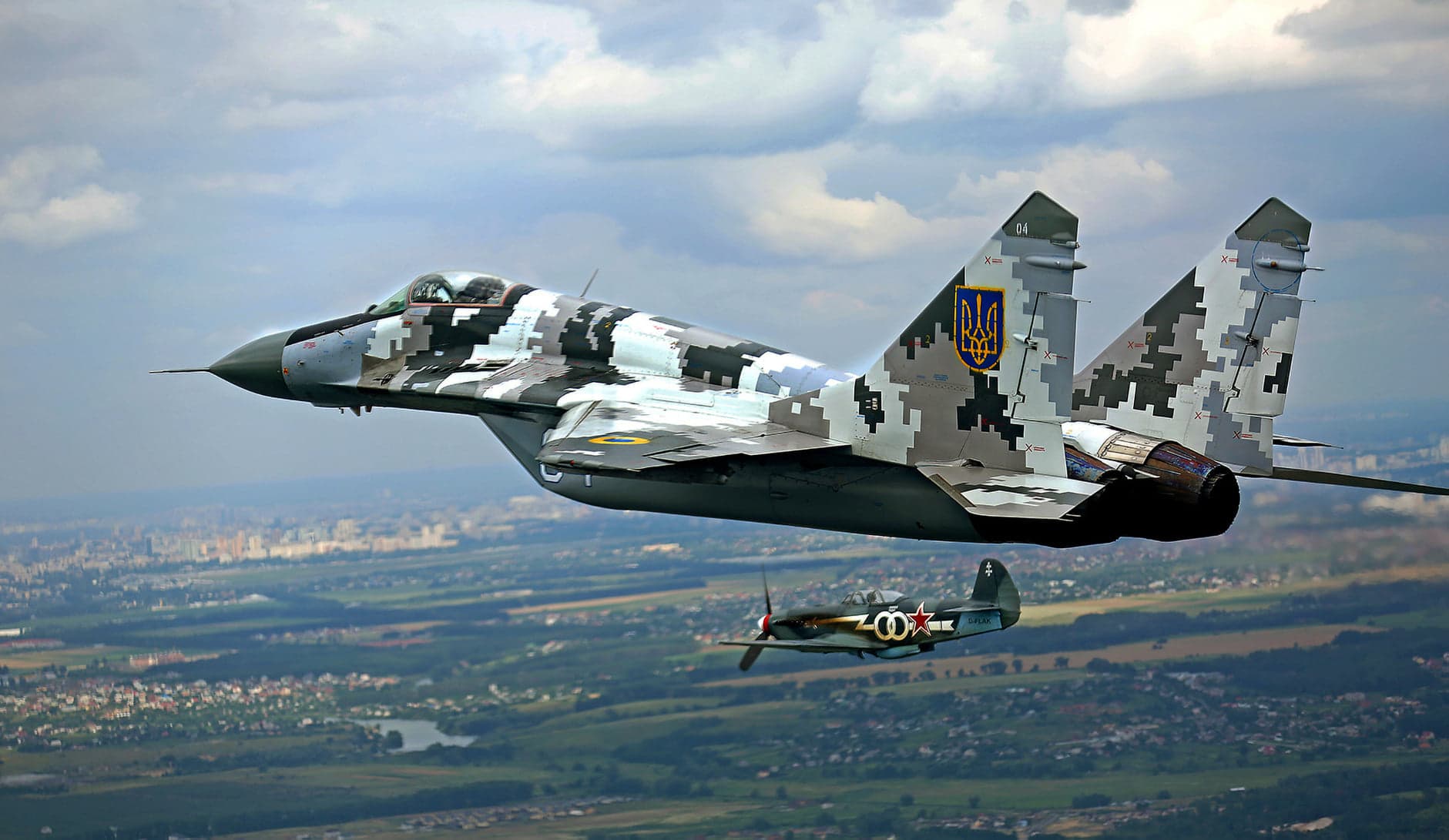

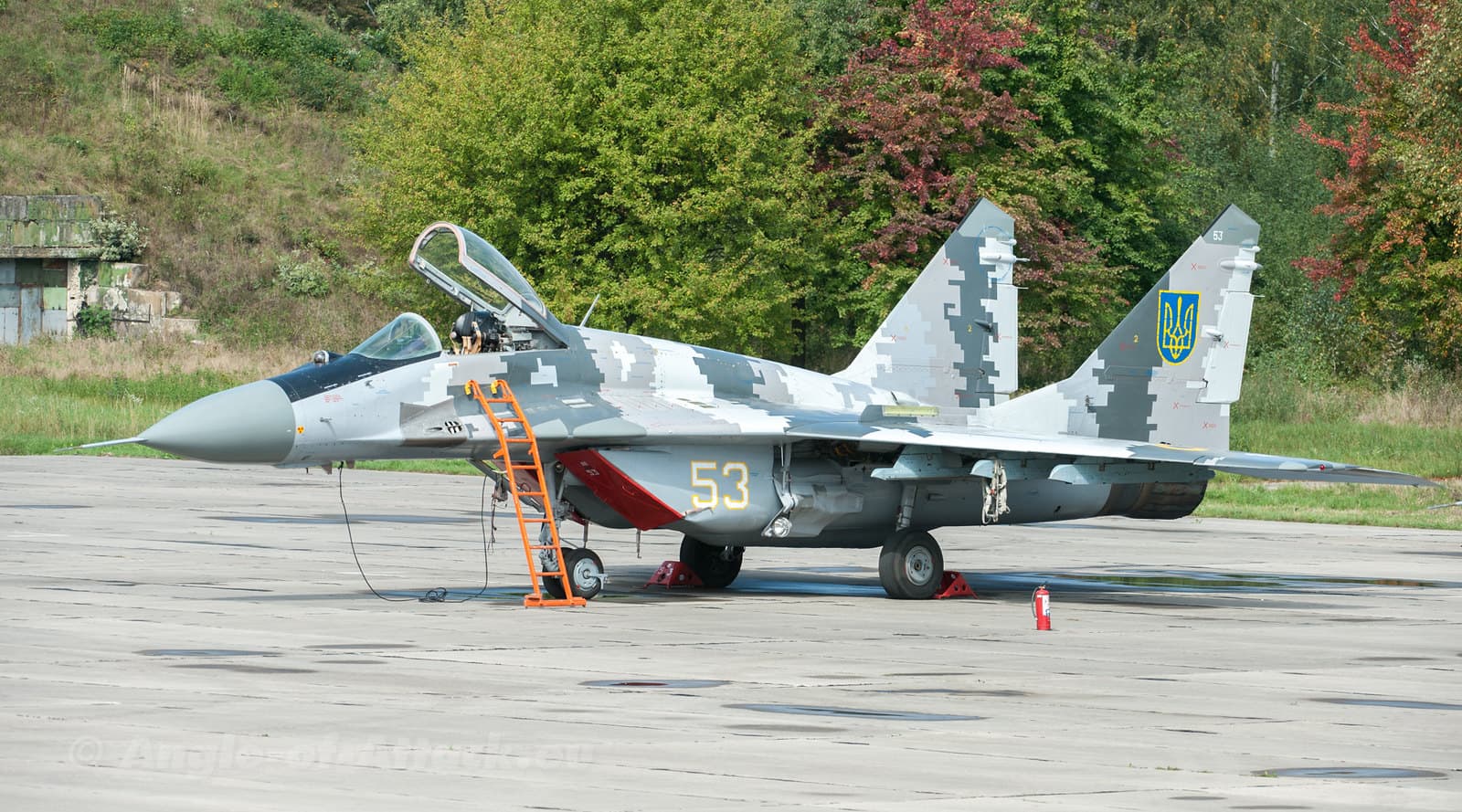
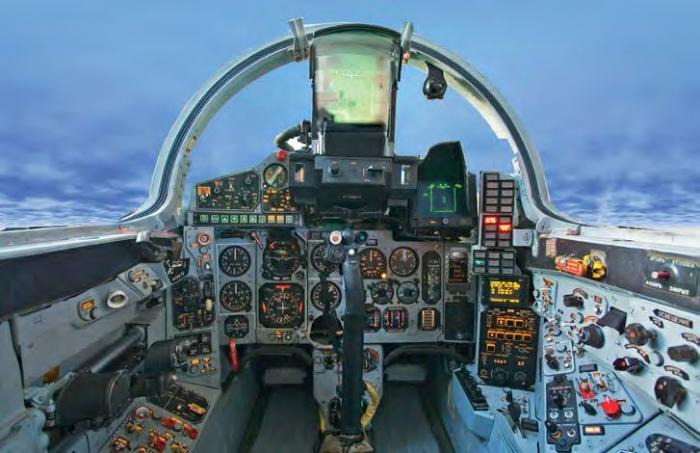

Sources:
Spoiler
Ukraine’s Uniquely Upgraded MiG-29 Fulcrum Is Back
Mikoyan-Gurevich MiG-29MU1 : Mikoyan-Gurevich
МИГ-29,МИГ-35 - Страница 7 - Hərbi portal
https://ukroboronprom.com.ua/media-centr/koncern-v-media/modernizaciya-vinishhuvaciv-mig-29-ta-aviasimulyatori-security-talks
https://opk.com.ua/в-україні-модернізуватимуть-винищув/
https://www.key.aero/article/mig-modernization-liviv
Фоторепортаж с киевского авиасалона "Авiасвiт XXI": bmpd — LiveJournal
На модернизацию истребителей МиГ-29 выделено около 7 миллионов гривен | podrobnosti.ua
В Україні тривають випробування МіГ-29 глибокої модернізації | АрміяInform
https://militarnyi.com/en/news/repair-and-modernization-of-mig-29-in-ukraine-which-imported-parts-have-already-been-substituted-the-list/
https://militarnyi.com/en/news/ukrainian-mig-29mu1-destroys-bridge-near-pokrovsk-with-high-precision-bomb-strike/
https://www.radionix.ae/radar-modernization
Ukrainian company Artem to produce R-27 missile for Asian customer
https://militarnyi.com/uk/news/nova-gsn-do-r-27-vyyavlyaye-tsili-na-vdvichi-bilshij-dalnosti-dyrektor-radioniks/
Керована ракета класу «повітря-повітря» ближнього повітряного бою
КБ "Луч" розробляє нове покоління авіаційних ракет малої та середньої дальності (фото) | Defense Express
Що може система "Омут" від "Радіонікс": деталі "битви РЕБ проти українських ЗРК" від директора компанії Станіслава Зав’ялова | Defense Express
Electronic self-defense system Omut-KM
Ukrainian Fighter Jets “Using iPads” To Control Western Weapons
First Look At Mystery Weapon Pylon Ukrainian MiG-29s Use To Carry Small Diameter Bombs