- Yes
- No
Hello everyone, and welcome to this new suggestion.
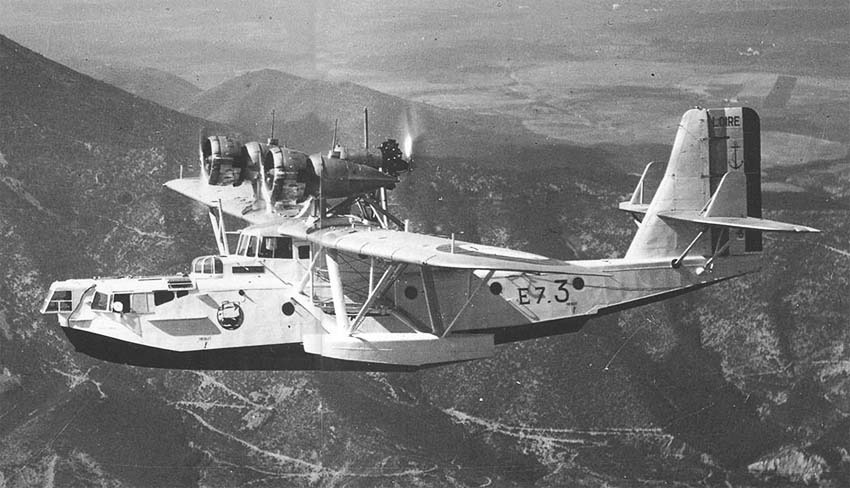
Today, I am presenting a new French Navy seaplane: the Loire 70.
In 1932, the French Navy issued a requirement for a new long-range flying boat capable of carrying out maritime reconnaissance, anti-submarine warfare, and patrol missions in order to replace the aging CAMS 55. Several French manufacturers submitted proposals, including Breguet, Latécoère, and Loire Aviation. Although the Breguet Bizerte ultimately won the competition and became the Navy’s primary patrol flying boat, the Loire 70 demonstrated sufficient potential during its evaluation for the Navy to place a limited production order. In 1935, seven aircraft were ordered, with deliveries taking place between 1937 and 1938. Once in service, the entire fleet was assigned to Tunisia, where it conducted long-range patrols over the southern Mediterranean and monitored the growing activity of the Italian Navy.
Despite its promising specifications, the Loire 70 quickly proved disappointing in operational service. The aircraft suffered from a number of structural and reliability problems that led to several accidents throughout its short career. By the outbreak of the Second World War, only five aircraft remained operational, and this number fell to four after another accident in early 1940. Flight crews were also highly critical of the aircraft, considering it underpowered, slow, and difficult to handle, particularly when fully loaded or operating in rough sea conditions.
When Italy entered the war in June 1940, the remaining Loire 70s were still based in North Africa. During an Italian air raid against their base, three of the surviving aircraft were destroyed or so badly damaged that they were deemed beyond economical repair and subsequently scrapped. The last remaining Loire 70 was dismantled shortly afterward, as maintaining a single example in service no longer made operational or logistical sense for the French Navy.
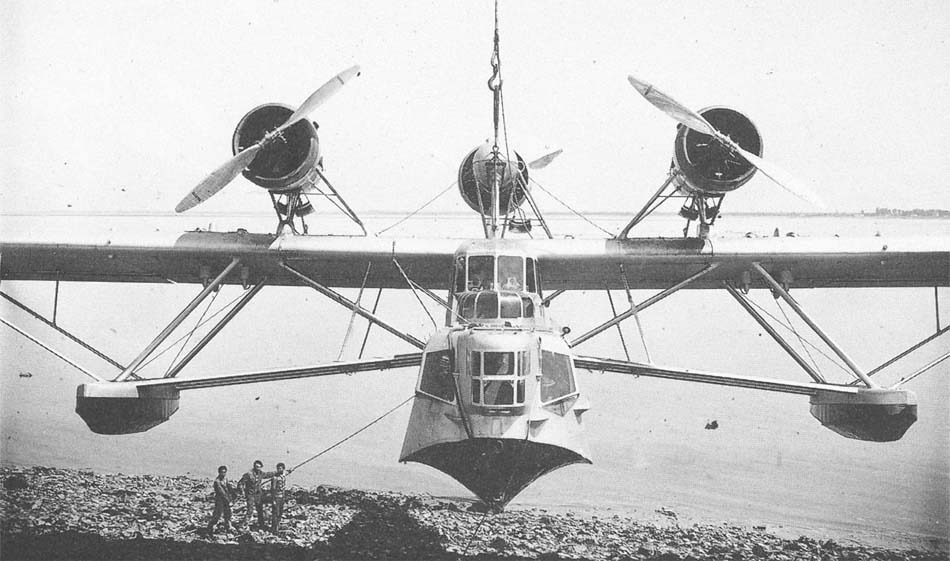
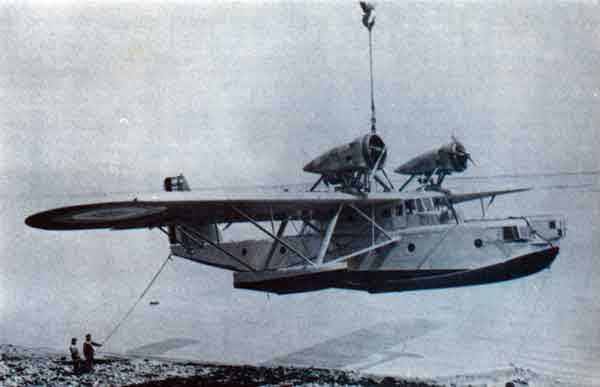
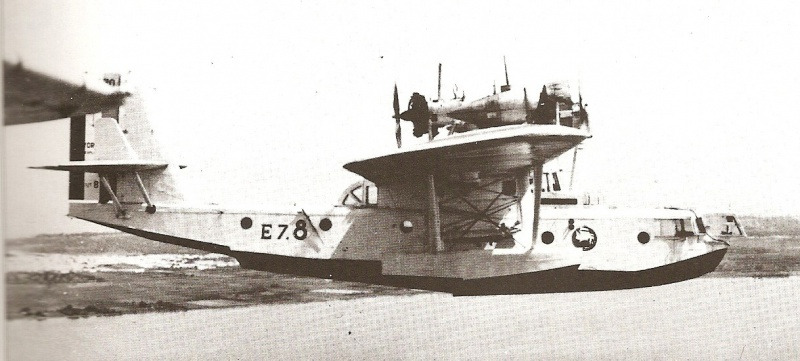
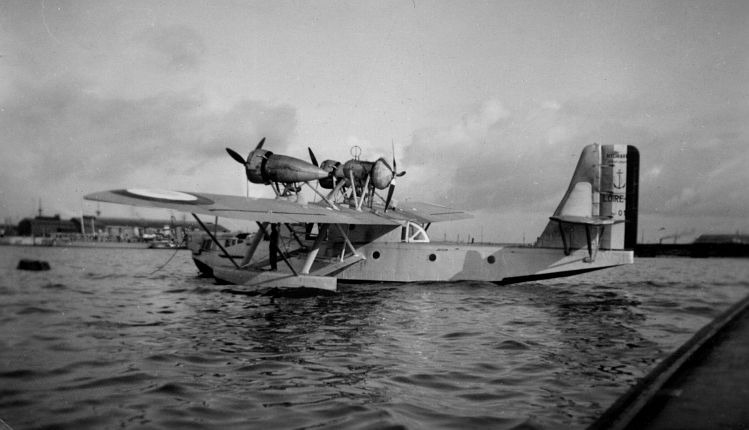
Unfortunately, there is not much more to say about this aircraft. It is worth adding, however, that its crews nicknamed it the “Flying Cathedral” due to the shape of its fuselage and its windows, which gave it a rather distinctive appearance.
Characteristics
Length : 19.58 m
Width : 30.00 m
Height : 6.45 m
Mass :
- Empty : 6 635 kg
- Full : 11 500 kg
The aircraft is powered by three Gnome & Rhône 9Kfr engines, each delivering 740 hp; these engines are arranged in a highly unconventional configuration, with two facing forward in the standard manner and the third (the central engine) facing rearward in a pusher configuration. This allows the aircraft to reach a top speed of 220 km/h and a service ceiling of 4,000 m. It has a range of 2,200 km at a cruising speed of 174 km/h.
The crew consists of seven people distributed across the various stations.
Weapons
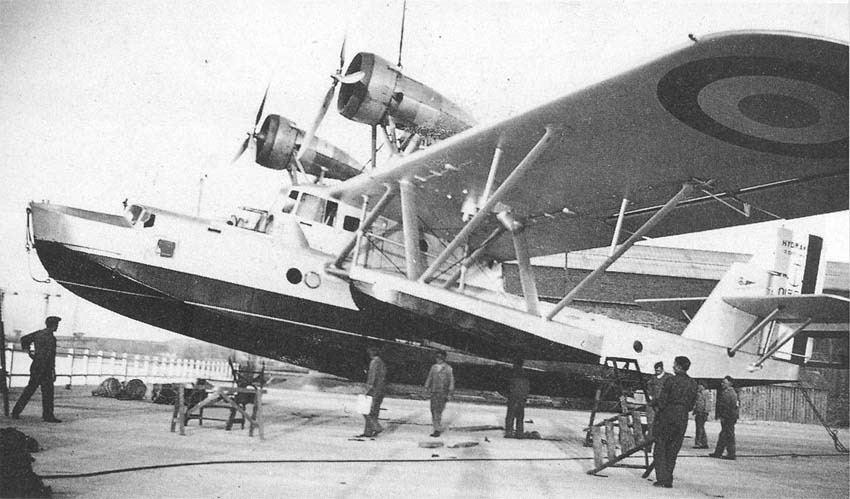
This seaplane boasts a comprehensive armament, featuring machine guns distributed around the fuselage to defend against other aircraft and a substantial payload of bombs for attacking maritime targets.
Defensive armament:
- 6 x 7.5mm Darne machine guns
- 1 in the forward dorsal turret
- 1 in the rear dorsal turret
- 1 rear ventral
- 1 in the nose turret
- 2 forward lateral
Offensive armament :
- 600kg of bombs and mine under the wings
In-game, this aircraft would be an interesting low-tier seaplane to add to the French tree, offering decent bomb-carrying capacity and good defensive capabilities, though its flight performance would not be sufficient to escape every situation.
Pictures
Sources
- Hydravion de patrouille maritime Loire 70 | Service historique de la Défense
- Loire 70 — avionslegendaires.net
- Loire 70
- Loire 70
- Loire 70 - Hydravion de reconnaissance - Un siècle d’aviation française
- Loire 70 1933 (France). Hydravion de reconnaissance longue distance. L’origine de cet hydravion remonte à 1932, suite une demande de la Marine française qui recherchait un hydravion rapide pouvant effectuer des missions de reconnaissance sur de longues distances. La société Loire proposa son projet, un gros hydravion à coque monoplan à aile haute de construction entièrement métallique. Il était équipé avec trois moteurs radiaux Gnome et Rhône 9Kbr de 500 CV chacun montés sur des pylônes dont, assez curieusement, deux étaient tractifs et un propulsif. Ceux ci, manquant de puissance, furent rapidement remplacés par la suite par des 9 Kfr de 750 CV chacun. Il était défendu par six mitrailleuses Darne de 7.5 mm et pouvait emporter 600 kgs de bombes ou de charges sous marines. Mais sa mise au au point fut longue et, bien qu’elle soit réticente, la Marine en commanda à contrecoeur huit exemplaires, le prototype étant inclus dans la commande. Ils furent mis en service en 1937 dans l’escadrille E 7 basée à Karouba en Tunisie. Toutefois, ils étaient peu appréciés de leurs équipages car il était lent, peu maniable et connaissait des pannes fréquentes ainsi que des accidents. Lors de l’entrée en guerre en septembre 1939, ils n’étaient plus que cinq exemplaires encore en état de voler, dont un qui s’abîma en mer quelques temps plus tard. Le 12 juin 1940, trois des quatre exemplaires restants furent fortement endommagés lors d’un raid de l’aviation italienne. Devenus inutilisables, ils furent démantelés peu après, ainsi que l’exemplaire resté intact, au grand soulagement de leurs équipages qui le jugeaient dangereux et peu adapté aux missions de reconnaissance. De par son architecture assez tourmentée, il fut surnommé la “cathédrale volante”… - Avions moches, bizarres, ratés, projets abandonnés et aviation insolite. | Facebook

