
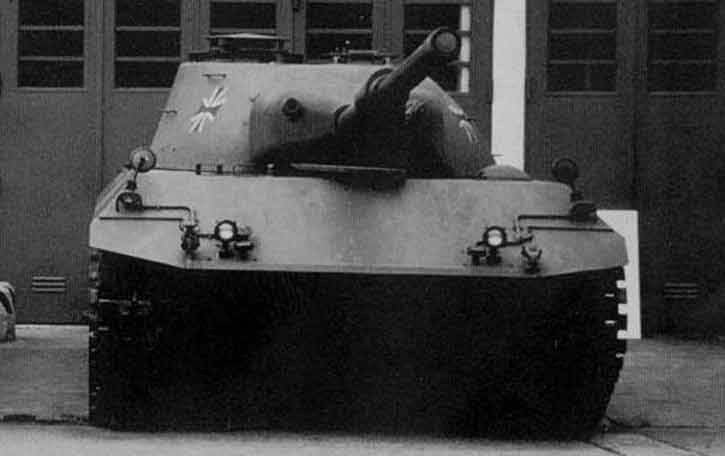
History and Introduction
TLDR: A leopard 1 prototype with an unstabilised Rheinmetall 105mm, slightly thicker armour than B-1 and a reversible transmission.
The Cold war was in full swing and many european militaries were all too aware of the lacking capabilities of their imported American equipment. The old M-47 and M48 pattons were beginning to show the end of their useful lifespans and nations were beginning to desire their own modern vehicles.
After much deliberation and cooperation, West Germany (FRG) and France decided to work together (oh no) to create the future main battle tank for their militaries as well as for export. Italy, seeing the potential for this project, soon joined in and contributed to the effort.
The program was started in November 1956, named Standard-Panzer, primarily intended, by the germans, to replace their stocks of Patton MBTs. The work continued from the start and only 1 year later, detailed specifications (requirements) for the program were released to possible companies willing to compete in the program.
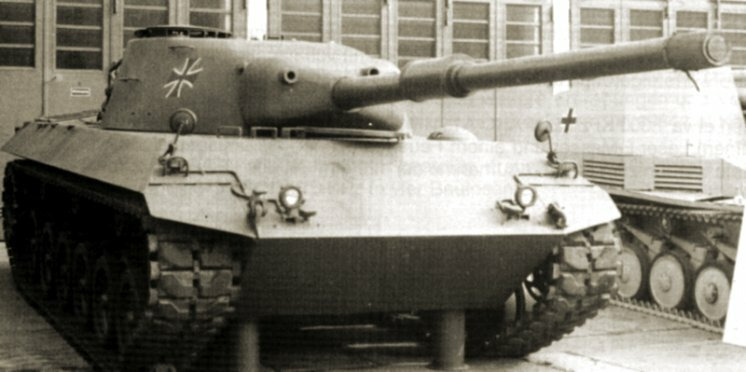
This new design was a change in direction for the germans especially as they dropped the idea of prioritising heavy armour and instead chose to go ith the mobility and lethality. With the failure of the french AMX-50 project, France was eager to take part in the Europa-Panzer, as it was called in Germany, MBT project.
The competing companies enthusiastically presented their designs and were given a deman for to prototypes each.
Team A, from Porsche, presented 2 vehicles quite similar to the Leopard 1 that went into production.


Team B, from Ingenieurbüro Warneke, Rheinstahl Hanomag, Henschel and Rheinmetall, presented 2 vehicles which cannot be denied to be leopard 1s, but they were someways off.
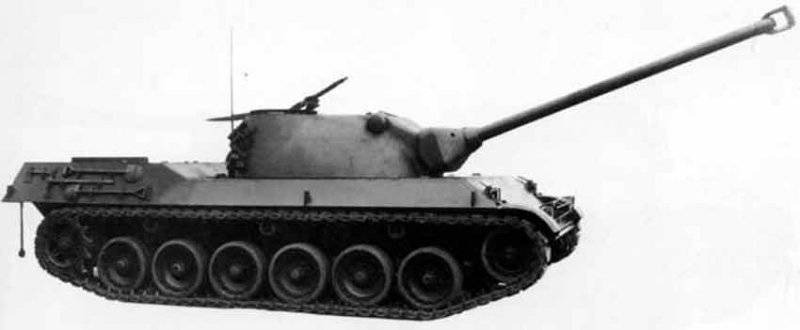
prototype B-1 (left), B-2 (right)
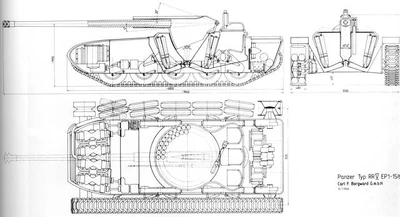
Team C, from Borgward, had presented blueprints for quite a futuristic tank, but they failed to produce a prototype within the given timeframe.
There was also Team D, primarily a design by the french, which later gave rise to the AMX-30, was not chosen for the German trials.
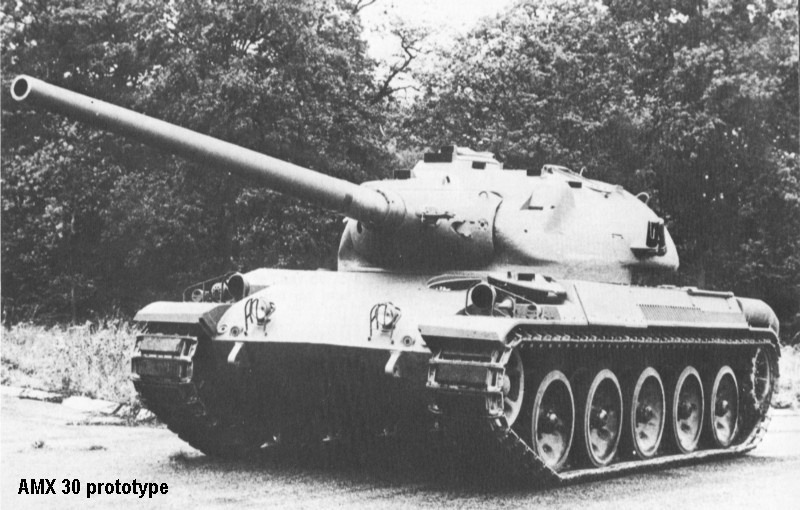
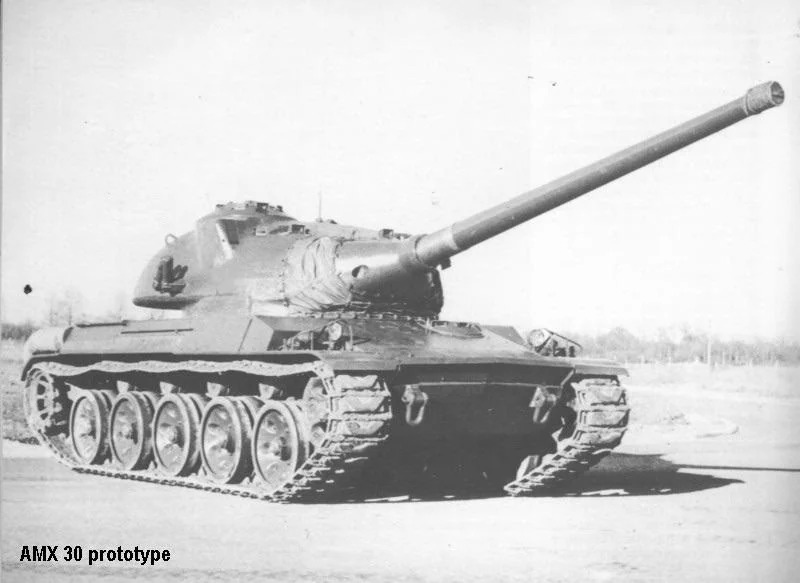
(All four prototypes (A-1, A-2, B-1, B-2) were initially armed with the 90mm gun).
Eventually, the winner of the competition, (after multiple stages of trials commonly referred to as series I, II and III (each with their own prototypes)) Porsche, who had been already ordered to produce around 50 prototypes, was chosen to produce the final, production leopard 1.
However, the vehicles presented by Team B (Rheinmetall), were by no means something to gloss over.
Unlike any other leopard 1, the B-2 prototype had an interesting UFP armour design as the LFP is particularly large and both plates seem to be at an equal angle. The front mudguards also blend in with the UFP giving the Hull a very sleek look that I adore.
Something I havent really seen or heard on any armoured vehicle is that the B-2 did not have torsion bar or hydropneumatic suspension but rather a DUBIOUS Dubonnet suspension.
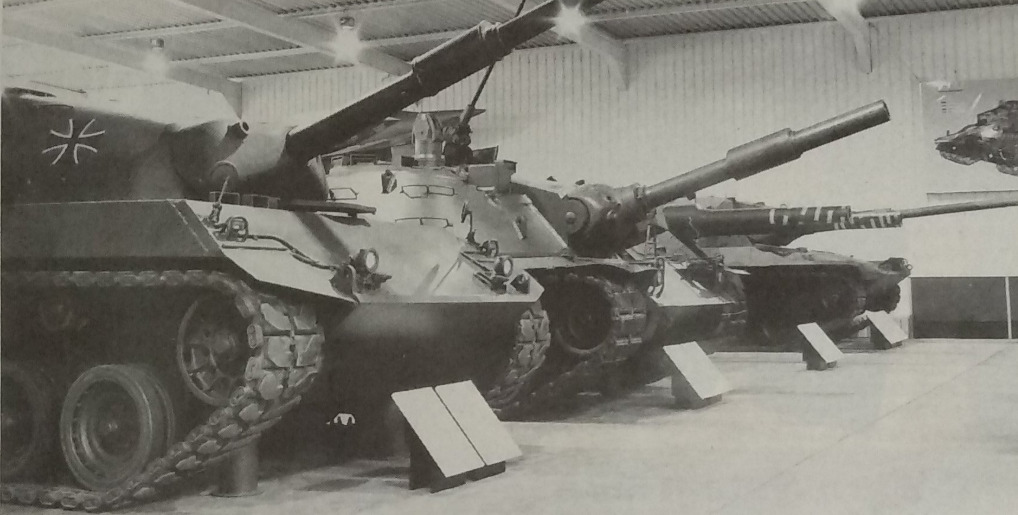
During trials it was found that the Porsche design was more preferrable considering all the features, including production. Although the PT B was technologically superior, the overall benefits it rovided may have been overshadowed by the increase in complexity and production costs as well as crew training time.
Overall the B-2 prototype was quite a bit more sharp than its brother and thats one of the reasons I really like it (especially the hull).
It seems that the PT B-2 turret, like its B-1 brother, was also trialled on a series II hull.
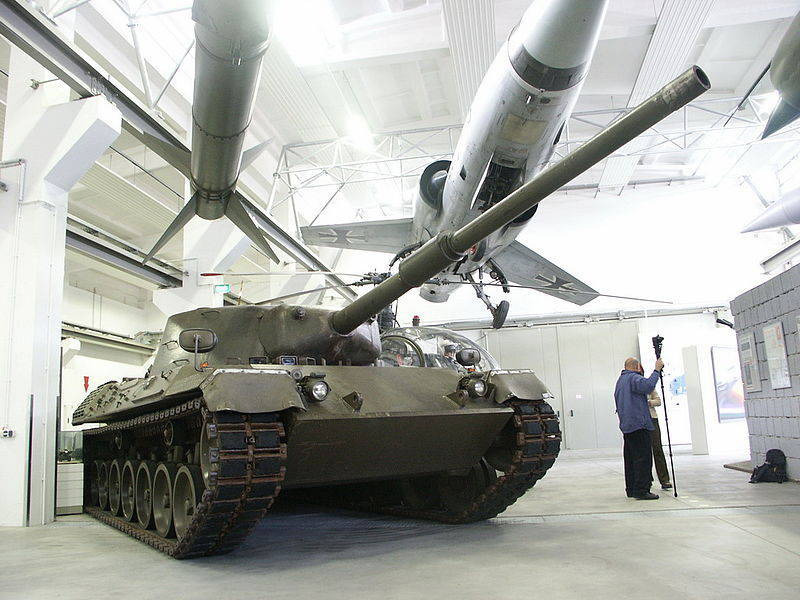
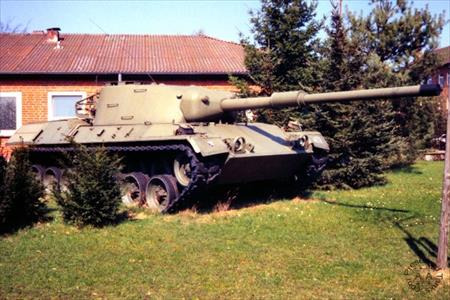
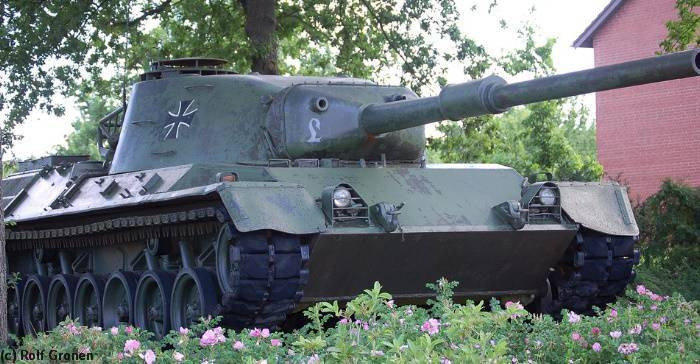
It now rests in the BWB Wehrtechnische Studiensammlung, Koblenz, Germany.
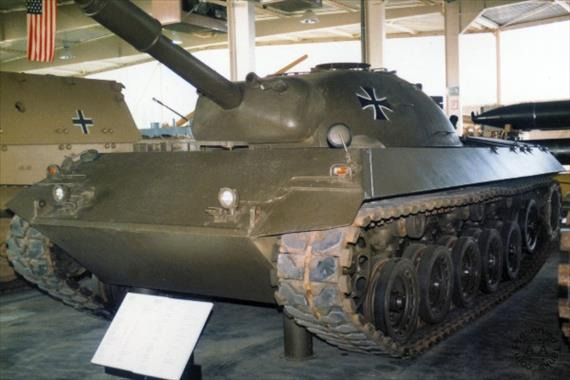
The Leopard PT B-2 would make an amazing vehicle in the lineup alongside the PT B-1 before the Leopard 1 at 8.0. Unlike the B-1, it seems it was mostly trialled with the 105mm L7 (although initially it too had the 90mm). Hence it somewhat balances out the advantages that the B-1 has by having more firepower.
Technical Specifications
Armour
Turret: 60mm all round
Hull:
- Front: 70mm
- Sides: 30mm
- Rear: 25mm
Crew: 4 (Driver, Commander, Gunner, Loader)
— Mobility —
Weight: 38.98t (maximum)
Engine: Daimler-Benz 37.33 liter MB838 Ca-500 10-cylinder
Power: 830hp
Top speed: 65kmph
Power/weight: 21.29hp/t
Transmission: Pub PP45 II lamellae clutch; eight forward and eight reverse gears
Suspension: Dubonnet spring suspension
Maximum gradient: 60%
— Armament —
Main gun: 105 mm Rheinmetall BK7A2
Secondary gun(s): 1 x MG3
Elevation: +X/-9
Traverse: 360°
Gun sight: Unknown zooms
Laser range finder: No
Thermals: No
NVD: No
— Ammunition —
- 105mm
Count: >63
Types and performance: (assumed similar to british L7)

- HEAT
- 7.62mm MG3
Count: 100? (5000 rounds total carried)
Rate of fire: 1200 rpm
Types and performance:

Sources
- Leopard, by AJ Barker
- Tankograd: Leopard 1 in German service, Early years
- Draft Standardpanzer. Prototypes of tank Leopard 1
- https://cloud.mail.ru/public/9dEX/djuwzbp4V/Wehrtechnik/1973%20not%20renamed/10/IMG_20210925_123926.jpg
- Postwar German Experimental tanks | Secret Projects Forum
- https://www.youtube.com/watch?v=CdL9uuvDRls
- Каким мог стать немецкий ОБТ "Леопард" - Альтернативная История
- Leopard 1 Geschichte

- Yes
- No