- Yes, don’t care how
- Yes, as a researchable vehicle
- Yes, as a premium/event/squadron vehicle
- No.
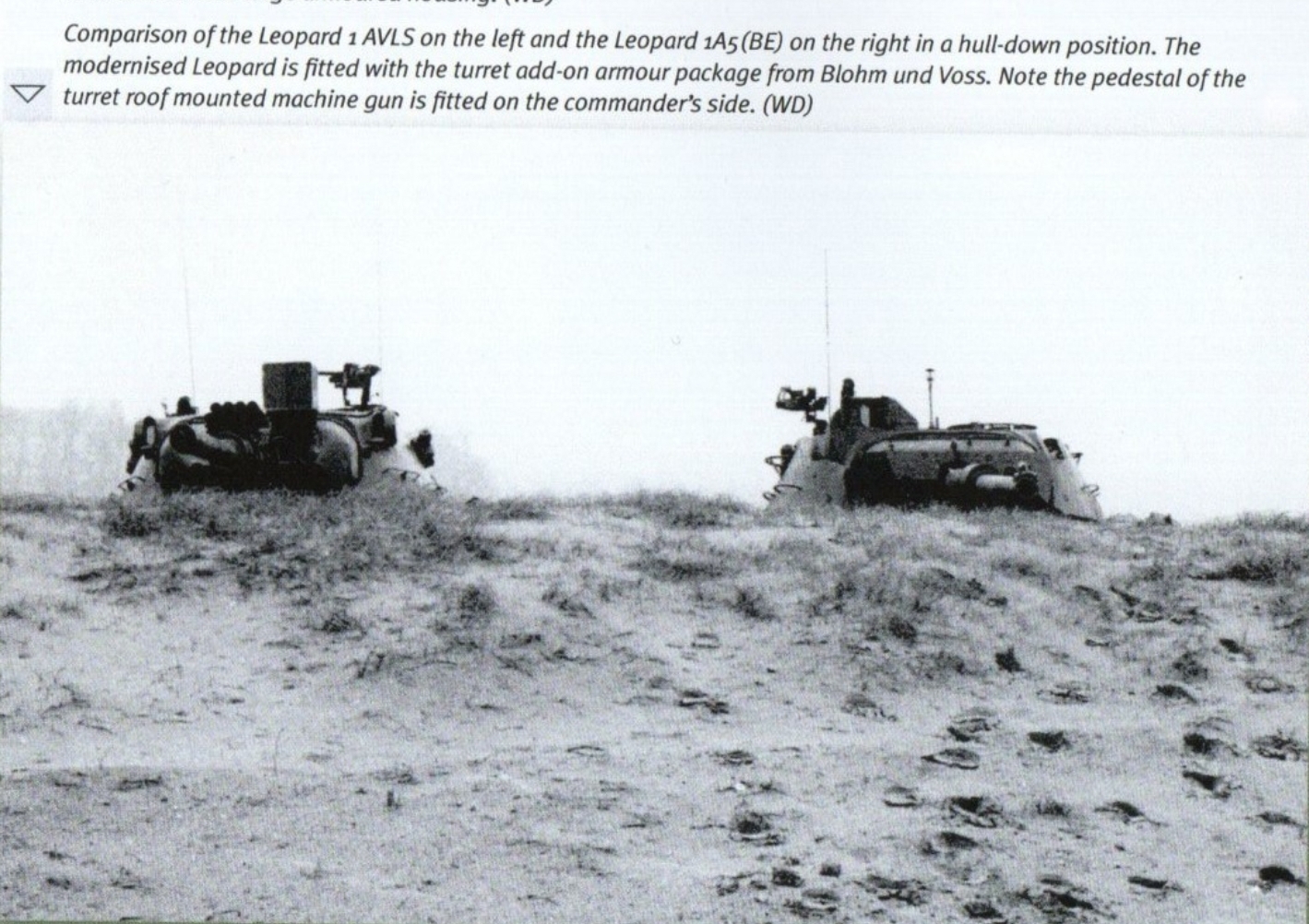
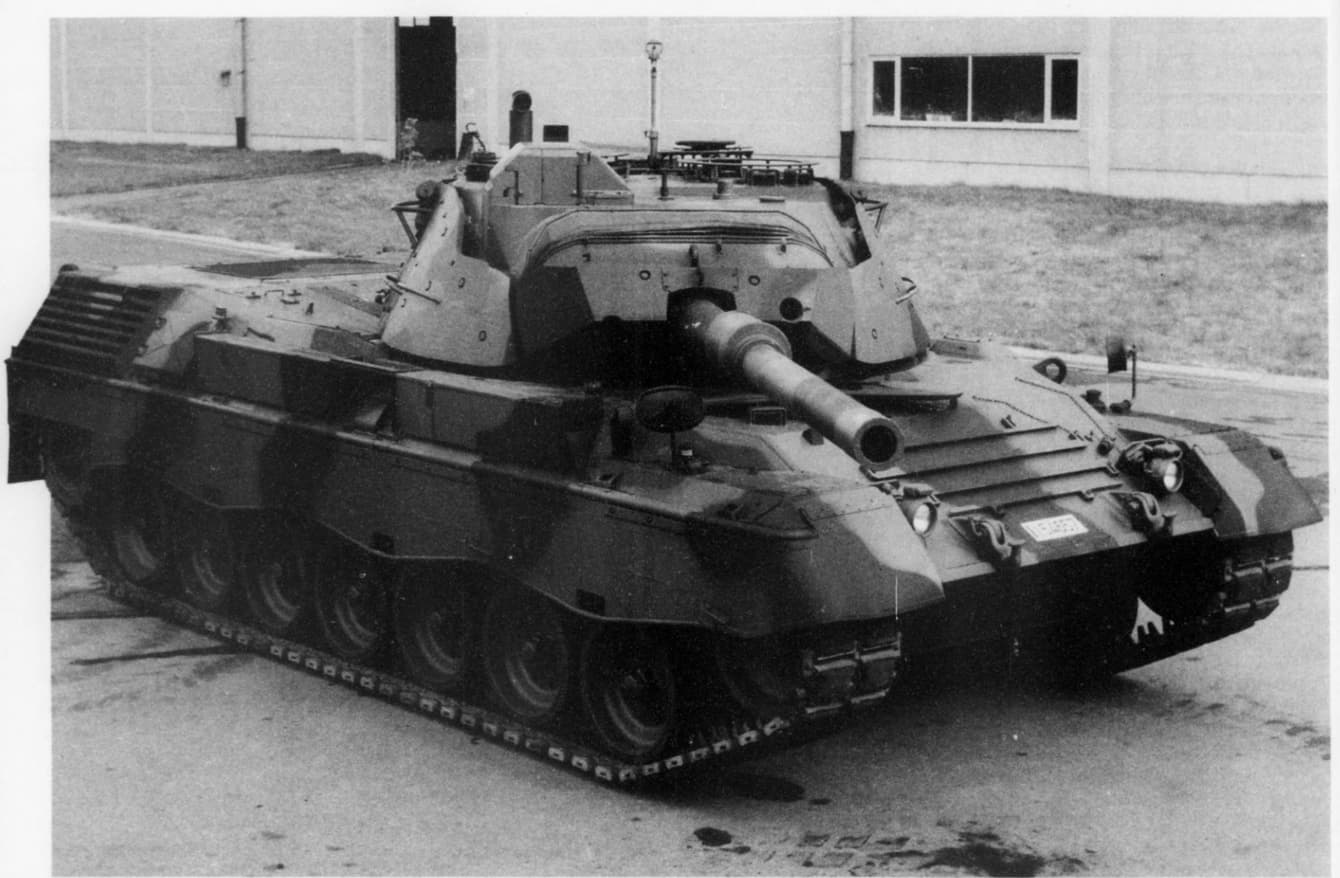
Today I would like to suggest the Leopard 1A5BE Prototype, the unique prototype vehicle developed during Belgium’s Leopard modernisation programme during the late Cold War.
Unlike the production Leopard 1A5BE, this vehicle represented the experimental stage of Belgium’s domestic upgrade effort and incorporated several features that were ultimately omitted from serial production, most notably the mounting provisions for additional spaced armour around the turret.
This prototype was completed in October 1988 and served as the testbed for what would become Belgium’s final and most advanced Leopard 1 variant.
TL;DR: A unique Belgian Leopard 1A5BE prototype featuring the original thermal sight installation and experimental spaced armour mounting points not present on production vehicles.
History
History
Belgian Leopard Service
Belgium became the first export customer of the Leopard 1 in 1967 and received hundreds of Leopard 1BE tanks during the following years.
During the 1970s and early 1980s, Belgian Leopards underwent several upgrades, including the installation of a SABCA fire-control system, laser rangefinder, ballistic computer, and gun stabilisation equipment. By the early 1980s these vehicles remained effective, but advances in optics and thermal imaging technology threatened to leave them behind compared to newer Soviet and NATO designs.
In 1982 the Belgian Army began examining options for a further modernisation programme. Following several years of studies, a formal upgrade programme was approved in 1985.
Development of the Leopard 1A5BE
The primary objective was to improve the Leopard’s fire-control capabilities without purchasing an entirely new tank fleet.
Responsibility for the project was shared between:
- SABCA (Société Anonyme Belge de Constructions Aéronautiques)
- OIP (Optique et Instruments de Précision)
The modernisation package included:
- A new thermal imaging gunner’s sight
- Upgraded fire-control system
- Electro-hydraulic gun control improvements
- Automatic muzzle reference system
- Improved commander observation equipment
- New MECAR APFSDS-T rounds fit for modern combat
Construction of the prototype began shortly afterwards and was completed in October 1988.
The Prototype
The prototype differed noticeably from later production Leopard 1A5BEs.
Most significantly, it featured mounting points intended for the installation of additional Blohm & Voss spaced armour around the turret. This armour package was evaluated during testing and was expected to improve protection against shaped-charge threats.
However, the Belgian Army ultimately decided against adopting the additional armour package. Maintenance concerns, increased complexity, and budgetary limitations resulted in the concept being abandoned.
As a result, production Leopard 1A5BEs were built without the armour and without the mounting structures fitted to the prototype.
Trials and Adoption
The prototype underwent extensive testing throughout the late 1980s.
The results were considered successful enough for Belgium to adopt the programme, with SABCA selected as prime contractor.
Five pre-production vehicles were subsequently completed before full production began.
Between 1990 and 1997, 132 Belgian Leopard 1s were upgraded to the Leopard 1A5BE standard.
The prototype itself therefore represents the direct ancestor of the final Belgian Leopard fleet.
Differences from the Production Leopard 1A5BE
Differences
The prototype can be identified by several unique features:
- Experimental turret armour mounting points.
- Prototype configuration of the thermal sight installation.
- Developmental fire-control system.
- Test vehicle status.
- Unique appearance compared to production vehicles.
In combat capability, it would be extremely similar to the Leopard 1A5BE currently found in War Thunder, but its distinctive appearance and prototype status make it a historically interesting addition.
Fire-Control Improvements
Thermal Imaging System
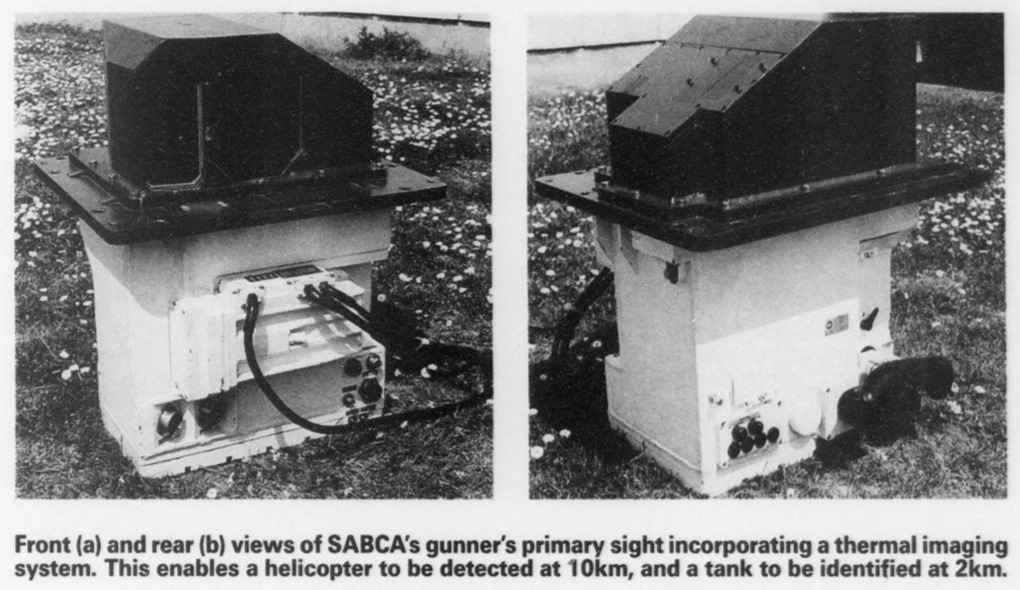
The most important aspect of the Belgian upgrade programme was the installation of a domestically integrated thermal imaging sight.
The thermal imaging system allowed:
- Tank identification beyond 2 km.
- Tank detection at distances exceeding 8 km.
- Helicopter detection out to approximately 10 km.
The sight was mounted in a prominent armoured housing on the turret roof, giving the Leopard 1A5BE its distinctive appearance.
Combined with the upgraded fire-control system and muzzle reference system, the prototype offered a substantial increase in first-round hit probability compared to earlier Belgian Leopard variants.
Specifications
Specification Details Crew 4 (Commander, Gunner, Loader, Driver) Weight Approx. 40 tonnes Length 9.54 m (with gun forward) Width 3.37 m Height 2.70 m Armament (Main) 105 mm Royal Ordnance L7A3 rifled gun Ammunition Types M1001 APFSDS-T, M1050 APFSDS-T, M1061 (M456A2) HEAT-FS, M393A2 HESH, M1010 HE, Smoke Ammunition Carried 60 rounds Secondary Armament 2 × 7.62 mm FN MAG (coaxial + roof-mounted) Fire Control System SABCA/OIP upgraded FCS with laser rangefinder, ballistic computer, thermal imager and automatic muzzle reference system (MRS) Thermal Imager SABCA thermal sight using TICM II modules Stabilisation Two-plane gun stabiliser Engine MTU MB 838 CaM 500 V10 diesel, 830 hp Transmission ZF 4HP250 automatic transmission Speed 65 km/h (road) Operational Range 600 km Armour Leopard 1 armour scheme with prototype turret mounting points for experimental Blohm & Voss spaced armour Special Features Thermal imaging sight, laser rangefinder, automatic muzzle reference system, prototype spaced-armour mounting provisions Year Completed October 1988
Potential ammunition
ammunition:
Designation Gun Caliber Type Velocity Weight Penetration Notes M393A2 NATO 105 mm L7 105 mm HESH 732 m/s 11.25 kg ~127 mm Belgian copy of US M393A2. M416 NATO 105 mm L7 105 mm Smoke (WP) 732 m/s 11.6 kg / Belgian copy of US M416. M1001 NATO 105 mm L7 105 mm APFSDS-T 1525 m/s 5.8 kg ? Monolithic tungsten alloy core. Cartridge length 985 mm. Predecessor of M1050 M1008 NATO 105 mm L7/F1 105 mm Illumination / 11.7 kg complete / WP illumination projectile M1010 NATO 105 mm L7 105 mm HE-T 700 m/s 12.1 kg / 2.0 kg Comp B filler. Specifically Designed for the 1A5BE program M1050 NATO 105 mm L7 105 mm APFSDS-T 1510 m/s 5.8 kg ? Monolithic tungsten alloy core. Cartridge length 927 mm. Specifically Designed for the 1A5BE program M1061 NATO 105 mm L7 105 mm HEAT-T 1173 m/s 10.5 kg 400 mm Modernized M456A2 derivative
In War Thunder
Unlike the production Leopard 1A5BE, the prototype represents an earlier stage of the Belgian modernisation programme. As such, it would be appropriate for it to have access only to the ammunition available during the initial development phase of the project, rather than the more advanced rounds that entered service later in the Leopard 1A5BE’s career.
This would allow the production Leopard 1A5BE to retain access to Belgium’s later MECAR ammunition developments, such as the M1060 family, while the prototype would be limited to earlier rounds such as the M1001 and M1050 APFSDS-T. As a result, the prototype would naturally occupy a lower Battle Rating than the production vehicle despite sharing many of the same fire-control and thermal imaging improvements.
Sources
Sources
- International Defense Review 8/1991 “Modernizing Belgium’s Leopard 1 Tanks” by R.M. Ogorkiewicz.
- Belgian Senate (1984) about the 105 mm modernisation program: https://www.senate.be/lexdocs/S0618/S06180603.pdf
- DST-1160Z-029-94, Foreign Ammunition Handbook. DST-1160Z-029-94
- Leopard 1 ABBL forums: Leopard I - ABL-History Forum
- Jane’s Armour and Artillery 1984.
- Jane’s Armour and Artillery 2011–2012