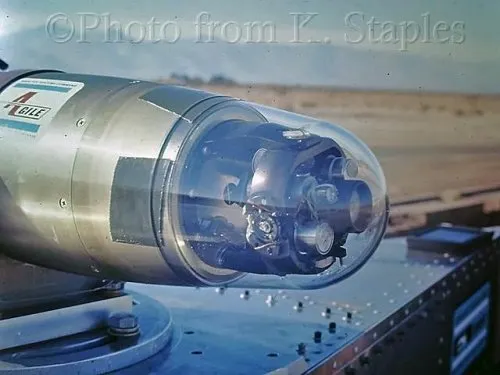
LDIRCM (and DIRCM) can involuntarily affect multiple missiles at the same time

@tripod2008

any missile with a non zero angular rate is not a threat since it is no longer on a trajectory that will result in an intercept.)

That is absolutely not true. Just because the missile is not on a collision trajectory does not mean that the seeker is still not looking towards last known target location and the targeting computer is not able to re-acquire the target.

No you have;[…]

Again not true:
1st gen → Uncooled pin-scan
2nd gen → Cooled conical-scan / FM
3rd gen →Imaging Seekers: IIR/Rosette scan seekers
Source: Review of Development of IR Guidance Techniques I by C. Feng

Approved for Public Release: Distribution Unlimited

Quote from Source:

  1. The third period is after the mid-seventies. At that
    time, long-wave infrared elements operating between 8 and
    14micrometer waveband were successfully developed. In
    particular, applications of high-performance HgCdTe (CMT) linear
    array infrared apparatus and infrared imaging technique have been
    gradually matured, thus having a leap forward in infrared
    guidance technology, with the emergence of the third-generation
    infrared guidance weapons of infrared subimaging and infrared
    imaging with precision guidance. One of the schemes in the third
    generation is the use of dual color (infrared/ultraviolet or
    dual-color infrared) rose-coil-shaped scanning in the subimaging
    guidance system, such as the improved version of the Stinger
    (Stinger-Post of the U.S.), the improved version of the Mistral
    (of France) and the SAM-13 (of the Soviet Union). In another
    arrangement, linear array or small-area infrared devices are used
    with the imaging guidance system of optical scanning imaging,
    such as the Maverick AGM-65D/F of the U.S. in using 16 (4x4)
    element optical guidance CMT infrared devices, and 20 phases
    internal rotating drum reflective mirror to realize scanning
    11
    images of ground targets. In the late eighties, staring-type
    infrared focal-plane array (IRFPA) detectors were successfully
    developed in the U.S. and Western Europe by using electronic
    self-automatic scanning to replace optical device scanning in the
    second-generation infrared imaging guidance weapon system. The
    representing models are the advanced intermediate-range antitank
    missile weapon system (AAWSM of the U.S.) and the long-range
    antitank missile Trigat of the U.K, France, and Germany, under
    development. The AAWSM is expected to complete its engineering
    development in 1992 by using 64x64 element CMT single-lens CCD
    staring infrared focal-plane array of the U.S.

Example:
Both AIM-9X and the R-74M are designated in official nomenclatures as 3rd Gen missiles.

AIM-9X is considered a 5th gen missiles in the Sidewinder Family itself, but in terms of IR missile technology is still designated as 3rd generation missile.

@Armen_Lozone

all IIR missiles will see a similar image simply because of physics (as long as they have at least 1 polarisation filter) and the original beam width is not 50mm wide or something (absurdly high power requirement).

You don’t know that. You haven’t tested a specific misile with specific LDIRCM nor have you provided specific case studies that showcase this.

(by the way the vibetsk-s/president brochure only states IR not IIR)

In Russian nomenclature “IR missile” stands for all missiles based on IR seekers. There is no special term for imaging ones like in English. (IIR)

for CIRCM???

I did. According to the glamorous (and ambiguous) marketing claims it should work again all known missiles, thanx to multiband laser
President-S is also marketed to have multiband laser. (they call it "multi-spectral, which in opticians ‘slang’ means that it has broader coverage across multiple spectral regions, but they probably wanted to say “multiband”.

yeah… it can have multiple emitter reflector pairs on a single aircraft.

I don’t have information that a single President-S can be equiped with multiple turrets.
Are you sure there are no 2 fully independent systems on the Su-57?
Can you provide a source?

i bet you ALSO dont know that the peak and nominal power draw listed on the president-S brochure is not for the emitter reflector pair but rather the ENTIRE vibetsk-5 sytem

I know that. But you should also know that the other components of the system don’t draw that much power. The most power hungry element is indeed the laser emitter. There is also listed power draw during standby mode at 1.2 kW and during active supression (short term) 3.5 kW.
If you substract 1.2 from 3.5 and another ~200 Watts for Servos and other electronics during active Beam steering (which is quite a lot but lets be conservative), you get 2.1 kW. Knowing power efficiency for QCL Lasers (20%), OPO (15~20%), Fiber Lasers (~20%)

We can calculate approximate optical Output Power for the laser to be up to:
420Watt (if QCL or Fiber)
315Watt (if Parametric Oscillator)

Which at first sight is 1.5 ~ 2 times that of Northrop’s CIRCM but if the actual efficiency is a bit lower and more power is used for other parts of the systems is pretty much the same as the CIRCM, which comes at 250Watts peak. It is of course possible that Northrop deliberately ‘lied’ about the output power of the CIRCM and the actual value is higher, for example 300~350 Watts, which again is basically the same as the one we can estimate for the President-S.

the meaning of which is, that while your BASIC argument is CORRECT, it is an anomalous case. only if the incoming missiles are within a few degrees of seperation from each other WITHIN the DIRLCM beams FOV then it can happen to affect both. thats why it says that it can affect 2.

Can you elaborate: What says that “it can affect two”?

Regarding single turret affecting multiple missiles:

when in reality, the case of a single reflector/emitter affecting multiple missiles would be the rarity.

What if the turrets can really move as fast and precise as you earlier claimed? What if when multiple missiles approach the beam simply hops between them with frequency higher than the

Not according to Northrop, Leonardo and KRET.

In fact, the primary goal of the DIRCM is to completely deny missile guidance and cause the MANPAD to miss by a very large distance and as early in the engagement as possible, in order to create the largest possible miss distance. The ability to jam a missile as soon as possible is also instrumental to allow a multiple threat scenario to be defeated effectively, even with only one laser firing on multiple targets. As an example, we can consider two missiles launched on the same side of the aircraft, so only one DIRCM turret would be able to see and engage them.

So it turns out that if the turrets can be turned as reliably and as precisely as you claim (which is completely possible with modern servo drives), the LDIRCM can ‘hop’ the beam between multiple missiles, meaning it sequentially illuminates multiple threats while applying a short dwell time on each one before switching to the next?

The deeper I dig into this, the more I begin to think that LDIRCMs might actually be using a very tight beam and probably primarily rely on damaging the FPA rather than simply dazzling.

Why am I thinking this?

Well if the manufacturers claim that no continuous illumination (per missile) is needed, then the principle of guidance disruption cannot be as simple as dazzling the seeker. Because when the laser switches to another target, the dazzling effect would be lost, leading to potential re-lock.

So what are your thoughts on this?

(And I will be waiting to see the full document that you quoted, or you can tell me its name and I will try to find it.)

Edit:
I forgot to add that Polarization filters have orientation and Laser beams’ polarization can be controlled, or even converted (linear>circular) for example with waveplates or ICA, although I doubt this is implemented due to complexity.

Incorrect. It illuminates the missile seeker, untill it diverts off course, and is no longer a threat. The missile (MANPADS, as even your text claims) does not have a datalink, once it steers away, it will not be a threat, as the seeker will have no idea where to look for the target.

And no, no context about IIR can be taken from this, as the video shows how it affects single element seekers, manpads. They get saturated, but we already knew that.

@DevilO6
How do we know that this video is not for illustrative purposes only and shows the actual principle of operation?

once it steers away, it will not be a threat, as the seeker will have no idea where to look for the target.

Not necessarily true.
Just because the missile veered of collision terajectory does not mean the target does not remain in seekers FOR. The seeker remains gyro-stabilized and points in the same direction where the last valid target centroid was generated by the tracking algorithm (which continuously tries to generate solution for TC based on the image).

If we were to go this way, we could apply this to virtually anything, making all sources invalid.

The reason it steers off course, is because the seeker is saturated, it is full of IR energy. It no longer knows where the IR source is. It would be like your eyes being filled with light, you see nothing. So it no longer knows where to look. If it were to keep the seeker in the same, stabilized in the same direction, it would not steer away, as it is the seeker that gives data for course generation. Its not like someone plays with a joystick.

i have provided credible and linear logic which even you can undertake, if only you would. do you even know what a polarisation filter is or does???

thats funny considering the russians dont have a single Imaging IR missile in service. (dont even bring up r74m2, its not IIR).

also, thats so kind of you to presume your understanding is correct. can you bring a source that states that russians dont know how to distinguish between IR and IIR.

according to you. but how come the very same claims, when made by russians, are not

hmm??
why is that? why the double standard. when it comes to russian documents, you say IR == IIR and it can decoy multiple missiles and cant be overwhelmed except under rare occasion, but when its western documents… NYET NYET THEM MURRIKKANZ ARR LIARS CYKA or NUH UH THEM YANKEES BE LYING BRUH (take your pick)

multi spectral = multi band, yes
evrything elseyou just said is only your assumption. they say nothing about broader coverage or what they “probably wanted to say”. Id appreciate if you stopped assuming that you know better than the OEMs.

… so you mean to tell me that you dont beleive a single President-S system can have multiple turrets?
it literally just requires another generator/reflector pair to be wired upto the computer.

no im not sure and logically speaking, it is stupid to make two independent systems when you can have one combined system using half the power and half the computing power and half the space on board the aircraft.

if you read the description of the president S system from the brochure


it lists the devices that are the main part of the system.

  • laser generator
  • optical-mechanical (threat/missile tracking) unit
  • control unit
  • power supply unit

now do you think a simple extra turret cannot be integrated into the system?

pretty sure its all integrated into the main aircraft defense subsystem suite. no i cannot provide a source its the bloody pride of russia the Su-57. If i had sources i wouldnt release them lol. i dont have a death wish.

oh really…

i recommend you give this article a read. while it isnt a proper first rank source, its plenty to make anyone understand the actual components of the L370 system (AKA Vibetsk-5 AKA President-S)

from the above article:

The main components of the Vitebsk system are (disclaimer: all data presented here are public and not classified):

  • L370-1 control unit, processes the information received from the radar, laser and infrared warning sensors to activate automatically the jamming system and countermeasures, while alerting the pilot and providing information about the threat;
  • L150 “Pastel” Digital Radar Warning Receiver, with sensors mounted in the tail, wingtips and nose, works in the 1.2- to 18-GHz range frequencies and covers 360° horizontally and 60° vertically around the aircraft;
  • L370-2 UV warning sensors and L140 Otklik laser warning sensors, detect IR signature from incoming missiles and laser designators, respectively;
  • L370-5 IR jammer (replaced by L370-5L or L418-5 in some configurations), a laser-based [Directional IR Countermeasure DIRCM, externally similar to a normal EO/IR sensor turret, which can “blind” the missile at a range from 500 to 5000 meters, covering 360° degrees around the aircraft and 90° vertically;
  • UV-26 countermeasures dispensers, each module can house 32 rounds of 26mm flares/chaffs;

(i have removed the 2-3 items that do not apply to the helicopter such as the towed radar decoy and radar jammer)

so i heavily advise you to rethink your statement that the other components dont draw that much power.

you are assuming a very big thing. that when the system is in operating mode, it is only the laser emitter that is taking up that extra juice. while you did mention servos (credit to you) but you vastly understated their overall draw. not only do servos become active, the IR sensors, self deense subsystem alerts and alert interfaces to the pilot as well as physical IR countermeasure dispensers take up a bunch of immediate power. the laser generator then also draws power.

therefore, instead of assuming this that or the other, how about we take a logical deduction that average power draw by the laser generator of the President-S would be the same as CIRCM.

again, dont assume. secondly, that lie will cost them because on aircraft with limited power generation and overall electrical energy to spare, you cant say 1 but mean 2 because that will end up becoming an issue when its time to integrate because uh oh you’re now short on power.

i was referring to the brochure stating that it is “effective against multiple threats” (yes ambiguous)

tell me exactly where they say that one single turret will be able to protect against 2 simultaneously approaching threats with enough seperation between them that both cannot be in the FOV of the laser at the same time yet be in the same (general direction) of the aircraft.

quite a 180 from you

yes this is the only way a single turret can affect multiple missiles unless multple missiles HAPPEN to be within the FOV of the laser.

yes, either it applies dwell or it just spends an equal time on all threats depending on specific implementation

damage cannot be done under such short times. all research indicates that the laser needs to impart high energy during a long enough duration of time to actually damage the seeker beyond recovery.

it really is. why?
because these systems in real life are designed to primarily protect aircraft against

which, as far as i know, most manpads do not have imaging infrared seekers. in assymetric warfare, militaries can expect the use of Aim-92, Mistral, Igla, Anza/HN-5 or QW-2. but mostly stingers. and those dont have imaging seekers.

unfortunately i cant find it. i got it from a technical moderators comment on a bug report. while i do not agree with his conclusion, the source he has is sound. you may be able to get it from a tech mod if you PM/DM them. i cannot as im held up in other communications with other mods

yes, however that would require the DIRLCM system to actually know what direction the polarisation filter on the incoming missile is, similarly to the dual band seekers, the system cannot know which band is in use by the missile at the time.

@DevilO6

The reason it steers off course, is because the seeker is saturated, it is full of IR energy. It no longer knows where the IR source is. It would be like your eyes being filled with light, you see nothing. So it no longer knows where to look. If it were to keep the seeker in the same, stabilized in the same direction, it would not steer away, as it is the seeker that gives data for course generation. Its not like someone plays with a joystick.

That is not how IR Air to Air missiles work. Please study carefully how the target tracking works, how the seeker itself is steered, and how the guidance command loop works.

As I said above, and I repeat mylsef again: just because missile has veered off course, due to induced target tracking errors, or induced guidance command errors due to Countermeasures, or for whatever other reason, does not mean that the target is no longer in the Seekers FOR!
The Target could still be within Seeker’s FOR and still be re-acquired based on actual circumstances.

I explain again, step by step, very simplified, in hope you can understand:

Imaging Seeker is initially Pointed towards the target. A Contrast spot or silhouette of the target appears on the Seeker’s sensor (lets assume we are using Imaging seeker for the purpose of this demonstration).
Once a valid Target Centroid has been calculated, a valid Lock is Achieved, and the Seeker is steered and stabilized auitomatically, so that the Target Centroid will be in the center of missiles FOV. (At this point you have LA)

If the Target silhouette moves upon the sensor, meaning the image changes, the Target Centroid is re-calculated in real time and the whole Missile’s Seeker is again turned so that the newly calculated Target Centroid will be again in centered missiles FOV.
(now a gross simplification bellow:)
At this point, the Seeker may be aligned with missiles Velocity vector or not (lets say we are already mid flight).*
If the Seekers LOS is misaligned with the Velocity Vector of the missile, a Deviation is calculated and a guidance command is generated proportional to that of the Deviation. The Missile is steered so, that its velocity vector will become Co-Axial with it it’s LOS, which in turn points towards the calculated Target Centroid, which ideally is the Target itself. This process continues.

If, for whatever reason, a lock has been broken, meaning Target Centroid solution cannot be solved due to for example missing Contrast Target SIlhouette, the missile’s seeker will cointinue to be Gyro Stabilized and will continue to point in the direction of the last TC, meaning last valid silhouette it used for solving said TC.
In some missiles, the seekers might even begin scanning a certain area around last known point in space where it last had a valid target solution and attempt re-acquisition.
-end of gross simplification-
*In realitty Air to Air missiles don’t use Pure Pursuit but instead use a Proportional Navigation that is solved for LOS rate, details that are irrelevant to what I’m trying to explain here.

During re-acquisition phase, the missile continues following PN based on last valid target state estimate, or enters Memory targeting mode, based on the last known valid target solution. And the seeker remains pointed towards last known target location.

If it were to keep the seeker in the same, stabilized in the same direction,

So yes, it does in fact keep the seeker stabilized in the “same direction”, so that its FOV is centered with last valid Target Centroid (which ideally represents the actual Contrast Target’s Silhouette, if missile had a valid lock before losing it for whatever reason.)

As for the game War Thunder, Missiles losing and re-acquiring lock has been modelled and working in-game for long time now.

I will answer to Armen later so be patient.

You do know that LDIRCM does not just inject fake course data using the laser, right? It is the seeker being oversaturated causes it. The seeker is the sole source of target data in a MANPAD, there is no datalink, nothing. When the seeker gets blinded, and then saturated, it is incapable of seing its original target. For the seeker, it is full of IR radiation, from its perspective, it is right at the IR source, that causes false signals to be send, and the whole system fails.
Even if the target is inside the missile FoR, it would need to be inside the FoV, when the seeker desaturates, and at that point the missile can be anywhere. The gimbal will not be kept at the target, as there is nothing to follow. While it is not the best analogy, imagine there are screens around you, and you have to follow a ball that flies randomy all over them, and then, someone puts a bag on your head. You cant see. How do you follow it? You might follow the original trajectory of the ball, but you do not know, if it is there. Here comes the problem in this example, as you do not get false signals sent into your brain, but you are able to reason with it, but lets jsut assume for the sake of the example you do a random turn. Then imagine the bage it taken off your head a few seconds later, but you cant turn around, you can only rely on your FoV. What are the chances you can see the ball within it? They are not 0, but they are not guaranteed.

Im not sure why you are bringing IIR into this line of discussion, we were talking about LEONARDO video and MANPADS, the single element ones, they cant generate a image, and they cant recognize it.

Missile relocking is indeed a thing, however not in case of a oversaturated single element seeker. If it were to be a IIR seeker, or if it were to not be a saturated seeker, but for exampel a flare, it would be a different story, but you are using argument about apples to reason in the talk about oranges.

1 Like

Once a missile goes ballistic after the lock-on is broken, positional error and pointing error will accumulate, as the relative position of the target will change so it can’t just look in the prior direction and know the target will be there, because it won’t be, it’s position in the scene will have changed.

It’s not though, it’s the Seeker’s pointing angle rate that is held constant, there is no need for the target to actually be held in the center of the IFOV of the seeker of a staring seeker since there is no null to drive it into, there is no fixed requirement of have it centered.

There is no need for it to be centered, it can be anywhere in the image since the scene is effectively continuously polled for updates independently (slight difference in how CCD & FPA work under the hood but is mostly immaterial to the point).

No PN declares that the seeker’s look angle at launch must be held constant to achieve intercept.

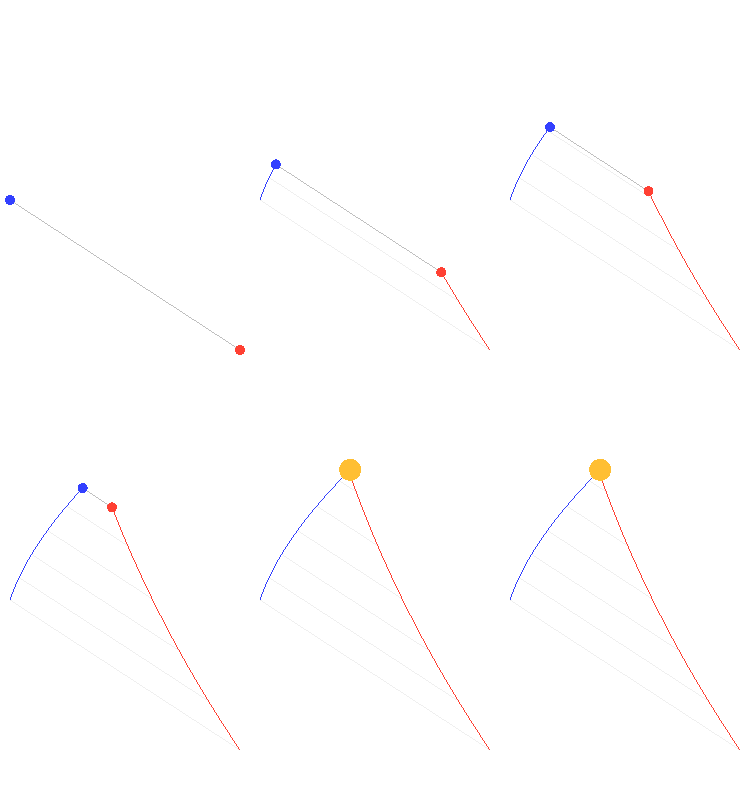
Proportional_navigation_animated

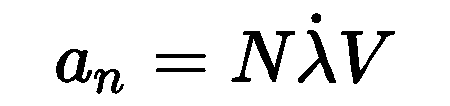
For the simplified 2D case:
faa172705c24015fec97be01da80217c3f288e11
where;
the scalar an is the acceleration perpendicular to the missile’s instantaneous velocity vector
N is the proportionality constant generally having an integer value 3-5 (dimensionless)
λ is the line of sight rotation rate
V is the closing velocity.

There is no mechanism for the look angle to change.

You are getting confused about which loop does what in a two loop tracking system, The Seeker tracking the target and Autopilot providing instructions to the control surfaces are separate loops.

No it is steered in such a way that the Angular rate of change of the seeker is driven to zero

No, As an example with the Maverick , this always occurs in the Terminal stage of the intercept (target estimator box exceeds 75%, of the FOV) where the target has become a near uniform return across the FOV due to being in the last few seconds of flight Control surfaces are commanded to maintain their current deflection angle to provide intercept.

1 Like

I have already mentioned and explained that above in the tread. It seems to me you have been reading beteen the lines.

For the seeker, it is full of IR radiation, from its perspective, it is right at the IR source, that causes false signals to be send, and the whole system fails.

Depends on the Seeker type and how the Centroid is being calculated.

Even if the target is inside the missile FoR, it would need to be inside the FoV, when the seeker desaturates, and at that point the missile can be anywhere. The gimbal will not be kept at the target, as there is nothing to follow.

Absolutely not true.

You dont know if there will be nothing to follow if the seeker becomes desaturated.
It depends on how the missile was fired, what aspect, what was the trajectory of the target, did the target change course while the seeker was blinded?

The gymbal will be stabilized in its last orientation before the seeker was blinded, as I explained before.
The gymbal is gyro stabilized and even without a valid Centroid will remain gyro stabilized in its last orientation. That is the basic principle of operation of the missile. Please, do your own research on basics of IR missiles and basics of the guidance loop.

I use modern Imaging seekers in the examples, since they are what present the most interest, and they are the ones that DIRCM and LDIRCM systems will have to work against.
@tripod2008

Once a missile goes ballistic after the lock-on is broken, positional error and pointing error will accumulate, as the relative position of the target will change so it can’t just look in the prior direction and know the target will be there.

That is not true, as I explained above.

Let me give you an example:

1)A missile is fired rear aspect at a Target aircraft.
2)The missile approaches the targets and its seeker gets dazzled by LDIRCM.
3)The seeker remains pointed and gyro stabilized towards last target location in 3D space
4)During the period of time the seeker was dazzled/blinded/saturated, the Target did not change trajectory signifficantly. The Target Remained in the Seekers FOV (or FOR for those seekers that will attempt to re-scan after loss of target silhouette)
5)Later, for whatever reason, the Seeker is no longer dazzled by the LDIRCM (for example malfunction in the LDIRCM system).
6)The seeker sees the bright thermal signature of Targets Engines
7)Valid re-acquisition is achieved
8)The missile continues normal operation and normal tracking of the target

Furthermore:

can’t just look in the prior direction and know the target will be there, because it won’t be, it’s position in the scene will have changed.

It doesnt ‘look into’ prior direction. It already is gyro stabilized and pointed towards exactly where the target is supposed to be, based on last known trajectory, as long as that is possible (seekers’ Gymbal Limits), and attempts a re-acquisition.

This is called Memory Track Mode.

It’s not though, it’s the Seeker’s pointing angle rate that is held constant, there is no need for the target to actually be held in the center of the IFOV of the seeker of a staring seeker since there is no null to drive it into, there is no fixed requirement of have it centered.

Absolutely wrong again. At this point I think you are trolling may be? Keeping the target silhouette centered in the seeker’s FOV is fundamental for reliable missile tracking and guidance, because:

1)Modern imaging seekers track a Target Centroid, which is the intensity-weighted center of the target in the sensor image.

2) If the target drifts toward the edge of the FOV the image may become distorted due to lens effects.

3) If the target drifts toward the edge of the FOV the seeker may lose lock entirely if the target or part of it leaves the FOV.

You are getting confused about which loop does what in a two loop tracking system, The Seeker tracking the target and Autopilot providing instructions to the control surfaces are separate loops.

I know that too.

No it is steered in such a way that the Angular rate of change of the seeker is driven to zero

Read everything again carefuly. I skipped the Guidance solution details

There is no mechanism for the look angle to change.

Again nonsense. Example: If the Target maneuvers and changes trajectory, the look angle changes.

The look angle is dynamic and always changes whenever the target moves relative to the missile.

Explanation:
A missile has a mechanical and control mechanism to change the look angle, and that’s exactly how it keeps the target centered in the seeker FOV even when the target moves. Let me break it down:

Look angle is angle between the missile’s velocity vector (or body axis) and the seeker boresight (line of sight).
It is absolutely not fixed, because targets can move, and the missile may need to observe them from different directions.

How the Look Angle Changes Mechanically

  1. Seeker Gimbal System
    The seeker head is mounted on a 2-axis gimbal (pitch & yaw).
    By rotating the gimbal, the seeker can point off the missile’s body axis.
    This changes the look angle relative to the missile velocity vector.

  2. Mechanical Limits
    Each seeker has a maximum gimbal deflection, for example ±60° for AIM‑9X.
    The look angle cannot exceed these physical limits.

The Look Angle Changes Dynamically:

The tracking loop continuously measures centroid error
The error is the Target Centroid Position minus the FOV Center

This error is used to turn the gimbal, which rotates the seeker to reduce the error. The Seeker’s boresight is therefore always centered with Centroid.

When the target moves, the gimbal rotates → look angle changes in real time.

Then, the look angle is fed to the guidance computer:
Proportional Navigation uses LOS rate, which depends on changes in look angle over time.
The missile generates steering commands to reduce LOS rotation at intercept. (the formula you copy pasted from somewhere without understanding).

And finally:
The Look Angle at launch is almost never constant.

Because:
The seeker must initially gimbal toward the target, creating a look angle other than zero.
During launch the target is rarely perfectly aligned with the missile’s velocity vector.

That’s that.

This entire scenario depends critically on the geometry between the target and the missile, the same thing could effectively happen with an unguided rocket fired on a perfect trajectory to intercept the target, since it it doesn’t move a hit is assured.

Remove step 4 from this and it all falls apart, don’t forget that even with an IMU error still exists so corrections and estimations of target state won’t be perfect.

But how does the missile know as to which exact frame the jamming began to be injected (slow rise flares for example defeat IRCCM)? You can’t just assume that the Predicted Trajectory of the target simply has no error in it prior to the onset of jamming.

No, no it’s not for imaging seekers. Look especially at the B-17 intercept footage, it’s not in anyway centered in the field of view of the seeker. Why would it matter where an electronic gate is in reference to the FOV?

1 Like

But how does the missile know as to which exact frame the jamming began to be injected (slow rise flares for example defeat IRCCM)? You can’t just assume that the Predicted Trajectory of the target simply has no error in it prior to the onset of jamming.

Of course it “knows”, since it loses the ability to determine a Target Centroid for whatever reason (in the above example due to application of countermeasures.)

Has valid Target Centroid - Has valid Tracking solution of said Centroid - Steering commands are normally generated
No valid Target Centroid - Switches to MTM and attempts re-acquisition.

This entire scenario depends critically on the geometry between the target and the missile, the same thing could effectively happen with an unguided rocket fired on a perfect trajectory to intercept the target, since it it doesn’t move a hit is assured.

The analogy with unguided rocket is wrong. Don’t twist my words to fit your argument.
If you fire an ungided rocket at a moving aircraft on a ballistic collision trajectory, and the aircraft changes its own trajectory, it will not hit.

Again, for the last time:
The target aicraft could have changed trajectory, but still be in Targets FOV (or FOR for more advanced missiles that will scan during MTM), therefore a valid re-acquisiton can be achieved.

You can’t just assume that the Predicted Trajectory of the target simply has no error in it prior to the onset of jamming.

That is true, you can’t. You do what you can to guide the missile on the best trajectory, based on the information you have (or had, prior to successful ‘jamming’).

(slow rise flares for example defeat IRCCM)?

There are different types of flares. After missiles with UV flare discrimmination were introduced, flares that glow in both the UV and IR spectrum were also introduced on aircraft. That is why early Lamp based IRCMs were so successful when used together with such flares.

if a missile is fired rear aspect, you would prefer to have a flare that will burn long enough and also emmit in both spectrums, to increase the chance of the flare discrimination algorithm to consider the falre to be a valid target.

No, no it’s not for imaging seekers. Look especially at the B-17 intercept footage, it’s not in anyway centered in the field of view of the seeker. Why would it matter where an electronic gate is in reference to the FOV?

It is, I already explained you why above.
Using AGM-Walleye for comparison or example is absolutely wrong.

Walleye is a TV-guided, unpowered glide bomb, not a high-agility missile using Proportional Navigation. Its flight path is fundamentally energy-limited and ballistic/glide in nature. Because it has no propulsion and limited control authority, temporary image displacement of the tracked contrast point does not imply tracking failure — it simply reflects glide dynamics and proportional correction lag.

Therefore, observing a Walleye video where the tracked point appears off-center does not demonstrate how an IIR missile behaves under similar conditions. The control architecture, energy state, and guidance law are fundamentally different.

And finally while it does have a Gymbal mounted Seeker:

1)It does not have the large, high-speed, wide-angle gimbal authority of modern IIR AAM seekers.
2)Its stabilization and tracking bandwidth are much lower.
3)It is not designed for extreme off-boresight, high-G maneuver tracking.

So while it is mechanically steerable, it is not comparable to modern gimbaled IIR missile seekers in agility or tracking precision.

Of course but as per step 4 it does not;

So in such a scenario as you have constructed it will hit the target. No?

Such as? I’m not aware of any that lack a Two way datalink (and so correlate the seeker LOS with informed target position ) that even attempt retargeting.

Why? The methodology is the same, between EO and FPA seekers. Hell even in the excerpt you hear the engineer state:

“at that point it’s a Sidewinder”

Ok cool so it’s not to spec. for an Air to Air missile, ok Sure. How does that impact the underlying mechanics being nominally similar; Thus somehow not being able to be applied to both?

I said:

4)During the period of time the seeker was dazzled/blinded/saturated, the Target did not change trajectory signifficantly.

Which means there has been some trajectory change.

Why? The methodology is the same, between EO and FPA seekers. H

The Walleye tried to keep the target Centered with Boresight, it just cannot always achieve that perfectly due to trajectory, aerodynamic, energetic and inertial constraints.

I explained why. Please read with comprehension.

Again:
The AGM-62 Walleye does try to drive the tracked point toward its internal reference (center of its tracking frame). The guidance loop generates steering commands proportional to image displacement. (nothing new or extraordinary here)

However, it unpowered glide bomb, with large mass, limited control authority, has slower control response and tracking bandwidth,flies an energy-limited ballistic/glide trajectory.

That is why It cannot always steer ideally and cannot correct angular error as aggressively or as quickly as a powered air-to-air missile, that has thrust vectoring and signifficantly less Moment of Inertia.

As a result, the tracked point may temporarily appear off-center, even though the system is still converging (just more slowly).

“at that point it’s a Sidewinder”

Yet it cant be used against planes due to what? Again:
-Energetic and Aerodynamic constraints, Guidance Solution, (and probably narrow Gimbal and other limits related to target tracking).

As you can see, at 33:58 in the video, the Tracking point is kept in the Center without issue. In later launches the Bomb was probably launched from a non-ideal release envelope, and was having hard time correcting itself. Wind can also be another cause.

Wouldn’t “no change”, still fall within the bounds of No Significant change? there is no way to quantify “some” in this context other than it being insufficient to impact the outcome.

There issue here is that the statement lacked a minimum value and as this is notional scenario you probably shouldn’t exactly quantify things.

Please go back and review exactly what was said in the video and the footage of the B-17 intercept,

The change in position of the target gate informs pointing error of the Seeker, and so in moving to correct that error introduces angular rate to the autopilot which it then countermands via the control section so in effect it is held constant.

We’re talking methodology here, not particular capabilities Please stop trying to muddy the waters with talk of insufficient performance.

Beside how fast is a stationary B-17 causing the seeker to move? Once a proper Intercept trajectory is assumed all it needs to then account for is perturbations in the missile’s flight path not any sort of target movement.

So why is it off center if it was supposedly required for the system to function properly.

I have literally provided footage of it tracking a B-17, The seeker is evidently perfectly capable of doing so.

I didn’t know a an aircraft stopped being an aircraft if it was stationary, have you Tried informing the missile of this obvious contradiction.

@tripod2008

The video you provided:
At Time:
1:44
23:43
31:19 (and the following few minutes)
33:56
You can clearly see that while the weapon glides towards the target, the tracked point remains centered in the camera’s FOV.
Are you satisfied now?

So why is it off center if it was supposedly required for the system to function properly.

I already explained to you why. Read again with comprehension. If you don’t like the answer, you can DYOR (do your own research on this) and will come up with the exactly the same answers.

You are comparing apples to oranges, and are not satisfied that they taste different.

Beside how fast is a stationary B-17 causing the seeker to move? Once a proper Intercept trajectory is assumed all it needs to then account for is perturbations in the missile’s flight path not any sort of target movement.

You dont know if the weapon was released at ideal launch envelope, if there was crosswinds or turbulence, or any other external factors.
As you can see at the times i gave you above, the target point remains centered.

Also some of the footage has clearly been recorded with External video camera from the plane’s monitor, due to the flashing scan lines (interlacing). Which can explain why on some of the footage the target does not appear to be centered.

For example the footage at 34:47 is clearly recorded with a misaligned external camera (interlacing and vignetting are present).

at 22nd minute the person explains exactly why the camera has to be gyro stabilized.
also 26:49

More explanations by the people 30:48 in the video.

The change in position of the target gate informs pointing error of the Seeker, and so in moving to correct that error introduces angular rate to the autopilot which it then countermands via the control section so in effect it is held constant.

I explained to you already that the Walleye’s seeker is Gymbal mounted. It is not affixed stationary to the missile body. The people in the video explain why it must be Gyro Stabilized.

For the FINAL TIME, here is step by step operation: (I will no longer argue with you about this anymore):

Step 1: Target moves in the seeker’s view

The Walleye has a gimbaled TV seeker in the nose.
The seeker has a ‘target gate’ (or tracking window) on the image.
If the target drifts inside that window (due to aircraft release, wind, or initial motion), the system detects the displacement — this is the error.

2)Seeker gimbal moves to correct error

The gimbal actively turns the seeker to bring the tracked target back toward the center of its field of view.
This is the seeker ‘following the target.’
At this point, the target may still appear slightly off-center, because correction is not instantaneous.

  1. Gimbal motion turns the seeker relative to the missile

The seeker gimbal moves to reduce the pointing error, and keep the Target Centered.
This motion does not directly move the missile, it just changes where the seeker is pointing.

4)Autopilot uses pointing error to generate control commands

The autopilot (FCS) takes the pointing error from the seeker and converts it into commands for the control surfaces.
The control surfaces adjust the bomb’s angular rates so that thebomb’s velocity vector rotates to reduce the LOS angular error. This forms a feedback loop: seeker measures angular displacement >> guidance converts it into commanded angular rates >> control surfaces generate rotation >> seeker sees reduced angular error.

Now you can see why the Missile (in this case the Walleye bomb) tries to keep the Target always centered in the Seeker’s boresight. in my previous posts I have explained why this is fundamental to Guided weaponry Imaging Seekers.

So at this point I don’t know what are you arguing about and what kind of convincing you need?

I didn’t know a an aircraft stopped being an aircraft if it was stationary, have you Tried informing the missile of this obvious contradiction.

You know very well that I meant a flying and actively maneuvering aircraft.

Edit (Addition):
Here you can see accurately modelled operation of the AGM Walleye

Sure, but that is up to the pilot as to placement of the gate in the scene (it is not actually required in any way as shown), which can be accomplished by either

Taking one’s hand off the throttle and manipulating the hand control (depending on airframe it may be the RIO that uses a rewired Bullpup or Radar hand control, not the pilot) to provide fine alignment to superimpose the gate with the target. While also flying the aircraft.

A-4M & ERDL

Or use the gate as a reference to fly the aircraft like a Snowplow and capture the target when in alignment.

One is much easier to focus on for an aircraft with a single crew member especially while being potentially shot at, and keep a plane flying while trying to release ordnance.

Do not mistake Test articles for the AGM-62, with production Walleyes don’t forget this program pioneered Contrast seekers.

The easiest way to tell them apart is that the Gate is either composed of two sets of either white or black parallel lines, also the lack of the FoR indicator (square that the image gate is super imposed over)

Did that particular Walleye not consummate the intercept? it’ certainly didn’t look like it was struggling at all, it didn’t fall short.

Can you even quote where i said it was fixed? This was never at issue.

It does not, it attempts to keep the gate in a fixed position in the field of FoV; this is not necessarily as demonstrated the center of the FoV. This would be different for something like the AXX-1 TCS camera on the F-14 for example due to the use of the Line of Sight for correlating the Radar’s antenna train angle along the line of bearing of a contact.

Sure, but my point is that if it is within the system’s capability to track it doesn’t matter, since motion of the target or missile both result in relative movement of objects the scene.

Do I really need a simulation when I’ve presented actual test & combat footage? Also as the Walleye has been revised many times over it’s service life who is to say what had happened in the intervening years in terms of upgrades, due to being a modular card based there were many revisions to hardware, and potential configuration that may function very differently, also as the ER/DL had a datalink capability some way to independently slew the gate and seeker was not needed.

The baseline Walleye likely lacked any ability to freely gimbal the seeker away from boresight prior to release, which is why the gate is what is moved to select a target, not that it is modeled in WT.

Good, I thank you for your concession.

@tripod2008

Sure, but that is up to the pilot as to placement of the gate in the scene (it is not actually required in any way as shown), which can be accomplished by either

That is true, but after launch, during guidance, for any modern Imaging seeker guided Air to Ground weapon, the gyro stabilized seeker will turn so that it tries to keep Target is centered in relation to boresight. It is important that the edge of the contrast target silhouette does not move too close to the edge of the image, (explained why above, and will explain again bellow why it is so important for Air to Air missiles). May be the Walleye was not so precise or “demanding” of keeping that area as tight as possible in relation to the Image’s center?

I also gave you two very plausible explanations why in some of the footage the target does not appear centered.

Do I really need a simulation when I’ve presented actual test & combat footage?

In the Actual test and combat footage you provided, it is clearly seen that the target is properly centered in the image at times:
1:44
23:43
31:19 (and the following few minutes)
33:56
Even if those were earlier prototypes of the actual production model, it is clearly seen that the developers of the Walleye understood that the gate should be kept pretty much in the center of the image.

At other times, the image is recorded with external, camera, not properly centered in relation to the display the pilot was looking at (for obvious reasons, not to block his view).
You can clearly see the induced interlacing, vignetting and on some shots even part of the pilots display is shifted to the side and not captured fully. (Example at 34:42 in the video). So we cant tell where exactly is the gate in relation to the full frame.

During the targeting of the plane on the ground, the image does look looks as if it was recorded straight from the onboard receiver. (there is no signifficant interlacing or other optical signs that show it might have been recorded from external camera).
So I cannot tell for sure why the Target appears so far away from the center of the frame.

Even if:

It does not, it attempts to keep the gate in a fixed position in the field of FoV; this is not necessarily as demonstrated the center of the FoV

Even if that is true for the Walleye, the Seeker would be gyro stabilized in such a way so that to keep “keep the gate in a fixed position in the field of FoV” as you said.
Which is not wrong, but ideally the target must not be allowed to drift too far from the center of the frame, let alone get anywhere near the edges. That is especially important for Air to Air missiles. (explained why above in previous message and again with tracking details bellow).

Using the Walleye as an example to precisely understand the guidance principle of modern imaging Air to Air missiles is on one hand good, because it explains the basics of contrast target tracking of early generation Imaging seekers, how the developers of that principle cam up with it and why the Seeker has to be moiunted on a Gimbal and be able to turn in relation to Missile’s /bombs’s body.

But on the other hand ‘treacherous’, since it can lead to misunderstanding when it comes to more modern systems.

For the centering ‘issue’ Walleye, it is not crucial: The target is stationary, the moment of inertia of the Walleye is large, it flies very stable and must not execute high G maneuvers. The target does not deploy countermeasures (flares) to try to shift the target point within the frame. While on Air to Air missiles, there is a risk of the Target centroid to get rapidly updated to a new location on the frame, due to (e.g.) flares becoming intermitently part of the Tracked Target Silhouette. So if the target Silhouete is close to the edge, and the Gimbal turns the whole seeker in a way that part of the Silhouette or the whole silhouette is lost from FOV (due to the Centroid shifting position rapidly and inducing unfavorable gimbal commands), the tracking of the target can be lost.

That is why the target silhouette for Air to Air missiles should be ideally kept centered as much as possible, because it proportionaly reduces the chances of the above mentioned loss of track happening.

Good, I thank you for your concession.

And I too. It is a great technical discussion and I am sure many will find it interesting.

May be we should make another thread some day about Laser Guided Air to Ground bombs/missiles? Different types of Laser guidance, inner details of beam-riding guidance etc. etc…

Later generation AGM missiles, including US ones, also follow that principle, as the need to reliably and precisely destroy even moving targets was prioritized:

Another video where the target is keps in the center of the image. It is even seen how it drifts around and the gymbal immediately corrects itself.

The thing is that the Walleye tracks edges, not centroids. Where even the AGM-65A tracks the centroid of the contrast target in the gate.

Even if it was to, the SAP-HE warhead equipt WGU-10 Maverick (?-65F?(unconfirmed but likely) or -65G) variants can for example transition a track to a Correlation Track on either axis independently(aka.Synergistic track) should a target exceed the FoV. They basically use the rest of the scene to maintain relative bearing to the scene to continue to prosecute an intercept.

The use case for this is attacking a large surface combatant, which can easily be many times longer than it is high.

Nothing requires it to be, only that as a large mass glide bomb with a warhead designed to deal with infrastructure (it uses a novel Linear Shaped Charge) its not optimized for tactical targets, the same way a Maverick’s heat warhead isn’t optimal for dealing with fortifications, but it still could have a sufficient effect.

This is more so an issue of CCM circuitry and less the seeker specifically, if I was going to point to a contemporary (alternate ) Electro-Optical seeker I’d point to the AIM-95, but I don’t have much info on it.

74258-26f822e118ba2710d687e9b63bb6c606

The thing is that the Walleye tracks edges, not centroids. Where even the AGM-65A tracks the centroid of the contrast target in the gate.

I know that.

They basically use the rest of the scene to maintain relative bearing to the scene to continue to prosecute an intercept.

That is a valid point, however unapplicable in Air to Air missiles due to obvious reasons (the sky is 'blank").

The use case for this is attacking a large surface combatant, which can easily be many times longer than it is high.

That is absolutely true.

Nothing requires it to be,

Aerodynamic and inertial limitations of the Bomb itself can be a limiting factor, along with type of target to be tracked, its speed and etc. etc.

This is more so an issue of CCM circuitry

Of course. For the purpose of explaining to those not familiar with how the tracking works I have omitted that from the ‘equation’. Since I was explaining the technical reasoning behind that design choice.

Here is a better visualization I made, applicable to Air to Air missiles:

Regular flares can be discriminated from a real contact though the use of Radial Rate filter since they rapidly decelerate due to aerodynamic drag, having no propulsion and being ejected in a different direction to that which the target is flying.

Assuming that aircraft were limited to less than ~14G (there are reports of an F-14A surviving an extended 13G excursion without overstressing the airframe) you can further refine this with an IMU on board to let the missile recover range rates as well.

So as soon as you get to IRCCM that the AIM-9M is known to use this falls apart.

Even so a Centroid may be separately generated if the spectral return appears to be separate islands. There is no requirement that only one centroid be generated, but only one used for guidance at a time.