- Yes
- No
Good day all!^^
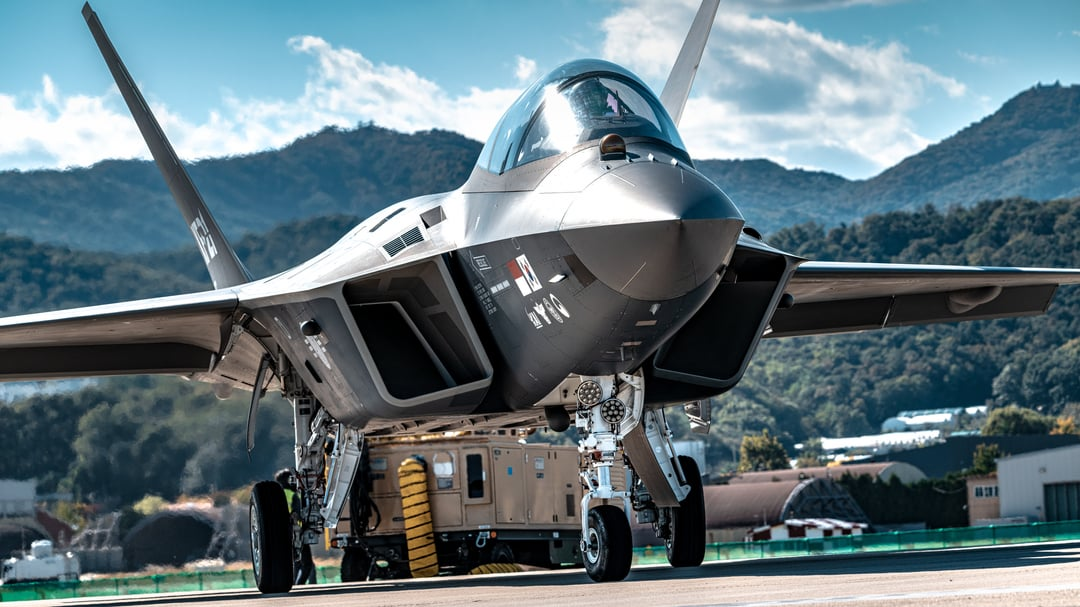
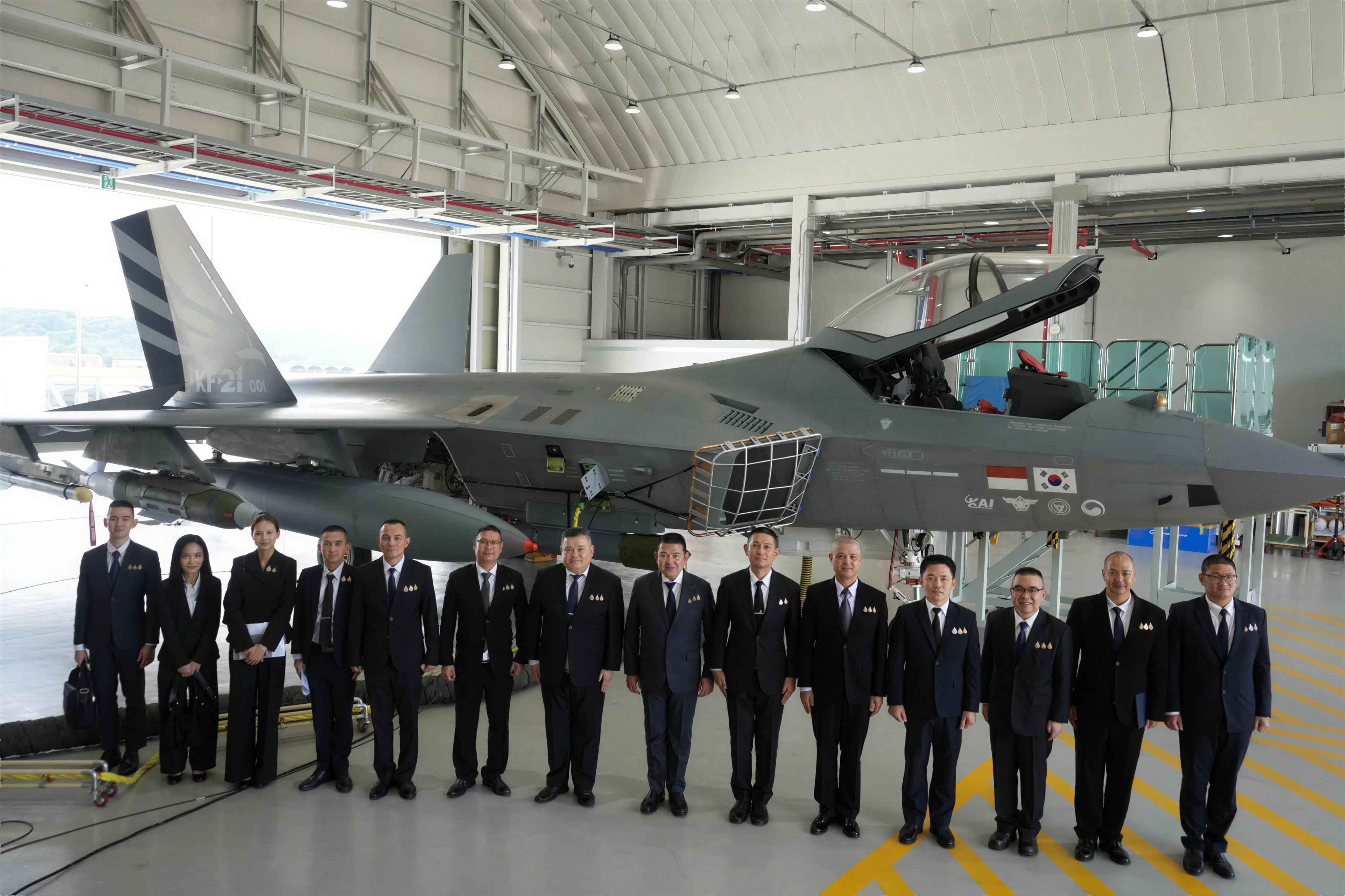
Though I’d written a couple of threads, this will only be my second suggestion, specifically on the KF-21 Block II. With the conclusion of its flight tests and first rollout in March 2026, service entry is expected in September 2026, I thought it well-timed to propose its addition to War Thunder. With the Block I standard and its armament deemed sufficient for introduction, I believe the KF-21 Block II would be an excellent addition offering the multi-role capability desired in a top-tier aircraft. It’s important to note this variant of the KF-21 is only essentially complete, planned munitions are still undergoing integration or are under development.
Note:
- This is merely a suggestion for an aircraft who may be represented in the future, the specific timing is irrelevant
- Feel free to share any additional information you may have, as the KF-21 always has the chance of receiving additional changes before entering service
- Feel free to inquire or correct me on anything that is incorrect or seems wrong
General Information
Originating from the Korean Fighter eXperimental (KF-X) development program, the KF-21 is a medium-weight “4.5” generation (+/++) designed to secure air superiority, perform long-range precision strikes and neutralize land and sea infiltration forces. Greatly responsible for the KF-X system’s development, Korea Aerospace Industries (Ltd.), or KAI (Ltd.), along with 16 domestic universities, 11 research institutes, and 553 partner companies participated in the KF-21’s creation.
The development of the KF-21 was envisioned to advance the industrial manufacturing capabilities of South Korea while preventing a power vacuum, as the Republic of Korea Air Force (ROKAF) intends to replace dated aircraft with an initial order of 120 aircraft, and a maximum of 250. Some KF-21s will be introduced as two-seat models for conversion training.
Fraught with delays and postponement as the feasibility and economic cost were debated, renewed interest in the KF-X program arose. A study published in 2008 and incidents with North Korea throughout 2010 concluded the KF-X program was a matter of national importance.
Designed to fulfill the requirements of structural strength and durability to withstand high maneuvering loads in transonic and subsonic ranges, the KF-21 secures excellent combat maneuverability through high lift-to-drag ratio in a wide flight envelope, enabling performance of various missions with high angle of attack characteristics. Smaller than the F/A-18E/F while using the F414-GE-400, the KF-21’s thrust -to-weight ratio is more comparable to the Eurofighter Typhoon. The KF-21’s wing loading is lower than the F-35 while maintaining similar thrust. To fulfill the requirements of a 4.5 generation (+/++) in a timely and cost-effective manner, KAI and the ADD opted for a Dual-path approach involving the indigenization of key components wherever possible and utilizing proven international expertise wherever necessary.
The KF-21 Block II
Despite the Dual-path approach, four major technologies required indigenous development, in some capacity, after failure to achieve approval for transfer from the United States: The IRST, the Radar, the Radio Frequency Jammer (RF Jammer), and the Electro-optical Targeting Pod (EOTGP). These critical components were required for the successful achievement of a functional modern fighter jet.
The KF-21’s IRST was developed based on Leonard’s Skyward. The Skyward-K was modified back-end and features South Korean software. Denoted as APY-016K, the active electronically scanned array (AESA) radar of the KF-21 was developed by the Agency for Defense Development (ADD) and Hanwha Systems.
The KF-21’s integrated electronic warfare (EW) suite, or KF-21 EW Suite, consists of a radar warning receiver (RWR), electronic countermeasures (ECM), and a chaff/flare dispenser (CMDS). With an ECM based on the ALQ-200K, the KF-21 EW suite can detect across the C~J-Band, and for E~J-Band against multiple threats. The KF-21’s Electro-optical Targeting Pod (EOTGP) is used in air- to-air missions and can detect enemy aircraft more effectively through IRST and sensor fusion.
In need of an interim engine, the General Electric F414 was selected on July 12, 2016, being approved for production under license after winning contention against the Eurojet EJ200. The HUD utilized by the KF-21 is developed by LIG Nex1, with ELTA’s JHMCS-II as the HMD and featuring Hands-on Throttle and Stick (HOTAS) controls with Direct Voice Input (DVI).
The development and maturation of these critical components coincided with successful testing of the KF-21’s Prototype Batch, allowing for the KF-X program to transition to the Initial Mass-Production phase. Between 2026 to 2028, a production volume of 40 units is expected for the completed KF-21 in the Block I standard.
The production and fulfillment of initial Block I mass production orders was necessitated by the urgent replacement of aging F-5s and KF-16s in the ROKAF air fleet. As such, Block Is without ground attack capability would be pushed into service. With achievement of full mass production, the KF-21 Block II allows for achievement of a proper multi-role fighter carrying a combination of foreign and indigenous munitions to accomplish tasks requiring engagement of ground or naval targets. Though complete in its Block I standard, the KF-21 Block II represents the indigenous MRF envisioned during the program’s inception.
Armament of KF-21 Block II
The KF-21 is due to expand dramatically with each successive block. The Block II is equipped for multi-role capabilities allowing air-to-air and air-to-ground/naval engagements. Munitions such as the MBDA Meteor and Diehl IRIS-T were expedited for integration thanks to export restrictions preventing Raytheon’s AIM-120s and AIM-9Xs from installation. Now with approval, and all previous and current plans still suggesting their use, Raytheon’s AIM-120s and AIM-9Xs are likely to be integrated into KF-21s at a later date.
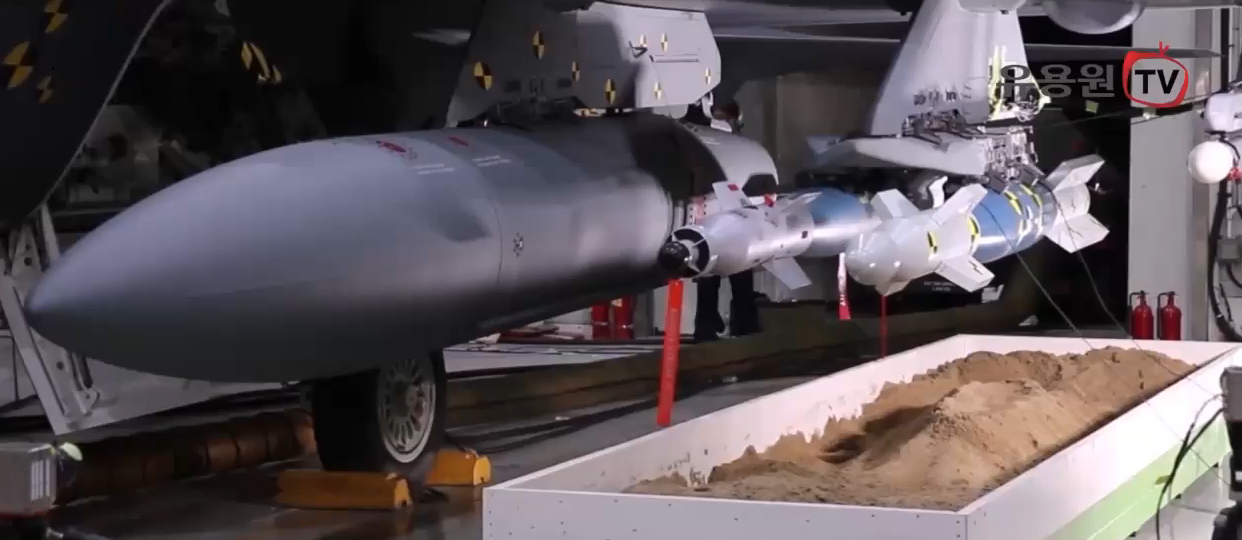
Recent orders from the Defense Acquisition Program Agency (DAPA), and test footage published by DAPA confirm the intended integration and use of several American and South Korean ground/naval munitions with the KF-21. KALCM, though present in said DAPA test footage, is still in development. KALCM has received live separation tests and is present in all modern material regarding the KF-21. MBDA’s SPEAR is also still under development, however a Memorandum of Understanding (MoU) was signed between KAI and MBDA on October 20th, 2025. The MoU between KAI and MBDA outlines the intention to integrate the SPEAR missile system on the KF-21.
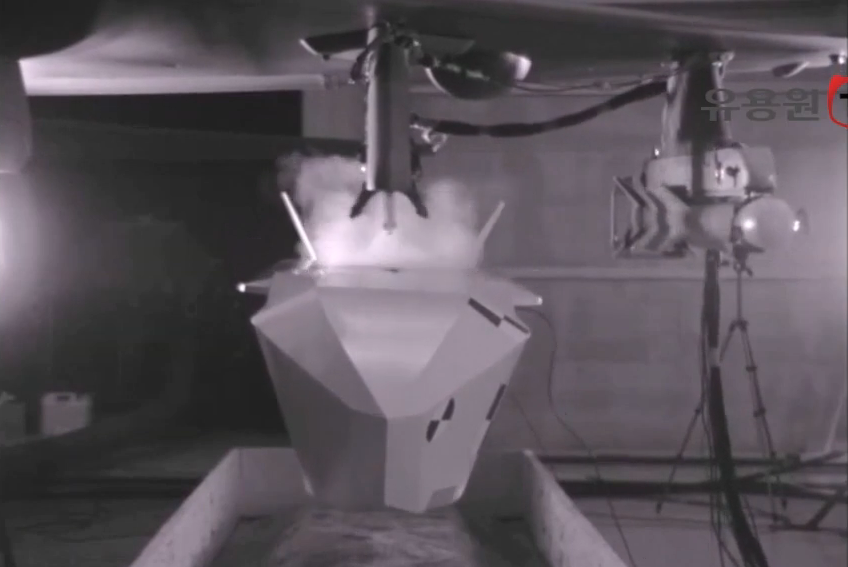
Note: The KF-21 was often planned to use the listed munitions in displays, documents, and expos with great regularity. The armament discussed represents the most realistic weapons systems to be integrated into the Block II standard from among the many suggested options throughout the KF-X program’s development. As the KF-21 matures, the systems integrated are subject to change.
Air-to-Air Missiles
6x MBDA Meteor
4x Diehl IRIS-T
Guided/Dumb Bombs
16x GBU-39 (SDB-I)
4x GBU-56 LJDAM
4x GBU-31 JDAM
4-8x GBU-38 JDAM
4-8x GBU-12 LGB
4-8x Mk. 82
4x Mk. 84
4-8x LIG Nex1 KGGB
Air-to-Surface Missiles
12-16x MBDA SPEAR
4x LIG Nex1 KALCM
Internal Gun
1x General Dynamics Ordnance and Tactical Systems M61A2 20mm Gatling Gun w/ 480 rounds and 6000 RPM
Specifications and Internal
Crew: 1
Length: 16.9 m (55.4 ft)
Wingspan: 11.2 m (36.7 ft)
Height: 4.7 m (15.5 ft)
Wing area: 46.5 m2
Empty weight: 11,800 kg (26,015 lbs.)
Loaded weight: 17,200kg (37, 920 lbs.)
Maximum Takeoff Weight (MTOW): 25,600 kg (56,400 lbs.)
Powerplant: 2 × General Electric F414-GE-400K
Dry thrust: 57.8 kN (13,000 lbf)
Thrust with afterburner: 97.9 kN (22,000 lbf)
Maximum speed is Mach 1.81
1378 km/h at sea level
2200 km/h at altitude
Service ceiling: 16,768 m (55,000 ft)
Rate of climb: >305 m/s
Wing loading:
Max. Payload: 7,700 kg (17,700 lbs.)
Thrust/weight:
Maximum: 1.69
Minimum: 0.79
Maximum g-load: +9g / -3g
Learn more about the KAI KF-21 here:
Thanks for reading! More (important/declassified) information will be added when available.
Sources:
Links:
Meteoric success in Korea | MBDA
KAI KF-21 accomplished first successful firing of IRIS-T | Diehl Defence
Partners in Flight: Powering the Next Chapter of Korea’s Aerospace Industry | GE Aerospace News
https://m.koreaaero.com/en/business/KF21.aspx
KF-21 completes four-year flight test campaign - FlightGlobal
South Korea clarifies KF-21 weapons development plans - FlightGlobal
F-16 20mm Gun System M61A1 Six-barrel Gatling Gun and Feed System
KFX(Korean Fighter eXperimental) | Air | SPACE&AIR | Defense | Hanwha Systems
https://www.lignex1.com/eng/business/elcWrfList.do
South Korea Starts KF-21 Pit Drop Trials with Air-to-Ground Weapons - The Aviationist
Integration of the SPEAR missiles onto the KF-21 Boramae fighter | MBDA
Other
Air International - Global Aerospace Analysis: November 2024
Aviation Week and Space Technology, Inside the KF-21 Factory: November 10, 2025
KAI - Business Brochure: 2021