- Yes
- No
Kawanishi H8K2 Model 12 late production
The Kawanishi H8K2 Model 12 late production refers to the modified version of the Kawanishi H8K2 Model 12 aircraft that was introduced into production in mid-1944. Probably 34 aircraft of this type were built by the end of the war.
History
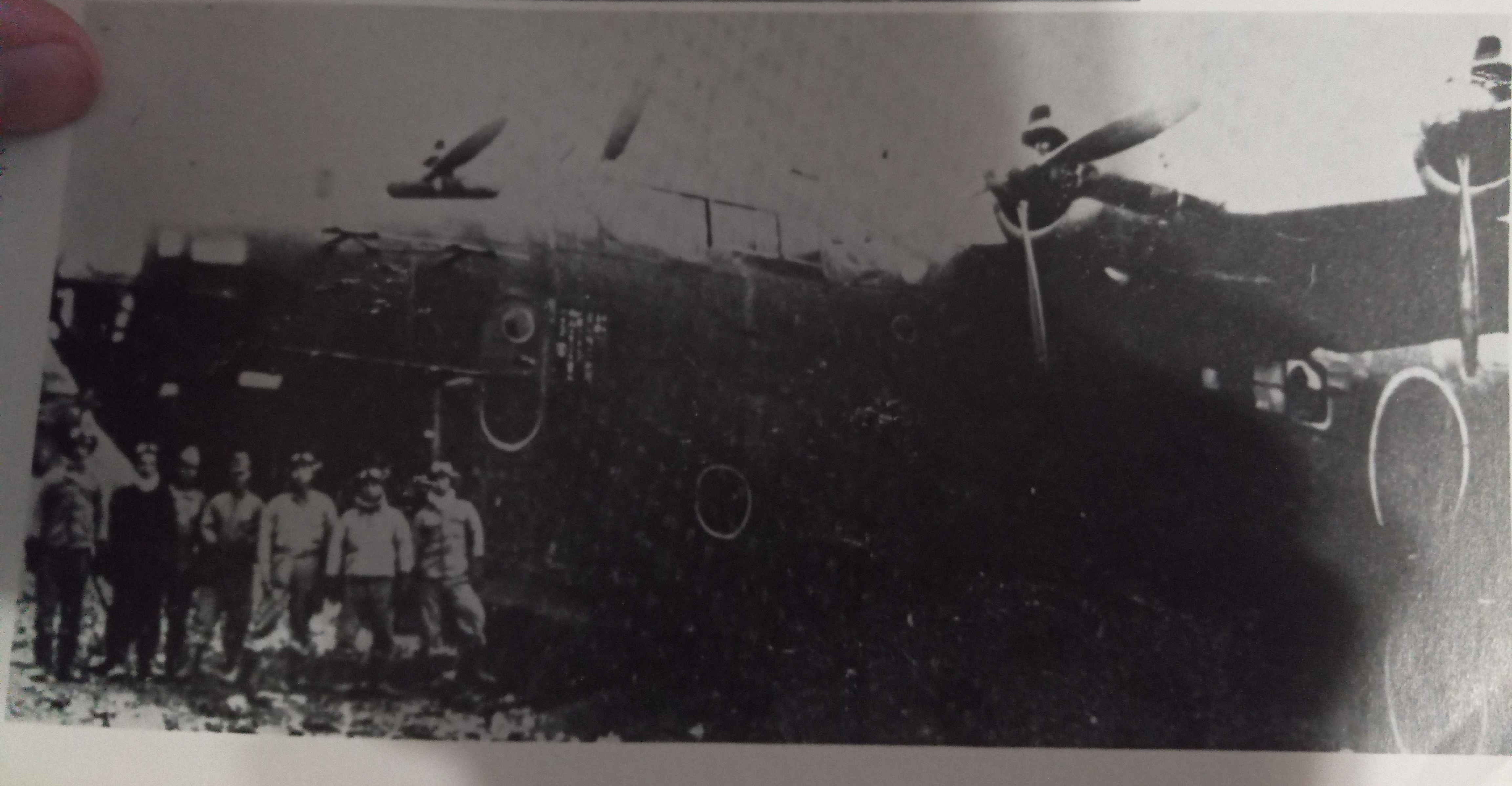
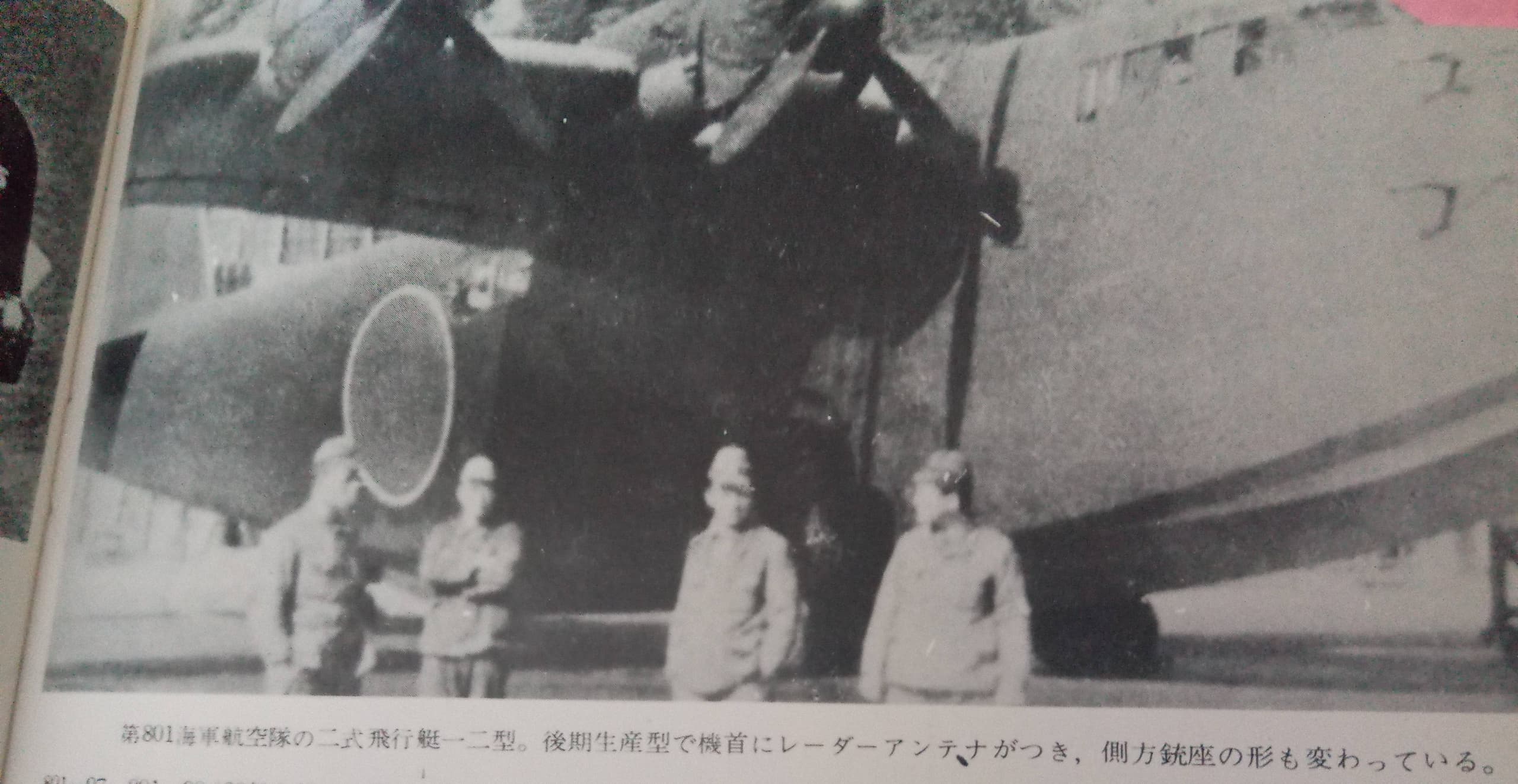
After the improved Kawanishi H8K3 Model 22 was rejected at the beginning of 1943 and not put into production, Kawanishi continued producing the Kawanishi H8K2 Model 12 aircraft at its factories. In 1943, the Kawanishi H8K flying boats were still aircraft that instilled fear in American pilots, especially at low altitude, when the heavy defensive armament of the H8K could deter American pilots. However, the situation in the Pacific was worsening for Japan with each passing month and becoming increasingly favorable for the USA. Japan was losing more and more islands and territory of its empire, losing pilots and aircraft, while the American army and navy in the Pacific had an increasing number of modern planes and growing numerical superiority. By 1944, even the heavily armed Kawanishi H8K flying boats were becoming increasingly frequent prey for American fighters. Additionally, Japan was experiencing growing shortages of raw materials. All these factors led to the need to improve the basic production version of the Kawanishi H8K2 Model 12. These flying boats were expensive to produce, and each shot-down Kawanishi H8K was a huge blow (by the end of the war, only 167 Kawanishi H8Ks of all versions were produced). To prevent losses, it was decided to use two solutions: higher speed and better detection. To improve the aircraft’s speed, it was decided to implement the solution from the second prototype of the Kawanishi H8K3. In the second H8K3 prototype, new side gunner positions were used. Instead of the bulging, teardrop-shaped side positions, rectangular windows with a slight bulge at the rear were used. Additionally, the side gunner position was moved from the end of the main wing root under the aircraft wing. This modification reduced aerodynamic drag and slightly improved the performance of the Kawanishi H8K2. To further increase the survivability of the aircraft, it was decided to install the Type 3 Ku Pattern 6 Model 4 radar, better known as H-6 (used in other Japanese Navy aircraft such as the Nakajima B6N2a or Mitsubishi G4M). This radar allowed for the detection of maritime targets (large ships over 100 km, small ships 50 km) as well as aircraft, which was intended to facilitate the detection of enemy ships and the ability to avoid American fighters. These improvements were meant to increase the survivability of newly produced Kawanishi H8K2 Model 12 aircraft, and they were implemented in production from mid-1944. In 1945, the later-production Kawanishi H8K2 Model 12 aircraft were still capable of engaging the Americans. An interesting example of such combat occurred on March 17, 1945. On that day, five H8K2 flying boats took off from the Takuma airbase in Shikoku on a nighttime mission to search for the American fleet group responsible for the attack on the Kyushu and Shikoku regions. One of the Kawanishi H8K2 flying boats was piloted by Warrant Officer Etsuro Kinoshita. During the mission, Kinoshita’s plane made contact with an American group, and as it was turning right to return to base, it was attacked by a formation of a few Grumman F6F Hellcat fighters. The Kawanishi H8K2 was hit in the engine, which caught fire, and the fuselage started showing bullet marks. During the fight with Kinoshita’s plane, Lieutenant Kawase was killed. However, the flying boat fired back at the American fighters, shooting down one of the F6Fs. When the F6F planes pulled back, the H8K flew extremely low to avoid being detected again. At that point, they were out of ammo for defense and also low on fuel because of the attacks. As Kinoshita’s crew feared they would crash in the Pacific due to running out of fuel, land suddenly appeared in sight. This land turned out to be the Shima Peninsula, where the H8K2 aircraft piloted by Warrant Officer Kinoshita safely landed in a fishing port, with only three engines functioning. Despite the large number of hits, only one crew member (Lieutenant Kawase) was killed, and no one else sustained serious injuries.Kawanishi H8K aircraft served until the end of the war, with only three planes surviving. It is unknown whether any late-production H8K2 Model 12 survived until the end of the war.

Construction description
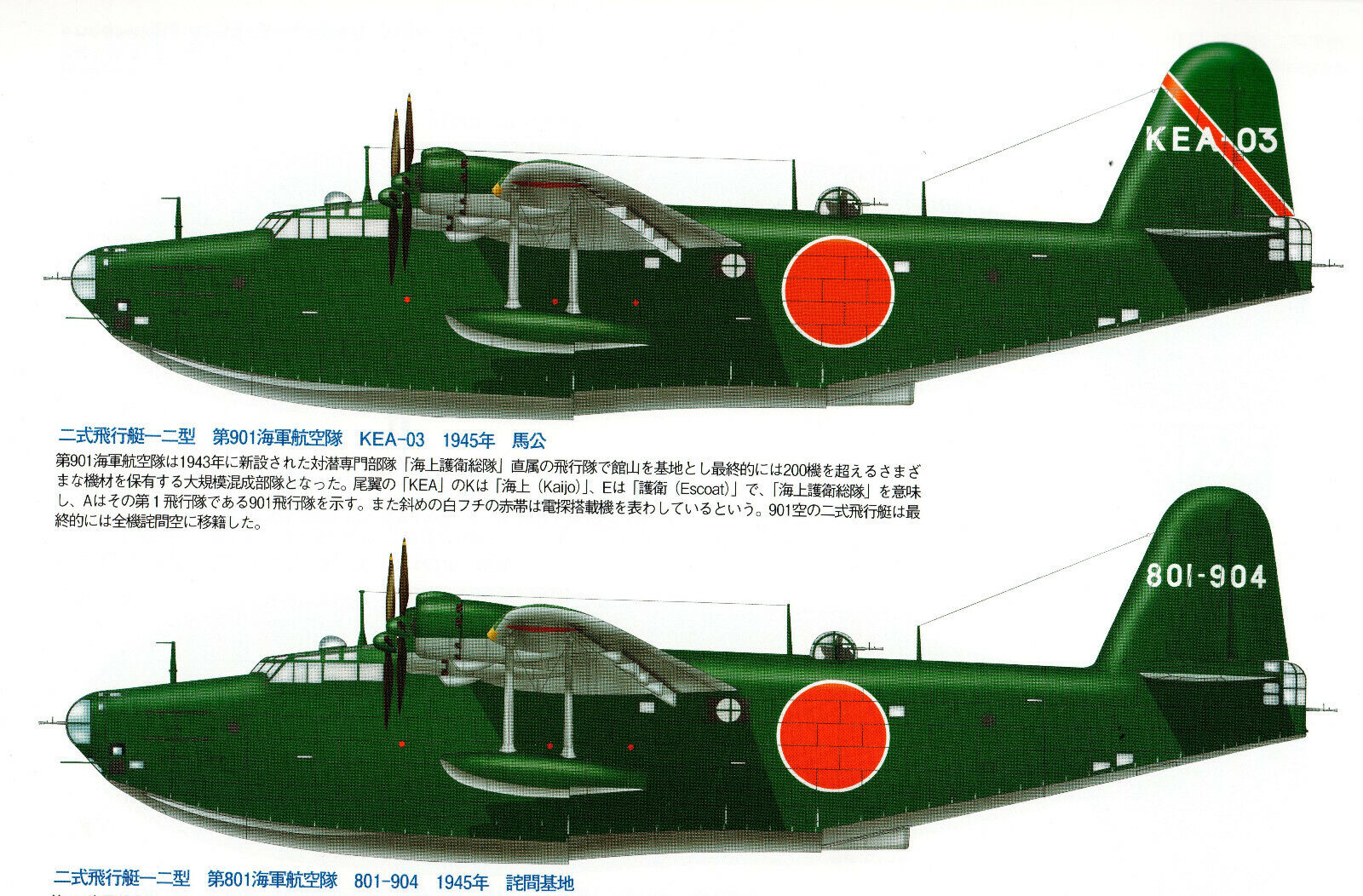
The Kawanishi H8K2 Model 12 late production differs little from the Kawanishi H8K2 Model 12 in the game, but there are significant differences between them.
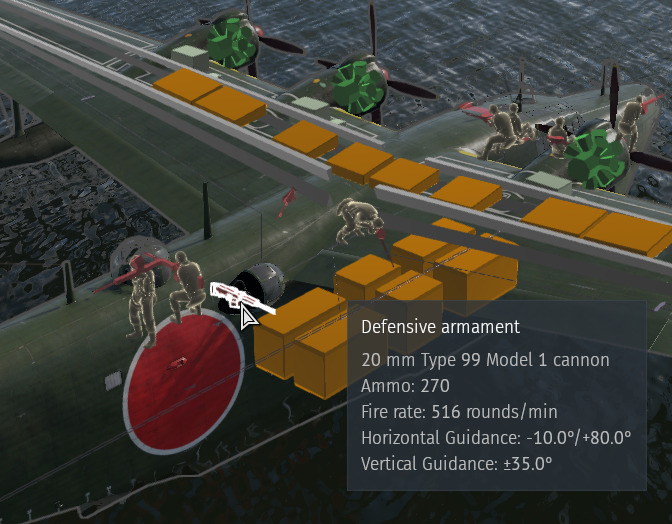
- New side gun positions were introduced, located under the main wing with a new shape (the same as in the second prototype of the H8K3 model 22 and the second prototype of the H8K4 model 23).
- The aircraft is equipped with an H-6 airborne radar with Yagi-type antennas on the nose

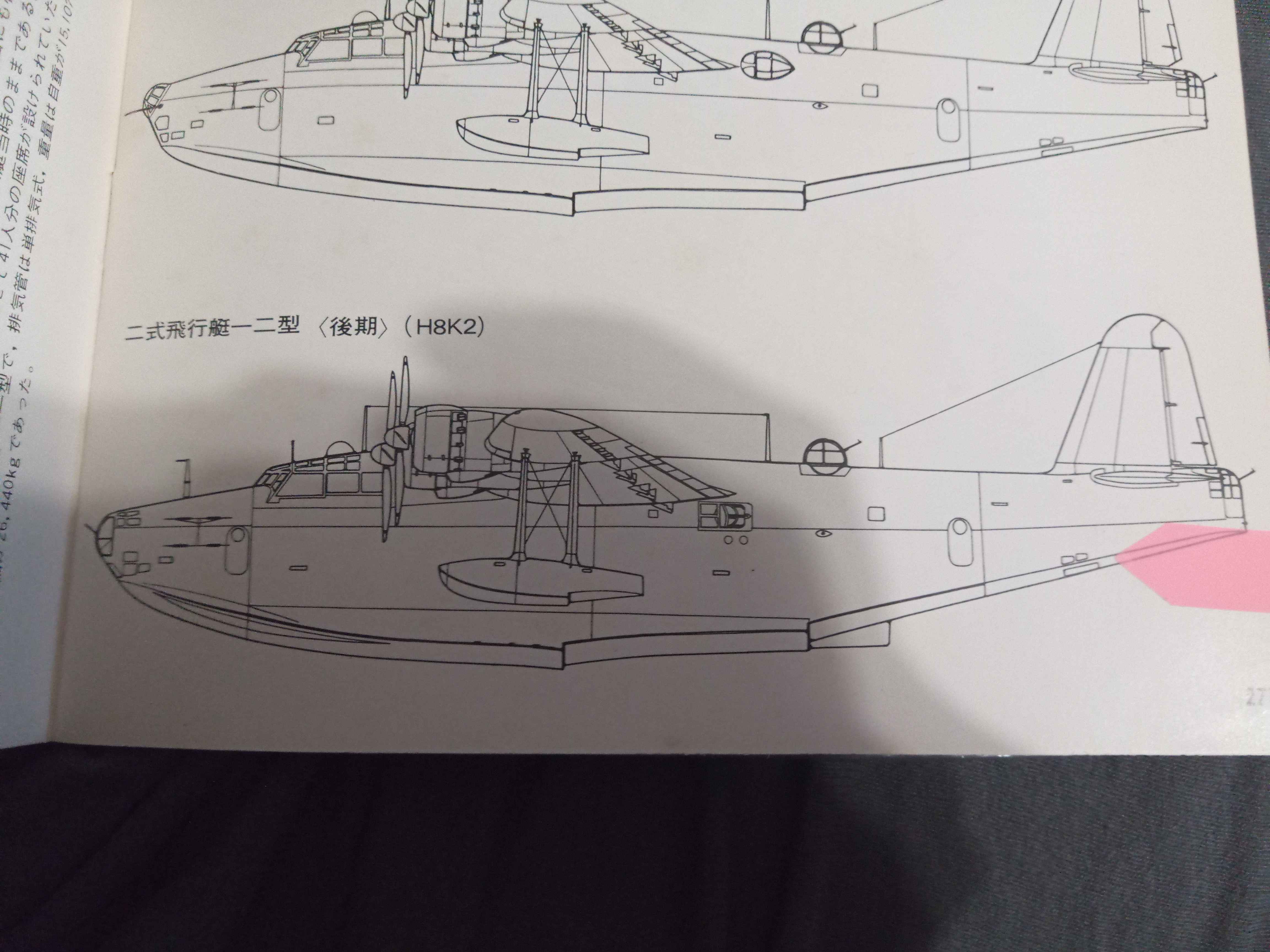
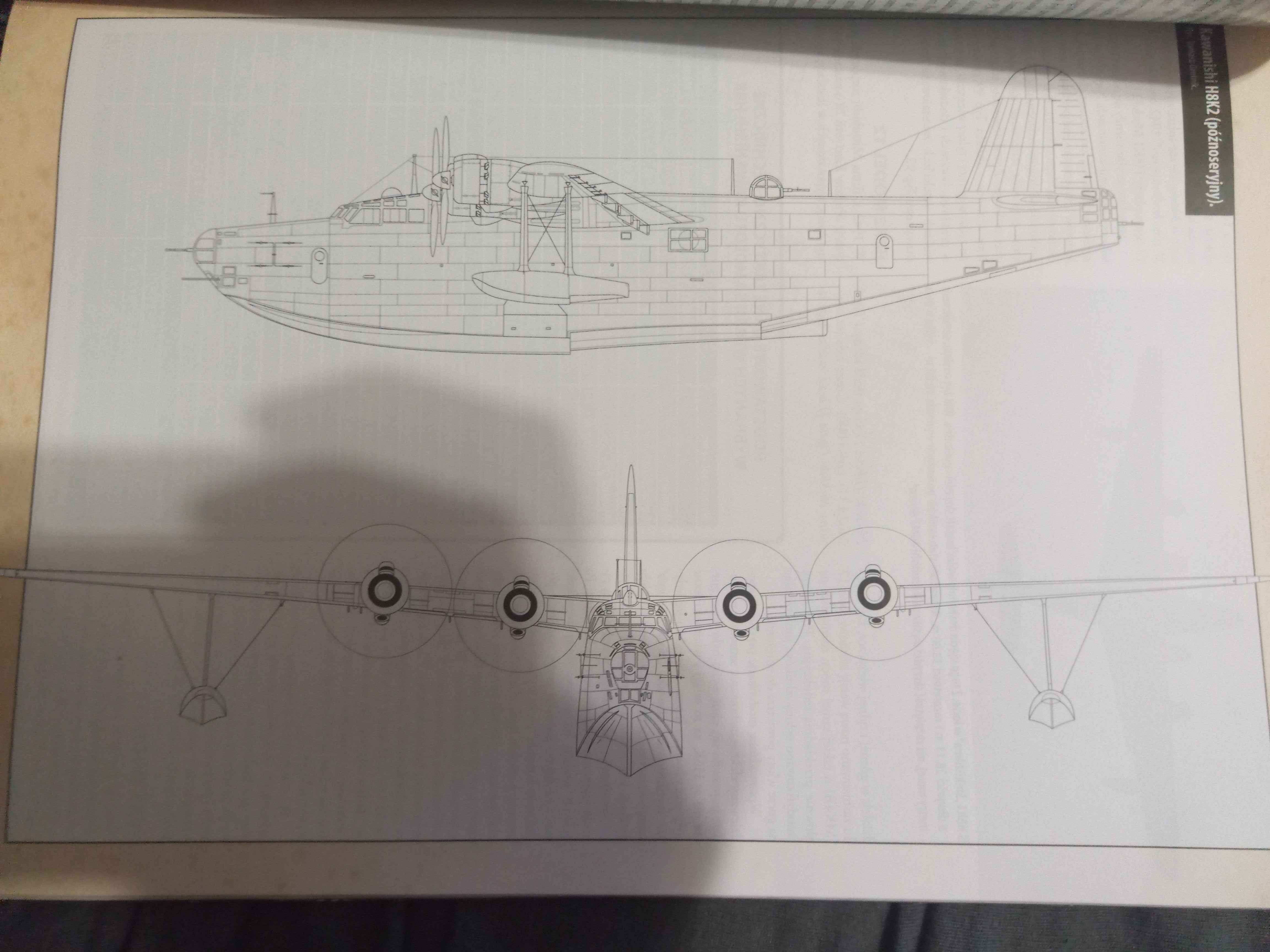
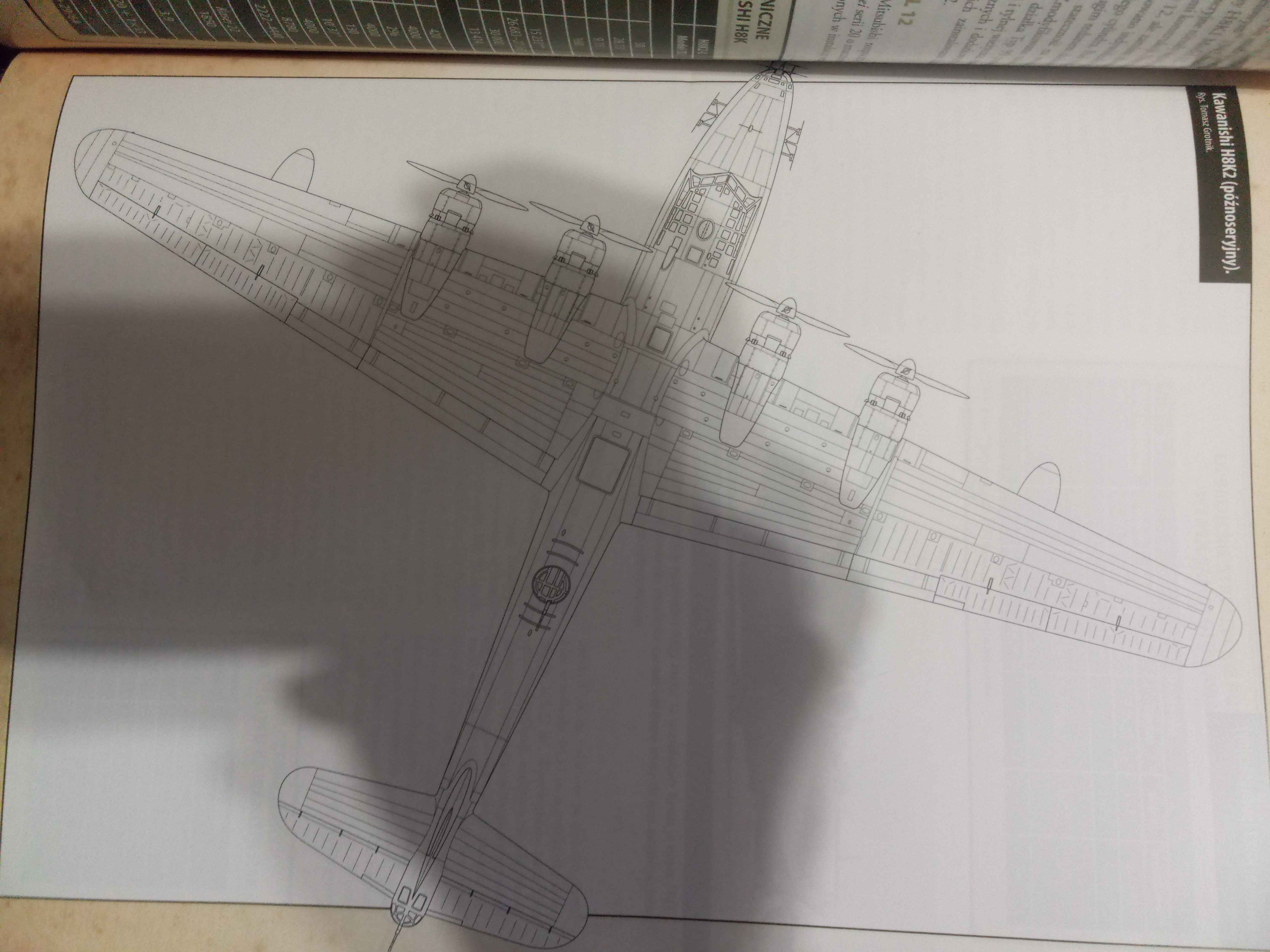

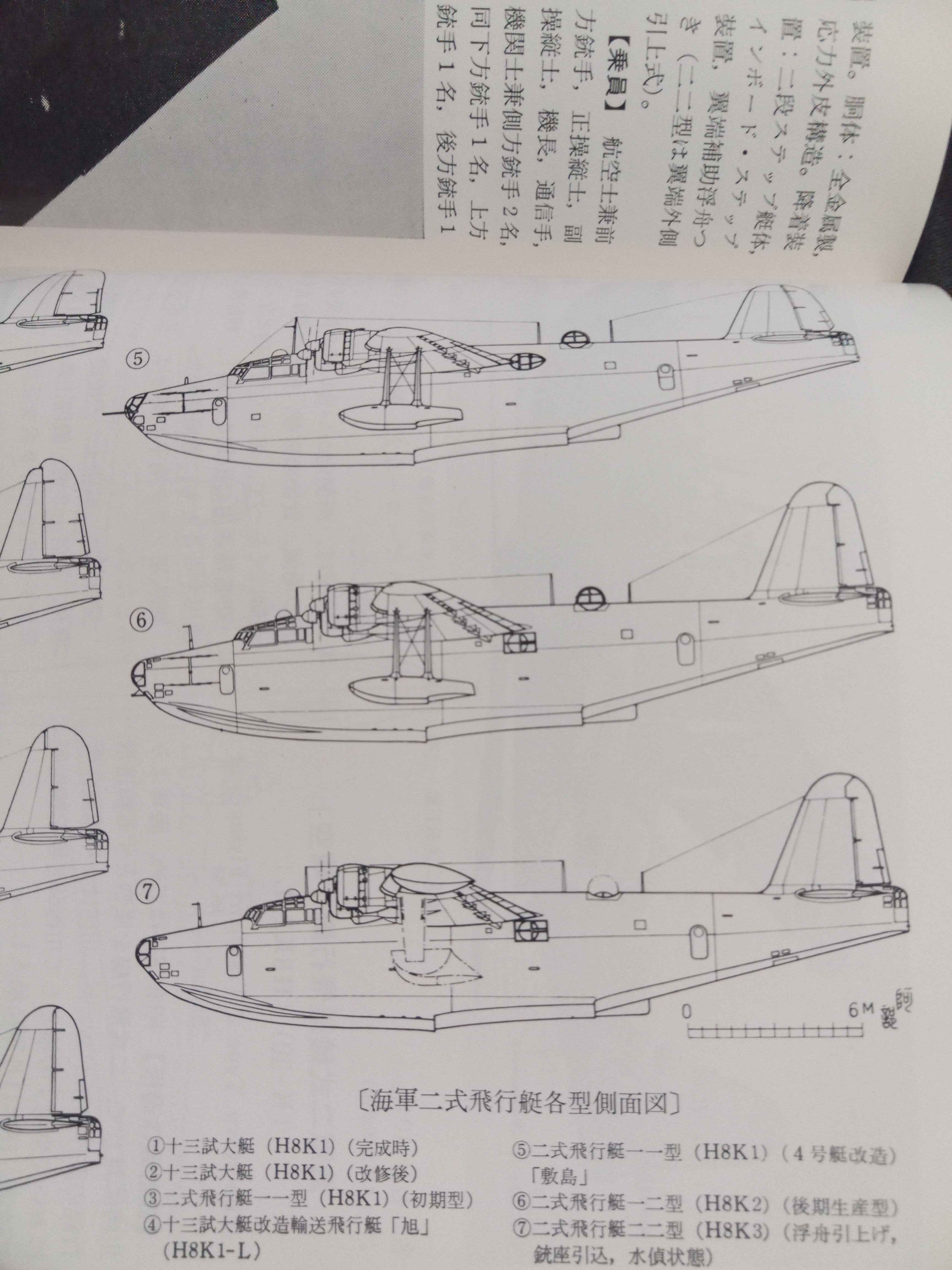
General characteristics
- Crew: 10-13
- Length: 28,130 m
- Wingspan: 38 m
- Height: 9,150 m
- Wing area: 160,00 m2
- Empty weight: 18380 kg
- Take-off Weight: 24500 kg
- Maximum Take-off Weight: 32500 kg
- Powerplant: 4 x Mitsubishi MK4Q Kasei 22 (Ha-32-22) air-cooled, two-row, fourteen-cylinder engine with a takeoff power of 1,361 kW (1,850 hp)
- Propellers: Four-blade metal propeller with variable pitch and a diameter of 3,900 m
Performance
- Maximum speed: 454 km/h
- Cruise Speed: 296 km/h (?)
- Range: 6240 km
- Maximum Range: 7160 km
- Service ceiling: 9120 m
- Time to Climb to: ?
- Climb Rate: ?
Armament
- Guns:
- 1 x Type 99 Model 1 20 mm dorsal cannon (225 rounds)
- 2 x Type 92 7.7mm machine gun in cockpit (970 – 1,064 rounds, each) (Optional)
- 1 x Type 92 7.7mm machine guns on the hull top in front of the first wing spar (970 – 1,064 rounds) (Optional)
- 2 × Type 99 Model 1 20mm guns in side mounts under the wings (360 rounds, each)
- 2 x Type 92 7.7mm machine guns under the wings (970 – 1,064 rounds, each) (Optional)
- 1 x Type 99 Model 1 20mm gun in a dorsal turret (450 rounds)
- 1 x Type 92 7.7mm machine guns on the bottom of the hull (970 – 1,064 rounds) (Optional)
- 1 x Type 99 Model 1 20 mm cannon in tail gun (225-315 rounds)
- Bombs:
- 2 x 800 kg bombs (under the wings)
- 2 x 500 kg bombs (under the wings)
- 8 x 250 kg bombs (under the wings)
- 16 x 60 kg bombs (under the wings)
- 2 x 800 kg torpedo (under the wings)
Armor
- Self-sealing fuel tanks
- 5 mm thick armor plate pilot seats
- 5mm armor plate behind the fuel tanks in the hull (?)
- 5mm armor plate behind the gunner of the dorsal turret
- 20mm armor plate in front of the tail gunner
Additional equipment
- H6 Radar
Summary
The Kawanishi H8K2 Model 12 late production is an interesting flying boat for Japan in War Thunder. This aircraft would be an interesting addition to the H8K2, which could serve to detect enemy aircraft and warn the team. Additionally, new side gunner positions may make it harder to eliminate their crew, improving the aircraft’s survivability. The late-production H8K2 Model 12 could be a Tech Tree, premium, or event aircraft. I encourage you to discuss in the comments and to share your own knowledge on this subject.
Finally, I apologize for the linguistic and logical errors because unfortunately English is not my main language and I had to use google translator.
Internet sources
二式飛行艇 - Wikipedia
Kawanishi H8K
Kawaniši H8K2 12 [Emily] : Kawaniši / Šin-Meiwa
Kawaniši H8K [Emily] : Kawaniši / Šin-Meiwa
Book sources
- 野沢正『日本航空機総集 川西・広廠篇』出版協同社 - page 126-133
- Japońskie Samoloty Marynarki 1912-45 część II (Japanese naval aircraft 1912-45 part II) page 102-106
- 日本航空機辞典 1910年(明治43年)~1945年(昭和20年) 上巻 (Encyclopedia of Japanese Aircraft 1910 (Meiji 43) – 1945 (Showa 20), Volume 1) page 244-247
- JAS Japanese Anti-Submarine Aircraft In The Pacific War page 43-50
- Japanese Aircraft of the Pacific War page 307-317
- Technika wojskowa historia Nr. 6/2014 (Military Technology: History No. 6/2014) page 50-69
- 0113 世界の傑作機 ,文林堂1975年12月号 68. 二式飛行艇

Thank you for reading the suggestion, see you in the next one. Good luck pilots