- Yes
- No

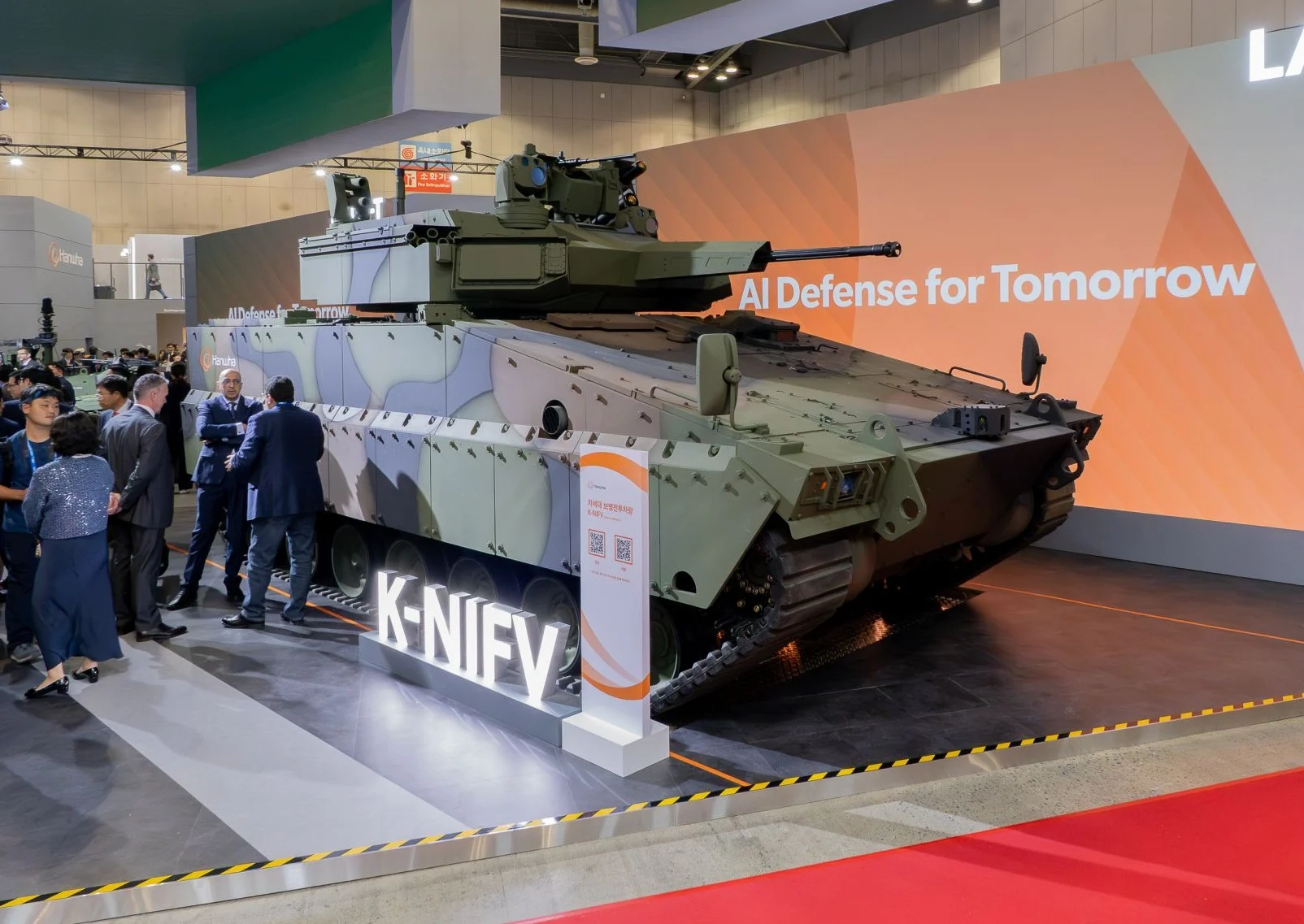
TL;DR: New South Korean IFV prototype based on the export AS21 Redback, fitted with an unmanned 30mm-armed turret, fire-and-forget ATGMs, and a hard-kill APS
Note:
This suggestion is for the first (and currently only) prototype of the K-NIFV, unveiled in late 2025. Should other prototypes, or the final production variant, differ in design, other suggestions will / should be made for them
History
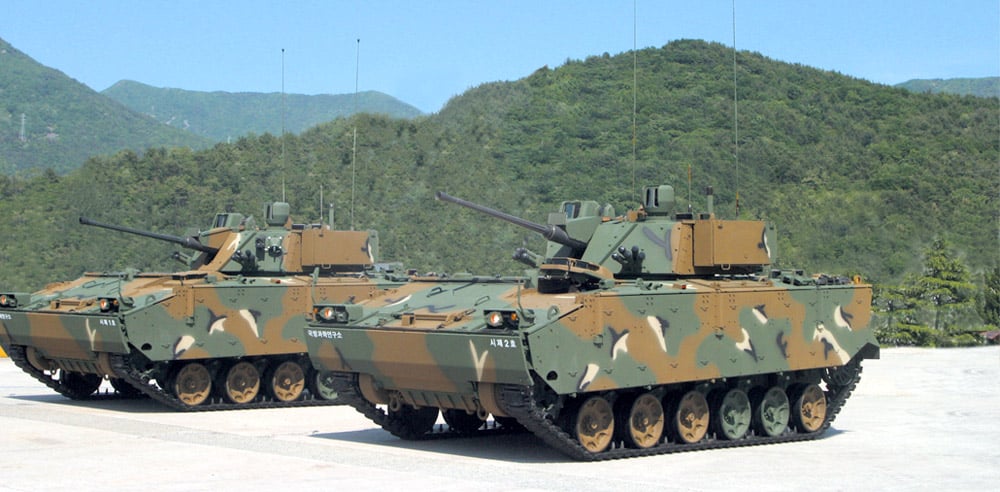
South Korea’s K200, an APC derived from the American AIFV, itself based on the M113, entered production in 1985. While the primary variant was an APC, the K200 was used as the basis for a number of other vehicle types, including the prototype KAFV-series developed in the late 1990, which were attempts at producing AFV and IFV variants. Prior to the development of the KAFV, however, work had already been carried out in the 1980s on an IFV variant of the K200, including at least one full-scale mock-up, as well as a prototype fitted with a 25mm Oerlikon cannon. Ultimately this project would fail, and instead work began on developing an entirely new IFV in the early-to-mid 1990s. Economic concerns held the project back briefly, until 1999, when development officially began.
In 2003, Doosan DST (now Hanwha Defense) was awarded a contract for the development of the new IFV, at the time named NIFV (Next Infantry Fighting Vehicle), worth $77 million. In 2005, the first three prototypes of the NIFV, officially designated K21, were built and sent for testing. A contract for the production of the first batch was signed in October 2008, and mass production began in November 2009. By the end of the production of the third batch in 2016, 466 vehicles had been built. A fourth production batch of 120 vehicles was approved in 2024, with production slated to end in 2028, with the goal of replacing all K200 APCs.
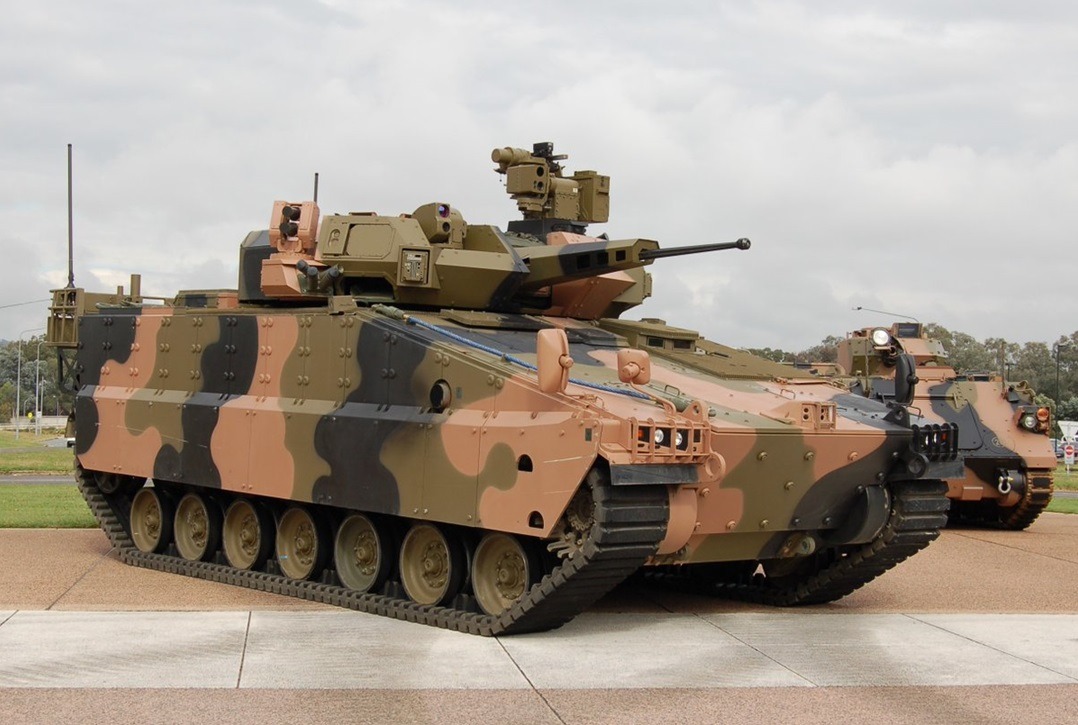
At ADEX 2019, Hanwha Defense unveiled the first prototype of the AS21 Redback, an IFV designed for Australia’s Land 400 Phase 3 project, announced in 2018. The AS21 is not closely related to the K21, but the two vehicles do share a number of characteristics. The AS21, equipped with a 30mm autocannon, a hard-kill APS, modular armour, and an advanced FCS, was selected as the winner of the competition, and a contract was signed for the production of 129 vehicles in Australia in 2023. Production is expected to end in 2028.
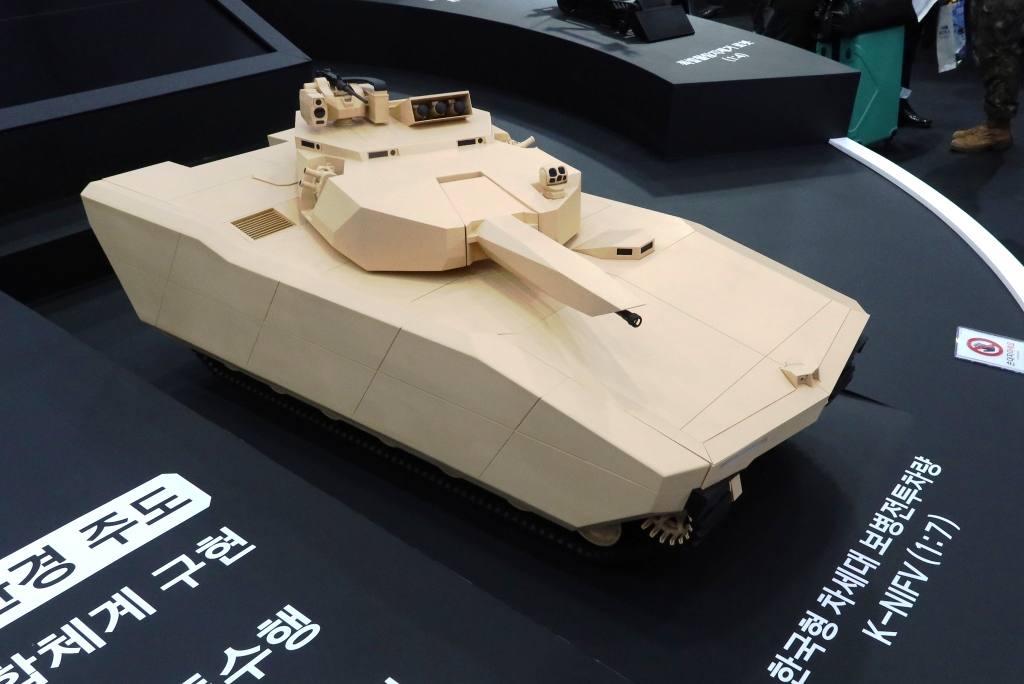
At DX Korea 2022, Hanwha unveiled a scale model of the ‘K-NIFV’, a proposed replacement for the K21 for South Korea. It was shown alongside other vehicles designed on a similar chassis, including an ATGM carrier and a fire support vehicle. The vehicle appeared to be heavily derived from the design of the AS21. The same vehicles were then shown off at ADEX 2023, with more information revealed. The K-NIFV was intended to house a new turret, armed with a 40mm CTA (Cased Telescopic Ammunition) cannon, alongside a triple TAipers ATGM launcher embedded in the turret. It was to be protected by the Iron Fist APS, alongside enhanced armour.
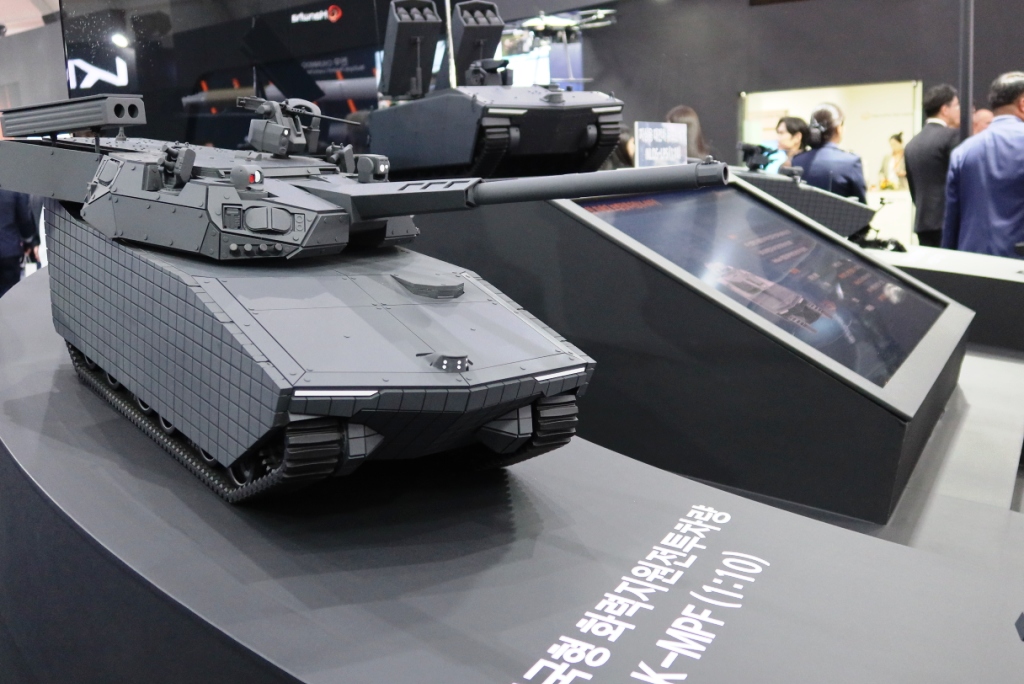
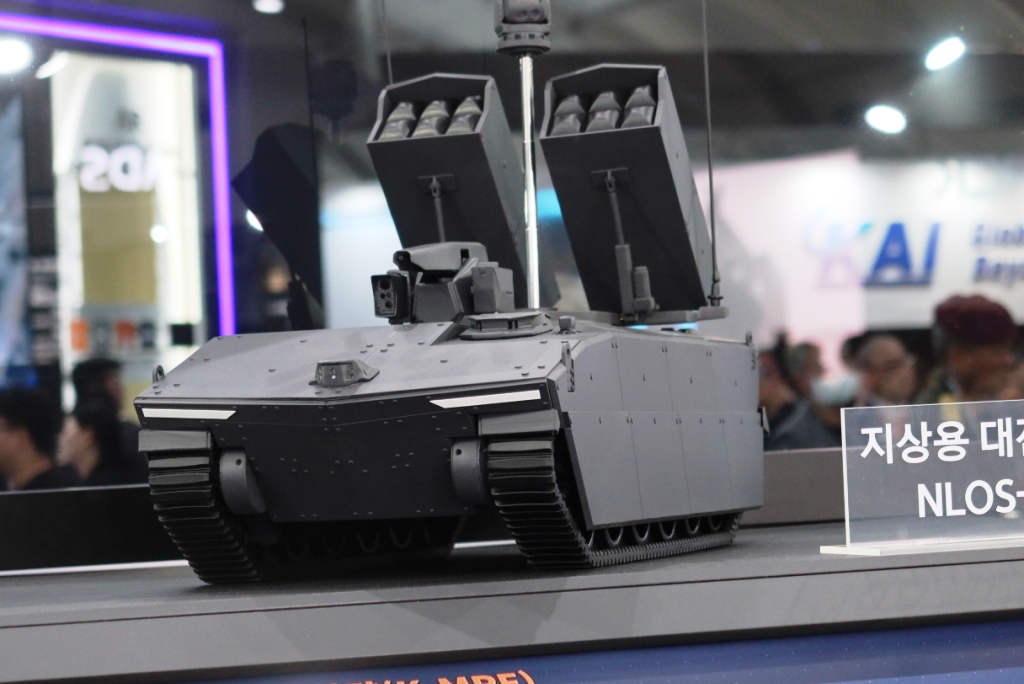
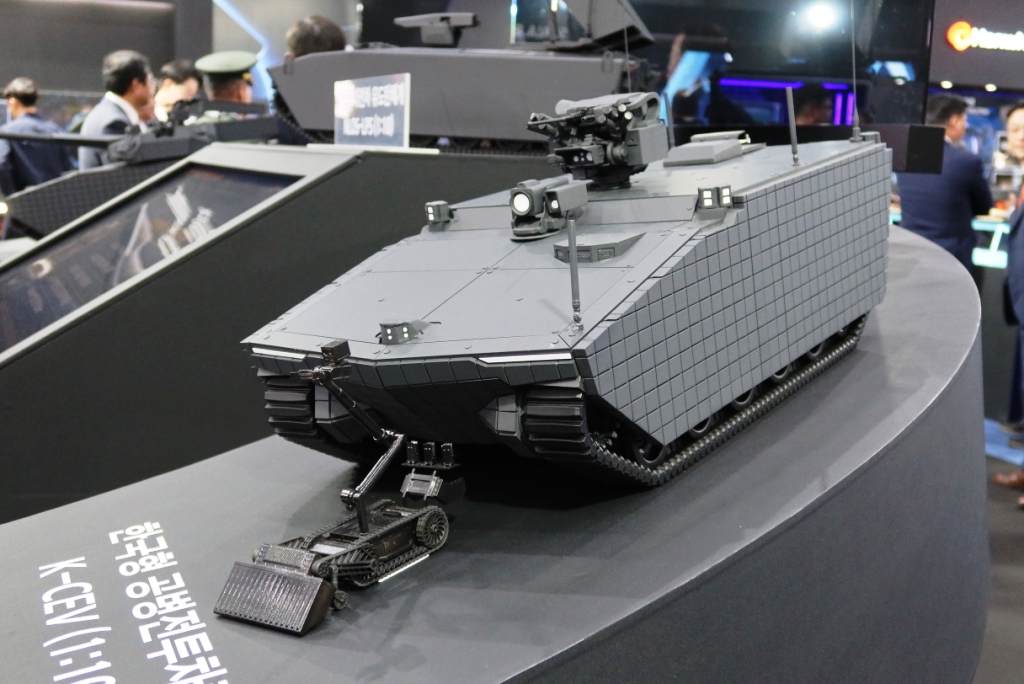
Whilst the K-NIFV was under development, reports emerged in 2024 that South Korea was considering the ‘Redback-eX’, a ‘Koreanised’ variant of the AS21, prior to production of the K-NIFV. It should be noted, however, that the Redback-eX is simply another name for Block I of the K-NIFV. At INLEX 2025, Hanwha revealed their roadmap for the development of the K-NIFV: Block I is intended to build upon the AS21 Redback, integrating more Korean systems, but retaining largely the same firepower and other capabilities, including the 30mm autocannon. Block II is planned to be armed with a 40mm CTA cannon, and be equipped with a stealth design, electric propulsion, and a fire control system integrated with AI (it should be noted some reports suggest that Block I will also be compatible with / upgraded to the 40mm CTA cannon).
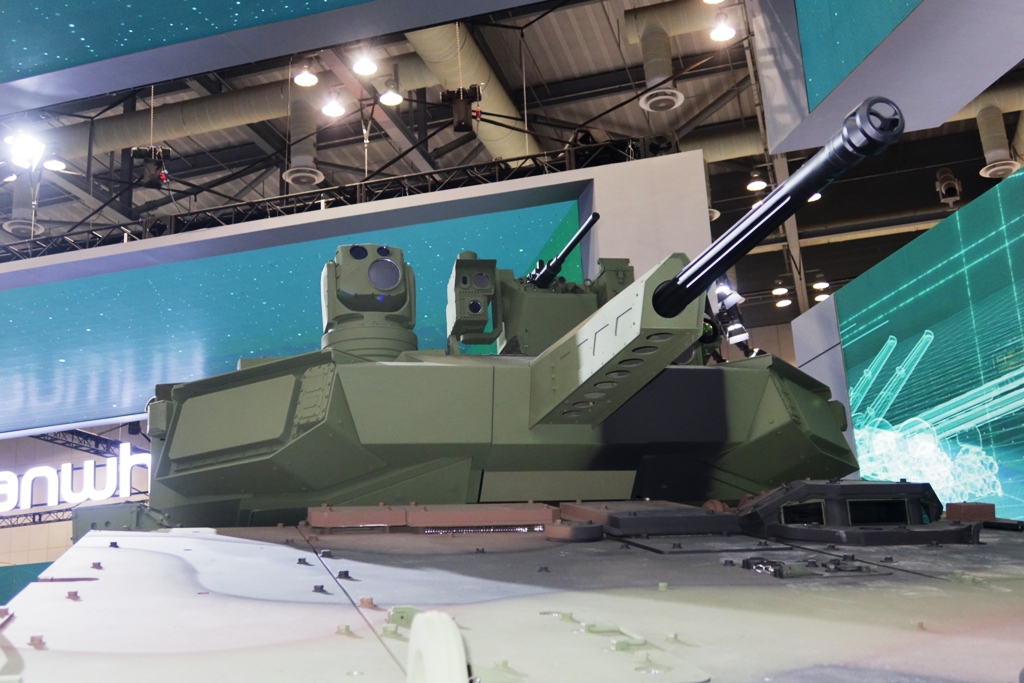
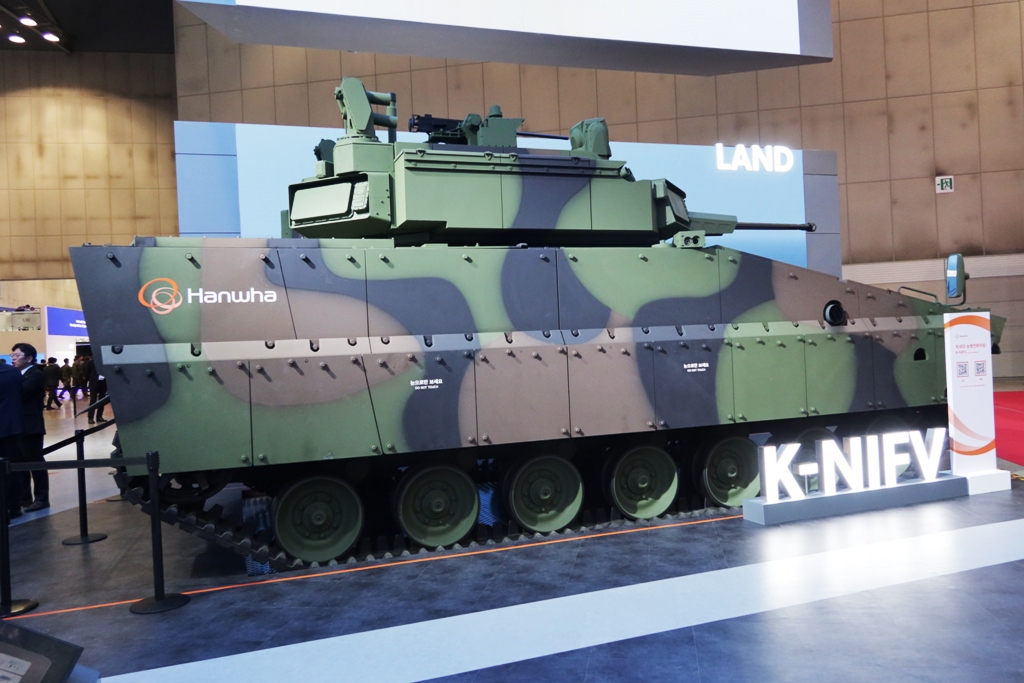
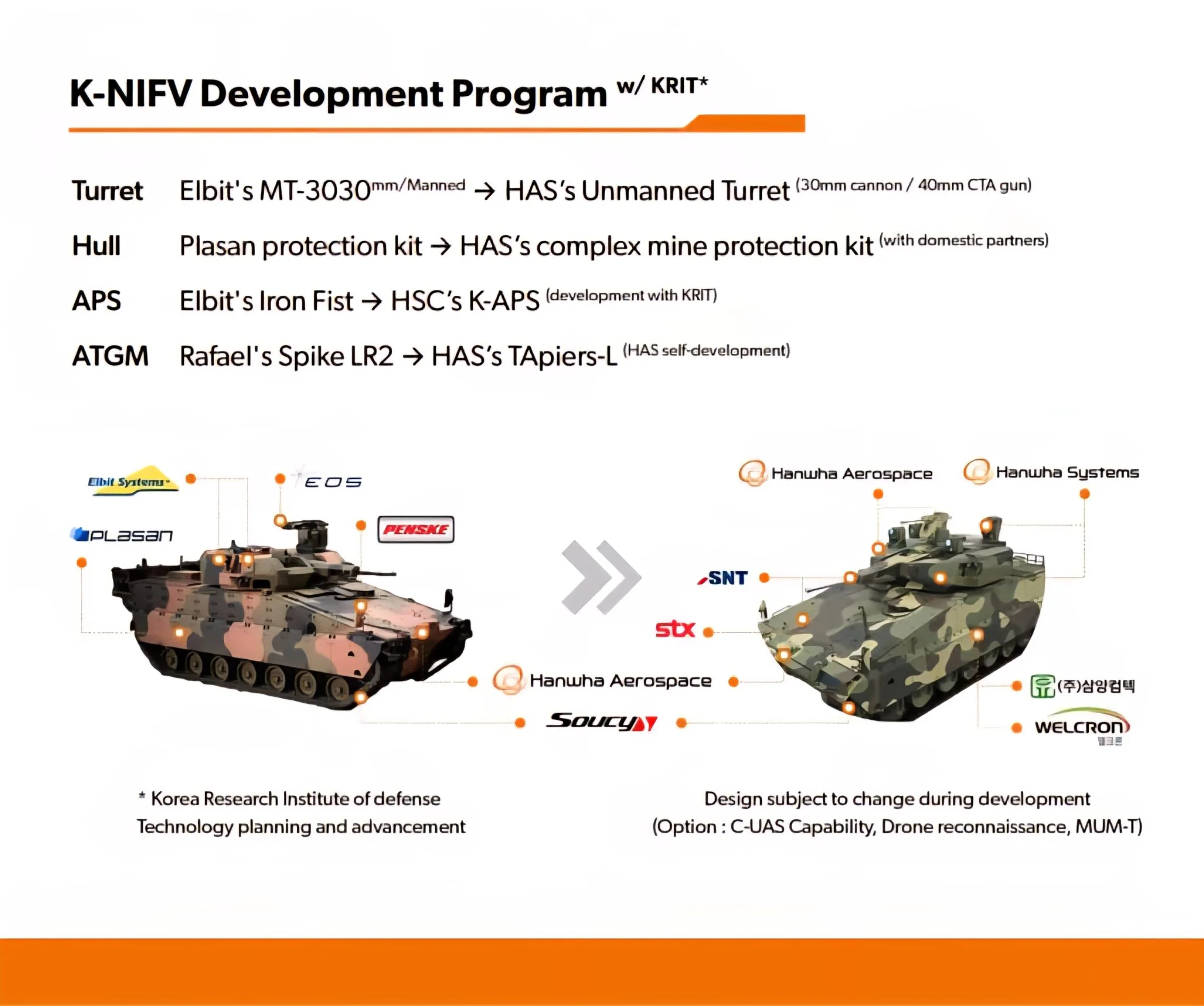
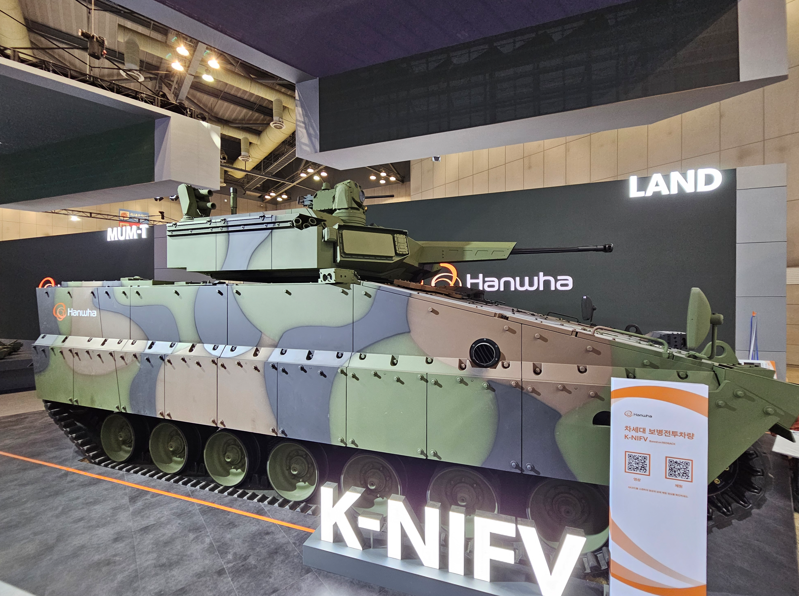
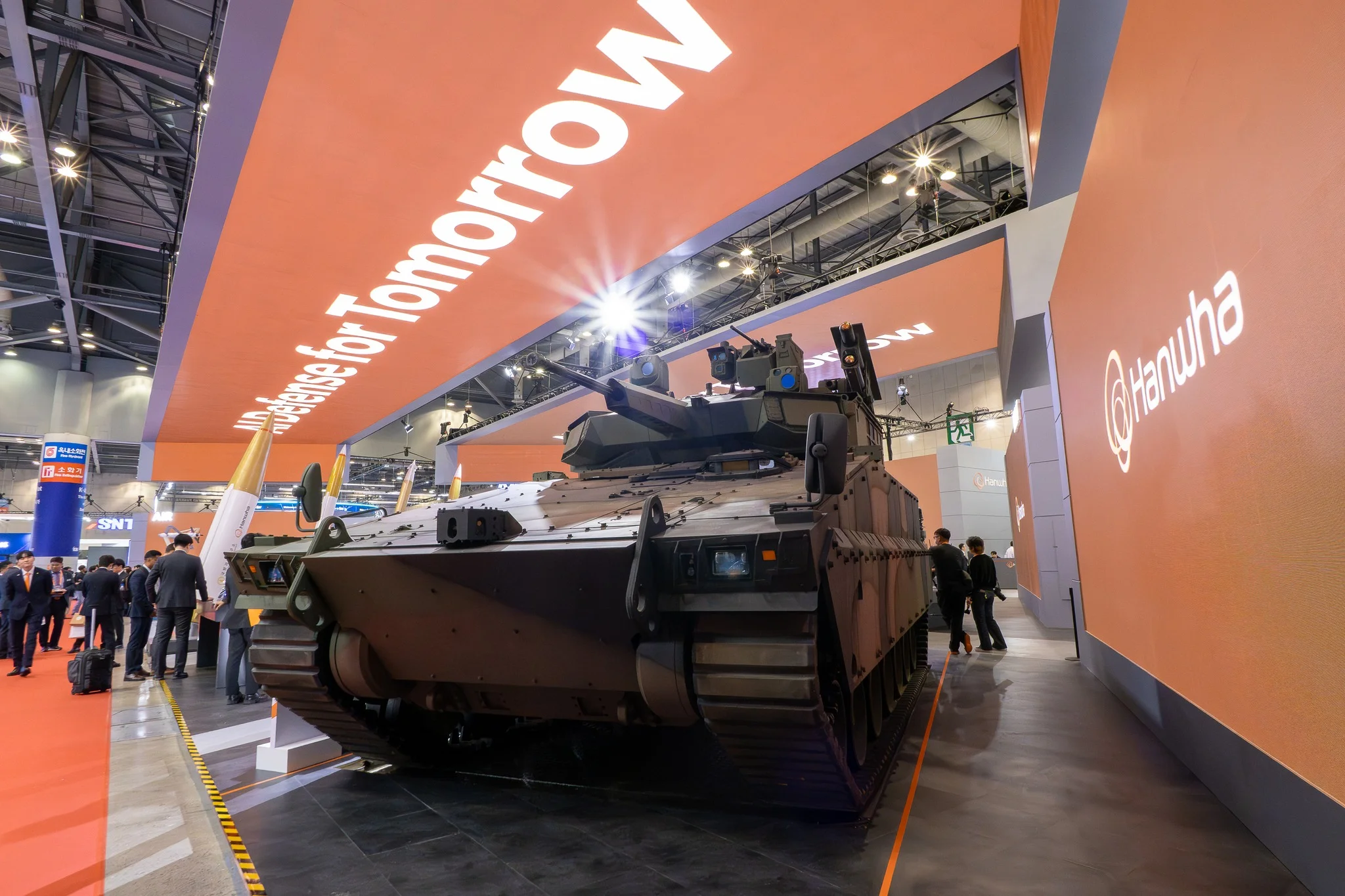
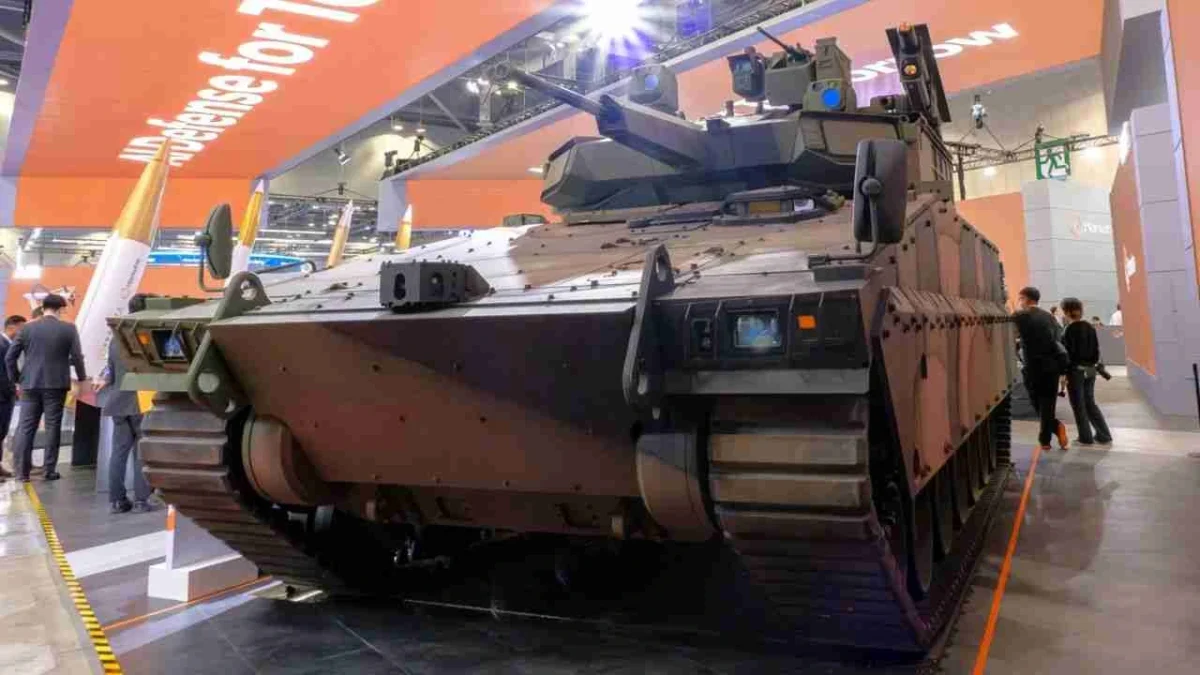
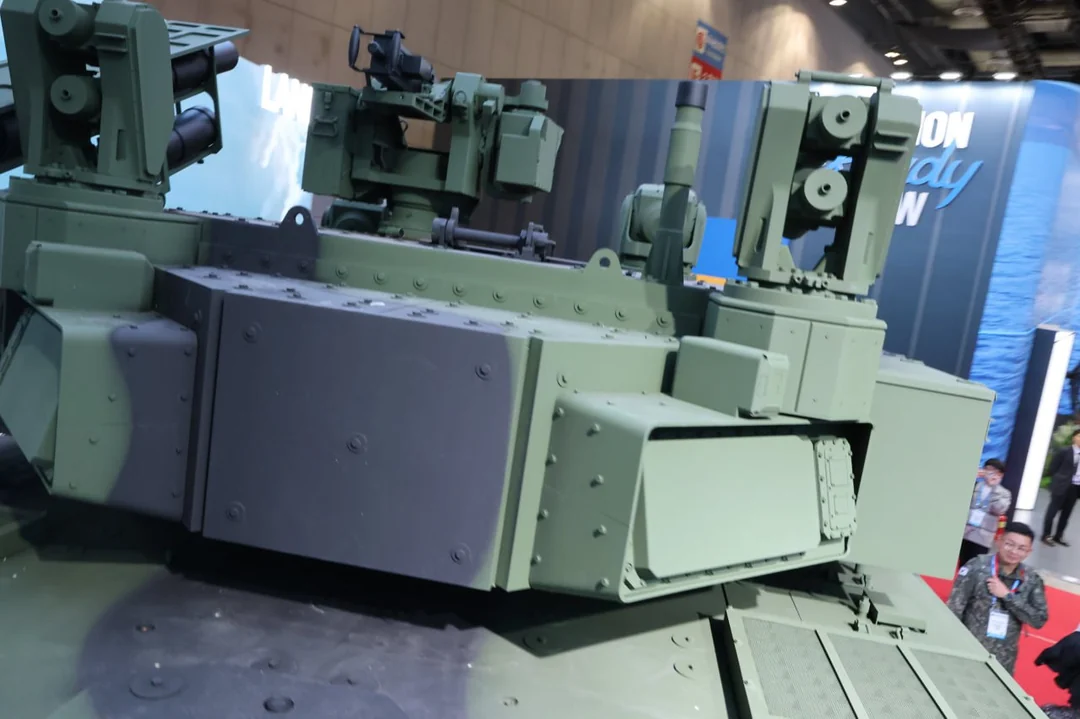
At ADEX 2025, held in October, the first prototype of the K-NIFV was revealed. The prototype is fitted with a domestic unmanned turret, armed with a 30mm Bushmaster autocannon (some sources claim it has the 40mm CTA, but this is still under development, and is in fact stated to be planned for the K-NIFV, not already fitted). Multiple foreign components, largely Israeli, were replaced by domestic Korean versions, including the APS (from Iron Fist to K-APS), the engine (from MTU to SMV), and the armour (from a Plasan development to a Hanwha development).
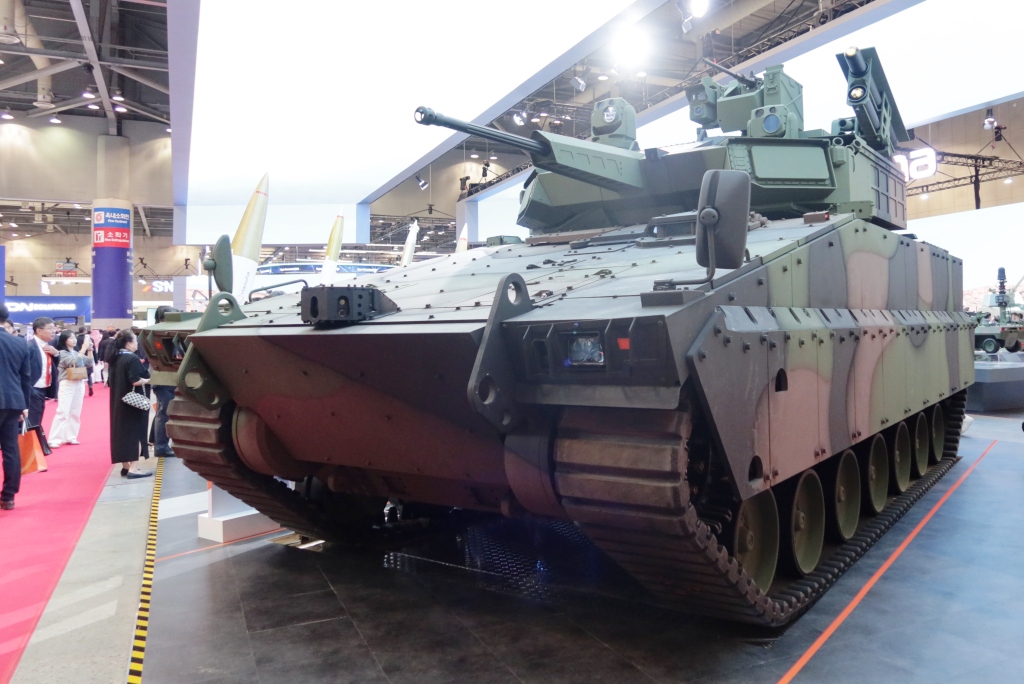
As of May 2026, only one K-NIFV Block I prototype has been built. It remains to be seen how the design will progress, and at what stage mass production may begin. Currently, development is expected to continue until March 2028, with Hanwha aiming for the vehicle to enter service in 2030.
Characteristics
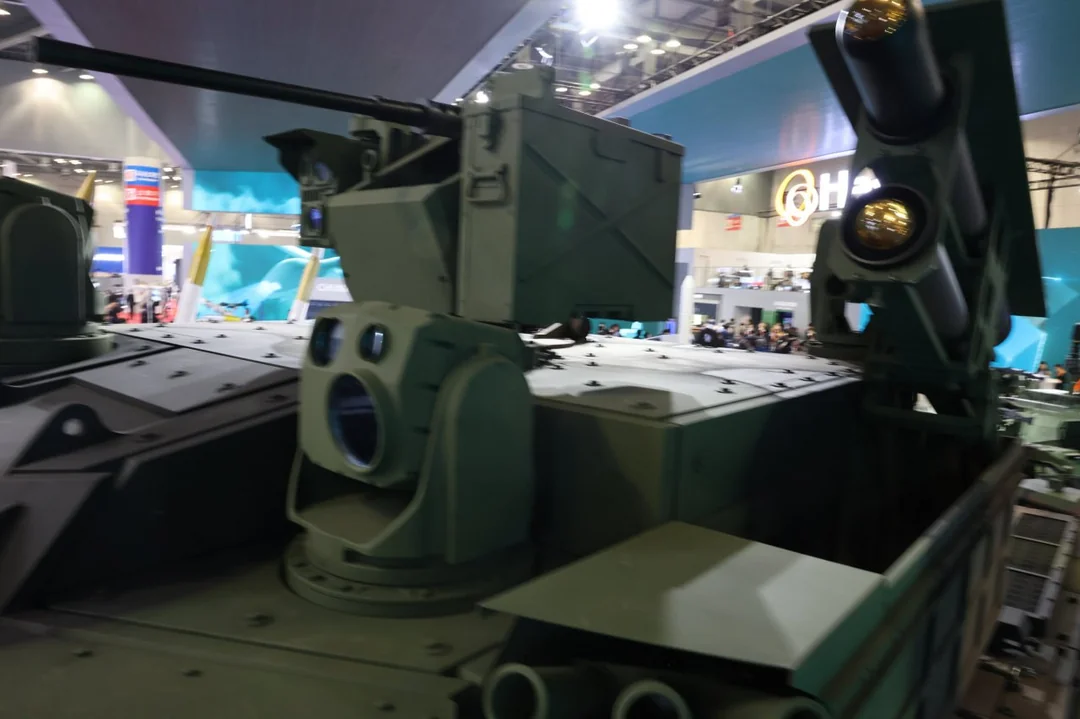
The K-NIFV is armed with a two-plane stabilised 30mm ATK Bushmaster Mk44S (Stretch) autocannon, as on the AS21 Redback. This cannon fires 30x173mm ammunition at 200 rounds/minute. It can use a variety of APDS, APFSDS and HE rounds – MK258 APFSDS has 116mm of penetration at 0° at 10m, firing at 1430m/s. The MK44S (S for Stretch) can also fire the MK310 PABM-T airburst round. This cannon is mounted in an unmanned turret. The vehicle has no coaxial armament, but instead has a roof-mounted RCWS, fitted with a 12.7mm K6 HMG. The K6 fires 12.7x99mm ammunition, including AP rounds capable of penetrating 31mm @ 0° @ 10m.
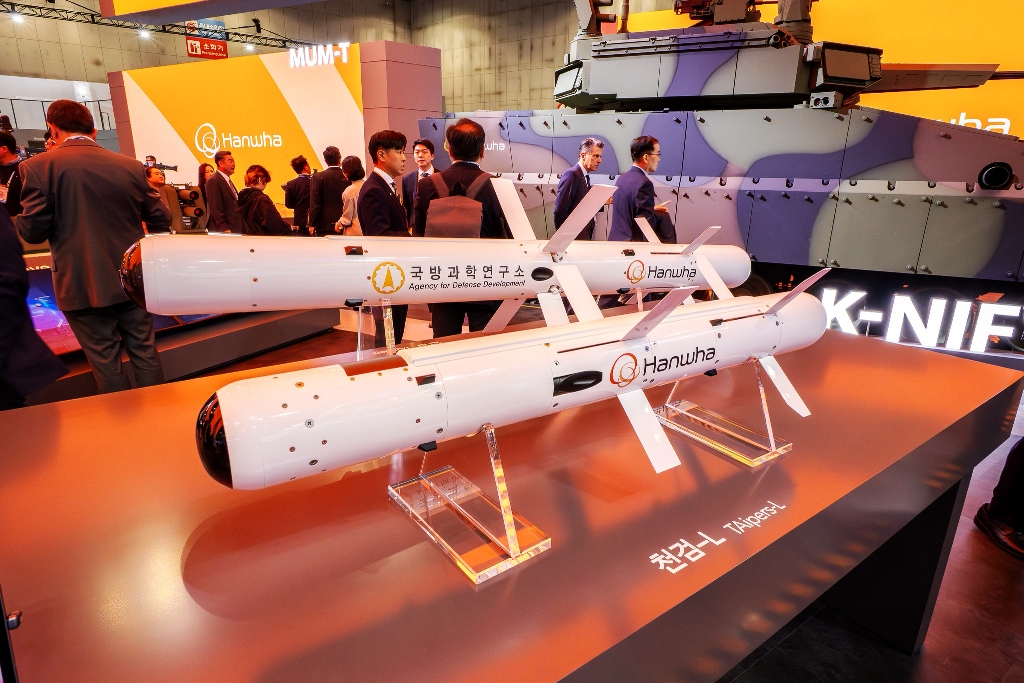
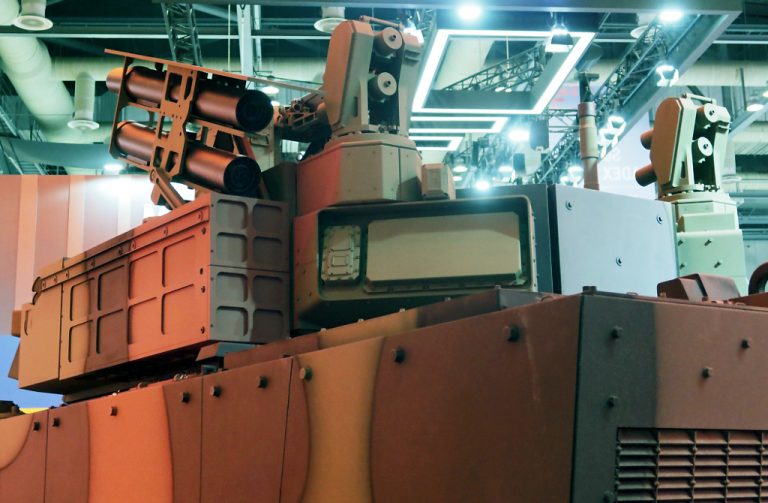
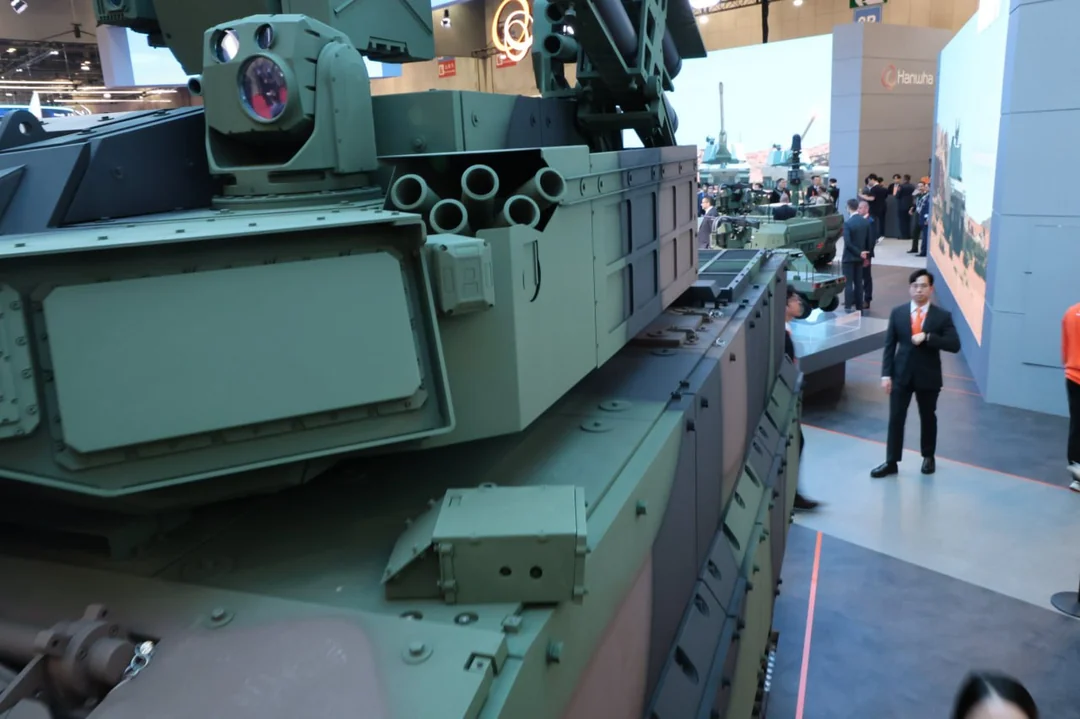
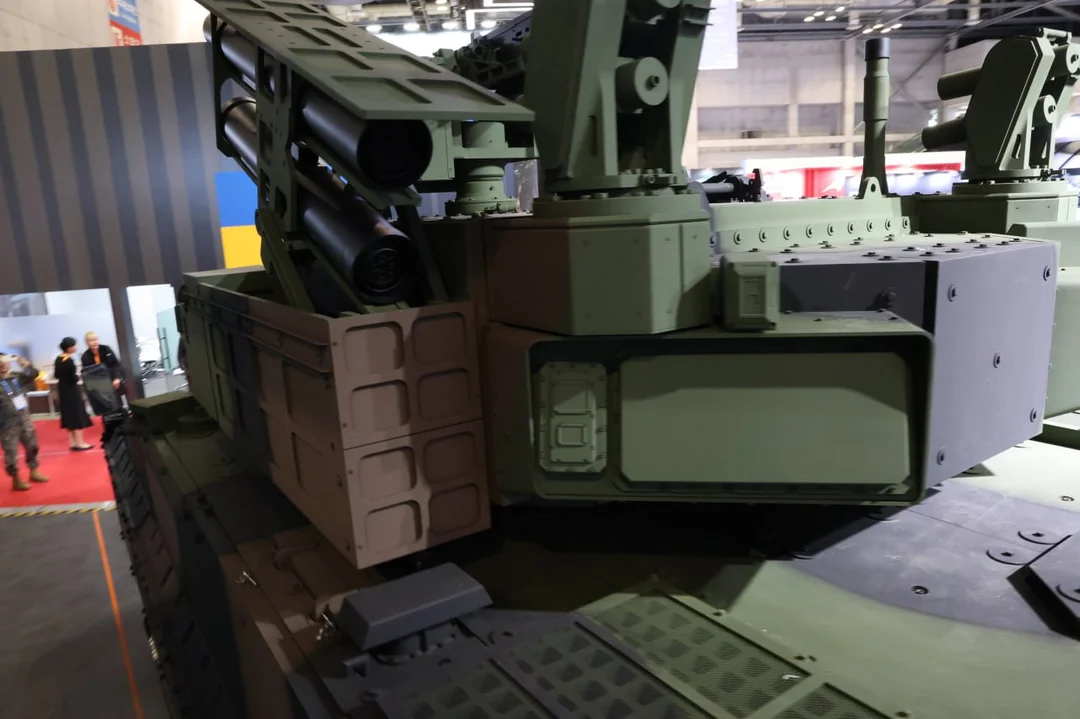
The turret is fitted with two dual ATGM launchers on either side of the turret. On the prototype, the launchers have mock-up ATGM tubes for the TAipers-L ATGM, a lighter variant of the standard TAipers currently under development. The TAipers-L weighs 17kg, with several different warheads planned — including a tandem HEAT warhead with over 900mm of penetration @ 0°, and a maximum range of 5.5km. The standard TAipers has an IIR search warhead, with three firing modes available: fire-and-forget, fire and update after launch, and non-line-of-sight (NLOS). The TAipers uses a wired data link, although the TAipers-L is intended to use a wireless data link, integrated with AI, to improve accuracy.
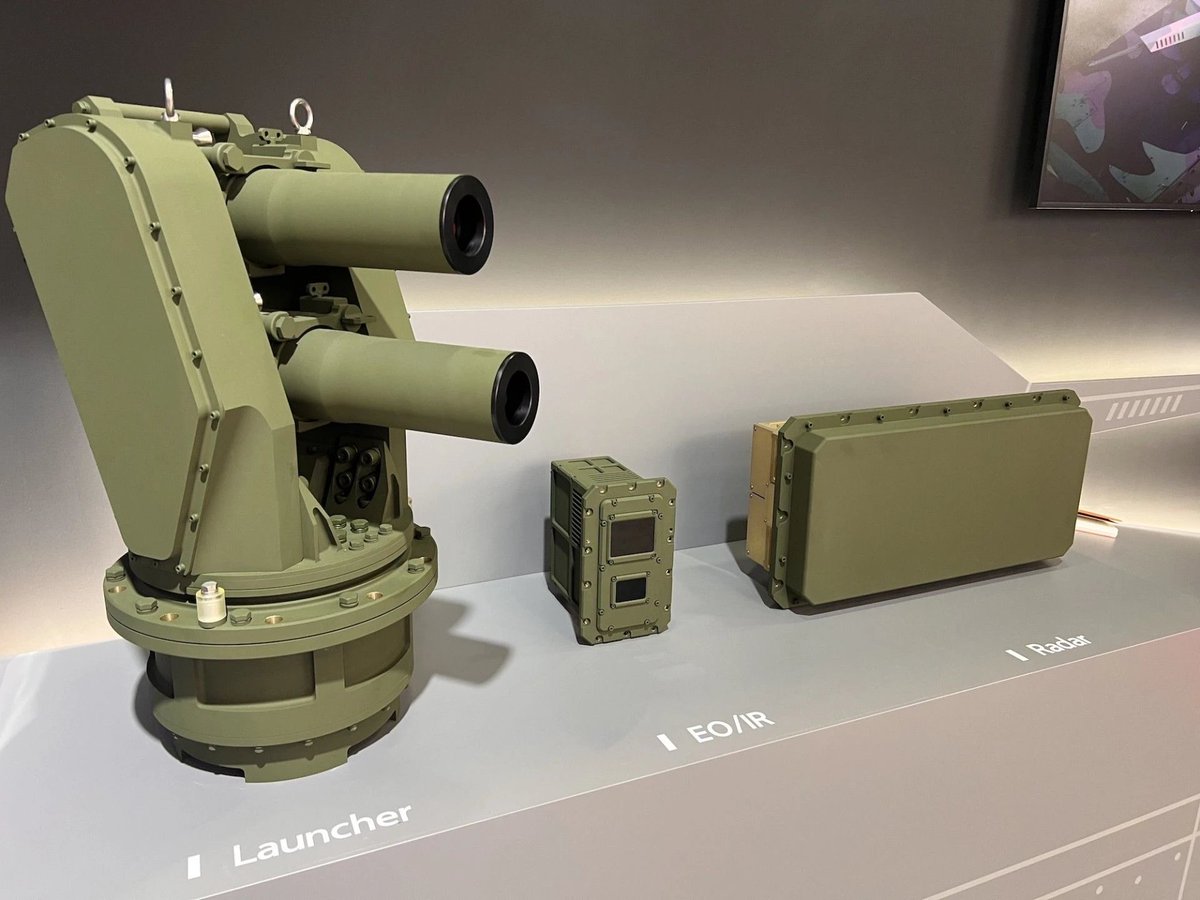
The 12.7mm RCWS is connected to the hard-kill active protection system. The K-NIFV is equipped with the domestic K-APS, which provides a multi-layered anti-drone system. The RCWS is expected to engage drones and loitering munitions from a distance of around 1km, with the APS engaging targets closer than 300m. The APS is connected to four AESA radar panels fitted around the turret, alongside EO/IR sensors. The base version is effective only at intercepting RPGs and ATGMs, while an upgraded version, first revealed at WDS 2026, is intended to be able to intercept HEAT and kinetic energy rounds (APFSDS), alongside greater launcher elevation. It is unclear which version is intended for the K-NIFV. The K-NIFV prototype is fitted with two dual APS launchers, for a total of four rounds. The vehicle is also fitted with five smoke grenade launchers on either side of the turret, for a total of ten.
The K-NIFV is fitted with an advanced fire control system (FCS) and sights, although there are very few details currently available. It is almost certainly fitted with a laser rangefinder and third-generation thermal sights for the gunner and commander, along with a laser warning receiver (LWR). The sights are integrated with the APS system, to enable the crew members to visualise any threats.
The K-NIFV is fitted with an advanced armour package, including a “complex mine protection kit”, developed by Hanwha Defense. Very few details are available, but it is likely to be similar in capability to the Plasan kit used on the AS21. The AS21 has protection levels up to STANAG 4569 Level 6 (frontal arc ± 30° protecting against 30mm APFSDS rounds from 500m), but this does not appear to be fitted on the prototypes. It is likely that the K-NIFV has protection levels around STANAG 4569 Level 4 (protection against 14.5mm AP rounds at all angles). The K-NIFV adopts a new 1000hp engine developed by STX — likely the SMV 1000. The vehicle is understood to have a weight similar to the AS21, at around 42–43t, thus giving it a power-to-weight ratio of around 23.2–23.8hp/t. The vehicle’s top speed has not been revealed, but is likely to be 70km/h as on the AS21.
Conclusion
The K-NIFV would be an excellent addition to the future United Korea Ground Forces Tech Tree. It would serve as the Korean equivalent to vehicles in-game like the KF41, with a 30mm autocannon, fire-and-forget ATGMs, and a hard-kill APS, thus likely sitting at a BR of 11.0. It could be the tech-tree equivalent to the AS21 Redback, which would be a perfect candidate for a premium or squadron vehicle for the Korean tree.
Specifications
Armament
- 30mm Bushmaster Mk44S
- 200rpm
- Ammunition
- MK238 HEI-T
- APDS
- 87mm at 0° at 10m
- MK258 APFSDS-T
- 116mm at 0° at 10m
- MK310 PABM-T (Airburst)
- Roof-mounted 12.7mm K6 HMG
- 450–600 rpm
- Ammunition
- API-T/I/AP/API-T belt
- 31mm at 0° at 10m
- API-T/I/AP/API-T belt
- 2x dual TAipers-L ATGM launcher
- TAipers-L
- Tandem HEAT warhead
- >900mm RHA penetration
- 5.5km range
- Fire-and-forget; fire and update after launch; NLOS
- TAipers-L
- Laser rangefinder
- Laser warning system
- 3rd generation thermals (commander + gunner)
- Unmanned
Armour
- Hull and turret: STANAG 4569 Level 4 (assumed; not confirmed)
- Resists 14.5x114mm AP from 200m @ 360°
Mobility
- Speed
- 70km/h
- Weight
- 42–43t
- Engine power
- 1000hp, 23.2–23.8hp/t
Other
- Crew
- 3 (commander, gunner, driver)
- Smoke grenades
- 10x launchers
Images
Sources
Spoiler
이성찬 블로그 - Warfare Systems & Issues : 네이버 블로그
Hanwha Defence Australia signs contract for LAND 400 Phase 3 Redback vehicles
ADEX 2023 – Hanwha looks in the future of IFVs with its K-NIFV
ADEX 2023 – Hanwha exhibits K21-derived armoured vehicles and more
South Korea Ordering New K21 Infantry Fighting Vehicles - Overt Defense
DX Korea 2022 Part 3: Hanwha Defense & Hanwha Systems
ADEX 2025 – K-NIFV, the Korean New Infantry Fighting vehicle proposal by Hanwha Aerospace
ADEX 2025: Premiere of Hanwha Aerospace’s K-NIFV Infantry Fighting Vehicle – MILMAG
ADEX 2025: Nowy lekki przeciwpancerny pocisk kierowany TAipers-L od Hanwha – MILMAG