- Yes
- No
Chengdu J-5 trainer aircraft
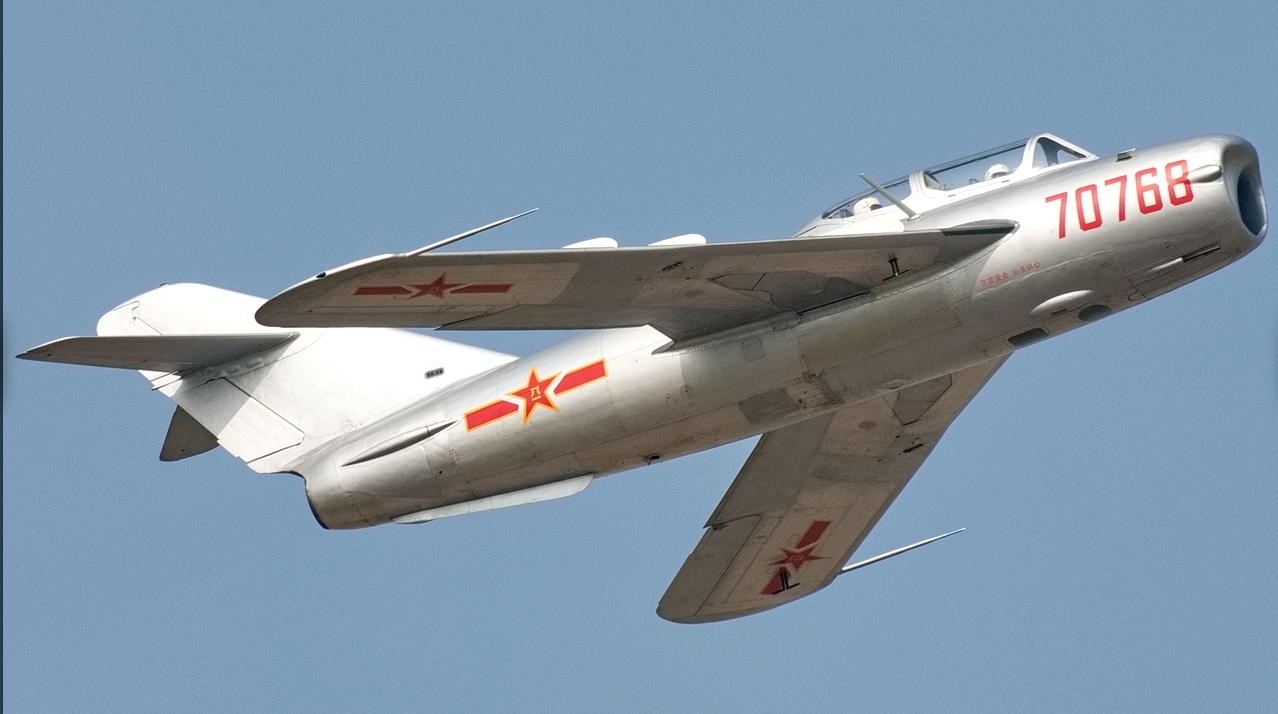
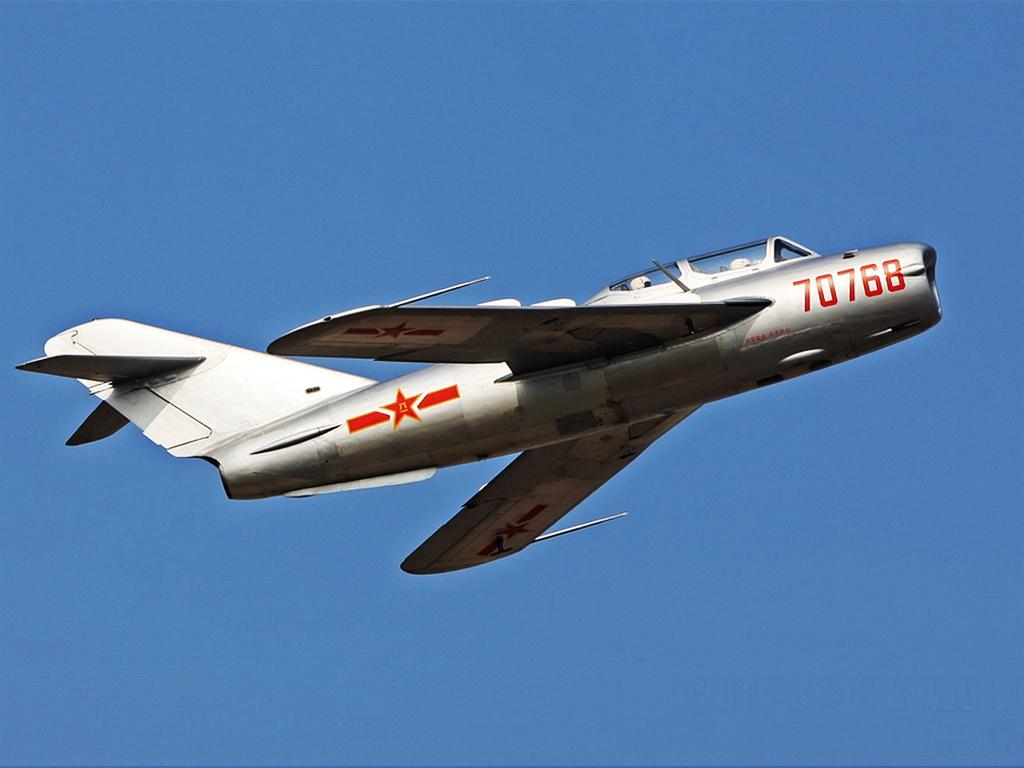
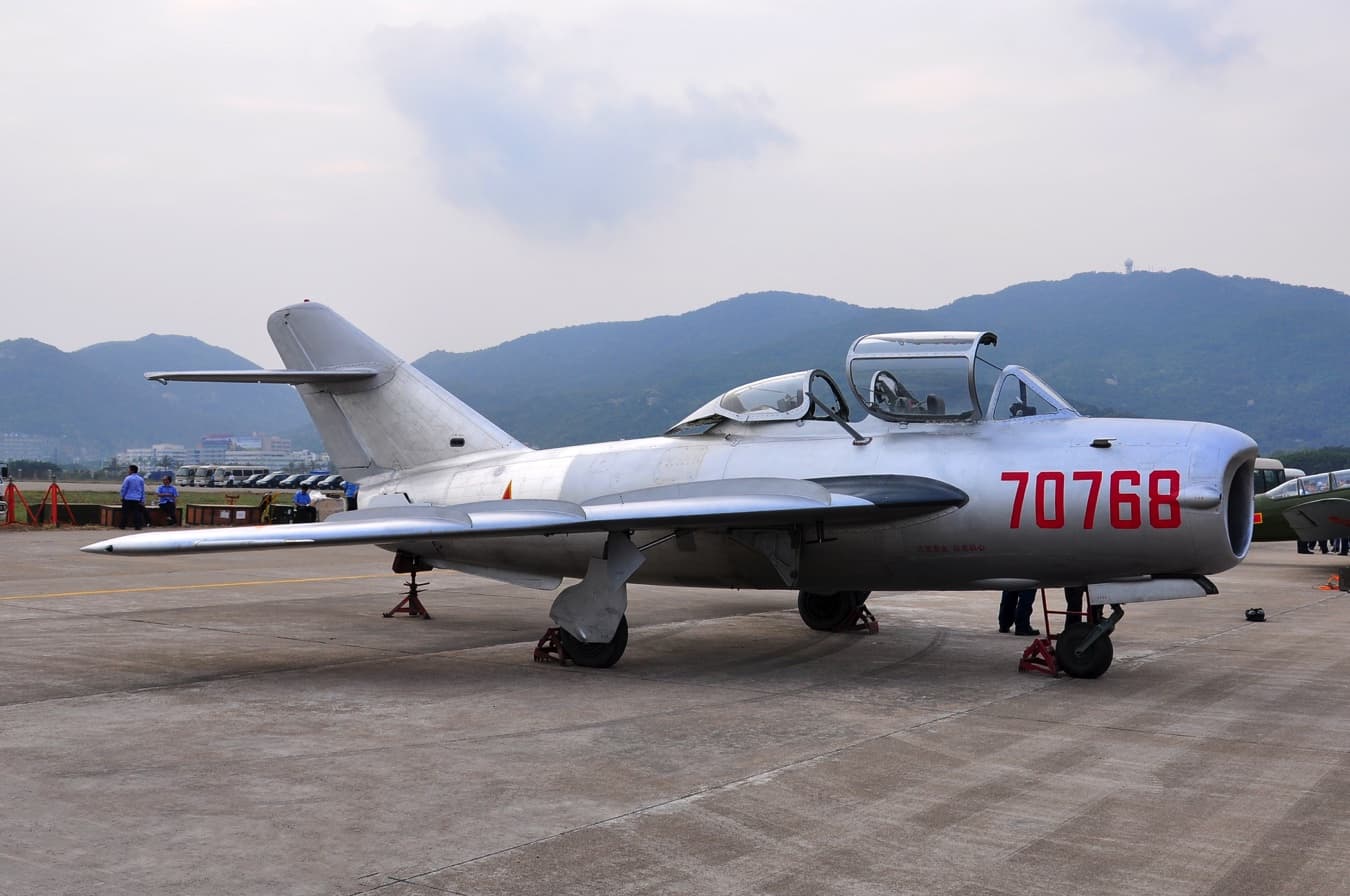
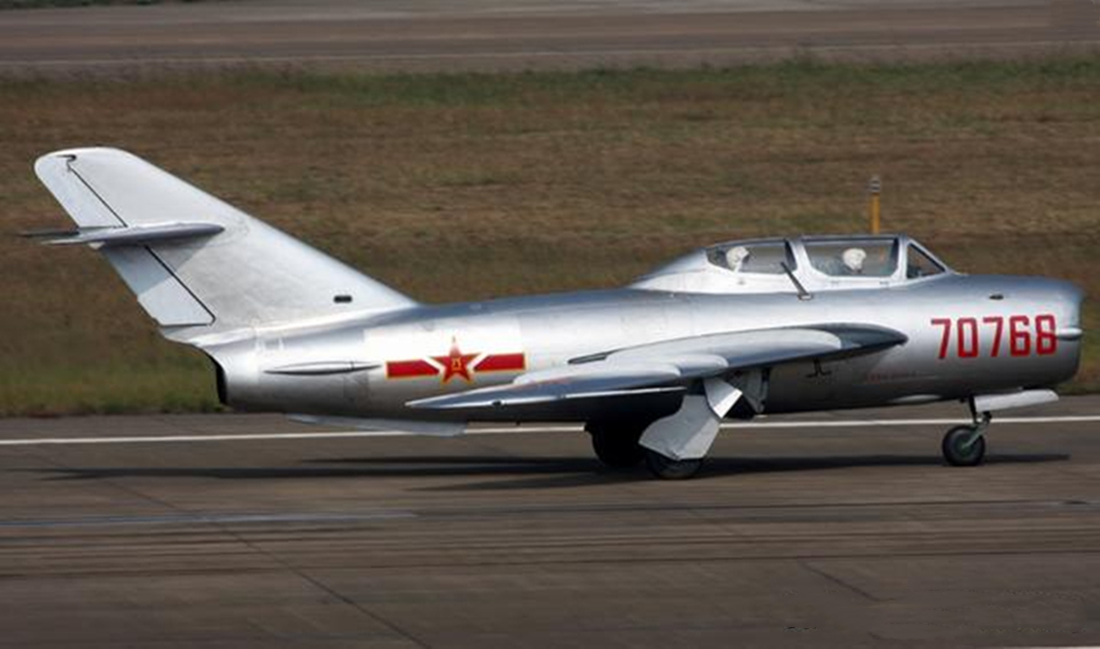
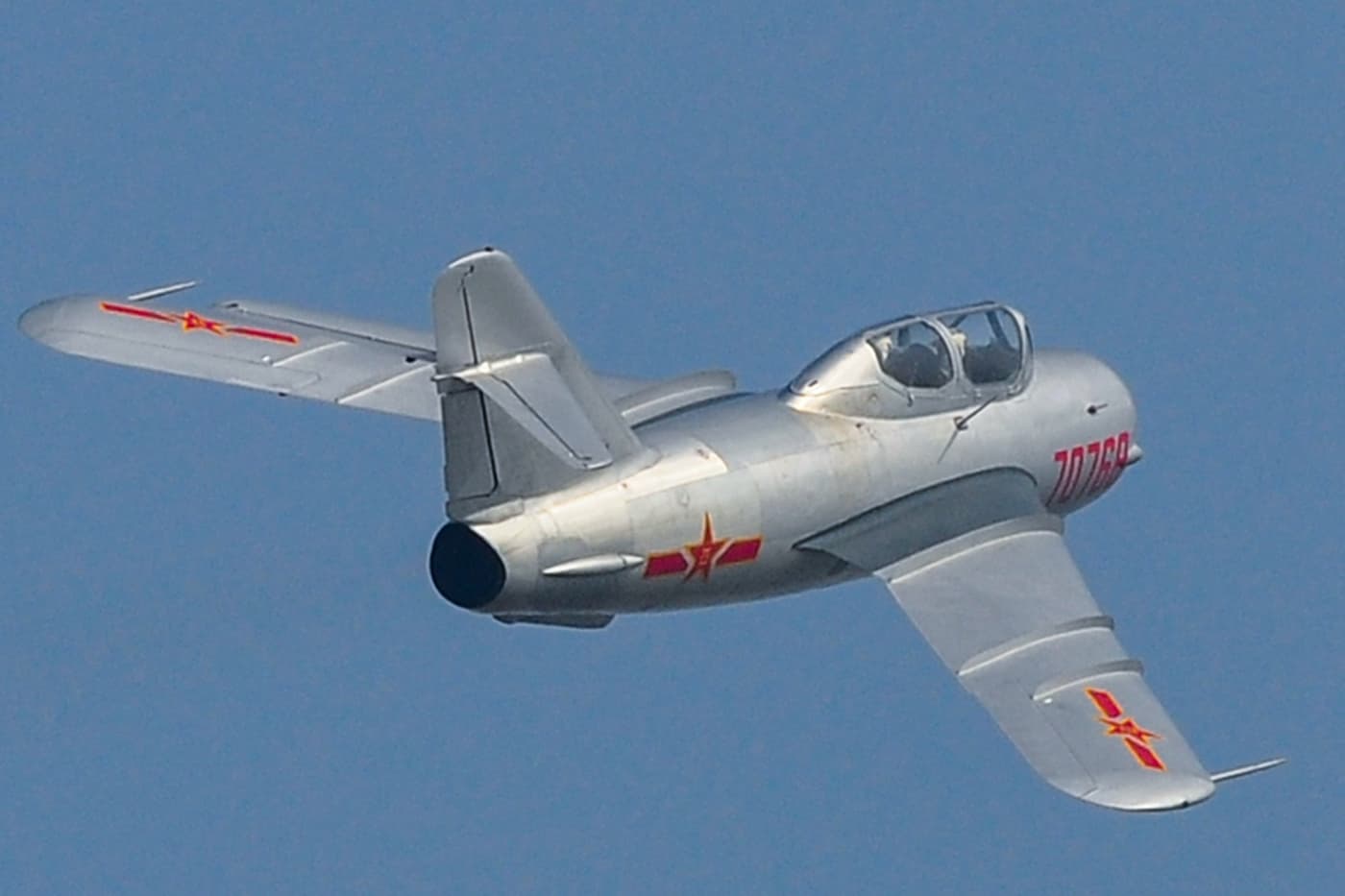
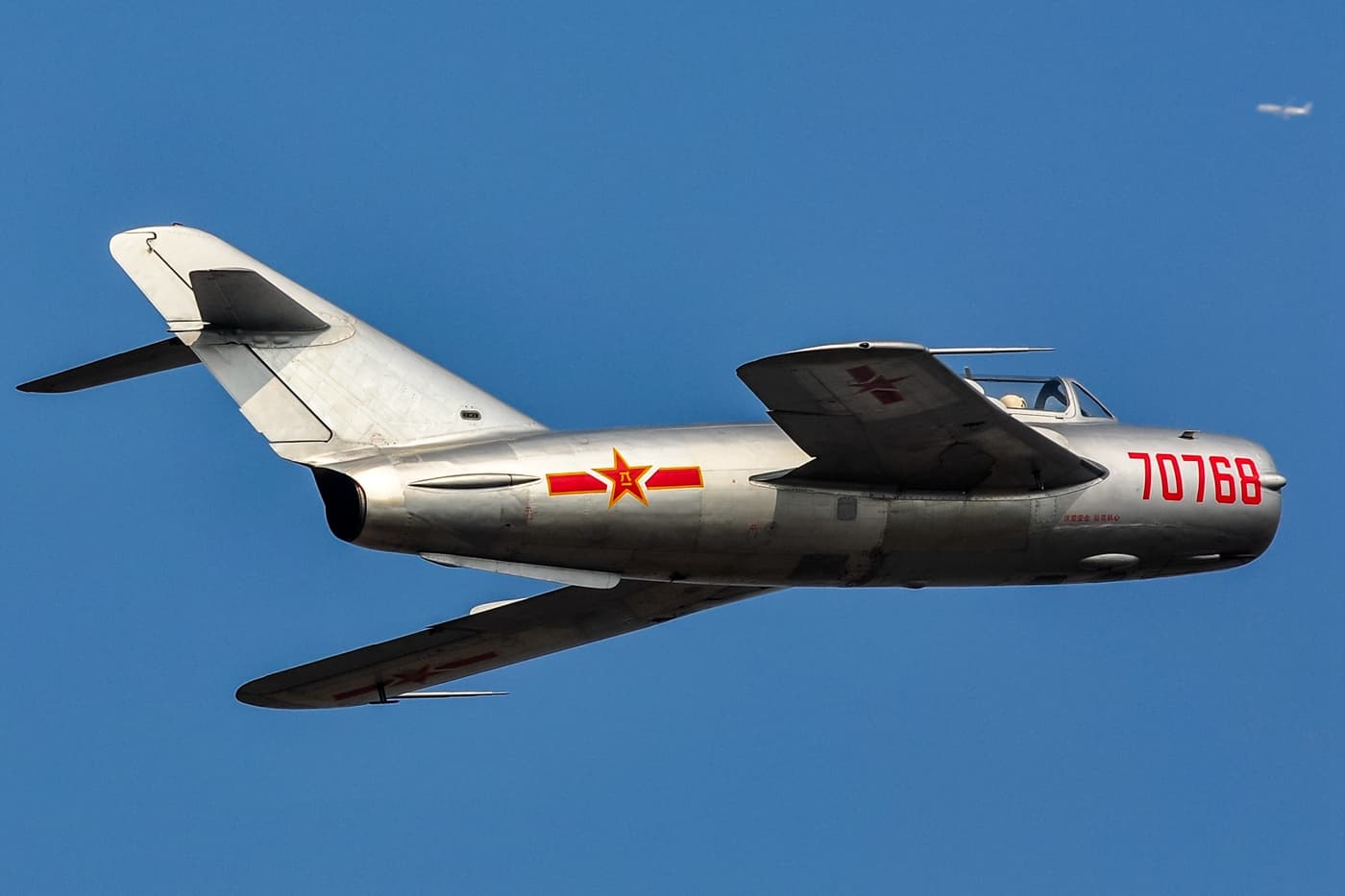
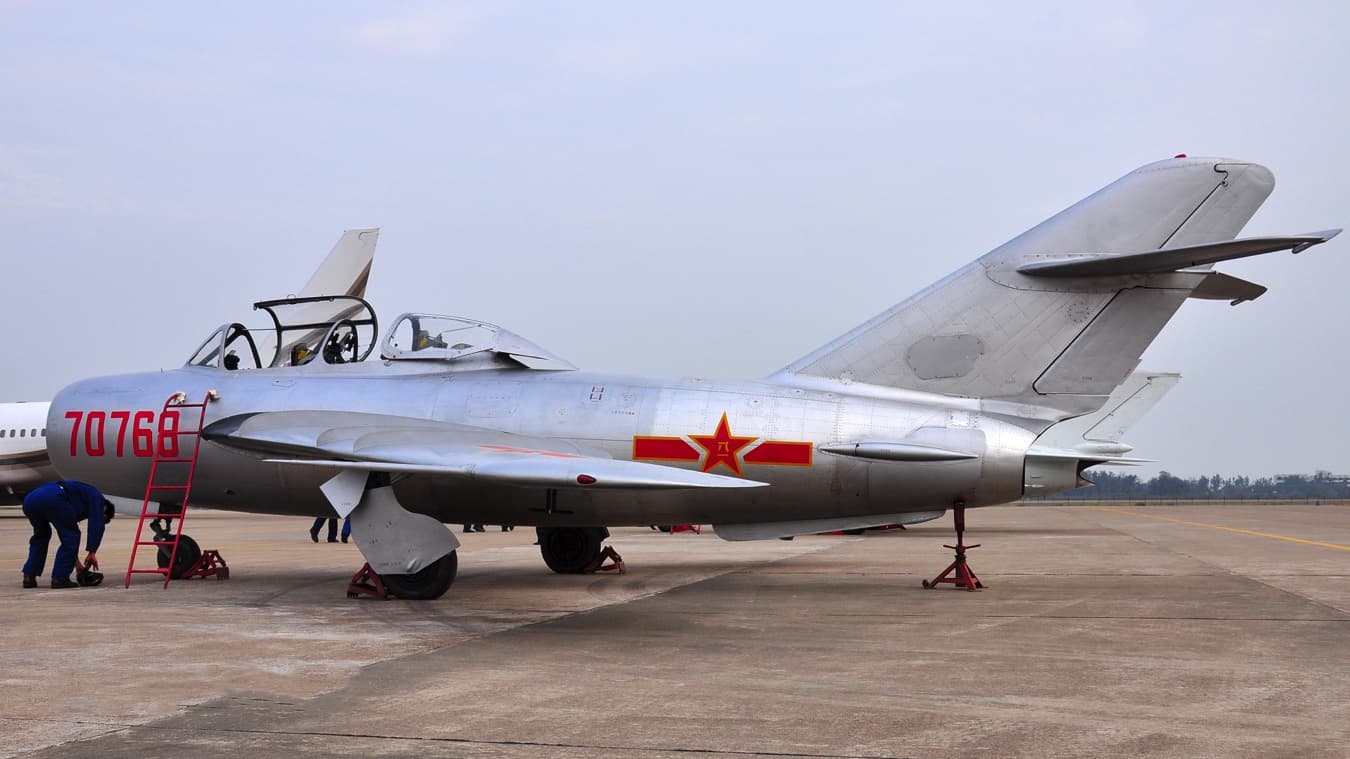
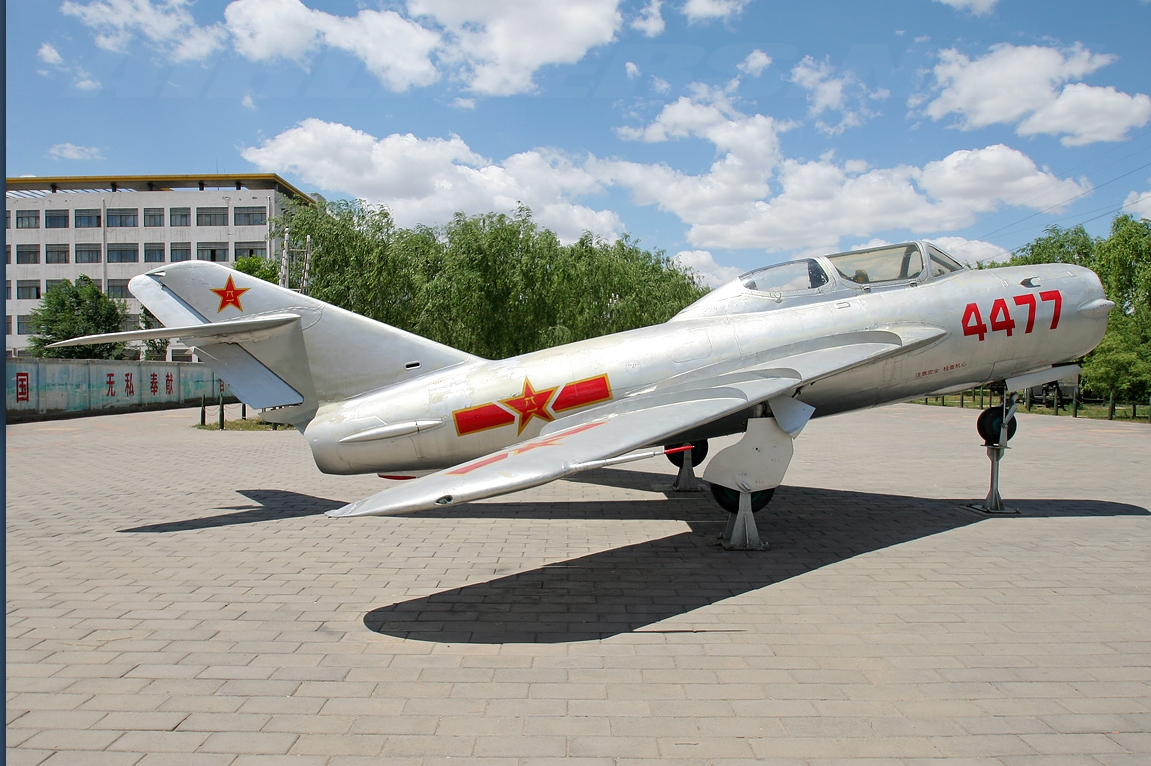
The JJ-5 (Chinese designation: 歼教-5 ) is a twin-seat jet fighter trainer developed and produced by the Chengdu Aircraft Industry Corporation in China during the mid-1960s. It was developed based on the J-5 ( MiG-17F) with reference to the MiG-15UTI, and was designed to replace the JJ-2 / MiG-15UTI trainer. It served as a high-level trainer for the Chinese Air Force. Some media refer to it as the MiG-17UTI, but this designation is actually incorrect—the Soviet Union never developed a trainer version of the MiG-17。
The development of the JJ-5 was officially launched in early 1964, with the Chengdu Aviation Industry Group undertaking the project. By that time, China had fully mastered the manufacturing technology of the J-5 based on the MiG-17F and the J-5A based on the MiG-17PF, laying a solid technical foundation for the development of the JJ-5. The first prototype was completed in April 1966 and underwent static load testing. The second prototype made its maiden flight in May 1966. In December 1966, the aircraft received official certification for mass production. By the end of 1984, a total of 1,087 units had been produced. In addition to serving in the Chinese Air Force and Navy, the JJ-5 was exported or provided as aid to several Third World countries, including Pakistan, Albania, Sri Lanka, and North Korea. The JJ-5 was also used as a display aircraft by the “August 1st” Aerobatic Team of the Chinese Air Force. The last batch of JJ-5 trainer aircraft was retired in 2009. The JJ-5 remains one of the most produced and longest-serving jet trainers in the history of the Chinese Air Force.
Since the JJ-5 is a jet trainer converted from the J-5A airframe, its appearance and performance are similar to those of the J-5. The JJ-5 combines the fuselage and airbrake system of the J-5A with the tandem two-seat cockpit of the JJ-2 (U-MiG-15UTI). The control system allows both the instructor and the trainee to operate the aircraft, but the instructor can override the trainee’s controls. During the conversion from a single-seat to a two-seat configuration, the design of the canopy shape and structure, ejection seats, dual control system, and engine controls—including off-the-shelf components—all drew from the U-MiG-15. The front windscreen was raised, and the canopy size was increased: the front canopy hinges to the right, while the rear canopy slides forward and backward. The nose lip of the J-5A was retained but reduced in size. The spherical center fairing on the intake splitter plate was removed, and the tail cone was lengthened by 21 mm. The aircraft’s hydraulic system is divided into a main hydraulic system and a power-assisted control system. It can carry two 400-liter underwing auxiliary fuel tanks. The main avionics include blind landing equipment: a WL-5 dual-controlled automatic radio compass, an XS-5A radio beacon receiver, and a WG-2A radio altimeter, enabling all-weather instrument landings. The engine used is the WP-5D, an improved version of the WP-5 engine used in the J-5, with a rated thrust of 2,400 kgf and a maximum thrust of 2,700 kgf. Other equipment is essentially the same as that of the J-5A. However, the aircraft is armed with only one Type 23-1 23 mm autocannon, and bombs can be carried under the wings. During the development of the JJ-5, it became the first Chinese aircraft to be equipped with an internal ammunition collection system.
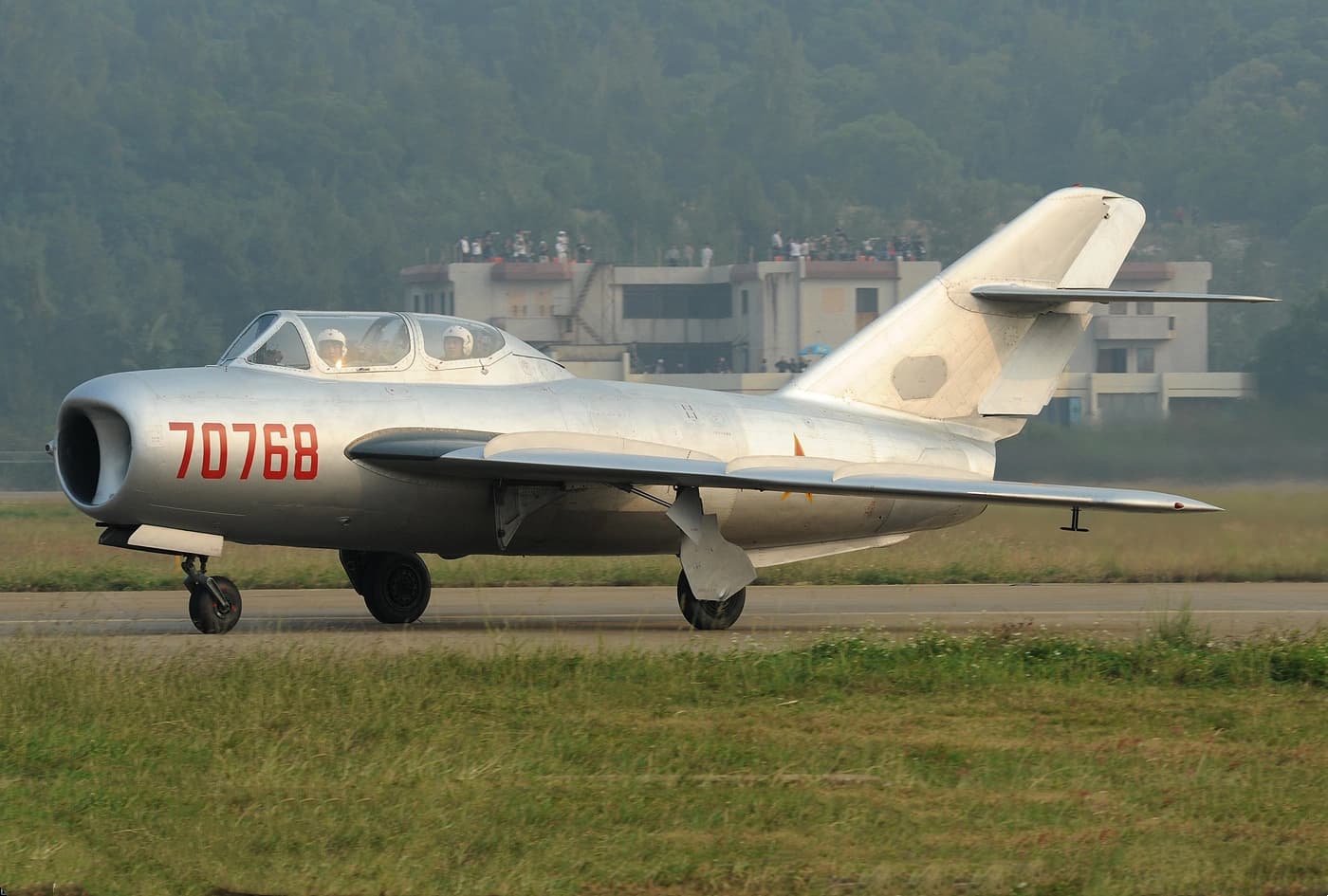
In the game, this aircraft should be positioned similarly to a ‘MiG-17F with reduced firepower.’ Its cannon configuration is greatly simplified, featuring only a single 23 mm autocannon, resulting in poor sustained fire capability and damage effectiveness. Its damage output is far lower than that of the MiG-17F.And the engine has no afterburner.
- 8.0
- 8.3
- 8.7
- 9.0
- I voted against it.
Spoiler
Dimensions
-
Length: 11.5 m
-
Height: 3.8 m
-
Wingspan: 9.63 m
-
Wing area: 22.6 m²
-
Empty weight: 4,080 kg
-
Normal takeoff weight: 5,401 kg
-
Maximum takeoff weight: 6,087 kg
Flight Performance
-
Cruise speed: 650–750 km/h
-
Maximum level flight speed: 1,050 km/h
-
Maximum climb rate: 39.8 m/s (inferior to the MiG-17F)
-
Service ceiling: 14,300 m
-
Endurance: 2 hours 4 minutes
-
Maximum range: 1,230 km (with drop tanks)
-
Takeoff run distance: 780–830 m
-
Landing roll distance: 1,000 m (with drag parachute)
Engine
- Engine: 1 × WP-5D (Wopen-5D), no afterburner
- Rated thrust: 24.5 kN
- Maximum thrust: 26.5 kN
Spoiler
- 1 × 23 mm NR-23 cannon (lower right side of fuselage), ammunition capacity: 40 rounds
- Can carry 2 × 250 kg or 100 kg aerial bombs
- Can carry 2 × rocket pods
- Can carry 2 × drop tanks to extend range