J35Ö: A Draken under the red-white-red flag
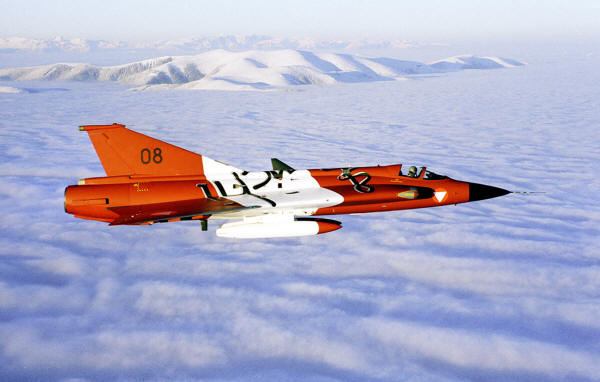
Hi! Today I am going to talk about the upgraded Austrian Interceptor J35Ö Mk2 .
At Glance:
RWR, a flare and chaff system, and different AIM-9P air-to-air missiles.
Special thanks to @_SchwarzerPanzer and @karnitin75 for their help!
Pictures
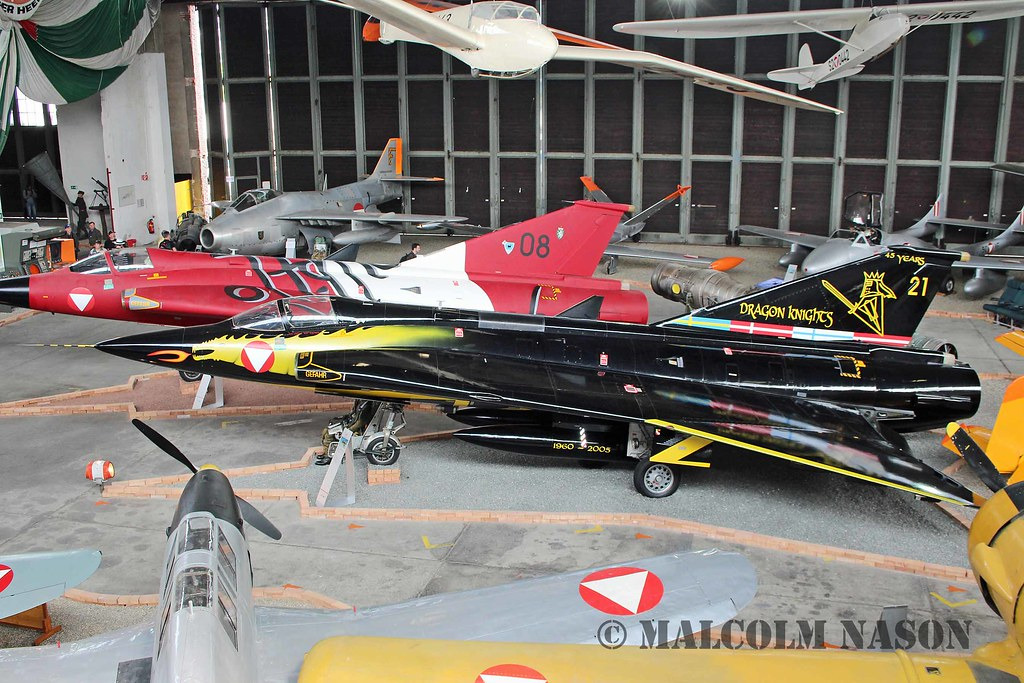
Brief summary of the J35 devolpment
Spoiler
In 1949, the Swedish Air Force started a competition for a new aircraft. The plane had to reach Mach 2.0, have one pilot, be able to fly in all weather, and take off from short runways. Because of this, SAAB began designing a plane that could meet these requirements.
During their research, SAAB found that a delta wing design could meet these goals. However, there was a problem. The fuselage had to be made longer, which made the aircraft heavier. To solve this, the engineers came up with a double delta wing design.
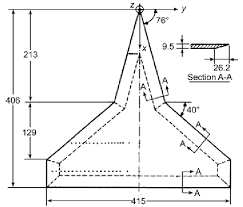
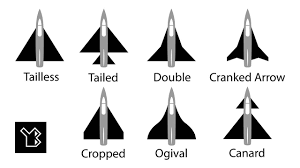
So SAAB built then the SAAB 210, also called the Lill Draken, to test the double delta wing. The Lill Draken made its first flight on 21 January 1952. The results from the SAAB 210 were good and led to the full development of the Draken.
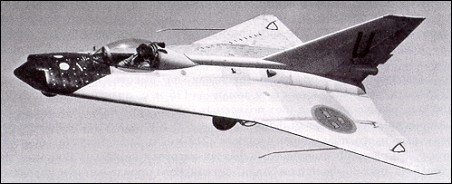
Source: Saab 210 - experimental
In October 1955, the first prototype of the Draken flew for the first time without an afterburner. The second prototype later broke the sound barrier while climbing. In 1956, the J35A was approved for mass production.
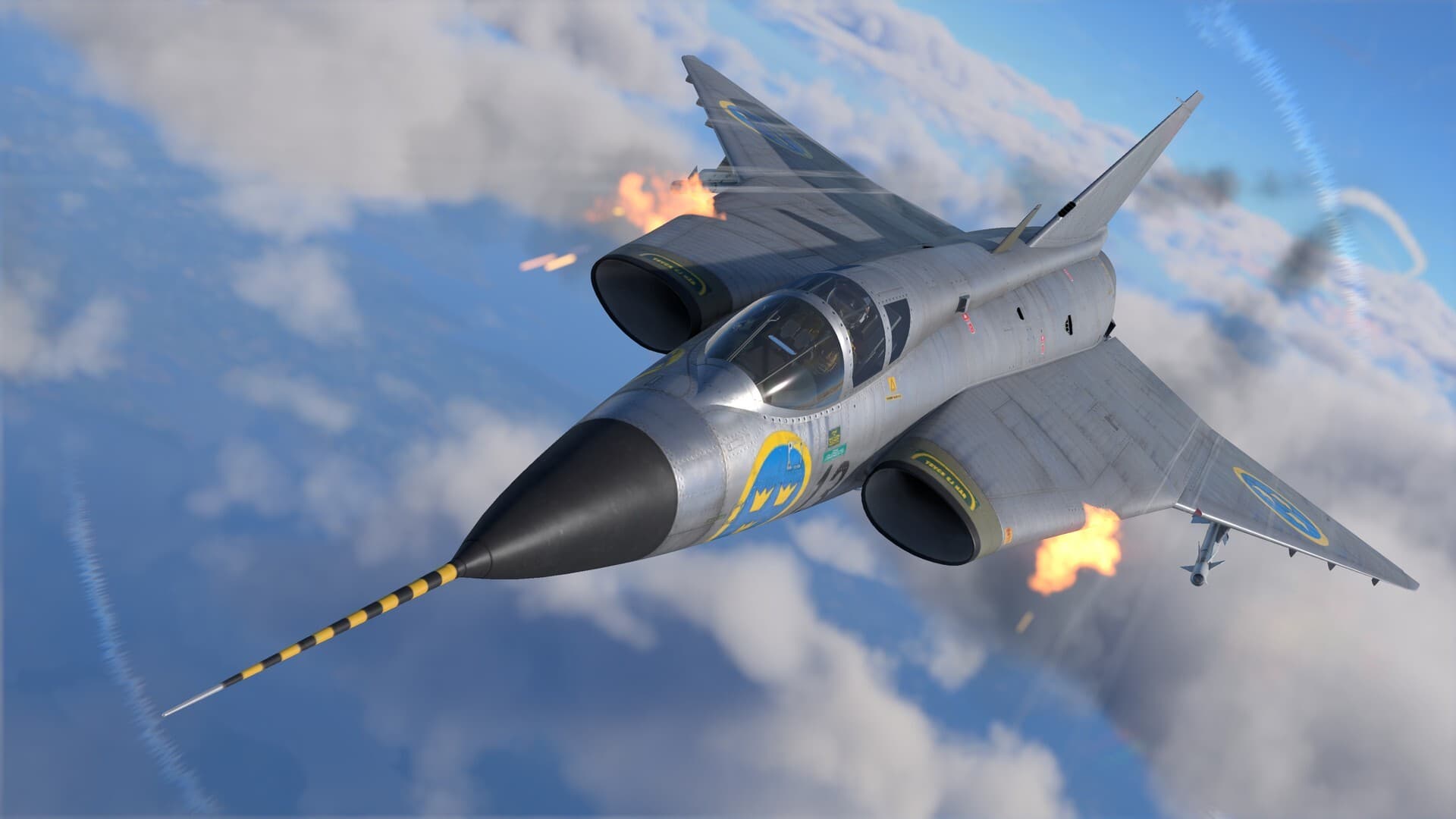
History of the J35D in Austria.
Spoiler
In 1960, 30 Saab J29F aircraft were bought by the Austrian Air Force as a temporary solution. In 1966, it became clear that Austria needed an interceptor, because the J29F was not very good at protecting Austrian airspace. At that time, Austria was looking at the Mirage, the F5E, and the J35 Draken.
Did you know that America wanted to give Austria 3 squadron of F86 Sabre for free? Sadly, Austria said no in fear of insulting the Sowjet Union. But funnily, the USSDR wanted also give some MiG 17 for free?
In 1967, the Austrian government and the Ministry of Defence met to decide whether to buy the Saab 105XT, the Saab Draken, or the Viggen. In the end, they decided to buy the Saab 105XT. On 20 May 1967, the National Defence Council (LVR) approved the purchase of the Saab 105XT, which was called the J105Ö in service. The LVR also said that Austria should buy interceptor aircraft.
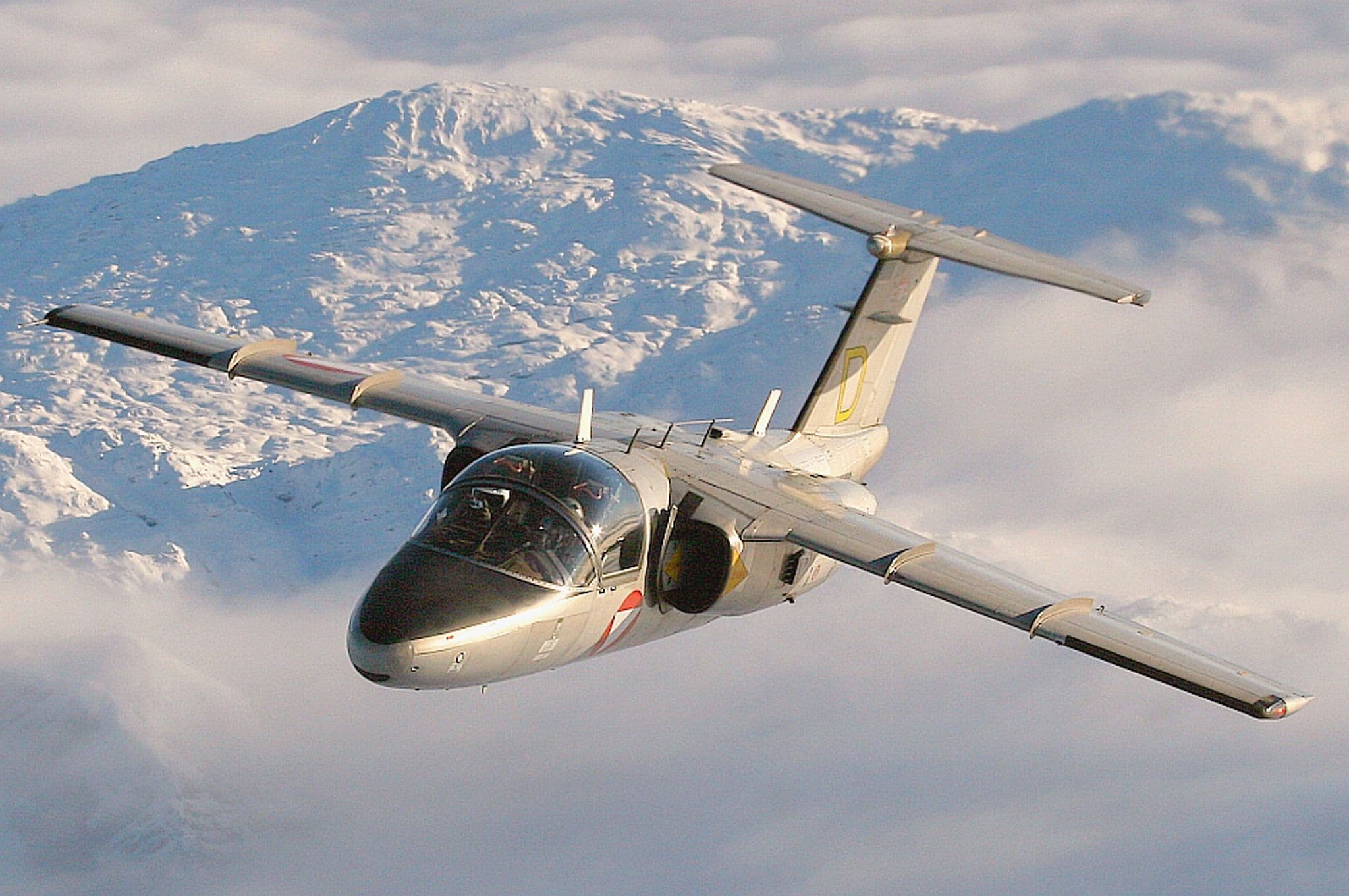
Source: https://www.bmlv.gv.at/waffen/waf_saab105.shtml
Two years later, in 1969, 20 more J105XT aircraft were bought. This caused a scandal. Because of this purchase, the Austrian military budget was so low that no interceptors could be bought. In 1977, the LVR again suggested buying an interceptor, but the government under Federal Chancellor Kreisky refused.
In 1981, the LVR once again suggested buying the Mirage III/C. In 1983, different political parties pushed the government to buy a strong interceptor. The main options were the J35 Draken and the Mirage III/C. In 1985, the final choice was between the Lightning and the Draken. On 9 January 1985, no aircraft was chosen.
https://heritage.baesystems.com/page/english-electric-lightning
After several more meetings, the LVR recommended buying the Saab J35D Draken from Sweden. On the same day, the Council of Ministers decided to buy 24 J35D aircraft. This helped make the Austrian Air Force more stable and improved the safety of Austrian airspace. Even tho, many Austrians hated the J35OE, many bullied J35OE Pilots Families, many quitted being a Pilot in the Austrian Airforce. However, durning the Jugoslawien Wars, 9 Pilots protected 24/7 the austrian airspace and even esqurting MiG 21 back to their country. Now many Austiran saw them as national hero. Once bullied, now loved.
The J35Ö, also known internationally as OE, completed over 20,000 accident-free flight hours and more than 2,500 takeoffs. The Saab J35Ö was finally retired in 2007.
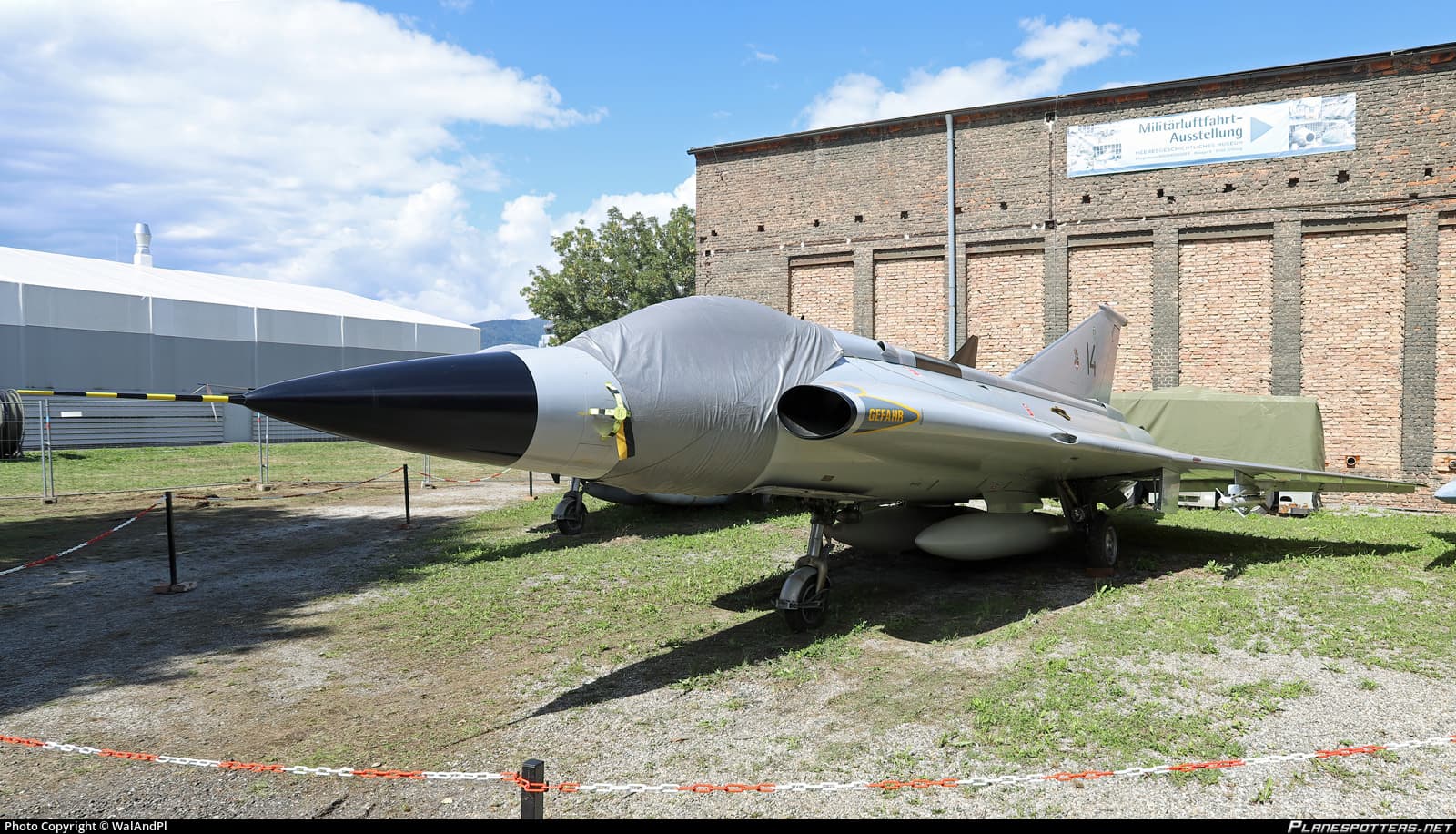
Technical Data
Spoiler
Type: Single-seat, single‑engine 2nd‑generation interceptor
Manufacturer: Saab AB, Linköping, Sweden (today Saab Aerosystems)
Crew: 1
Empty weight: 7,265 kg
Maximum takeoff weight: approx. 11,800 kg
Length: 15.35 m / Wingspan: 9.40 m / Height: 3.89 m
Wing area: 49.2 m²
Powerplant: 1 × Volvo Flygmotor RM6C
(License-built version of the Mk 60 from the British Rolls‑Royce Avon Series 300)
Afterburner: EBK 66
Dry thrust: approx. 57 kN (5,850 kgf)
Thrust with afterburner: approx. 77 kN (7,886 kgf)
Thrust-to-weight ratio: 0.73 / 0.81
Fuel capacity:
Internal: 2,764 liters
External: 2 × 525‑liter drop tanks (optional)
Fuel consumption:
100 liters/min (300 liters/min with afterburner)
Maximum speed:
Mach 2 at 11,000 m altitude (without external stores)
Mach 1.5 with 2 × 525‑liter drop tanks and 2 × Sidewinder missiles
Mach 1.1 at sea level
Rate of climb: approx. 200 m/s
Wing loading: 180 kg/m²
Combat radius: 430 km (without drop tanks)
Ferry range: 2,840 km
Service ceiling: over 20,000 m
Runway requirements:
Takeoff distance: approx. 1,400 m
Landing distance: approx. 1,700 m
(950 m with braking parachute)
Onboard radar: Ericsson PS‑03 radar
Equipment:
Saab S7A fire-control system
Two radio systems
Saab FH‑5 autopilot
Saab 73SE‑F ejection seat
(operational even on the ground, from 100 km/h up to 1,100 km/h)
Marconi Head‑Up Display (HUD)
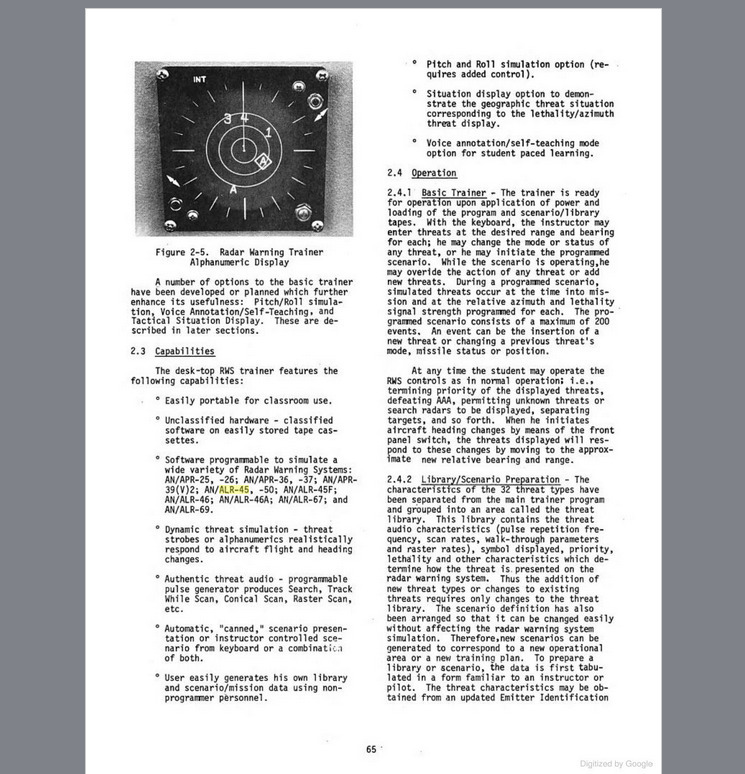
ALR‑45 radar warning receivers
Countermeasure systems (chaff & flares)
20 kVA auxiliary generator
Braking parachute
Airbrake consisting of four small brake flaps
Since 2004: Garmin GPSMAP 295 (portable GPS moving map)
The outer delta wing sections can be removed for transport purposes
Armament:
2 × 30 mm ADEN M‑55 cannons, each with 90 rounds
Rate of fire: 1,200 or 1,400 rounds per minute
From 1992: one or two AIM‑9P3/P4/P5 Sidewinder short‑range air‑to‑air missiles
Arnament
Spoiler
2x30mm Aden cannons
2x Aim9P-3,4
2x Aim9P-5 (maybe, i need to find proof first)
Aim9P-3 äquivilant to RB24J
Aim9P-4 is like a RB24J but all aspect
What the differende of J35Ö Mk1&2?
Spoiler
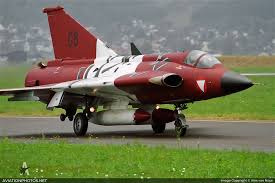
When the Austrian Airforce purchased the J35D, it was converted into J35OE with a birdproof cockpit. While the J35Ö had only 2x 30mm cannons, and later on 2xA2A missels, the J35ÖMk2 got an upgrade. This Upgrade gave it RWR, Flares and Chaff sytem, and Aim9P-5 A2A (maybe) missels.
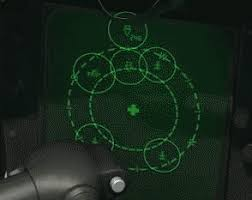
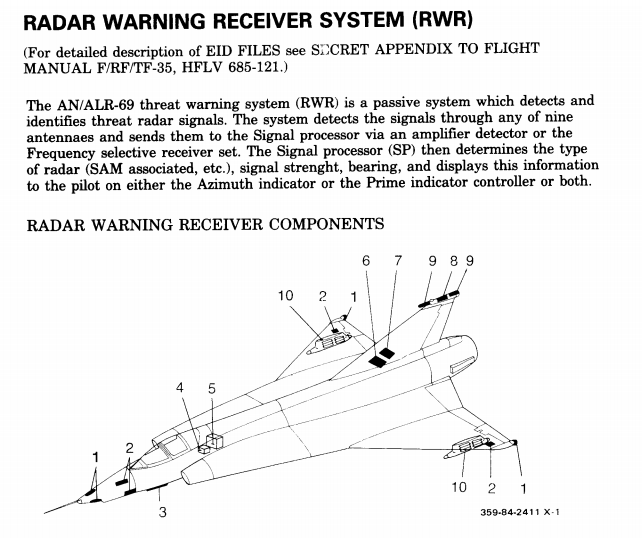
The RWR and Flares system was develop with a collaboration with the Royal Danish Air Materiel Command FMK. The system is very similar to the on the danish WDNS Draken. ( In fact, the collab is so similar to the danish WDNS sytem, we can say, the it is a F-35 with aim 9p5)
RWR: this websites says that the J35Ömk has the ARL-45 RWR.
RAL 7013 - Saab J-35 Oe Draken Mk.II
WNDS
Flares and Chaff system: I coundt find any information on it, but becouse it used a system of the WDNS, it should be thesame like the SAAB F35 .
J35Ö Mk2 in Warthunder
Spoiler
There are multiple ways the Austrian Draken could be implemented into War Thunder:
As a Tech Tree (recommended)
The J35Ö Mk2, with the AIM-9P5 (2x RB74), should sit at a BR of 11.0–11.3. It should be placed under the J35D or together
As a Premium
- J35Ö Mk2 – 11.0–11.3
I wouldn’t add the J35Mk2 as a premium, since we already have the J35XS. Players would still buy the XS over ther Mk2 because the XS has more missiles at a lower BR.
Event
- J35Ö Mk2 – 11.0–11.3
The Mk2 could likely be added this way, since it has an RWR, flares, and 2 equivalent RB74 missiles.
Squadron
- J35Ö Mk2 – 11.0–11.3
The J35Ö Mk2 could be useless for the Tech Tree and not very useful as a premium.
Battle Pass
The J35Ö Mk2 could also be added in a Battle Pass, but there are better vehicles for that purpose.
Would you like to have this in Game?
- Yes
- No
What BR should the J35Ö Mk2 have?
- 10.0
- 10.3
- 10.7
- 11.0
- 11.3
- I said no
Both J35Ö had from the beginning always the missel lounchers but they only used 2 missels.
So, should both planes have the full 4 missels? Or only 2 but a lower br?
- Yes, it should have 4 A2A
- No, it should have only 2 A2A but lower BR
- I said no
Sources:
Spoiler
Saab 35 Draken - Wikipedia
Waffen und Gerät | Bundesheer
Saab J-35OE "Draken"
Saab J-35OE "Draken"
Saab J35 “Draken” von www.gotech.at
Vor 15 Jahren endete die Draken-Ära in Österreich | Austrian Wings
Pictures: