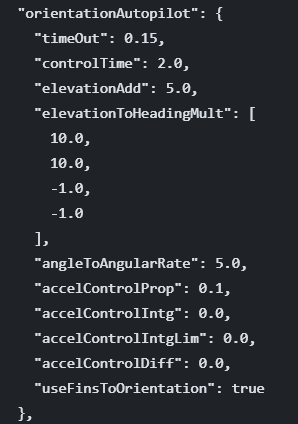
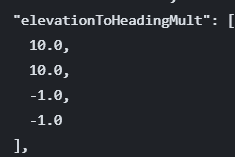
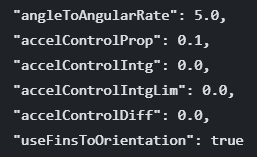
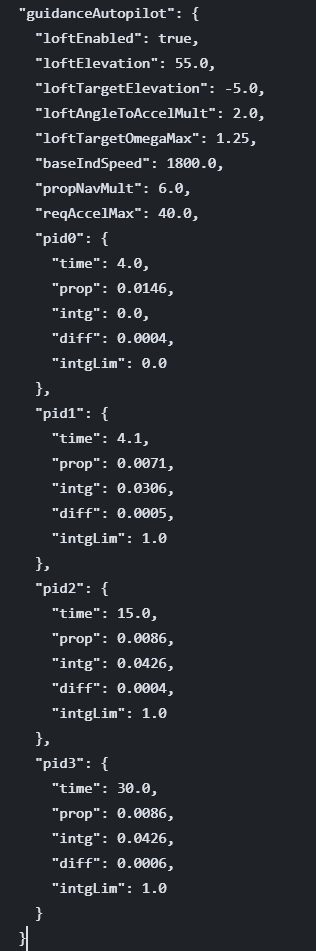
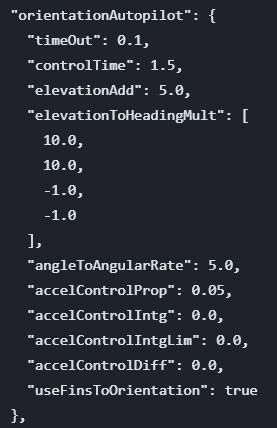
So in my humble theory, what’s happening here is the following:
1st stage: Missile goes vertical until a certain hardcoded altitude is met.
2nd stage: Orientation autopilot tells the missile which heading it needs to go, levels the missile relative to the horizon and tells it to gain altitude at a shallow angle, creating the weird double loft we see in game.
3rd stage: Datalink logic??? That’s my best bet.
Feel free to add to this, as I could be totally wrong, but that is what I feel it’s going on behind the scenes of the launch logic of the SLM.
My guess is that the double lofting will be more egregious in the cases when the target is far away, as it commands the autopilot to loft harder after the missile has been leveled and set in the right heading.
This is a good analysis, I just don’t get why Gaijin can’t simply forego this flawed logic, the vertical launch should last longer depending on the target distance, and altitude. I guess this code works for short distance engagements but falls apart the moment the target is far away.
If anyone knows how to tinker with this in game, they should adjust the vertical launch parameters so that the autopilot doesn’t have to compensate as much for the short vertical launches.
People calling the orientation phase + loft a “double loft” is fundamentally false. The orientation phase tosses the missile out of the container and then forces it to pull 90deg to end up flat, the missile then gets to start guiding after that using the rest of the guidance code.
The real question imo is why does it “need” to pull the 90deg turn to start flat. We know missiles with loft code dont need to be flat to work in-game, since the 9m317 from the Buk-M3 doesnt have an orienting phase.
I also wonder how the Aster 30’s flight path compares, since there are some differences
That’s kinda what I said, the “Autopilot” does not need to level the missile.
I have the feeling that Gaijin could not figure out how to make the vertical launch last longer or vary from target distance/altitude so they settled for this weird solution of making the missile go horizontal and then have it climb at a shallow angle afterward, thus, making this weird “S” shape loft on launch.
I wonder if letting the vertical launch last just a little longer, say, 150 to 300 meters altitude and then let the normal guidance carry over without the flaws of the autopilot would help a bit.
Because to me, the vertical launch altitude is hardcoded, and that’s the main issue with the missile’s flight pattern, it simply cannot properly loft when the vertical launch is so limited in altitude and the autopilot setting the horizontal orientation for an angled climb at such a short distance from the ground, instead of simply letting the missile climb and course correct without the need of the horizontal setup.
Thatd murder its short range capabilities. I was thinking in the other direction, cut down the duration of the orientation phase to something like 1s so it doesn’t pull a full 90deg turn but still gets somewhat pointed in the right direction.
Yeah, that could work too, maybe cutting the orientation phase to just a few degrees instead of the hard 90° pull to level itself with the horizon could help a bit?
But that still wouldn’t be a real loft, just an angled climb shortly after launch and not a true lofting pattern. Because from the footage we’ve seen, the missile climbs to high altitude vertically before it begins to turn to the target.
Nice, I really wouldn’t mind a version of the missile in game that actually climbs to high altitude vertically before it begins to turn, yeah you lose some close range interception ability, but I’d much rather have the higher kill potential at distance than a missile that burns all of its energy and climbs in the most inefficient way imaginable to the target lol.
Kinda like this
The missile needs more time to climb before it can begin to turn.
I think rather than orienting it manually to 90… i could experiment with letting it orient itself via DL or maybe only orient it some 10 or 20 degrees to let it chart a smoother curve
For the record, I haven’t been able to intercept a single LMUR or BA-11 because DL can only guide 4 targets at a time, radar refresh is too slow for DL course corrections and IR locks are not possible because of the low heat signature of helicopter AGMs lmao.
That’s how it should be in the first place, it always climb up to a certain altitude then it start moving towards the target, eather descending on it or climbing up after the turn to match it’s altitude, the phase at which the missile orient it slef then correct it’s path depending on how close is the target, and only start lofting if the target is far should be removed.
In game, it’s basically a pathetic 30 meter or less climb, it then turns 90 degrees because of the “Autopilot” and begins to climb at a shallow angle, wasting precious energy and time. In real life, the missile climbs to 200 meters or more, turns and begins to dive on or climb on the target as needed.
I think Ger already needs a new SPAA. Cause lets face it, Iris-t is not up to the task. Lasted 2 patch cycles and its already obsolete. introduction of LMUR killed it pretty much.