- Yes
- No
Background
History
After the signing of the Sino-Soviet Non-Aggression Pact in 1937, airplanes assisted by the USSR and the Soviet Volunteer Group began entering China. The fighters mainly included the various models of the I-15 and I-16. On October 27, 1937, the first batch of Soviet combat aircraft arrived in China. The first group of arriving volunteers (including aircrew and ground personnel) numbered 254. Due to coordination issues between China and the USSR, the Soviet Volunteer Group did not officially participate in the war until December 1. And due to the retreat at the front line, the ROCAF was also in chaos. Chinese pilots did not begin training on I-16 trainer aircraft at the Lanzhou base until December 3, 1937.Nevertheless, with the help of the Soviet volunteer team, ROCAF pilots gradually mastered the performance characteristics of Soviet aircraft, allowing the ROCAF to primarily use Soviet planes in combat from 1938 to 1942. Between October 1937 and September 1939 the USSR delivered 885 aircraft (rising to 1,250 by 1941), including 216 I-16s, predominately Type 5s and Type 10s, which were the best-performing fighters of ROCAF at the time before the creation of American Volunteer Group Flying Tigers.
The first to arrive in China were the I-152 and I-16 type 5/6. Later, because Japan widely deployed the Mitsubishi A5M and Nakajima Type 97 fighters in the battlefield, which slightly outperformed these two Soviet models and the Soviet planes clearly lacked firepower, the Soviet Volunteer Group together with the ROCAF replaced them with the I-16 type 10 in the spring of 1938. Chinese referred to it as the I-16III. This aircraft became the main fighter for the Soviet Volunteer Group and the ROCAF during 1938-1940. However, the ROCAF’s lack of combat capability made it impossible to retire old variant I-16 type 5/6. To strengthen firepower, some I-16 type 5/6 (and later Chung 28) were also simultaneously upgraded, with one machine gun added on each side of the wings. This suggestion is about modified I-16 Type 5 which is called I-16 Type 5 w/ Field Mod here.
Difference
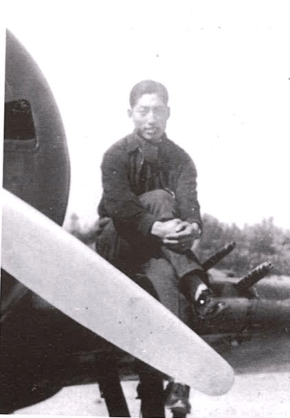
The I-16 Type 5 w/ Field Mod have an additional weapon nacelle mounted on the upper side of each wing. The standard equipment is 4 x PV-1 which is called Maxim in Chinese document. For Gao Qingchen’s I-16 in the photo, in order to avoid misleading, we don’t know if it’s a standard I-16 Type 5 w/ Field Mod as its guns looks different.
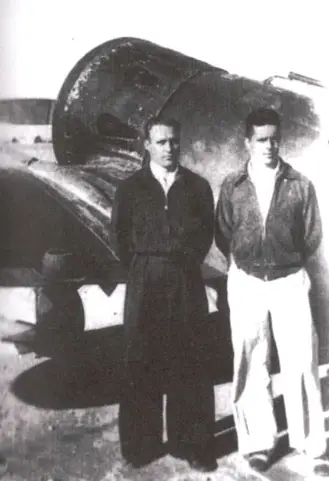
The additional weapon nacelle is clearly visible
Technical Data
Specifications
Length - 5.9 m
Height - 3.25 m
Wingspan - 9 m
Crew - 1 pilot
Max Speed - slightly below 450 km/h
Engine - 1 x Shvetsov M-25A
Armament
2 x 7.62 mm PV-1 machine guns in the wings with 500 rounds per gun
2 x 7.62 mm PV-1 machine guns in the nacelles with 500 rounds per gun
Images
Spoiler
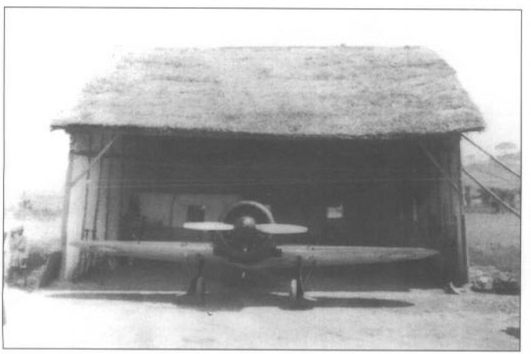
an photo of I-16 Chung 28 with Field Mod can help you understand its structure
Sources
Spoiler
Secondary sources:
The Air Operation On The Anti-Japanese War, ISBN 7-80183-690-1
History of Chinese Aviation, ISBN 7-302-04021-4
遺囑、紅辣椒和空油箱:高慶辰的八年抗戰(上) - 民間史料數位平台1937-1949
Memorial Museum of the Eighth Route Army Lanzhou Office
Primary sources: