Would you like to see this vehicle in-game?
- Yes
- no
0
voters

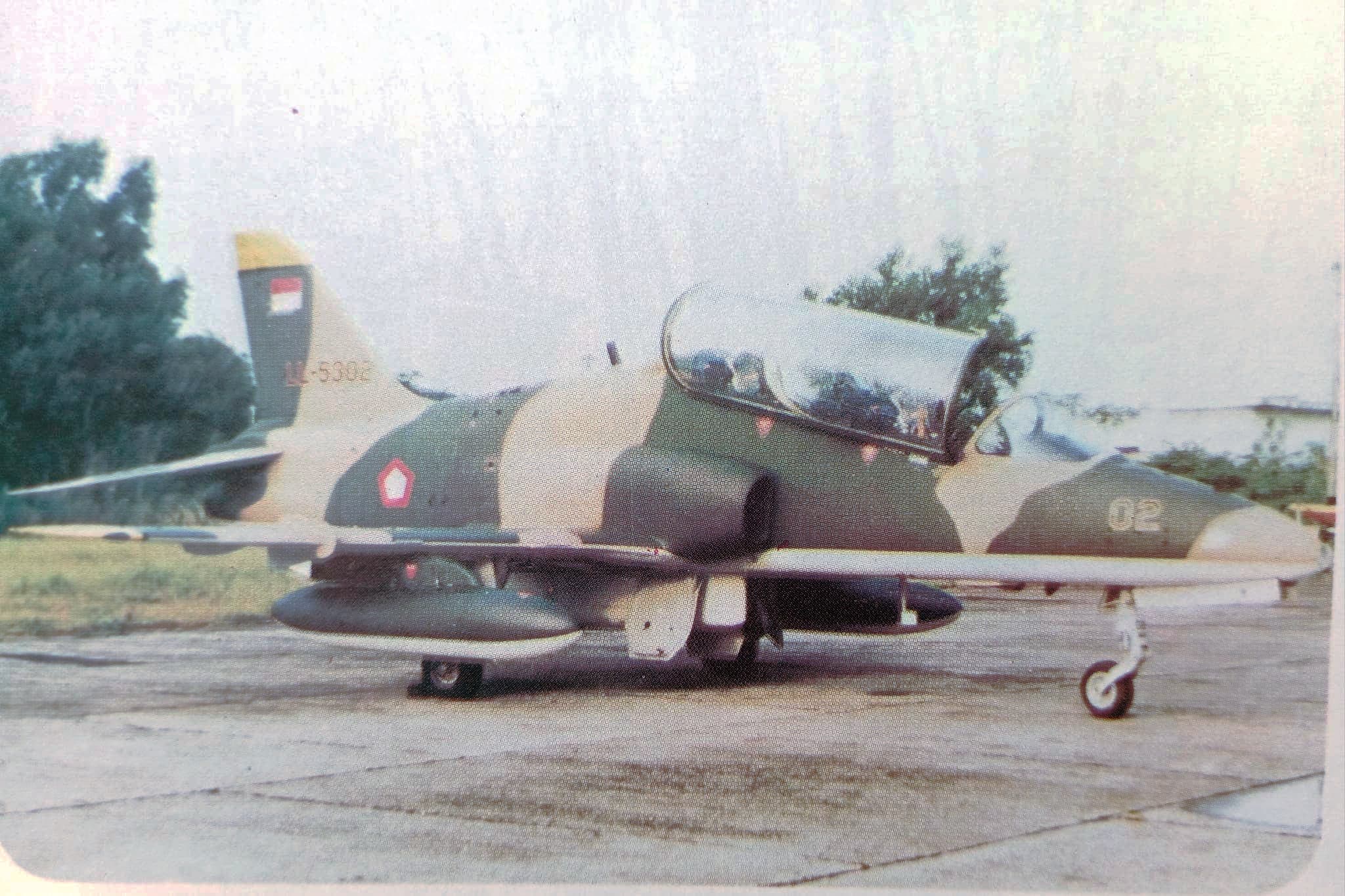
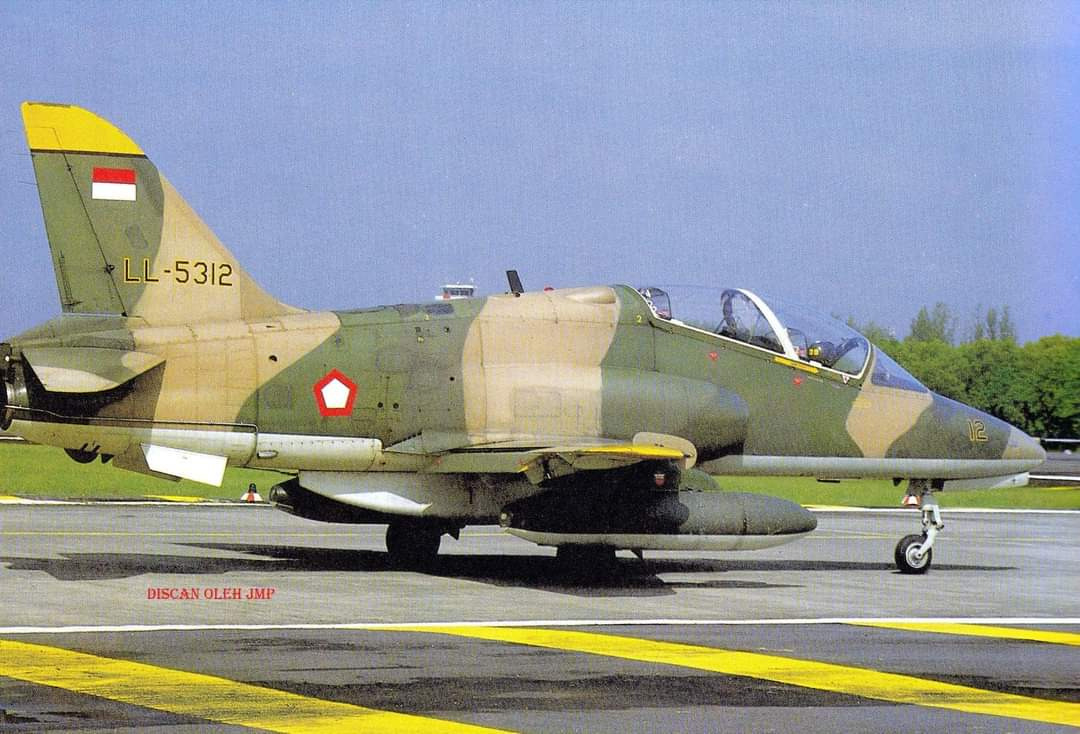
 Hawker Siddeley Hawk Mk.53

Hello everyone! Today I would like to suggest the Hawk 53! This is an Indonesian-export variant of the British Hawk 50 series, which is an improved export model of the Hawk T Mk.1. First flew in 1976, It features an improved cockpit instrumentation, additional external weapon stations, and an increase in range and weapons load which allows the jet to act as both an advanced trainer as well as a light fighter.
Getting an exact armament list for this thing is quite a challenge, so everything I’ve listed came from one source, the display information provided by the Indonesian Air Force during Indonesian Air Show '96. According to that display, the jet was armed with a wide variety of bombs and ordinance of various different countries, namely America, Great Britain, Soviet Union & Israel. Additionally the jet in Indonesian Service was never mounted with any guided A2A or A2G munitions.
Given Indonesia’s inclusion into the Japanese tree, this vehicle would perform quite similarly to the Thai Alpha Jet A, albeit with a slightly faster speed but a slightly lower total payload for its suspended ordinance (its biggest bomb would only be a 360kg). This vehicle can be considered a side-grade, presumably at around the same rank or BR as the Alpha Jet A.
How to tell it apart from the Hawk 109/209?
You can tell by the tail number, if its start with 53, then its the Hawk 53, if its 01 then its Hawk 109, if its 02 then its Hawk 209.
But the easiest way to tell it apart is through the vertical stabilizer, if it has an extra element near the front of the tail, then its a Hawk 109/209, if its smooth, then its the Hawk 53
Hawk 53 (Left) vs Hawk 109 (Middle) vs Hawk 209 (Right)
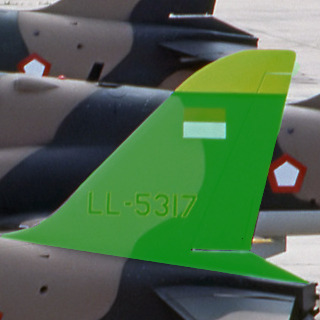
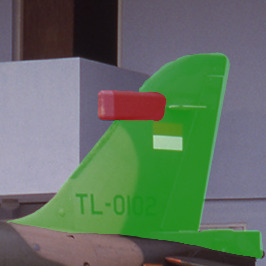
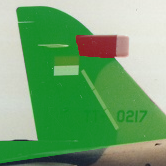
This suggestion is primarily made to complement the already suggested Indonesian Aviation Sub-tree as well as the Expanded List of Indonesian Air vehicles
A. Background & History
Details
In the mid-60s, the Air Staff was thinking of updating the Royal Air Force (RAF) pilot training programme, and in 1964 issued the Air Staff Target (AST) 362 for a replacement to the Folland Gnat. the requirement called for a twin-engine, two-seat advanced trainer capable of speeds up to 1.5 Mach, something similar to the USAF’s T-38 aircraft. Originally the SEPECAT Jaguar was to be selected for this role, but the airframe proofed to be more complex for fast jet training. This results in the RAF trainer programme unfulfilled, and in the late sixties it was clear that these older Folland Gnat & Hawker Hunter trainer were becoming more expensive to fly and maintain, and would need to be replaced very soon.
Because of that, in 1968 Gordon Hodson conducted discussions with Gnat operators, the Future Projects Office of the Kingston-on-Thames works of Hawker Siddeley Aviation started to investigate the requirements for a suitable replacement aircraft. The features the operators wanted was low acquisition and life cycle costs, low fuel consumption and a wide speed range up to high subsonic, high reliability & low maintenance cost, and high structural integrity. Some considerations from the Point of view of the company are as follows: low risk, easy to manufacture, simple design, potential development platform for the future, successful export is needed to cover costs. These studies would be conducted for the next few years.
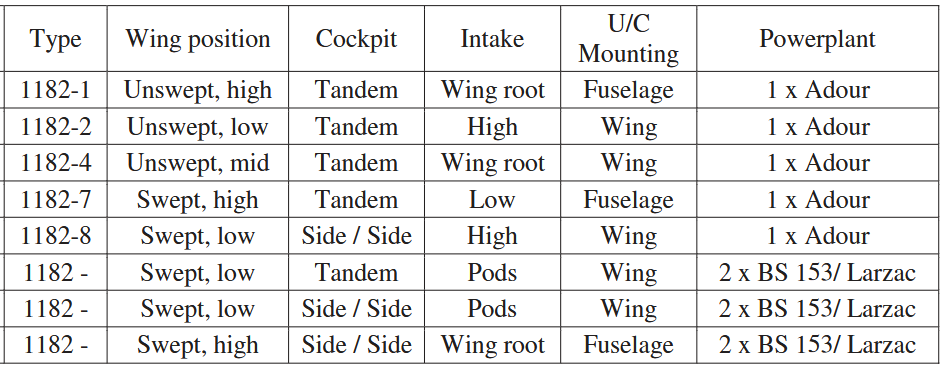
Summary of all the different variants of the HS 1182
In regards to the engine, there was a split in supports of a single-engine and twin-engine. The argument for a single-engine was because its more familiar & proven to be reliable. Additionally from interviews, it was understood that students when conducting an engine failure simulation in a twin-engined plane, it was discovered that the training often ends in disastrous results. More engine would also result in more instruments and engine-support systems, which would increase cost and maintenance hours.
Another key point for debate were its wing position, namely of a shoulder wing or a low wing. Supporters of the shoulder wing highlights its aerodynamic performance, as well as the capability to use a low tail, which is good for high speed. But its drawbacks is a more narrower track undercarriage housed in the fuselage (which operators of the Gnat dislikes). Additionally any maintenance work of the wing or engine would require a crane for removal. Additionally any suspended ordinance would need more lifting to be applied. The wing most likely would be anhedral as well, which can result in low wing tip clearance when moving on the ground. The low wing position was eventually chosen even though it might be more difficult from an aerodynamic point of view, but this concerns was primarily outweigh by the convenience of applying the payload as well as easing the maintenance process of the wings if required
The HSK 27 document was the design used as the primary design for the project. This design has a “Teddy Bear’s Ears” design for the intake, a high, flat, all-moving tail. Both the tailplane and ailerons were fitted with a duplicated, irreversible hydraulically powered control units to account of the higher speed. A mockup of the cockpit was designed and built, and it was modified accordingly to give the best possible layout, primarily in terms of investigating lighting and reflections. The Folland F4 GT2 Mk2 seat was used. It includes a whole host of avionic equipment. A 7.62mm machine gun was installed in the wing root for training purposes. Speaking of the wing, it was of moderate sweep, with the design being based on experience with the Harrier. The half model showed a promising high lift performance. The proposed powerplant was the Rolls-Royce Turbomeca RT172-06 providing 5,000 lbs of thrust.
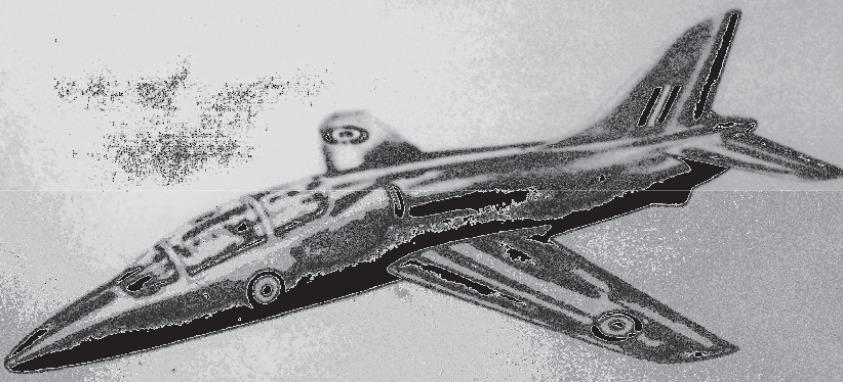
Artist’s impression of the HS 1182 (HSK 27)
The Air Staff issued a new ASR (No.397) for a trainer aircraft in 1970, with no requirement for sustained supersonic flight, but with strict requirements elsewhere. The requirement were compared to the HS 1182, and though some discrepancy appears, it mostly met the specifications perfectly. Additionally though it was not required, it was proposed that the jet would incorporate a full ground strike capability for export versions. The export market was estimated at around 464 aircrafts, with the jet primary competition being the Franco-German Alpha Jet.
The HS 1182 would be modified into many different variants, which the HSA would eventually enter into the competition with the HS 1182AJ. This variant was 5% smaller than the original design on dimensions, however items like the cockpit and engine were unchanged. This aircraft, later dubbed the “Hawk” was declared the winner of the competition in October 1971, and the contract were agreed on March of 1972 for the production of ~176 aircrafts. The aircraft were able to be converted to close support role using one centerline pylon, and two outer wing pylons, including a jettisonable drop tanks, heavy weapons, and twin store carriers. These capabilities does not subtract from the jet’s primarily role as a trainer. After further refinement, the first flight of the Hawk T Mk.1 took place on the 21st of August 1974, with Chief Test Pilot Duncan Simpson flying from Dunsfold.
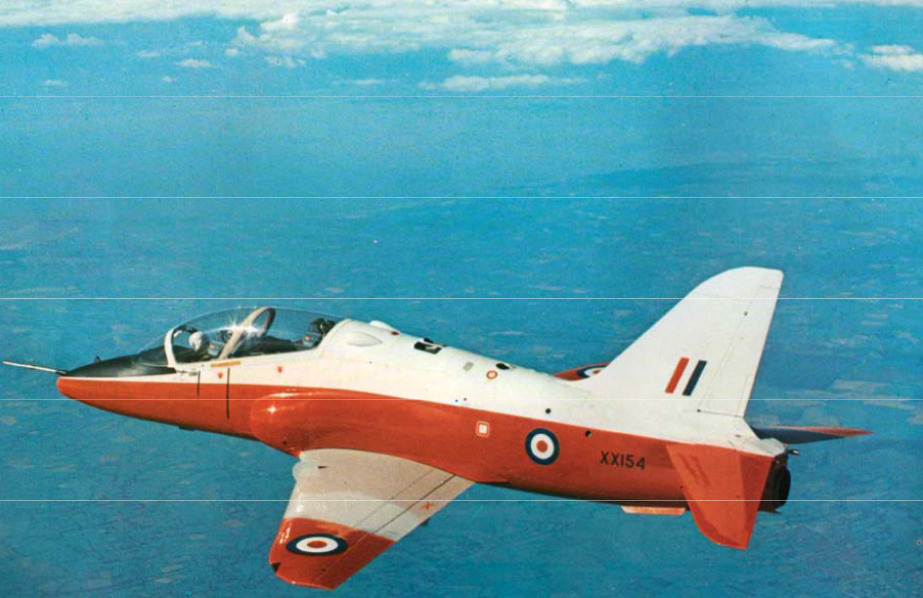
Hawk T Mk.1 (XX154) First Flight, 21st August 1974
Initial comments were favourable of both the handling and performance. Specifically noted was the cockpit being outstanding. Of course when the aircraft was tested to its limit some flaws appear, but they were non-major and was soon rectified. As a result, the performance requirements of ASR 397 were all met or even exceeded in some elements. The deliveries began with production aircraft XX162 & XX163 flown to RAF Valley (No.4 F.T.S.) on November 4th, 1976, 27 months after the first flight and 4.5 years after the contract agreement. Around the same time, the Ministry of Defence wrote a letter to the HSA congratulating them as quoted “that the Hawk is on time and on cost, and has met and/or exceeded the performance specified”
In service with the RAF, the Hawk was mainly used for Advanced Flying Training at RAF Valley and for Tactical Weapons Training at the Tactical Weapons Unit at RAF Brawdy & Chivenor. The Red Arrows Display team also used the Hawk T Mk.1A, which previously operated the Gnat Trainer. They uses a modified version of the Adour engine. Later in 1983, ~88 Hawks were rewired so that they can be quickly converted to a second line defensive fighter role in an emergency, capable of carrying a centerline gun pod and sidewinder AA missiles on the pylons
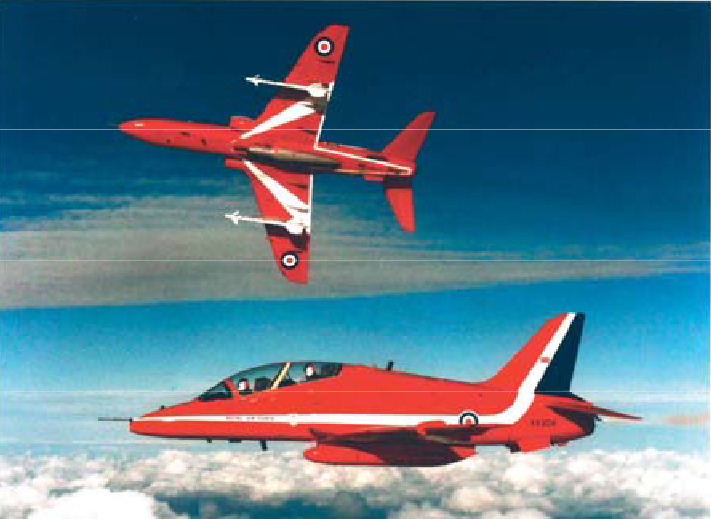
Red Arrows Hawk T Mk.1A. 88 Hawks (Including The Red Arrows) are capable of carrying AIM-9 Sidewinders
The Hawk T Mk.1 has a two-seat tandem cockpit design with a stepped rear seat, giving outstanding vision for both pilots. The fuselage is a conventional aluminium alloy stringer-frame struction. The instructor in the rear has a clear view of the runway ahead almost to touchdown. The one-piece curved windscreen also gives good rain clearance and can abosrb impact of a 2pound bird at 450 kts (this was later improved to 528kts). Its primarily made of stretched acrylic material and is hinged sideways for entry. The canopy also has a miniature detonating cord (MDC) which is used to shatter the glass before using the Martin Baker Type 10b Zero-zero ejection seats.
In front of the cockpit, the nosewheel retracts forwards into the nose compartment, which also provides storage for some of the equipments. A MicroTurbo 047 Mk.2 gas turbine which drives an air compressor provides air to start the main engine, which is mounted on two forwards and one rear brackets. The engine can be easily taken out for maintance by using mini hoists. A gun pod housing a 30mm Aden Mk.4 cannon with 120 rounds of ammo is carried on the centre-point below the airframe. For the Red Arrows, this mount was replaced with a tank-creating smoke. The wing & tail unit is made in one-piece, using aluminium alloy. It has a continous structure from tip to tip and is attached to the fuselage by six bolts. The main box of the wing has machined skins wit two main spars and integral ribs and stringers, the insides of which is used as an internal fuel tank, capable of carrying 184 imperial gallons worth of fuel. An auxiliary spar at the front of the wing forms the front of the compartment which holds the retracted main wheels. It uses the Adour Mk.151-01 in RAF use, whereas the Red Arrows uses a modified variant, the Mk.151-02
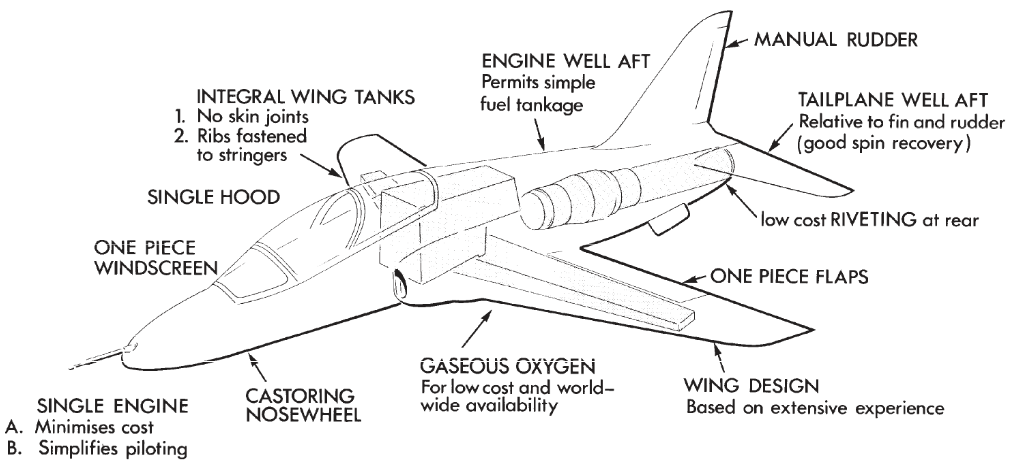
Basic features of the Hawk T Mk.1
In terms of what the pilots think, Brian Hoskins, a well-known former leader of the Red Arrows explained that the hawk is very comfortable to fly, its also extremely reliable and carries a far more fuel-efficent engine than the Gnat. He also highlights how useful it is as a trainer, its supersonic, capable of flying on long sorties. Another aspect he focuses on is its manouverability. The hawk’s wing is very strong and provide ample lift. He note that rather than a tool to learn, its as if the plane is teaching you to fly as well. This sentiment is shared across many different pilots, not just from the United Kingdom, but also from America. For instance Major John P. Kelly, a senior pilot and flight instructor in the USAF’s Air Training Command, was on an exchange position to RAF brampton, he had the opportunity to fly the Hawk. He gives the hawk a high praise in his article published in the Air Force Magazine titled “Hawker Siddeley’s Hustling Hawks”

Major John P. Kelly (Left) and his article on the Hawk Trainer Jet (Right). Unfortunately he passed away recently in April of 2026 at the age of 87
From the start it was always understood how important the export market was to recoup the cost of the project. It was clear that a new alternative version must be developed from the intial Hawk T Mk.1 and be offered to other nation’s Air Forces. Namely scandinavia (excluding sweden) was a potential source of orders, but also with the Middle East and Africa. The Asian continent also has potential with Indonesia and Malaysia as front runners. This new export variant was designed to have a four or five pylons and the structure had to account for these in terms of maximum weight and equipment.
The Hawk mk.50 series is the export variant of the T Mk.1. It has the same engine but as an export variant named the Mk.851, it was fitted with “wet” inboard pylons capable of carrying 130 imperial gallon of external fuel tanks which could be jettisoned, as well as an outboard pylons. The central gunpod can be switched to an additional pylon if necessary. All the pylons can carry payloads up to 500kg each, and for smaller payloads, a single pylon can be twin-mounted with two ordinance. A comprehensive weapons management system was also offered, including an enhanced navigation and attack avionics, new cockpit layout and instruments as well as an improved communications system. The dimensions are virtually the same as the basic aircraft, but the nose equipment bay was enlarged. There was also some improvement made to high lift capability because of the higher weights. To help reduce landing run, upgraded wheels and tyres were fitted as well as a possible brake parachute. With these changes, the Mk.50 series had a 30% increase in take-off weight over the Mk.1. It also has 70% more disposable load and 30% more ferry range.
The first Mk.50 series orders were from Finland, after a Finnish Air Force delegation paid a visit to Kingston, inspecting the aircraft in great detail and putting in a number of flying hours. The Finns ordered 50 aircraft (designation Hawk Mk.51), but the first 4 airframes were to be assembled in Finland by the Valmet company. The deal was signed in December 1977 and first delivered 3 years later. Subsequent orders came from Kenya (Hawk Mk.52) and finally Indonesia (Hawk Mk.53).
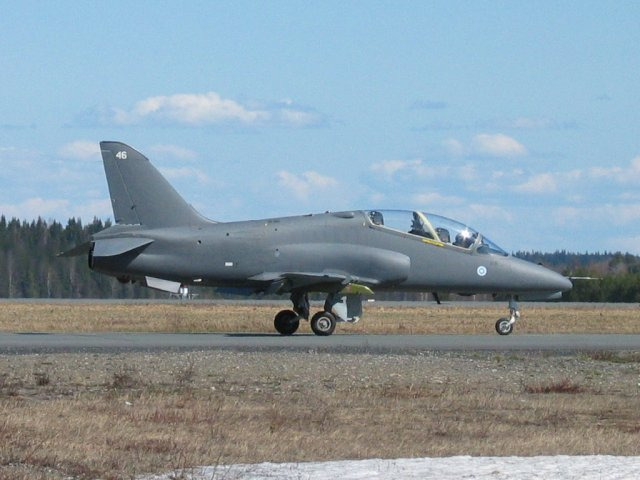
Finnish Hawk mk51
In the 70s, the Indonesian goverment received a an excess of funds from rising oil prices, which allows the country to allocate extra funds towards new procurements. The Hawk procurement itself is a part of the Indonesian Air Force’s Modernization program called Renstra (Strategic Plan) II in order to replace the older Aero L-29 Delfin which had been operated as a trainer since 1964. The variant purchased was the Mark.53, a specific Indonesian export variant with a secondary ground attack role. Indonesia purchase around 8 units as a part of the first batch. After the signing of the purchase, eight Hawk 53s with registration of LL-5301 - 08 was to be sent in stages throughout 1980-81. After the first two airframes arrived, the Indonesian Air Force then ordered 20 more units, which began arriving until 1984. The Hawk jets was first showcased to the public during the Indonesian Armed Forces’ 35th anniversary in October 1980, with it flying alongside the L-29 to give it a final farewell to its predecessor.
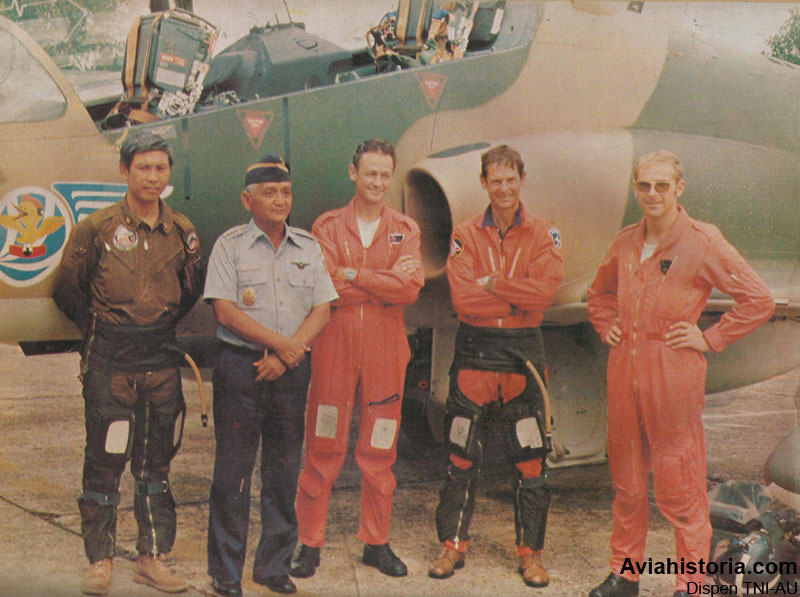
The first arrival of the Hawk 53. Indonesian Air Force Chief of Staff (2nd from left) greets the delivery pilots. 3 from Hawker Siddeley (right) and 1 Indonesian Pilot, Flight Major Mahpudin Taka (left-most)
Unlike the F-5E fighter jets, which require new infrastructure and buildings. The Hawk is capable of reusing the older facilities used for the L-29 Delfin. Just like its predecessor, the jet would be put as a part of Training Squadron 103 of the Training Wing 1 based in Adisucipto AFB in Yogyakarta. Indonesia had sent 33 technicians & 4 pilots over to the United Kingdom to learn how to operate and maintain the Jet aircraft. The 4 pilots would eventually qualified to teach other Indonesian pilots in operating the jet.
Due to the amount of airframes, the Training Squadron 103 was further expanded into the 15th Air Squadron based in Iswahyudi AFB in Madiun. Throughout its service, the jet had participated in many different training and military missions, namely operations in Manado, Papua, Kupang & East Timor. Several of the Hawk 53s also was painted in a red & white paint scheme for use by the Spirit’85 Aerobatic Team. The jet even took part in the 1990 movie “Perwira dan Ksatria”.
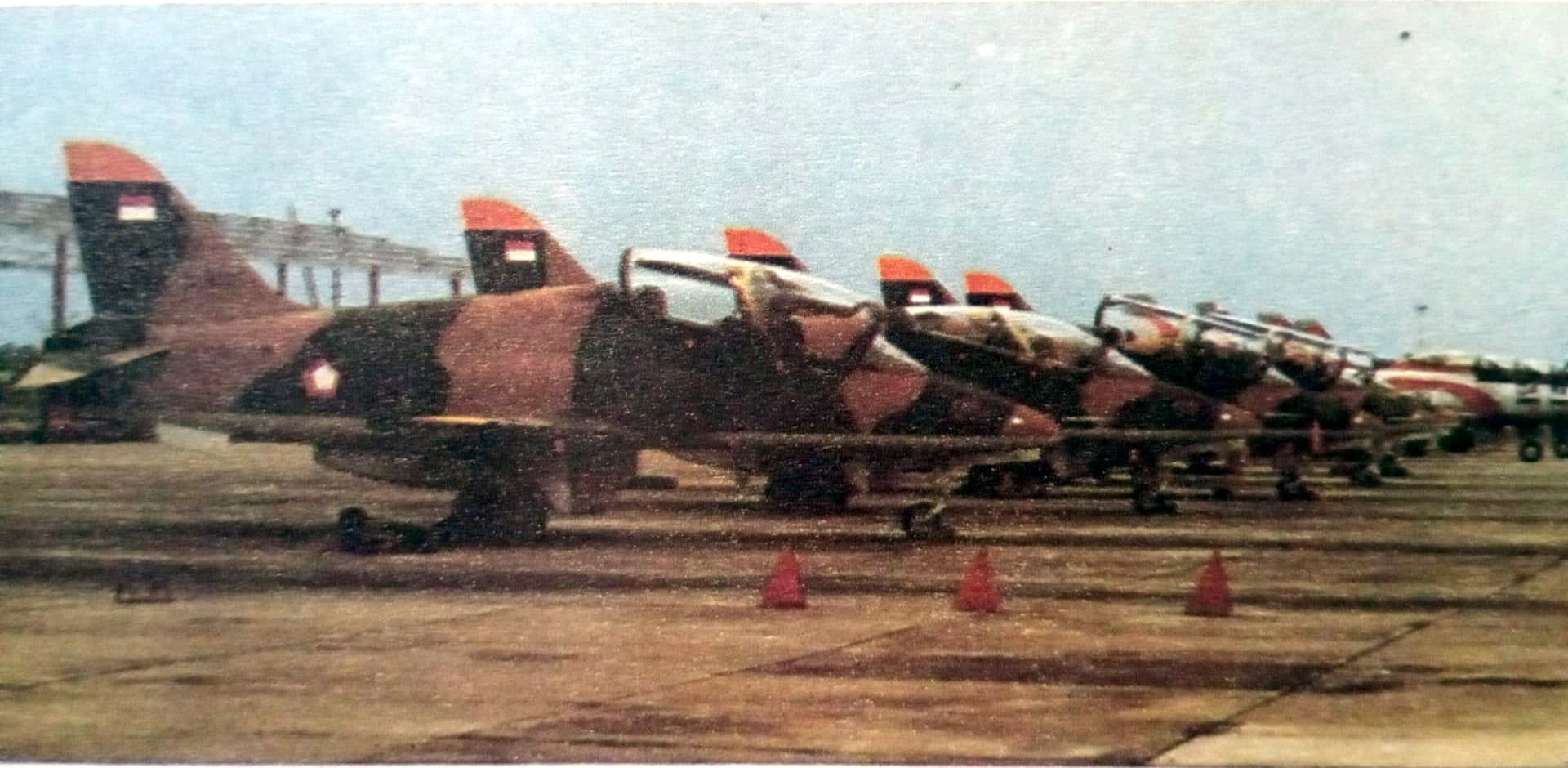
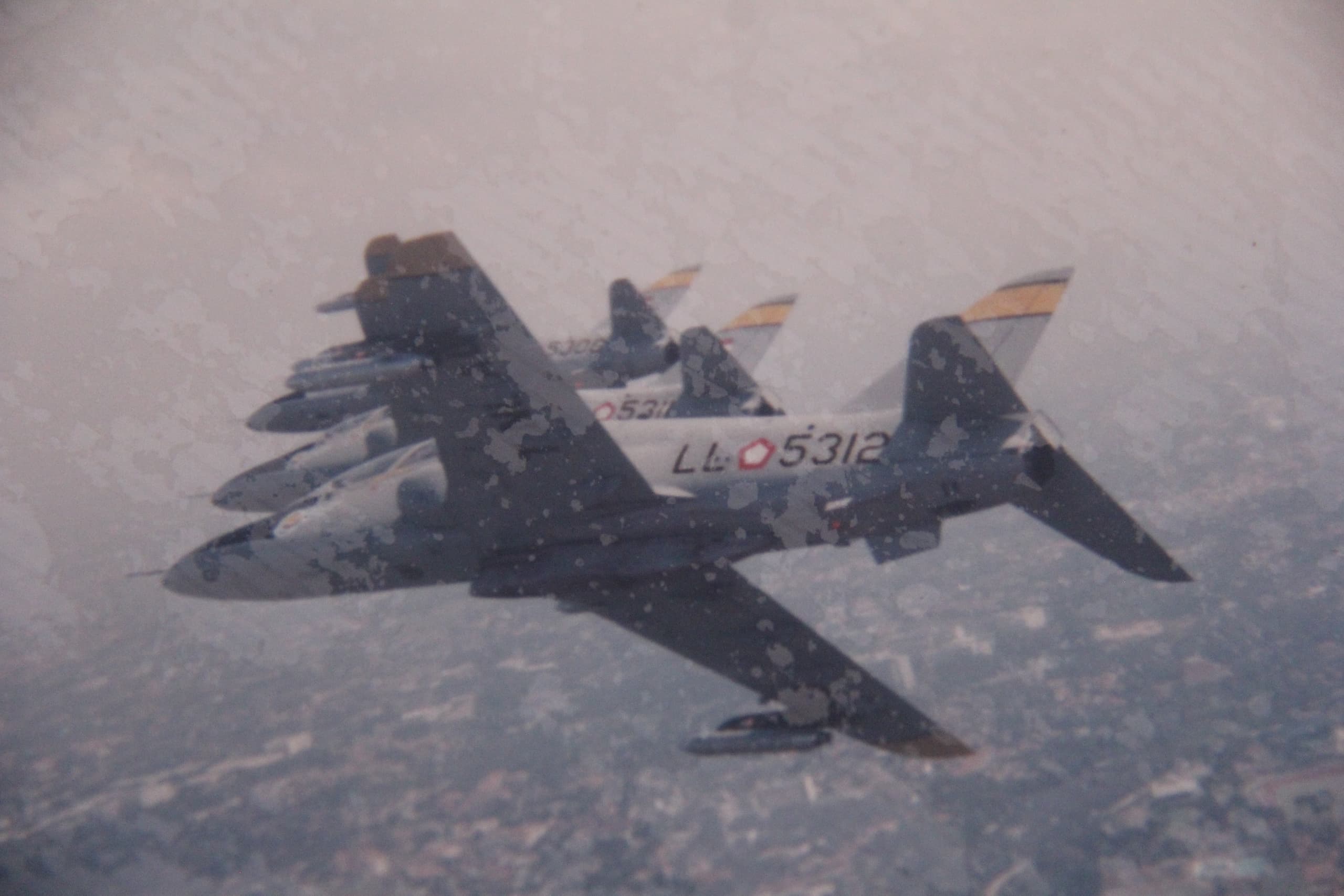
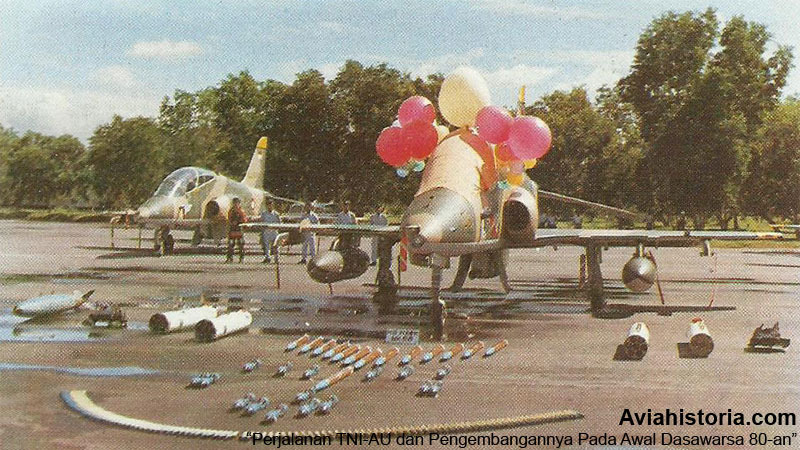
Row of Hawk 53, notice the front-most jet has its gunpod equipped
The role of the Hawk 53s started to diminish when the Indonesian Air Force started introducing its new fleet of Hawk 109/209 series jets in mid-1990s. Its readiness in the turn of the millenia is also not great due to an embargo due to human rights concerns in East Timor. Notably some units had also suffered fatal crashes. As a result some units were eventually sold back to Hawker Siddeley, which at this point had became British Aerospace.
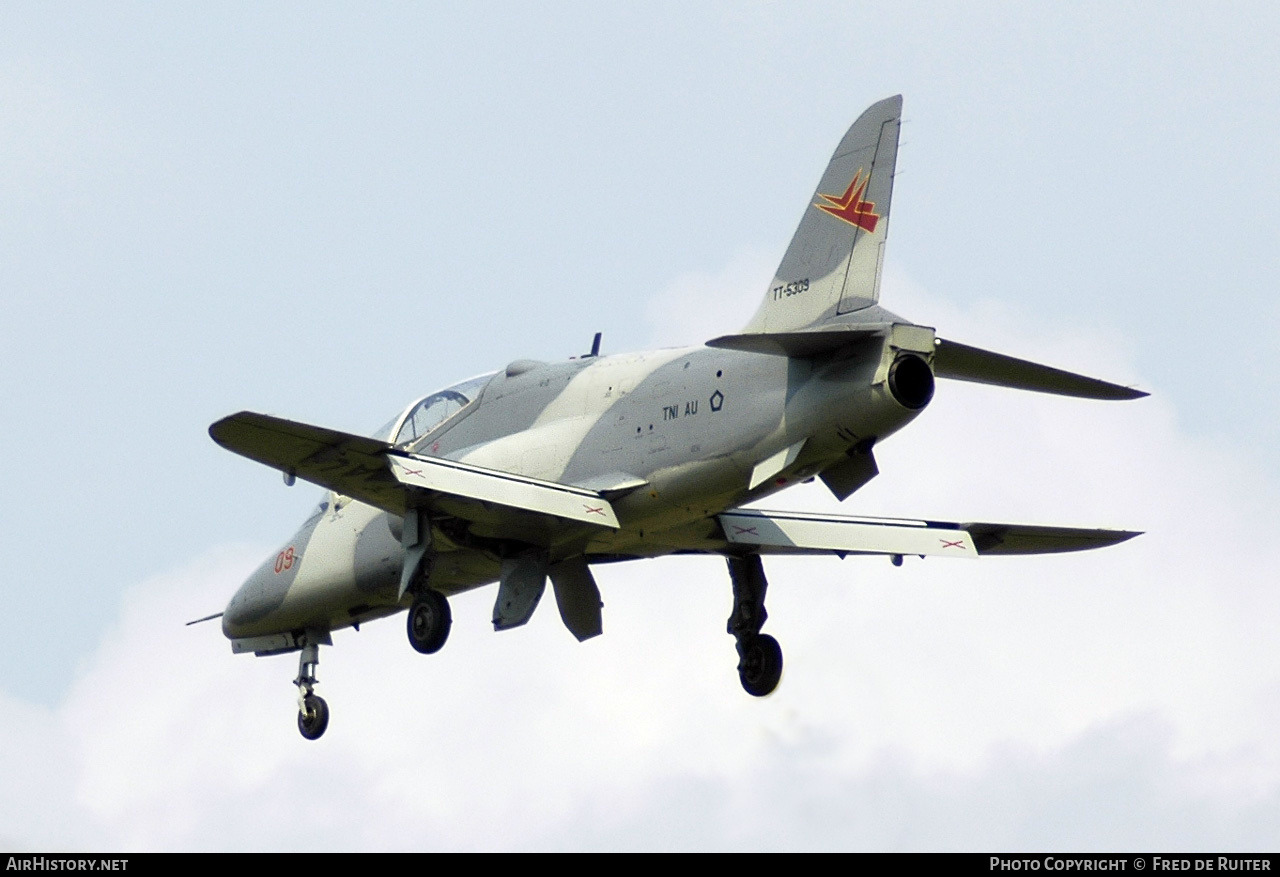
Eventually it was decided that the hawk 53s would be retired after 35 years of service, with its role as a trainer/attacker being replaced by the KAI T-50 Golden Eagle. The single remaining flying Hawk 53, T-5309 was flown for the last time from Iswahyudi AFB to Adisucipto AFB on the 12th of March, 2015, to be handed over to the Dirgantara Mandala Museum in Yogyakarta.Currently, there are 6 displayed Hawk 53 aircrafts scattered throughout the Archipelago, primarily stationed in and around Indonesian Air Force facilities and locations.
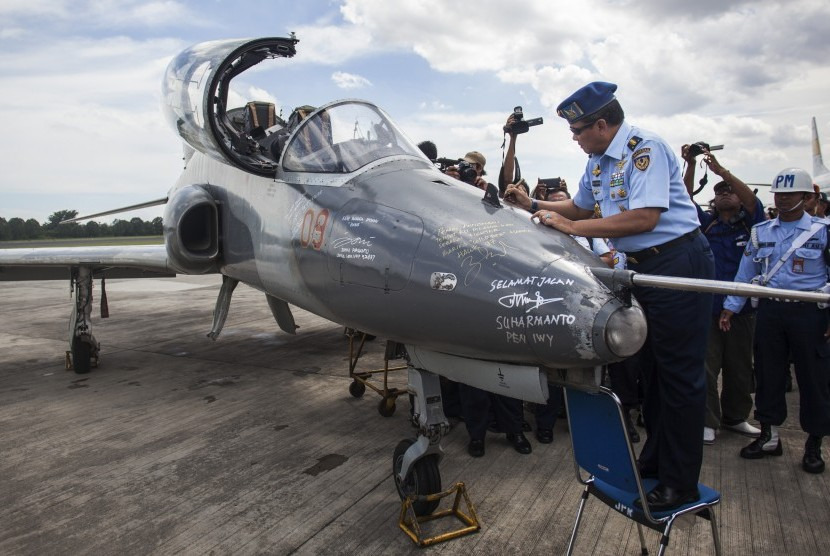
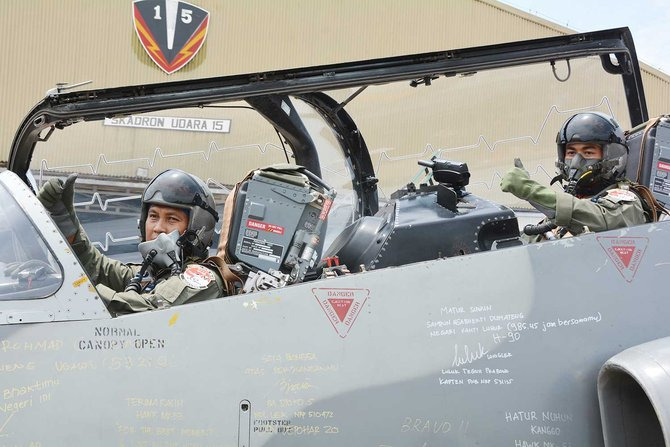
Hawk 53 with many different parting words written on its fuselage as a part of its retirement ceremony
B. Specifications
Details
General Specifications
- Crew: 1 - 2
- Wing span: 9.4 m
- Overall Length: 11.9 m
- Height: 4 m
- Wing Area: 16.7 m
- Max Altitude: 15,240 m
- Max Endurance: 4 - 3.5 hours
- Weight:
- Empty: 3,719 kg
- Max Takeoff: 7,348 kg
- Max Landing: 4,990 kg
- Engine: Rolls Royce Turbomeca adour Mk851 Twin-shaft turbofan engine
- thrust (ISA Sea Level): 23.1 KN (5,200 lbs)
- Max Speed (Dive): mach 1.2 (1,481 km/h)
- Max Speed (Straight @ sea level): 550 kts (1,018 km/h)
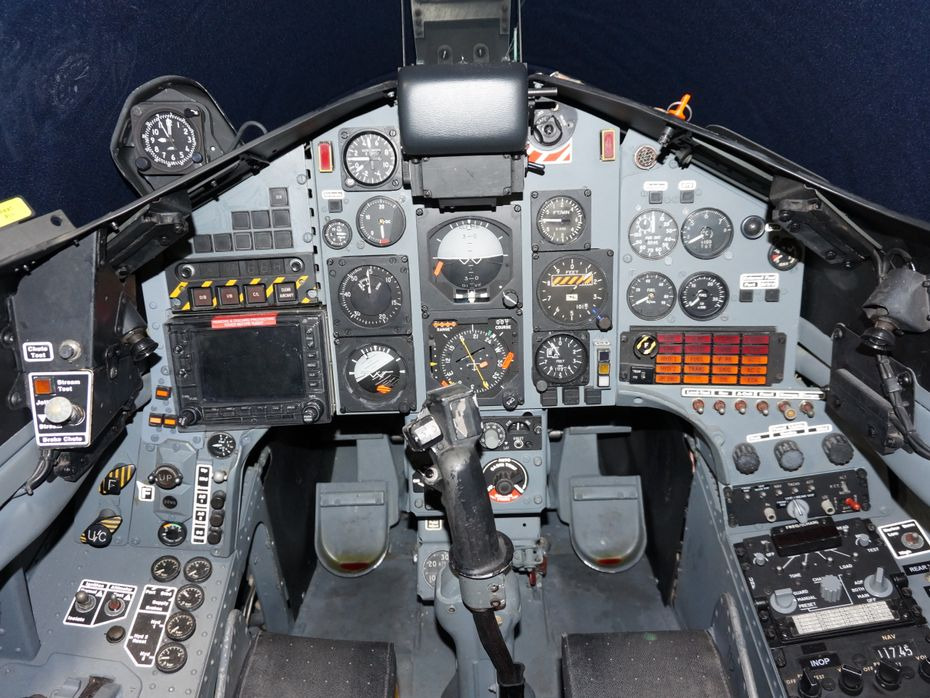
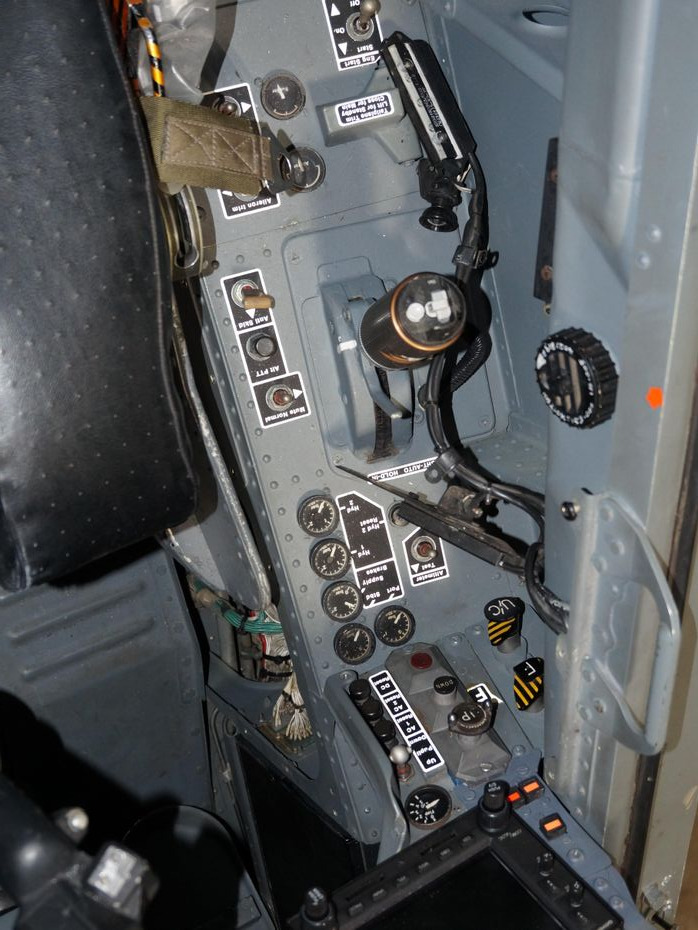
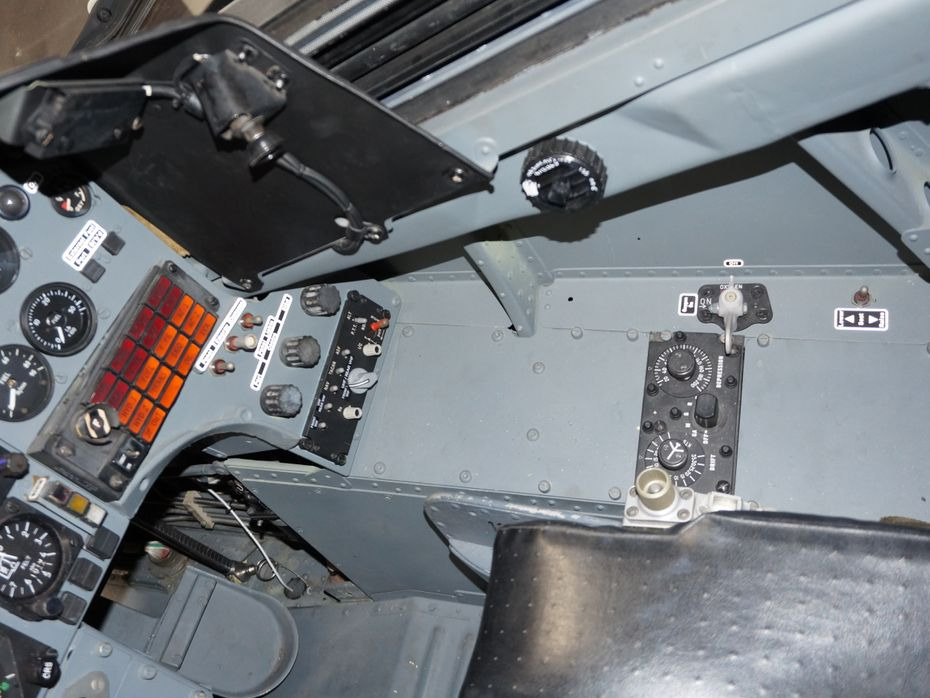
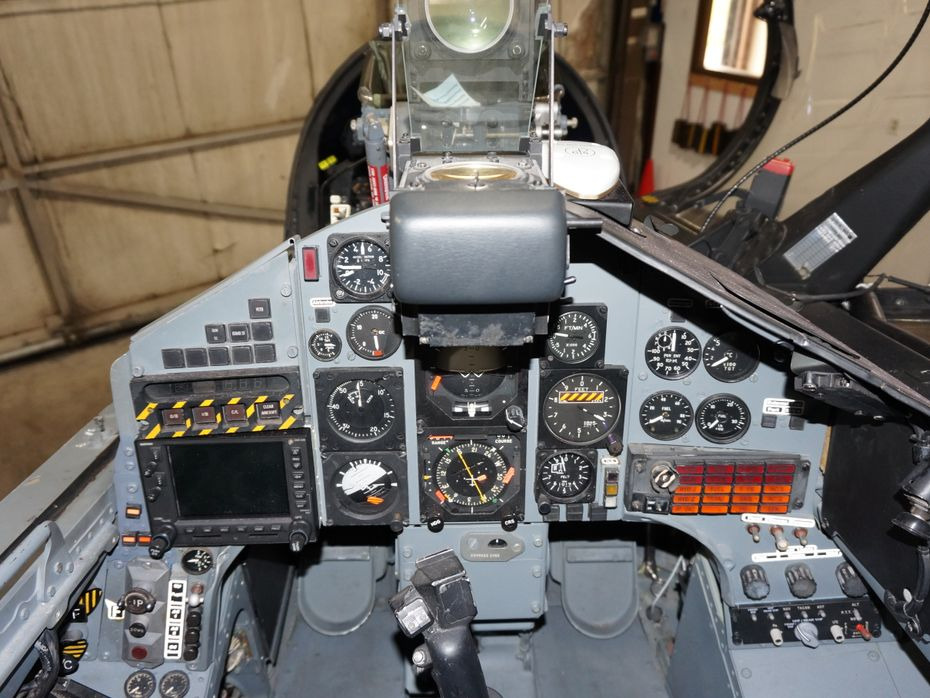
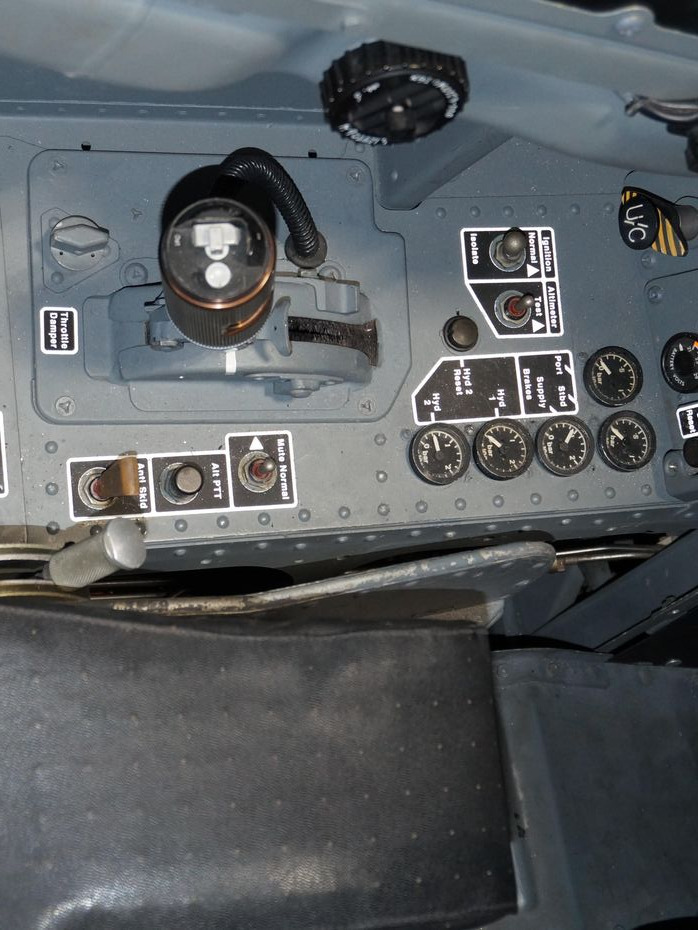
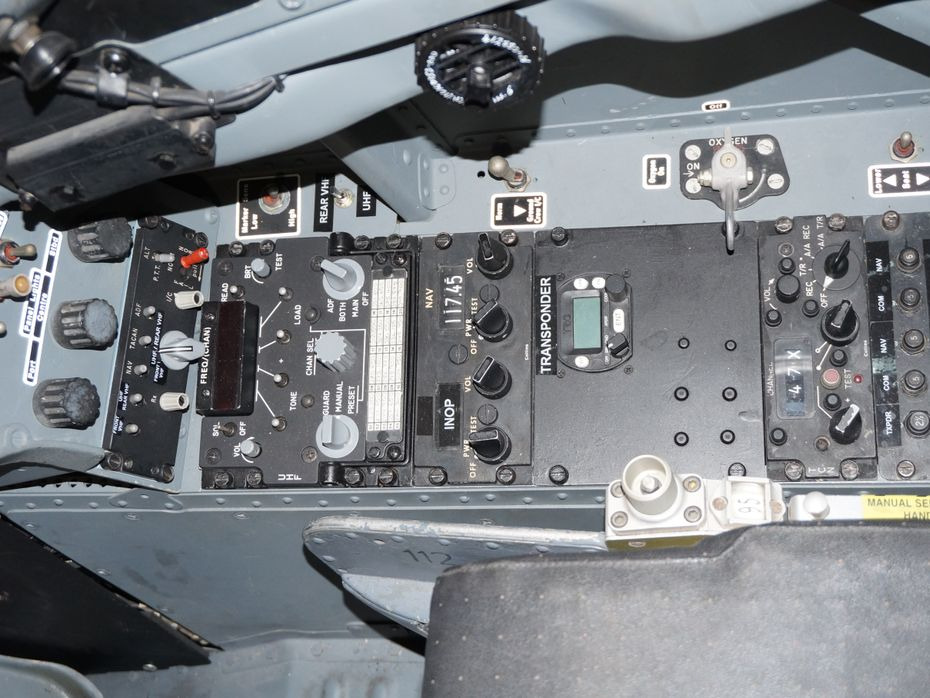
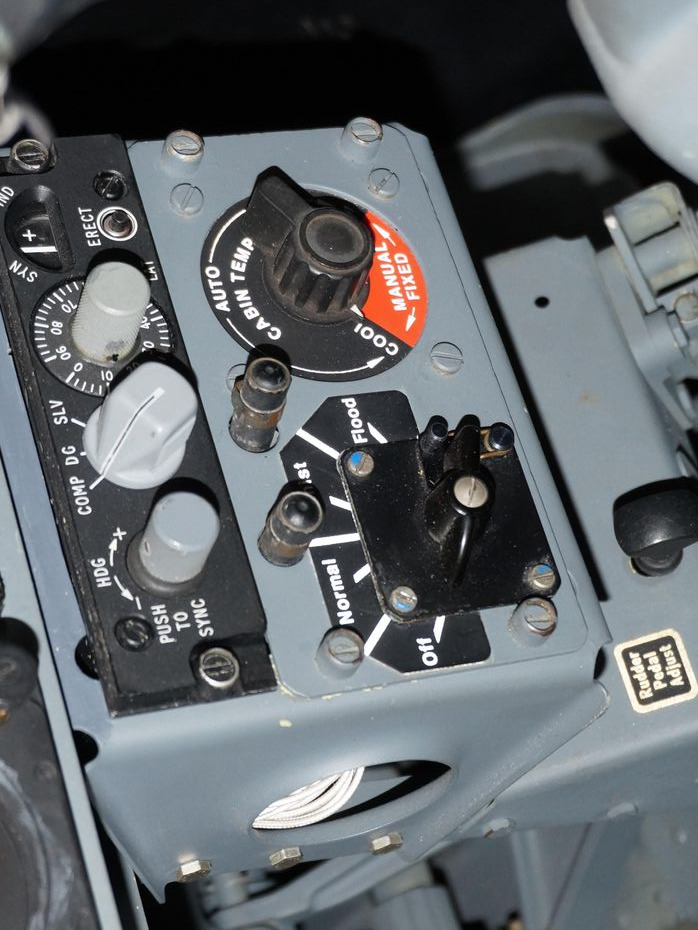
Cockpit Instrument
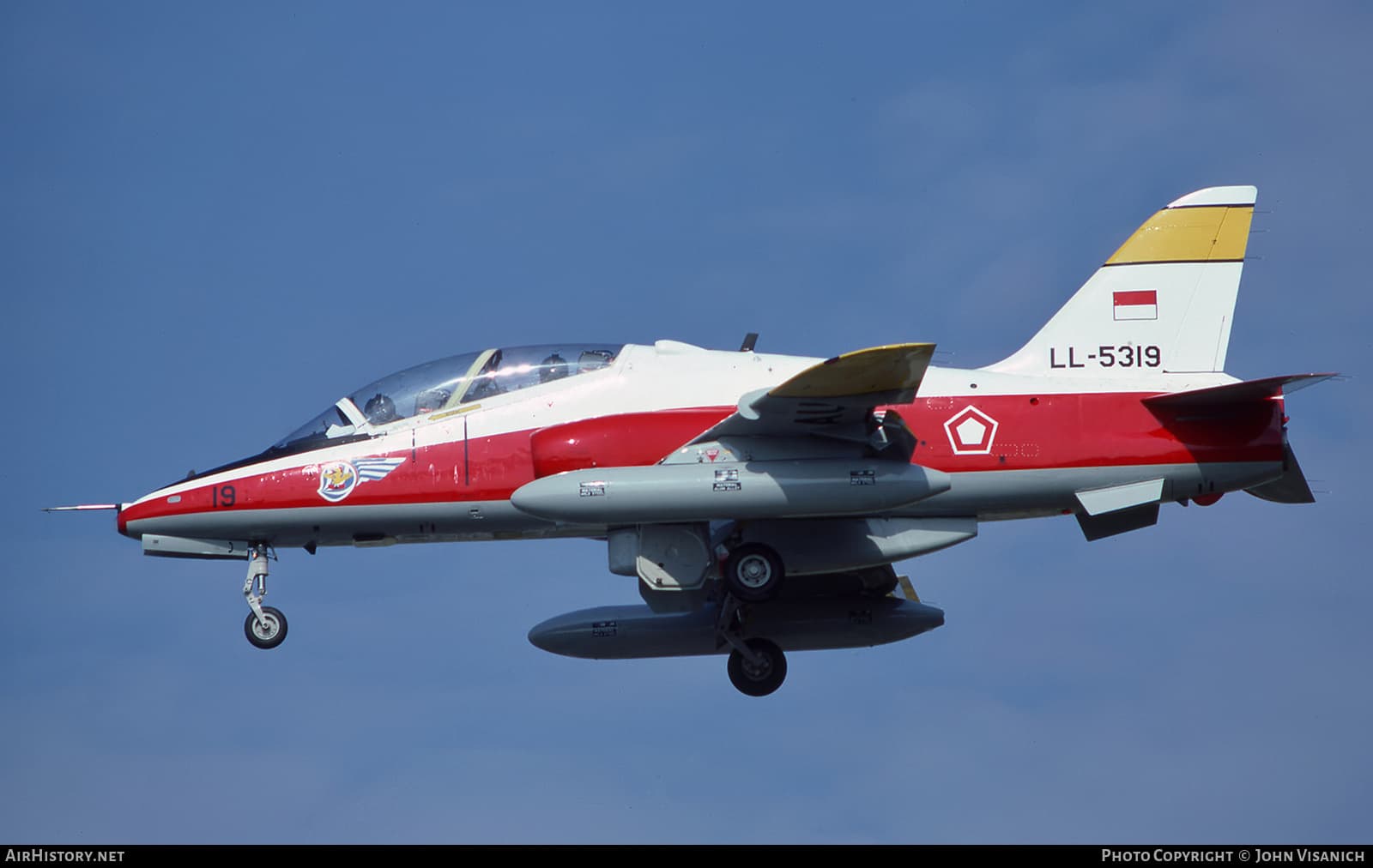
Images taken of ZK534, which was formerly Indonesian Air Force’s LL-5319
Armament
- Max Payload: 6,500 lbs (2,950 kg) on 4x pylons
- UK | 1x ADEN 30mm Gunpod (130x rounds)
- UK | 4x GP MK 1 (presumably M.C. Mk1) Dumb Bombs (130kg)
- US | 4x GP MK 82 Dumb Bombs (250kg)
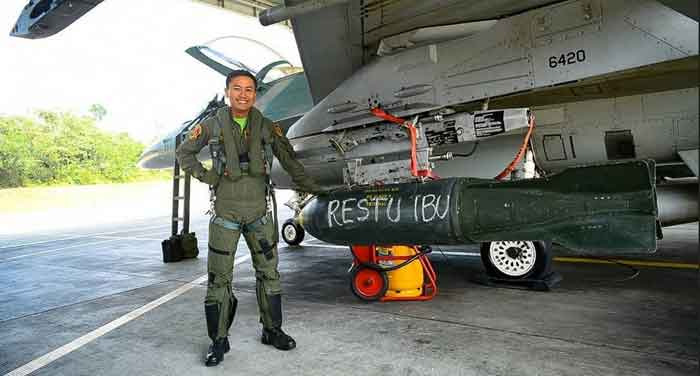
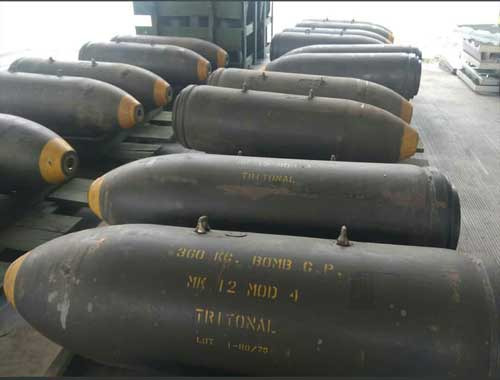
- US | 4x GP MK 12 Dumb Bombs (360kg)
- US | 4x Lau-68 FFAR rocket pods (7x rocket each, 28x total)
- IL | 4x CBU TAL 1 Cluster Bombs (250kg)
- SU | 4x HE-FRAG OFAB 100 Fragmentation Bombs (100kg)
-
additional armaments mentioned in the display panel are unfortunately illegible
-
Notably NOT armed with AA Missiles
MK12 bomb (360kg)
Vietnam-era US dumb bombs
Specifications:
- Mass: 340 kg
- Length: 2.06 m-2.16 m
- Diameter: 408 mm
- Maximum firing range: Air-dropped
- Warhead: Tritonal or Minol
- Warhead weight: 171 - 183 kg
- Wingspan: 520 mm
- Guidance: No free fall
C. More Images
Details
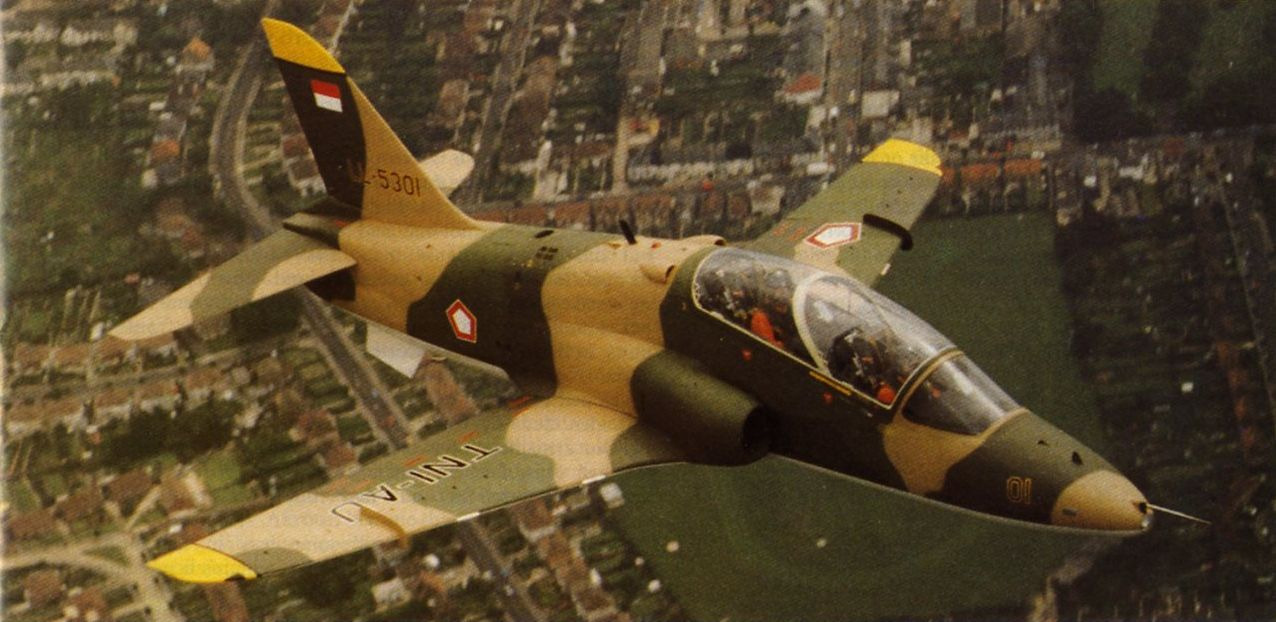
CAMOUFLAGES
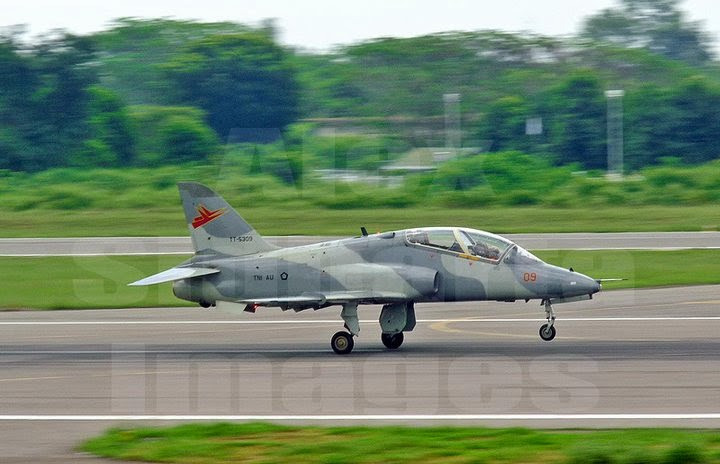
Trainer | Unicolor Gray


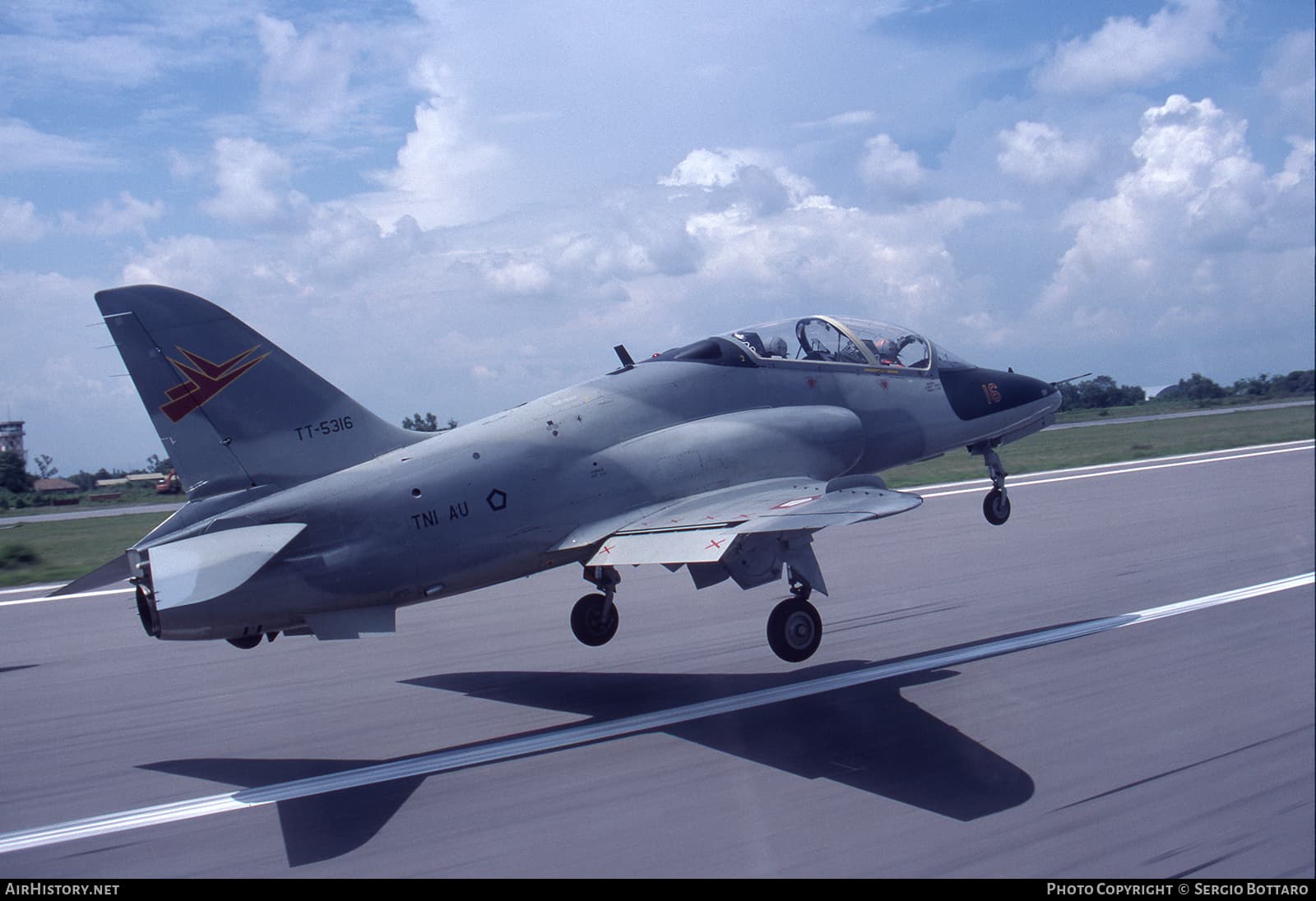
VIDEOS
IMAGES
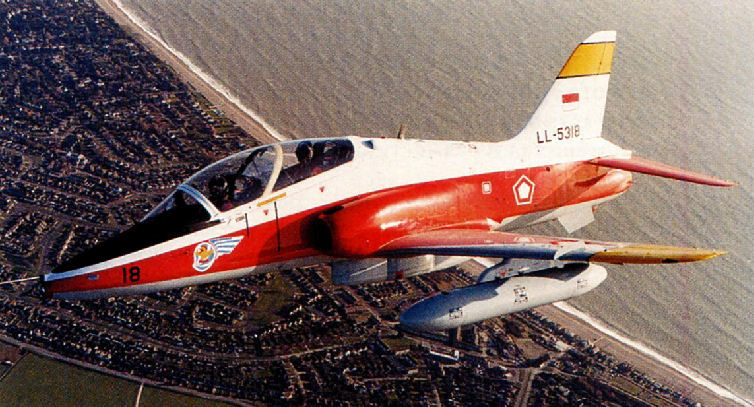
Hawk 53 with its gunpod and armament (alongside some tactical inflated balloons)
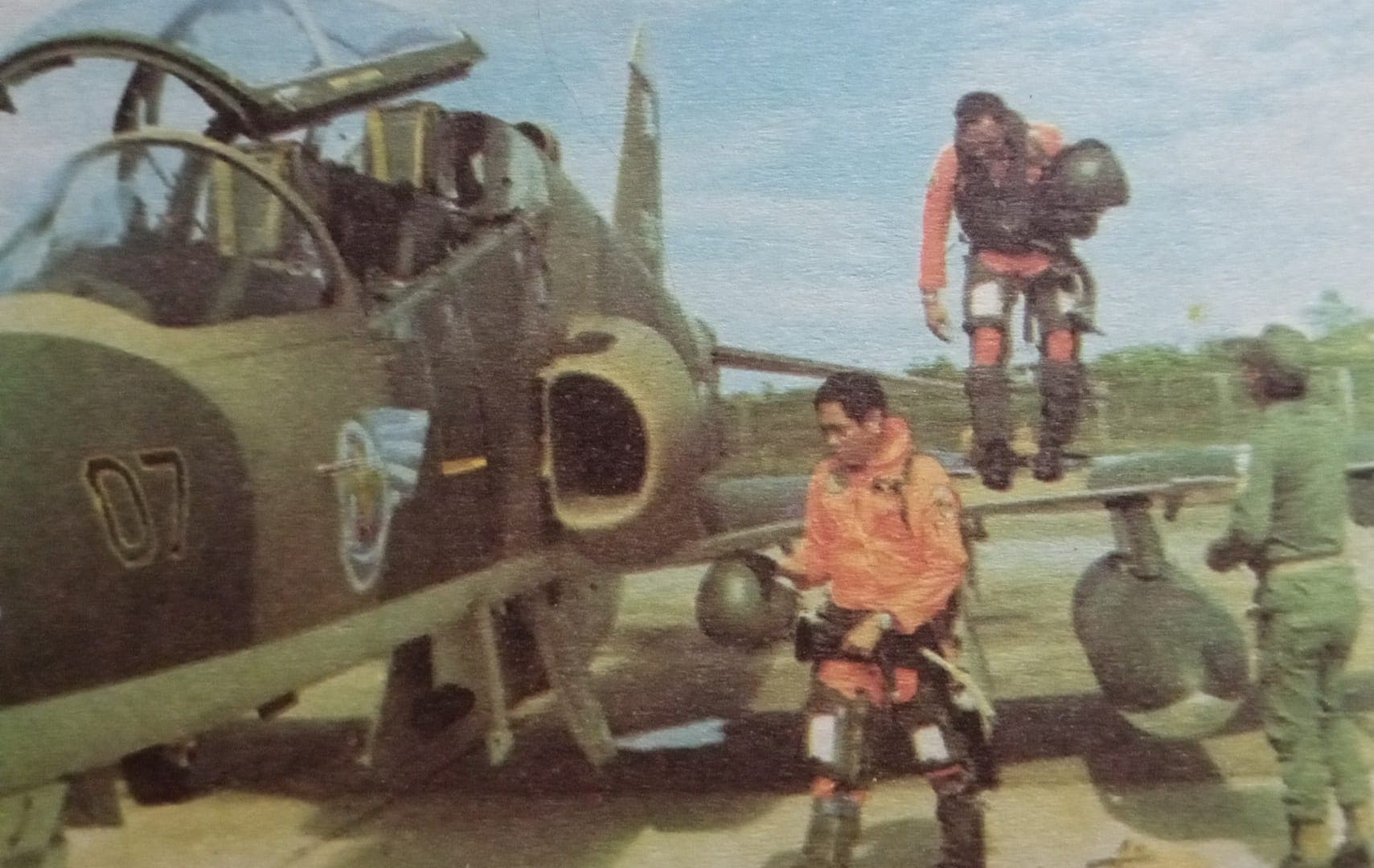
Close-up look of the Hawk 53
Hawk 53 Final flight before retirement
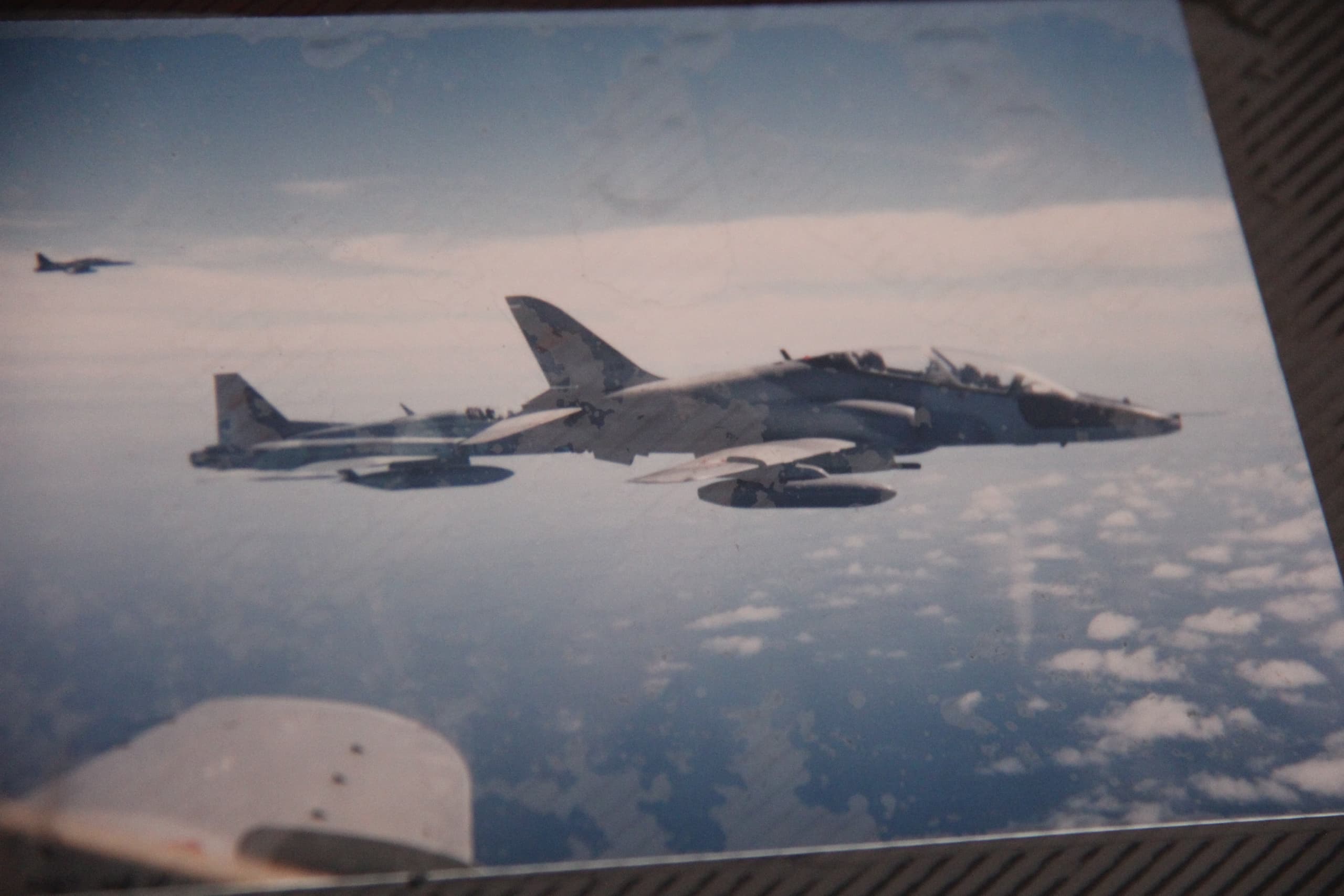
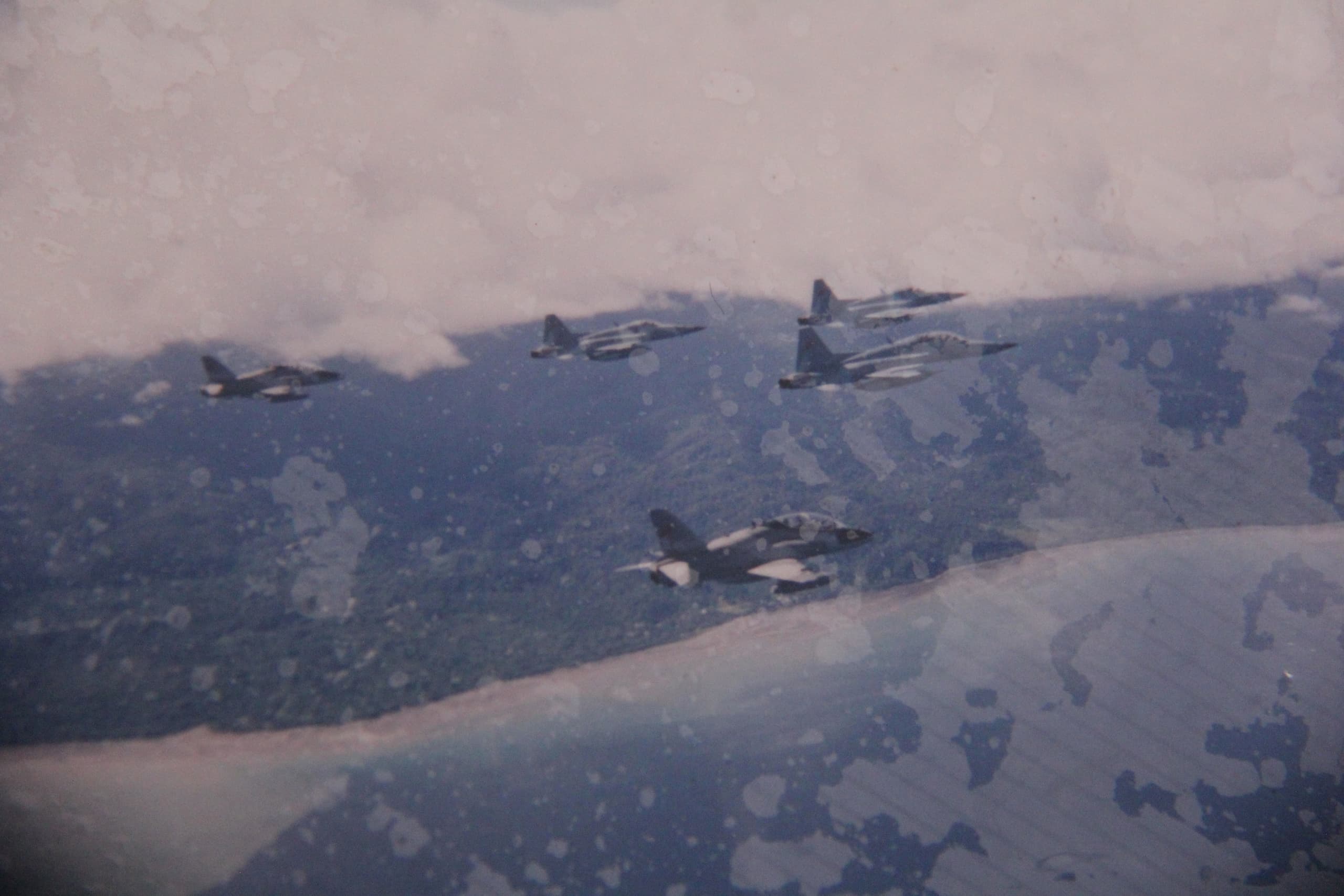
Hawk 53 flying in formation above the sea
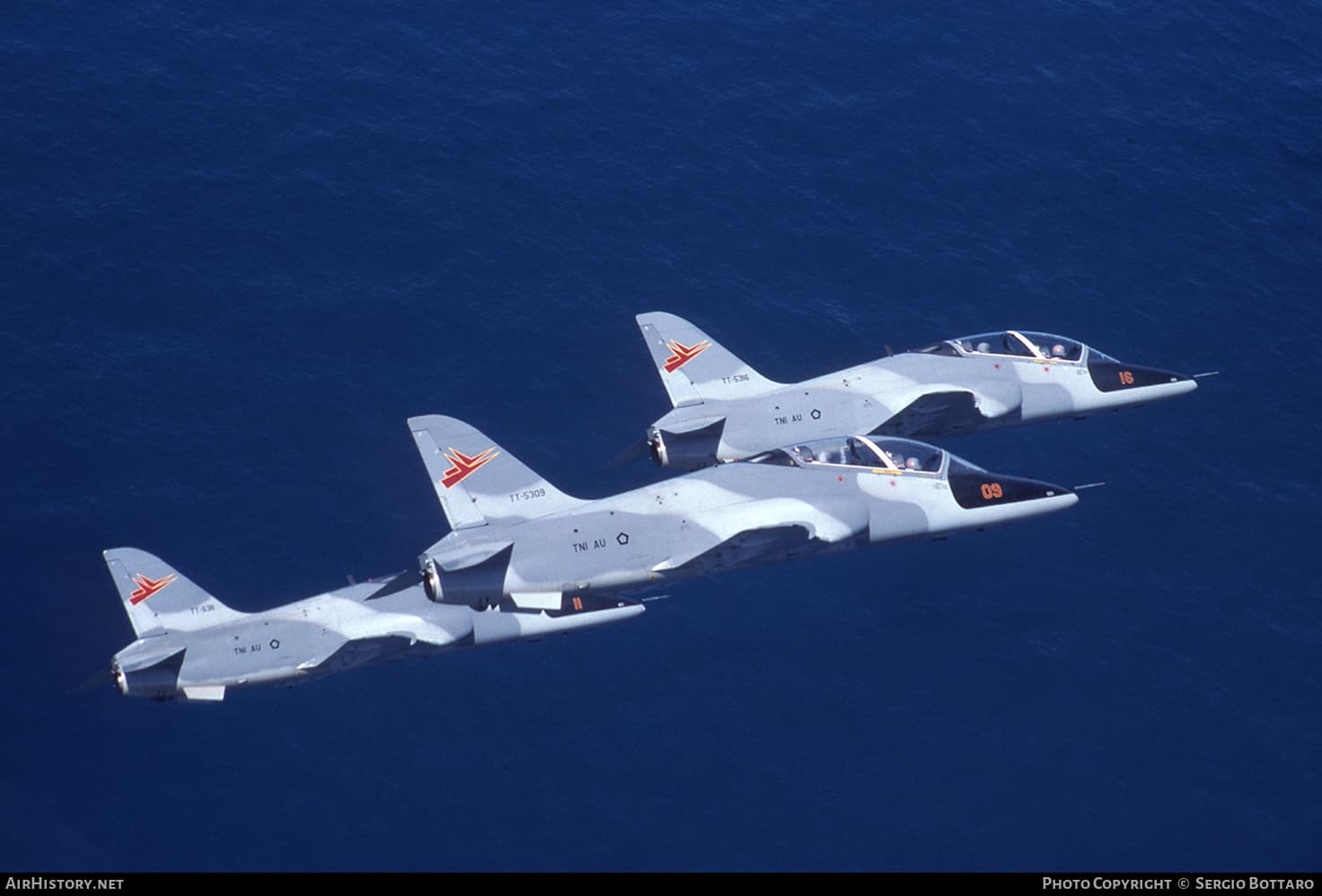
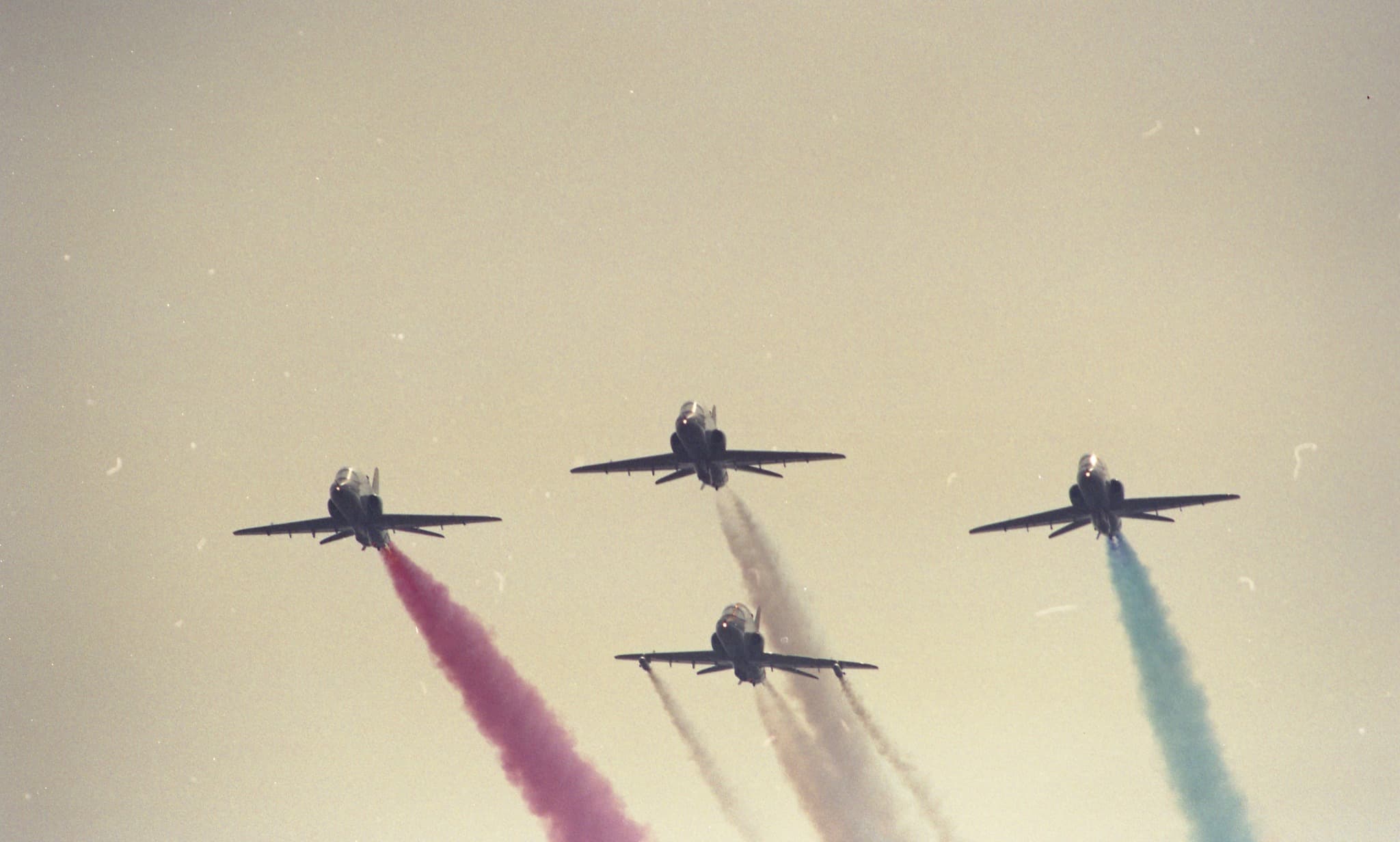
Hawk 53s from the Training Squadron 103 during the Indonesian Armed Forces Anniversary 52 in 1997
D. Sources
Details
- “HS-Hawk Aircraft Capability Data” Display Panel, Indonesian Air Show 1996. Soekarno-Hatta International Airport, Jakarta, Indonesia.
- Obtained from : https://www.youtube.com/watch?v=-SEvbpoVyTw (4:50)
- Fraser-Mitchell, H. (2013). The HAWK Story. Journal of Aeronautical History. (interesting piece)
- Obtained from : https://www.aerosociety.com/media/4842/the-hawk-story.pdf
- Kelly, J.P. (1977). Hawker Siddeley’s Hustling Hawk. Air Force Magazine. 60(6). p.36
- Polmar, N., & Bell, D. (2004). One hundred years of world military aircraft. Naval Institute Press.
- Hawk MK-53 Kembali Bersinar, Monumen Gagah Penjaga Ingatan Kejayaan Udara Indonesia
- AIRPLANE SCALE MODELKIT: Bae Hawk Mk-53
- HS Hawk Tiba di Indonesia – Aviation History of Indonesia
- Penyerahan Resmi Skadron Hawk – Aviation History of Indonesia
- MK12 “Restu Ibu,” Bom Udara Andalan F-16 Fighting Falcon TNI AU – Indomiliter.com
- Mark 12 Bomb - History & Specifications - 3rd Air Squadron | Instagram
- BAE SYSTEMS HAWK 50, 60 and 100 SERIES
- BAE Systems Hawk - Wikipedia
- UK Serials
Image Sources
Thank you for reading! Any suggestions or corrections would be highly appreciated!Additionally, you can check out more Indonesian suggestions below!