- Yes
- No
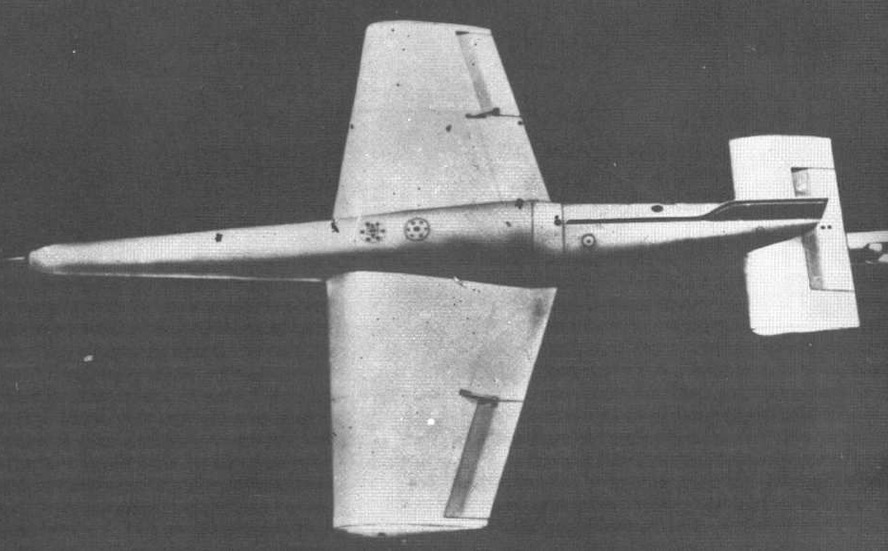
The Henschel Hs 294 was a guided air-to-sea missile developed by Henschel Flugzeug-Werke in Germany during World War II.
History and development:
Spoiler
The Henschel Hs 294 was a German guided anti‑ship missile project during World War II. It originated as a development of the Hs 293 glide bomb, with the goal of creating a weapon that could dive into the water and strike below a ship’s waterline. Work began around 1941 under Henschel Flugzeug‑Werke AG, led by Dr. Herbert Wagner.
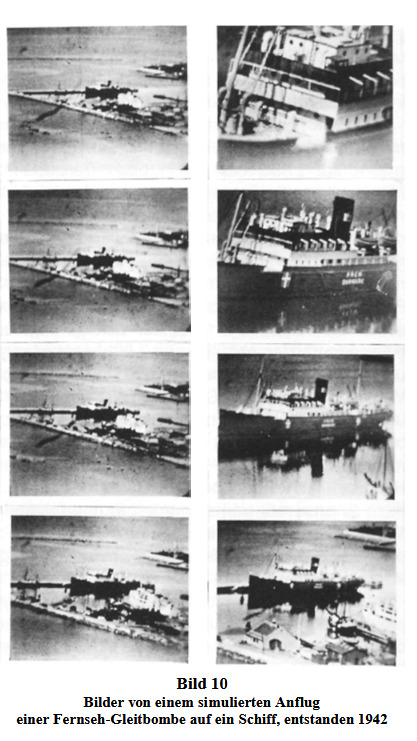
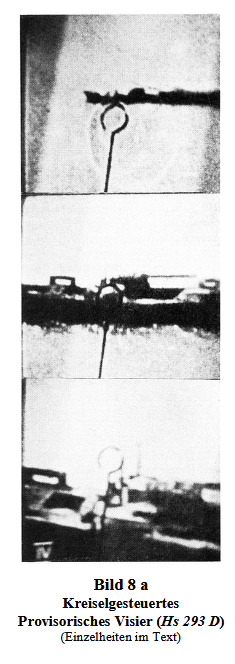
The missile was about 6 meters long with a wingspan of 4 meters. It carried a warhead of roughly 630 kilograms and was powered by short‑burn rocket engines, usually the Walter HWK 109‑507. Guidance was radio‑controlled through the Kehl‑Straßburg system, and later experiments included television guidance. The design allowed the wings and rear fuselage to break away when the missile hit the water, letting the forward section continue underwater like a torpedo before detonating.
Testing took place between 1943 and 1944, with about 120 to 170 prototypes built in several variants. Contracts initially called for over a thousand units, but production was cut back as Germany’s war situation worsened. Trials showed promise but also revealed problems with propulsion reliability, guidance accuracy, and the difficult transition from air to water.
The Hs 294 never reached operational service. By late 1944, Germany lacked the resources and air superiority to deploy such advanced weapons. After the war, captured examples and documentation influenced Allied guided weapon programs, including the American BAT missile.
Specifications:
Spoiler
| Type | Guided anti‑ship missile (glide bomb derivative) |
|---|---|
| First Flight | 1941 |
| Length | 6.1 m |
| Wingspan | 4.0 m |
| Launch Weight | 2,170 kg |
| Warhead | 630–650 kg high‑explosive (shaped for underwater penetration) |
| Propulsion | Two Walter HWK 109‑507 liquid‑fuel rocket engines (590 kgf thrust each, 10 s burn); later solid‑fuel WASAG 109‑512 tested |
| Guidance | Radio control (FuG 203/230 Kehl‑Straßburg); later experimental TV guidance (Super Iconoscope) |
| Range | 13–14 km when released from 5,400 m altitude |
| Launch Platforms | Heinkel He 177, Dornier Do 217 (tested) |
| Special Feature | Designed to dive into water; wings and rear fuselage detached, forward section continued underwater like a torpedo |
| Production | 120–170 prototypes built (A‑0, V‑2, D variants) |
IRL images :
Spoiler
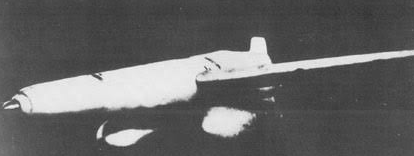
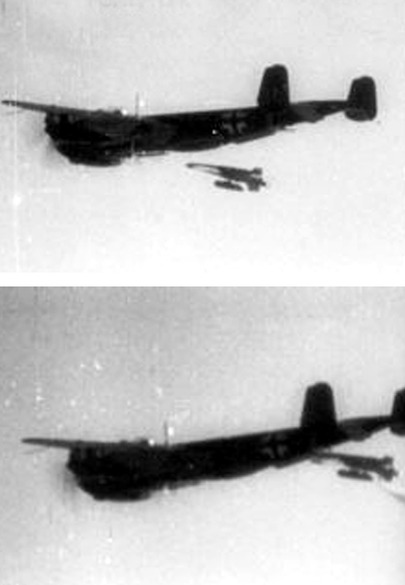
Sources:
Spoiler
1-wiki Henschel Hs 294 - Wikipedia
2- William Green – Warplanes of the Third Reich
3- J. R. Smith & Antony L. Kay – German Aircraft of the Second World War
4- John Christopher – H#tler’s Luftwaffe
5- TM 9‑1985‑2 / TO 39B‑1A‑9 – German Explosive Ordnance
Thanks for reading 💗