HISTORY
During World War 2, Brazil was the Latin-American country that benefitted the most from the Lend-Lease Act, receiving up to 53 Shermans among other armored vehicles. This meant that the Brazilian Army could finally modernize itself from obsolete cavalry doctrines. After the war ended, Brazil ordered more Shermans to complement those already in their possession, obtaining an extra 6 by the early 1950s.
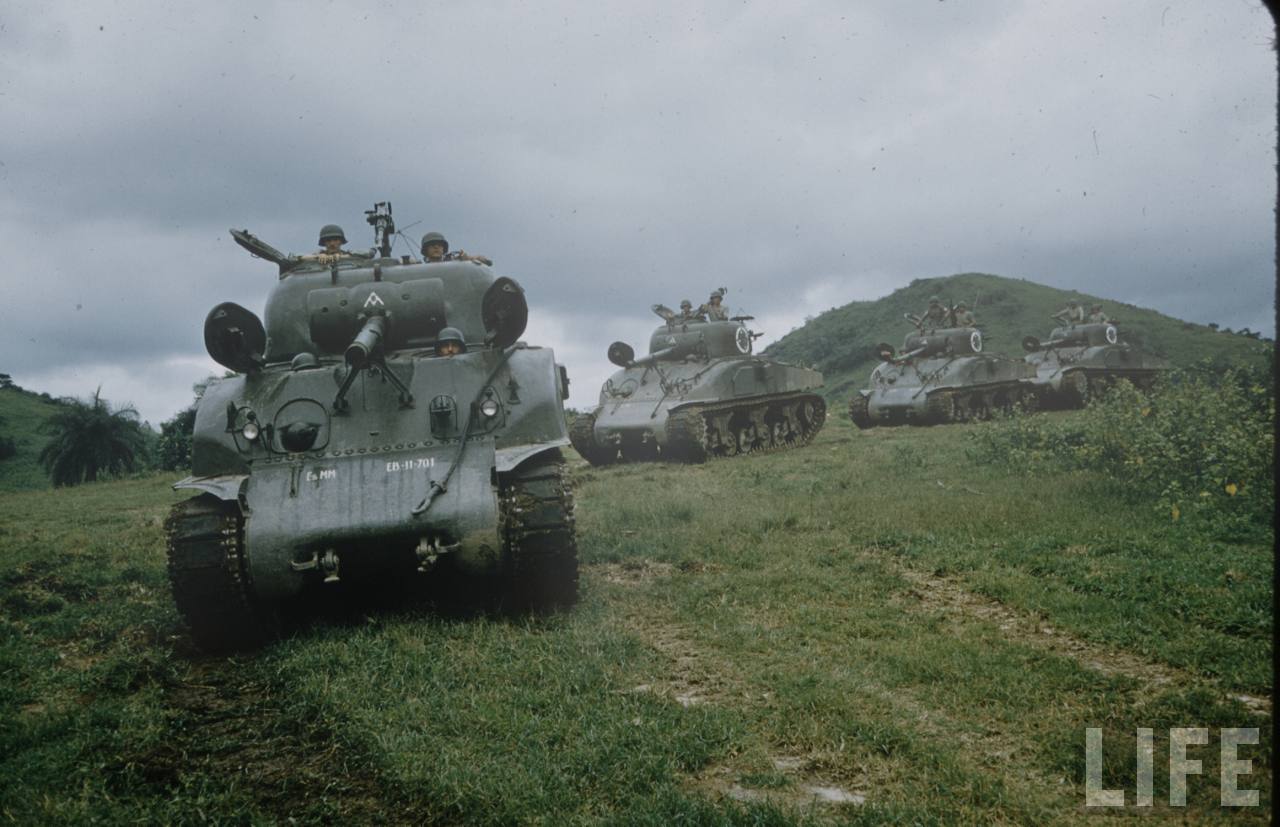
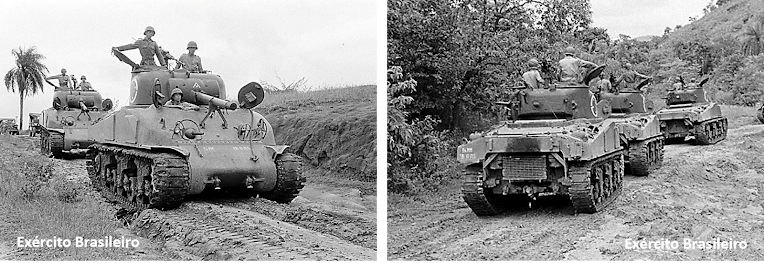
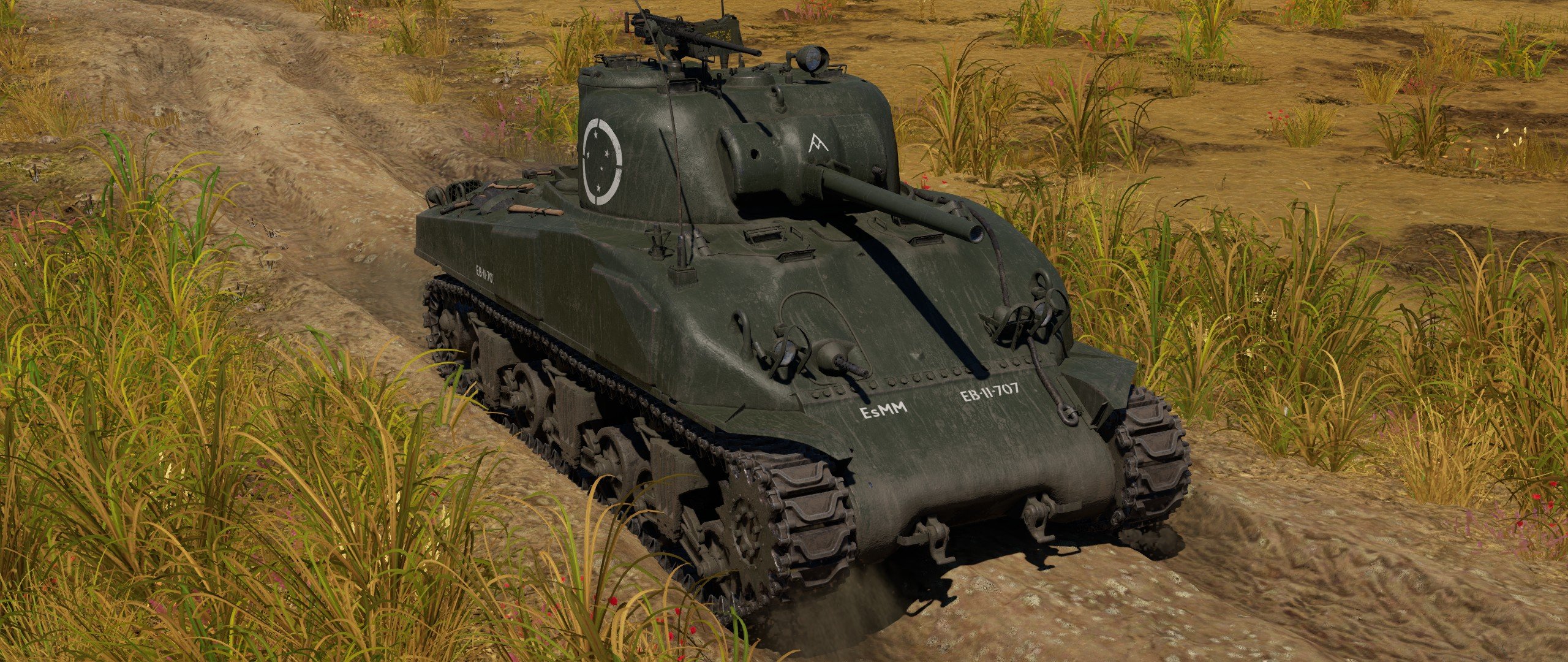
The Camouflage and its characteristics.
After the Korean War, Brazil received another batch of 24 Shermans, 22 of those being from the Military Assistance Program (MAP), a deal between Brazil and the US to help modernize the Brazilian Army. The batch was comprised of M4A1 late and M4 Composite models. These new M4 Composites were more modern than the older ones already in Brazil, having two hatches on the turret instead of only one hatch in the cupola of the earlier designs, and were designated locally as “CH-2” (Composite Hull - 2nd batch) to differentiate from the older batch. Some of these tanks came equipped with duckbills, and were referred to by some Brazilian tankers as “Super Shermans” as they were more reliable on muddy terrain.
Some Shermans from the second batch were immediately sent to the Escola de Moto-Mecanização (Motor-Mechanization School), based in the city of Rio de Janeiro, and serviced there until 1957, when all but one of those Shermans were transferred to the Regimento Escola de Infantaria (Infantry School Regiment).
All 22 Shermans obtained via the MAP came from the United States with a symbol similar to a letter “A” painted right above the cannon. It meant that the equipment painted with that symbol was exported from the US by the MAP and that could not be reexported without the consent of the Americans. Most vehicles in the Brazilian Army acquired through the MAP had these symbols removed, but for some reason, those in the Motor-Mechanization School kept it.
links
- Yes
- No