- Yes
- No
- Tec Tree
- Event
- Premium
- Battlepass
- No
The He 177 program as a whole was plagued by design compromises—especially the requirement for dive-bombing capability in a heavy bomber. The A-7 represented an attempt to salvage the design with stronger wings and advanced weaponry, but by 1944–45 Germany’s industrial and strategic situation made further development impractical.
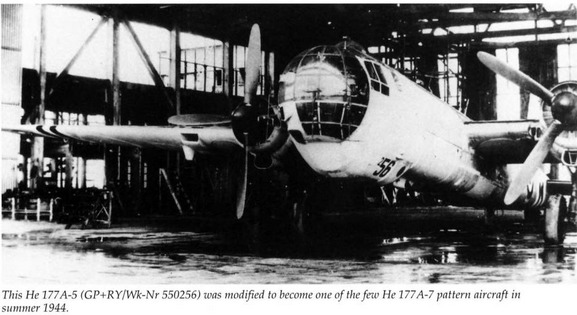
History and Development :
Spoiler
The A-7 was a prototype/conversion stage aircraft, never mass-produced.
It represented Germany’s attempt to salvage the He 177 program by:
Strengthening wings for heavy ordnance.
Redesigning cockpit ergonomics and armament.
Considering separate engines (but reverting to coupled DB 610s).
Ultimately, the A-7 inherited the same engine reliability problems as earlier He 177s, preventing it from becoming a viable operational heavy bomber.
The He 177 Greif was Germany’s only operational long-range heavy bomber, but plagued by design compromises.
Early Luftwaffe doctrine demanded that even heavy bombers retain dive-bombing capability , leading to structural stress and engine overheating.
The He 177 program was constantly reshaped by contradictory orders, resource shortages, and technical failures. By 1943–44, Germany sought to salvage the design with improved wings and guided weapon compatibility
Development of the A-7:
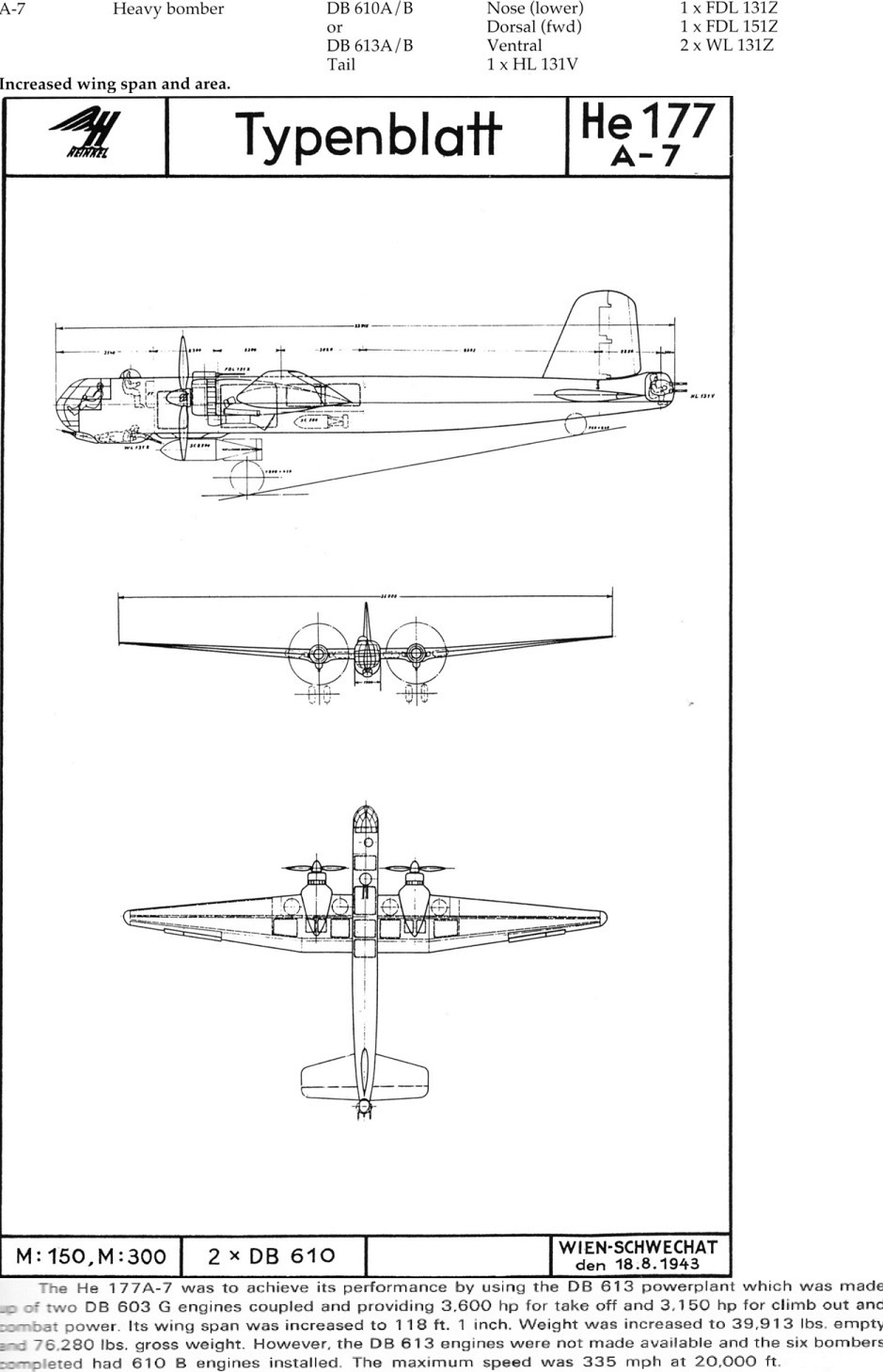
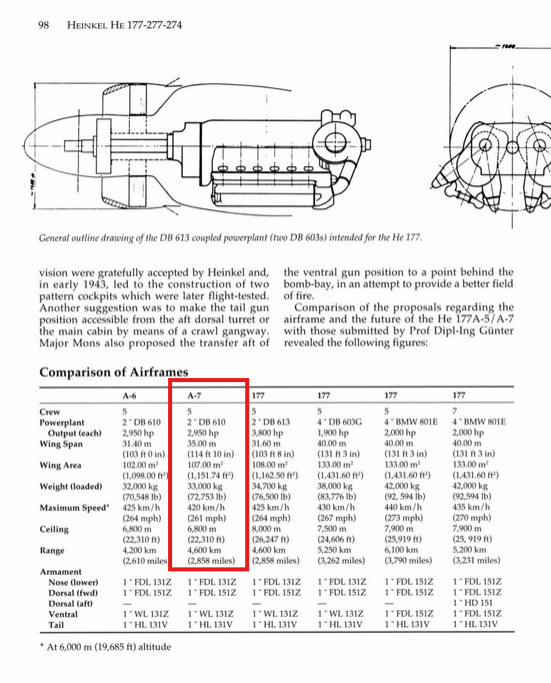
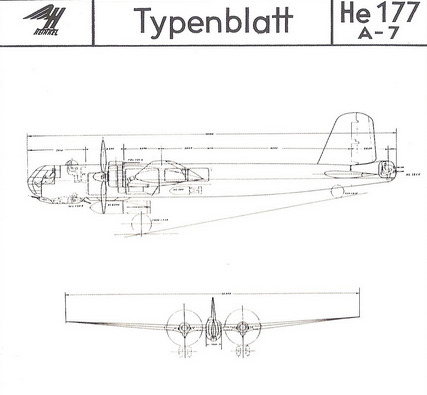
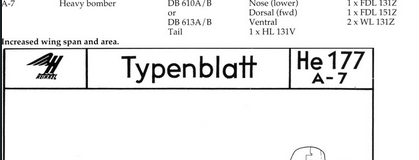
- origins: The A-7 was conceived as a modified A-5 airframe, with longer reinforced wings (span increased to 35 m, area to 107.5 m²).
- Purpose: To improve lift, stability, and payload capacity for advanced ordnance (Hs 293 A and Fritz X).
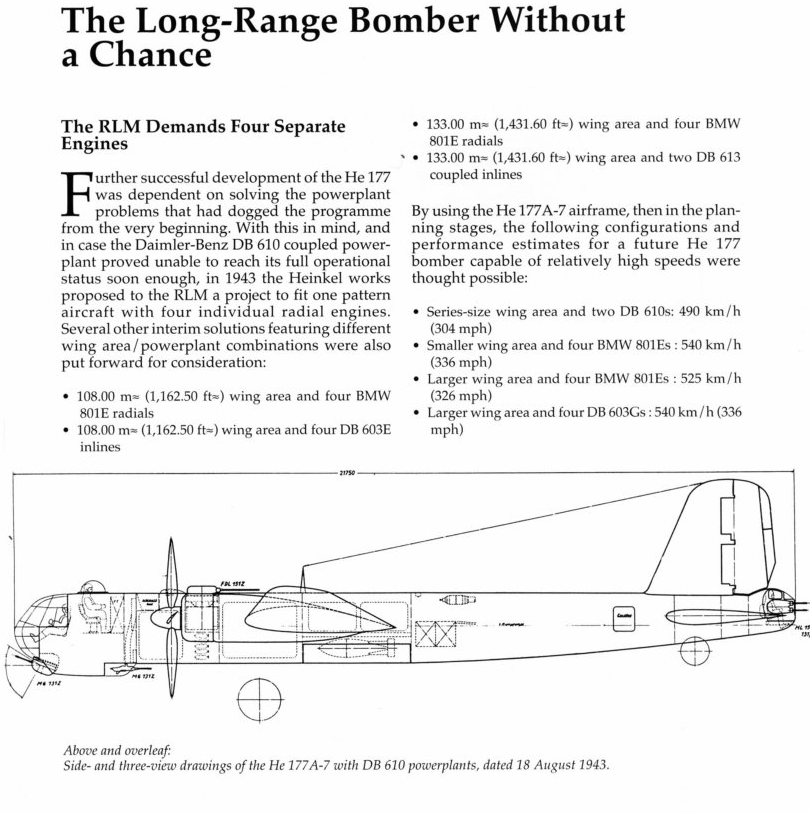
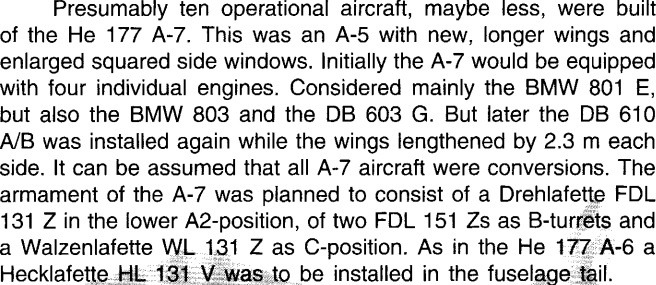
- Initial Plan: Equip the A-7 with four separate engines (BMW 801 E, BMW 803, or DB 603 G) to eliminate the fire-prone coupled design.
- Reality: These engines were unavailable, so the A-7 reverted to DB 610 A/B coupled engines.
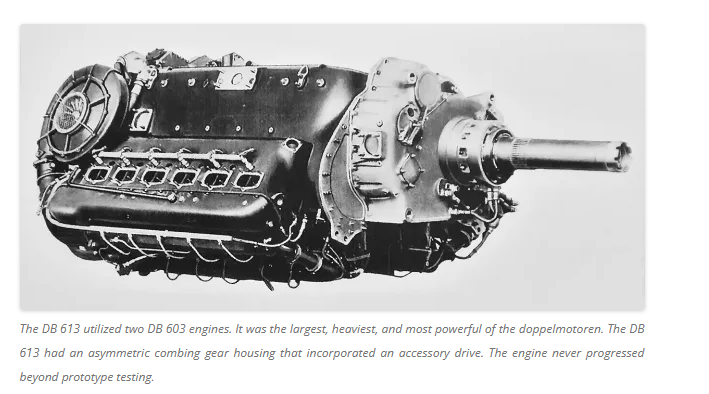
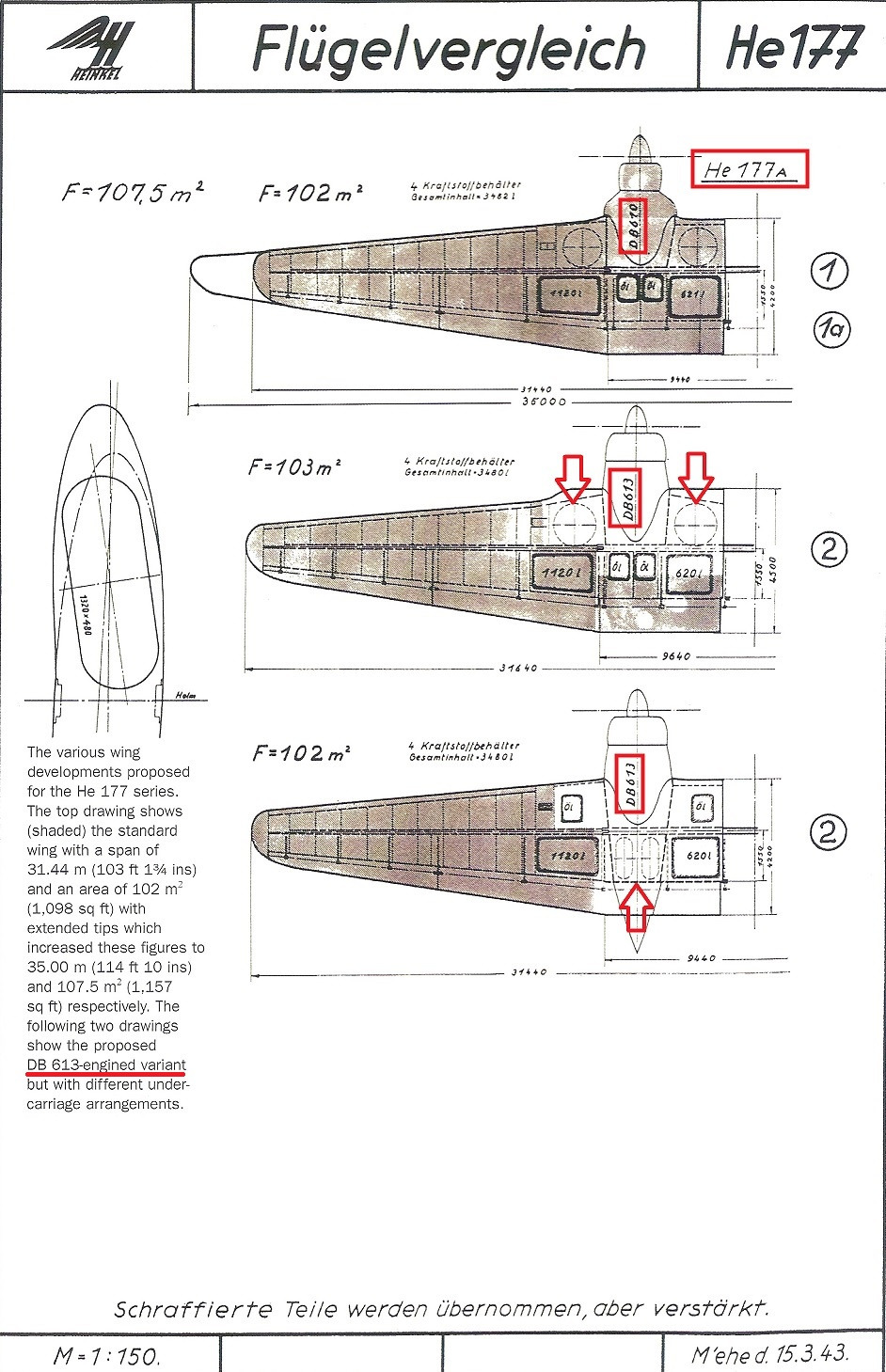
- Proposed but not delivered: DB 613 (two DB 603 Gs coupled, 3,600 hp).
Production: Likely fewer than 10 aircraft, mostly conversions rather than new builds.
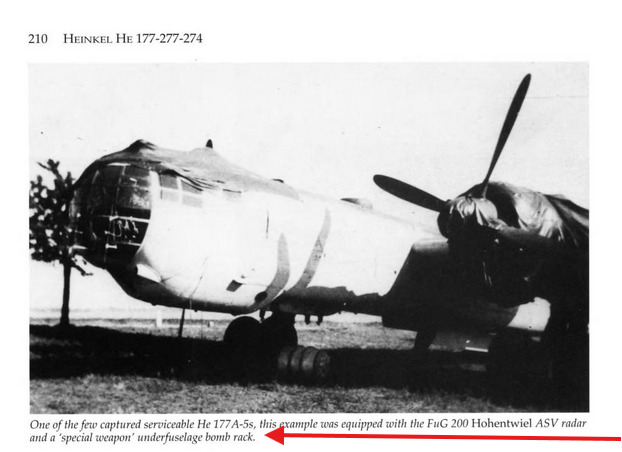
Captured Examples:
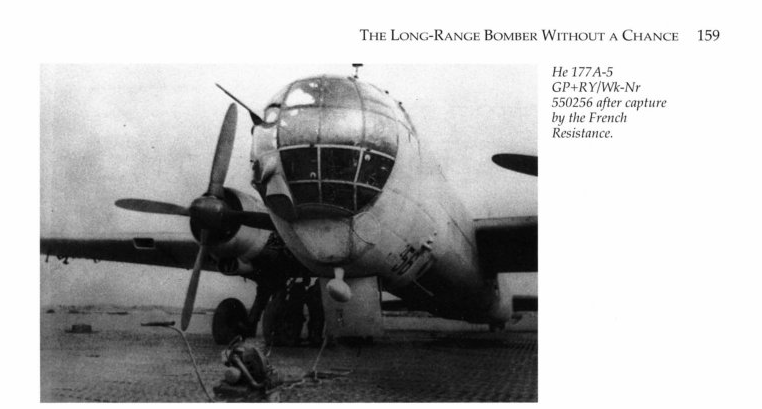
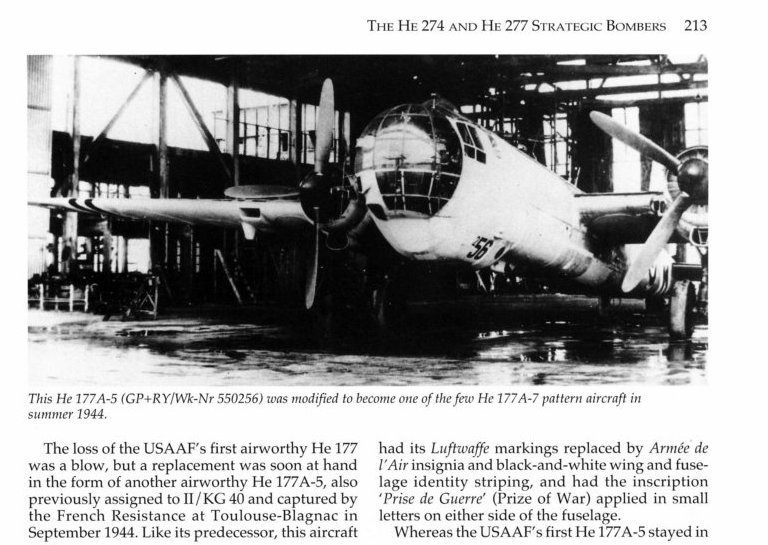
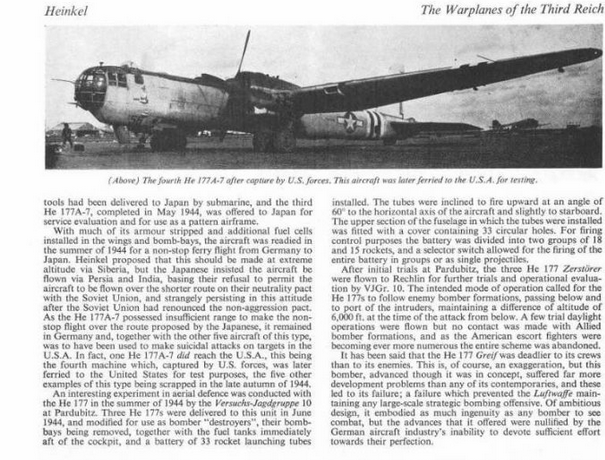
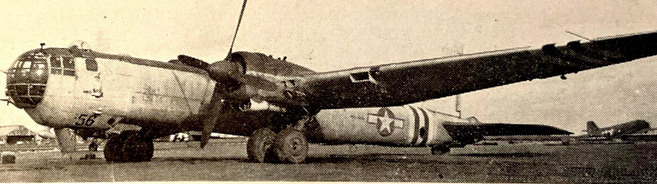
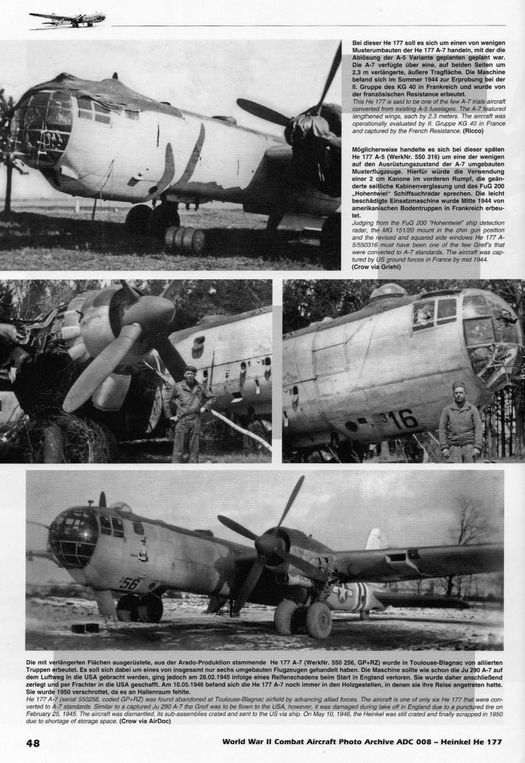
One seized at Toulouse-Blagnac in 1944, examined in England.
Another shipped to the USA, tested, and scrapped in 1945.
fewer than 10 built, with captured/tested examples
Image of Captured He 177 A-7 by USA:
The He 177 A-7 Cockpit Improvements / Wings / Air frame :
Spoiler
Wing Comparisons :
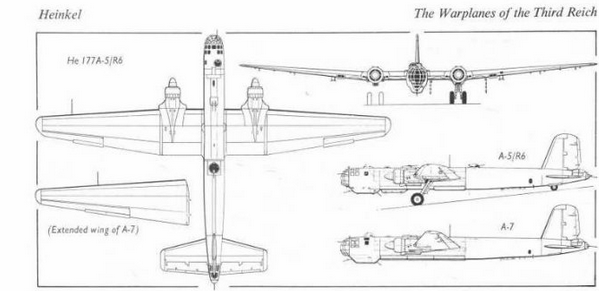
Standard A-series wing: 31.44 m span, 102 m² area.
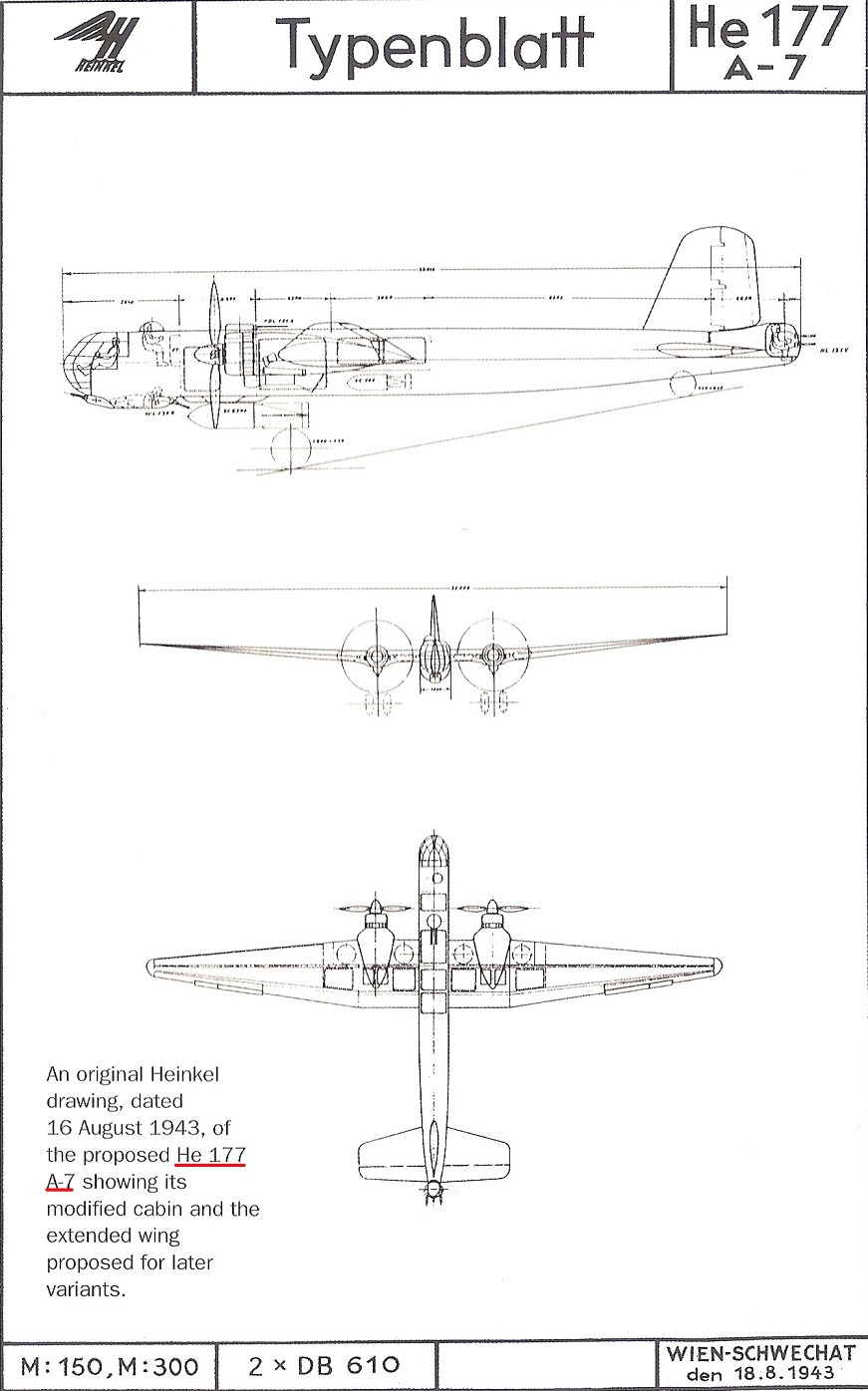
He 177 A-7 extended wing: 35.0 m span, 107.5 m² area.
Reinforced structures adopted to handle heavier loads.
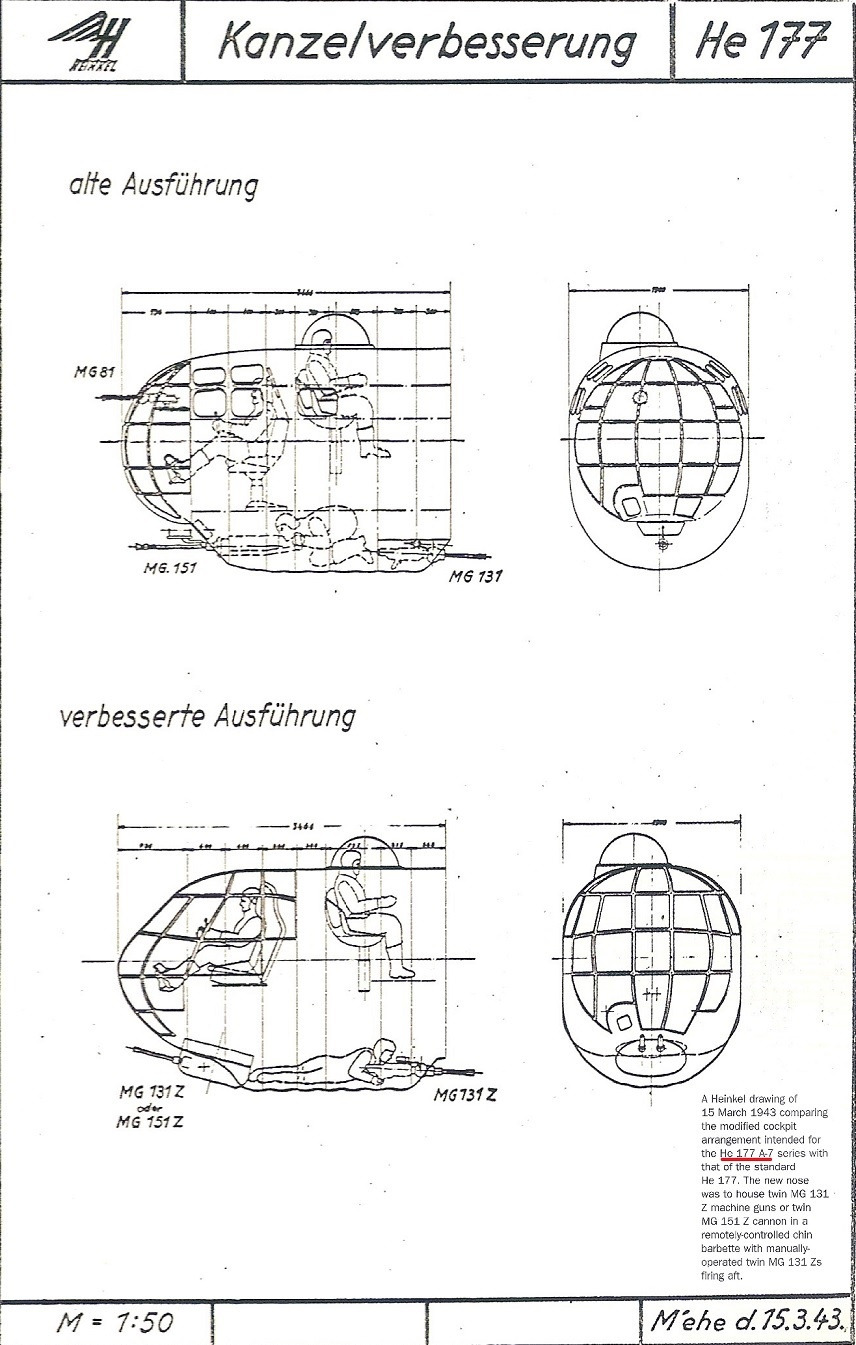
Fuel capacity ~3480 liters across four tanks.Cockpit Improvements (March 1943):
Redesigned nose with remote chin barbette.
Prone gunner position for aft-firing MG 131 Zs.
Streamlined crew ergonomics compared to earlier layoutsAirframe :
The A-7 was conceived as a modified A-5 airframe, with longer reinforced wings (span increased to 35 m, area to 107.5 m²).
Engine Development of the He 177 A-7 :
Spoiler
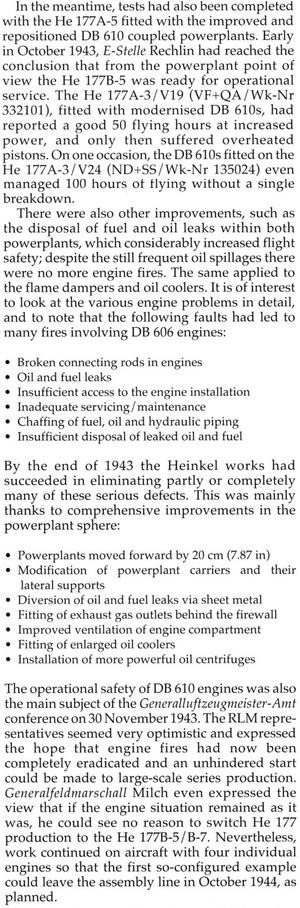
The He 177 program was defined by its coupled engine design — two engines joined to drive a single propeller. This was meant to save drag and weight but caused endless reliability issues.
DB 606 → DB 610 → DB 613
DB 606 Early coupled engines (two DB 601s). Known for fires due to oil leaks, poor ventilation, and maintenance difficulties.
DB 610: Improved coupled engines (two DB 605s). By late 1943, Heinkel introduced fixes:
- Engines moved forward by 20 cm.
- Better carriers and supports.
- Enlarged oil coolers and stronger oil centrifuges.
- Improved ventilation and exhaust routing.
- Sheet metal channels to divert leaks. These changes reduced fire risk significantly, though overheating pistons still occurred.
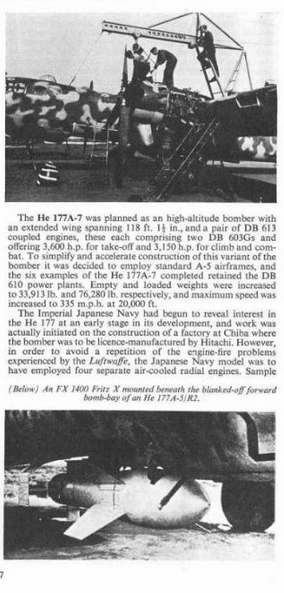
- DB 613 (planned): Two DB 603 Gs coupled, producing 3,600 hp at takeoff. This was the intended powerplant for the A-7, but it was never available.
- Reality for A-7: The six completed aircraft used DB 610 B engines, giving ~3,150 hp in climb/combat power and ~335 mph max speed at 20,000 ft.
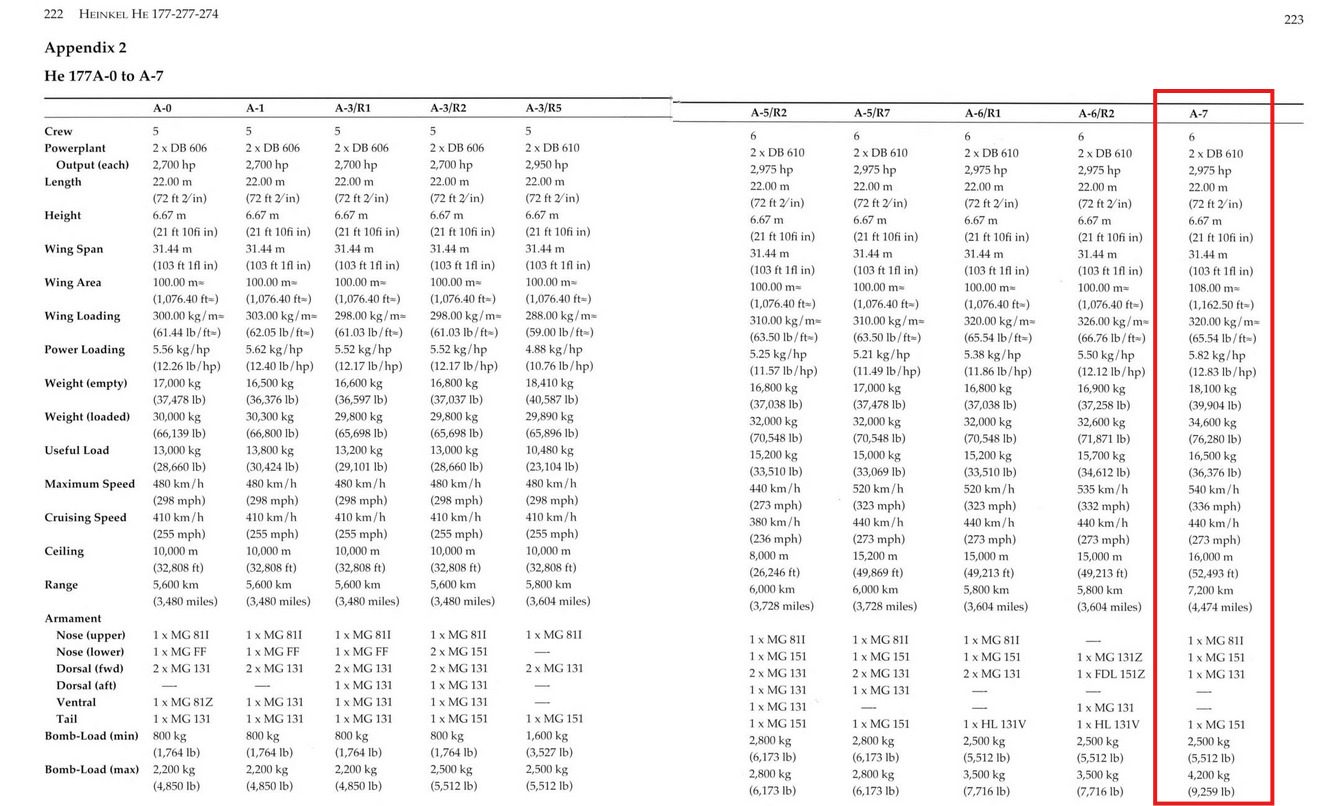
SPECIFICATIONS
General characteristics:
Spoiler
| Crew | 6–7 (pilot, co-pilot, bombardier, radio operator, gunners) |
|---|---|
| Length | ~22 m (similar to A-5) |
| Wingspan | 35.0 m (114 ft 10 in) |
| Wing Area | 107.5 m² |
| Height | ~6 m |
| Empty Weight | 39,913 lbs (18,110 kg) |
| Gross Weight | 76,280 lbs (34,610 kg) |
| Engines (planned) | 2 × DB 613 (never delivered) |
| Engines (actual) | 2 × DB 610 B coupled engines |
| Power Output | 3,600 hp (takeoff, DB 613 planned) / 3,150 hp (combat, DB 610 actual) |
| Max Speed | 335 mph (540 km/h) at 20,000 ft |
| Range | ~5,500 km (estimated, similar to A-5 but reduced by weight) |
| Service Ceiling | ~8,000–9,000 m |
| Fuel Capacity | 3,480 liters (4 tanks) |
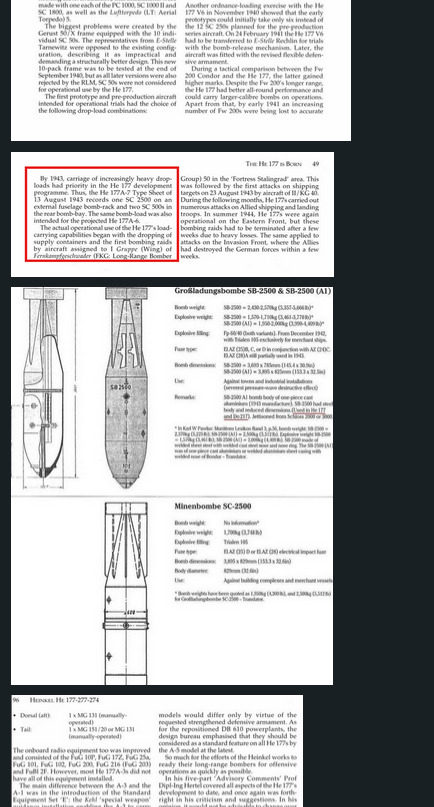
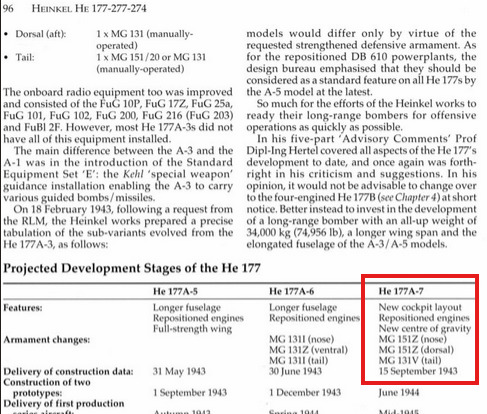
| Armament (planned) | Nose Drehlafette FDL 131 Z or MG 151 Z; dorsal FDL 151 Z ×2; ventral WL 131 Z; tail HL 131 V |
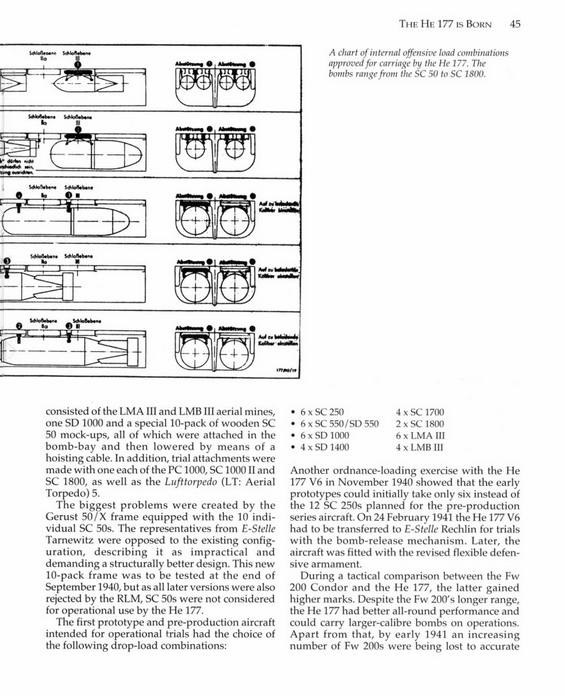
| Payload | Designed for guided weapons (Hs 293 A, Fritz X,Hs 294) and conventional bombs |
| Airframe | Based on the He 177 A-5 |
Sources :
Spoiler
1-Wiki
Heinkel He 177 Greif - Wikipedia
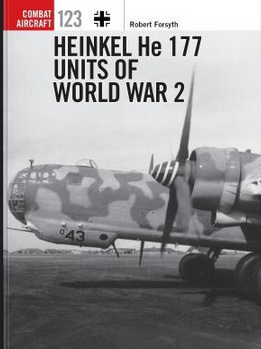
2- Heinkel He 177 Units of World War 2
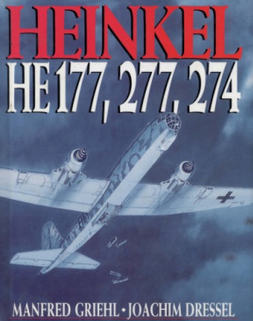
3- Heinkel HE 177, 277, 274
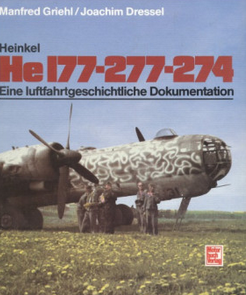
4- Heinkel He 177-277-274 Eine luftfahrtgeschichtliche Dokumentation
Special thanks for @TT33a
Thanks for Reading.