That is actually thrust dependent, and why its fairly provable that the F-5’s engines are colder.
The F-5 does actually just have a lower base thrust then the the G91YS. However it then gets a multiplier on the thrust figure which can exceed 1, leading to the engine effectively being colder then on the G91YS, where the figure caps out at around 1.
It going above or not going above 1 isn’t that weird by itself, there are plenty of engines with either implementation (Most harrier variants cap at 1~, part of why they’re so hot). But it is weird that the same engine on different aircrafts has a different multiplier for this.
I’ve tried bug reporting it, but uh. Yada yada bug report staff wanted proof of the engines temps installed due to channel loss to prove they should be more similar. Which like, how they are right now is physically impossible, but i’ll just assume they meant to figure out which one actually deserves to be changed.
I dunno about the E, the A deffinitly does though and it uses the same engine as the YS.
The F-5A has a base max thrust of 960, while the G91YS has a base maximum thrust of 1230.
The heat is calculated by a base thrust figure then adjusted for RPM and such. However there are thrust multipliers for the final thrust figure based on flight conditions, which is where the multiplier comes from. The G.91YS has this figure cap out at 1.01, while the F-5A has it cap out at 1.4.
Bringing this back to the main topic though. Yeah the Harriers generally have their multiplier cap out around 1. Which while not an issue when viewed as a standalone thing. Does lead to them running fairly hot.
Do you know is general thermodynamic considered as well, concretely fuel flow?
If we think about it, fuel has a specific caloric value, so higher fuel flow literally means more energy transformed into heat. How that is translated into thrust is then of course a matter of the efficiency of an engine, but the total energy (and thus heat) output should be more or less correlated with how much fuel is burned per second.
Of course that would not be the whole story, but could be highly relevant, no?
If it was it would be part of body/engine heat, which I do not know how the game handles. The game does have stuff for fuel flow and mixture ratios, but from what I know it’s more of a thing that’s back calculated to get proper fuel consumption rates and such dynamically then something done for heat.
Body heat is it’s own thing, I’m fairly certain that its a non-issue on the harriers due to how their engine is configured, although i’m not entirely sure. And if it’s not taken care of then it could also be a contributing factor.
The F-5E’s base thrust is 1480, the F-117’s is 4100. The F-117’s rear aspect IR mult is only 0.5. So yeah the F-5E will be more detectable from rear aspect.
It should be noted though, that heat bands are not additive across types. So even if body heat is too high, it generally would not be an issue due to the current sensitivity of seekers to other bands such as it’s exhuast.
The F-117 has a bit less then half the heat an F/A-18A without afterburner. The F-117’s heat suppression is 0.5x from the rear. 0.06 from the side, and 0.006 from the front.
Versus regular aircraft having like, 1x rear, 0.6x side, 0.012x front? I think? Im not entirely sure i’m remembering these numbers right though.
Also the F-117’s engines just have slightly lower base thrust then the F/A-18A’s, 4100 versus like 4700.
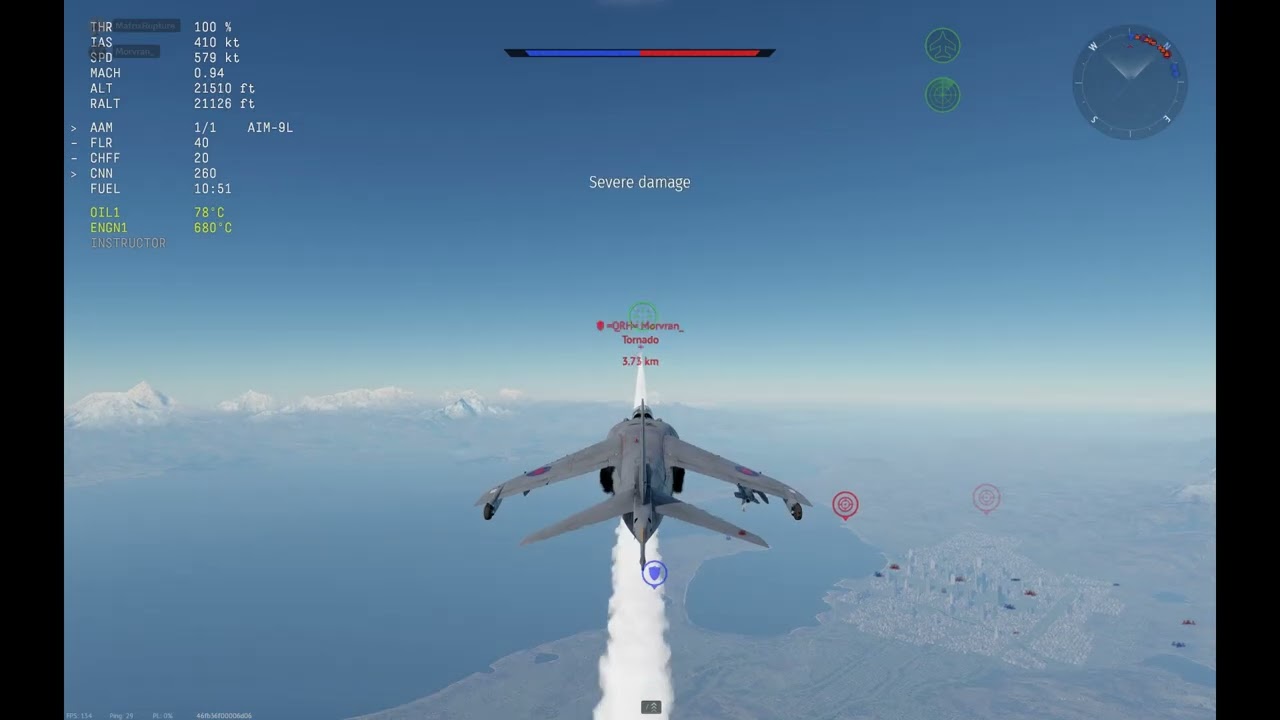
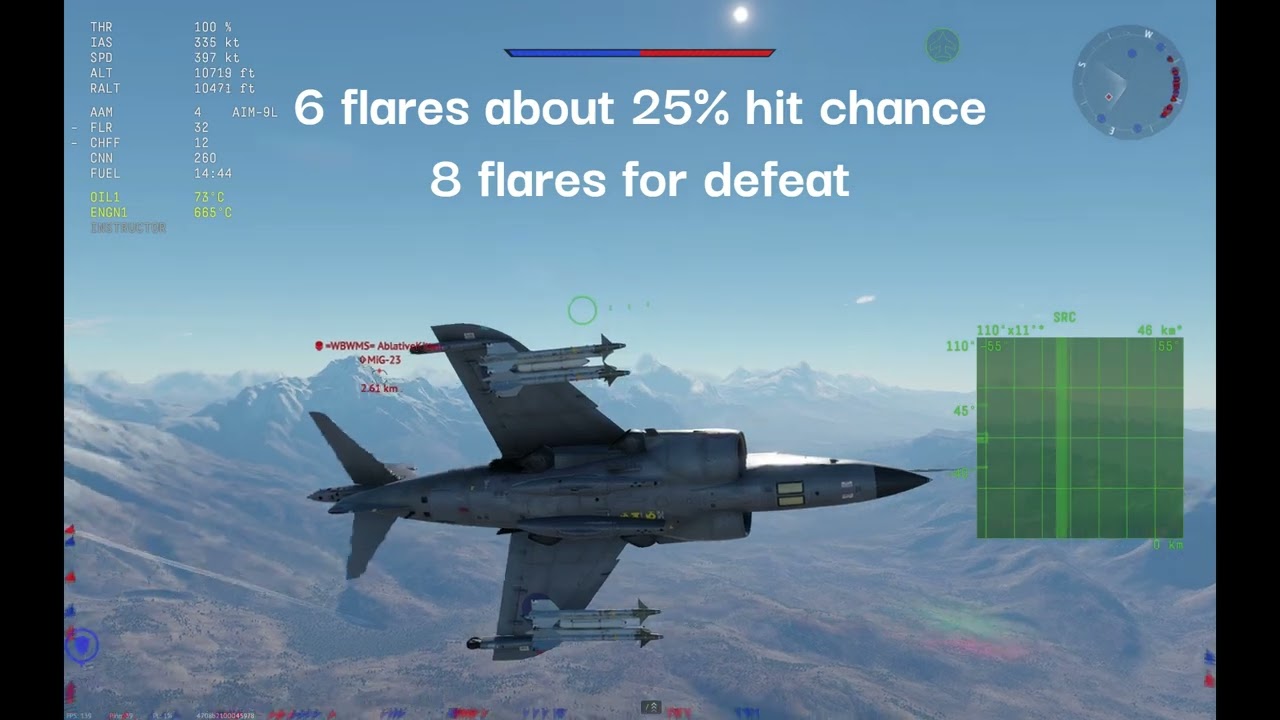
Yeah, the Harrier heat signature is a mess at the moment. There is 2 major parts to this, the first is just how much “heat” the Harrier produces.
The other is that the thrust curve is inverted. So as you reduce your airspeed (like say, when jinking a missile) you are actually making your aircraft hotter and thus harder to defeat a missile.
Me and @MatrixRupture tested this a while ago now, a 600+ kts. An R-60M fired from 3km in rear-aspect was instantly defeated by a flare. At 420kts, a fairly typical speed to be at during a dogfight, 8x flares did not defeat the R-60M fired under the same conditions.
There is a lot to said about both the exhaust position and being able to VIFF and turn a rear-aspect shot into a side aspect shot with the wing between the exhaust and the seeker, but until directional exhaust is added to aircraft. That isnt changing anytime soon.
For now, the greatest hope is for this report to be actioned
Yea, that video comparing the F-117 and the F-5 is more like 2 different problems in one. The first being that the multiplier for the F-117 for the exhaust band is way too high. The second being the F-5 being way too damn cold, due to how heat signature is calculated in the game. From memory, the A-10 is hotter than an afterburning F-5.
The tests in the second video are not consistently enough performed. And yeah double checking with old notes from others i’ve previously tested to confirm, the used value is the baseline thrust figure, not the active thrust figure.